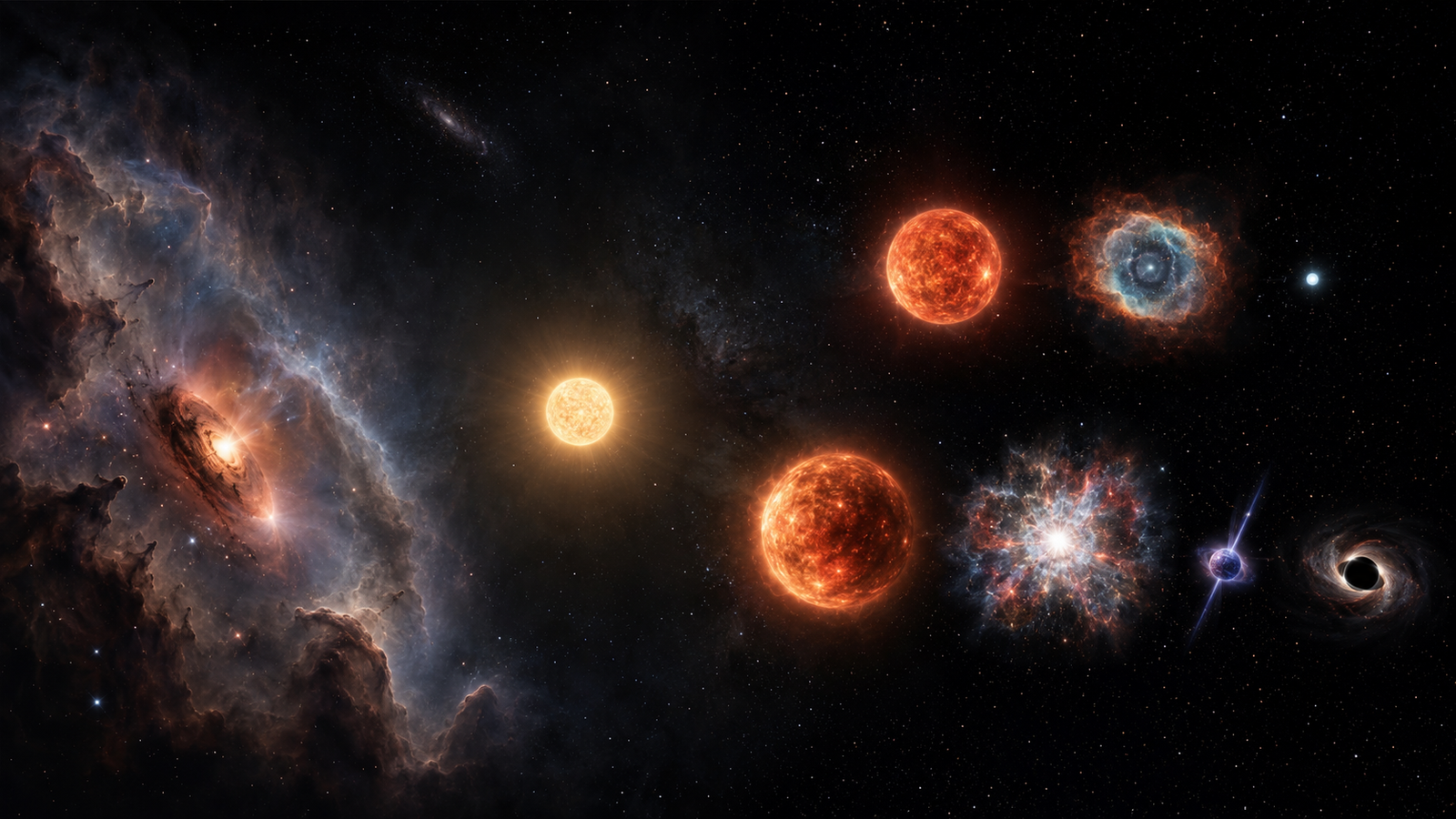
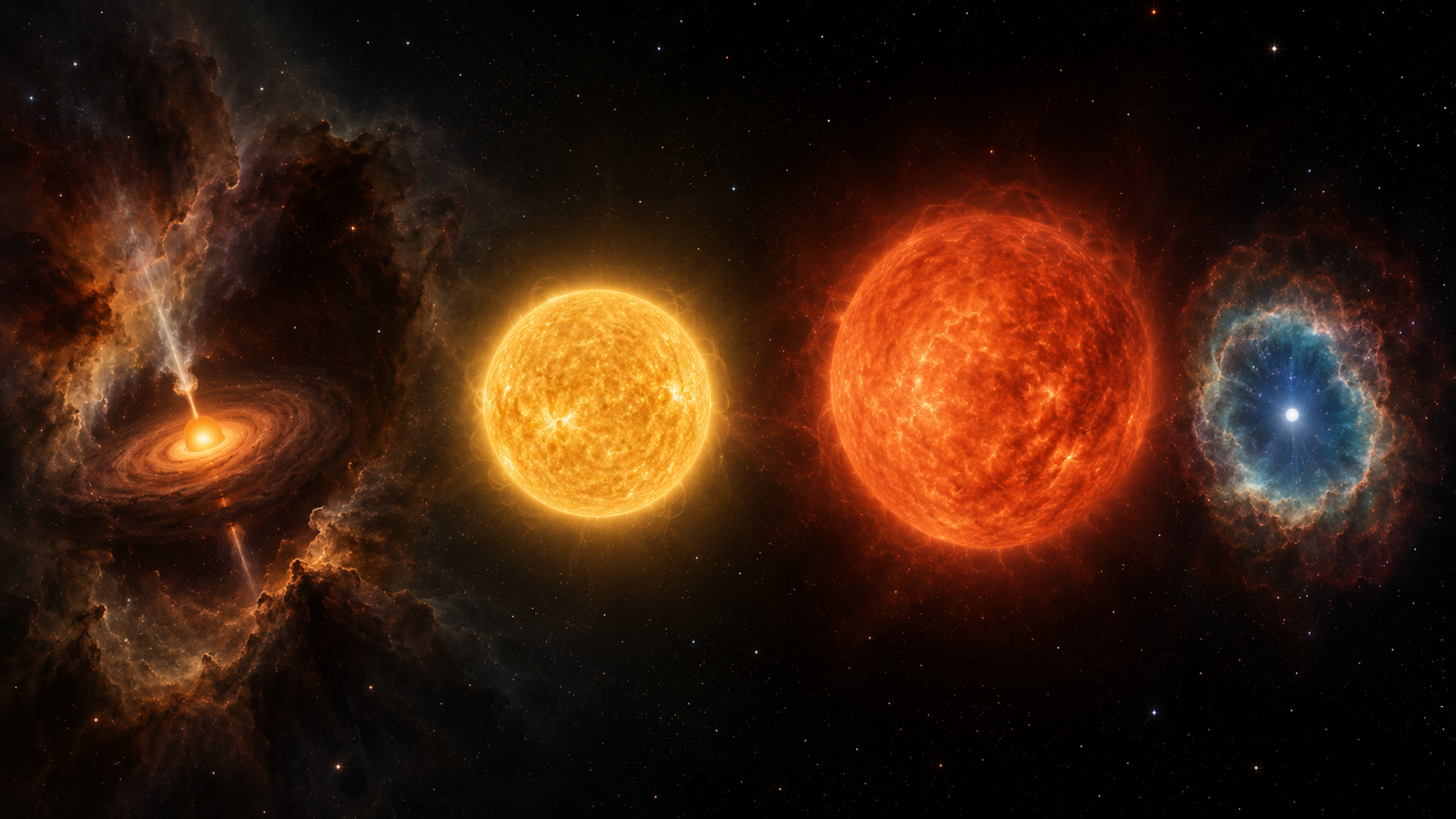
An accessible explainer on the life of stars, from gas clouds and nuclear fusion to red giants, supernovae, white dwarfs, neutron stars and black holes.
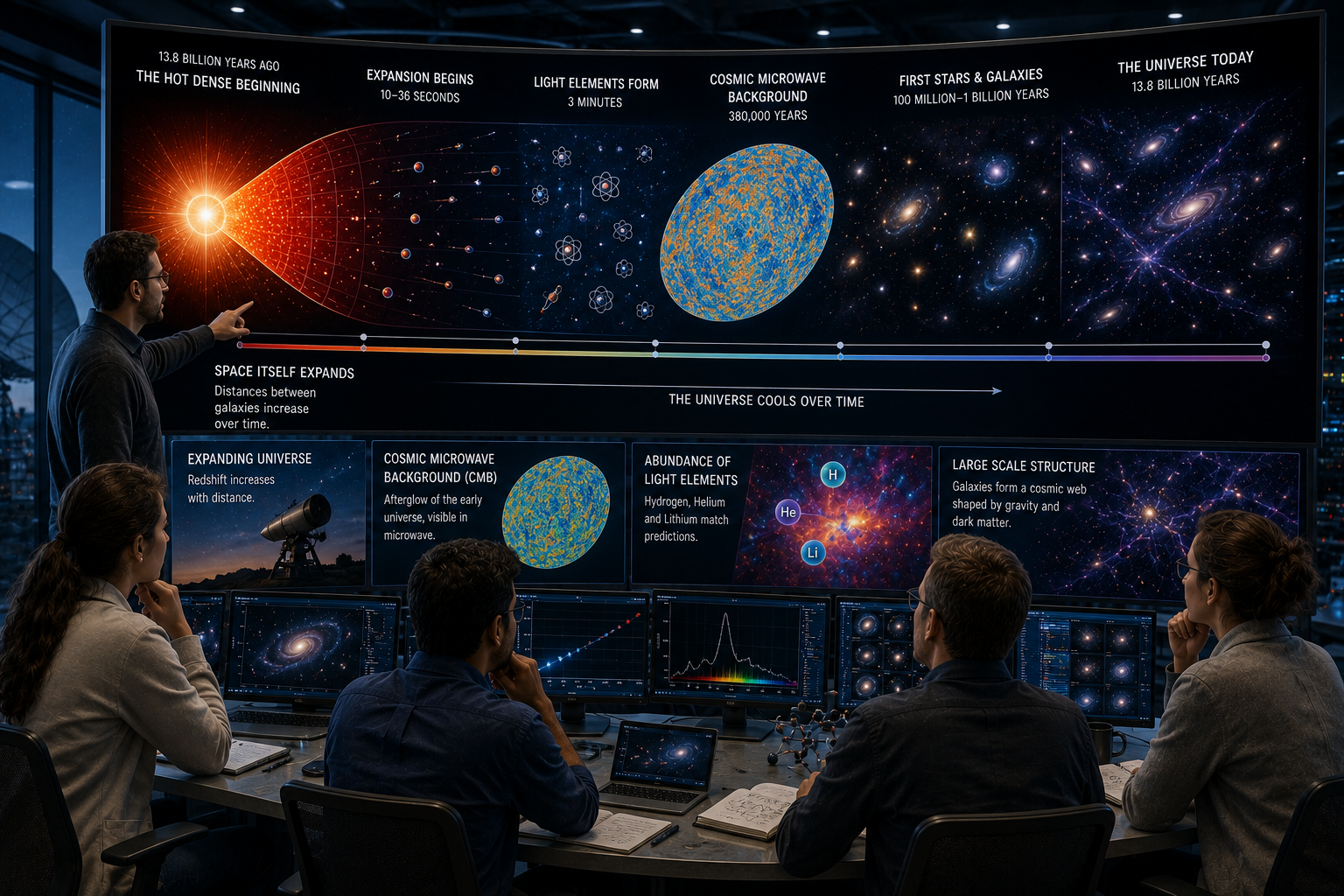
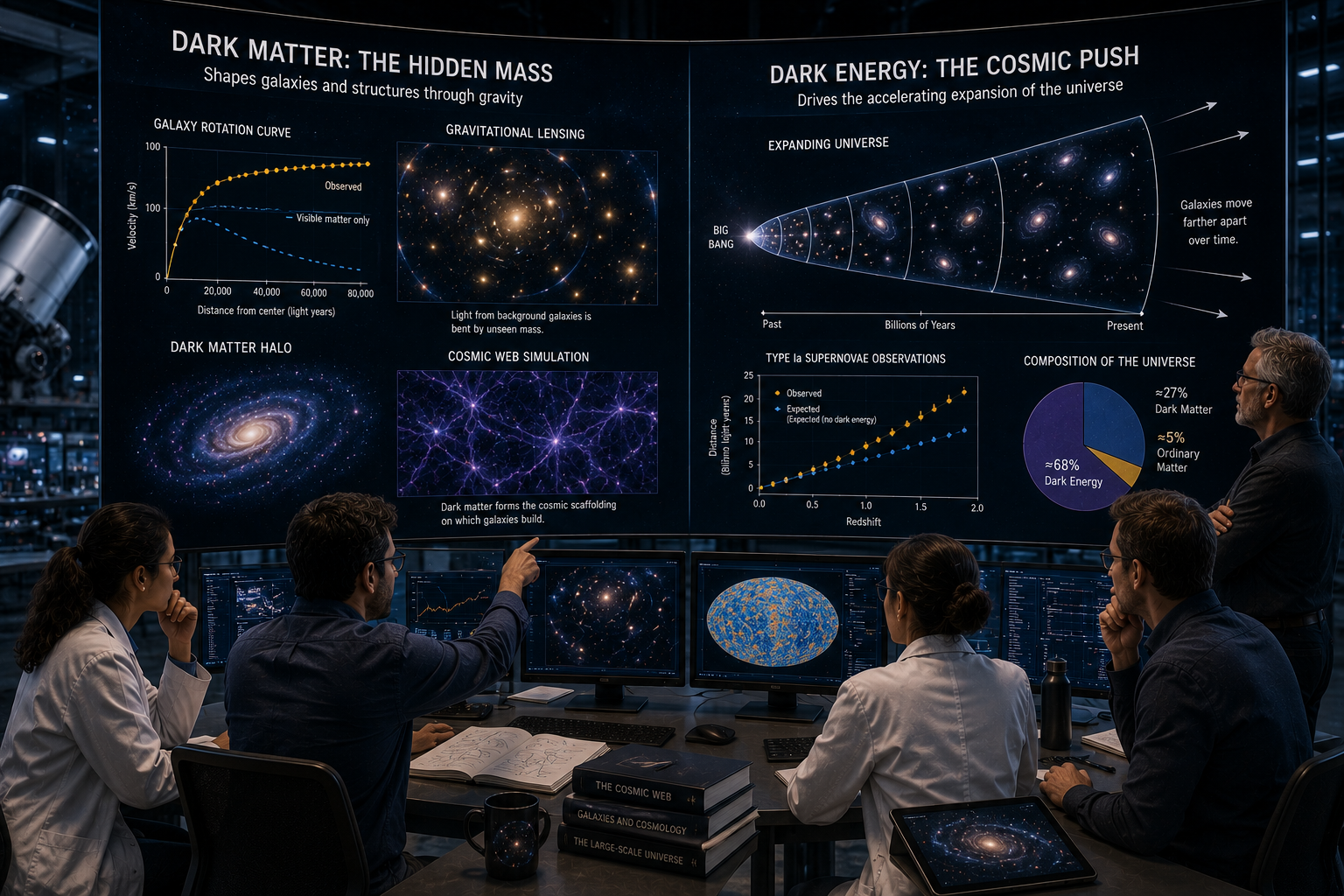
A simple explanation of cosmic expansion, galaxy redshift, the expanding fabric of space, dark energy and why the universe is not expanding from a single centre.
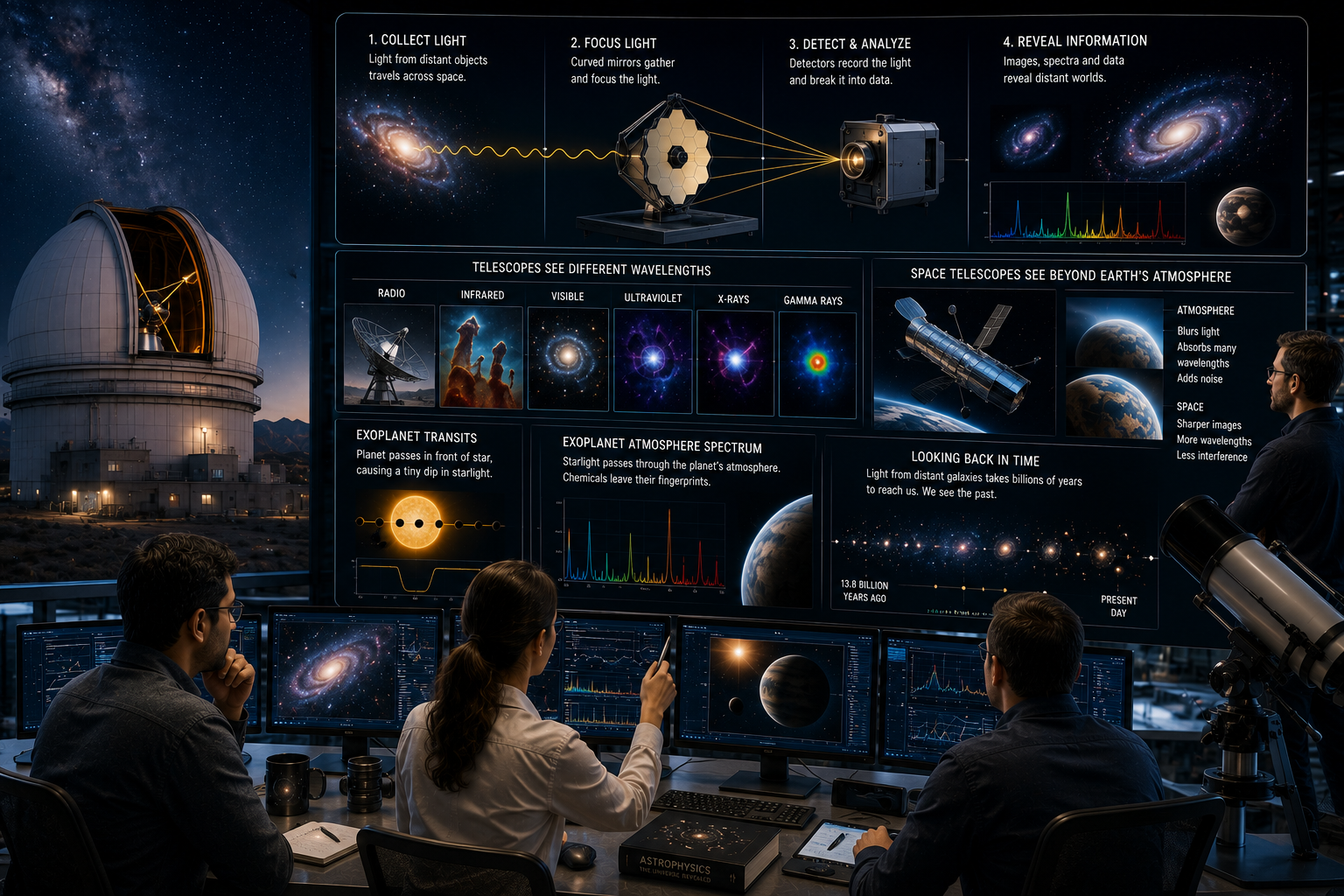
A clear explainer on how telescopes gather light, use mirrors and detectors, observe different wavelengths, and help scientists study distant planets and galaxies.
A clear explainer on how scientists search for alien life through astrobiology, Mars missions, icy moons, exoplanet atmospheres, biosignatures and technosignatures.
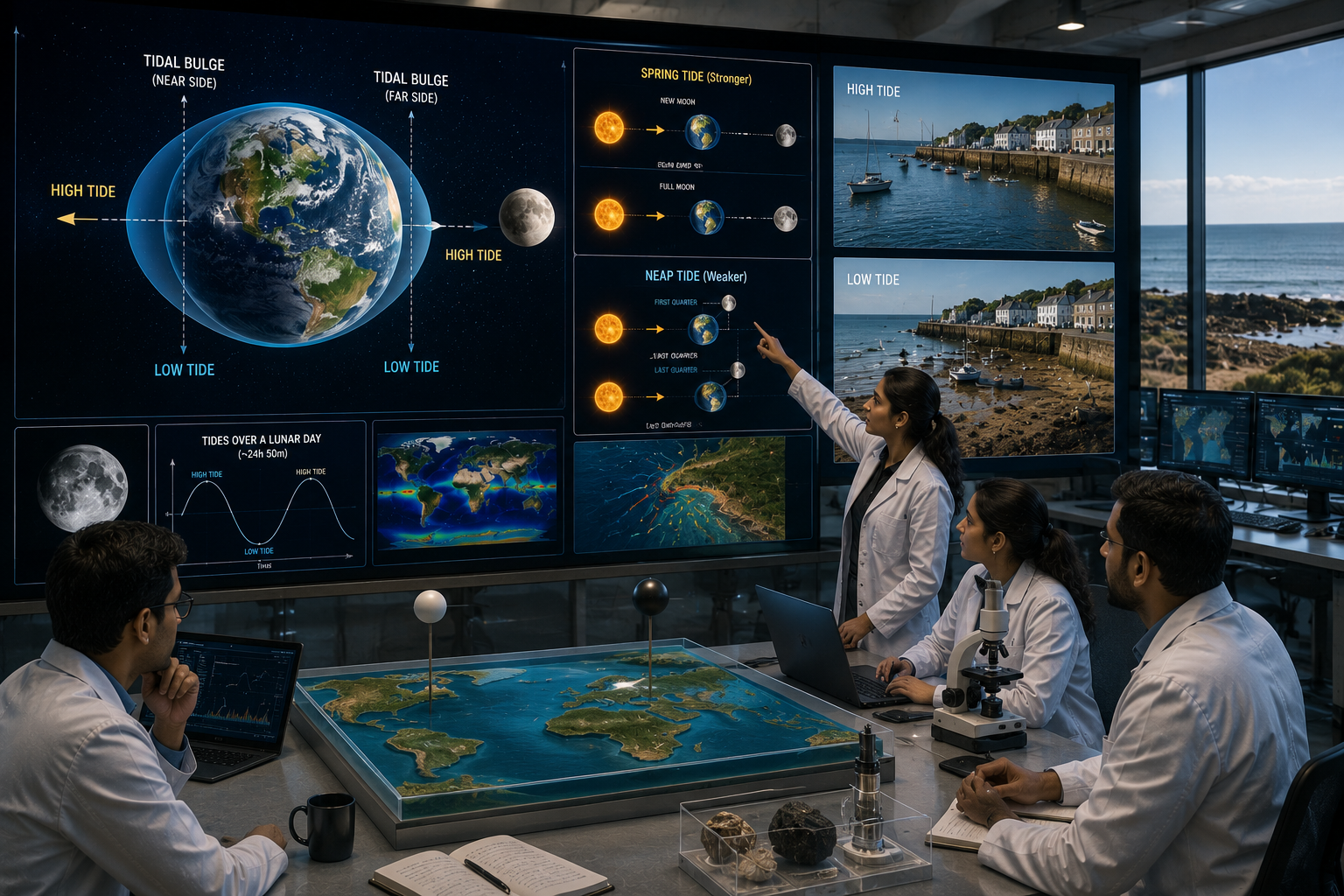
A clear explainer on how the Moon controls tides through gravity, why there are usually two high tides and two low tides, and why the Sun also matters.
A simple explainer on exoplanets, how scientists find planets around other stars, what makes some potentially habitable, and why they matter for astronomy.
A clear explainer on what causes solar and lunar eclipses, why they do not happen every month, and how shadows, alignment and the Moon’s tilted orbit matter.
A simple explainer on black holes, how they form, why light cannot escape, what an event horizon means, and how scientists detect them.
Enjoying the reporting?
We noticed an ad blocker. Ads keep our journalism free — please consider allowing them, or subscribe to our newsletter instead.
We use cookies to keep you signed in and to understand how readers use the site. See our Privacy Policy.