Gyanesh Kumar Under Pressure: What Changed in the Election Commission Row
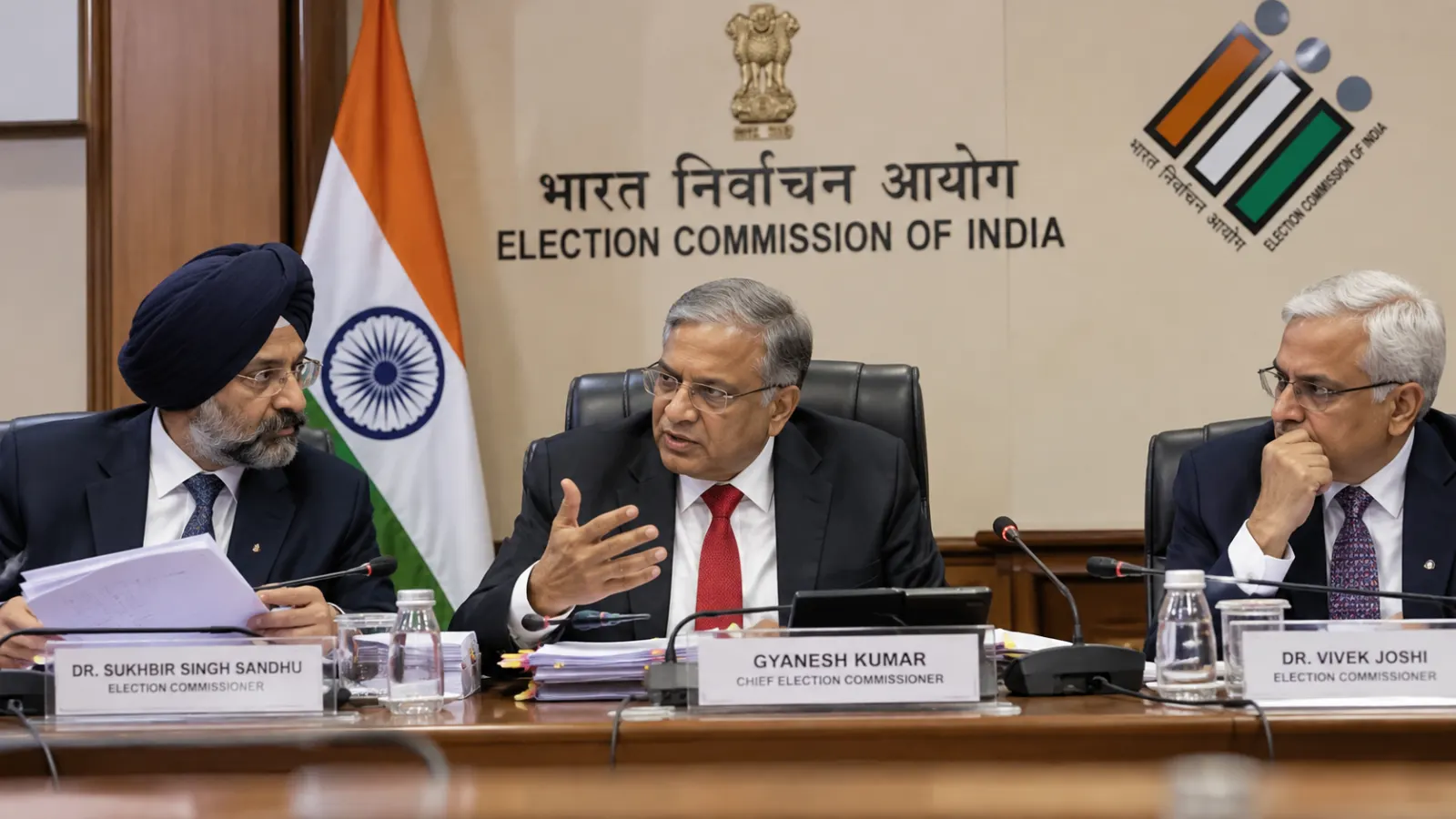
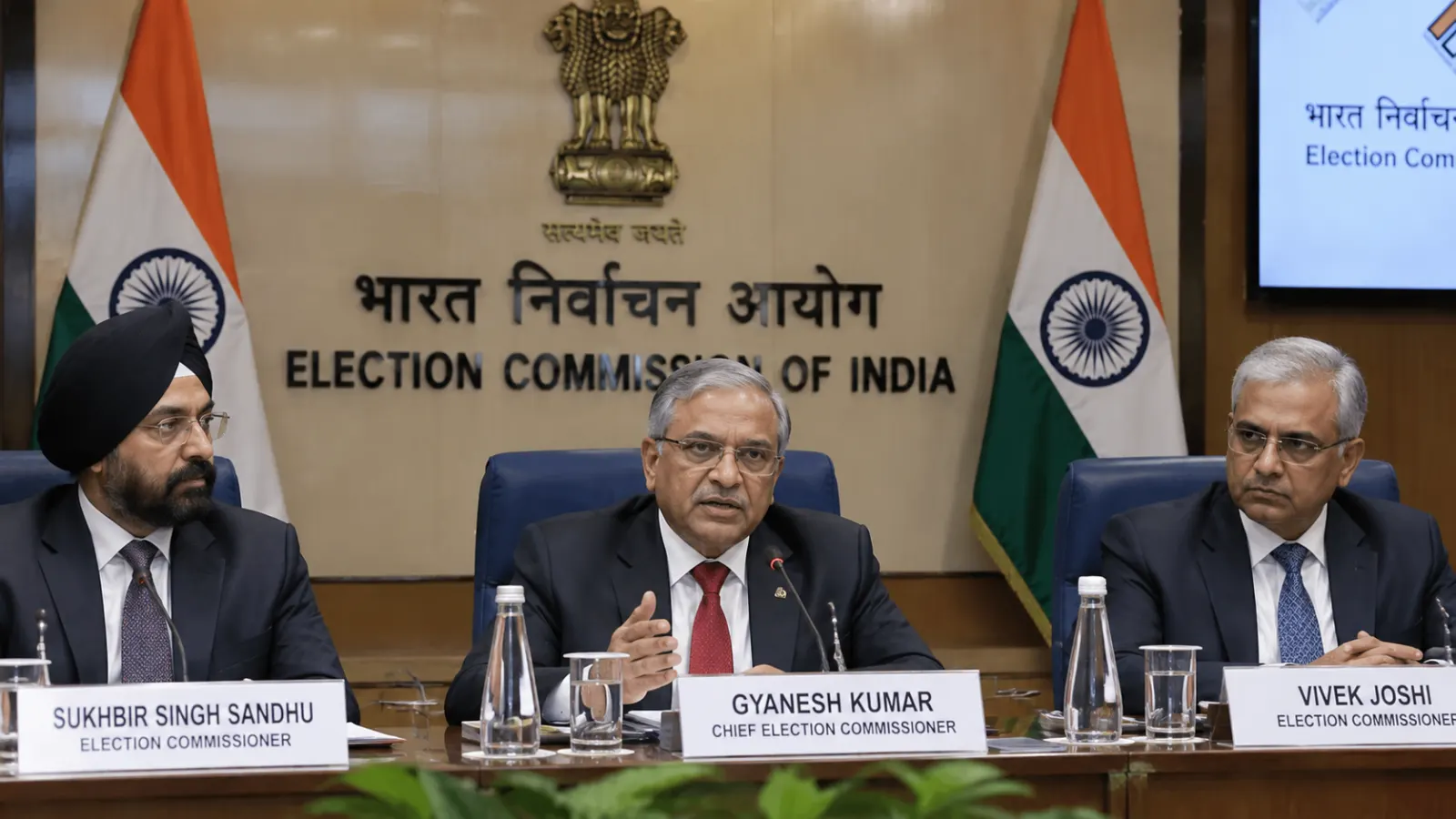
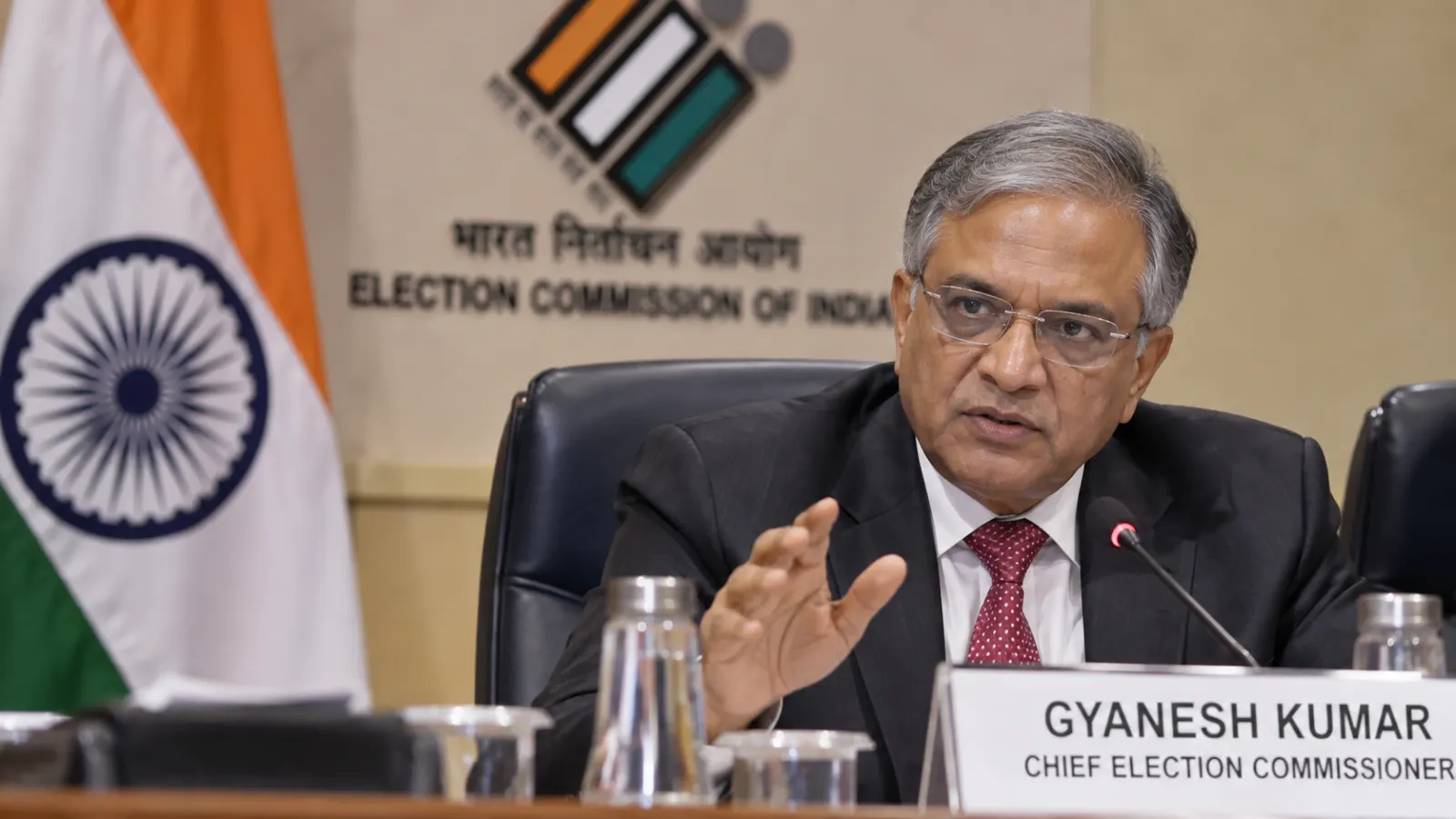
Pressure on Chief Election Commissioner Gyanesh Kumar intensified on September 28 as opposition parties and protest groups renewed demands for his resignation over allegations concerning India’s ongoing electoral-roll verification exercise. The Election Commission has rejected suggestions that its key decisions were improperly taken, maintaining that decisions on the Special Intensive Revision, or SIR, were approved unanimously by all three commissioners. The dispute has therefore developed into two parallel arguments: one about the administration of voter rolls and another about how decisions are made inside the Election Commission itself.
The latest demonstrations do not establish that electoral rolls were manipulated or that Kumar committed misconduct. Those remain allegations advanced by opposition parties and protest groups. At the same time, the controversy has moved beyond ordinary political criticism because reports of internal objections by the other two Election Commissioners have raised questions about how proposals were discussed before the Commission reached its final decisions.
Why has pressure on Gyanesh Kumar increased now?
The immediate controversy began after reporting that Election Commissioners Sukhbir Singh Sandhu and Vivek Joshi had recorded objections on at least 14 occasions over roughly 10 months.
Those reported objections covered issues including voter registration, deletion of names, changes connected with Form 6, electoral-roll databases and aspects of the Special Intensive Revision. The significance of the reports was not that the commissioners necessarily opposed every final decision, but that they had reportedly questioned how some actions or proposals were being handled during the decision-making process.
Opposition parties seized on those reports to reinforce their existing criticism of SIR. They have alleged that the electoral-roll revision process could improperly exclude legitimate voters and have demanded greater transparency over deletions, documentation requirements and the technology used to maintain voter databases.
The Election Commission disputes that interpretation.
It says disagreements, written comments and objections are normal during internal deliberations in a three-member institution and should not be confused with the Commission’s final decisions. According to the ECI, the nationwide SIR order and other major decisions were approved unanimously by Kumar, Sandhu and Joshi.
This distinction has become central to the entire controversy.
An internal objection can show that a commissioner questioned a proposal. It does not automatically show that the commissioner opposed the version ultimately adopted.
What changed on September 28?
The dispute entered a more confrontational political phase.
Opposition groups continued demonstrations demanding Kumar’s resignation, while Congress workers organised protests in several parts of the country. In Agra, Youth Congress workers went further and defaced the gate and walls of Kumar’s residence with political slogans—an act separate from the substantive dispute over electoral rolls.
Meanwhile, the youth-led Cockroach Janta Party, or CJP, has announced plans for another protest in Mumbai on October 2 and continues to demand Kumar’s resignation. The group has also called for changes to the SIR process. These are political demands and do not have the force of a legal finding against the CEC.
Reuters reported on September 28 that demands for Kumar’s resignation were intensifying over allegations of voter-list manipulation during the exercise to verify India’s enormous electorate. The Election Commission continues to deny that the exercise is being used for improper manipulation.
The result is that a technical dispute about voter-roll administration has now become a national political confrontation.
What exactly is SIR?
The Special Intensive Revision is an exercise through which the Election Commission reviews and updates electoral rolls.
Electoral rolls need regular correction because people die, move between constituencies, become newly eligible to vote, appear more than once or may otherwise require their registration details to be changed.
The basic purpose of a revision exercise is therefore not controversial: voter lists need to be accurate.
The dispute concerns how verification is carried out and what safeguards exist to ensure legitimate voters are not wrongly excluded.
India’s electorate is extremely large, so even a very small error rate can affect a substantial number of people. A process that is 99% accurate could still leave millions of records requiring correction when applied across an electorate approaching one billion voters.
That is why seemingly technical questions about forms, databases and documentation can become politically consequential.
The Election Commission’s voter services currently include SIR-related facilities allowing citizens to search rolls, submit documents against notices and use standard registration processes such as Form 6.
Why are electoral-roll deletions so sensitive?
An election can be fair only if eligible citizens are able to participate.
That makes the electoral roll one of the foundations of the voting process.
If a person’s name is wrongly excluded, possessing a voter card alone may not necessarily resolve the problem on polling day. The person must ordinarily be included on the relevant electoral roll.
At the same time, keeping ineligible, duplicate or deceased entries on voter lists creates a different integrity problem.
The Election Commission therefore has to balance two risks:
removing names that should remain,
and retaining names that should not remain.
Political controversy develops when parties believe that one of those risks is being addressed more aggressively than the other.
The current SIR debate has therefore focused heavily on notices, documentation, deletions, appeals and the ability of citizens to correct errors.
The Supreme Court has also sought explanations from the Election Commission concerning aspects of notices issued during the Delhi revision process, showing that some procedural questions are receiving judicial scrutiny independently of the political accusations against Kumar.
Judicial scrutiny of a procedure, however, should not be confused with a finding that the Election Commission deliberately manipulated voter lists.
What did the other two Election Commissioners reportedly object to?
The reported internal objections touched several areas.
One concerned Form 6, the form used by new voters seeking inclusion on electoral rolls.
Another concerned control over electoral-roll technology and whether certain functions were becoming excessively centralised.
Other objections reportedly involved voter deletions, appeals and administrative processes used during electoral-roll revision.
These issues matter because the Election Commission is not structured as an institution in which the Chief Election Commissioner personally decides every issue.
Kumar is the chairman of the Commission, but Sandhu and Joshi are also Election Commissioners with decision-making authority.
When significant disagreements arise, India’s legal framework provides for collective decision-making rather than unilateral control by the CEC.
This is why reports that two commissioners raised concerns attracted such intense attention.
But if there were objections, how can decisions still be unanimous?
There is no necessary contradiction.
Imagine that a proposal is initially presented in Version A.
Two commissioners object.
Officials reconsider the proposal and produce Version B.
Further discussions occur.
Version C is ultimately approved by all three members.
It would then be accurate to say both that serious objections existed during deliberation and that the final decision was unanimous.
The Election Commission says this is the broader principle being overlooked in coverage of the internal notes: individual comments made during consideration should not automatically be treated as dissent from the final institutional decision.
Critics respond that the nature and timing of the objections still matter—particularly if an action was implemented before all concerns were resolved.
That is where a clear chronology becomes important.
For each disputed action, the meaningful questions are:
What was originally proposed?
What objections were recorded?
Was implementation already underway?
What changed after those objections?
What did the final Commission approve?
The answers may differ from one issue to another.
The Election Commission has tried to present a united position
Following the controversy, Kumar, Sandhu and Joshi held a meeting at Nirvachan Sadan, after which the Commission issued further clarification.
It reiterated that the nationwide SIR decision had unanimous approval and said future decisions concerning new digital initiatives would involve additional discussions and checks. Reporting also indicated that aspects of the notice and hearing process were being streamlined and deadlines in some jurisdictions were extended.
This is important because the Commission’s response has not consisted solely of denying disagreement.
It has also publicly emphasised collective decision-making and procedural review.
Whether those measures resolve the wider political controversy remains a separate question. Opposition parties continue to argue that the underlying issues require greater investigation and disclosure.
The Commission maintains that its final decisions were lawful and unanimous.
Both positions need to be reported distinctly rather than merging allegations with established facts.
Why resignation demands do not automatically remove a CEC
Political groups can demand the resignation of a Chief Election Commissioner, but they cannot simply remove the office-holder through ordinary political pressure.
The Constitution gives the CEC substantial protection from removal in order to preserve the independence of the Election Commission.
Article 324 provides the Chief Election Commissioner with removal protection comparable to that of a Supreme Court judge.
This deliberately makes removal difficult.
A CEC can voluntarily resign, but forcing removal involves a much more demanding constitutional process than removing an ordinary government official.
That protection exists precisely because election authorities may be required to take decisions unpopular with ruling parties, opposition parties or both.
The current demands for Kumar’s resignation should therefore be understood primarily as political pressure unless and until a formal constitutional removal process is pursued or Kumar himself resigns.
Why protests are expanding beyond traditional political parties
One unusual feature of the controversy is the involvement of youth movements alongside established parties.
The Cockroach Janta Party has attempted to frame the dispute as part of a broader campaign around institutional accountability and voter rights. It has threatened further nationwide demonstrations and announced a Mumbai protest for October 2.
Congress and other opposition parties have separately organised protests and demanded Kumar’s resignation.
These groups do not necessarily have identical demands or political objectives.
Their shared position is that the electoral-roll controversy requires stronger accountability from the Chief Election Commissioner.
The BJP and its allies have taken a different view, arguing that the Election Commission’s clarification demonstrates that the decisions were collective and that opposition parties are using the controversy to undermine confidence in electoral institutions.
Those are competing political interpretations.
The factual questions underneath them remain narrower.
The strongest question is not whether commissioners disagreed
Disagreement inside a constitutional institution is not automatically a problem.
In many institutions, it is a sign that proposals are actually being scrutinised.
The more important issue is what happens after disagreement emerges.
Were concerns documented?
Were they discussed?
Were changes made?
Did the full Commission approve the ultimate decision?
Was any action taken before the required approval?
Those questions can be answered through records and procedure.
A healthy multi-member institution does not require every member to have identical views from the beginning of every discussion.
It requires a system in which disagreements are resolved according to law before institutional decisions are implemented.
Voters also have a practical role
The political battle surrounding SIR can make electoral rolls appear like something controlled entirely by political parties and officials.
For individual citizens, there is a more immediate concern: is your own name correctly included on the roll?
Voters can use Election Commission services to search electoral rolls, register as new voters, track applications and respond to notices where necessary.
This does not answer the institutional controversy, but it reduces the risk that an individual learns about a registration problem only when attempting to vote.
Large electoral-roll revisions inevitably generate corrections, appeals and disputes. The effectiveness of the system therefore depends partly on whether mistakes can be identified and fixed before polling.
What would settle the controversy more clearly?
Political speeches are unlikely to resolve the core dispute.
A more definitive account would require documentary clarity around the reported objections.
For each contested issue, the Election Commission could potentially establish:
when the proposal originated,
which commissioner raised concerns,
whether the proposal was changed,
when the final decision was approved,
and whether implementation occurred before or after approval.
Such a record would allow the public to distinguish ordinary internal deliberation from any genuine procedural irregularity.
The Election Commission has already provided its central answer: final decisions, including SIR, were unanimous.
Critics are asking a different question: what happened before those final approvals?
Both issues can be true at the same time, and examining the chronology is more useful than assuming that either automatically disproves the other.
What happens next?
The political confrontation is unlikely to disappear immediately.
Protests are expected to continue, including the announced October 2 mobilisation in Mumbai. Opposition parties are likely to maintain pressure over SIR, while the Election Commission will continue implementing the revision process and defending its procedures. Hindustan Times
Court proceedings concerning aspects of electoral-roll revision may also continue independently.
For voters, the important distinction is between three different layers of the story.
There are documented procedural developments, such as internal objections, Commission clarifications and changes to SIR procedures.
There are political allegations, including claims that the process is being deliberately manipulated.
And there are legal findings, which require evidence and formal adjudication.
Those categories should not be treated as interchangeable.
The pressure on Gyanesh Kumar is politically significant. The reported internal objections are institutionally significant. The Election Commission’s assertion of unanimous final decisions is equally relevant.
What remains to be established is whether the disputed procedures involved any breach of law or collective decision-making requirements.
That question cannot be resolved by the size of a protest, the intensity of an allegation or the strength of an institutional denial.
It ultimately depends on what the records show about how India’s Election Commission made and implemented its decisions.