Why Gold Prices Are Falling Today: Oil, Inflation and Rate Hikes Explained
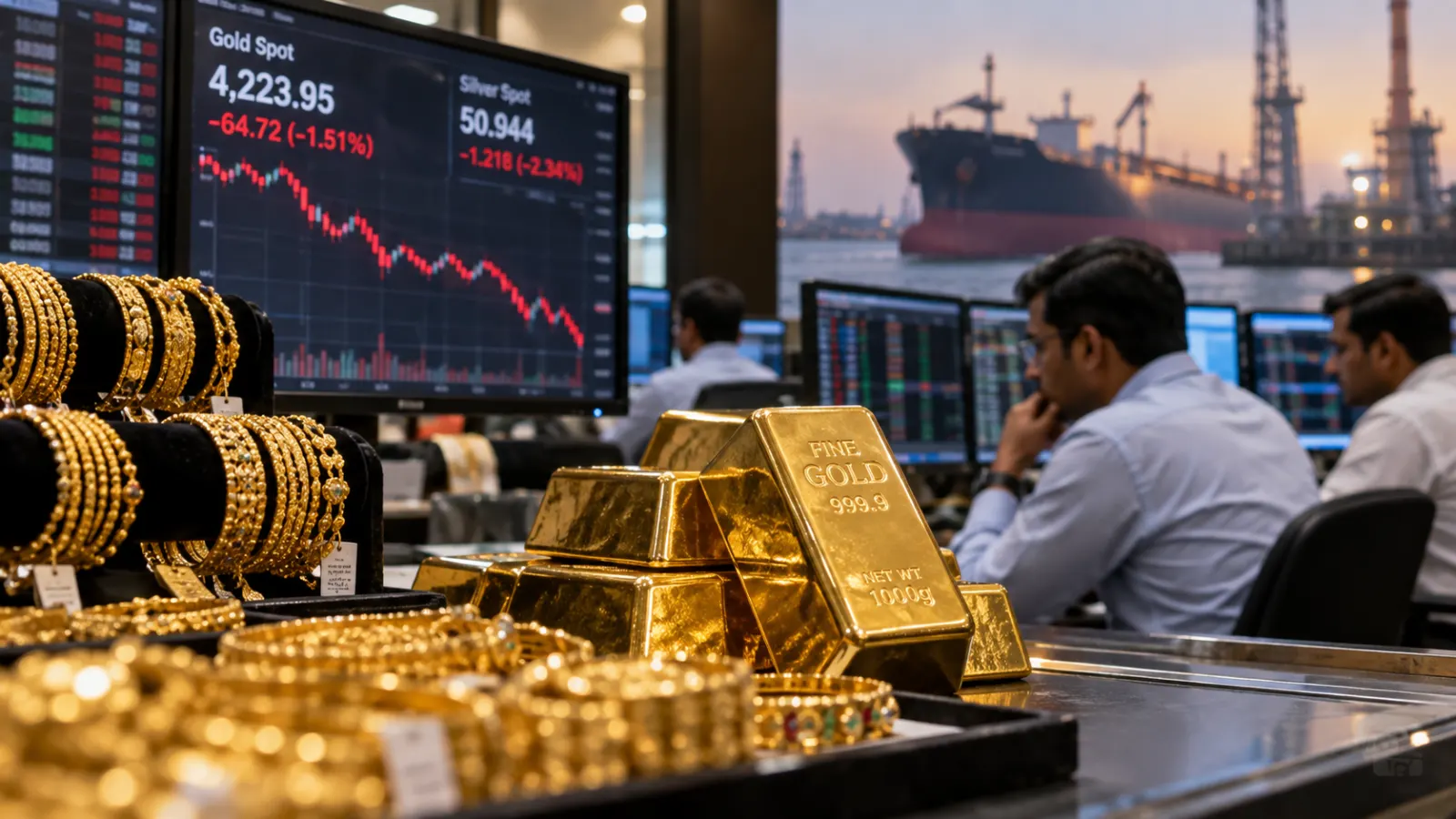
Gold prices fell sharply on September 28, 2026, extending recent weakness as rising crude-oil prices revived inflation concerns and strengthened expectations that the US Federal Reserve may raise interest rates again. Spot gold was down about 1.5% at $4,223.95 per ounce in early trading, while US gold futures declined by a similar amount. Indian gold and silver markets also came under pressure, with MCX gold futures falling by more than ₹3,000 per 10 grams during the session. MarketScreener India
At first, this may appear contradictory. Gold is traditionally described as a hedge against inflation and geopolitical uncertainty. Oil prices are rising, inflation risks are increasing and tensions involving Iran and the United States remain unresolved—conditions that might normally be expected to support gold. Yet prices are falling.
The explanation lies in the way interest rates, bond yields and the US dollar interact with gold. Gold may benefit from uncertainty, but it produces no interest income. When investors expect central banks to keep interest rates high or raise them further, interest-bearing assets such as government bonds become more attractive. That can outweigh gold's safe-haven appeal.
Why rising oil prices are hurting gold
The immediate pressure on gold is closely connected with crude oil.
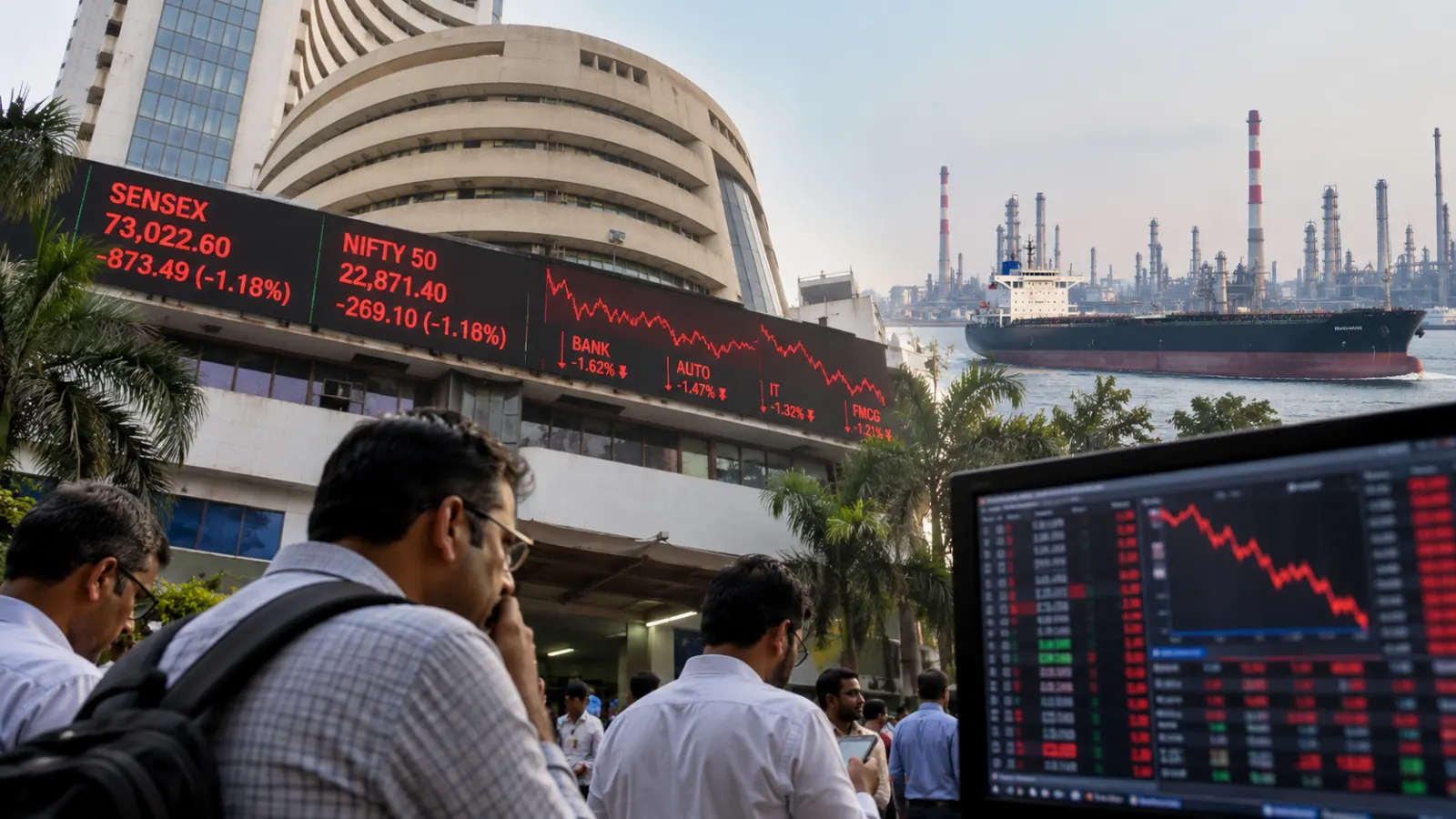
Oil prices rose again after diplomatic efforts involving Iran and the United States failed to produce a clear resolution over the Strait of Hormuz. Iran maintained that diplomacy was necessary, while US President Donald Trump rejected an Iranian proposal concerning reopening the strategically important waterway. The uncertainty pushed oil prices higher. MarketScreener India
Higher oil prices can spread inflation throughout an economy because energy is embedded in transportation, manufacturing, agriculture and logistics. Businesses facing higher fuel and freight bills may eventually pass some of those costs on to consumers.
For central banks, persistent energy-driven inflation creates a problem. If inflation remains above target, cutting interest rates becomes more difficult. Central banks may instead keep rates elevated—or raise them further.
That is exactly what gold investors are currently worried about.
The Federal Reserve raised its benchmark interest-rate range earlier in September by a quarter percentage point to 3.75%–4.00%. By September 28, financial markets were assigning a substantial probability to another increase in the coming months. mint
Gold therefore faces an unusual situation: the same rising oil prices that increase inflation fears can ultimately hurt gold if investors conclude that those fears will force the Federal Reserve to tighten monetary policy.
Why higher interest rates make gold less attractive
Gold does not pay interest.
If an investor owns ₹1 lakh worth of gold, the investment produces no coupon, dividend or fixed return simply from being held. The investor earns only if the market value of gold increases.
Government bonds work differently. When interest rates rise, newly issued bonds generally offer higher yields. Investors can therefore earn a return simply by holding them.
Imagine investors choosing between gold and a highly rated government bond.
If the bond yields 2%, the income sacrificed by holding gold is relatively small. If yields rise to 4%, 5% or more, the opportunity cost becomes substantially greater.
This is why gold can fall even during inflationary periods.
Gold is widely regarded as an inflation hedge over long periods, but high interest rates can make competing assets more attractive in the short term. Reuters has repeatedly highlighted this dynamic during gold's recent decline. Reuters
The pressure has been particularly visible in 2026. Gold reached a record high of roughly $5,595 an ounce in January, but by late September it had fallen significantly from that peak as expectations for tighter monetary policy increased. Reuters
Why the dollar matters for gold prices
Gold is internationally priced in US dollars.
When the dollar strengthens, buyers using other currencies effectively need more of their local currency to purchase the same amount of gold. That can reduce international demand.
For example, imagine gold remains unchanged at $4,200 per ounce but the dollar becomes substantially stronger against the euro, yen or rupee. Buyers in those currencies experience an effective increase in the local cost of gold even though the dollar price has not changed.
A stronger dollar can therefore put downward pressure on bullion.
Expectations for higher US interest rates often strengthen the dollar because international investors can earn more attractive returns on dollar-denominated assets. This creates another transmission mechanism:
inflation concerns → higher Fed rate expectations → stronger dollar and higher yields → pressure on gold.
This relationship is not perfect every day, but it is one of the most important forces driving precious-metal markets.
Why isn't geopolitical tension pushing gold higher?
Gold traditionally benefits from wars, financial crises and geopolitical instability because investors regard it as a store of value.
The continuing tensions involving the United States, Israel and Iran therefore provide some support for bullion.
But markets rarely respond to only one factor.
At the moment, investors appear more concerned about the monetary-policy consequences of the conflict than the conflict itself.
If geopolitical tensions restrict energy supplies, crude prices rise. Higher crude increases inflation. Persistent inflation encourages central banks to maintain higher interest rates. Higher rates and bond yields then make gold less attractive.
The same geopolitical event can therefore simultaneously produce two opposing forces:
Safe-haven demand supports gold.
Inflation-driven rate expectations pressure gold.
Currently, the second force appears to be stronger.
This is also why gold can sometimes fall during periods that would normally appear favourable for a traditional safe-haven asset.
What is happening to gold prices in India?
Indian gold prices depend on more than the international dollar price.
Domestic prices are influenced by international bullion prices, the rupee-dollar exchange rate, import duties, taxes and local demand.
On September 28, MCX gold futures fell by roughly ₹3,214 per 10 grams, while silver futures dropped by about ₹6,661 per kilogram during trading, according to market reports. Economic Times
The impact of an international gold decline can sometimes be partially offset by a weakening rupee.
Suppose international gold falls 2%, but the rupee weakens significantly against the dollar. Indian importers then need more rupees to buy each dollar, reducing the benefit of the lower international price.
This is why Indian jewellery prices do not always move by exactly the same percentage as international gold.
For Indian households, another factor is the already elevated absolute price. Even after recent corrections, gold remains historically expensive in rupee terms. That can influence jewellery demand during weddings and festivals, particularly when consumers respond by buying lighter products or exchanging old jewellery rather than purchasing entirely new gold.
Gold and inflation: why the relationship is misunderstood
The statement that “gold rises when inflation rises” is incomplete.
Gold tends to perform best when inflation is high and interest rates fail to keep pace with it.
Economists often focus on the real interest rate: the nominal interest rate after accounting for inflation.
Suppose inflation is 5% while interest rates are only 3%. The real return on many fixed-income assets is negative. Gold can become relatively attractive because holding cash or low-yielding bonds causes purchasing power to erode.
Now suppose inflation is 4%, but central banks raise interest rates to 5%. Investors can earn a positive real return from interest-bearing assets.
Gold becomes less attractive in comparison.
The market is currently worried that central banks will respond aggressively enough to inflation to keep real yields elevated.
Federal Reserve officials have recently emphasised continuing inflation risks. St. Louis Fed President Alberto Musalem said additional rate increases could be necessary to contain persistent inflation, while other Fed officials have also signalled that policy may need to remain restrictive. Reuters
That is why higher inflation is currently producing downward rather than upward pressure on gold.
Silver is falling too
Gold is not the only precious metal under pressure.
Silver also declined on September 28, while platinum and palladium weakened. Early Reuters-linked market data showed spot silver around $63.67 per ounce, down about 1%, with platinum and palladium also lower. mint
Silver behaves differently from gold because it has substantial industrial demand. It is used in electronics, solar panels and other manufacturing applications.
That means silver can face pressure from both sides when investors become concerned about tighter monetary policy. Higher interest rates reduce its attractiveness as a precious metal, while concerns about slower economic growth can weaken expectations for industrial demand.
This partly explains why silver can sometimes move more sharply than gold.
Does the fall mean the gold rally is over?
A sharp daily decline does not answer that question.
Gold remains influenced by several longer-term factors that can support prices, including central-bank purchases, geopolitical instability, high government debt and concerns about currencies and fiscal deficits.
A Reuters survey of analysts earlier in 2026 found that forecasters had lowered their gold expectations after the decline from January's record high, but many still expected central-bank buying to provide underlying support. Reuters
At the same time, the short-term environment remains difficult.
Gold investors are currently watching whether inflation stays elevated, whether oil remains expensive and whether the Federal Reserve continues raising interest rates.
If those pressures persist, gold could remain volatile.
If oil prices fall, inflation expectations weaken and markets begin anticipating lower rather than higher interest rates, conditions could shift rapidly in gold's favour.
Gold frequently moves before actual central-bank decisions occur because markets attempt to price future policy in advance.
What could make gold rise again?
Several developments could reverse the current pressure.
A significant decline in crude-oil prices would reduce inflation fears and make further central-bank tightening less likely.
Weak US economic or employment data could also cause investors to conclude that the Federal Reserve cannot continue raising rates without damaging the economy.
A meaningful decline in Treasury yields would reduce the opportunity cost of owning non-yielding gold.
A weaker US dollar would make bullion cheaper for buyers using other currencies.
And a serious deterioration in geopolitical conditions could increase safe-haven demand strongly enough to overwhelm concerns about interest rates.
This is why gold can change direction quickly.
The same market that sells gold because of higher yields can begin buying it aggressively if economic conditions suddenly make rate cuts appear more likely.
Why gold buyers in India should distinguish price from purpose
The significance of falling gold prices depends heavily on why someone owns gold.
A jewellery buyer preparing for a wedding has a different objective from a short-term commodities trader. A household buying gold periodically as long-term savings is making a different decision from someone attempting to profit from a move over the next several days.
This distinction is particularly relevant because gold prices can be extremely volatile around central-bank meetings, inflation reports and geopolitical developments.
A fall of 1% or 2% in one trading session may look dramatic in headlines but does not necessarily represent a fundamental change in gold's long-term role.
Likewise, a large rally does not guarantee that prices will continue rising.
For readers following prices, the more useful approach is to understand the forces affecting gold rather than interpreting each daily movement as a permanent trend.
The real reason gold is falling
The current decline can be understood through one chain of events.
Geopolitical uncertainty is keeping oil prices high.
Higher oil threatens to increase inflation.
Persistent inflation increases expectations for additional Federal Reserve rate hikes.
Higher interest rates and Treasury yields make bonds more attractive compared with gold.
A stronger dollar can add further pressure.
The result is falling bullion prices—even though the geopolitical environment itself would normally support demand for gold.
That apparent contradiction is the key to understanding the September 28 move.
Gold is not simply an inflation asset or a crisis asset. Its price reflects a competition between fear, inflation, interest rates, currency movements and investor expectations.
For now, markets appear to believe that the inflation created by expensive energy will keep monetary policy tighter for longer.
And that is proving more important to gold prices than its traditional safe-haven appeal.