RBI Rate Hike Explained: Why Interest Rates May Rise Again
The Reserve Bank of India could raise its benchmark repo rate at its October 5–7, 2026 Monetary Policy Committee meeting, as inflation broadens across the economy, crude-oil prices remain elevated and global central banks move towards tighter monetary policy. A Reuters poll conducted between September 18 and 28 found that 35 of 61 economists—about 60%—expect a 25-basis-point increase, taking the repo rate from 5.25% to 5.50%. Such a move would be the RBI’s first rate increase since February 2023.
This is still a forecast, not an RBI decision. The Monetary Policy Committee has not yet voted, and the final outcome will depend on inflation, growth, oil prices, the rupee and financial conditions when it meets. But the economic environment has changed considerably since August, when the RBI kept the repo rate unchanged at 5.25% for a fourth consecutive policy review.
For households, a rate increase would matter because the repo rate ultimately influences borrowing costs across the economy. Floating-rate home loans could become more expensive, new personal and vehicle loans may carry higher rates, fixed-deposit returns could eventually improve and businesses could face higher financing costs. Understanding why the RBI might raise rates therefore requires understanding what has changed in inflation—and why policymakers may now be more willing to slow demand.
Why is the RBI considering a rate hike?
The most important reason is inflation.
India’s consumer inflation accelerated to 4.82% in August 2026, up from 4.45% in July and above the RBI’s 4% medium-term target for the third consecutive month. Core inflation, which strips out some of the more volatile components, also increased to about 4.2% from 3.86% in July.
More important than the headline number is the breadth of the price increases.
Reuters reported that almost half of the 43 categories in India’s inflation basket were recording year-on-year inflation of at least 4%, compared with roughly one-third in March. That suggests inflation is no longer concentrated only in a few volatile items such as vegetables or fuel. Price pressure is spreading through more of the economy.
That matters enormously for monetary policy.
A central bank can sometimes tolerate a temporary spike caused by one crop failure or one fuel shock because raising interest rates cannot produce more vegetables or crude oil. But when inflation becomes widespread across goods and services, policymakers become more concerned that businesses and consumers are adjusting to a generally higher inflation environment.
Once those expectations become embedded, controlling inflation can become significantly harder.
Why high oil prices make the problem worse
India imports most of the crude oil it consumes, which makes the economy especially sensitive to international energy prices.
Higher crude increases the country's import bill and raises costs for fuel, transportation, aviation, manufacturing, chemicals, plastics and logistics. Companies may eventually pass some of those additional costs on to consumers.
That can create second-round inflation.
A rise in crude does not remain confined to petrol and diesel. A truck transporting vegetables becomes more expensive to operate. Airlines face higher fuel bills. Manufacturers pay more for transportation and petroleum-derived raw materials. Businesses then either accept lower profit margins or increase prices.
Oil can also pressure the rupee because Indian refiners need dollars to pay international suppliers. Greater demand for dollars can weaken the domestic currency, which in turn makes imported commodities even more expensive in rupee terms.
The RBI has already been actively managing both liquidity and currency pressures through bond sales and foreign-exchange operations.
That is why the current inflation problem is not only about today's CPI number. Policymakers also have to consider what expensive energy might do to inflation several months from now.
Strong economic growth gives RBI more room to raise rates
Central banks face a difficult trade-off when inflation rises during an economic slowdown.
Raising interest rates can control demand, but it can also weaken an already fragile economy.
India currently faces a different situation.
The economy expanded by roughly 7.8% in the April–June 2026 quarter, while private investment and consumption remained comparatively resilient. Bank credit growth exceeded 19% in July, nearly double the pace recorded a year earlier, according to Reuters.
Strong growth makes monetary tightening easier to justify.
If companies are investing, consumers are spending and banks are lending rapidly, the RBI has less need to keep rates low purely to stimulate demand. Policymakers can devote more attention to controlling inflation.
This is one reason the same inflation figure can produce different policy decisions at different stages of the economic cycle.
An economy growing at 3% might make the RBI reluctant to raise rates.
An economy growing close to 8% gives it considerably more room.
Why global interest rates also matter
India does not set monetary policy in isolation.
Major central banks around the world have recently moved towards higher borrowing costs as energy-driven inflation has returned. The US Federal Reserve raised rates earlier in September, while other central banks have also tightened policy or signalled that they may do so.
This matters to India because investors compare returns across countries.
Suppose Indian government bonds offer 6.5% while US Treasury securities offer substantially less. Investors may be willing to accept the additional risks associated with India because they receive a larger return.
But if US rates rise while Indian rates remain unchanged, that difference becomes smaller.
Foreign investors may then decide that Indian bonds are less attractive relative to safer dollar-denominated assets.
That can reduce capital inflows and put additional pressure on the rupee.
Reuters reported that overseas investors have withdrawn nearly $26 billion from Indian equities during 2026, while the rupee has also weakened significantly against the dollar.
A rate increase would not automatically strengthen the rupee, but higher Indian interest rates can help preserve the relative attractiveness of rupee-denominated financial assets.
What exactly is the repo rate?
The repo rate is the policy interest rate at which the RBI lends short-term money to banks against eligible securities.
It currently stands at 5.25%.
The repo rate does not mean ordinary borrowers can obtain money directly from the RBI at 5.25%. Instead, it serves as a reference point influencing interest rates throughout the financial system.
When the RBI raises the repo rate, borrowing becomes more expensive for banks or the general monetary environment becomes tighter. Banks can then increase lending rates for households and businesses.
The transmission is not instantaneous or identical for every borrower.
How quickly a loan changes depends on whether it is linked to an external benchmark, the bank's internal lending rate, the reset date specified in the contract and the lender's own pricing decisions.
But directionally, a sustained RBI rate increase generally puts upward pressure on borrowing costs.
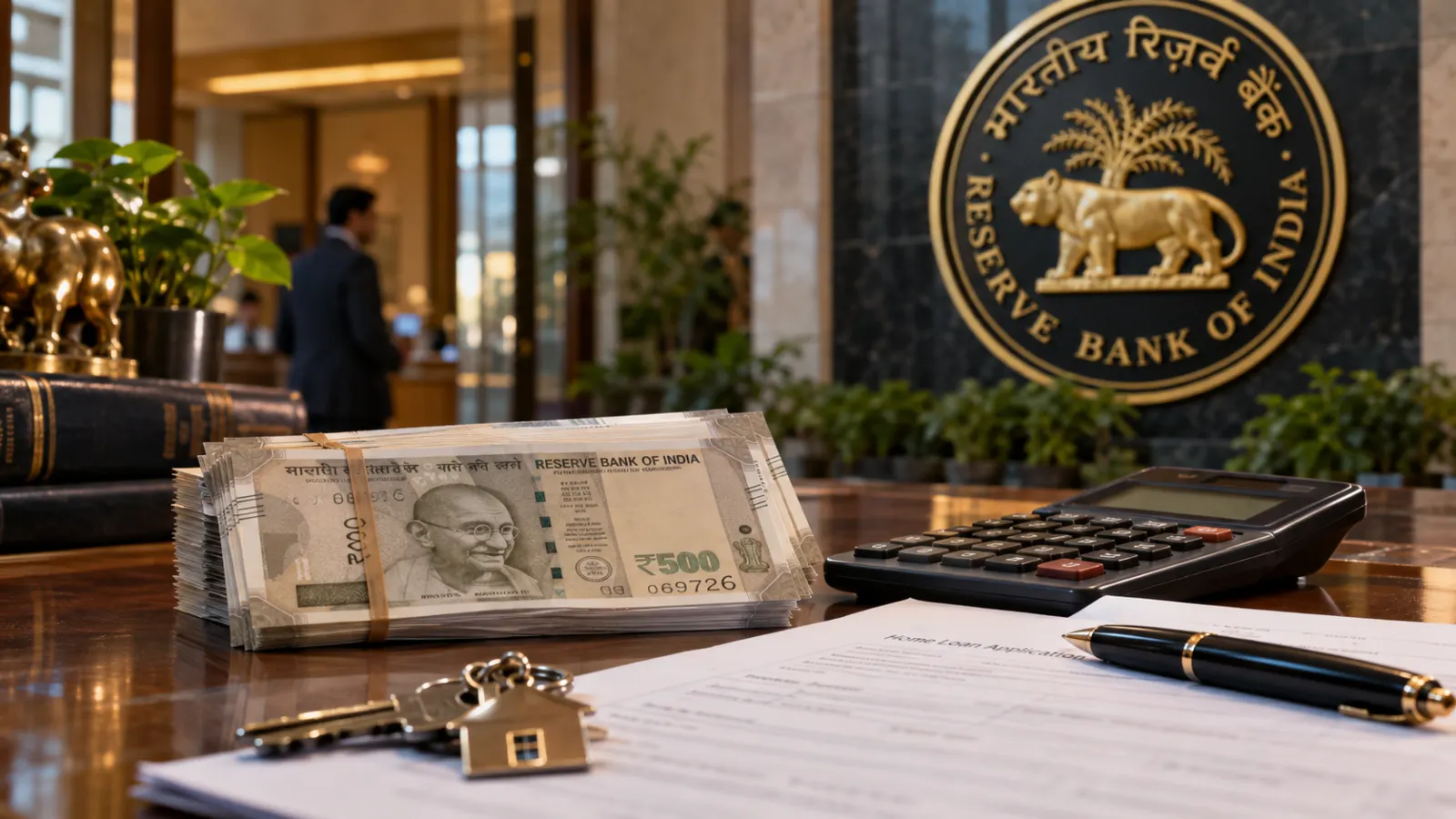
What could a 0.25% hike mean for a home loan?
A 25-basis-point increase means an increase of 0.25 percentage point.
Suppose a borrower has a ₹50 lakh home loan with 20 years remaining.
At an illustrative interest rate of 8.00%, the EMI is about ₹41,822 per month.
If the rate rises to 8.25%, with the same principal and 20-year tenure, the EMI would be approximately ₹42,603.
That is roughly ₹780 more every month, or around ₹9,400 a year.
This is only an illustration. Actual loan impacts depend on the borrower's outstanding principal, current interest rate, remaining tenure and the method used by the lender.
Many banks also respond to rate changes by extending the loan tenure instead of immediately increasing the EMI, unless the borrower requests otherwise.
That can make the monthly impact appear small while substantially increasing the total interest paid over the life of the loan.
Home loans could feel the impact faster than some other loans
Many newer floating-rate retail loans are linked to external benchmarks, including the RBI repo rate.
When the benchmark changes, the applicable loan rate may reset according to the schedule specified by the lender.
Existing borrowers should therefore check whether their loan is based on:
an external benchmark such as the repo rate,
MCLR,
an older base-rate system,
or a fixed interest rate.
A borrower with a genuinely fixed-rate loan would ordinarily not see the rate change simply because the RBI hikes the repo rate during the fixed period.
Borrowers on floating rates are more exposed.
The practical question is not only whether the RBI hikes rates in October but whether there is a single 25-basis-point increase or the beginning of a broader tightening cycle.
Could rates rise again in December?
Possibly.
In the latest Reuters poll, 29 of 53 economists expected the RBI to deliver at least another 25-basis-point increase by December after a possible October hike. The median forecast implied the repo rate could reach 5.75% and remain around that level for an extended period.
Financial markets are pricing an even larger amount of tightening.
India's one-year overnight index swap market was pricing approximately 90 basis points of rate increases over the next 12 months, according to Reuters.
Market pricing is not a guarantee of what the RBI will do. Expectations can change rapidly if inflation falls, oil prices decline or economic growth weakens.
But it tells us something important: investors currently believe October may be the beginning of a tighter monetary-policy environment rather than an isolated adjustment.
Why higher interest rates help fight inflation
Raising interest rates does not directly reduce the price of oil or vegetables.
Instead, monetary policy works primarily through demand.
More expensive home loans can discourage some property purchases.
Higher vehicle-loan rates can reduce demand for cars.
Costlier personal loans can slow discretionary spending.
Businesses may postpone projects that no longer generate sufficient returns after financing costs rise.
Consumers may also save more if deposit rates become attractive.
All of this reduces the amount of money competing for goods and services.
Over time, weaker demand can make it more difficult for businesses to keep raising prices.
That is how higher interest rates help control inflation.
The process is slow. Monetary policy typically works with a lag, which is why central banks often act before inflation becomes extreme.
Could fixed-deposit rates rise?
Potentially, yes.
Higher policy rates generally increase competition for deposits because banks need funding to support lending.
If banks raise loan rates while credit growth remains strong, they may need to offer better returns to attract deposits.
This can benefit people who depend on fixed-income investments, particularly retirees and conservative savers.
However, FD rates do not automatically increase by exactly the same amount as the repo rate.
A 25-basis-point RBI hike does not guarantee every bank will increase every deposit rate by 25 basis points.
Banks decide deposit pricing based on their liquidity, funding requirements, loan growth and competitive conditions.
Customers planning large fixed deposits during a rising-rate cycle may therefore want to pay attention to how deposit rates evolve rather than assuming one RBI decision immediately represents the peak.
What happens to personal and vehicle loans?
New personal loans, vehicle loans and other forms of credit can also become more expensive during a tightening cycle.
Personal loans tend to carry relatively high interest rates because they are usually unsecured. The effect of a 25-basis-point change can therefore appear small compared with the existing rate, but repeated increases can become meaningful.
Vehicle loans can respond similarly.
For new borrowers, banks may revise their advertised lending rates.
Existing borrowers are affected according to whether their contracts carry fixed or floating rates.
Businesses can also feel the change through working-capital loans, commercial borrowing and corporate bonds.
Higher funding costs can eventually affect investment, hiring and pricing decisions.
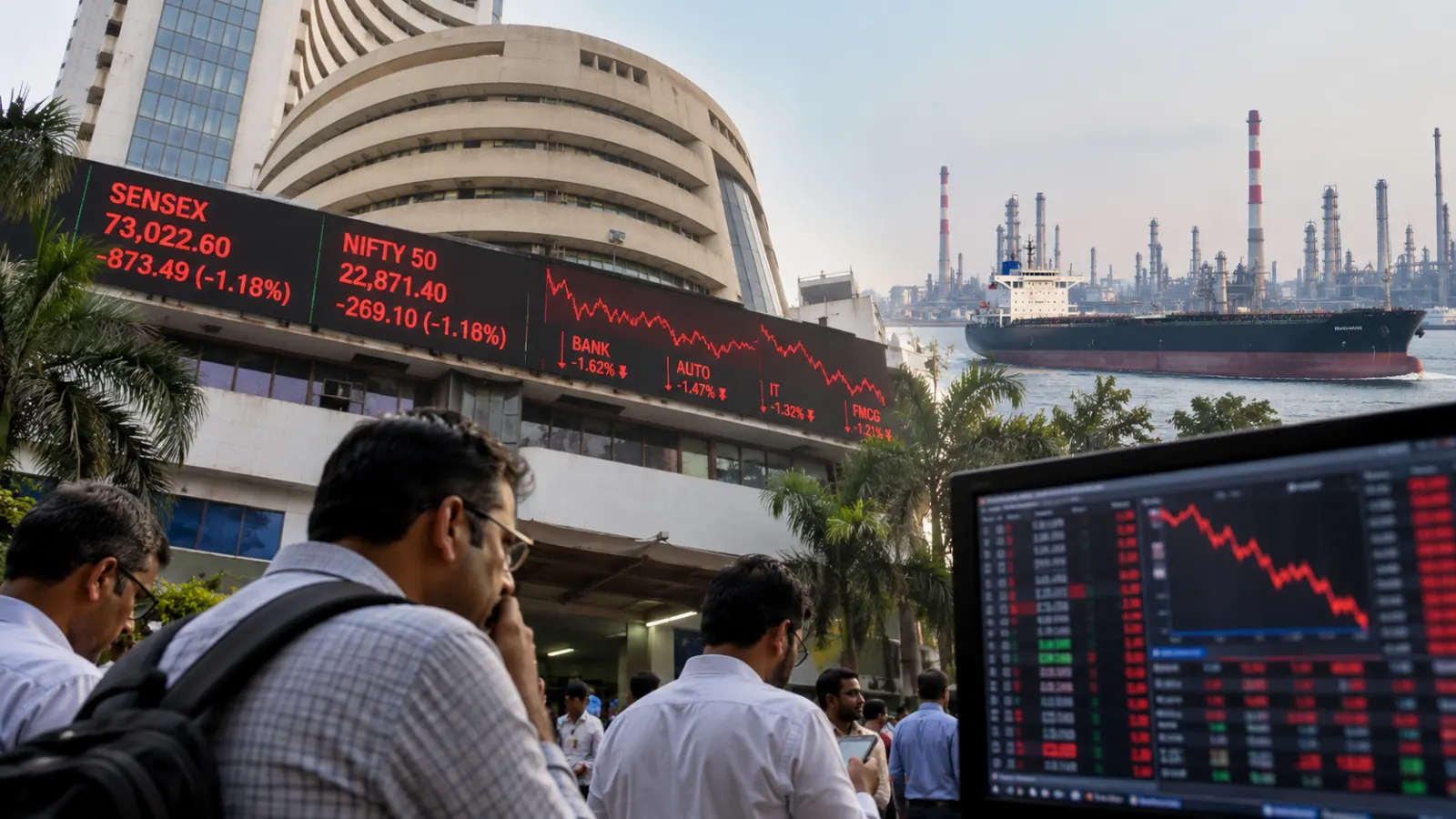
What could happen to the stock market?
The impact on equities is mixed.
Higher interest rates can be negative for stocks because companies face higher financing costs and investors can receive better returns from bonds and deposits.
High-growth companies can be especially sensitive because much of their valuation depends on profits expected many years into the future.
Banks are more complicated.
Higher lending rates can sometimes improve interest margins, but aggressive tightening can also slow credit growth and increase repayment stress.
Rate-sensitive sectors such as real estate, automobiles and consumer durables may face greater pressure because customers frequently rely on financing.
However, markets often anticipate monetary policy before the RBI actually acts.
If investors already expect a 25-basis-point increase, the announcement itself may produce relatively little movement unless the RBI's guidance about future hikes surprises markets.
Why could the rupee benefit?
One argument for tighter policy concerns the currency.
Higher Indian interest rates increase the return available on rupee-denominated assets relative to what investors can earn elsewhere, all else being equal.
That can support capital inflows or reduce the incentive for investors to move funds overseas.
A stronger or more stable rupee can then help reduce imported inflation because Indian companies need fewer rupees to purchase foreign currencies.
But monetary policy cannot completely offset external forces.
If crude prices surge dramatically or the US dollar strengthens globally, the rupee can still weaken even after an RBI hike.
Interest rates are only one part of the currency equation.
Would a rate hike mean the RBI believes the economy is in trouble?
Not necessarily.
Paradoxically, one reason the RBI may be able to raise rates now is that the economy appears relatively strong.
GDP growth close to 8%, rapid credit expansion and resilient demand give policymakers greater confidence that a modest rate increase can be absorbed without causing a severe slowdown.
A central bank usually raises rates when it believes demand and inflation are stronger than desirable—not simply because the economy is weak.
The objective is to prevent strong nominal demand from turning into persistent inflation.
A controlled rate increase can therefore be viewed as an attempt to preserve economic stability rather than evidence that growth has already collapsed.
What could make the RBI decide not to hike?
The October increase remains an expectation rather than certainty.
Several developments could change the calculation before or during the MPC meeting.
A substantial decline in crude-oil prices could reduce inflation risk.
A sharp improvement in the rupee could ease imported inflation.
Weak economic or credit data could increase concern about growth.
New inflation data showing that August's broadening was temporary could also reduce the urgency to tighten.
The RBI could alternatively decide that its ongoing liquidity operations are sufficient for now and wait for more evidence.
The central bank has already been selling government securities and conducting foreign-exchange operations to reduce surplus liquidity, which tightens financial conditions even without changing the repo rate.
This is why a rate decision should never be treated as predetermined solely because most economists forecast it.
What borrowers should watch before October 7
The most important figure is obviously the repo rate decision itself.
But borrowers should also watch the MPC's language.
A 25-basis-point increase accompanied by guidance suggesting that inflation is expected to fall could imply only limited additional tightening.
The same hike accompanied by a warning that inflation remains broad-based and persistent could signal further increases.
The RBI's inflation forecast will therefore matter almost as much as the headline rate.
So will its assessment of crude oil, economic growth, the rupee and financial-system liquidity.
For homeowners and businesses, the difference between one 25-basis-point hike and three consecutive hikes is considerably larger than the impact of one meeting.
The October RBI meeting is really about inflation expectations
At its August meeting, the RBI chose to wait for stronger evidence that inflation was becoming broad-based.
That evidence is now beginning to appear.
Nearly half of the inflation basket is registering price growth of at least 4%, August inflation has risen to 4.82%, growth remains strong and global interest rates have moved higher. Reuters
These conditions explain why the market has shifted so rapidly from expecting the RBI to stay on hold to expecting a rate increase.
A 25-basis-point hike would not suddenly eliminate inflation, nor would it transform household finances overnight.
Its importance would be largely in the signal it sends.
It would indicate that the RBI believes inflationary pressure has become broad enough to justify actively restraining demand again.
For borrowers, that would mean preparing for a period in which cheap money becomes somewhat less available.
For savers, it could eventually mean better returns on deposits.
And for the economy as a whole, the RBI would be attempting the central banker's difficult balancing act: slow inflation without unnecessarily slowing growth.