Delhi Women’s Safety: Supreme Court Asks Who Is Accountable
The Supreme Court has taken suo motu cognisance of a series of recent sexual-assault cases in Delhi and the National Capital Region, saying the incidents raise serious questions about failures in law enforcement and the safety of women in public spaces. The intervention follows several cases involving minors, including the alleged gang rape of a teenage girl at Aastha Kunj Park near Kalkaji and another alleged sexual assault involving a minor travelling on a sleeper bus.
The Court’s intervention moves the discussion beyond individual criminal investigations. Police can arrest suspects and courts can eventually determine guilt, but the larger question is whether some crimes were made easier by preventable failures: poorly monitored public spaces, inadequate lighting, weak patrolling, gaps in surveillance, failures during commercial transport journeys or authorities not acting on known vulnerabilities.
That is why the issue before the country is no longer only whether particular accused persons are prosecuted. It is also: when a woman or child is assaulted in a place that should have been reasonably safe, who is accountable for the conditions that allowed the risk to persist?
Why did the Supreme Court intervene?
On September 28, the Supreme Court took note of several recent cases involving alleged sexual violence in Delhi-NCR and directed registration of a suo motu matter.
The Court referred specifically to the Aastha Kunj Park case and an earlier case involving the alleged sexual assault of a minor travelling on a sleeper bus. While discussing the bus incident, the Bench said the circumstances inevitably recalled painful memories of the 2012 Nirbhaya case.
That comparison is significant, but the cases are legally separate and should not be treated as identical. The point raised by the Court concerns the recurring question of whether public-safety systems have improved sufficiently when serious sexual violence can allegedly occur during ordinary activities such as travelling through the city or visiting a public park.
The Bench also emphasised that public spaces cannot be allowed to become high-risk zones because of inadequate lighting, poor surveillance or failures in law enforcement.
This shifts attention from what a victim was doing in a particular place towards what authorities were supposed to be doing to make that place reasonably safe.
The Aastha Kunj case exposed several safety gaps
The alleged assault at Aastha Kunj Park near Kalkaji became a major public issue after a teenage girl reported being sexually assaulted while visiting the park with a male friend.
According to police accounts, three men allegedly approached the teenagers while pretending to be police officers. They reportedly used threats and the language of law enforcement to intimidate them before separating the pair. Three accused were subsequently arrested. The allegations remain subject to investigation and trial.
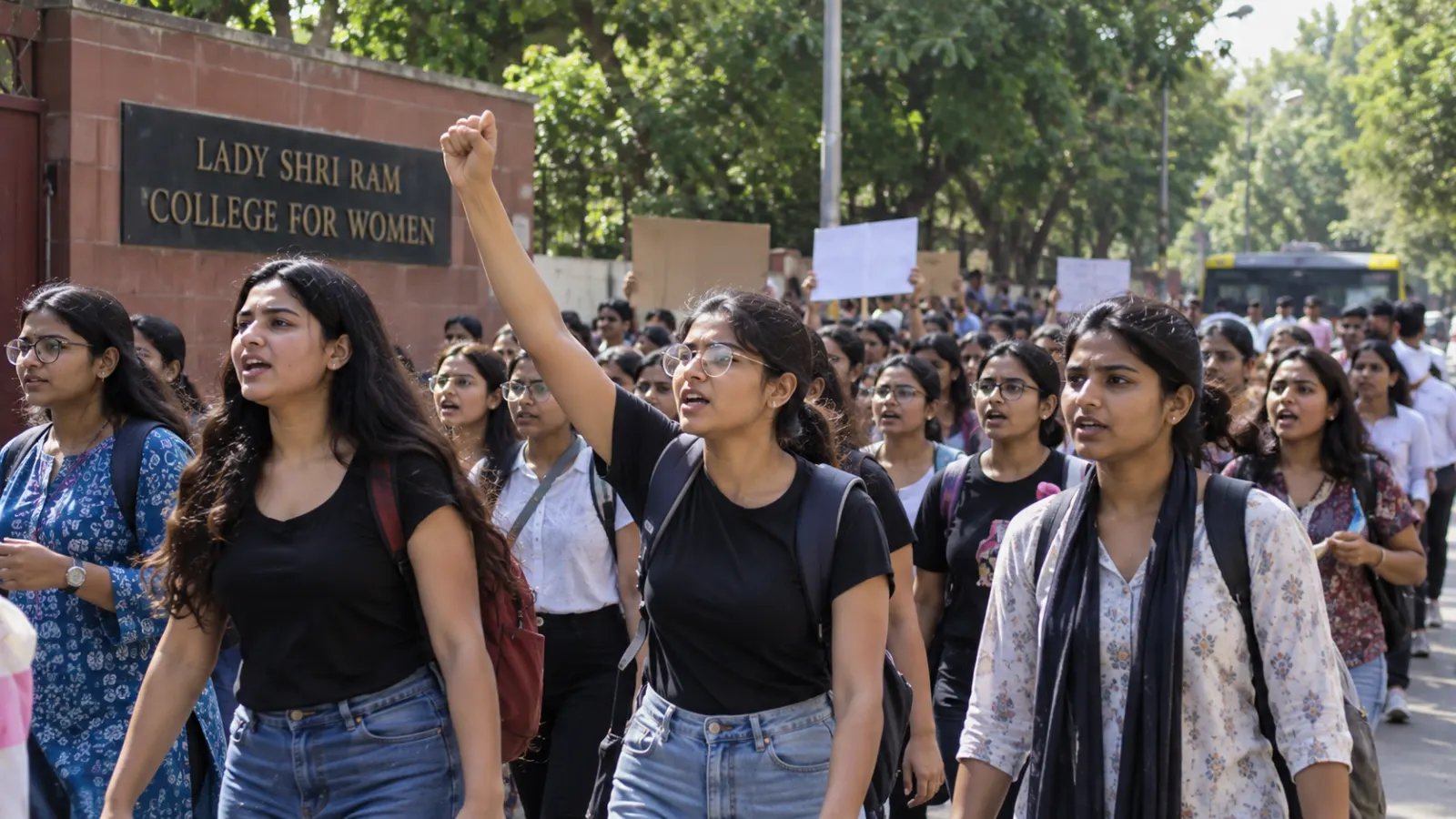
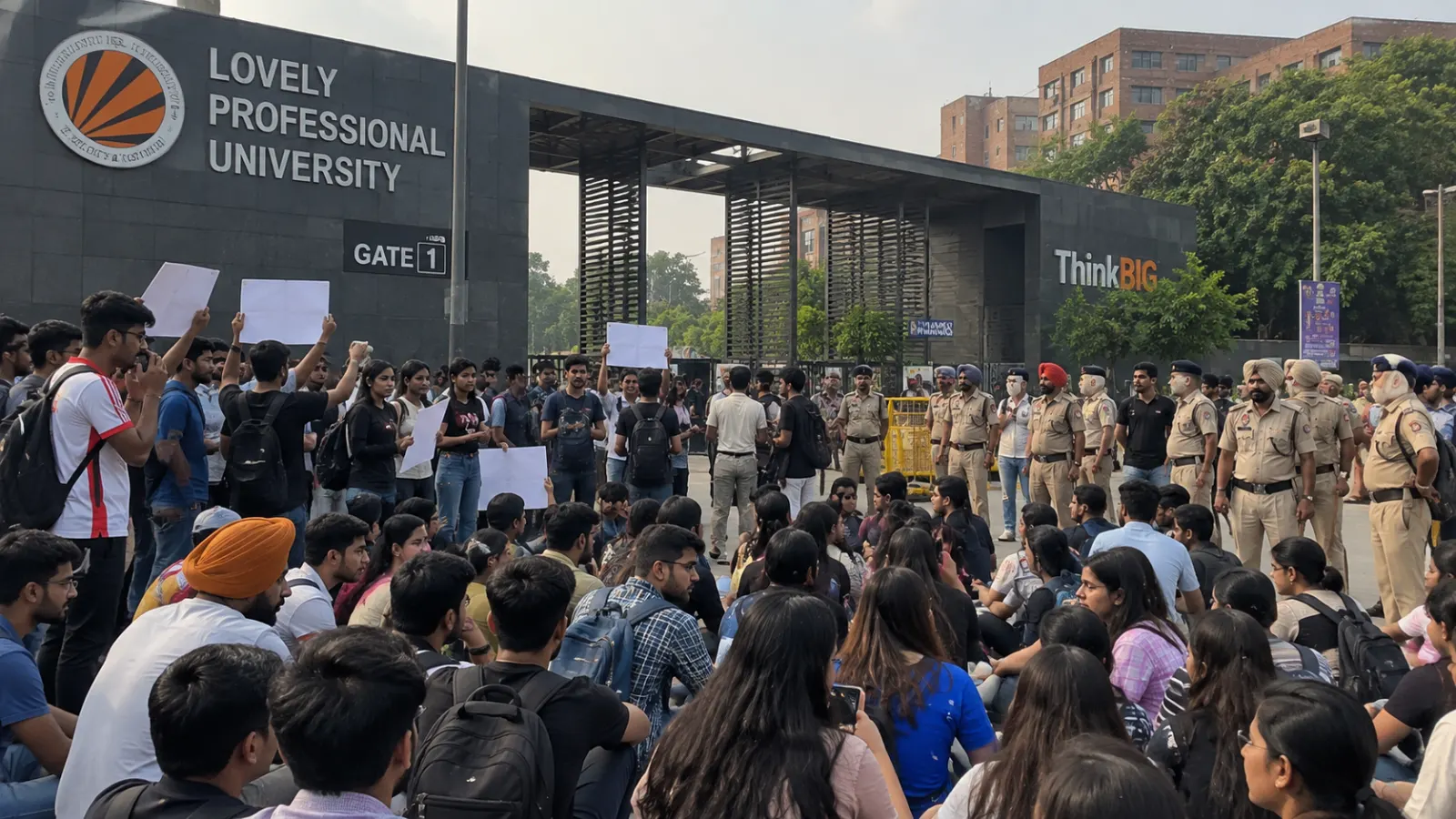
The incident triggered protests involving students from Lady Shri Ram College and other educational institutions.
Students did not limit their demands to punishment for the accused. They raised concerns about conditions around their campuses and public spaces, including dark roads, inadequate police presence, surveillance problems and the functioning of safety infrastructure.
Reports following the incident also drew attention to security weaknesses inside Aastha Kunj Park, including insufficient lighting, surveillance gaps and concerns over patrolling.
These are precisely the kinds of institutional issues now receiving Supreme Court scrutiny.
An arrest deals with an alleged offender after a crime.
Lighting, patrolling and surveillance are intended to reduce opportunities for the crime to happen in the first place.
Both are necessary, but they perform very different functions.
Accountability cannot stop with the person who commits the crime
The person who commits sexual violence bears criminal responsibility for that act.
Institutional accountability is a different question.
Suppose authorities know that a public park contains multiple dark stretches, broken CCTV cameras and poorly monitored entrances. If those vulnerabilities remain unresolved for months and a serious crime later occurs there, asking why those problems were not corrected does not transfer responsibility away from the offender.
It asks whether another layer of failure existed alongside the crime.
The same principle applies to public transportation.
If a commercial bus can travel for a long distance while an alleged assault occurs without detection or intervention, questions may arise about vehicle monitoring, route supervision, driver responsibilities, passenger-safety procedures and enforcement of transport regulations.
Accountability therefore does not necessarily mean finding one government official to blame for every crime.
It means identifying where systems failed, who had authority to fix those systems and whether reasonable preventive steps were taken.
Without that process, every serious incident can produce the same cycle: public outrage, emergency announcements, temporary police deployment and then gradual return to the conditions that existed before.
The uncomfortable comparison with 2012
The 2012 Delhi gang-rape and murder case fundamentally changed public discussion about sexual violence in India.
Mass protests followed. Criminal laws were amended. Sexual-offence definitions were expanded. Penalties were strengthened. Police procedures and public-safety policies received far greater scrutiny.
More than a decade later, the legal landscape is unquestionably different.
Yet the Supreme Court's reference to 2012 highlights a harder question: has institutional prevention improved at the same pace as criminal law?
Stronger punishment matters.
But punishment takes place after someone has already been attacked.
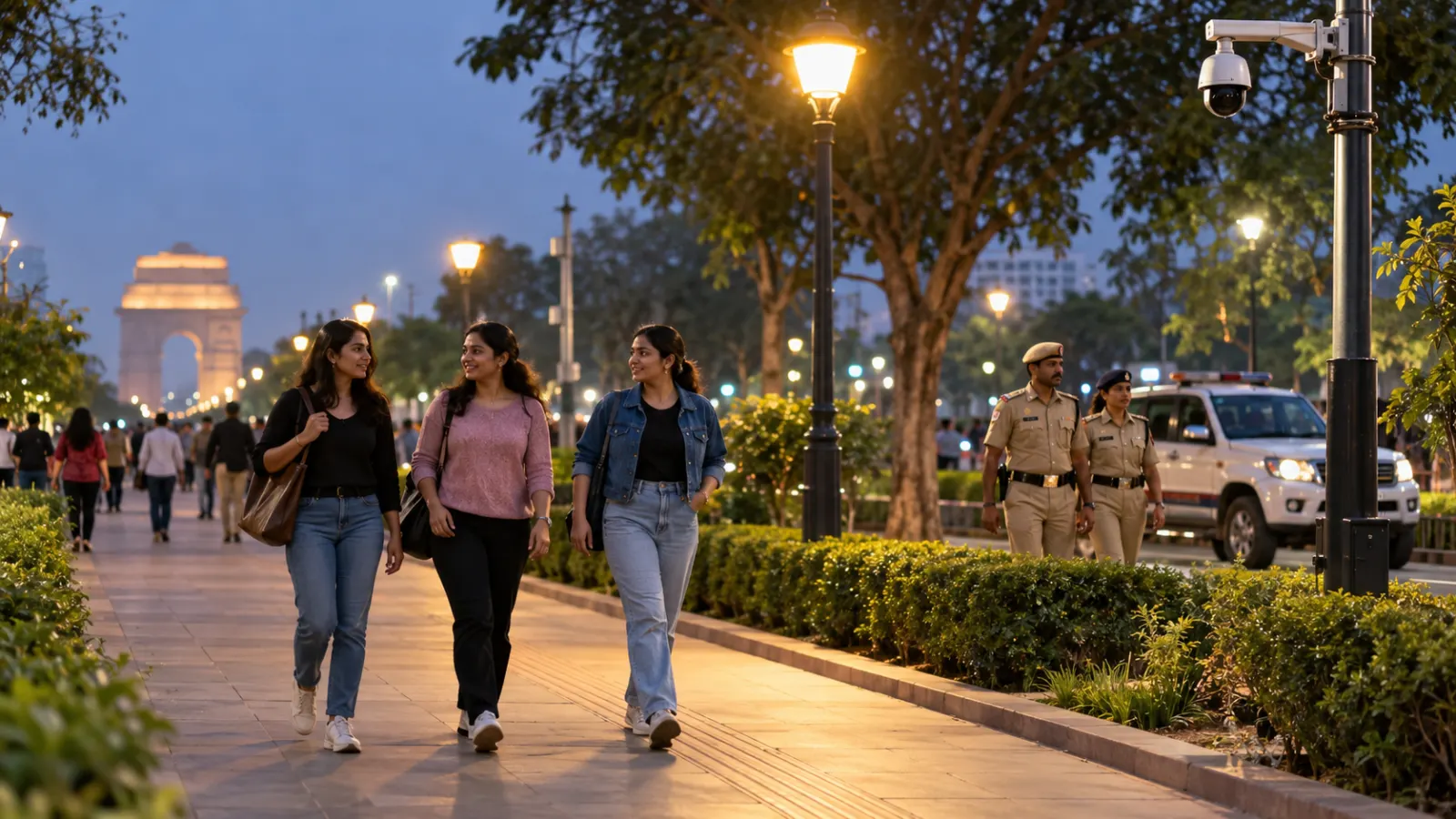
The prevention side of women's safety requires less dramatic but continuous work: functioning lights, safe public transport, reliable emergency response, police presence, properly monitored parks, accountability for security personnel and systems that encourage victims to report misconduct without fear.
These measures rarely attract the same public attention as legislation or arrests.
They may nevertheless have greater influence over everyday safety.
Public spaces cannot become places women are expected to avoid
One of the most important implications of the Court's observations concerns access to public space.
After serious crimes against women, the first response is often precautionary.
Women are advised not to travel late at night.
Students are asked to move in groups.
Families tell daughters to avoid isolated places.
Institutions modify timings.
Authorities may restrict access to parks or other spaces.
Some precautions can reduce immediate risk and may be reasonable during an emergency.
But they create a deeper problem when they become the permanent solution.
If a park is unsafe after dark, the long-term answer cannot simply be that women should stop using the park after dark.
If a road has poor lighting, the solution cannot be that female students should find another road.
If buses cannot be adequately monitored, the response cannot be that women should avoid travelling alone.
A safety system has failed if the only reliable way to remain safe is to surrender access to ordinary public life.
The Supreme Court's emphasis on preventing public spaces from becoming high-risk zones therefore carries a broader principle: safety policy should make environments safer, not merely teach potential victims to avoid them.
Safety measures need to be judged by outcomes
Following the Aastha Kunj case, authorities announced multiple measures involving park safety, lighting, surveillance and patrolling.
Such announcements are common after high-profile incidents.
Their real value depends on whether they remain operational after media attention fades.
A CCTV camera does not improve safety merely because it has been installed. It needs to work, be monitored and retain usable footage.
A police booth provides little value if it is regularly unstaffed.
A streetlight helps only if broken lights are repaired quickly.
A security guard matters only if shifts are actually covered.
A patrol programme matters only if officers consistently cover vulnerable locations.
This distinction between announced safety and functioning safety is essential.
Accountability becomes meaningful when authorities can answer measurable questions.
How many cameras are operational?
How long does it take to repair a broken light?
Which areas receive regular patrols?
Who checks whether security personnel are present?
How many complaints were received from a location before a serious crime occurred?
What action followed those complaints?
Without such information, safety policies can become difficult to evaluate.
The question of prevention goes beyond policing
It is tempting to treat women's safety entirely as a police problem.
Police are clearly central to responding to crime, investigating allegations and deterring misconduct. But many factors affecting safety fall outside traditional policing.
Municipal authorities control streetlights and public infrastructure.
Development agencies may manage parks.
Transport departments regulate buses and commercial vehicles.
Educational institutions control campus gates, hostel policies and security systems.
Private contractors may manage guards and CCTV networks.
Local authorities can influence street design, pedestrian infrastructure and transport connections.
This means that one serious incident may reveal failures spread across several institutions.
If responsibility is fragmented, each agency can argue that the problem belongs to somebody else.
A serious accountability exercise therefore needs to determine not just what failed, but which authority was responsible for preventing that failure.
Technology can help, but it is not the whole solution
CCTV cameras, emergency applications, GPS tracking and digital monitoring frequently appear in women's-safety programmes.
These tools can be valuable.
GPS can help track buses.
CCTV can reconstruct events and sometimes deter misconduct.
Emergency systems can shorten response times.
Lighting technology can make public spaces easier to monitor.
But technological systems are only as effective as the institutions operating them.
A camera that has been broken for six months provides no protection.
GPS data nobody monitors cannot prevent an offence.
An emergency application is of limited value if police response takes too long.
Technology also cannot replace social behaviour, effective policing or institutional accountability.
Sexual violence is not caused simply by the absence of CCTV.
The objective should be to reduce opportunities for offenders, increase the probability of intervention and make it easier for victims to seek help.
Women should not bear the cost of institutional failure
There is a recurring pattern after crimes against women.
A serious assault occurs.
Authorities increase security.
Institutions introduce restrictions.
Families become more protective.
Women change their routines.
Over time, women end up carrying much of the practical cost of the crime.
They return home earlier.
They avoid certain neighbourhoods.
They stop walking alone.
They share their location continuously.
They use more expensive transport.
They give up activities they would otherwise have undertaken.
These decisions can be rational responses to real risks.
But collectively they reveal something troubling.
The offender commits the crime, institutions fail to prevent it, yet women reorganise their lives around the consequences.
A meaningful women's-safety policy should attempt to reverse that burden.
Women will always make individual risk assessments, just as men do. But basic access to streets, parks, universities and public transport should not require women to operate under a permanently different standard of freedom.
Why the Court’s intervention matters
Suo motu intervention by the Supreme Court does not itself solve Delhi's women's-safety problem.
Nor does it establish wrongdoing by any particular public authority before the Court examines the relevant records and responses.
Its significance is that the Court is asking the issue to be examined at a systemic level.
Individual criminal cases ask whether particular accused persons committed particular offences.
A systemic proceeding can ask different questions.
Are recurring patterns visible?
Were known vulnerable locations neglected?
Are transport-safety requirements adequate?
Are existing safety measures actually functioning?
Which agencies are accountable?
What preventive measures should be institutionalised?
Those questions can lead to reforms that affect far more people than the victims and accused involved in the immediate cases.
Accountability should not become symbolic blame
There is also a danger in the word “accountability.”
Public pressure following a horrific crime can produce demands for immediate punishment of officials before the precise institutional failure is established.
That is not necessarily useful.
Effective accountability requires a chain of responsibility.
If lighting failed, who maintained it?
If cameras were non-functional, when did they stop working and who was responsible for repair?
If patrols were inadequate, what was the deployment plan?
If complaints had previously been made, where did they go?
If a bus was not adequately monitored, which regulatory requirement was breached?
The objective should be to identify correctable failures, not merely to produce a public scapegoat.
That distinction matters because institutional learning depends on accurately diagnosing what went wrong.
The next test is what changes after the headlines disappear
Delhi has faced intense debates about women's safety before.
Each major case produces demands for stronger policing, tougher laws and safer infrastructure.
The difficult part is maintaining those systems once public attention moves elsewhere.
The Supreme Court's intervention creates another opportunity to move from reactive safety to permanent accountability.
That means asking whether vulnerable public spaces are regularly audited rather than inspected only after a crime.
It means ensuring cameras and lighting are maintained rather than merely installed.
It means examining whether public transportation can be monitored effectively.
It means evaluating whether students and women can report harassment before it escalates into more serious violence.
Most importantly, it means measuring success not by the number of restrictions placed on women but by whether women can continue using public spaces safely.
The cases currently before the authorities involve serious allegations that must be resolved through investigation and judicial process. The privacy of minors and survivors must remain protected, and guilt must not be presumed before trial.
But the institutional question does not need to wait for every criminal proceeding to end.
Delhi can already ask whether parks, roads, buses and other public spaces are being managed as safely as reasonably possible.
That is the larger significance of the Supreme Court's intervention.
After every serious crime, the country asks what happened to the victim and who committed the offence. The Court is now pressing another question that is equally important for prevention: what failed around them, and who was responsible for fixing it?