What Is Orbital Computing? India’s TakeMe2Space Explained
An Indian space startup is preparing to test a different way of using satellites: instead of sending enormous amounts of raw data back to Earth for analysis, it wants the satellite to process much of that information while still in orbit.
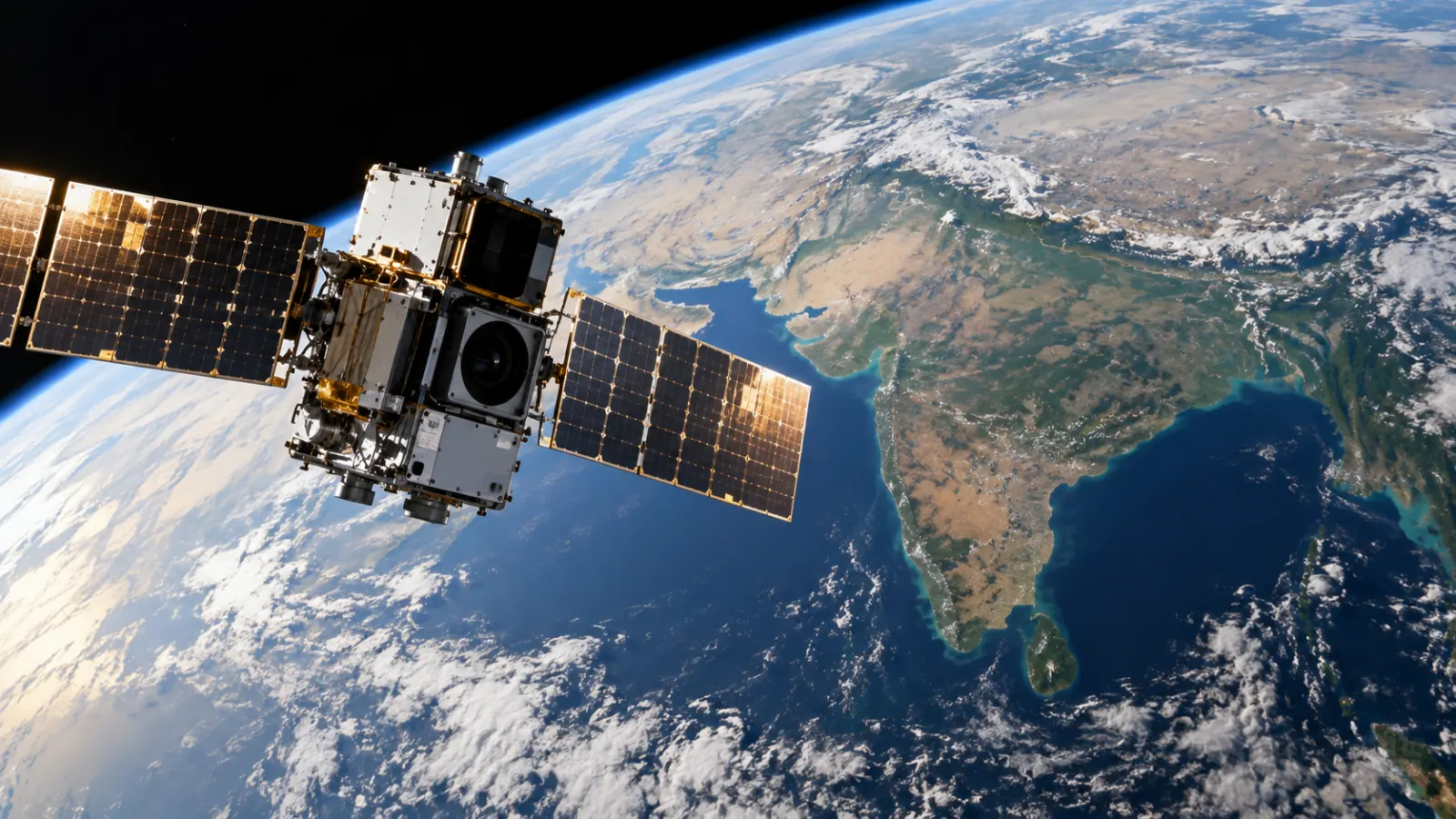
Hyderabad-based TakeMe2Space plans to launch its MOI-1A satellite aboard SpaceX’s Transporter-18 rideshare mission on October 1, 2026. The company describes the spacecraft as India’s first orbital-computing satellite. MOI-1A weighs less than 50 kg and carries Nvidia Orin NX edge-computing processors designed to run artificial-intelligence models directly in space.
The idea sounds futuristic, but the problem it attempts to solve is straightforward. Modern Earth-observation satellites can collect enormous amounts of imagery and sensor data. Sending every image back to Earth consumes bandwidth, takes time and can be expensive. If a satellite can analyse the information first, it can transmit only the useful result.
Instead of downloading thousands of images to determine whether a field is suffering from crop stress, for example, a satellite could potentially run an AI model in orbit and send back a map showing only the affected areas.
That is the basic promise of orbital computing.
What exactly is orbital computing?
Most traditional satellites operate primarily as sensors or communications platforms.
An Earth-observation satellite might photograph agricultural land, forests, oceans or cities. The raw imagery is stored onboard and transmitted to ground stations when the satellite passes over them. Computers on Earth then process the data.
Orbital computing moves part of that processing into the spacecraft itself.
The satellite still collects data, but instead of treating itself mainly as a camera and storage device, it also functions as a small computing platform. Software running onboard can analyse images, identify relevant objects or patterns and decide which information is worth transmitting.
This is similar to edge computing on Earth.
A security camera equipped with artificial intelligence does not necessarily upload every second of video to a remote cloud server. It may analyse footage locally and send an alert only when it detects movement or a specific event.
Orbital computing applies the same concept hundreds of kilometres above Earth.
TakeMe2Space says MOI-1A customers will be able to upload containerised AI models to the spacecraft. As the satellite passes over a specified region, those models can process data onboard and send the resulting analysis to Earth rather than transmitting the complete raw dataset.
That distinction could become increasingly important as satellites generate more data than traditional downlink systems can efficiently handle.
Why not simply download everything to Earth?
Because transmitting data from space is not free or unlimited.
A satellite has limited communication windows with ground stations. Its radio system has limited bandwidth. Electricity is constrained by its solar panels and batteries. Every gigabyte transmitted consumes resources.
High-resolution cameras can generate especially large datasets.
Imagine that a satellite photographs hundreds of square kilometres while monitoring ships in an ocean region. A traditional workflow might require downloading all of those images and then running software on Earth to identify the ships.
An orbital-computing system could instead analyse the images while still in space, count the ships and send down something far smaller: their positions, classifications or a processed map.
The raw imagery might never need to be transmitted.
TakeMe2Space founder and CEO Ronak Samantray told Reuters that the economic argument is strongest for customers currently paying to download large quantities of raw satellite data and then paying again to process it on the ground. Reducing the amount that needs to be downloaded can offset the additional cost of computing in orbit.
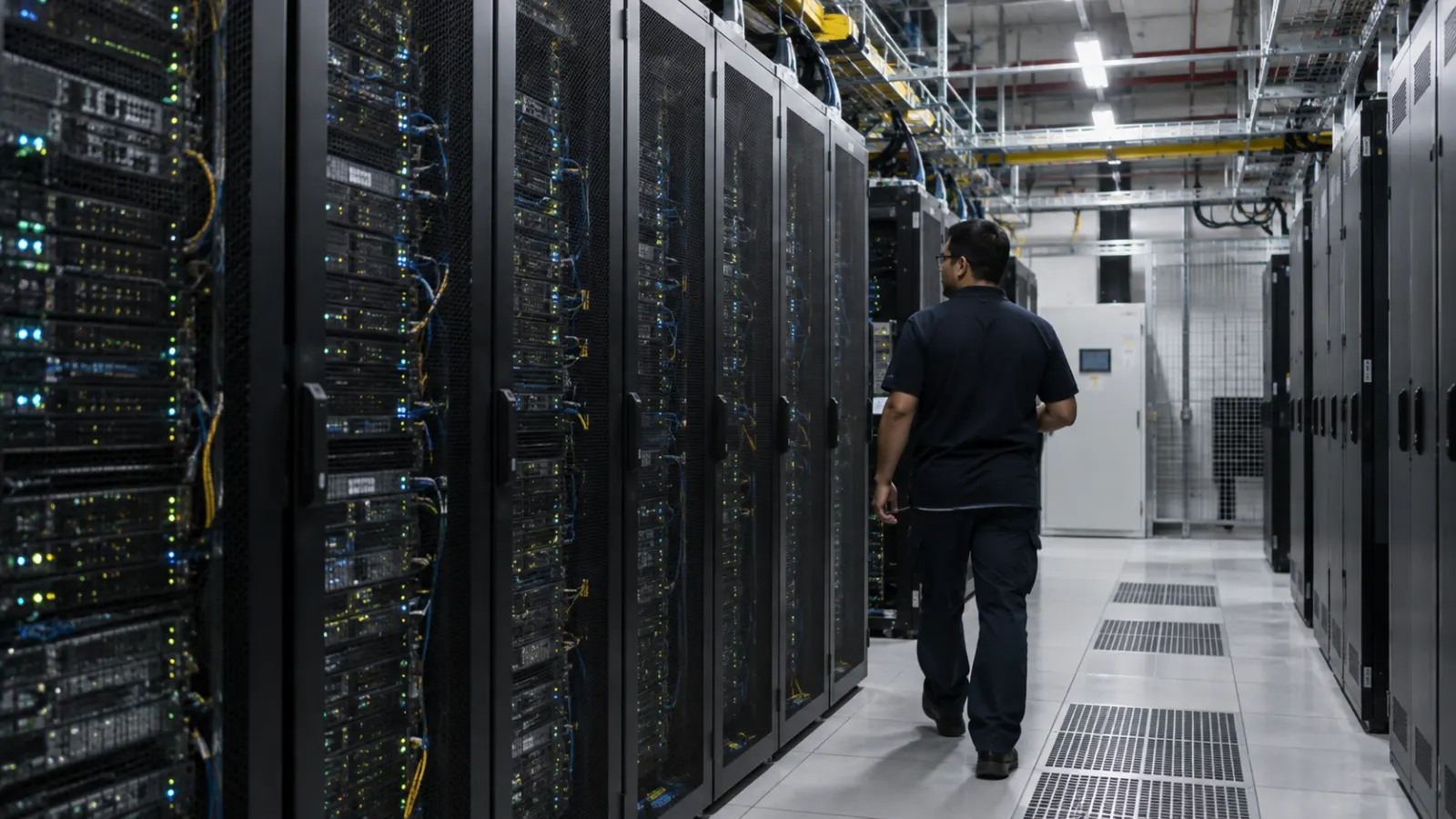
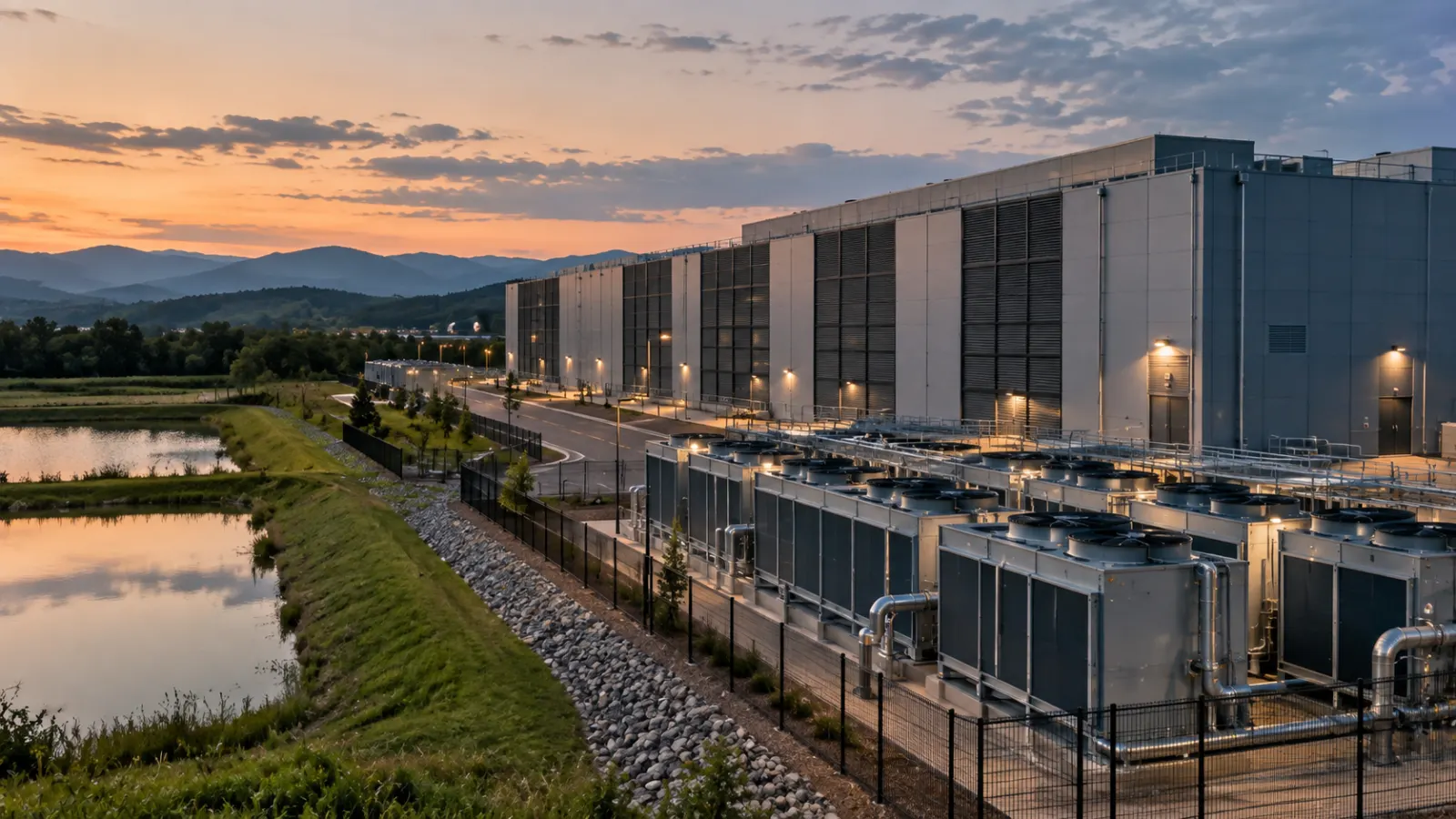
This does not mean Earth-based cloud computing becomes unnecessary. More complex analysis, long-term storage and large AI workloads will still often be performed in terrestrial data centres.
The more realistic near-term model is a combination: process what makes sense in orbit, transmit what is valuable, and perform deeper analysis on Earth when necessary.
What is MOI-1A carrying?
MOI-1A is a relatively small spacecraft weighing under 50 kg.
Its computing system uses Nvidia Orin NX processors, hardware originally designed for edge-AI applications where artificial-intelligence workloads need to run locally rather than entirely in remote data centres.
TakeMe2Space says the spacecraft has roughly 150 watts of available power. That makes it very different from the enormous orbital data-centre concepts being discussed by some companies, which envisage satellites carrying much more powerful computing hardware.
Calling MOI-1A a “data centre in space” would therefore overstate what the spacecraft actually is.
Reuters specifically describes it as an onboard edge-computing satellite rather than a conventional data centre.
That distinction matters.
A terrestrial hyperscale data centre can consume tens or even hundreds of megawatts of electricity. MOI-1A operates with only a tiny fraction of that power.
Its purpose is not to reproduce Amazon Web Services or Google Cloud in orbit. It is to demonstrate that useful AI processing can occur close to where satellite data is generated.
Who would use a computer in space?
TakeMe2Space says it has already signed 23 customers for the MOI-1A mission, including geographic-information-system companies and educational institutions. Commercial users span agriculture, mining, supply-chain management and insurance, according to the company. US space-data analytics company Little Place Labs is also among the customers named by TakeMe2Space.
These industries have something in common: they can benefit from information derived from Earth-observation imagery.
Agricultural companies may want to identify crop stress, irrigation problems or changing vegetation.
Mining companies may analyse terrain and activity around sites.
Shipping and supply-chain businesses could monitor ports, vessels or transportation corridors.
Insurance companies may use satellite analysis after floods, fires or other disasters to assess affected areas.
The value is not necessarily in possessing the original satellite image. Often the customer wants the answer contained within the image.
How many ships are visible?
Which fields appear unhealthy?
Where has flooding occurred?
Has a particular location changed since the previous observation?
Orbital AI attempts to answer those questions before the raw data ever reaches Earth.
Why AI in space could become increasingly important
Satellites are becoming more capable while launch costs have fallen dramatically over the past two decades.
That combination has produced huge growth in the number of spacecraft orbiting Earth and in the amount of data they generate.
But communication bandwidth has not grown without limit.
A satellite may be capable of photographing far more territory than it can conveniently transmit during its available ground-station windows.
Artificial intelligence offers a potential filter.
An onboard AI system could examine hundreds of images and determine that only ten contain information relevant to the mission. Those ten images—or simply the conclusions extracted from them—could then be prioritised for transmission.
This becomes particularly valuable when speed matters.
In disaster response, for example, receiving a processed flood map quickly may be more useful than receiving terabytes of imagery that analysts must still examine.
For defence and security applications, reduced dependence on constant communication with terrestrial infrastructure may also be valuable, although such uses introduce their own security and policy questions.
TakeMe2Space has already tested the basic idea
MOI-1A is not the company's first attempt at in-orbit computing.
TakeMe2Space conducted an earlier technology-demonstration mission in late 2024 that, according to the company, validated its ability to upload applications to a spacecraft, perform AI inference in orbit and download the resulting output.
A later spacecraft called MOI-1 was lost following a launch-vehicle third-stage failure.
That history is important because space startups face a risk that software companies on Earth rarely encounter: even perfectly functioning hardware can be lost because of a launch failure.
MOI-1A therefore represents both a continuation of TakeMe2Space's orbital-computing programme and another opportunity to demonstrate that the technology can operate commercially rather than merely as an experiment.
The company has a much larger plan
TakeMe2Space's ambitions extend beyond one small satellite.
Reuters reported that the company plans to begin deploying larger spacecraft from 2027, with the goal of increasing computing capacity and lowering the cost of orbital processing. Reuters
The company is also planning a more ambitious orbital data-centre demonstration for 2028.
According to The Times of India, that mission is expected to use two approximately 100-kg satellites, each carrying 10 Nvidia Thor GPUs, roughly 100 TB of storage, a one-metre multispectral imaging system and around 1.5 kW of power. Optical links would allow the two spacecraft to exchange data and computing workloads, effectively testing whether multiple satellites can behave as parts of a distributed computer.
This represents a major step beyond MOI-1A.
One satellite processing its own imagery is edge computing.
Multiple satellites sharing data and computational tasks begin to resemble an orbital computing network.
If such systems eventually scale to dozens or hundreds of satellites, space infrastructure could start functioning less like isolated spacecraft and more like distributed cloud infrastructure.
That remains a longer-term possibility rather than an established commercial reality.
Could data centres really move into space?
There are reasons companies are exploring the idea.
Space provides abundant solar energy during much of an orbit. Data generated by satellites could potentially be processed without first travelling to Earth. And orbital infrastructure could offer physically separate backup locations for certain critical information.
TakeMe2Space has said it is also exploring cold storage in orbit for customers including financial-services and defence organisations seeking another backup location outside terrestrial cloud infrastructure.
But putting computing hardware in space introduces enormous disadvantages too.
Launching hardware is expensive.
Repairs are difficult or impossible.
Radiation can damage electronic components.
Cooling electronics in a vacuum requires specialised engineering because heat cannot simply be removed using ordinary air-conditioning.
Power is limited.
Space debris creates physical risks.
And modern processors become obsolete quickly, while a satellite may remain in orbit for years.
For these reasons, orbital computing is unlikely to replace terrestrial data centres.
The more plausible future is that certain workloads migrate into orbit because processing them there provides a specific advantage.
Why SpaceX is launching an Indian satellite
The fact that MOI-1A is travelling aboard a SpaceX Falcon 9 does not mean SpaceX developed the satellite.
TakeMe2Space is using Transporter-18, one of SpaceX's rideshare missions.
Rideshare launches work somewhat like shared transportation. Instead of one customer paying for an entire rocket, multiple satellite operators purchase capacity on the same launch.
This has made access to orbit significantly more practical for smaller companies, universities and research organisations.
A startup building a satellite weighing tens of kilograms does not need to finance a dedicated rocket. It can purchase a slot alongside numerous other spacecraft heading to a similar orbit.
That change in launch economics has been one of the factors enabling the global small-satellite industry to grow rapidly.
TakeMe2Space says most of the satellite's subsystems are designed and manufactured in India, although components including chips, solar cells and propulsion equipment are sourced externally. Reuters
Why the mission matters for India's space industry
India's private space industry has expanded significantly since the government began opening more parts of the sector to private participation.
Companies are now working on rockets, satellites, propulsion systems, Earth observation, communications and space-data services.
Orbital computing represents a different layer of that ecosystem.
Instead of focusing only on building spacecraft or launching them, companies such as TakeMe2Space are trying to build computing services that happen to operate in space.
That can shift the economics of the satellite business.
A traditional satellite company may sell imagery.
An orbital-computing company could potentially sell processed information, AI inference or computing capacity.
The difference resembles what happened in computing on Earth: businesses gradually moved from buying physical servers toward purchasing computing as a service.
Whether that transition can occur economically in orbit remains uncertain, but MOI-1A is an attempt to demonstrate that customers are willing to pay for it.
What will determine whether MOI-1A succeeds?
The first test is simply whether the spacecraft reaches orbit successfully and becomes operational after its October 1 launch.
After deployment, TakeMe2Space will need to show that customers can reliably upload AI workloads, run them onboard and receive useful results.
The company will also need to demonstrate that the economics make sense.
Saving bandwidth is valuable only if the cost of operating computing hardware in orbit does not exceed the savings.
Power efficiency will be critical. So will reliability, radiation tolerance and the ability to update software remotely.
Customer adoption matters just as much as engineering performance.
Twenty-three signed customers show interest in the idea, but orbital computing will become a sustainable industry only if users continue buying capacity after experimental missions become routine.
A satellite is becoming more than a sensor
For decades, the basic model of Earth observation was straightforward: collect information in space and analyse it on Earth.
Orbital computing challenges that division.
A satellite equipped with sufficient computing power can increasingly decide which information matters, analyse it and send down conclusions rather than simply acting as a remote camera.
MOI-1A remains modest compared with the enormous orbital data centres sometimes imagined in technology forecasts. It operates on roughly 150 watts and weighs less than 50 kg.
But that may be precisely why the mission is significant.
It is testing the concept at a scale where a commercial company can actually launch it, find paying customers and learn what workloads make sense in orbit.
If the model works, future satellites may not merely observe Earth.
They may increasingly think about what they see before telling us about it.