Human Memory Existed Before the Archive
For most of human history, societies could not place everything they knew into printed books, searchable databases or audiovisual archives. Yet they remembered.
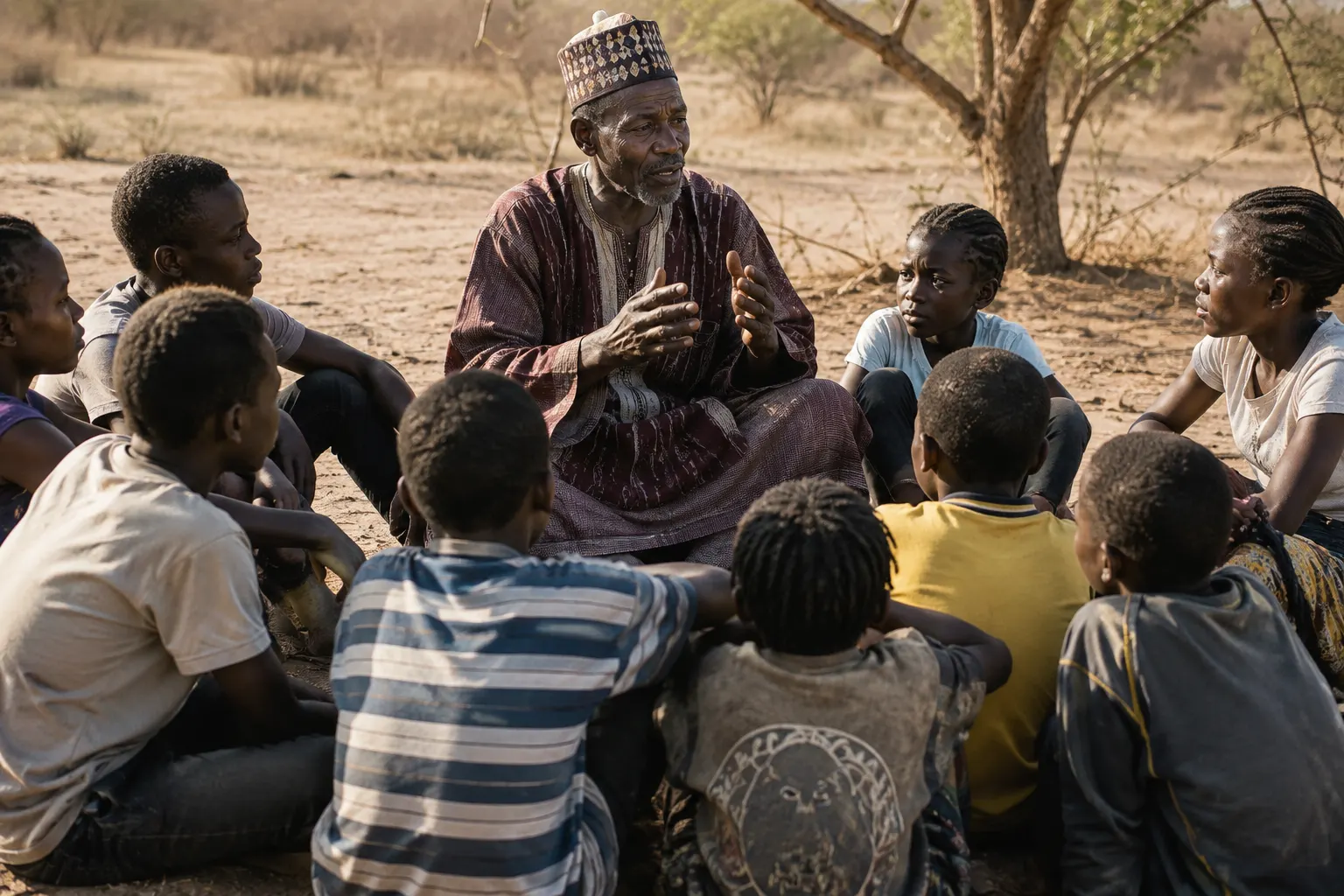
They remembered genealogies, journeys, songs, laws, sacred narratives, farming knowledge, family histories, warnings, remedies, ceremonies and the names of important places. They remembered by speaking, listening, performing and repeating.
That broad process is the world of oral tradition. UNESCO defines oral traditions and expressions broadly enough to include proverbs, riddles, tales, legends, myths, songs, epic poems, prayers, chants and dramatic performances. Their importance lies not merely in entertainment but in transmitting knowledge, social values and collective memory.
The category is therefore much larger than storytelling around a fire. It is an entire technology of cultural transmission.
Oral Tradition Is Not the Same as Oral History
The terms are sometimes confused. Oral tradition usually refers to knowledge or expression transmitted through generations. Oral history, in its modern scholarly sense, usually involves recording people's recollections of events and experiences in which they participated or that occurred within living memory.
An interview with a factory worker describing a strike witnessed in 1980 is oral history. A song about an ancestral migration passed through generations is oral tradition. Sometimes the two overlap, but they answer different questions.
What Can Be Transmitted Orally?
Almost anything that can be encoded into memorable language or performance.
stories
legends and myths
genealogies
songs
prayers
riddles
proverbs
ceremonial speech
agricultural knowledge
place names
historical memories
rules of behaviour
specialist vocabulary
explanations of landscapes and natural phenomena
UNESCO's 2003 Convention formally recognises oral traditions and expressions as one domain of intangible cultural heritage alongside performing arts, rituals and festive events, knowledge concerning nature and traditional craftsmanship. In practice, those categories constantly intersect.
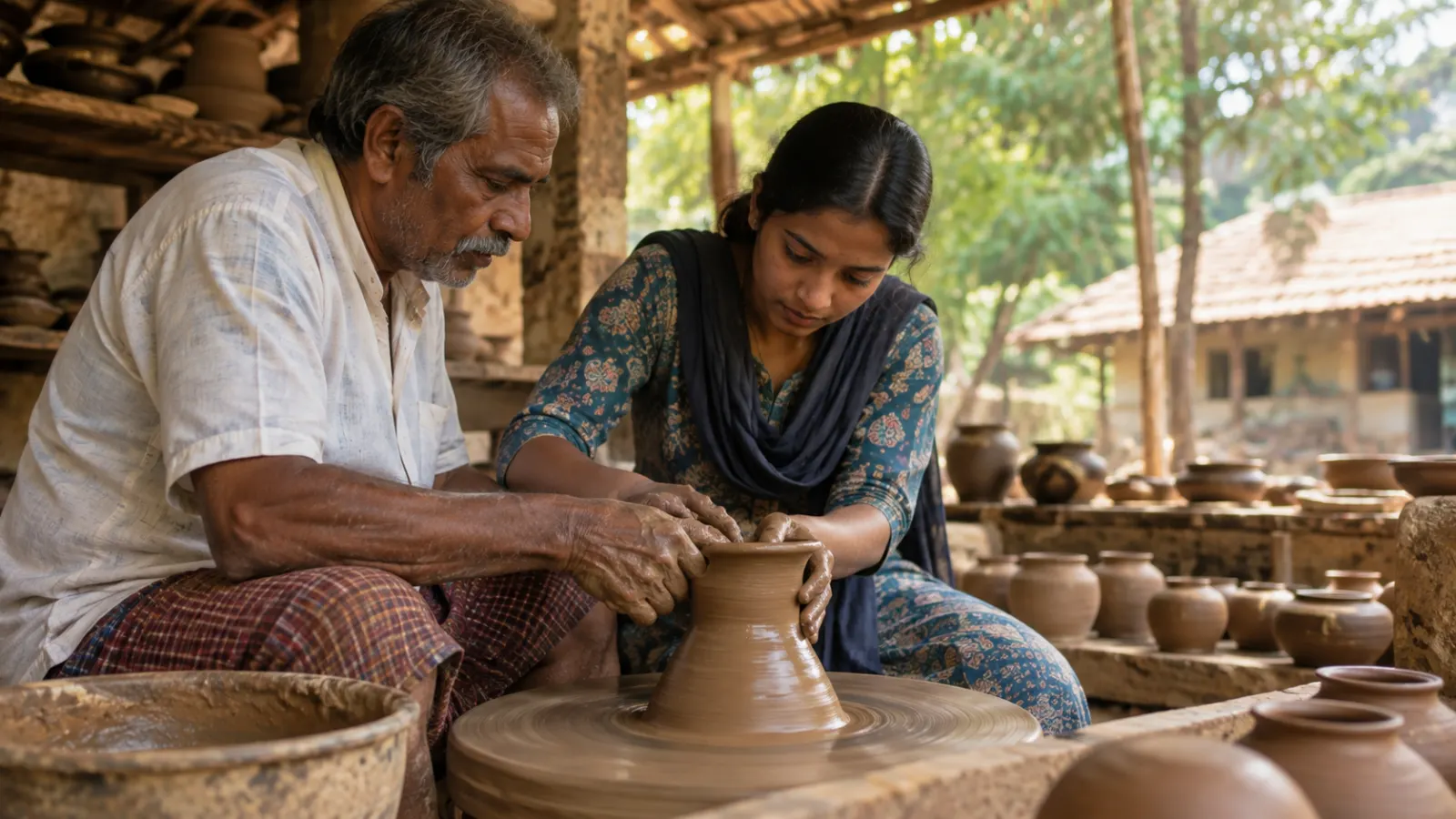
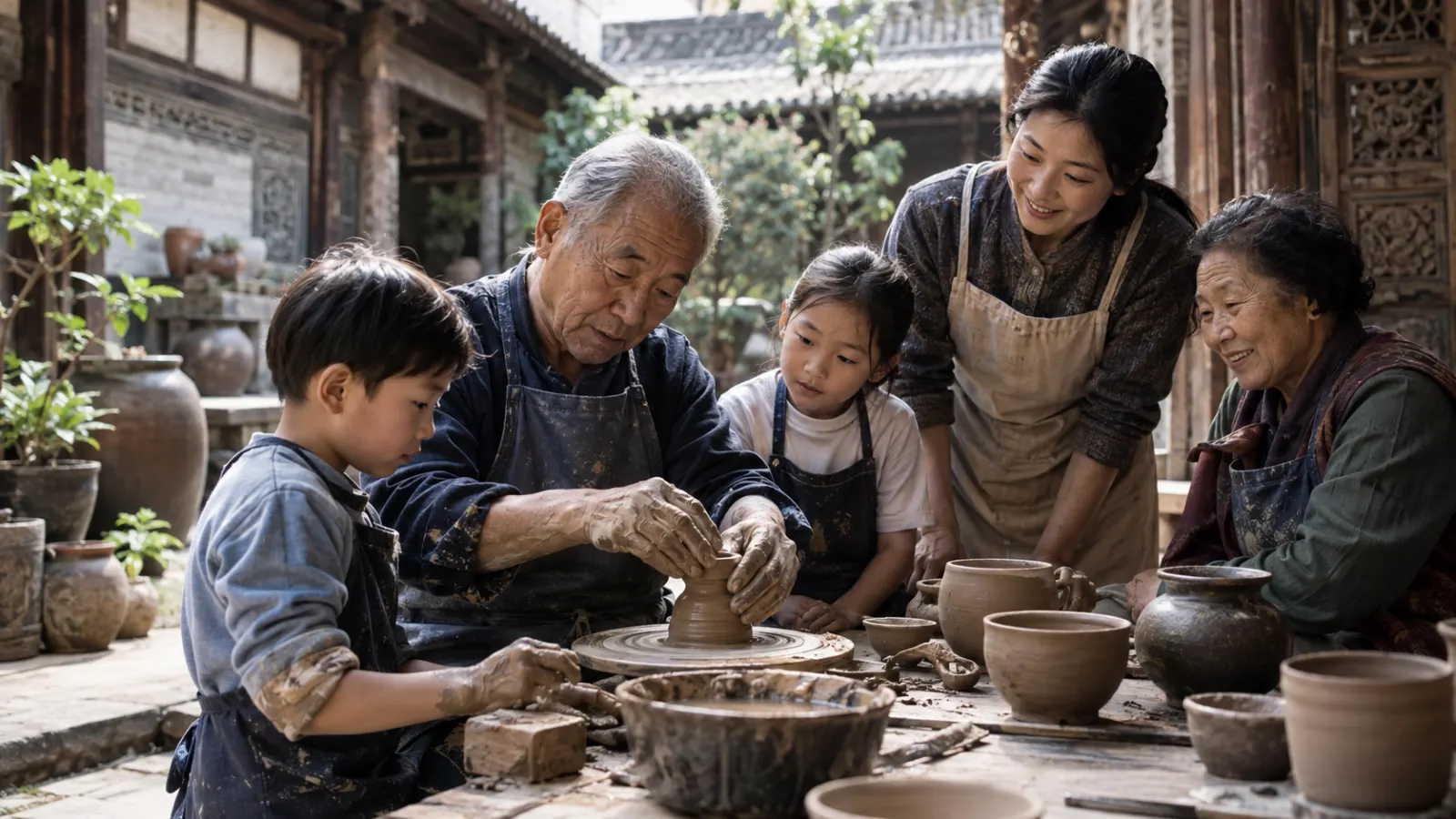
A ritual may require a song. A craft may require spoken instruction. A story may explain access to a sacred landscape. A proverb may encode generations of observation.
Memory Is Supported by Form
A common misconception assumes that an oral society must rely on ordinary conversational memory to preserve enormous amounts of information. Oral traditions frequently develop structures that make memory easier.
Rhythm helps. Repetition helps. Formulaic phrases help. Song helps. Narrative sequence helps. Specialised performers or knowledge keepers help.
The result can be an organised memory system rather than casual recollection. This does not make oral transmission immune to change. It means that communities have techniques for making important knowledge repeatable.
Performance Is Part of the Information
A written transcription captures words. It may not capture the tradition. The meaning of an oral performance can depend on pronunciation, rhythm, gesture, audience participation, facial expression, location and the identity of the speaker.
A proverb delivered as a joke may mean something different from the same sentence delivered as a warning. A ceremonial speech performed at a funeral is not interchangeable with a transcript read silently at home.
This is why safeguarding oral heritage cannot simply mean converting speech into text. Documentation is useful. Continued practice is more important.
Oral Tradition Connects Language and Worldview
Language is not simply a container into which any cultural idea can be poured without loss. Words carry associations. Grammar encodes relationships. Names classify landscapes. Metaphors rely on shared environments. Humour depends on cultural expectations.
When a language disappears, translation may preserve some information while losing other dimensions. Language loss consequently involves more than losing vocabulary. It can disrupt a system through which a community understands itself.
Oral Traditions Are Historical Sources—but Require Method
Can historians use oral traditions as evidence? Yes. But not naively.
Oral accounts can preserve information unavailable in written archives, especially where institutions did not record the experiences of marginalised groups or where the community itself relied primarily on oral transmission.
At the same time, narratives change. Different episodes merge. Chronologies compress. Political circumstances alter interpretation. A later generation may read contemporary concerns into older stories.
None of this makes oral evidence useless. Written evidence has biases too. Researchers therefore compare different versions, linguistic patterns, archaeology, documentary sources, geography and the social circumstances in which narratives were recorded.
Knowledge Lives in People
A library can survive with very few visitors. An oral tradition cannot. Its archive is partly human.
If the last fluent speaker of a language dies without teaching another speaker, recordings may preserve the sound of the language but not recreate a functioning speech community. If only a handful of elders know a ceremonial narrative and younger members no longer learn it, the tradition can disappear within one generation.
This reveals a crucial difference between tangible and intangible heritage. A monument can remain even when people stop using it. A living oral practice survives only if somebody continues doing it.
Schools Can Both Damage and Support Oral Traditions
Formal education has sometimes displaced local languages and knowledge systems by treating them as inferior to nationally dominant languages or written curricula. Colonial and assimilationist systems were particularly destructive in many Indigenous communities.
Education can therefore play either role. It can tell children that inherited knowledge is obsolete. Or it can give that knowledge new spaces to survive. The most effective approach is rarely to move a tradition entirely into a classroom. Community participation remains essential.
Recording Is Necessary—but Not Sufficient
Modern technology has transformed safeguarding. Audio can preserve pronunciation. Video can preserve gesture and performance. Digital archives can store thousands of hours of material. Online platforms can connect dispersed communities.
But documentation creates its own questions. Who owns the recording? Who may hear it? Was consent given for public distribution? Is sacred or restricted material being placed online? Who decides which version is authentic?
A tradition can be damaged by preservation undertaken without the community's authority. The central principle should therefore be community control, not extraction.
Oral Traditions Change Because Societies Change
Safeguarding does not mean freezing a practice at a supposedly pure historical moment. UNESCO's concept of living heritage recognises that traditions are transmitted while also being continually recreated.
A song may acquire new verses. A traditional storyteller may use video. A proverb may be adapted to modern work. Members of a diaspora may transmit a tradition in another language. Children may learn through an app rather than at the gathering where their grandparents learned.
Change does not automatically mean disappearance. The more important question is whether the community still recognises the practice as meaningful and retains agency over its transmission.
Why Oral Traditions Matter
Their importance can be understood at several levels. They preserve collective memory. They connect generations. They transmit local knowledge. They support language. They encode social values. They provide communities with narratives through which to interpret their histories.
And they remind us that literacy and knowledge are not synonyms. A society that writes little can possess highly sophisticated systems of memory. A society that records everything can still forget.
Preservation Versus Continuity
Imagine two outcomes. In the first, researchers record the final expert performer of an oral epic. The recording is stored permanently in an archive. No one in the community learns to perform it.
In the second, the epic changes slightly as younger performers adopt it, shorten parts, alter its language and present it in new settings.
Which tradition survived? From an archival perspective, the first case produced excellent preservation. From the perspective of living heritage, the second may represent stronger continuity.
Oral traditions are not important because they are old. They are important because they remain relationships between people: speaker and listener, elder and learner, performer and audience, past and present.
The most secure future for an oral tradition is therefore not simply to record it. It is to make sure someone still has a reason to tell it—and someone else still wants to listen.