Intangible Cultural Heritage: How Living Traditions Survive
Heritage does not always exist in stone, manuscripts or museum collections. Some of the most important things communities inherit cannot survive independently of the people who know how to practise them. A song tradition exists because people continue singing it. A craft survives because someone still possesses the knowledge and can teach another person. A ritual remains living because communities recognise, perform and reinterpret it. Oral histories depend on telling, languages on speaking, and traditional ecological knowledge on people who understand how to apply it in particular landscapes.
This is what makes intangible cultural heritage different from heritage that can primarily be conserved as a physical object. UNESCO's 2003 Convention defines intangible cultural heritage as practices, representations, expressions, knowledge and skills—along with associated instruments, objects, artefacts and cultural spaces—that communities, groups and sometimes individuals recognise as part of their cultural heritage. Crucially, the Convention says that this heritage is transmitted between generations while being continually recreated in response to environment, history and interaction with nature.
That final point is essential. Living heritage does not survive because every generation reproduces an exact historical version. It survives because enough knowledge, meaning and social participation remain for people to continue making the tradition their own.
Safeguarding therefore cannot mean turning culture into a museum exhibit. It means sustaining the relationships through which people learn, practise, value and transmit it.
Intangible heritage includes practices, knowledge and relationships
UNESCO identifies five broad domains of intangible cultural heritage: oral traditions and expressions; performing arts; social practices, rituals and festive events; knowledge and practices concerning nature and the universe; and traditional craftsmanship. These categories are useful, but actual cultural practices rarely fit neatly into one of them.
A festival may contain music, dance, food traditions, religious practice, costume-making, storytelling and specialised craft. A traditional fishing practice may combine environmental knowledge, vocabulary, boat-building skills, social organisation and seasonal ritual. A craft may depend not only on manual technique but also on knowledge of where materials come from, how they behave and which designs carry particular social meanings.
Living heritage is therefore often a system of relationships, not a single performance or object.
This helps explain why displaying the final product of a craft in a museum does not automatically preserve the craft itself. A woven textile can survive for centuries under controlled conditions while the knowledge required to produce it disappears within one generation.
The distinction between product and practice matters.
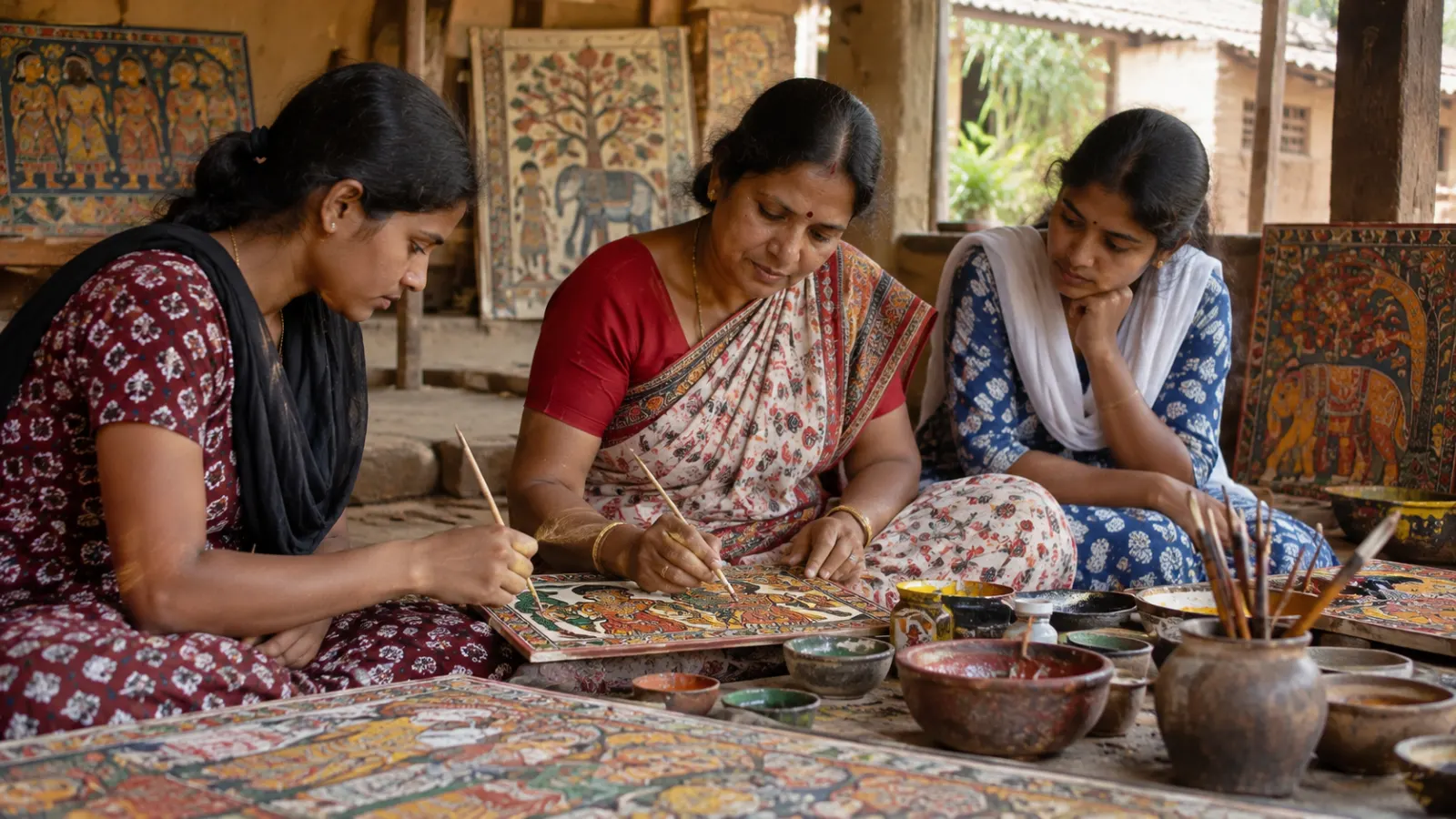
If an experienced artisan knows how to choose fibres, prepare them, judge tension by touch, adjust a pattern during production and teach those decisions to a learner, much of the heritage exists in embodied knowledge that is difficult to capture completely in written instructions.
The same applies to language. A dictionary can preserve vocabulary. Audio recordings can document pronunciation. Written archives can provide invaluable evidence for future researchers. Yet none of these alone creates speakers who use the language in family life, humour, argument, work and everyday conversation.
Documentation preserves information about a tradition. Transmission keeps the tradition socially alive.
Transmission is the central challenge
UNESCO's definition of safeguarding includes identification, documentation, research, preservation, protection, promotion, transmission through formal and non-formal education, and revitalisation. But among these activities, transmission is particularly important because intangible heritage must move between people if it is to remain living practice.
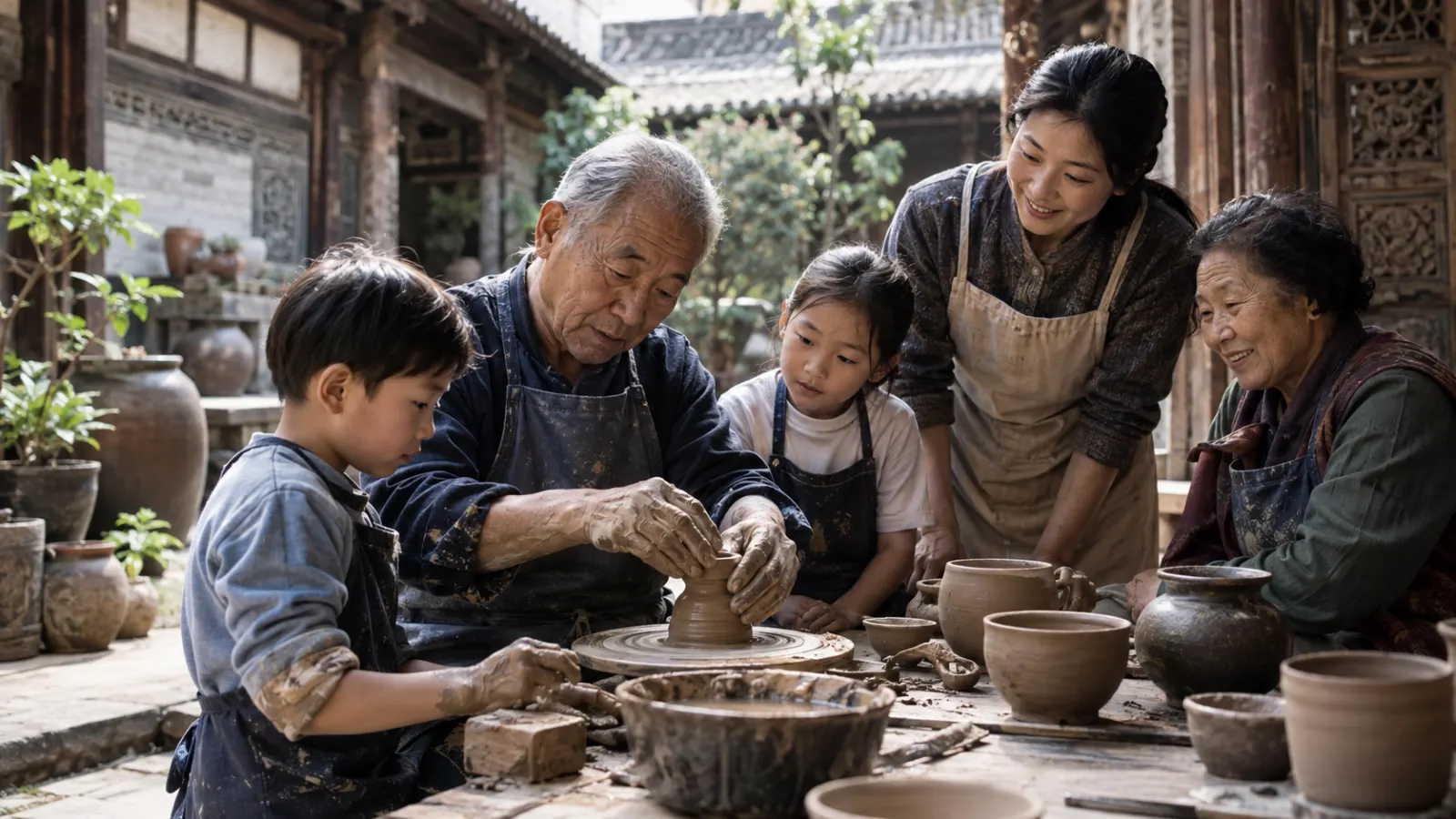
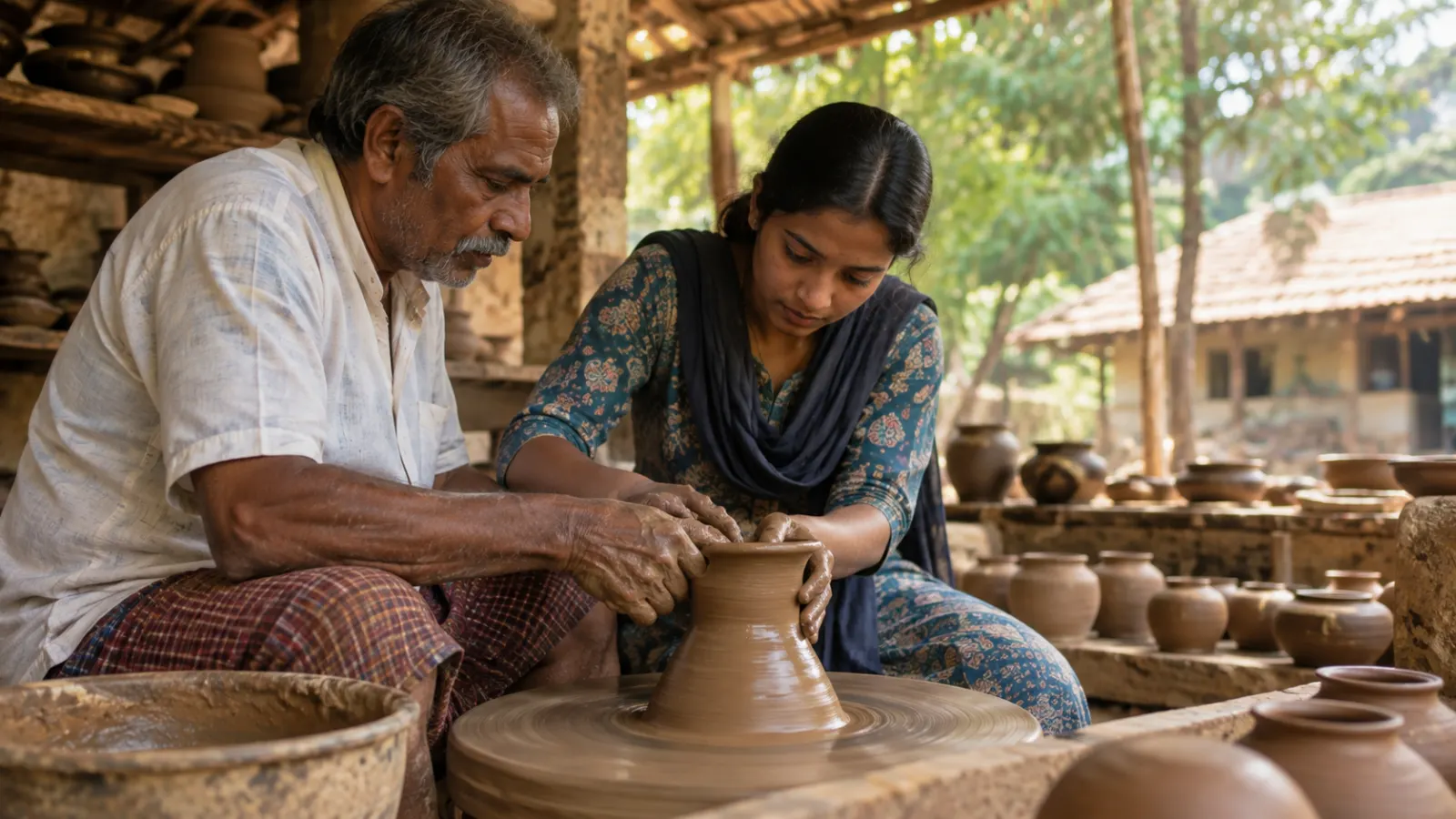
Transmission can occur through formal apprenticeship, but much of it is informal.
Children watch adults prepare food for a festival. A musician learns by listening and participating before receiving formal instruction. A craft apprentice copies the movements of an experienced practitioner. Knowledge about plants, weather or seasonal work is learned through repeated activity rather than through a textbook.
These methods transmit more than technique. They carry timing, judgment, social roles, stories and forms of behaviour that may be extremely difficult to describe explicitly.
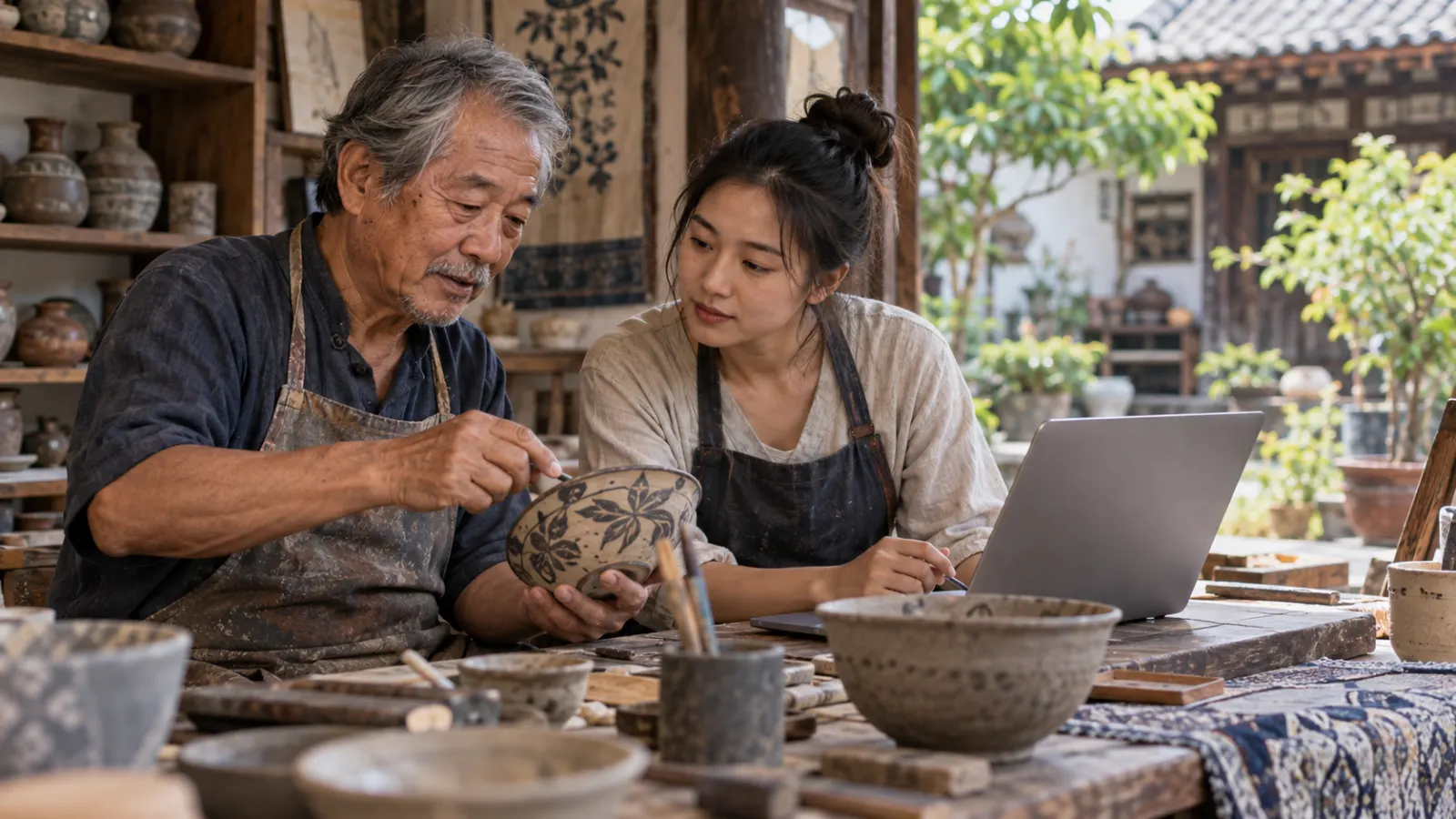
Formal education can support transmission when ordinary pathways weaken. Schools can introduce local languages, music, oral histories and crafts to younger generations. Community centres can host practitioner-led training. Digital resources can connect learners with teachers who live elsewhere.
But formalisation also introduces risk.
A tradition containing many regional or family variations may be reduced to one standard curriculum. One performance can become the “official” form because it is easiest to teach or examine. Knowledge that was historically learned through participation can become detached from the social setting that gave it meaning.
UNESCO's education work consequently emphasises community-based heritage and the involvement of heritage bearers themselves in formal and non-formal learning.
The aim should not simply be to teach students about living heritage. Where appropriate, it should help create conditions in which people can actually learn to practise it.
Safeguarding does not mean freezing culture
One of the most important principles in UNESCO's approach is that safeguarding should not fix intangible cultural heritage into a supposedly pure, primordial or original form.
UNESCO states explicitly that living heritage must remain relevant to its communities, be continuously recreated and be transmitted across generations. Safeguarding is primarily about transferring knowledge, skills and meaning rather than preventing all change.
This matters because cultural practices have always adapted.
Materials become scarce or expensive. People migrate. New technologies change how knowledge is shared. Performance spaces disappear or move. Religious interpretations change. Younger practitioners introduce different aesthetics. Communities develop new occupations and schedules.
A tradition unable to respond to any of these changes may become increasingly difficult to practise.
Consider a craft that historically relied on a material that has become environmentally scarce. Insisting that only the historical material counts as authentic may eventually eliminate the craft altogether. Practitioners might instead experiment with another material while preserving characteristic techniques, forms and knowledge.
Which version is more authentic?
There is no universal mechanical test.
For living heritage, continuity may lie more strongly in technique, lineage, social meaning, purpose or practitioner recognition than in exact visual replication.
This does not mean that every newly invented practice can be marketed as ancient tradition. Historical claims still require evidence. Commercial organisations can appropriate cultural forms and manufacture false stories about authenticity.
The point is narrower: change itself does not automatically make a living tradition inauthentic.
Sometimes adaptation is exactly what makes continuity possible.
Communities must have meaningful control over safeguarding
The 2003 Convention places communities, groups and individuals who create, maintain and transmit intangible cultural heritage at the centre of safeguarding. Article 15 asks states to ensure their widest possible participation and involve them actively in management.
This represents an important shift in heritage thinking.
An older model can imagine experts arriving in a community, deciding that a particular practice is culturally valuable, documenting it and designing a preservation programme. In that model, practitioners become sources of information while institutions retain authority.
Living heritage requires a different relationship.
People who practise a tradition may know which aspects are public and which are private. A ritual may be important precisely because participation is restricted. Sacred knowledge may not be intended for publication. A craft technique might have commercial value for practitioners who do not want it reproduced freely by companies elsewhere.
Greater visibility is therefore not always the same as better safeguarding.
UNESCO's guidance notes that safeguarding measures should be developed with community consent and involvement and must respect customary restrictions governing access to particular forms of heritage, including sacred or secret practices.
This principle has practical consequences for researchers, museums, tourism agencies and digital archives.
Who authorised the recording?
Who owns the resulting files?
Who can access them?
Can photographs be used commercially?
Should every detail of a sacred practice appear online?
Do practitioners share in revenue when their cultural knowledge becomes a marketable product?
Safeguarding can become another form of extraction when institutions gain prestige, research material or tourism revenue while practitioners lose control over how their culture is represented.
Community participation also should not be simplified into consultation with one leader. Communities contain disagreements involving generation, gender, class, religion, status and economic interest. Practitioners themselves may disagree about how a tradition should change.
Good safeguarding does not assume unanimous communities.
It creates credible processes through which the people carrying the heritage can participate in deciding its future.
Recognition and listing can help—and can also change what is being protected
National and international heritage lists can provide significant benefits.
Recognition can attract public attention, funding, training and institutional support. A tradition previously treated as backward may gain prestige. Younger people may become more interested in learning it. Governments may devote resources to documentation and transmission.
UNESCO's Representative List of the Intangible Cultural Heritage of Humanity exists partly to increase visibility, awareness and dialogue around cultural diversity.
But recognition can alter incentives.
Once a festival attracts international attention, tourism may expand. Sponsors may demand predictable schedules and visually appealing performances. A complex local tradition may be compressed into something that fits a stage programme. One version may become the “official” version because it appears in a nomination file while local variations become less visible.
Crafts can face similar pressures. Increased demand may provide valuable income but encourage faster production, standardised designs or materials chosen primarily for tourist markets.
This does not make recognition harmful.
It means safeguarding has to ask what happens after recognition.
Does publicity strengthen transmission?
Do practitioners gain meaningful economic benefit?
Are local variations still respected?
Has the practice become easier for community members to continue, or mainly easier for visitors to consume?
Heritage can survive visually while losing the social relationships that once made it meaningful.
The original draft captures this risk particularly well: listing can raise awareness and funding while simultaneously creating pressure to standardise practice around the version recognised by institutions.
Economic viability matters because praise cannot sustain a practice by itself
Communities cannot maintain every form of living heritage through cultural pride alone.
A craft may require weeks of highly skilled labour but earn less than factory work. Musicians need places to perform. Festivals require organisation and resources. Traditional ecological knowledge may depend on access to forests, grazing lands, rivers or coastal environments. A language may lose speakers when parents believe another language offers their children better educational or economic opportunities.
Safeguarding therefore has an economic dimension.
Training can help younger practitioners learn. Fair market access can improve craft livelihoods. Legal protections can protect access to important resources. Community institutions can create performance opportunities. Public funding can support traditions that provide social value even when they cannot survive through commercial sales alone.
But commercialisation creates its own risks.
If artisans become dependent entirely on tourist demand, they may increasingly produce what visitors expect rather than what their own communities value. Rituals can become scheduled entertainment. Complex cultural meanings may be simplified into marketable stories.
The question is therefore not whether living heritage should be economically useful.
Many traditions have always been connected with livelihood.
The question is whether economic activity supports practitioners' capacity to continue and shape their heritage or gradually transfers control to markets, intermediaries and outside institutions.
Globalisation creates both sides of this problem.
Cheap industrial products can reduce demand for handmade goods. Migration can weaken local apprenticeship networks. Mass media can reduce everyday use of minority languages.
Yet the same processes can create new opportunities. Diaspora communities can sustain festivals and languages across borders. Online teaching can connect practitioners and learners. Digital marketplaces can create new customers for specialised crafts.
Technology and markets are therefore not inherently threats or solutions.
Their effect depends partly on who controls them and who receives the benefits.
Climate change shows that intangible heritage still depends on the material world
Calling heritage “intangible” can misleadingly suggest that it exists independently of physical environments.
Many living traditions depend on very specific ecological conditions.
Crafts require particular woods, fibres, clays, plants or dyes. Fishing traditions depend on species and seasonal patterns. Pastoral knowledge depends on landscapes and water availability. Agricultural festivals may follow planting or monsoon cycles. Oral traditions can be deeply connected with specific mountains, rivers or forests.
Climate change can therefore threaten intangible heritage even without destroying a monument.
Changing rainfall can alter agricultural calendars. Species movement can undermine fishing knowledge. Drought may remove materials needed for craft. Displacement can separate communities from landscapes around which memory and ritual were organised.
Safeguarding may consequently require environmental conservation and adaptation alongside cultural programming.
A workshop teaching a traditional craft has limited value if the material required to practise it has disappeared. Recording pastoral knowledge cannot fully preserve the relationship if communities lose access to grazing land.
This demonstrates why UNESCO's Convention recognises the interaction between intangible heritage, nature and cultural spaces rather than treating practices as detached performances.
Living heritage is carried by people, but those people live in material environments.
Documentation is valuable when it strengthens transmission and community control
Recording endangered knowledge can be enormously important.
When practitioners are ageing, languages are losing speakers or landscapes are changing rapidly, audio recordings, films, photographs, written descriptions and three-dimensional documentation can preserve information that might otherwise disappear entirely.
Archives can also support revival.
A later generation may use historical recordings to relearn songs. Craft documentation can help apprentices understand older techniques. Diaspora communities can reconnect with cultural material held elsewhere.
But documentation works best when it is integrated with transmission rather than treated as a substitute for it.
A perfectly catalogued archive can coexist with the disappearance of the living practice it describes.
Who controls the archive also matters.
If recordings made in a community are stored only in an overseas university that community members cannot access, documentation may preserve scholarly information while doing little for local transmission. Community copies, accessible metadata, agreed access rules and practitioner involvement can make archives much more useful.
Ethical questions become particularly serious when documentation exposes restricted knowledge.
Digitising something does not create an automatic obligation to make it universally available.
Some heritage may be sacred, private or appropriate only for particular groups. UNESCO's Convention itself calls for access while respecting customary practices governing access to specific aspects of intangible heritage.
The objective should therefore not be maximum documentation at any cost.
It should be responsible documentation that preserves evidence while respecting the people whose knowledge is being recorded.
Living heritage does not have to survive forever
Safeguarding discussions can accidentally imply that every inherited practice must continue indefinitely.
That would conflict with the central idea of living culture.
Communities change. Values change. Environments change. People may decide that a practice no longer carries sufficient meaning to justify continuing it. Younger generations cannot ethically be forced to perform identities simply because institutions have designated those identities as culturally important.
UNESCO's own safeguarding guidance recognises this. It notes that some forms of intangible cultural heritage may disappear because communities themselves no longer regard them as relevant or meaningful and that safeguarding does not require revitalising every practice at any cost.
This creates an important distinction between voluntary cultural change and avoidable cultural destruction.
A language disappearing because speakers freely adopt another under conditions of equal respect is different from a language disappearing because children were punished for speaking it. A craft abandoned because a community no longer values it is different from a craft disappearing because practitioners cannot access materials or receive fair compensation. A ritual evolving internally is different from outsiders banning it without community participation.
Safeguarding should preserve capacity and choice, not demand permanent reproduction.
People have a right to inherit culture.
They also have a right to change it.
Intangible cultural heritage survives when people can keep recreating it
The phrase intangible cultural heritage can make living culture sound abstract. In reality, its survival depends on very practical conditions: teachers and learners, time, materials, spaces, livelihoods, language use, community recognition and access to the environments in which knowledge makes sense.
UNESCO's framework captures this through three connected principles.
Heritage is transmitted.
It is continually recreated.
And the communities, groups and individuals who maintain it should participate meaningfully in decisions about its safeguarding.
These principles prevent preservation from becoming simple nostalgia.
A living tradition does not need to remain exactly as it looked a century ago. Nor does every tradition have to continue forever. The aim is to prevent unnecessary loss while preserving enough knowledge, agency and social infrastructure for communities to decide what their inheritance should become.
Documentation matters, but a recording cannot replace practitioners.
Recognition matters, but a heritage list cannot create community commitment.
Tourism and markets can provide income, but commercial visibility cannot substitute for cultural meaning.
Education can support transmission, but a curriculum cannot replace the social relationships through which much traditional knowledge is learned.
The most successful safeguarding therefore protects more than the visible performance.
It protects the conditions under which people can continue learning, practising, questioning and adapting what they inherit.
Intangible cultural heritage survives not when the past is reproduced perfectly, but when communities retain enough knowledge and freedom to make that past meaningful in the present—and enough opportunity to pass something living into the future.