Tradition and Progress: How Societies Decide What to Preserve and Change
Public debate often presents tradition and progress as opposite directions. One side is associated with continuity, inherited values and respect for the past; the other with reform, innovation and movement toward the future. That picture is too simple. Every functioning society depends simultaneously on things it inherited and things earlier generations changed.
Language, law, food, architecture, family customs, political institutions and religious practices are transmitted across generations, but none remains completely untouched. Many traditions now described as ancient were once innovations, and some acquired their present form surprisingly recently. Progress is equally dependent on inheritance: modern science builds on earlier research, constitutional government relies on accumulated legal rules, and new technologies emerge from long chains of previous discoveries.
The important question is therefore not whether society should choose tradition or progress. It is how to decide what deserves continuity, what can be adapted and what should be abandoned. That requires more than asking whether a practice is old or new. It requires examining what purpose it serves, whose interests it affects, whether its original conditions still exist and whether better alternatives are now available.
Tradition can preserve knowledge, identity and useful social coordination
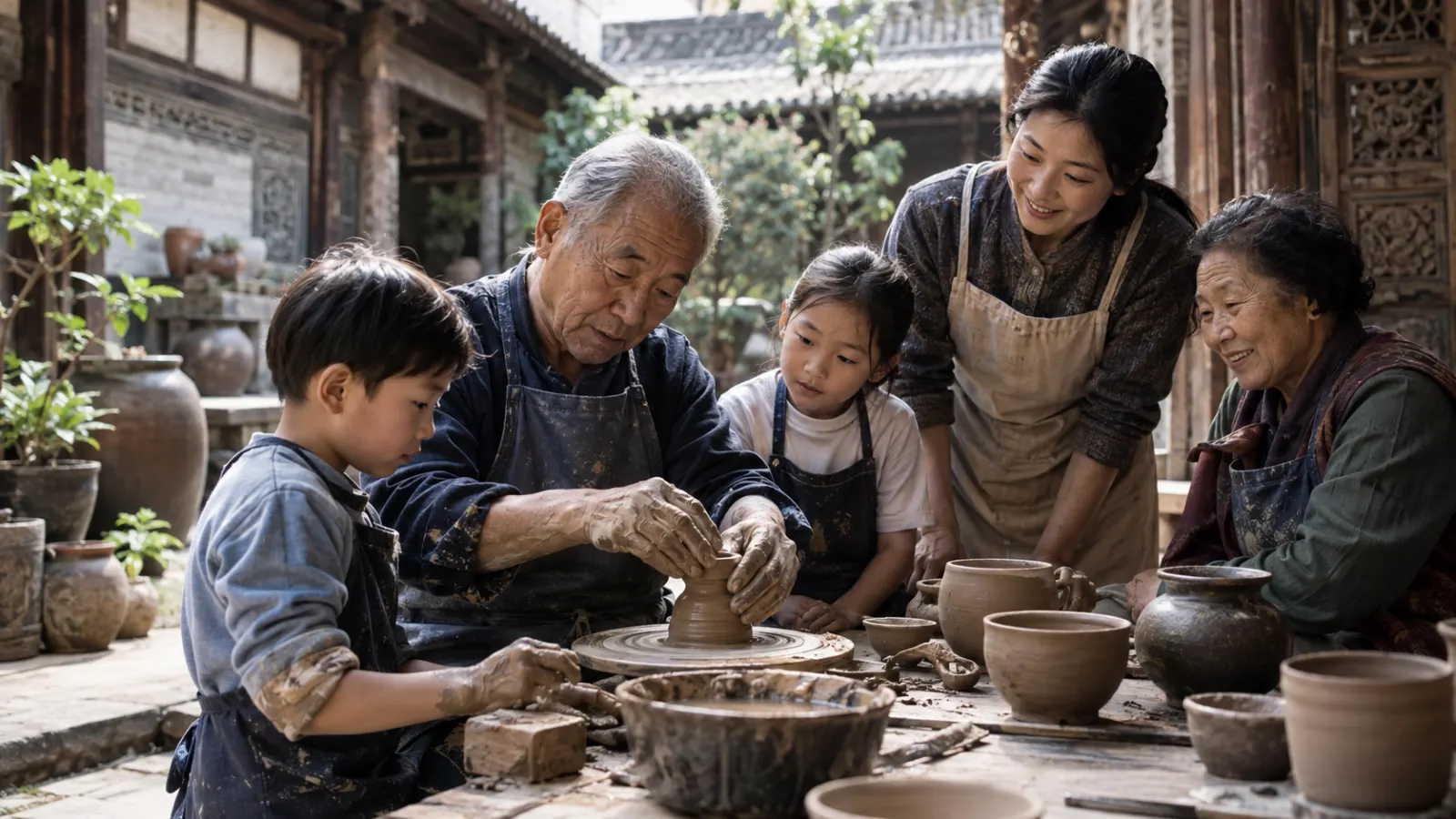
Tradition gives people more than repetitive behaviour. It can provide memory, identity and a shared vocabulary for important events. Rituals help communities mark birth, adulthood, marriage, death and collective remembrance. Traditional crafts can preserve technical knowledge that would be expensive or impossible to reconstruct once the chain of transmission disappears. Legal and institutional traditions can create stability by allowing people to anticipate how decisions will be made.
Inherited practices also reduce the burden of constantly redesigning social life. Communities do not need to invent every ceremony, rule or method from the beginning. Existing practices provide defaults that later generations can accept, modify or reject.
Some traditions also contain practical knowledge accumulated through repeated observation. Agricultural calendars may incorporate generations of experience with rainfall and seasonal conditions. Traditional water-management systems can reflect detailed knowledge of local landscapes. Craft techniques may embody material understanding that was never formally written down. Food preservation methods often developed in response to specific environmental and resource constraints.
Rejecting such practices simply because they are old can destroy useful information.
But longevity does not prove that a practice works well or deserves continuation. Customs can survive because they reinforce authority, status, fear or exclusion just as easily as because they solve a practical problem. A practice that was once useful may remain after the conditions that justified it have disappeared.
The better question is investigative: What problem did this tradition originally solve? Does that problem still exist? What evidence suggests that the practice still solves it effectively?
This approach treats tradition as accumulated evidence worth examining rather than authority that must automatically be obeyed.
It also aligns with how UNESCO approaches living cultural heritage. The 2003 Convention describes intangible cultural heritage as practices and knowledge transmitted across generations while being continually recreated by communities in response to their environment, history and interaction with nature. (ich.unesco.org) UNESCO's safeguarding guidance is explicit that protecting living heritage does not mean freezing it into a supposedly pure original form; viability depends on continued transmission of knowledge, skills and meaning. (ich.unesco.org)
Tradition can therefore remain continuous even while its expression changes.
Progress needs criteria because change is not automatically improvement
If tradition should not be accepted merely because it is old, change should not be celebrated merely because it is new.
Progress is a judgment. To describe something as progress is to say that the change improves an outcome people value: perhaps health, freedom, knowledge, equality, productivity, safety, sustainability or human dignity.
That means every serious claim about progress needs criteria.
A technology may expand capability while increasing surveillance. Economic development may raise incomes while damaging ecosystems or concentrating wealth. Automation may increase productivity while imposing large costs on workers whose skills become less valuable. A social reform may expand freedom for one group while creating risks that require new institutions.
The useful questions are therefore: Progress for whom? Measured by what? Over what period? Who receives the benefits and who carries the costs?
These questions do not imply that every reform should be delayed until everybody agrees. They simply prevent the word progress from functioning as a substitute for evidence.
The language of modernization can otherwise become as resistant to criticism as the language of tradition. Governments, firms and political elites can describe disruptive changes as inevitable progress and portray anyone questioning them as backward. Infrastructure projects may improve transportation while displacing communities. New labour systems may increase efficiency while weakening worker security. Digital systems may provide convenient services while concentrating unprecedented amounts of personal data.
A credible argument for progress should survive scrutiny rather than demand immunity from it.
The same principle applies to rights.
A strong reason to challenge an inherited practice arises when it systematically violates basic rights, dignity or meaningful consent. Historical legitimacy cannot by itself justify coercion, exclusion or avoidable harm. Importantly, UNESCO's own definition of intangible cultural heritage limits the Convention's recognition to heritage compatible with existing international human-rights instruments, mutual respect and sustainable development. (unesco.org)
But the rights test applies equally to new institutions. Modern technology can enable coercion or surveillance. Contemporary workplaces can exploit people. Recently introduced laws can discriminate. Being modern does not exempt a practice from ethical evaluation any more than being traditional protects it from criticism.
Tradition and reform often develop together
Cultural change is frequently imagined as an external force attacking a fixed tradition. In reality, many traditions contain internal debates about interpretation, authority and adaptation.
Practitioners reinterpret old rules. Elders modify ceremonies. Younger members negotiate greater participation. Religious communities disagree about texts. Craftspeople incorporate new materials or tools. Families retain obligations toward relatives while changing how decisions are made.
Traditions are rarely one voice.
This matters because the apparent choice between respecting a culture and allowing criticism is often false. Members of a community can value their inherited identity while arguing strongly against particular practices within it. Reform can be justified through principles that the tradition itself already contains.
Research on changing marriage practices in India offers a useful example of this hybridisation. Rather than finding a straightforward replacement of arranged marriage by a fully individualised Western model, researchers observed more women becoming involved in choosing their husbands while parents often continued to play substantial roles in partner selection. The result was frequently a hybrid form combining greater personal choice with continuing family participation. (pmc.ncbi.nlm.nih.gov)
This illustrates a broader pattern. Social change often does not replace one complete cultural system with another. It recombines elements.
People can pursue modern careers while maintaining religious rituals. Families can support greater individual autonomy while retaining strong intergenerational obligations. Traditional crafts can be marketed through digital platforms. Local languages can develop vocabularies for technologies their earlier speakers never encountered.
Family-change research more broadly shows that economic development, technological change and shifting cultural beliefs can transform family systems without producing one identical destination across societies. Traditional arrangements adapt differently depending on history and institutions. (pmc.ncbi.nlm.nih.gov)
This is why modernization should not automatically be understood as cultural replacement.
Progress itself can also create new traditions. School ceremonies, national holidays, workplace routines and digital etiquette may be historically recent yet become normal within a few generations. What begins as innovation can eventually feel inherited.
Culture is continuously produced.
Preservation can fail when it protects appearance but loses meaning
The relationship between tradition and progress becomes especially visible in heritage preservation.
A craft can continue to look traditional while losing the economic and social relationships that once sustained it. A ceremony performed mainly for tourists may preserve its outward appearance while changing its function. A historic neighbourhood can retain beautiful architecture while rising property values push out the communities whose lives created much of its cultural significance.
This raises a difficult question: What exactly is being preserved?
Is it appearance? Technique? Social meaning? Livelihood? Memory? Religious function? Community authority?
These goals can conflict.
A traditional craft adapted for modern markets may use slightly different materials but remain economically viable for practitioners. A strict preservation programme might insist on historical methods so expensive that younger people abandon the craft entirely. Which approach better protects the tradition?
There is no universal answer, but UNESCO's living-heritage framework offers an important principle: intangible heritage remains alive through transmission, recreation and community participation rather than perfect replication. (ich.unesco.org)
Community agency is therefore crucial.
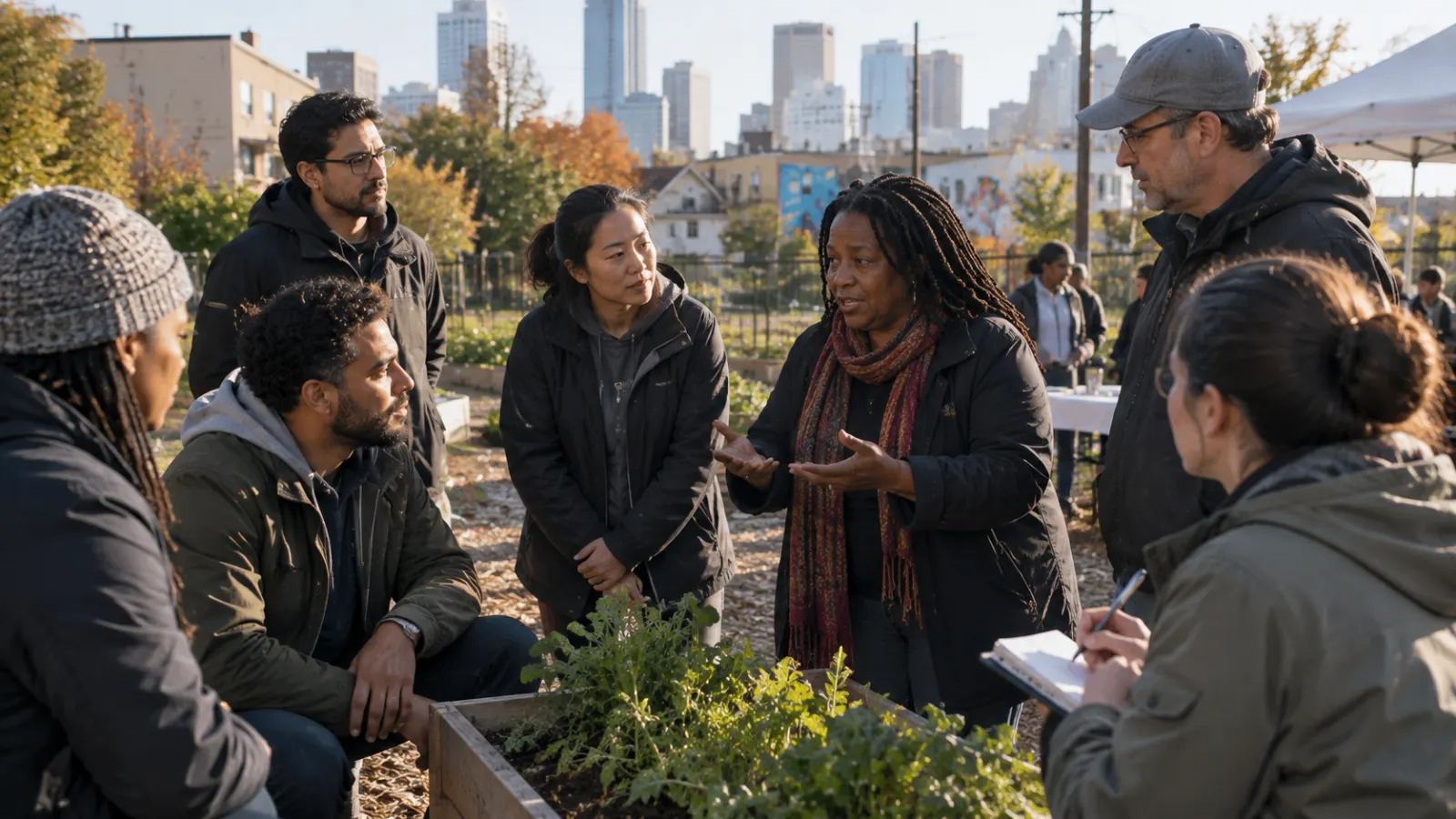
Reform imposed without meaningful local participation can produce resistance even when its objective is defensible. People may experience an externally imposed change not merely as criticism of one practice but as evidence that outsiders consider their whole identity inferior.
Participation does not mean communities possess a veto over every reform, particularly where basic rights are involved. Nor should “the community” be treated as if everybody inside it agrees. Different generations, classes, genders and groups may want different forms of continuity and change.
It means that people who actually live with a practice should normally have meaningful opportunities to influence how it evolves.
This is particularly important when economic development is involved. UNESCO's current guidance on the economic dimensions of living heritage recommends context-specific, heritage-sensitive and rights-based approaches that seek to support livelihoods while limiting economic pressures that could undermine the viability of cultural practices. (ich.unesco.org)
Preservation is therefore not simply the opposite of development. Both can be designed well or badly.
Generations often face different costs from continuity and change
Arguments between older and younger generations are frequently described as differences in personality: older people resist change, while younger people reject tradition.
The structural explanation is often more useful.
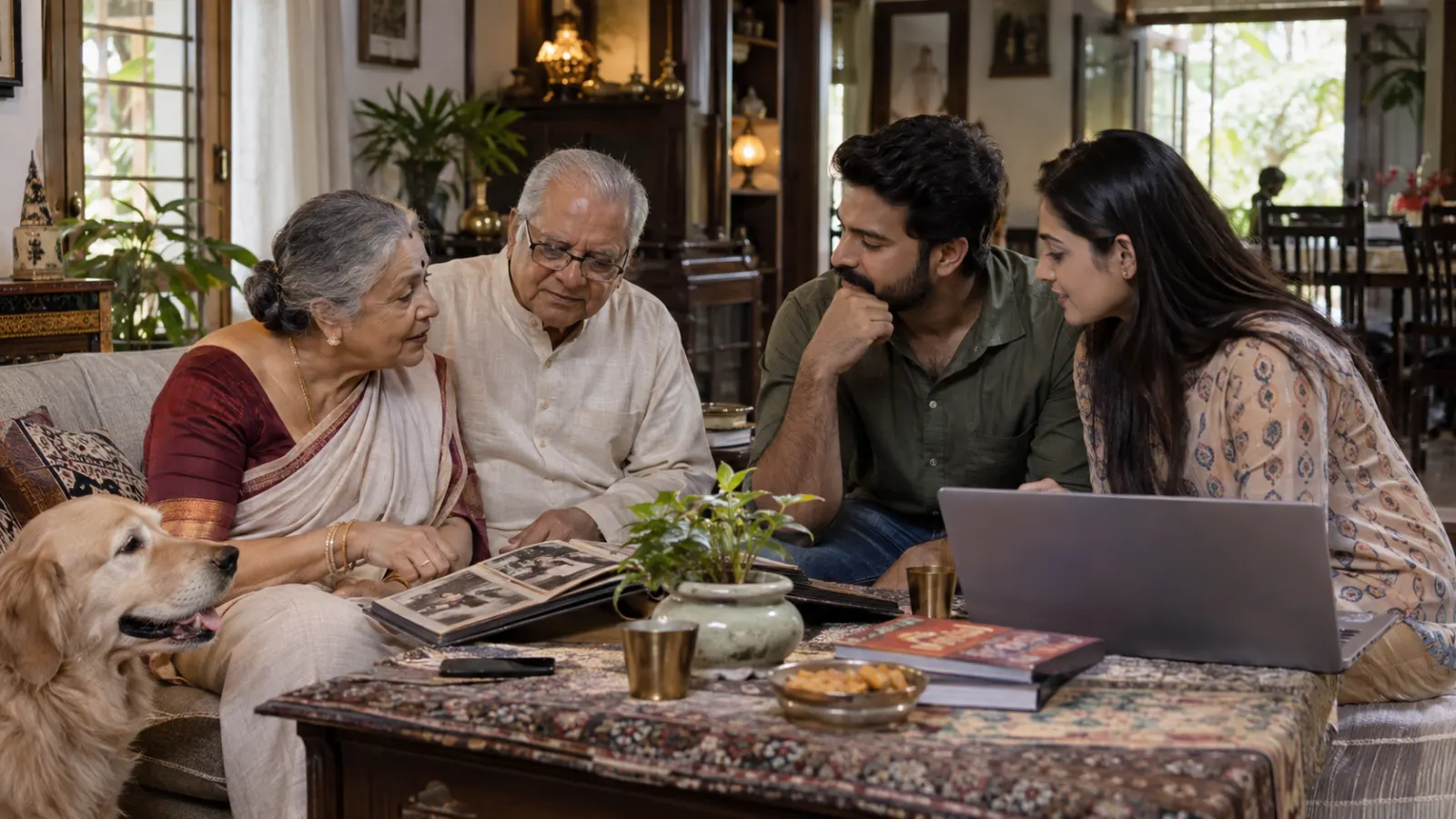
Older people may have spent decades building skills, status and relationships around existing institutions. Changing those institutions can therefore impose real costs. A professional whose expertise depends on one technology may experience a new system differently from someone entering the occupation after the transition has already occurred.
Younger people face a different problem. They may inherit rules designed for economic and social conditions they never experienced. A family expectation built around one-earner households may be difficult to maintain when housing costs require two incomes. Employment expectations formed during periods of long-term job stability may fit poorly with more fragmented labour markets.
Neither group is necessarily irrational.
They are paying different prices for continuity and change.
Age also does not determine ideology. Young people can defend inherited customs, while older activists can lead major reforms. Class, education, religion, geography, gender and economic security can matter as much as generation.
The better question is therefore not which generation understands society correctly. It is what each group stands to lose or gain if the practice changes or remains fixed.
This also explains why reform can become more acceptable when communities feel culturally secure. If people believe that changing one practice requires admitting that their entire history is shameful, resistance can become defensive and absolute. If they feel their language, history and identity are recognised, they may find it easier to reconsider individual customs without interpreting change as cultural erasure.
Cultural confidence can make adaptation less zero-sum.
A practical test is better than choosing a side
Debates about tradition and progress become more productive when broad symbols are converted into specific questions.
A useful framework begins with five tests.
What value or function does the practice serve? A tradition may preserve identity, coordination, knowledge, family support or social trust. Identifying the function prevents reform from accidentally destroying something useful.
Who benefits and who bears the costs? A practice may create strong community cohesion while imposing disproportionate burdens on particular people. A reform may generate efficiency while transferring economic costs to those with the least ability to adapt.
Is participation meaningfully voluntary? A practice can carry cultural value while becoming ethically problematic when people cannot refuse it without serious coercion or punishment.
Does current evidence challenge the assumptions behind the practice? Institutional memory is important here. A rule that looks irrational may have developed to solve a real historical risk. The correct response is to discover whether the risk remains rather than removing the rule without understanding it.
Can the underlying value be preserved through a less harmful or more effective form? This is often where continuity and progress meet. The goal may not require preserving the exact mechanism inherited from earlier generations.
These questions avoid two equally weak positions: It is traditional, therefore it must stay, and It is old, therefore it must go. The source draft captures this distinction directly.
They also prevent the reverse mistake: assuming that because something is described as innovation or modernization, opposition requires no serious consideration.
Sometimes the correct decision will be preservation. Sometimes adaptation. Sometimes complete abandonment. Occasionally, a practice previously discarded may contain useful knowledge worth recovering in a new form.
The answer depends on evidence, rights, consequences and context rather than age alone.
The future is built from selective continuity
Tradition gives societies continuity, identity, accumulated knowledge and institutional memory. Progress allows societies to respond to new evidence, technologies, rights claims and changing material conditions.
Either principle becomes dangerous when treated as absolute.
A society that preserves everything eventually protects institutions long after their justification disappears. A society that treats novelty as inherently superior risks repeatedly discarding accumulated knowledge before understanding why it developed.
Healthy societies do something more difficult.
They conserve selectively and reform selectively.
They preserve practices that continue to provide meaning, knowledge or social value. They adapt traditions whose underlying purpose remains valuable but whose existing form no longer works well. They abandon practices whose harms cannot be justified by historical continuity. And they subject new systems to the same scrutiny rather than assuming that innovation is automatically progress.
This is why the relationship between tradition and progress is better imagined as a conversation across time than a battle between past and future.
People inherit institutions they did not design, modify them under conditions their ancestors could not predict and pass the results to people they will never meet.
The task of each generation is therefore not to escape its inheritance or obey it unquestioningly.
It is to understand what was received well enough to decide what deserves to be carried forward—and what the future no longer needs.