The Problem With Calling a Dish “Traditional”
A dish appears on restaurant menus, at weddings, in family kitchens and during festivals. People say it belongs to them. Tourists are told they must try it. Eventually it is described as traditional.
But what exactly happened?
There is no universal number of years after which a recipe becomes part of a culture. Nor does a dish need to have originated entirely within one community. Many foods now treated as cultural symbols rely on ingredients, techniques or ideas that once came from elsewhere.
What turns food into cultural heritage is not age alone. It is repeated social recognition.
A Dish Becomes Cultural When People Keep Choosing It
Repetition is fundamental.
A food prepared once is an experiment. A food prepared across seasons, households and generations can become convention. People begin to expect it in particular contexts: a festival, a family gathering, a street market, a religious observance or an ordinary weekly meal.
Through repetition, the dish acquires a place in social life.
UNESCO’s work on foodways treats culinary heritage as a network of knowledge, skills, rituals, symbols, production practices and shared consumption. The emphasis is significant: cultural food is not merely a recipe card. It is a practice repeated by people.
Shared Recognition Matters More Than Perfect Uniformity
A cultural dish rarely has one universally accepted recipe.
One household adds more chilli. Another uses a different grain. A coastal version uses fish where an inland version uses meat. Religious communities adapt ingredients. Diaspora cooks substitute what is available.
Yet people may still recognise all of these versions as belonging to the same culinary family.
This tells us that cultural identity is often based on a pattern rather than exact composition. A dish may be identified by its broad method, occasion, texture, name or social meaning even when ingredients vary.
Place Gives Food Identity
Dishes become culturally powerful when they are attached to landscapes.
A grain associated with a dry region, a seafood preparation tied to a coast, a cheese produced in a particular pasture zone or a bread baked in a local oven can become shorthand for place.
FAO describes gastronomy as a cultural expression connected to natural and cultural diversity. Local cuisine reflects agricultural conditions, available ingredients and accumulated knowledge about how to use them.
This relationship creates regional identity. People do not merely say “we eat this.” They say “this comes from here.”
Geographical Indication systems formalise one version of that relationship for certain products, but cultural attachment is broader than legal protection.
A Dish Can Become a Calendar Marker
Some foods are culturally important because of when they are eaten.
A sweet prepared once a year may carry more symbolic weight than an everyday staple. A bread made for a religious feast can become inseparable from the ceremony. A harvest dish may mark the agricultural cycle. A wedding preparation may signal transition between social roles.
The French gastronomic meal recognised by UNESCO, for example, is not defined by one fixed plate. Its cultural importance lies in the ritualised act of celebrating significant moments through selecting food, pairing it, setting the table and sharing the meal.
The social sequence is part of the heritage.
Memory Gives a Dish Emotional Authority
Cultural foods often become powerful through memory rather than formal instruction.
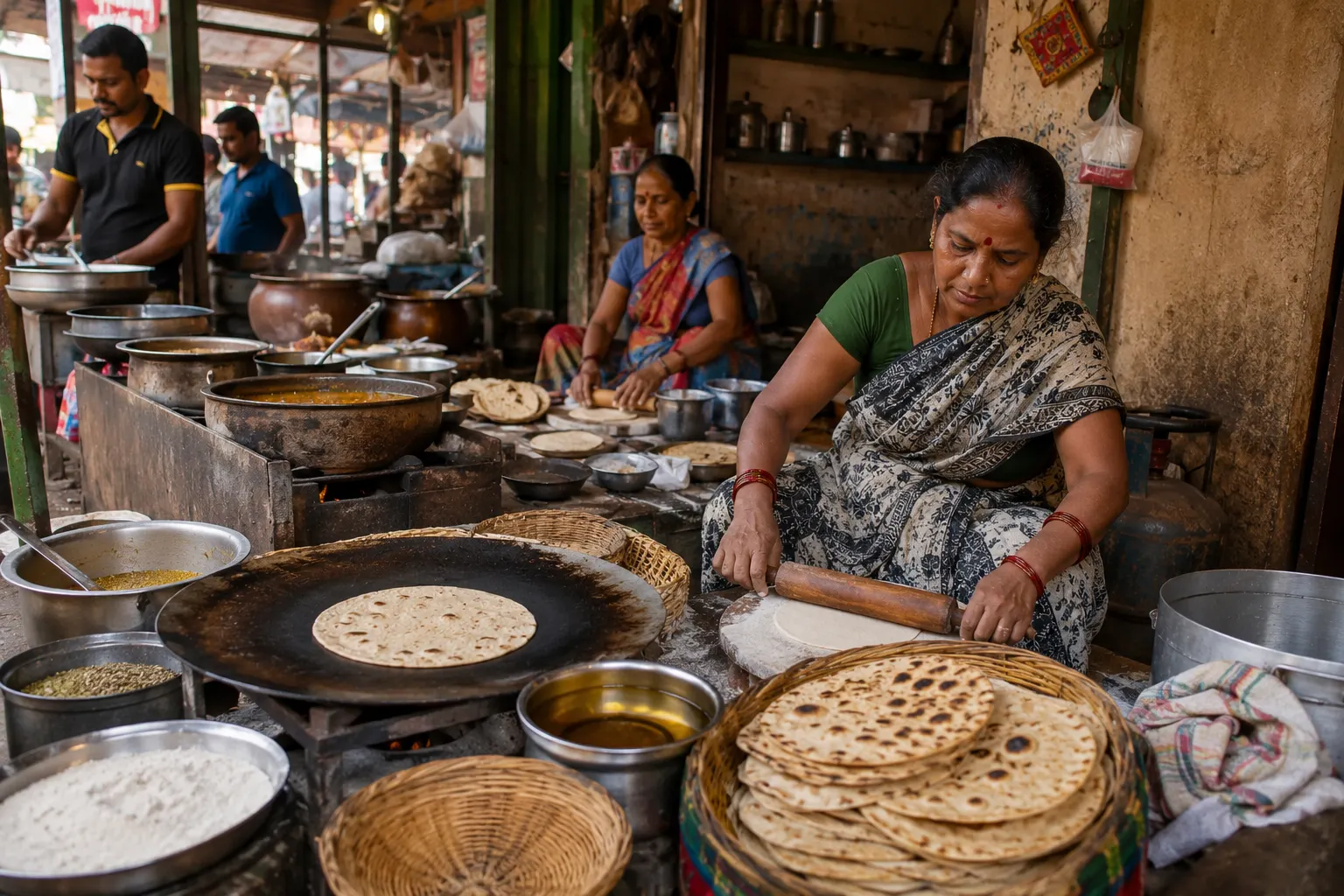
People learn a dish by watching parents, grandparents, neighbours, vendors or community cooks. The smell and texture become connected with childhood, celebration, grief, migration or homecoming.
Once that happens, changing the recipe can feel larger than changing dinner. It can feel like changing memory.
This helps explain why arguments over “the right way” to prepare a dish can become so intense. Participants are often defending more than flavour. They are defending autobiographical experience.
Names Matter
Naming helps stabilise culinary identity.
When a preparation acquires a recognised name, people can discuss it, teach it, order it, compare versions and associate it with a place or group. A name can travel farther than the original household practice.
But names are historically unstable. The same dish may have several names across languages. Different dishes may share a name. A restaurant may popularise a label that later appears traditional.
For that reason, the history of a dish’s name should not automatically be treated as the history of the dish itself.
Restaurants Can Turn Local Food Into Cultural Symbols
Restaurants do not simply reproduce tradition; they help manufacture public recognition.
A dish once associated with one neighbourhood can become a city speciality after restaurants promote it. Tourism can then connect it to the city’s identity. Cookbooks standardise a version. Television chefs expand its reach. Packaged-food companies make it available nationally.
At that point, a dish may belong simultaneously to household tradition, commercial culture and regional branding.
This does not necessarily make it fake. It shows how cultural status is produced through institutions as well as families.
Migration Can Strengthen a Dish’s Identity
A food sometimes becomes more culturally significant after people leave home.
Migrants often use familiar dishes to recreate continuity in an unfamiliar environment. A preparation that once seemed ordinary can become an explicit marker of identity abroad.
Community gatherings, ethnic grocery stores and restaurants reinforce the association. Children born in the destination country may know the dish less as everyday food from an ancestral village and more as a symbol of family origin.
In diaspora, cuisine can become a portable homeland.
Cultural Adoption Does Not Require Pure Origin
Many iconic dishes are historical mixtures.
Ingredients travel. Empires connect kitchens. Merchants introduce new tastes. Refugees adapt recipes. Restaurants experiment. Agricultural technology changes what is affordable.
If cultural belonging required a dish to be invented in complete isolation, very few dishes would qualify.
The more useful question is not “Was every ingredient invented here?” but “How did this community make the dish meaningful?”
Cultural ownership is about long-term practice and identification, even when historical origins are multiple.
Who Gets to Decide What Is Authentic?
Authenticity becomes difficult because different groups have different authority.
A chef may value technical consistency. A grandmother may value family memory. A heritage institution may focus on transmission. A tourism board may promote recognisable symbols. A historian may point out that the supposedly ancient recipe is relatively recent.
All may be discussing the same food.
The concept becomes most useful when it is specific. Instead of asking whether a dish is simply authentic, ask: authentic to which region, period, household, community or occasion?
That turns a vague argument into a historical one.
UNESCO’s Living-Heritage Approach Offers a Better Model
Foodways listed by UNESCO illustrate an important principle: heritage is carried by communities and transmitted through practice.
Traditional Mexican cuisine, the Mediterranean diet, the gastronomic meal of the French, hawker culture in Singapore and other listed elements are not treated merely as collections of recipes. They involve farming, markets, skills, social relationships, rituals, craftsmanship and shared consumption.
This approach avoids a common mistake: assuming that preserving food culture means freezing one recipe forever.
Living culture survives by being reproduced, and reproduction always involves some variation.
Commercial Success Can Both Protect and Distort
Once a dish becomes culturally valuable, businesses may market it aggressively.
Commercialisation can create jobs for cooks, farmers and vendors. It can support local ingredients and make younger generations interested in heritage. But it can also simplify regional diversity into a single tourist-friendly version.
A complex cuisine may be reduced to five famous dishes. A labour-intensive preparation may be industrialised. A communal ritual may be repackaged as a product.
The issue is not commerce itself. The issue is whether the people who sustain the tradition retain meaningful participation and recognition.
Cultural Dishes Can Be Shared Across Borders
Political borders are often younger than culinary traditions.
A dish may be common across neighbouring countries because communities, trade routes and empires predate the border. When modern national identities become stronger, the same food can be claimed by several sides.
Such disputes are understandable because food carries identity. But historical complexity should not be erased for the sake of exclusivity.
Shared dishes can be evidence of contact as much as ownership.
What Makes a Dish Part of a Culture?
No single test decides it. But several signals recur.
People recognise the dish by name or form. They prepare it repeatedly. Knowledge about it is transmitted. It becomes attached to occasions, places or relationships. Variations are debated because people care about them. It appears in memory and public representation. And even when the recipe changes, the community continues to recognise a line of continuity.
That is how food becomes heritage.
Not because it has remained untouched, but because people keep returning to it.