Conflict is not one thing. A disagreement about priorities can be useful; repeated disrespect or personal hostility is different. Effective resolution starts by identifying what k…
The Eisenhower Matrix is useful because it asks two questions that busy people often collapse into one: does this need attention soon, and does it actually matter?
Self-discipline is often imagined as winning a constant internal battle. Research suggests a more sustainable model: structure behaviour so fewer battles need to be fought in the…
Mistakes are informative only when they change what happens next. The useful sequence is not failure followed by optimism, but error detection, explanation, correction and another…
Growth mindset is often reduced to “believe you can improve.” The research is more precise: beliefs about whether abilities can develop may influence responses to challenge, but e…
A fixed mindset is not simply pessimism. It is a way of interpreting ability that can make challenge feel diagnostic: if performance reveals who you are, mistakes become more thre…
Growth mindset is often reduced to “believe you can improve.” The research is more precise: beliefs about whether abilities can develop may influence responses to challenge, but e…
A fixed mindset is not simply pessimism. It is a way of interpreting ability that can make challenge feel diagnostic: if performance reveals who you are, mistakes become more thre…
Reading Comprehension is more than recognising words. Learn 9 practical strategies to understand difficult texts, remember key ideas and read more actively.
Reading faster is useful only if the information you need survives the increase in speed. Research suggests there is a real speed-comprehension trade-off, so efficient readers var…
Exam anxiety is more than ordinary pre-test nerves when worry, physical arousal and fear of failure begin to interfere with preparation or performance. Understanding the mechanism…
The goal of exam preparation is not to eliminate every nervous feeling. It is to reduce avoidable uncertainty by preparing early, testing what you know, protecting recovery time a…
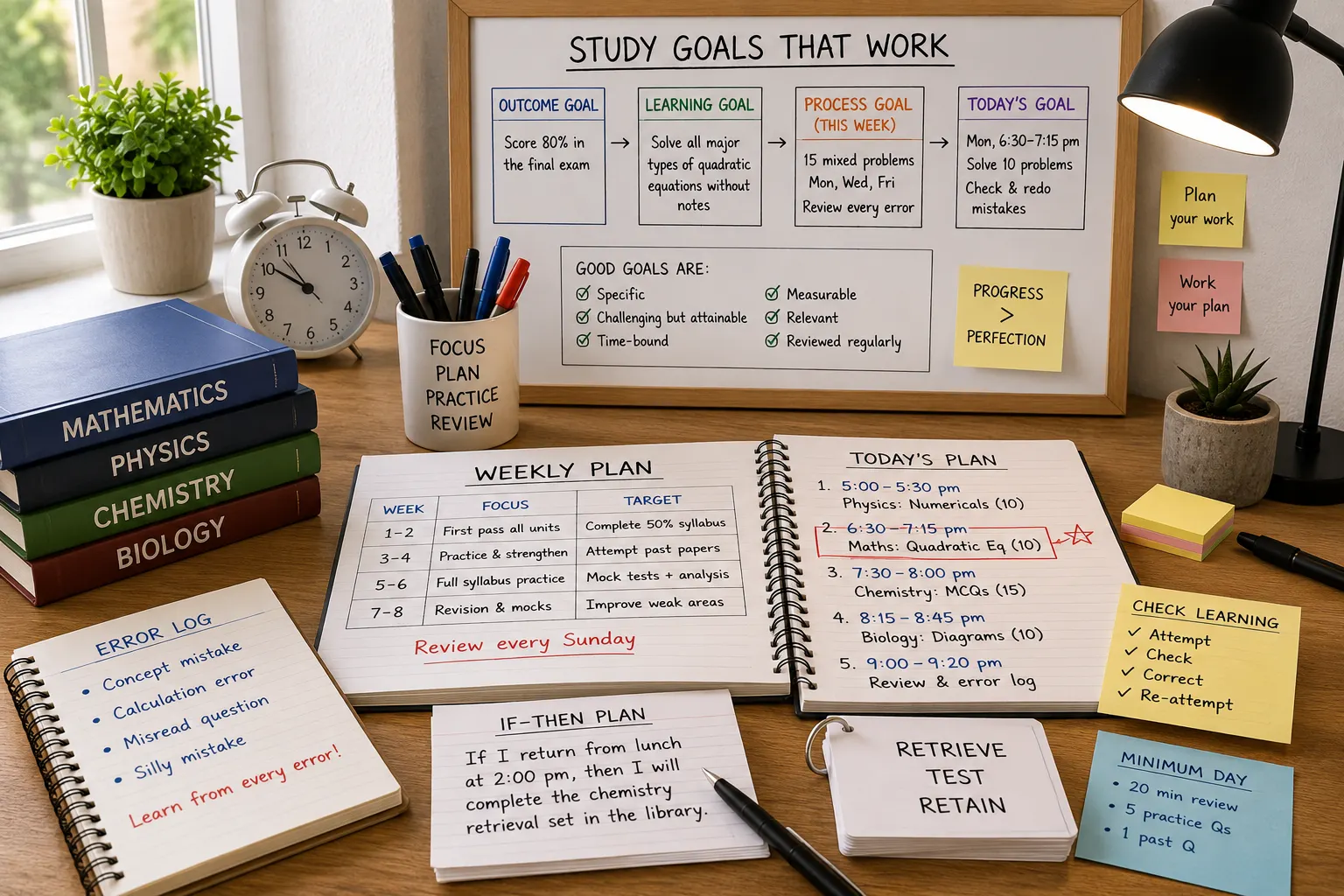
“Study harder” is an intention, not a plan. Effective study goals translate a desired result into specific actions, realistic milestones and a system for checking whether learning…
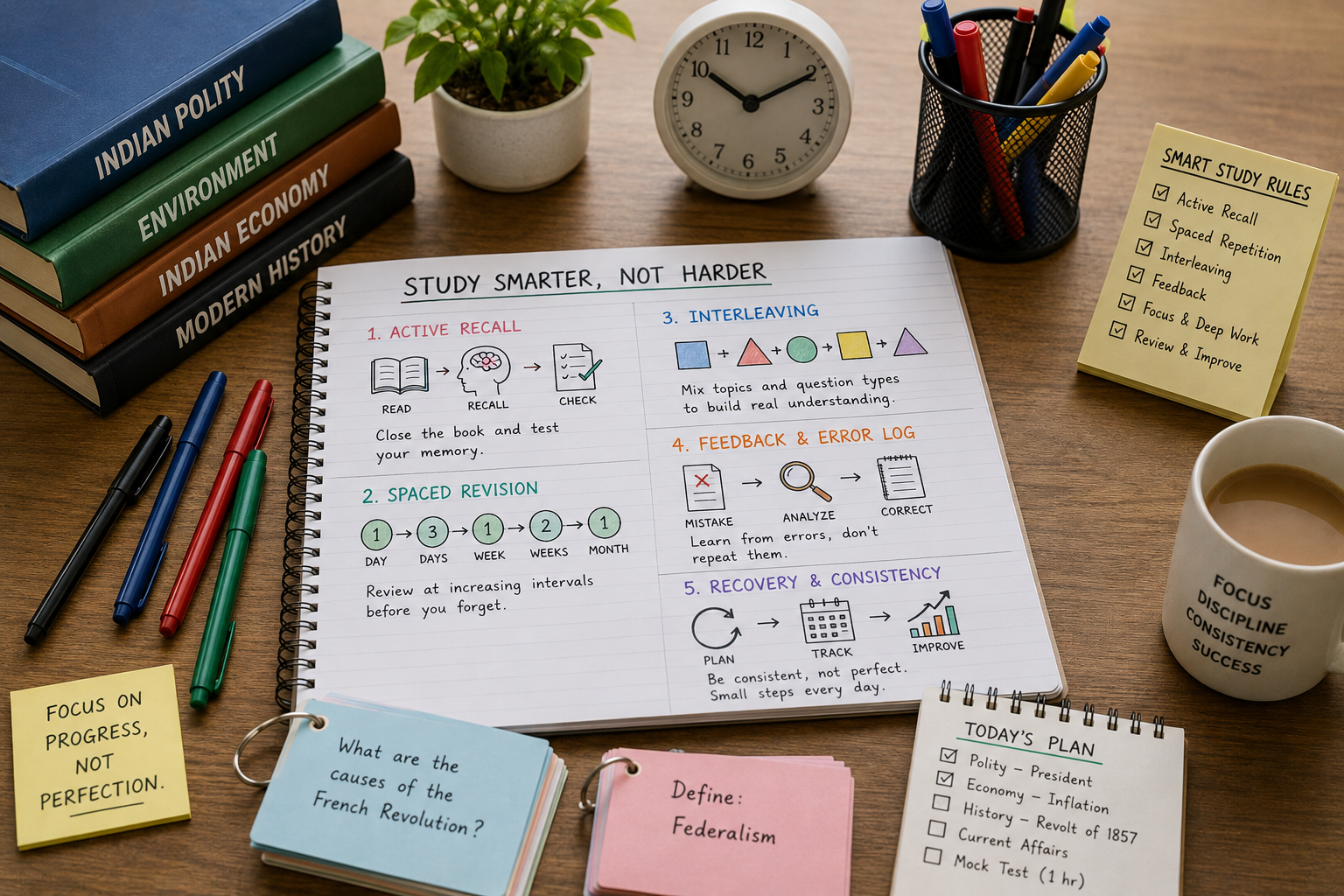
Revision is not simply reading the same material again. Memory becomes more durable when learners revisit information across time and actively retrieve it, making the design of re…
Learning styles are better understood as preferences, not fixed limits. Effective study depends on matching methods to material and using evidence-based revision.
The Cornell note-taking method turns ordinary notes into a revision system by using cues, summaries and active recall to improve understanding and memory.
The science of learning shows that students learn better through attention, active recall, spacing, feedback, sleep and application—not passive rereading alone.
A clear explainer on the Pomodoro Technique, how 25-minute focus blocks work, when to use them, their limits and how students can adapt them.
Enjoying the reporting?
We noticed an ad blocker. Ads keep our journalism free — please consider allowing them, or subscribe to our newsletter instead.
We use cookies to keep you signed in and to understand how readers use the site. See our Privacy Policy.