Election Commission Internal Dissent: What Happens When Election Commissioners Disagree?
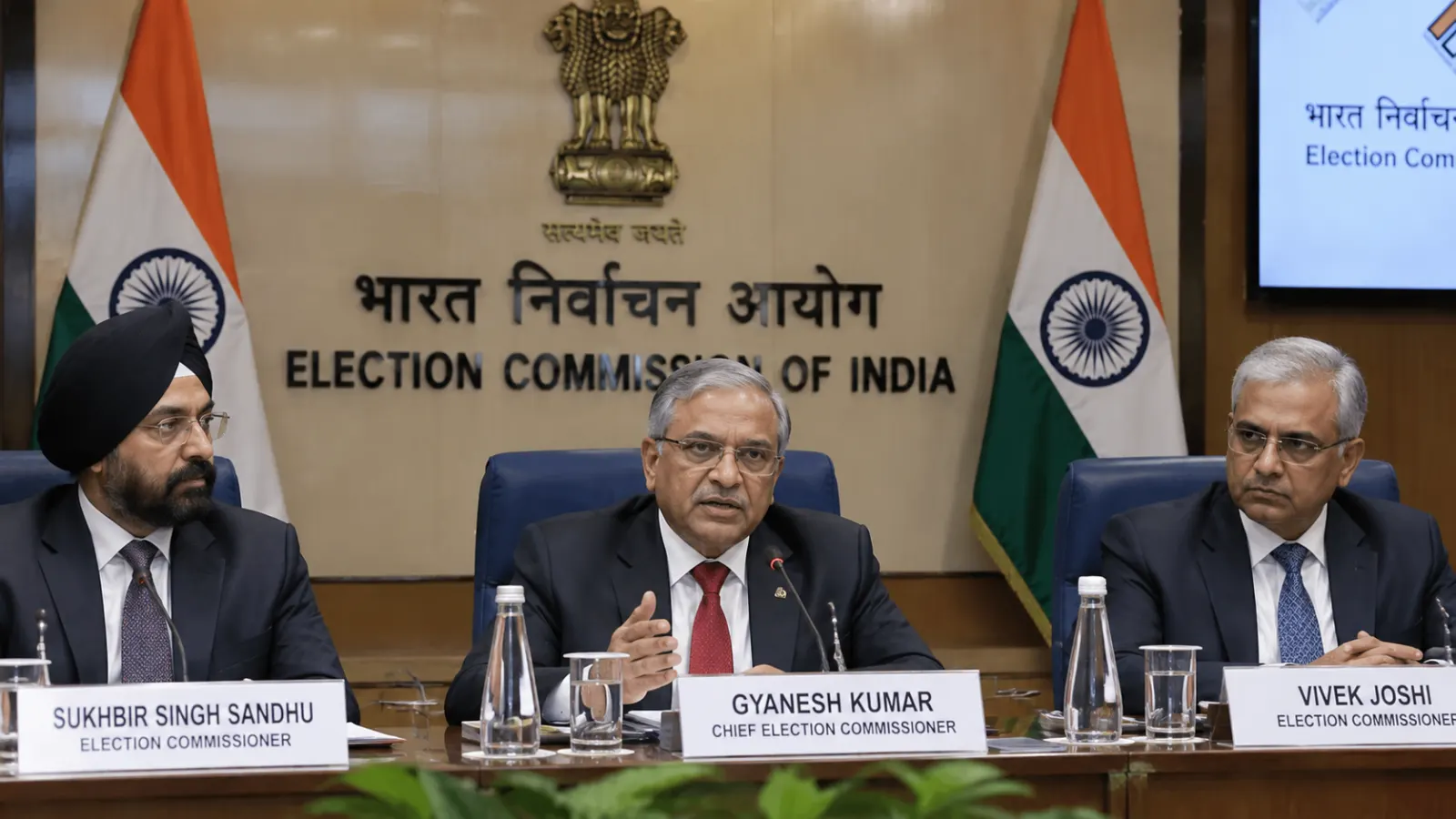
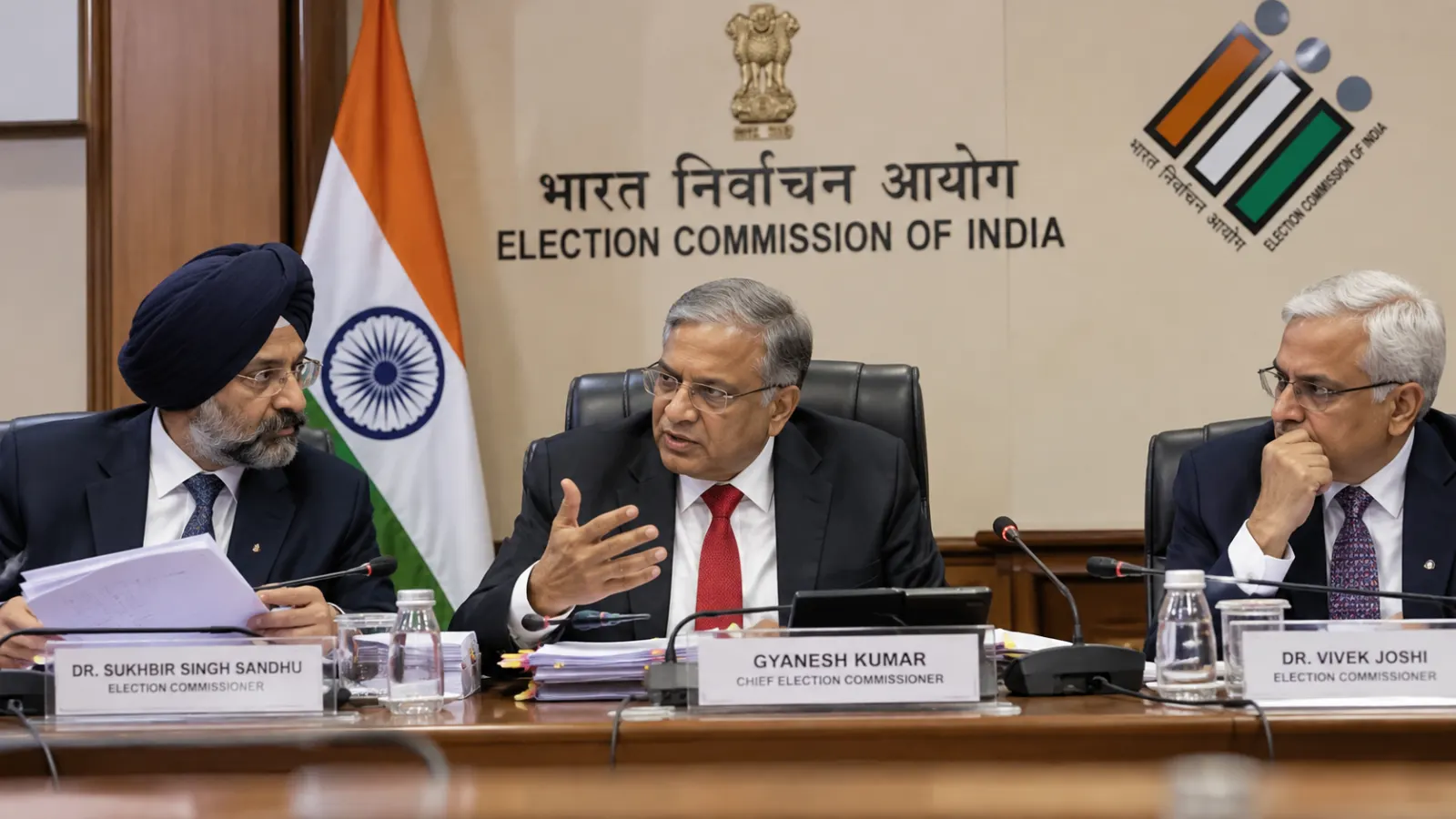
India’s Election Commission is facing intensified scrutiny after reports that Election Commissioners Sukhbir Singh Sandhu and Vivek Joshi repeatedly raised concerns over decisions connected with electoral-roll revisions during Chief Election Commissioner Gyanesh Kumar’s tenure. The controversy escalated further on September 24, 2026, when the youth-led Cockroach Janta Party gave Kumar 48 hours to resign and threatened nationwide protests if he did not do so.
The political reaction has been sharp, but the institutional question is more precise: what happens when the Chief Election Commissioner and the other Election Commissioners disagree?
The answer matters because the Election Commission is not legally designed as a one-person authority. It is a constitutional body whose decisions are supposed to be taken collectively. India’s current law expressly anticipates disagreements among its members and provides a mechanism for resolving them.
What triggered the current controversy?
An investigation by The Indian Express reported on September 23 that Sandhu and Joshi had formally recorded objections on at least 14 occasions over roughly 10 months. According to the report, the issues included changes to voter-registration procedures, additions and deletions from electoral rolls, appeals involving voters restored during the Special Intensive Revision process, and control over electoral-roll software.
One significant dispute concerned Form 6, which is used by citizens seeking inclusion in the electoral roll. The investigation reported that additional questions connected with the Special Intensive Revision were introduced into the digital registration process even though commissioners had previously raised concerns about whether such a change could be made without amending the governing rules.
Another area of concern involved the administration of voter databases. The two commissioners reportedly questioned what they viewed as increasing centralisation of electoral-roll systems in Delhi and whether statutory officials at the state and constituency levels retained appropriate access and authority.
These are reported internal objections, not judicial findings of wrongdoing. Their significance lies in the fact that they concern some of the Election Commission’s core responsibilities: deciding how citizens are added to or removed from electoral rolls and how the systems holding those rolls are administered.
What does the Election Commission say?
The Election Commission has rejected the suggestion that the reported notes demonstrate improper functioning.
In its response, the Commission said differing views and observations are a normal part of institutional deliberation. It argued that focusing on individual internal notes without considering subsequent decisions gives an incomplete picture and said that its major decisions and reforms during the past year, including electoral-roll revision and SIR-related measures, were ultimately unanimous decisions of the full Commission.
That creates an important distinction between two stages of decision-making.
Commissioners may disagree while a proposal is being developed. They may question legal authority, recommend changes or object to administrative implementation. A proposal can then be altered before all three commissioners approve the final decision.
If that is what occurred, internal dissent and subsequent unanimity can both be true.
The unresolved public question is therefore not merely whether objections existed. It is what happened to those objections before the final decisions were taken.
Is the Chief Election Commissioner more powerful than the other commissioners?
The Chief Election Commissioner is the chairman of the Election Commission, but that does not mean the CEC has a unilateral vote over the other commissioners.
Article 324 of the Constitution provides that the superintendence, direction and control of electoral rolls and elections are vested in the Election Commission. When other Election Commissioners are appointed, the Chief Election Commissioner acts as chairman of the Commission.
The Election Commission currently operates as a three-member body consisting of the CEC and two Election Commissioners.
The Chief Election Commissioner and Other Election Commissioners Act, 2023 goes further. Section 18 states that the Commission may regulate its procedure and distribute its work by unanimous decision. It also says that all Commission business should, as far as possible, be transacted unanimously.
Most importantly, the law expressly addresses disagreement:
If the CEC and the Election Commissioners differ on a matter, it must be decided according to the majority opinion.
That means two Election Commissioners can constitute the majority in a three-member Commission.
The title “Chief Election Commissioner” therefore does not turn the institution into a hierarchy in which the chairman can simply override two colleagues.
Why do the reported objections matter?
Not every disagreement inside a constitutional institution is evidence of dysfunction. In fact, disagreement can demonstrate that proposals are being scrutinised rather than automatically approved.
But the subject of the disagreement matters.
The current controversy concerns electoral rolls, which determine who is registered to vote.
Article 324 places the preparation and supervision of electoral rolls squarely within the Election Commission’s constitutional responsibilities. The ECI’s own electoral-roll manual describes Article 324 as the cornerstone of the legal framework governing roll preparation and revision.
A procedural dispute over an ordinary administrative matter may have limited consequences. A disagreement about voter additions, deletions or control of electoral databases has potentially broader implications because such decisions can affect electoral participation on a very large scale.
The Indian Express investigation reported that more than 13 crore names had been excluded from draft rolls during SIR exercises across 30 states and Union Territories, although a draft-roll exclusion is not necessarily a permanent deletion and the electoral-roll process includes claims, objections and appeals.
That scale helps explain why internal procedural questions have become politically significant.
The 48-hour resignation ultimatum is a political demand, not a legal process
The controversy took another turn on September 24 when leaders of the Cockroach Janta Party, a youth movement, demanded Gyanesh Kumar’s resignation within 48 hours.
The group said it would launch nationwide protests if Kumar did not resign. It also called for the rollback of aspects of the SIR process and, according to India Today, demanded that upcoming elections be frozen while the controversy is examined.
Those demands are political advocacy. They do not themselves determine whether the CEC remains in office.
The Constitution provides substantial protection to the Chief Election Commissioner. Article 324 states that the CEC cannot be removed except in the same manner and on the same grounds as a judge of the Supreme Court.
That constitutional protection is designed to insulate the office from ordinary political pressure.
Opposition parties have separately demanded Kumar’s removal and have indicated plans to pursue parliamentary action. Those demands should be distinguished from any established legal finding against him.
Why internal dissent is not automatically a crisis
Multi-member institutions are specifically designed to accommodate disagreement.
Judges dissent from one another. Regulators disagree over rules. Monetary-policy committees divide over interest rates. Election commissioners can similarly hold different views about law, technology and administration.
A Commission in which nobody ever disagreed would not necessarily be healthier than one in which officials question proposals vigorously.
The crucial distinction is between deliberative dissent and institutional bypass.
Deliberative dissent occurs when commissioners debate an issue, record their objections, consider alternatives and eventually reach either consensus or a majority decision.
Institutional bypass would involve significant Commission business being carried out without the approvals required by law or without giving the other commissioners the opportunity to exercise their statutory decision-making role.
The reported notes are controversial precisely because Sandhu and Joshi are said to have questioned whether some communications or decisions had been issued without the full Commission’s approval.
The Election Commission, by contrast, says the eventual decisions were unanimous.
Those two propositions need to be examined issue by issue rather than collapsed into a single political conclusion.
What would actually clarify the dispute?
The most useful evidence would be a clear chronology for each contested decision.
For example:
What proposal was originally placed before the Commission?
Which commissioners objected?
What exactly did they object to?
Was the proposal modified?
Was a formal meeting held?
What was the final decision?
Did all three commissioners approve it?
Was the disputed action taken before or after that approval?
Those questions are more informative than simply asking whether there was a “rift.”
If the objections resulted in changes and the final proposal was then unanimously approved, the records would demonstrate functioning deliberation.
If an action requiring Commission approval was implemented despite opposition from two commissioners, the legal and institutional questions would be materially different.
At present, the Election Commission’s statement establishes its position that the final decisions were unanimous, while the newspaper investigation provides detailed reporting about objections during the process.
Why the controversy matters beyond Gyanesh Kumar
Political attention currently centres on Gyanesh Kumar, but the broader issue concerns the design of the Election Commission itself.
The Commission administers elections in the world’s largest electorate. Its credibility depends not merely on who occupies the office of Chief Election Commissioner but on whether institutional procedures are predictable, collective and capable of being scrutinised.
The present dispute therefore raises several questions that will remain relevant after the immediate political controversy fades.
How much operational authority can individual officials exercise without full-Commission approval?
How should disagreements between commissioners be documented?
When commissioners object to the legality of a proposed action, what process ensures that the objection is resolved before implementation?
And how transparent should a constitutional body be about such disputes when they affect voter eligibility?
None of these questions requires assuming that disagreement proves electoral manipulation. Equally, describing disagreement as routine does not eliminate the need to understand whether legally required collective procedures were followed.
The real test is procedure
The growing political campaign around Gyanesh Kumar will inevitably produce competing claims about motives, bias and responsibility. Opposition parties and protest groups are demanding his removal, while the Election Commission maintains that its decisions were lawful and collectively approved.
Those political positions should not substitute for the underlying institutional question.
Indian law already provides a framework for disagreement within the Election Commission: seek unanimity where possible and decide by majority where commissioners differ.
The central issue is therefore not whether three commissioners always agree.
They are legally allowed to disagree.
The more important question is whether their disagreements are processed through the collective decision-making system that the Constitution and Parliament created.
That question can ultimately be answered through records, procedure and law—not through the intensity of either political accusations or institutional denials.