Patriarchy Is Not Men: Why Gender Equality Needs Men Too
Patriarchy is often discussed as though it means “men against women.” That interpretation is simple, emotionally powerful and also misleading. Men are not a single group with identical beliefs or behaviour, and women are not merely passive recipients of a system imposed uniformly by every man. Patriarchy is better understood as a set of social norms and power relationships that can reward some forms of masculinity, restrict women’s choices, impose expectations on men and be reinforced—or resisted—by people of any gender.
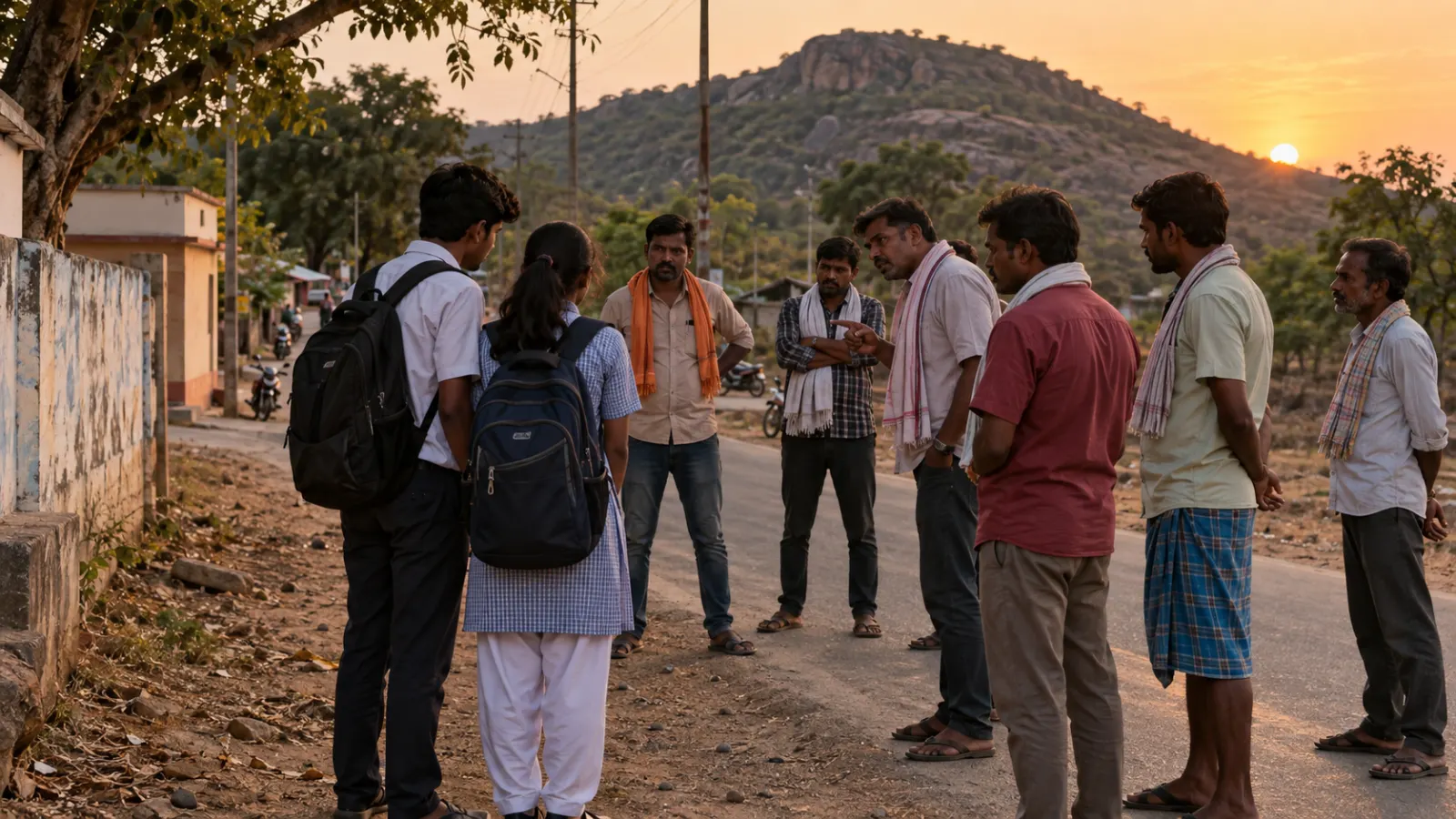
A recent incident in Jamui, Bihar, provides an unusually clear illustration of this distinction. In September 2026, a teenage boy and his female classmate were confronted by a group while returning from an outing. Videos showed members of the group assaulting the teenagers and subjecting the girl to sexual harassment. Yet the boy, himself being threatened and assaulted, repeatedly tried to intervene when the girl was grabbed. One widely reported clip showed him attempting to prevent an attacker from reaching her, while other footage showed him intervening when she was physically restrained.
The contrast is important. The teenager trying to protect his classmate was male. The people allegedly harassing her were also predominantly male. If patriarchy simply meant “men are the problem,” the scene would be difficult to explain. But if patriarchy is understood as a system of beliefs about power, gender, sexuality, honour and entitlement, the contradiction largely disappears. The relevant question is not whether someone is a man. It is what kind of relationship to power, autonomy and other people that person accepts.
Patriarchy is a system, not a description of every man
In everyday arguments, the word patriarchy is sometimes used so broadly that it starts sounding like an accusation directed at half the population. That weakens the concept rather than strengthening it.
Historically and sociologically, patriarchy describes systems in which men have disproportionately occupied positions of authority and in which social expectations have often given men and women different freedoms, responsibilities and forms of power. These structures can appear in property ownership, inheritance, marriage, political representation, household decision-making, employment and sexual norms. They can persist even when no individual consciously wakes up intending to “support patriarchy.”
This distinction between people and systems matters. A man can benefit from some gender norms while rejecting others. He can oppose discrimination against women. He can challenge another man who harasses a woman. A woman can also enforce restrictive gender expectations—for example, by insisting that daughters should have less freedom than sons or by blaming another woman for violating conventional expectations. None of these possibilities invalidates the concept of patriarchy; they demonstrate why social systems cannot be reduced to the biological sex of individual participants.
The Jamui incident should not be treated as proof of a sociological theory, and the motives and criminal responsibility of individual accused persons must be determined through investigation and law. But as an example, it exposes the weakness of the “men versus women” framework. According to news reports, the boy was grabbed, assaulted and intimidated too, yet still attempted to help his classmate when members of the group targeted her.
There were therefore men on radically different sides of the same encounter. Biology cannot adequately explain the difference between their behaviour.
Values can.
The difference between protection and control
Gender debates become especially confusing because both control and solidarity can sometimes be described using the language of “protecting women.”
A father preventing his adult daughter from leaving the house because he disapproves of her relationship may say he is protecting her. A stranger questioning a woman about why she is travelling with a man may claim to be defending social morality. Communities have historically justified restrictions on women’s clothing, relationships, education and mobility using arguments about safety, honour or protection.
But there is a fundamental distinction between protecting someone's autonomy and replacing it with your own authority.
Helping a person escape an assault protects that person's agency. Preventing her from making her own lawful choices because you believe you know what is appropriate for her restricts it.
This distinction is visible in the Jamui example. The teenage boy did not appear to be attempting to decide where the girl should go, whom she should meet or how she should behave. Reports and video descriptions indicate that when she was grabbed, he tried to help her get free and escape. That is different from paternalism. It is solidarity with someone whose immediate safety and freedom are being violated.
This gives us a more useful definition of positive male involvement in gender equality. Men do not need to become guardians who make decisions on behalf of women. They need to respect women as people capable of making decisions for themselves—and intervene appropriately when another person attempts to take that freedom away through coercion or violence.
A society can therefore simultaneously reject two ideas: women do not need men to control them in the name of protection, and men should not remain indifferent when women are being abused.
Those positions are not contradictory.
Masculinity can be expressed through domination—or restraint
The Jamui incident also raises a deeper question about masculinity itself.
Traditional ideas about masculinity frequently contain admirable characteristics: courage, responsibility, resilience, loyalty and willingness to protect people from harm. Problems arise when masculinity becomes associated instead with dominance, sexual entitlement, aggression or the need to control other people's behaviour.
Two men can therefore respond to the same situation in completely different ways while each believes he is acting as a man “should.”
One may think masculinity means establishing authority: questioning a couple, intimidating a weaker person, proving toughness before other men or controlling a woman's behaviour. Another may understand courage as standing beside someone who is vulnerable even when doing so puts him at personal risk.
This difference matters because harmful masculinity is rarely created simply by telling boys, “You are male, therefore you have power.” It can develop through thousands of smaller lessons about what earns respect among other males. Do you gain status by humiliating someone weaker? Is aggression treated as strength? Is refusing to participate in harassment considered cowardice? Are girls discussed as autonomous people or as objects whose sexuality must be monitored? Does a man lose standing among his peers if he challenges sexist behaviour?
Male peer groups can reinforce these norms strongly. A person who might hesitate to harass someone alone can behave differently inside a group where aggression is rewarded with attention, laughter or approval. Conversely, one individual refusing to cooperate can sometimes disrupt that group dynamic.
This is why gender equality cannot be achieved solely by teaching girls to protect themselves. Boys also need models of masculinity in which self-control is strength, consent is normal, empathy is not weakness and challenging abusive behaviour is socially respected.
The teenage boy in the Jamui videos is relevant precisely because he complicates the stereotype. He reportedly faced aggression himself and nevertheless intervened when his classmate was attacked. Whatever broader conclusions people draw from the incident, that behaviour demonstrates something simple: being male does not predetermine whether a person becomes an aggressor, a passive observer or someone who resists aggression.
Patriarchal norms can harm boys and men as well
Recognising that women have historically experienced specific forms of gender inequality does not require pretending that men are untouched by restrictive gender systems.
Many traditional gender expectations impose substantial costs on men. Boys may learn that fear should be hidden rather than managed, sadness should be suppressed, asking for help demonstrates weakness and physical confrontation is preferable to appearing vulnerable. Men may be expected to become primary earners irrespective of their circumstances, tolerate dangerous work, absorb emotional stress silently and demonstrate toughness when what they actually need is support.
The same culture that tells a woman she must behave in a particular way because she is female can tell a man he must react in a particular way because he is male.
This does not mean every disadvantage experienced by men is caused by patriarchy, nor does it mean male and female experiences are identical. It means gender systems create expectations on both sides.
The Jamui boy illustrates another dimension. Public discussions of gender-based violence often classify males primarily as possible perpetrators and females primarily as possible victims. But in the Jamui incident, police and media reports describe both teenagers as victims of assault and harassment, even though the alleged sexualised aggression was directed particularly at the girl. The boy was reportedly slapped, grabbed by his collar and threatened while attempting to help her.
Acknowledging what happened to him does not diminish what happened to the girl. In fact, recognising both experiences produces a more accurate account.
Gender equality should not require competing over whose suffering deserves recognition.
Men are essential participants in gender equality
A model of feminism that treats men only as the people who need to change and women only as the people who produce change is incomplete. Social norms cannot shift sustainably if roughly half the population is treated as an external problem rather than as potential participants in the solution.
Men influence other men in ways that women sometimes cannot. A sexist joke challenged by another man can communicate that misogyny is not necessary for male acceptance. A friend stopping another friend from harassing someone can change the social cost of that behaviour. Fathers can teach sons that domestic work is ordinary rather than feminine. Teachers and coaches can show boys that emotional control is different from emotional suppression. Male friends can intervene before peer pressure turns into aggression.
This is often called bystander intervention, but its importance goes beyond emergency situations. The most valuable intervention may occur long before violence happens: when someone challenges the assumptions that make violence easier to justify.
That does not mean recklessly entering a dangerous confrontation. Safe intervention may involve calling police, attracting other adults, documenting an incident without exposing the victim publicly, creating a distraction or seeking immediate assistance. Physical confrontation can make some situations more dangerous and should not be romanticised.
What matters is the rejection of passive acceptance.
There is also an important difference between allyship and heroism. Gender equality should not depend on imagining women as helpless people waiting to be rescued by good men. Women possess their own agency. The goal is instead to create a social expectation that people do not abandon one another when someone else's freedom or safety is being violated.
That principle applies regardless of gender.
The real divide is not men versus women
The most productive gender debate is not one in which women are taught to distrust men or men are taught that feminism considers them collectively guilty.
The more meaningful divide is between different principles.
One principle says strength creates entitlement: if you are physically stronger, socially powerful, older or supported by a group, you may impose your judgment on someone weaker. The opposing principle says power creates responsibility: greater strength or influence should make a person more careful about respecting someone else's dignity.
One principle treats women's choices as matters for collective supervision. The other recognises women as individuals possessing agency.
One equates masculinity with domination. The other makes room for courage, restraint, empathy and moral independence.
And one tells men that gender equality is an accusation against them. The other asks them to participate in building it.
The Jamui incident is useful as an example precisely because the males present cannot be placed into a single moral category. Reports describe a group allegedly intimidating and assaulting two teenagers, with the girl subjected to particularly serious sexualised harassment. At the same time, another teenage boy—himself facing aggression—tried to protect his classmate and help her escape.
That contrast reveals something important about patriarchy.
The problem is not that men exist. The problem is when domination, entitlement and control are normalised as acceptable expressions of power.
And the solution is not to replace hostility towards women with hostility towards men. It is to build social norms in which neither sex is confined by assumptions about what they must tolerate, how they must behave or how much authority they should possess over someone else.
A boy standing beside a girl who is being mistreated is not acting against men. He is acting against abuse.
That distinction may be one of the most important starting points for understanding gender equality.