Why Local Traditions Disappear: How Culture Is Lost, Adapted and Revived
Local traditions rarely disappear in one dramatic moment. A language is not usually spoken fluently one year and completely forgotten the next; a craft does not suddenly vanish because one workshop closes; a festival rarely reaches an obvious final performance. Cultural decline usually begins much earlier and more quietly. Fewer children learn from older practitioners, apprenticeships become economically unrealistic, traditional materials become harder to obtain, local spaces disappear, work schedules change and practices that once belonged to everyday life survive only as occasional performances. By the time the loss becomes publicly visible, the system that kept the tradition alive may already have been weakening for decades.
This is why cultural preservation is better understood through transmission and viability than through visibility alone. A traditional dance may appear frequently in tourism campaigns while only a handful of community members can still perform it properly. A craft may be displayed in museums while nobody is learning how to make it. A language may be documented in dictionaries and recordings while children no longer use it in ordinary conversation. UNESCO’s 2003 Convention for the Safeguarding of the Intangible Cultural Heritage places particular emphasis on keeping heritage viable through identification, documentation, protection, promotion and, crucially, transmission through formal and non-formal education. A tradition survives not because somebody has recorded that it once existed, but because people remain able and willing to practise, adapt and pass it on.
A Tradition Survives Through Transmission
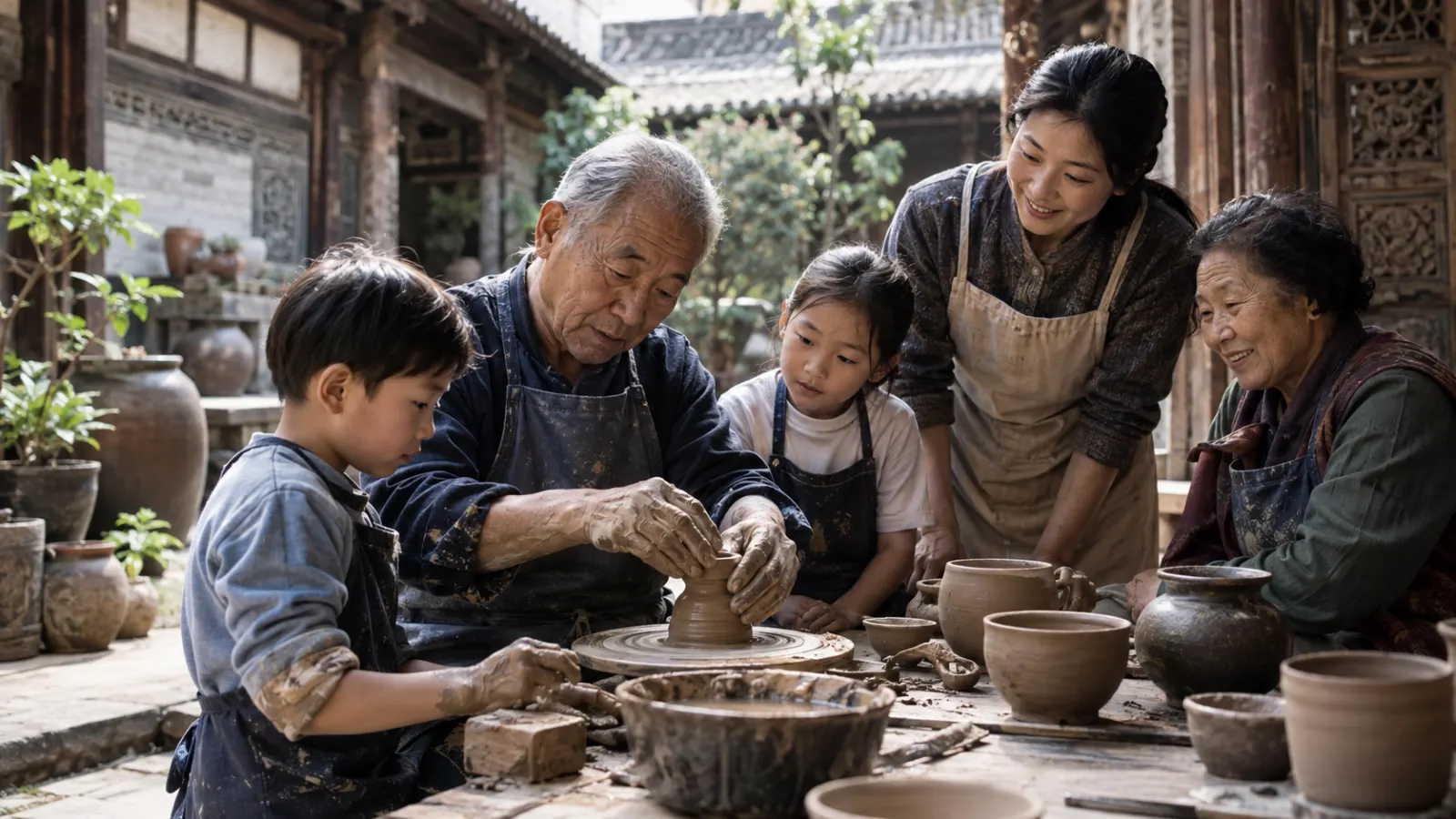
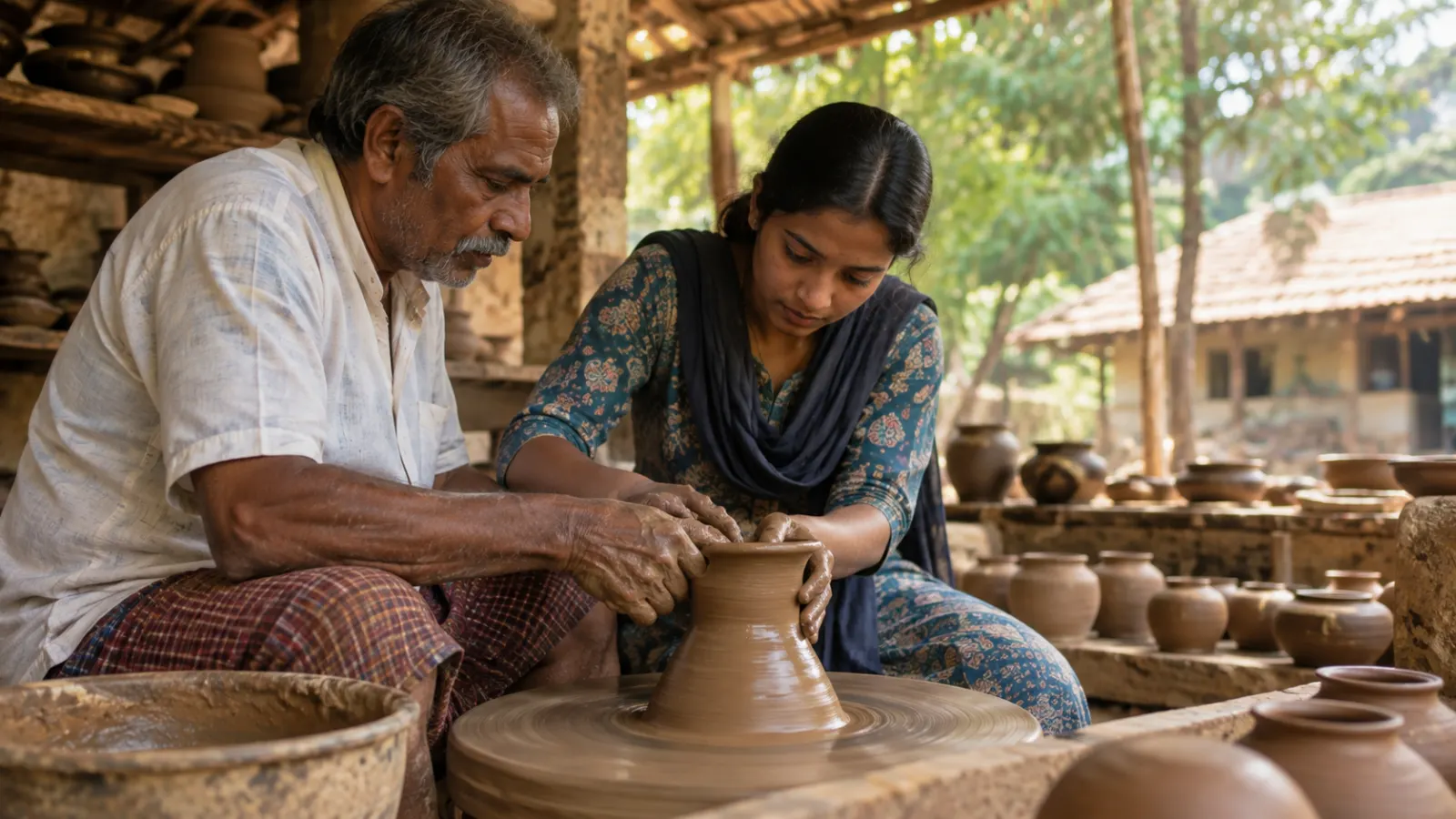
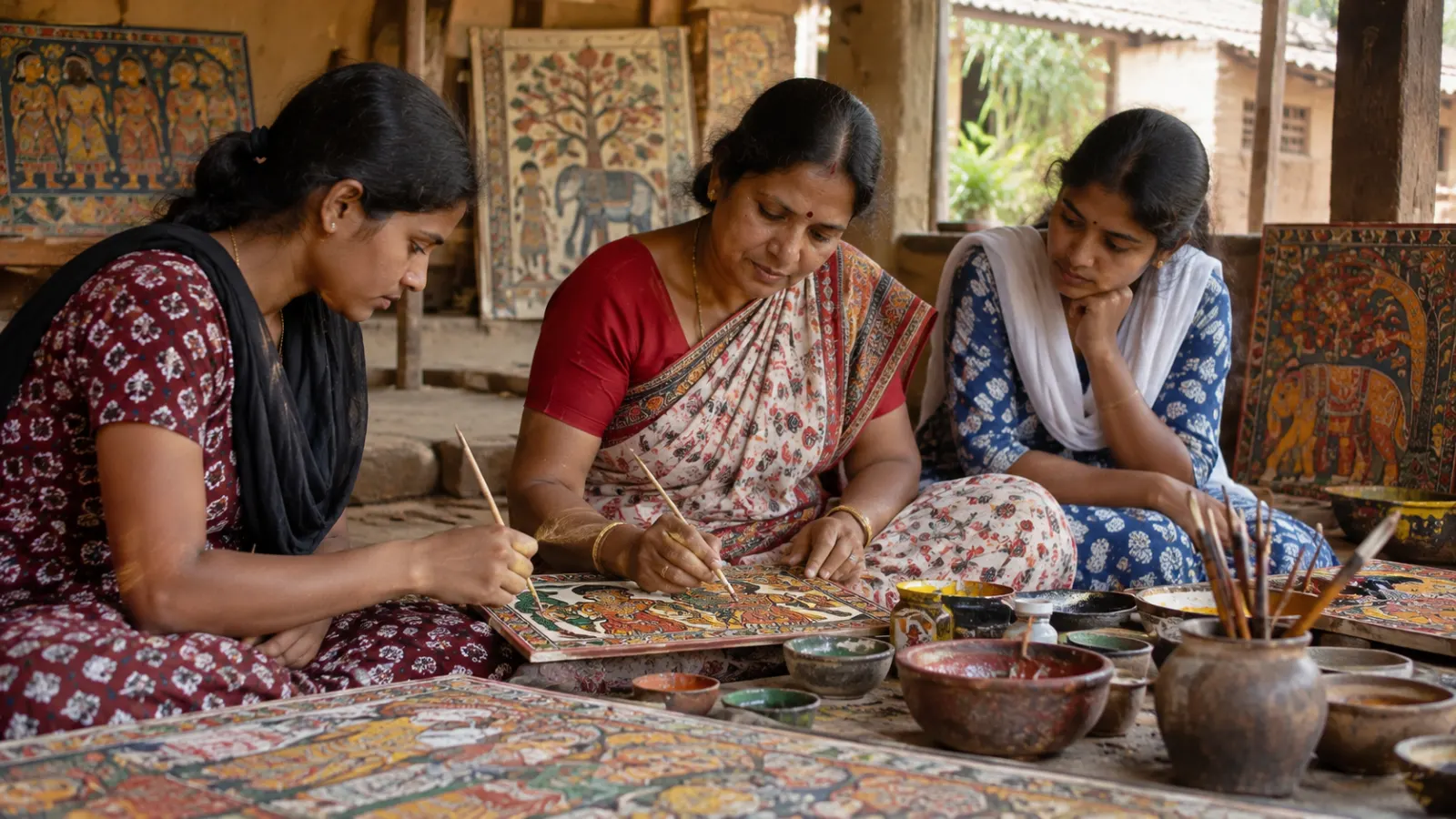
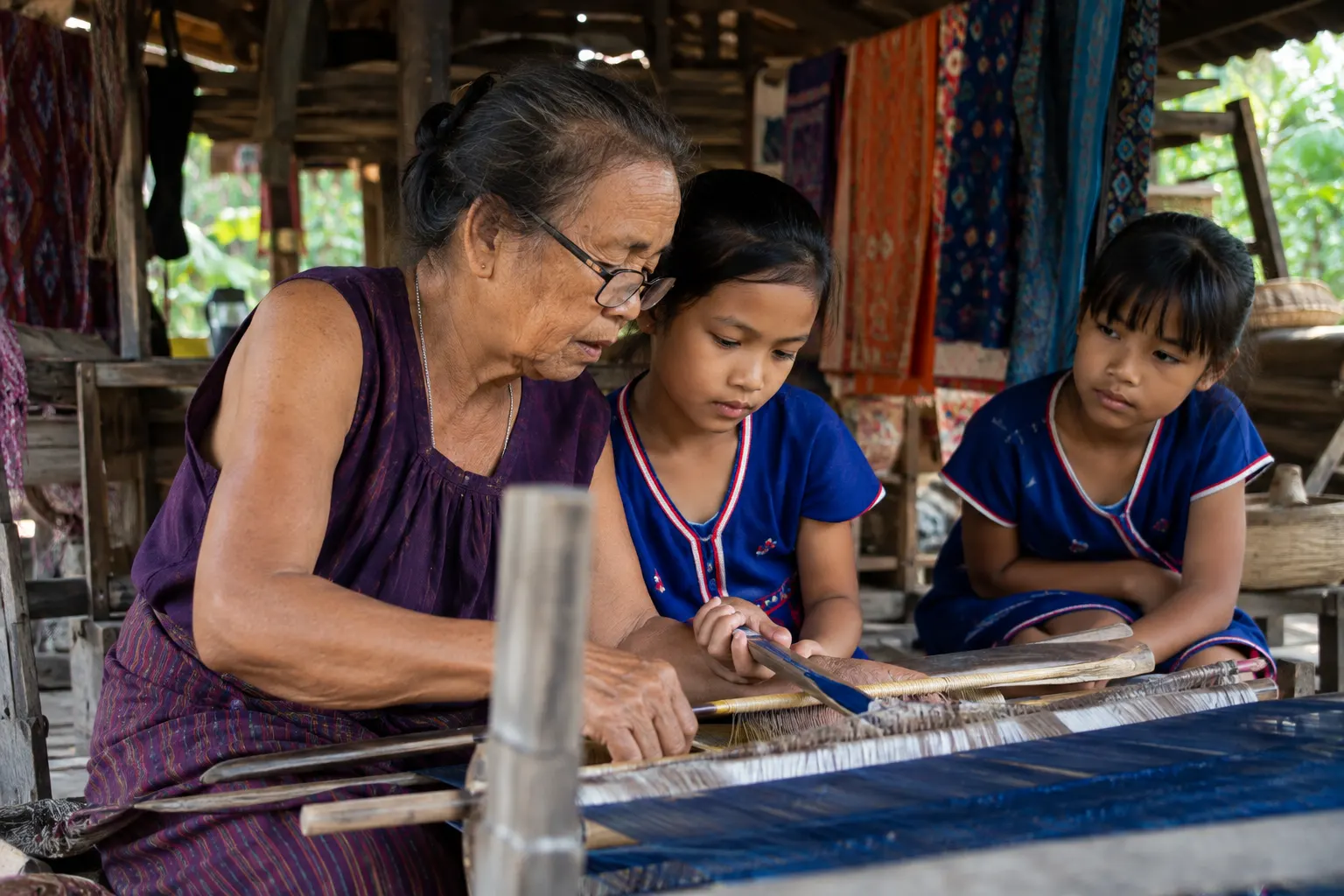
Every living tradition depends on a chain connecting people who know the practice with people who are learning it. That chain may operate formally through apprenticeships, schools and organised training, or informally through families, religious communities, neighbourhoods, workshops and repeated participation in everyday life. The form varies, but the principle is the same: knowledge has to move between generations.
This is especially important for practices that cannot be reduced to written instructions. A craftsperson may know how much pressure to apply by touch, when a material has reached the right consistency by smell or sound, or how to modify a technique according to weather and available resources. Musicians learn timing, style and interpretation through repeated listening. Ritual specialists may understand sequence, language and social relationships that cannot be reconstructed fully from a short description. When transmission stops, documents can preserve evidence of the tradition without preserving the complete practical knowledge needed to continue it.
Cultural Loss Often Begins With a Generation Gap
One of the most common threats is a break between older practitioners and younger potential learners. Young people may leave their communities for education or employment. Parents may encourage them to pursue occupations that appear more stable or prestigious. Older practitioners may assume the next generation is uninterested, while younger people may never receive structured opportunities to participate seriously.
The problem can remain invisible while skilled practitioners are still alive. A village may still contain musicians, weavers, storytellers or ritual specialists, creating the impression that the tradition is healthy. But if almost all of them belong to the same older generation and very few younger people are learning, the tradition has already entered a vulnerable stage. Once that generation dies or becomes unable to teach, reconstruction becomes much harder.
The critical measure is therefore not simply how many practitioners exist today, but whether enough competent learners are becoming tomorrow’s practitioners.
Transmission Requires Time
Many cultural practices cannot be transferred through a weekend workshop. Complex weaving, instrument making, classical or folk performance, storytelling, agricultural knowledge and ritual practice may require years of observation, repetition and correction.
Modern economic life can make this difficult even when young people are genuinely interested. A learner working full time may not be able to spend several hours each day with an older craftsperson. An apprenticeship that once happened naturally within a family business may become impossible when both generations depend on outside employment.
This means cultural transmission can fail without anyone consciously rejecting the tradition. The missing resource may simply be time.
Economic Change Can Make Traditions Unviable
Cultural survival is closely connected to livelihood. A craft is much easier to transmit when a skilled practitioner can earn enough to justify spending years mastering and teaching it. If factory-made alternatives sell for a fraction of the price, younger people may reasonably conclude that learning the traditional technique cannot support a household.
Performers can face similar problems when fewer ceremonies or community events provide paid work. Traditional agricultural methods may require more labour than mechanised alternatives. Craftspeople may lose customers as consumer preferences change.
This is why cultural decline can look like a change in taste while actually being an economic problem. People may still value the tradition symbolically but be unable to make a living from practising it.
Effective safeguarding therefore has to ask whether practitioners can sustain themselves, not merely whether audiences claim to admire the heritage.
Commercialisation Is Not Automatically Cultural Death
Selling traditional products, performances or experiences is sometimes treated as evidence that a culture has become inauthentic. That conclusion is too simple. Commercial demand can keep skills economically viable, create apprenticeships and give young practitioners reasons to continue learning.
The problem arises when the market controls the tradition rather than supporting it. Crafts may be simplified to reduce production costs. Performances may be shortened to fit tourist schedules. Ceremonial elements may be detached from their context because they are visually attractive. Outsiders may capture most of the profit while community practitioners remain poorly paid.
Commercialisation can therefore sustain or weaken a tradition depending on who controls adaptation and who receives the benefit. The important question is not whether money is involved, but whether economic activity strengthens the community’s ability to continue the practice.
Tourism Can Both Support and Distort Heritage
Tourism can create new audiences for crafts, music, dance, food and festivals. Visitor spending can support practitioners who might otherwise abandon their skills and can increase the prestige of traditions that had become socially marginal.
At the same time, tourism creates pressure to make culture easy to consume. A ritual that normally lasts several hours may be reduced to a twenty-minute performance. Regional variation may be replaced by one standardised version that visitors recognise. Practices that make sense within a specific religious or social setting may be presented purely as entertainment.
The tradition may remain highly visible while becoming less connected to the community’s everyday life. Safeguarding therefore has to distinguish touristic visibility from cultural vitality.
Visibility Is Not the Same as Vitality
A tradition can appear healthy because it is displayed frequently in festivals, television programmes, museums or tourism advertising. Yet those appearances can conceal shrinking participation.
A dance performed professionally at national events may no longer be practised in the communities from which it came. Traditional clothing may remain highly recognisable while the specialist techniques used to produce it disappear. A festival may still attract thousands of visitors even though smaller household rituals associated with it have stopped.
Measuring cultural survival therefore requires attention to practitioners, learners, frequency of use, transmission settings and community meaning—not simply publicity.
Urbanisation Can Remove the Places Traditions Need
Traditions frequently depend on physical environments: courtyards, village commons, workshops, grazing areas, waterways, forests, religious spaces, agricultural land or particular streets. Urban development can remove or transform these spaces even when the community continues to value the practice.
A festival requiring a large communal ground becomes difficult when the land is converted into housing. Traditional fishing knowledge becomes less useful when access to water is restricted. A craft workshop may disappear when neighbourhood rents rise beyond what artisans can afford. Informal performances that once occurred in public spaces may decline when those spaces become heavily regulated or commercialised.
Cultural policy therefore cannot focus only on the practice itself. Sometimes preserving cultural life requires preserving the places in which it can occur.
Traditional Materials Can Become Scarce
Crafts often depend on specific woods, fibres, plants, clays, metals, dyes or animal-derived materials. Environmental degradation, climate change, conservation rules, industrial development or market pressures can make those materials difficult or impossible to obtain.
Practitioners then face choices. They may substitute new materials, alter the technique or stop production altogether. Adaptation may preserve the core knowledge, but substitutions can also change the final product significantly.
This demonstrates why cultural heritage and environmental management can be closely linked. Protecting a craft may require maintaining access to sustainable sources of the materials on which it depends.
Climate Change Creates New Cultural Threats
Environmental change can affect more than physical materials. Seasonal festivals may depend on rainfall patterns, flowering periods, migrations or agricultural cycles. Sacred landscapes can be damaged by fires, floods, erosion or sea-level change. Traditional foods may depend on crops that become harder to grow locally.
Climate change can therefore disrupt the ecological timing around which cultural practices developed. At the same time, traditional ecological knowledge may help communities respond to changing conditions, giving cultural preservation practical value for resilience as well as identity.
Safeguarding cannot always mean recreating the environmental conditions of the past. Sometimes it means helping communities adapt cultural knowledge to a new ecological reality.
Language Loss Can Carry Other Traditions With It
Language is not merely a vehicle for ordinary communication. It can hold songs, ritual vocabulary, oral histories, place names, ecological classifications, humour and concepts that do not translate perfectly into another language.
When a community shifts languages, some cultural knowledge may survive through translation, but not everything transfers intact. A song can be translated semantically while losing rhythm, wordplay or associations. Environmental knowledge embedded in local names may be reduced when those terms fall out of use.
This means language decline can trigger wider cultural loss even when other visible traditions continue temporarily. Safeguarding linguistic diversity therefore has implications far beyond preserving vocabulary.
Schooling Can Either Support or Displace Local Knowledge
Formal education can create enormous opportunities, but it can also unintentionally weaken local transmission. Children spending most of their day in school have less time to learn family trades, community ceremonies or oral traditions. If the school treats local languages and practices as backward, students may also absorb the belief that success requires distancing themselves from their heritage.
Education can produce the opposite effect when local knowledge is included respectfully. Community practitioners can participate as teachers, local languages can be recognised and students can learn cultural skills without being forced to choose between formal education and heritage.
The crucial issue is whether education presents local knowledge as something intellectually meaningful and alive rather than as a decorative relic.
Social Prestige Influences Whether Young People Continue
Traditions sometimes decline because the people who practise them feel socially undervalued. A craft associated with poverty or a local dialect mocked as unsophisticated may become something parents actively discourage their children from learning.
Prestige can change. Public recognition, exhibitions, educational programmes, professional opportunities and media coverage can raise the status of a practice. But recognition is meaningful only when it benefits practitioners themselves. Institutions should not celebrate the beauty of a craft while allowing the people who produce it to remain economically or socially marginalised.
Cultural status and economic viability often reinforce one another.
Religion and Social Reform Can Change Traditions From Within
Not every disappearing tradition is destroyed by outside forces. Communities sometimes consciously abandon practices because religious beliefs, ethical standards or political values change.
A practice may be rejected because it is considered discriminatory, coercive, environmentally harmful or incompatible with contemporary beliefs. Social reform can therefore produce cultural discontinuity intentionally.
This matters because heritage preservation should not assume that every inherited practice must survive unchanged. Communities have the right to reinterpret or abandon traditions they no longer consider acceptable.
Culture remains living partly because people can decide what should continue.
Not Every Tradition Should Be Preserved Unchanged
Calling something “heritage” does not place it above human rights, community choice or ethical scrutiny. Traditions can contain inequalities and harmful practices just as modern institutions can.
Safeguarding should therefore protect cultural viability without freezing coercion or discrimination in the name of authenticity. Communities must be able to change inherited practices.
This distinction prevents heritage policy from becoming a demand for cultural purity. The goal is not to force people to reproduce the past exactly. It is to preserve their capacity to inherit, interpret and reshape it.
Migration Can Weaken Transmission—and Strengthen It
Migration can separate people from the physical environments and social networks in which traditions were normally learned. A child growing up far from grandparents may have fewer opportunities to absorb a family language or participate in local ceremonies.
Diaspora communities, however, often respond by becoming more deliberate about cultural preservation. They establish language classes, religious organisations, dance schools, food festivals and community associations. Practices that were informal at home may become highly organised abroad because migrants recognise that transmission can no longer be assumed.
A tradition can therefore become more consciously preserved after migration even while changing in form.
Mass Media Changes Cultural Aspiration
Global television, music, film and digital platforms expose young people to cultural forms far beyond their locality. Local practices may begin to seem less prestigious or relevant compared with globally dominant styles.
But mass media does not necessarily destroy tradition. The same media systems can distribute folk music, crafts, oral histories and performances to enormous audiences. A musician from a small community can reach listeners across continents. A craft technique can gain customers through digital platforms.
The effect depends on whether technology merely replaces local participation or helps communities create new forms of participation.
Digital Technology Can Preserve Evidence
Audio recordings, video, photography, 3D scanning and digital archives can document endangered cultural practices in extraordinary detail. UNESCO also recognises the potential of digital technology for cultural safeguarding and access.
Such records can become invaluable when practitioners die, physical objects deteriorate or communities become geographically dispersed. They can capture pronunciation, movement, technique and performance that written descriptions cannot.
But documentation has limits. A recording cannot answer a learner’s question, correct a mistake, explain why one variation is appropriate in one context but not another, or adapt the practice when circumstances change.
Documentation preserves evidence.
Transmission preserves capability.
Documentation Can Create a False Sense of Security
Institutions sometimes believe a cultural practice has been “saved” once it has been filmed, catalogued or placed in an archive. That can be dangerous.
A recording of a master craftsperson does not create another master craftsperson. A dictionary does not create speakers. A video of a ceremony does not guarantee that the social relationships necessary to perform it still exist.
Archives are essential resources, especially when continuous transmission is threatened. They should support communities of practice rather than substitute for them.
Good Documentation Preserves Context
Recording only the visible form of a tradition can strip away much of what makes it meaningful. A dance video should ideally document who performs it, when it is performed, what music accompanies it, who teaches it and what social or ritual role it plays. A craft archive should record materials, tools, terminology and the relationships through which expertise is learned.
Context becomes particularly important when later generations attempt revival. Without it, they may reconstruct the appearance of the tradition while losing the social knowledge surrounding it.
Cultural documentation therefore needs to preserve relationships as well as objects and performances.
A Tradition Can Survive Online
Digital transmission can become genuine transmission when practitioners themselves teach, demonstrate, answer questions and maintain communities online. Diaspora learners can receive instruction from teachers thousands of kilometres away. Musicians can exchange recordings and feedback. Craftspeople can demonstrate techniques through video while also selling directly to customers.
The resulting tradition may differ from earlier forms. That does not automatically mean it has become less authentic.
Living culture has always changed with communication technologies. Digital adaptation can represent a new stage of transmission rather than the end of tradition.
The Community Is the Real Unit of Preservation
Museums, governments and universities can provide funding, archives, research and public recognition. But a living tradition ultimately survives because people continue to practise and value it.
UNESCO’s safeguarding approach therefore emphasises the participation of communities, groups and practitioners. A government cannot sustainably preserve a tradition by ordering a community to perform it for tourists. A museum cannot keep a ritual alive solely by displaying its objects.
Practitioners need meaningful authority over what is taught, what can be shared publicly, which elements can change and how benefits are distributed.
Community agency is not an optional addition to safeguarding.
It is the foundation of it.
Community Consent Matters
Outside institutions can easily reshape traditions unintentionally. Tourism departments may emphasise whichever version is easiest to market. Schools may create one standard syllabus from a practice that previously had many regional variations. Researchers may publish knowledge that practitioners consider restricted.
Meaningful safeguarding therefore requires community participation in decisions about documentation, teaching, representation and commercial use.
This does not imply that every community member will agree. Communities contain internal debate just like other social groups. The goal is not imaginary unanimity but legitimate participation by people who actually maintain the tradition.
Young People Need Roles, Not Lectures
Heritage programmes often tell young people that they should respect tradition without giving them meaningful opportunities to shape it. This can make cultural preservation feel like an obligation imposed by older generations.
Participation becomes more sustainable when younger practitioners can perform, create, earn, teach and innovate. They need room to make decisions rather than being asked only to reproduce one officially approved version.
Intergenerational transmission works best when respect moves in both directions. Older practitioners deserve recognition for accumulated expertise, while younger people need enough creative freedom to make the tradition meaningful within contemporary life.
Institutions Can Accidentally Standardise Culture
Schools, competitions, tourism boards and cultural ministries often need standardised versions of practices for teaching or administration. That can make transmission easier, but it can also reduce diversity.
A dance with numerous village variations may become one national performance style. Different regional pronunciations may be replaced by one standard form. Crafts may be redesigned to satisfy formal certification requirements.
Standardisation can preserve a recognisable tradition while eroding the variation that made the tradition locally adaptable.
Safeguarding should therefore avoid confusing uniformity with survival.
Ownership and Economic Benefit Matter
A tradition can become commercially successful while the people who maintained it receive very little benefit. Designers may copy traditional motifs, tourism companies may sell cultural performances and digital platforms may monetise recordings without strengthening the community that produced the material.
Economic success should therefore be evaluated through distribution. Are practitioners being paid? Do communities control how their knowledge is represented? Are apprenticeships being supported? Does commercial demand strengthen the conditions for transmission?
Safeguarding is stronger when cultural value and economic value return to the people responsible for maintaining the tradition.
Local Traditions Can Adapt to New Livelihoods
Cultural preservation does not require forcing practitioners into obsolete economic models. Craft cooperatives, design collaborations, apprenticeships, digital sales, cultural enterprises and contemporary applications of traditional techniques can create new livelihoods.
Adaptation works best when communities decide which elements can change and which remain important to cultural meaning. A craft can use new products or markets while retaining essential techniques. Traditional music can interact with contemporary genres. Local languages can enter digital media.
Continuity can therefore include innovation.
A living tradition is not a museum replica of its earliest documented form.
Safeguarding Is More Than Putting Something on a Heritage List
UNESCO’s 2003 Convention describes safeguarding broadly. It can include identification, documentation, research, preservation, protection, promotion, enhancement and transmission through formal and non-formal education.
Recognition can increase prestige and help attract funding, but listing alone does not guarantee viability. If young people still cannot afford training, practitioners cannot obtain materials or the spaces needed for performance disappear, the heritage may remain endangered despite international visibility.
Effective safeguarding addresses the conditions that make transmission possible.
Urgent Safeguarding Does Not Mean Freezing a Practice
UNESCO’s List of Intangible Cultural Heritage in Need of Urgent Safeguarding includes practices whose viability requires particular attention. The objective is not to preserve them exactly as they looked at one selected historical moment. Training, documentation, institutional support and new opportunities for participation may all form part of safeguarding.
Change is compatible with cultural continuity.
What matters is whether the community retains the ability to continue and reshape the practice rather than losing the capacity altogether.
Safeguarding Works Best Before Crisis
Once only a few elderly practitioners remain, recovery becomes difficult and uncertain. Teaching must happen quickly, documentation becomes urgent and the cultural environment that once supported the practice may already have disappeared.
Earlier intervention is usually more effective. Supporting apprenticeships, spaces, materials, community organisations and livelihoods while transmission is still functioning can prevent the emergency stage entirely.
Heritage policy therefore needs indicators of declining transmission rather than waiting for obvious disappearance.
Reduced Frequency Can Signal Cultural Decline
A festival may continue annually even as dozens of smaller practices surrounding it disappear. A craft may survive only as an occasional demonstration instead of producing objects for everyday use. A language may remain in ceremonial songs while disappearing from ordinary conversation.
These changes matter because cultural vitality includes depth and frequency, not merely continued existence.
A tradition can technically survive while occupying a much smaller place in community life.
When Does Cultural Loss Become Irreversible?
A tradition becomes extremely difficult to recover when practitioners have died, detailed records do not exist and community memory has disappeared. The visible form may sometimes be reconstructed from archives, but continuous transmission has been broken.
This does not mean revival is worthless or fake.
It means revival represents a different historical process from uninterrupted continuity.
Understanding that difference helps communities document what has been reconstructed and what has survived directly.
Revival Is Still Living Culture
Communities sometimes recover abandoned languages, ceremonies, music or crafts using archives, recordings and knowledge held by older practitioners. These efforts can produce vibrant new traditions.
Revival should not be dismissed because it differs from the past. Every generation modifies cultural practices to some degree.
A revived tradition may develop new institutions, new teaching methods and new meanings while remaining connected to historical heritage.
Cultural authenticity does not require pretending that history never experienced interruption.
The Goal Is Not Cultural Purity
Traditions have always borrowed, adapted and changed. Foods incorporate imported ingredients, musical styles absorb new instruments, languages adopt foreign vocabulary and rituals evolve alongside political and religious change.
Safeguarding should therefore protect the capacity for cultural continuity, not demand an imaginary untouched version of the past.
The important distinction is between change chosen and negotiated by communities and change produced because the practical conditions for continuation have collapsed.
Adaptation can keep culture alive.
Loss occurs when meaningful continuation is no longer possible.
Frequently Asked Questions
Why do local traditions disappear? Traditions often decline when the systems supporting transmission weaken: teachers disappear, young people cannot participate, livelihoods become unviable, materials or spaces are lost, languages decline or the practice loses social status. Globalisation and technology can contribute, but they are rarely the only causes.
What is intangible cultural heritage? UNESCO uses the concept for practices, representations, expressions, knowledge and skills that communities recognise as part of their cultural heritage, together with associated instruments, objects and cultural spaces.
What does safeguarding mean? Safeguarding includes measures aimed at ensuring the viability of intangible cultural heritage, including identification, documentation, research, protection, promotion and transmission.
Is documentation enough to preserve a tradition? No. Documentation preserves information about a tradition, but living heritage requires practitioners, learners, social contexts and continuing transmission.
How does urbanisation affect traditions? It can remove the spaces, landscapes and community structures that particular cultural practices require.
Can economic development cause cultural loss? Yes. Traditional occupations may become unviable when industrial alternatives are cheaper or when practitioners cannot earn sufficient income.
Does tourism destroy traditional culture? Not necessarily. Tourism can provide income and prestige, but it can also simplify or commercialise traditions when visitor demand begins determining how they are practised.
Can commercialisation help preserve culture? Yes. Sustainable markets can support practitioners and apprenticeships when communities retain control and receive fair benefits.
How does language loss affect culture? Languages can contain songs, oral history, ecological knowledge, ritual vocabulary and cultural concepts that may be difficult to transfer completely into another language.
Can schools help preserve traditions? Yes. Formal education can support local languages and practices when communities are involved and local knowledge is treated respectfully.
Should every tradition be preserved? No. Communities can reject or change practices they regard as harmful, discriminatory or no longer meaningful. Safeguarding should not override human rights or community choice.
Can migration preserve traditions? Yes. Diaspora communities often organise classes, associations and festivals that make cultural transmission more deliberate.
Can traditions survive online? Yes. Digital technology can support teaching, performance, communication and new audiences, although recordings alone cannot replace practitioners.
Does UNESCO listing guarantee that a tradition is safe? No. Visibility and recognition can help, but viability still depends on practitioners, learners and the conditions necessary for transmission.
Why is community consent important? Communities and practitioners are the people maintaining the tradition and should have meaningful authority over how it is documented, taught, represented and adapted.
Can a disappeared tradition be revived? Sometimes. Archives, recordings and surviving community knowledge can support revival, although revived traditions may differ from practices transmitted continuously.
The Real Threat Is the Collapse of the Supporting System
It is tempting to blame disappearing traditions on one force: globalisation, television, young people, migration or technology. The evidence presented in the source shows why that explanation is inadequate. Cultural practices operate inside systems. They depend on teachers, learners, time, livelihood, spaces, materials, language, status and occasions on which the practice remains socially meaningful.
A tradition can survive enormous technological change if those relationships continue. It can disappear in a relatively isolated community if the transmission chain breaks.
This changes how cultural preservation should be approached. The goal is not merely to make the tradition visible. It is to maintain the conditions under which people can still practise it.
The Central Idea
Local traditions disappear when the system supporting transmission breaks down. A craft becomes vulnerable when apprentices cannot afford to learn it. A language declines when children stop using it. A festival loses depth when the smaller practices surrounding it disappear. A ritual becomes difficult when its space is redeveloped. A musical tradition weakens when performers no longer have audiences, income or opportunities to teach.
This is also why preservation cannot consist only of archives and heritage lists. Documentation is valuable because it records knowledge, but a recorded tradition can still be culturally dead if nobody remains able to practise it. Visibility can increase prestige, but a widely advertised festival can still be fragile if almost no young people are learning its underlying traditions.
Effective safeguarding therefore focuses on conditions: transmission, livelihoods, materials, spaces, language, education, status and community control. Digital tools, tourism and commercialisation can strengthen those conditions when communities use them deliberately. The same forces can weaken traditions when they replace participation, remove meaning or divert economic benefit away from practitioners.
Preservation should also leave room for change. Living traditions have never been culturally pure. Communities borrow, adapt and reinterpret. Revival after interruption can become a legitimate new stage rather than an imitation of an imagined frozen past.
The objective is not to stop culture from changing.
It is to prevent change from becoming involuntary disappearance because people who want to continue a tradition no longer have the means to do so.
A local tradition remains alive when people can still learn it, practise it, adapt it, benefit from it and find a reason to pass it forward.
That is the difference between heritage that is merely remembered and heritage that still has a future.