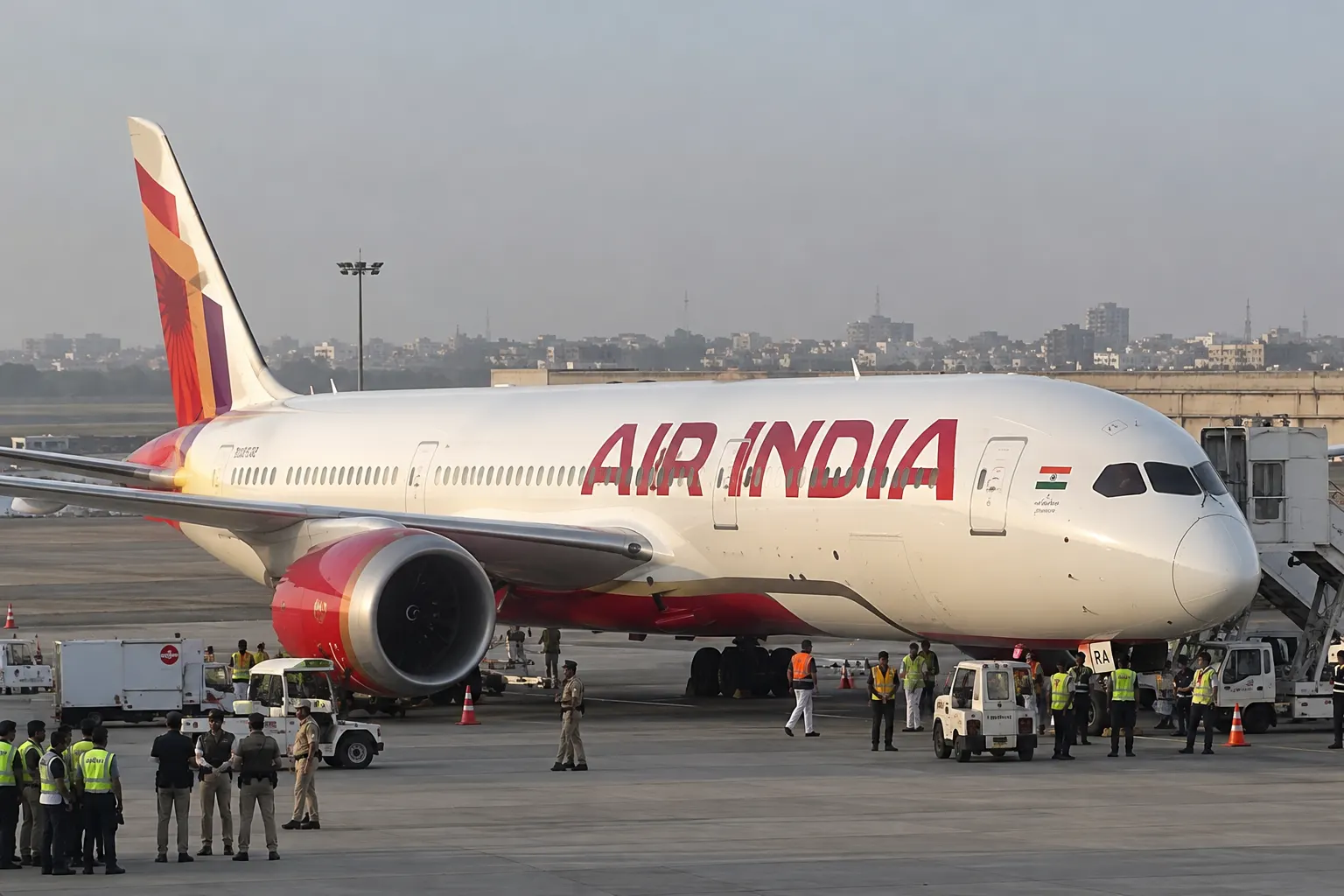
Air India Frankfurt–Delhi Flight Diverted to Jaipur After Hijack Alert
An Air India flight travelling from Frankfurt to Delhi was diverted to Jaipur on Wednesday after the aircraft transmitted the emergency transponder code used internationally to indicate hijacking or unlawful interference.
Flight AI2030, operated by a Boeing 787-9, landed safely at Jaipur International Airport at around 9:35 am. All 306 passengers were reported safe, while the aircraft was moved to an isolation bay for security checks.
The incident triggered a major security response involving airport authorities, police, the Central Industrial Security Force, bomb detection teams and other agencies. Preliminary indications suggest the hijack alert may have been transmitted accidentally, but authorities are investigating exactly what happened.
Flight transmitted emergency hijack code 7500
The security alert began after the aircraft transmitted squawk code 7500 while approaching Indian airspace.
Aircraft transponders use numerical codes to communicate specific situations to air traffic control. Code 7500 is internationally recognised as indicating unlawful interference, including a possible hijacking.
Once the signal was detected, air traffic controllers treated the situation as a genuine security threat and diverted the aircraft to Jaipur rather than allowing it to continue to Delhi.
The Boeing 787-9 landed safely before being moved away from the main terminal area to an isolation bay. Passengers were then deboarded under the supervision of security agencies.
Authorities inspected the aircraft, passengers and baggage as part of standard procedures used when a potential hijacking or security threat is reported.
306 passengers safely evacuated and screened
All 306 passengers on board were reported safe after the landing.
Security personnel carried out checks inside the aircraft and examined baggage while passengers remained in a designated area of the terminal.
Sniffer dogs and bomb detection teams were also deployed as authorities attempted to establish whether there was any genuine threat aboard the aircraft.
No evidence of an actual hijacking or unlawful interference was reported during the initial security checks.
Air India later said relevant security agencies had completed the necessary checks and cleared the aircraft and crew. Passengers underwent security screening before being allowed to reboard.
The airline apologised for the disruption and said passenger and crew safety remained its highest priority.
Was the hijack alert sent accidentally?
The most important question now is why code 7500 was transmitted.
Preliminary information suggests the signal may have been issued by mistake. Airport officials have indicated that investigators are examining whether the alert resulted from an accidental cockpit input rather than an actual security incident.
The situation is unusual because pilots reportedly communicated that conditions aboard the aircraft were normal even though the transponder was showing the hijacking code.
That discrepancy is likely to be a central part of the investigation.
A false 7500 transmission cannot simply be ignored because air traffic controllers and security agencies must treat the code as genuine until the aircraft is secured and the circumstances are established.
Even if the alert ultimately proves accidental, the incident demonstrates how quickly aviation security protocols activate once a recognised hijacking signal appears.
Why code 7500 triggers an immediate security response
Commercial aircraft use transponders to transmit information that helps air traffic controllers identify and track flights.
Pilots can enter specific emergency codes depending on the nature of a problem. Code 7500 indicates unlawful interference, while other codes are used for radio communication failures or general emergencies.
Because a pilot facing a genuine hijacking may not be able to openly explain the situation over radio, the transponder code provides a discreet way of alerting air traffic control.
Once code 7500 appears, authorities generally assume the aircraft could be under threat and begin coordinating an emergency response.
That can involve diversion to a designated airport, isolation of the aircraft, deployment of specialised security units and screening of everyone on board.
Those procedures explain why AI2030 was diverted even though there was no immediate confirmation of an actual hijacking attempt.
Security agencies investigate what caused the alert
The investigation will now focus on cockpit procedures, transponder data, communication between pilots and air traffic control and the sequence of events before the diversion.
Investigators may also examine whether there was any technical issue with the aircraft's transponder system or whether the code was entered manually by mistake.
Because the aircraft transmitted an internationally recognised hijacking signal, authorities will need to establish the cause clearly before the incident can be considered closed.
Air India and aviation regulators may also review whether additional procedural safeguards are required to reduce the risk of accidental emergency-code transmissions.
For passengers aboard AI2030, however, the most important outcome is that the aircraft landed safely and no actual security threat was found during initial checks.
The incident caused significant disruption but ultimately ended without injuries or evidence of a hijacking.
What remains is a highly unusual aviation mystery: how did an international passenger flight transmit one of the most serious emergency signals available to pilots when everything aboard the aircraft was apparently normal?