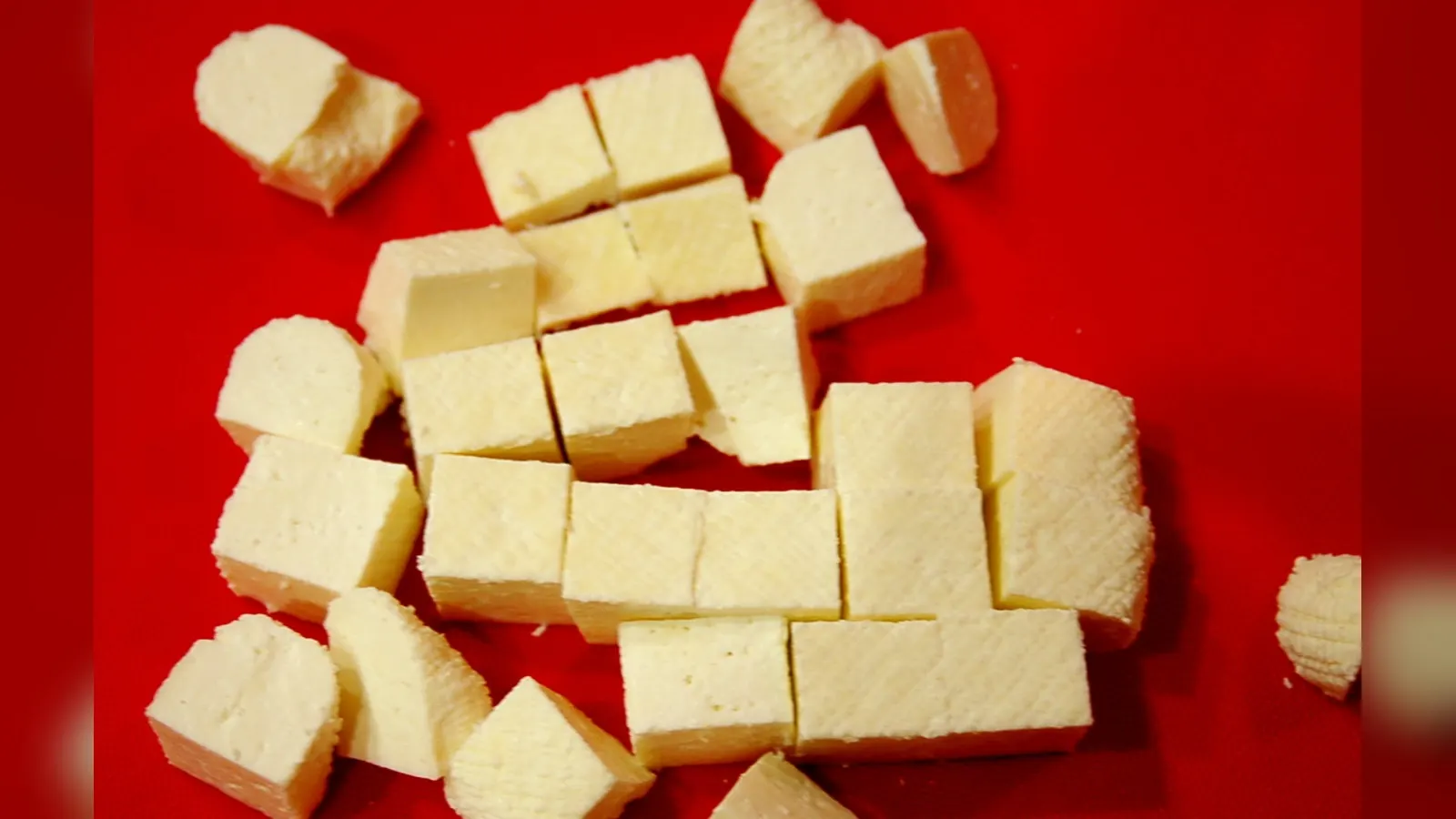
Delhi High Court Seeks FSSAI Response Over ‘Fake Paneer’ Sold to Consumers
The Delhi High Court has sought responses from the Food Safety and Standards Authority of India, the Centre and the Delhi government over allegations that non-dairy substitutes are being sold or served to consumers as paneer without adequate disclosure.
The case comes just ahead of the festive season, when demand for paneer and dairy-based products typically rises sharply. Petitioners have argued that consumers ordering paneer at restaurants, hotels, cloud kitchens or food outlets may have no reliable way of knowing whether they are receiving traditional milk-based paneer or an analogue product made using vegetable oils, starches and other non-dairy ingredients.
The court has not banned analogue products. Instead, the proceedings are focused on whether such products are being misrepresented and whether consumers are being given clear information about what they are actually eating.
Court asks Centre, FSSAI and Delhi government to respond
A Division Bench of Acting Chief Justice Nitin Wasudeo Sambre and Justice Sanjay Sharma issued notices to the authorities and sought their responses within six weeks.
The public interest litigation was filed by law student Ridhima Singh and advocate Avlokiteshwar Padmapani Sidharth. The petition seeks stronger enforcement against non-dairy products allegedly being passed off as paneer and asks authorities to carry out testing and monitoring in the capital.
The petitioners argued that when a customer orders paneer, there is a reasonable expectation that the product is made from milk. If a restaurant or food business instead uses an analogue product, they said, that difference should be clearly disclosed.
The High Court declined to immediately order the enforcement drive sought by the petitioners but agreed that the issue required responses from regulators and governments.
What is analogue paneer?
Traditional paneer is made by curdling milk and separating the solid curds from whey. Analogue products can be made using combinations of vegetable oils, plant proteins, starches, emulsifiers and other ingredients designed to replicate the texture and appearance of paneer.
Such products are not automatically illegal merely because they are non-dairy. The regulatory concern arises when they are marketed, labelled or served in a way that leads consumers to believe they are buying conventional milk-derived paneer.
That distinction has become increasingly important because analogue products can be cheaper to manufacture than dairy paneer and may therefore be attractive to restaurants, caterers and food businesses trying to control costs.
Consumers, however, may make purchasing decisions based on assumptions about ingredients, nutrition, allergies, dietary preferences or religious and cultural considerations.
FSSAI has already proposed tighter rules
The High Court proceedings come shortly after FSSAI proposed draft regulations aimed specifically at preventing non-milk products from being represented as paneer.
Under the proposed amendment, products made from ingredients not derived from milk would not be allowed to use the term “paneer” in their name, labelling or marketing.
Products currently registered under the “Analogue in Dairy Context” category would also have to stop using “paneer” in their nomenclature if the draft rules are finalised.
The proposal reflects regulators’ growing concern that consumers may struggle to distinguish between conventional paneer and lookalike substitutes, especially when eating outside the home.
The court case now raises a related enforcement question: even if clearer rules exist on paper, how can customers know what restaurants and food businesses are actually serving?
Restaurants and food-delivery platforms may come under greater scrutiny
The petition seeks stronger checks not only on manufacturers and retailers but also on hotels, restaurants, cloud kitchens and other businesses serving prepared food.
This could become particularly significant for the food-delivery sector, where customers generally cannot inspect ingredients before ordering.
If regulators move towards mandatory disclosure, restaurants could eventually be required to clearly state when a dish contains an analogue or non-dairy substitute rather than traditional paneer.
That would shift the issue from food manufacturing alone to menu transparency and consumer information.
Such disclosure could also become important for online platforms, where food descriptions may need to distinguish between dairy paneer and substitute products more clearly.
Festive season raises urgency of the dispute
The timing of the case is important because demand for paneer, sweets and dairy products tends to rise during festivals.
Higher demand can create greater incentives for adulteration, substitution or misrepresentation, particularly when milk prices are high or supply is tight.
The petitioners have argued that stronger sampling and enforcement are needed before the festive season to prevent consumers from being misled.
The court, however, has so far chosen to seek detailed responses from the authorities rather than impose immediate restrictions.
That means the next major development will depend on what FSSAI, the Centre and the Delhi government tell the court about existing enforcement mechanisms, proposed regulations and consumer-protection measures.
The issue is ultimately about disclosure, not banning alternatives
The controversy around “fake paneer” can easily become misleading if every non-dairy substitute is treated as inherently fraudulent.
Analogue products can have legitimate commercial uses if they are properly labelled and sold transparently.
The central issue is whether consumers are told what they are buying.
If a product is made from vegetable oil, starch or plant protein but is represented simply as paneer, customers may reasonably believe they are receiving a milk-based dairy product.
The High Court proceedings could therefore influence how food businesses disclose ingredients and how regulators enforce rules around imitation dairy products.
For consumers, the principle at the centre of the case is straightforward: if a food looks like paneer but is not made from milk, they should be able to know that before they order or eat it.