What Is Cultural Heritage? Meaning, Types, Importance and Why We Preserve It
What is cultural heritage? Cultural heritage is the collection of places, objects, traditions, knowledge, skills and cultural practices that people inherit from the past, value in the present and seek to pass on to future generations.
That definition immediately shows why heritage is not simply another word for “old things.” A centuries-old building may have little recognised cultural significance, while a much younger factory, railway station, neighbourhood, song, ritual or political site may become important because of what it reveals about a community's history and identity. Heritage can also exist without a physical object at all. Oral traditions, performing arts, rituals and craftsmanship can survive through people rather than through stone or metal.
Nor is heritage limited to famous monuments. The UNESCO World Heritage List represents only a small group of cultural and natural properties judged to possess Outstanding Universal Value. A local market, cemetery, industrial building, family archive, religious practice or neighbourhood landmark can carry enormous cultural significance without ever becoming a World Heritage Site. UNESCO's own 1972 Convention makes clear that World Heritage is a particular international framework rather than an exhaustive inventory of everything worth preserving.
The deeper point is that heritage is a relationship between the past, the present and the future. People inherit more history than they can possibly preserve. They therefore make choices about what deserves protection, what stories should be told, how places should continue to be used and whose memories have been ignored. Those choices can produce pride, disagreement, tourism, economic opportunity, political conflict and difficult questions about ownership.
Cultural Heritage at a Glance
| Question | Answer |
|---|---|
| What is cultural heritage? | Inherited places, objects, traditions, knowledge and practices that people value and pass forward |
| Does heritage have to be old? | No. Significance matters more than age alone |
| What is tangible heritage? | Physical heritage such as buildings, monuments, archaeological sites, landscapes and objects |
| What is intangible heritage? | Living traditions, performing arts, rituals, knowledge and craftsmanship transmitted between people |
| Is all heritage UNESCO World Heritage? | No. World Heritage is a special category requiring Outstanding Universal Value |
| Why preserve heritage? | Memory, historical evidence, identity, education, continuity, cultural diversity and community value |
| Does preservation mean freezing a place? | No. Conservation often has to coexist with use, adaptation and development |
| Who decides what is heritage? | Communities, governments, experts, owners, institutions and sometimes international bodies |
| Can heritage be controversial? | Yes. Sites and symbols can represent pride to one group and oppression to another |
| What threatens heritage today? | Neglect, development, tourism pressure, disasters, war, trafficking and climate change |
Cultural Heritage Is More Than Old Buildings
The popular image of heritage is often monumental: a palace, temple, fort, cathedral, archaeological ruin or historic city centre.
Those are important forms of heritage, but they are only part of the picture.
UNESCO's understanding of cultural heritage expanded significantly during the twentieth and early twenty-first centuries. The 1972 World Heritage Convention focused on monuments, groups of buildings and sites of exceptional international significance. The 2003 Convention on Intangible Cultural Heritage formally recognised another dimension: traditions and knowledge that remain alive because communities continue practising and transmitting them.
Cultural heritage can therefore include a historic railway station and the craft skills once used to build it, a religious building and the rituals performed there, a traditional musical instrument and the knowledge required to play and manufacture it.
This distinction fundamentally changes preservation. A stone building may survive physically even after its original community disappears. A song, dance or traditional technique can vanish even when nothing visible has been destroyed.
Heritage Is an Inheritance—but Also a Selection
The word heritage implies inheritance, but societies do not preserve everything they inherit.
Every generation receives an enormous physical and cultural record from those before it: buildings, documents, objects, landscapes, stories, customs, industrial sites, political institutions and everyday practices. Much of that record inevitably changes or disappears.
Heritage therefore involves selection.
The National Park Service describes historic preservation as a way of asking which parts of the past matter enough to carry into the future, including histories that are admirable as well as histories that are painful or uncomfortable.
This selection process is important because heritage values are not completely fixed. Nineteenth-century factories that were once regarded as ugly industrial infrastructure may later be protected as evidence of labour and technological history. Modernist buildings that one generation wanted to demolish may later be recognised as architecturally important.
The heritage list of one era can therefore reveal almost as much about that era's values as it does about the past being preserved.
What Are the Main Types of Cultural Heritage?
The simplest distinction is between tangible and intangible cultural heritage.
Tangible heritage has a physical form. Intangible heritage survives primarily through knowledge, practice and transmission.
These categories overlap constantly in real life. A traditional festival may depend on a particular square, temple, costume and musical instrument. A historic workshop may matter partly because of the skills practised inside it.
That is why modern conservation increasingly looks at relationships between physical places and living cultural practices rather than assuming heritage can always be placed into rigid boxes.
Tangible Cultural Heritage
Tangible cultural heritage consists of material things that can be physically encountered.
Examples include historic buildings, monuments, archaeological remains, cultural landscapes, manuscripts, paintings, sculptures, tools, industrial machinery and museum objects.
UNESCO's World Heritage Convention identifies three broad forms of cultural property for its purposes: monuments, groups of buildings and sites. The Convention also recognises sites resulting from the combined work of people and nature.
Tangible heritage can be divided further into immovable heritage, such as buildings and archaeological sites, and movable heritage, such as artworks, manuscripts and objects.
Its physical character creates obvious conservation problems. Stone erodes. Wood decays. Metal corrodes. Water enters roofs. Foundations move. Fires, earthquakes and floods can destroy in hours what survived for centuries.
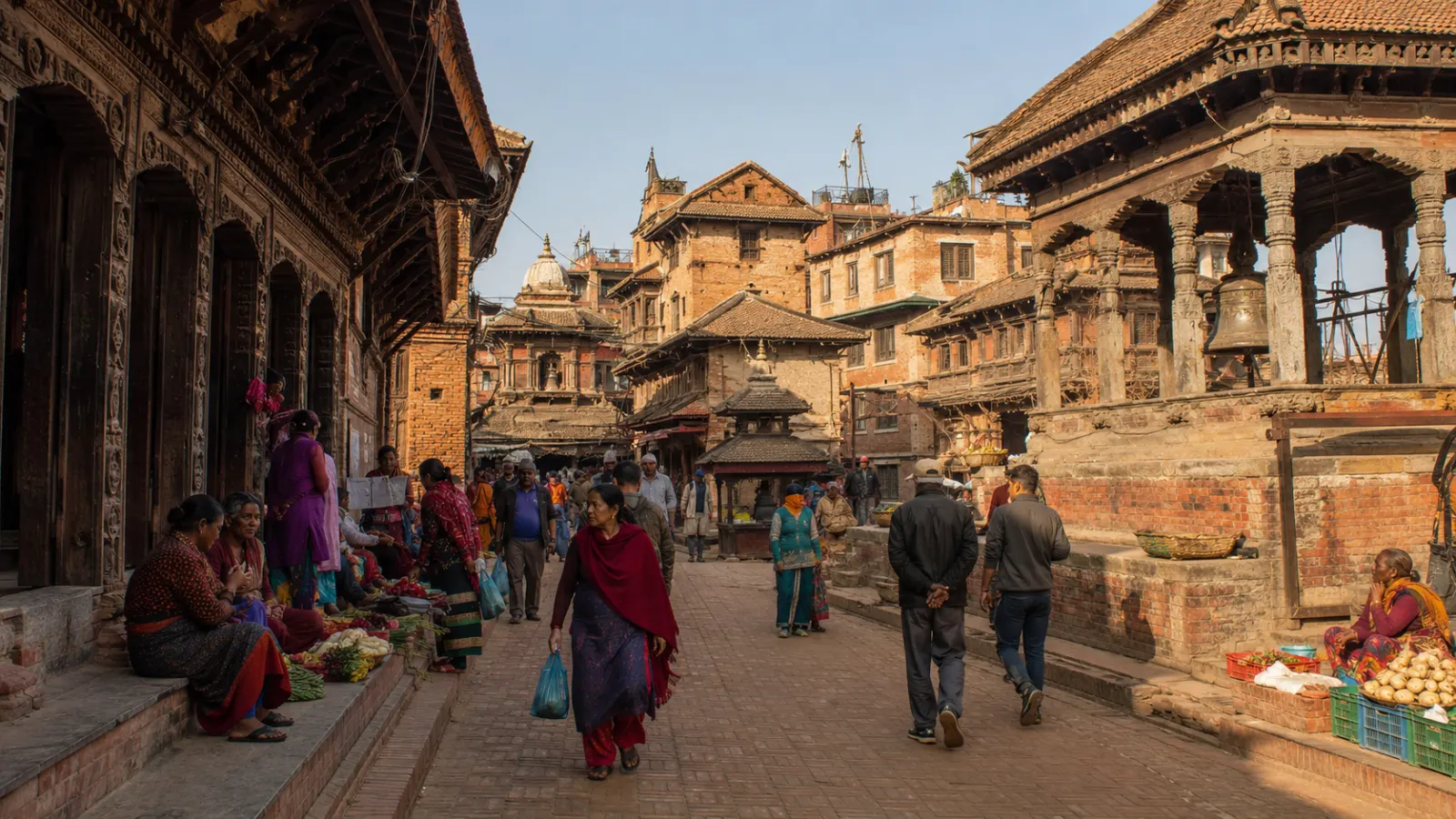
But material conservation alone is not always enough. A beautifully restored market that loses all of its traders may remain architecturally intact while losing much of the social meaning that made it important.
Intangible Cultural Heritage
Intangible cultural heritage, often called living heritage, refers to cultural knowledge and practices that communities recognise as part of their heritage and continue transmitting.
UNESCO identifies five broad domains: oral traditions and expressions, performing arts, social practices and festive events, knowledge and practices concerning nature and the universe, and traditional craftsmanship.
Examples can include storytelling, music, dance, rituals, festivals, traditional farming knowledge, foodways and craft skills.
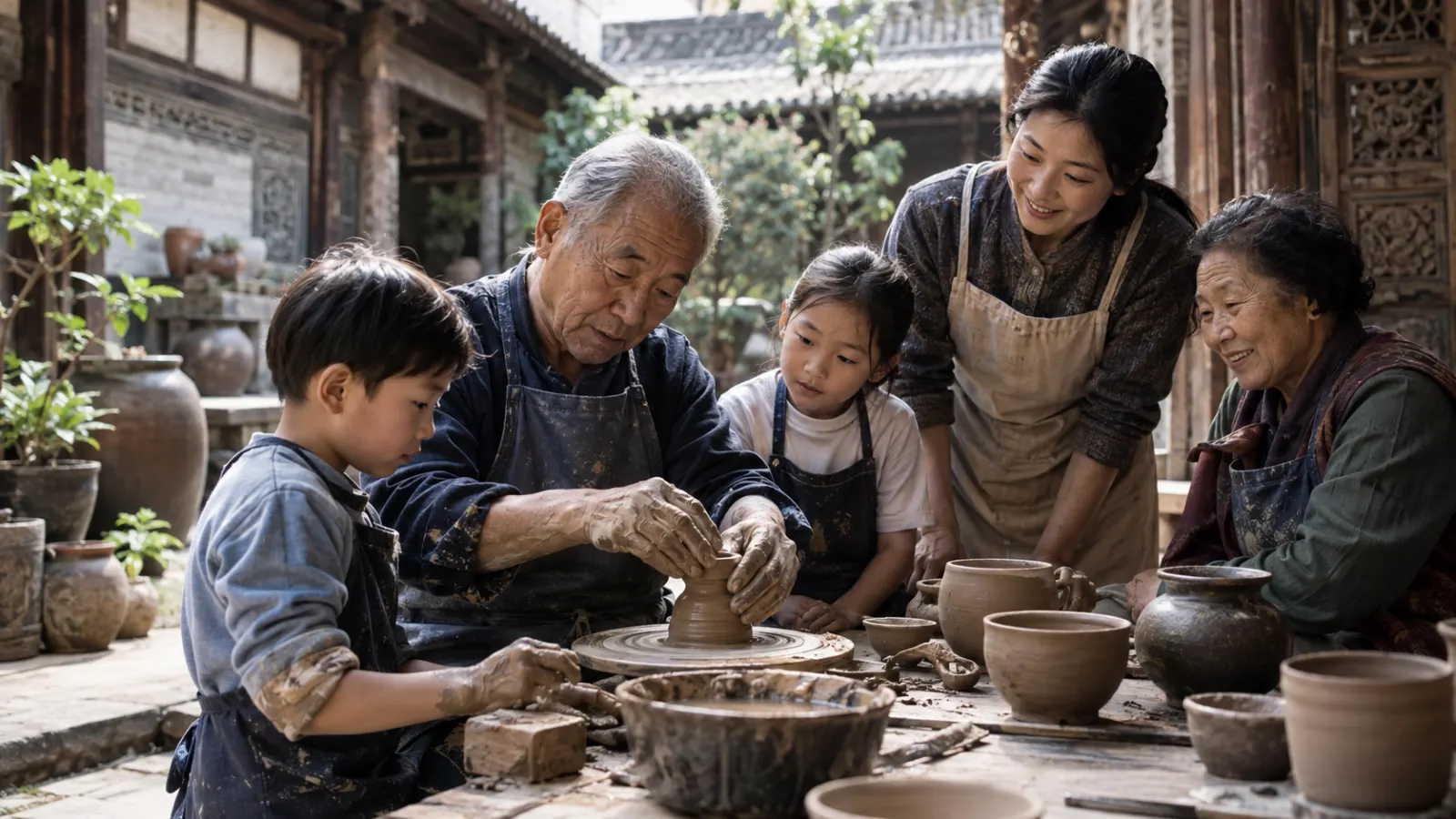
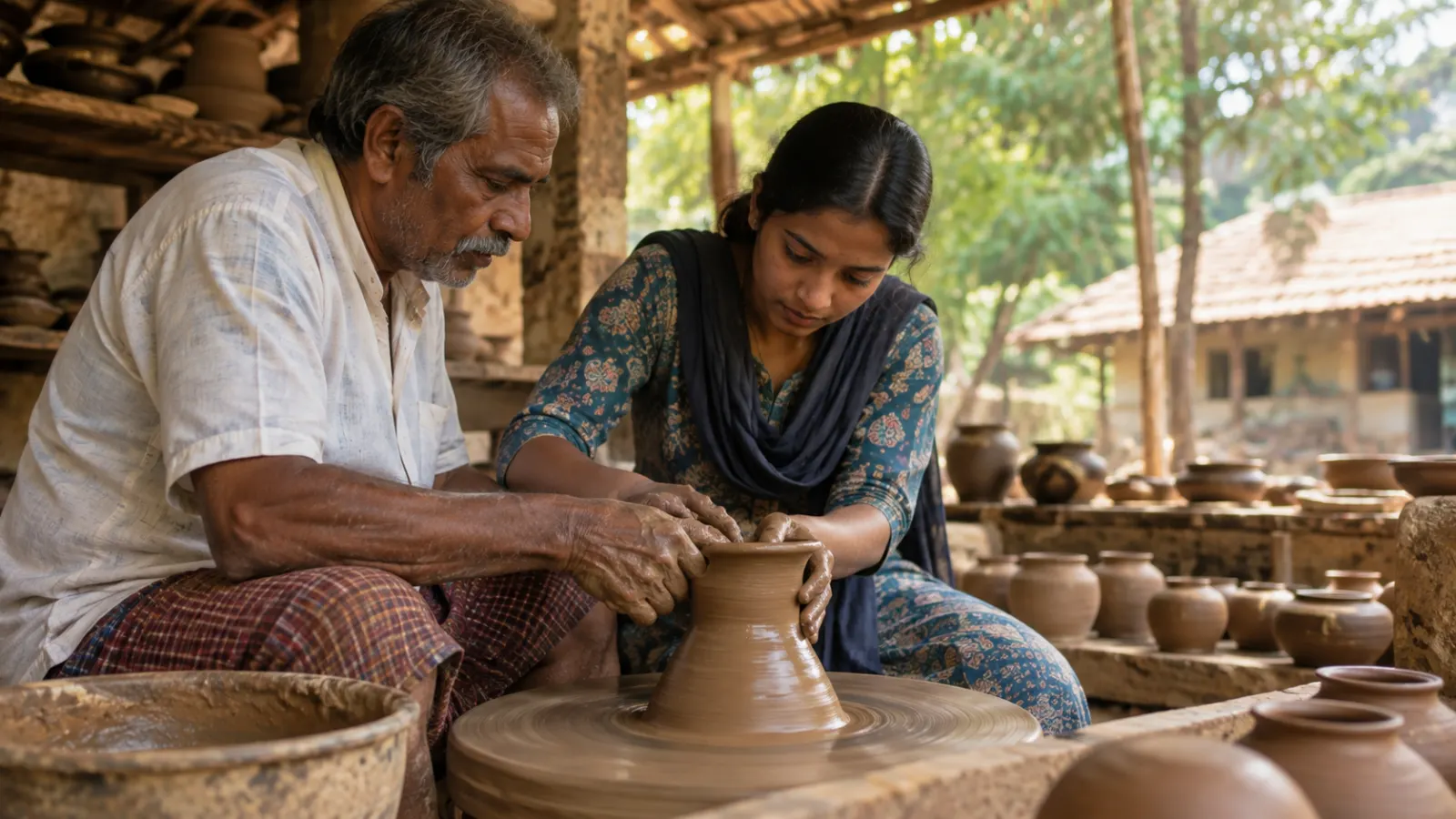
Intangible heritage cannot be safeguarded simply by placing an example inside a museum. A musical tradition survives when people continue learning and performing it. A craft survives when practitioners can still obtain materials, earn a livelihood and teach the technique to another generation.
UNESCO consequently defines safeguarding broadly to include identification, documentation, research, protection, promotion, education, transmission and revitalisation.
The central object of preservation is often not the product but the knowledge required to recreate it.
Living Heritage Is Supposed to Change
Preservation sometimes creates a misleading expectation that traditions must remain exactly as they existed centuries ago.
That is not how living culture works.
UNESCO explicitly describes intangible heritage as something continuously recreated as communities transmit it and respond to their environments and histories.
A song can develop new variations. A ritual can change while remaining meaningful. Craftspeople may incorporate new tools while retaining essential knowledge. A festival can evolve as a community changes.
Safeguarding living heritage therefore does not necessarily mean reproducing one historically frozen version forever.
Indeed, forcing communities to perform a tradition exactly as outsiders expect can transform living culture into staged heritage.
Traditional Craftsmanship Shows the Difference Clearly
Consider a traditional craft.
A museum could collect one beautifully made object and preserve it for hundreds of years. The object would survive, but the craft itself could still become extinct if nobody knew how to produce another one.
UNESCO's approach to traditional craftsmanship therefore focuses heavily on the skills and knowledge of practitioners and on creating conditions in which those skills can be passed to others.
That can involve apprenticeships, access to materials, viable markets, education and recognition of craftspeople.
The difference illustrates why preserving heritage and preserving objects are not always the same activity.
What Is Natural Heritage?
The 1972 World Heritage Convention was unusual because it established an international framework for protecting both cultural and natural heritage.
Natural heritage can include exceptional physical and biological formations, habitats and natural sites with major scientific, conservation or aesthetic significance.
This creates a useful conceptual distinction, but nature and culture are frequently intertwined.
Terraced agricultural landscapes, sacred forests, historic gardens, pastoral landscapes and long-inhabited coastal environments may have been shaped by interactions between communities and ecosystems over centuries.
The boundary between “natural” and “cultural” therefore does not always match the way local communities understand a place.
What Is a Cultural Landscape?
A cultural landscape is broadly a landscape whose significance reflects the relationship between people and their environment.
Agricultural terraces, designed gardens, sacred landscapes and regions shaped by traditional land management can all demonstrate that relationship.
The idea helps correct an older preservation tendency to treat heritage as isolated monuments surrounded by irrelevant space.
A temple may derive meaning from its mountain setting. A historic settlement may be inseparable from the agricultural landscape that sustained it. A pilgrimage route may matter because of the sequence of places and experiences encountered along the journey.
Heritage conservation increasingly considers these wider relationships.
World Heritage Is Not the Same as All Heritage
The World Heritage List has enormous public visibility, which can create the impression that UNESCO determines what counts as heritage.
It does not.
The 1972 Convention uses a demanding international standard: listed properties must possess Outstanding Universal Value and meet formal criteria and management requirements. The Convention itself states that national inventories are not exhaustive.
Most meaningful heritage will never appear on the World Heritage List.
A local cinema may matter deeply to one town. A cemetery may preserve the history of a marginalised community. A neighbourhood market may contain generations of social memory. An industrial structure may explain how a region's economy developed.
Their significance does not become invalid because UNESCO has not listed them.
World Heritage is therefore best understood as one level of recognition, not a complete hierarchy of human cultural value.
Why Is Cultural Heritage Important?
The importance of cultural heritage comes from several overlapping functions.
It preserves evidence about the past, supports collective and individual identity, helps transmit knowledge, creates continuity, sustains cultural practices and can contribute to local economies.
The National Park Service emphasises preservation as a means of transmitting understandings of the past to future generations, including difficult as well as celebratory histories.
But heritage matters differently to different people. A historian may value a building for evidence. Residents may value it because family memories are attached to it. Architects may care about construction methods. Tourists may value its beauty.
Conservation becomes difficult precisely because these values can overlap—and sometimes conflict.
Heritage Preserves Evidence
A surviving place or object can contain information that written descriptions cannot fully reproduce.
An industrial building reveals how manufacturing was organised spatially. Tool marks can show how craftspeople worked. Archaeological remains can reveal diet, technology and settlement patterns. Historic streets can show relationships between class, transport and urban planning.
This evidence can support interpretations that later generations have not yet imagined.
That creates one of the strongest arguments for conservation: destruction is often irreversible.
Future researchers may ask better questions or develop new analytical methods, but those possibilities disappear if the physical evidence has already been demolished.
Heritage Supports Identity and Belonging
People frequently use heritage to understand where they come from and how they relate to a wider community.
That identity may be national, religious, regional, occupational, ethnic or local.
A neighbourhood cinema can become part of local identity. A pilgrimage tradition can connect people across generations. Industrial workers may identify strongly with a factory that outsiders see only as obsolete infrastructure.
This is particularly important for groups whose experiences were poorly represented in conventional historical records.
Preserving worker housing, minority neighbourhoods, women's organisations or migration sites can expand the public record beyond palaces, government buildings and elite monuments.
Heritage policy therefore influences whose past becomes visible.
Heritage Can Correct Historical Exclusion
Traditional heritage systems often concentrated on monumental architecture associated with political, religious or economic elites.
That left large parts of social history underrepresented.
The places connected with workers, migrants, women, minority communities, informal settlements and everyday life may be less architecturally spectacular but historically significant.
Correcting that imbalance requires active research.
Heritage significance should not depend solely on grandeur. An ordinary-looking house can matter because an important political movement operated there. A modest workshop may preserve evidence of a disappearing trade.
Expanding what counts as heritage can therefore broaden who sees themselves represented in public history.
Heritage Has Educational Value
Historic places make abstract history tangible.
A student studying industrialisation can learn from books, but walking through a mill complex reveals the scale of machinery, spatial organisation and working conditions differently.
Likewise, a prison, battlefield or former segregation site can make systems of power visible in physical space.
This does not mean visiting a place automatically produces historical understanding. Interpretation still matters.
Signs, museums, guides, archives, oral histories and educational programmes help visitors connect surviving fabric with historical context.
The strongest heritage education therefore combines place with explanation.
Heritage Creates Continuity During Change
Cities and communities are constantly changing through migration, development, economic transformation and demographic turnover.
Heritage can provide continuity during that change.
The value is not necessarily nostalgia or resistance to all new development. It is the sense that the present exists within a longer sequence rather than beginning from zero.
This partly explains why residents sometimes fight passionately to save buildings outsiders consider unremarkable.
The building's architecture may be ordinary, but it can function as a shared landmark through which people organise memory and belonging.
Preservation Does Not Mean Freezing Everything
One of the most persistent misconceptions about conservation is that a heritage place must remain physically and socially unchanged.
Historic cities cannot function that way.
People still need housing, transport, utilities, workplaces, accessibility, schools and public services. Buildings need fire protection and structural repair. Communities change.
UNESCO's Historic Urban Landscape approach explicitly treats urban heritage as part of an evolving human environment containing tangible and intangible values, socioeconomic conditions, local communities and environmental factors. It aims to integrate conservation with urban development rather than treating them as completely separate activities.
A perfectly frozen neighbourhood may preserve a visual image while destroying the social conditions that made it a living community.
Adaptive Reuse Can Keep Heritage Alive
One solution is adaptive reuse: giving an old building a viable new function while retaining important heritage characteristics.
A warehouse might become housing, a railway building a cultural centre or an industrial complex a university campus.
Reuse can provide maintenance, income and regular occupation. Abandoned buildings, by contrast, often deteriorate quickly.
But adaptive reuse is not simply placing any new activity inside an old shell. New interventions may affect spatial character, historic materials or culturally significant uses.
The central question is therefore not whether change is permitted but which values need to survive through the change.
Authenticity Does Not Simply Mean “Everything Original”
Authenticity is another complicated heritage concept.
Historic buildings are rarely untouched products of one moment. They accumulate repairs, additions, replacements and adaptations.
A medieval structure may contain nineteenth-century alterations and modern safety interventions. Removing every later change in an attempt to reveal an “original” version can itself destroy historical evidence.
Conservation therefore requires judgment about which layers have significance.
Authenticity may involve materials, design, workmanship, setting, use, tradition or other attributes depending on the heritage being protected.
There is rarely one universal formula.
Maintenance Is More Important Than Dramatic Restoration
Heritage news often focuses on spectacular restoration projects.
Routine maintenance is less glamorous but frequently more important.
A small roof leak left unresolved can eventually destroy timber, plaster and decorative finishes. Blocked drainage can undermine foundations. Vegetation can penetrate masonry.
A preservation system that funds occasional expensive restoration while neglecting ordinary care is inefficient.
Conservation is cumulative.
Inspecting roofs, controlling moisture, repairing minor defects and documenting change can prevent much larger losses later.
Heritage Can Be Painful
Heritage does not have to celebrate the past.
Former prisons, battlefields, concentration camps, sites of enslavement, places of massacre and locations associated with political repression may deserve preservation precisely because they preserve evidence of suffering and injustice.
The National Park Service explicitly includes painful and uncomfortable histories within the purpose of preservation.
Such sites create difficult interpretive responsibilities.
Preservation should not romanticise perpetrators or reduce victims to tourist spectacle. But destroying the evidence can also make denial and forgetting easier.
Some heritage exists because societies need places where difficult history remains physically confrontable.
Heritage Can Be Contested
A monument can mean entirely different things to different groups.
One community may see a statue as a symbol of national achievement. Another may see the same figure as representing conquest, slavery or dispossession.
Colonial architecture can be admired aesthetically while remaining politically associated with domination.
Contested heritage therefore raises questions that conservation science alone cannot answer.
Should the object remain? Should it be removed? Relocated? Reinterpreted? Should additional memorials or explanation be added?
These are debates about public memory and political meaning, not merely about stone conservation.
Preservation Is Not the Same as Celebration
This distinction is essential.
Keeping a controversial site does not necessarily mean honouring the values associated with it.
A prison can be preserved as evidence of repression. A battlefield can be interpreted through the experiences of soldiers and civilians rather than used to glorify war. A monument can remain while its historical context is fundamentally reconsidered.
Conversely, removal does not always mean historical erasure if the object is documented and relocated to a setting where it can be interpreted more critically.
Heritage policy has several tools besides the binary choice of destroy or celebrate.
Who Gets to Decide What Is Heritage?
Governments often make formal designation decisions, but heritage value exists outside government lists.
Residents, Indigenous peoples, religious communities, historians, archaeologists, architects, museums, owners and advocacy organisations may all have different understandings of what matters.
UNESCO's Historic Urban Landscape approach specifically promotes civic-engagement tools that allow a diverse range of stakeholders to identify local values, establish priorities and participate in decisions about conservation and development.
This matters because experts and residents may value the same place differently.
A conservation architect may emphasise façade integrity. Residents may care more about affordable housing, a local market or continued religious use.
Good heritage management needs to understand both.
Community Participation Is Not Just Consultation
Weak participation asks communities for comments after major decisions have already been made.
Meaningful participation gives people influence over what is identified, how significance is interpreted and how conservation affects daily life.
This becomes especially important where heritage designation can increase property prices, restrict alterations or expand tourism.
If residents bear the costs of preservation while outsiders receive most of the benefits, resentment is understandable.
Community participation therefore belongs to long-term conservation, not merely public relations.
Who Owns Cultural Heritage?
Legal ownership and cultural meaning can point in different directions.
An individual or museum may possess an artefact legally under current law while another country or community argues that it was removed through colonial coercion, conflict, illicit excavation or unequal transactions.
Sacred objects create even more complicated questions because a community may regard an artefact not as ordinary property but as part of an ongoing spiritual relationship.
Restitution and repatriation debates therefore concern more than museum storage.
They ask how historical injustice, legal title, cultural rights and stewardship should interact.
There is no universal answer for every object, but preservation cannot be separated from questions of how heritage was acquired and who has authority to interpret it.
Tourism Can Help Preserve Heritage
Tourism can provide revenue, employment and political support for conservation.
Visitors pay entrance fees, use local hotels and restaurants, buy crafts and create demand for guides and cultural interpretation.
UNESCO's sustainable-tourism programme explicitly recognises that well-managed tourism can generate community and economic benefits while supporting heritage conservation.
Tourism can also introduce people to histories and cultures they might never otherwise encounter.
But economic value does not automatically produce good conservation.
Tourism Can Also Damage Heritage
Too many visitors can erode paths, strain water and waste infrastructure, increase congestion and damage fragile spaces.
Tourism can also change the social environment.
Housing may shift toward short-term accommodation. Residents can be displaced. Traditional practices may be reformatted primarily for visitors rather than for the communities that created them.
UNESCO consequently treats tourism and heritage as a two-way relationship: tourism can provide benefits when managed well, but it can threaten heritage when poorly managed.
The important question is not simply how many tourists can we attract?
It is what level and form of tourism allows the place and its community to remain viable?
Cultural Heritage Can Create Jobs
Conservation is labour-intensive.
It creates work for architects, engineers, archaeologists, surveyors, historians, conservators, craftspeople, curators, interpreters and site managers.
Traditional repair projects can also create demand for skills that might otherwise disappear.
Stone carving, lime plastering, timber repair and traditional roofing may survive partly because historic buildings still require them.
This creates a productive relationship between tangible and intangible heritage: preserving buildings can help preserve knowledge.
The strongest economic outcome occurs when conservation investment supports local expertise rather than importing all labour and capturing revenue elsewhere.
Heritage Law Creates Real Responsibilities
Official heritage designation often changes what owners and governments are permitted to do.
Depending on the legal system, demolition may require special approval, alterations may be reviewed and public agencies may need to consider heritage impacts before development.
These rules exist because ordinary market incentives do not always protect historically important properties.
A developer may rationally prefer replacing an old structure with a more profitable new one even when the old building has public historical value.
Regulation therefore addresses the gap between private ownership and broader cultural interest.
But legal protection also creates legitimate tensions involving development, affordability and property rights.
Good heritage systems need clear criteria, transparent decisions, appeal mechanisms and realistic support for owners asked to maintain protected buildings.
Heritage Preservation Has Opportunity Costs
Not everything can be preserved.
Budgets are limited. Conservation specialists are limited. Governments must also fund housing, education, healthcare, infrastructure and other needs.
Even within heritage, choices have to be made among archives, monuments, archaeological sites, landscapes, museums and living traditions.
This makes prioritisation unavoidable.
The danger is pretending that prioritisation does not happen.
Explicit criteria are better than a system in which famous monuments automatically receive resources while less visible communities lose their heritage quietly.
Local Heritage Can Matter More Than Famous Heritage
People often form their strongest attachments to places that never appear in guidebooks.
A school, cinema, street market, sports ground, workshop or neighbourhood shrine may structure decades of personal and community memory.
Its architectural importance may be modest.
Its social significance may be enormous.
Heritage management works best when it recognises different scales of importance: local, regional, national and international.
A globally famous monument does not automatically matter more to every person than the corner building that has anchored their community for generations.
Climate Change Is Becoming a Major Heritage Threat
Climate change is increasingly part of heritage management.
Sea-level rise threatens coastal archaeological sites and historic settlements. Extreme rainfall can increase erosion and water damage. Heat stresses buildings and collections. Wildfires threaten cultural landscapes and natural sites.
UNESCO now describes climate change as one of the major threats facing World Heritage and adopted an updated Policy Document on Climate Action for World Heritage in 2023. Its current programme combines monitoring, adaptation, disaster-risk planning and capacity building.
Climate risk also complicates traditional conservation philosophy.
A coastline may retreat faster than a site can be physically protected. A historic building may need new cooling or flood protection. A community may eventually have to relocate.
Heritage professionals increasingly face choices not only about how to preserve, but sometimes about what can realistically be saved.
Disaster Preparedness Is Part of Preservation
Earthquakes, floods, fires and storms can destroy heritage rapidly.
Waiting until disaster occurs is therefore not enough.
Inventories, emergency documentation, evacuation plans for collections, structural assessment and coordination with disaster-response agencies can reduce losses.
After disaster, heritage can also play a role in social recovery.
Rebuilding a familiar market, religious site or neighbourhood landmark may restore more than architecture. It can help communities reconstruct patterns of gathering and belonging.
Resilience has therefore become part of modern heritage conservation.
War Can Target Heritage Deliberately
Cultural property is especially vulnerable during armed conflict.
Buildings and collections can be damaged accidentally, looted for profit or intentionally destroyed because they symbolise a community's identity.
International law recognises this problem. The 1954 Hague Convention and its protocols created mechanisms for protecting cultural property during armed conflict, including enhanced protection for certain properties of exceptional importance.
Deliberate destruction can be strategically powerful precisely because heritage connects communities to history.
Attacking a religious site, archive or monument can therefore be an attack on social memory as well as physical material.
Documentation Becomes Critical During Conflict and Disaster
When physical survival cannot be guaranteed, detailed documentation becomes essential.
Photographs, measured drawings, inventories, oral histories, satellite imagery and three-dimensional scans can record the condition and character of sites.
Such records can support restoration, investigation and historical research.
They can also document destruction.
But digital documentation should not be confused with preservation of the place itself.
A 3D model of a historic neighbourhood does not recreate its material surfaces, smells, acoustics, community relationships or lived spatial experience.
A digital record is evidence of what existed.
It is not a complete substitute for what was lost.
Digital Technology Is Changing Heritage Conservation
Digital tools nevertheless offer major advantages.
Photogrammetry and laser scanning can document structures with extraordinary precision. Geographic information systems can map heritage risks. Databases can connect archival records with buildings and landscapes.
UNESCO's current Sites Navigator, for example, integrates geospatial information and hazard alerts to support monitoring of designated sites.
Digital access can also allow people to examine collections that would otherwise be geographically inaccessible.
But digital preservation creates its own problems: file formats become obsolete, storage systems fail, metadata can disappear and digital platforms require continuing maintenance.
Digital does not mean permanent.
Heritage Preservation and Urban Development Can Coexist
Historic-city debates are often framed as a fight between preservation and progress.
That framing is too simple.
Cities need new housing, transit, infrastructure and economic activity. Heritage can also contribute to liveability, local identity and sustainable development.
UNESCO's Historic Urban Landscape approach specifically aims to integrate conservation into urban development rather than isolate historic districts from wider planning.
The practical question becomes whether new development understands and responds to the significance of the existing place.
Contemporary architecture does not automatically damage heritage.
Poorly planned development can.
Heritage Can Support Sustainable Development
Reusing existing structures can sometimes avoid demolition waste and retain embodied materials. Traditional environmental knowledge can provide insights into locally adapted building and land-management practices.
Historic urban areas can also support compact, walkable development.
This does not mean every old building is environmentally sustainable. Some require substantial upgrading for energy efficiency, accessibility or safety.
The stronger principle is that conservation and sustainability should not automatically be treated as competing objectives.
The most effective solutions often begin by asking how existing cultural resources can be adapted rather than assuming replacement is always preferable.
Heritage Is Not Automatically Good
Heritage is sometimes discussed as though inherited traditions are inherently valuable and should be protected from criticism.
That is too simple.
Some inherited practices may conflict with human rights, equality or changing community values.
UNESCO's Intangible Cultural Heritage Convention explicitly limits its recognition to heritage compatible with international human-rights instruments, mutual respect and sustainable development.
This matters because cultural continuity cannot justify every practice merely by calling it traditional.
Heritage is subject to interpretation, debate and ethical judgment.
Education Determines Whether Heritage Remains Meaningful
Legal protection can preserve a building physically, but it cannot force future generations to care about it.
Heritage survives socially when people understand why it matters.
School programmes, local exhibitions, oral-history projects, interpretation and community participation can connect younger generations with inherited places and practices.
Education is especially important for intangible heritage because transmission itself is part of survival.
A craft nobody learns, a song nobody performs or an oral tradition nobody remembers can disappear even while governments officially recognise it.
Cultural Heritage Is Always Changing
The categories of heritage change as societies change.
Industrial heritage became much more prominent as factories closed and communities began recognising the historical importance of industrialisation.
Twentieth-century architecture increasingly requires protection as buildings once considered too new become historically significant.
Communities may revive practices after periods of decline.
New research can also change interpretation. A building once protected primarily for its architecture may later become important because historians uncover connections to labour, migration or political movements.
Heritage is therefore not a fixed inventory completed by earlier generations.
It is an ongoing conversation about significance.
Common Myths About Cultural Heritage
Myth 1: Heritage Means Anything That Is Old
Age can contribute to significance, but it does not automatically create heritage value. Historical, cultural, social, architectural or community meaning matters.
Myth 2: UNESCO Decides What Counts as Heritage
UNESCO designates particular international heritage categories. Most important cultural heritage is recognised and managed locally or nationally.
Myth 3: Heritage Is Only Buildings and Monuments
Heritage also includes objects, archaeological sites, landscapes, oral traditions, performing arts, rituals, knowledge and craftsmanship.
Myth 4: Preservation Means Nothing Can Change
Good conservation frequently involves adaptation, maintenance and continued use.
Myth 5: Intangible Heritage Should Never Change
Living heritage naturally evolves as communities transmit and reinterpret it.
Myth 6: Preserving a Historic Site Means Celebrating Its History
Places associated with violence or oppression can be preserved precisely to document and confront difficult history.
Myth 7: Tourism Always Helps Heritage
Tourism can provide revenue and visibility, but unmanaged visitor pressure can damage sites and displace communities.
Myth 8: Digital Scanning Can Replace a Destroyed Site
Digital records preserve information, not the complete material and social experience of the original place.
Myth 9: Heritage Preservation Is Only About the Past
Conservation decisions are made in the present for future users. They are also closely connected to housing, climate, development, education and local economies.
Myth 10: Experts Alone Should Decide What Matters
Professional expertise is important, but communities often hold knowledge and values that formal surveys cannot capture.
How Can Cultural Heritage Be Preserved?
Different heritage requires different strategies.
Buildings need inspection, maintenance, compatible repair and appropriate reuse. Archaeological sites may need controlled access and environmental monitoring. Museum collections need conservation and documentation.
Intangible heritage requires transmission between people, support for practitioners and conditions that allow traditions to remain viable.
Historic cities require planning that balances inherited character with contemporary life.
Across all of these areas, several principles recur: identify significance before intervening, document what exists, involve affected communities, manage change rather than pretending change can be stopped, address risks early and maintain heritage continuously rather than waiting for crisis.
What Can Individuals Do?
Heritage preservation is not limited to governments and conservation organisations.
People can document family and community histories, support local museums and archives, participate in heritage consultations, learn traditional skills and report damage or illegal trafficking where appropriate.
Residents can also ask better questions when development is proposed.
What would be lost? Can the structure be reused? Which communities value the site? Is documentation adequate? Could development occur while retaining important elements?
Preservation does not require opposing every change.
It requires recognising irreversible loss before it happens.
Frequently Asked Questions About Cultural Heritage
What is cultural heritage in simple words?
Cultural heritage is what people inherit from previous generations, consider culturally significant and want to pass on. It includes both physical places and objects and living traditions or knowledge.
What are examples of cultural heritage?
Examples include historic buildings, archaeological sites, monuments, manuscripts, traditional music, festivals, oral traditions, craftsmanship and culturally significant landscapes.
What are the two main types of cultural heritage?
The two broad categories are tangible cultural heritage, which has physical form, and intangible cultural heritage, which includes living traditions, knowledge and practices.
What is tangible cultural heritage?
Tangible cultural heritage includes physical resources such as buildings, monuments, archaeological sites, artworks, objects and cultural landscapes.
What is intangible cultural heritage?
Intangible cultural heritage includes living cultural practices and knowledge such as oral traditions, performing arts, rituals, festive events, knowledge concerning nature and traditional craftsmanship.
What is natural heritage?
Natural heritage includes natural features, geological and biological formations, habitats and sites valued for their scientific, conservation or aesthetic importance under frameworks such as the World Heritage Convention.
What is the difference between cultural heritage and natural heritage?
Cultural heritage primarily reflects human history, creativity and cultural practice. Natural heritage primarily concerns significant natural features and ecosystems, although many real landscapes contain both cultural and natural values.
Does cultural heritage have to be old?
No. Age can contribute to historical significance, but relatively recent buildings, sites or traditions can become heritage when communities recognise their importance.
What is the importance of cultural heritage?
Cultural heritage preserves evidence of the past, supports identity and belonging, provides educational value, sustains traditions and can contribute to local economic and social life.
Why should we preserve cultural heritage?
Preservation keeps irreplaceable evidence and cultural knowledge available for future generations while allowing communities to maintain meaningful connections with their history.
What is heritage conservation?
Heritage conservation is the process of managing cultural resources so that significant values survive. It can include maintenance, repair, documentation, adaptation and risk management.
Is conservation the same as restoration?
No. Conservation broadly aims to safeguard significance. Restoration is a more specific intervention that may attempt to recover or reveal an earlier state.
What is adaptive reuse?
Adaptive reuse means giving an existing historic building a new viable function while retaining important heritage values.
What is a UNESCO World Heritage Site?
It is a cultural or natural property recognised under the 1972 World Heritage Convention as possessing Outstanding Universal Value.
Is every important heritage place a World Heritage Site?
No. Most culturally significant places are not on UNESCO's World Heritage List.
What is living heritage?
Living heritage is another term for intangible cultural heritage: traditions, practices, skills and knowledge that remain alive because people continue transmitting them.
Can traditions change and still remain heritage?
Yes. UNESCO recognises intangible heritage as continually recreated and adapted as it passes between generations.
Who decides what becomes heritage?
Decisions can involve governments, communities, heritage professionals, owners, Indigenous peoples, museums and other institutions. Different levels of recognition have different legal processes.
Why is community participation important?
Communities may understand the social, spiritual or everyday significance of places in ways that outside experts do not. Their participation can also make conservation fairer and more sustainable.
Can heritage be controversial?
Yes. Monuments, buildings and traditions can have different meanings for different communities, particularly when connected with empire, slavery, war or political violence.
Should controversial monuments be preserved?
There is no universal answer. Options can include preservation, reinterpretation, relocation or removal depending on historical significance, context and community decisions.
What is heritage restitution?
Heritage restitution generally concerns returning cultural property to a country, community or owner claiming that it was wrongfully or unjustly removed.
How does tourism affect cultural heritage?
Well-managed tourism can provide funding, employment and awareness. Poorly managed tourism can damage fragile sites, overwhelm infrastructure and displace residents.
How does climate change threaten heritage?
Sea-level rise, flooding, extreme heat, storms, wildfires, changing rainfall and erosion can damage cultural and natural heritage. UNESCO now treats climate action as an important component of World Heritage management.
How does war affect cultural heritage?
War can damage cultural property accidentally or deliberately, and conflict frequently creates risks of looting and illicit trafficking. International agreements such as the 1954 Hague Convention provide protections.
Can technology save cultural heritage?
Digital documentation can preserve detailed information and improve monitoring, research and reconstruction, but it cannot fully substitute for the physical place or living cultural practice.
Why is local heritage important?
Local heritage can preserve histories, identities and memories that national or international heritage systems overlook.
Why can't everything be preserved?
Money, skills, space and institutional capacity are limited. Heritage systems therefore have to make decisions about significance and priority.
Cultural Heritage Connects Past, Present and Future
The best answer to what is cultural heritage is not “old buildings.”
Heritage is what survives from the past and continues to matter enough in the present that people seek to carry it forward.
Sometimes that inheritance is monumental: a temple, palace, archaeological city or extraordinary landscape.
Sometimes it is ordinary: a school, market, factory, family archive or workshop.
Sometimes it has no permanent physical form at all. It exists because one generation still knows a song, performs a ritual, tells a story or teaches a craft to the next.
That makes preservation more complicated than simply preventing demolition.
Heritage has to remain physically viable, culturally meaningful and capable of being interpreted. Historic places may need new uses. Traditions may evolve. Tourism has to be managed. Communities need influence over decisions. Climate change and conflict create new risks. Difficult histories need to be preserved without being celebrated.
And because societies cannot save everything, preservation is always partly a judgment about significance.
Those judgments deserve scrutiny.
Which stories dominate official heritage lists? Which communities are missing? Whose interpretation controls a monument? Who receives the economic benefits of tourism? Who bears the restrictions imposed by conservation? What evidence will disappear permanently if a place is lost?
These questions reveal why heritage is ultimately about more than the past.
Every preservation decision is made by people living now on behalf of people who do not yet exist.
The present generation cannot know exactly what future historians, communities or descendants will value. It can only decide which evidence and traditions are too significant to discard casually.
That is the responsibility at the heart of cultural heritage: not to freeze the past, but to pass enough of it forward that future generations can still encounter it, question it and decide what it means for themselves.