Why Wetlands Matter: Water, Wildlife, Climate and Flood Protection
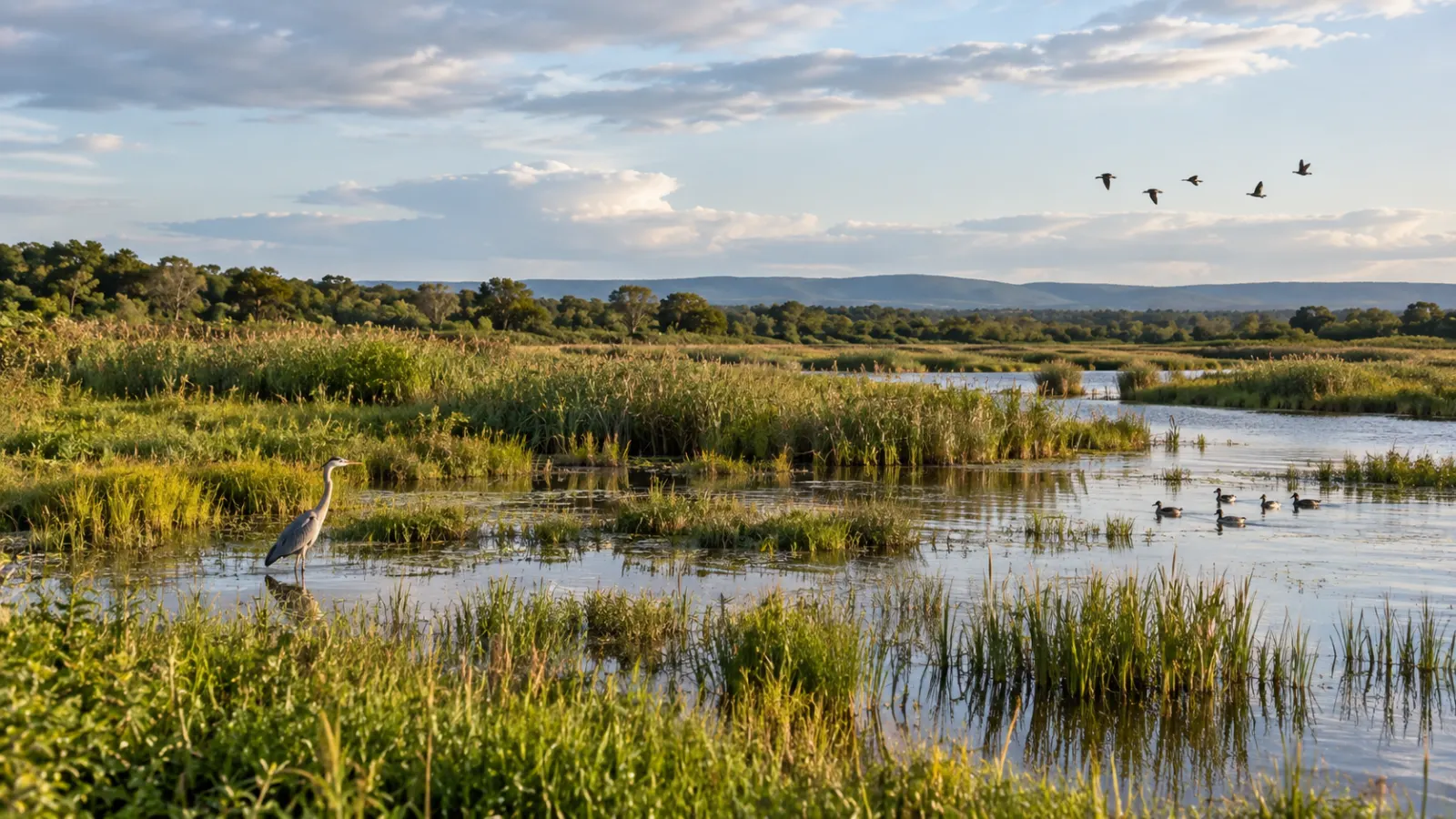
A wetland can look like a reed-filled marsh, a peat bog, a flooded forest, a mangrove shoreline, a seasonal grassland, a river floodplain or the shallow edge of a lake. Some remain wet throughout the year. Others may appear almost dry for months before rainfall, river flooding or groundwater returns.
That variety makes wetlands easy to misunderstand.
They are not simply pieces of land permanently covered by shallow water, and they are certainly not all “swamps.” What connects them is the recurring influence of water on soils, vegetation, hydrology and ecological processes.
The Convention on Wetlands deliberately uses a very broad definition. It includes lakes and rivers, marshes and swamps, wet grasslands, peatlands, estuaries, deltas, tidal flats, mangroves and other coastal systems. Its framework also includes some human-made wetlands such as fish ponds, rice paddies, reservoirs and salt pans. (ramsar.org)
This breadth reflects an important ecological fact: wetlands sit at the shifting boundary between terrestrial and aquatic systems. Their value often comes precisely from that instability. Water can spread across them, slow down, sink into soils, carry sediment, support microorganisms and create habitats that would not exist on permanently dry land.
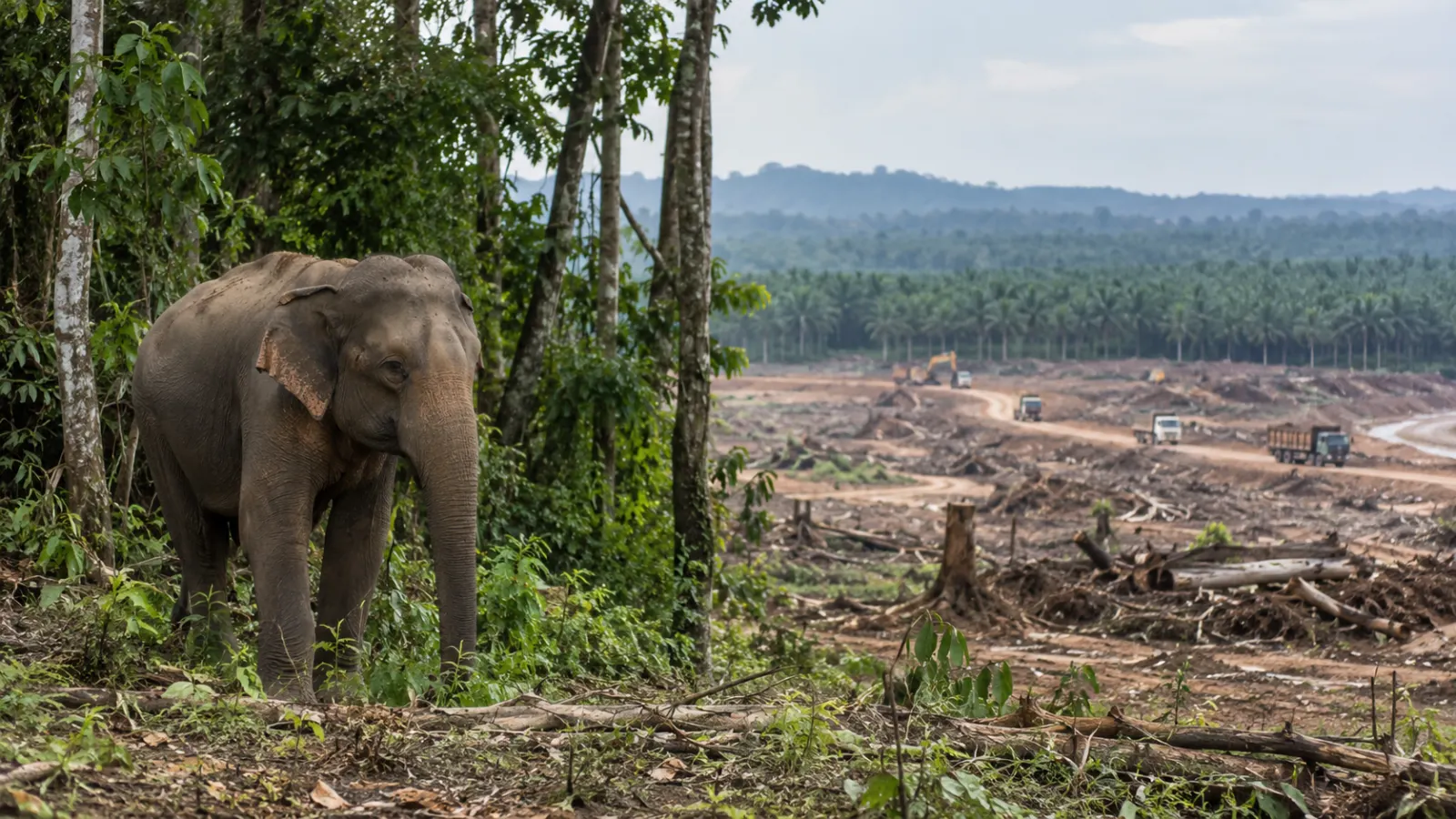
For centuries, however, many wetlands were treated primarily as obstacles. They were drained to create farmland, filled for roads and buildings, separated from rivers by embankments or channelled so that water would leave more quickly. Some of those pressures were understandable. Wetlands can complicate transport and construction, and historically some wet areas were associated with mosquito-borne disease.
The mistake was assuming that removing the wetland also removed the functions it was performing.
A drained floodplain no longer has the same space to hold high river flows. A filled urban marsh can no longer absorb part of a storm. A degraded peatland can release carbon that accumulated over centuries. A coastal wetland that disappears can no longer buffer waves in the same way. If those functions are still needed, societies often have to replace them with drainage channels, flood walls, water-treatment infrastructure or other engineered systems.
Wetlands are therefore better understood not as unused land but as working water infrastructure created by ecosystems.
Wetlands regulate water because they give it somewhere to go
One of the most important wetland functions is temporary water storage.
During heavy rain or river flooding, connected floodplains, marshes and other wetlands can spread part of the incoming water over a larger area. Vegetation and uneven ground slow the flow, while depressions and wet soils provide places where water can remain temporarily rather than immediately moving downstream.
The U.S. Environmental Protection Agency describes wetlands as natural systems that can trap and slowly release floodwater, reducing flood peaks and slowing erosive flows. Wetlands within or downstream of urban areas can be especially valuable because roads, roofs and other impermeable surfaces cause rainfall to move rapidly into drainage systems and rivers instead of soaking gradually into the ground. (epa.gov)
This does not mean wetlands prevent every flood.
A small wetland cannot absorb unlimited water. A floodplain disconnected from its river by levees may provide little flood storage. A storm may simply be too large for the available capacity. The effect depends on location, hydrological connection, topography, soil, vegetation and the scale of the event.
The more accurate principle is that wetlands can slow, store and redistribute water, reducing or delaying downstream flood peaks under suitable conditions.
That distinction becomes particularly important in cities. Natural low-lying land is often attractive for development precisely because it appears empty. Once filled with roads, housing or industrial sites, however, the landscape loses a place where stormwater previously accumulated. Water still has to go somewhere, and the consequence may be faster runoff, more pressure on drainage networks or increased flooding elsewhere.
Wetland hydrology can also matter during dry periods. Some wetlands store water during wet conditions and release it gradually, contributing to streamflow later. Others interact with groundwater, sometimes receiving groundwater and sometimes helping recharge aquifers. These relationships vary greatly among wetland types, which is why broad claims that “all wetlands recharge groundwater” should be avoided.
EPA guidance stresses this variability while recognising groundwater recharge and discharge, dry-period streamflow and flood storage as important wetland functions in many landscapes. (epa.gov)
This gives wetlands a role at both ends of the water cycle.
During excess rainfall, they may help spread and hold water.
During drier periods, some systems can help sustain water availability.
That combination makes wetland protection increasingly relevant to climate adaptation because climate change can intensify both extreme rainfall and drought risk in many regions.
Coastal wetlands perform a related function at the boundary between land and sea. Mangroves, salt marshes and other vegetated coastal ecosystems can dissipate wave energy, stabilise shorelines and reduce some impacts of storm surge. UNEP identifies mangroves, tidal salt marshes and seagrass systems as important for coastal resilience as well as carbon storage. (unep.org)
Again, they are not magical barriers capable of stopping every cyclone or storm surge.
Their value lies in becoming one layer of protection within a broader coastal system.
Wetlands can improve water quality, but they are not unlimited filters
Water entering a wetland usually moves differently from water racing through a straight drainage channel.
Flow slows around vegetation and across uneven ground. Suspended sediment can settle. Plant roots absorb nutrients. Microorganisms in wetland soils can transform compounds, including some forms of nitrogen. Certain contaminants can attach to sediments or become incorporated into biological processes.
EPA identifies water-quality protection, nutrient transformation, sediment retention and pollutant removal among important functions of many wetlands. These processes are effective enough that engineers deliberately construct wetland-like treatment systems for some wastewater and stormwater applications. (epa.gov)
This explains why wetlands are sometimes described as the kidneys of the landscape.
But the metaphor can become misleading if it suggests that wetlands can absorb unlimited pollution without consequence.
They cannot.
A marsh receiving moderate nutrient inputs may transform or retain part of them. The same marsh exposed continuously to very high loads of sewage or fertiliser may become eutrophic, lose sensitive species and release nutrients downstream. Toxic chemicals can accumulate in sediments or organisms. Plastic and other debris can damage habitat. Excess sediment can alter the wetland itself.
The ability to process pollution is therefore an ecosystem service, not permission to use the ecosystem as a disposal system.
This distinction becomes important when constructed wetlands are compared with natural ones. A purpose-built wastewater-treatment wetland may be engineered and managed specifically to remove nutrients or organic matter. A natural peatland, mangrove forest or floodplain performs many additional ecological functions and cannot necessarily be replaced simply by constructing a pond elsewhere.
Human-made wetlands can provide genuine environmental benefits.
They are not automatically ecological substitutes for natural wetlands that developed through different hydrological and biological processes.
Wetlands concentrate biodiversity and store environmental memory
Wetlands support extraordinarily diverse biological communities because they combine water, nutrients, vegetation and physical habitat within relatively small areas.
The Global Wetland Outlook 2025 reports that wetlands support about 40% of known plant and animal species while occupying only about 6% of Earth's land surface. (ramsar.org)
Some species spend their entire lives in wetlands. Amphibians may depend on shallow water for reproduction. Aquatic plants occupy specific water depths and soil conditions. Invertebrates form the foundation of complicated food webs.
Other species depend on wetlands only during part of their lives.
Fish may use marshes or floodplains as nurseries before moving elsewhere. Birds may breed in one wetland and feed in another. Migratory species can depend on a chain of sites spread across continents.
That makes wetland conservation a problem of connectivity, not merely isolated protected areas.
A migratory bird does not benefit much from excellent habitat at the beginning and end of its route if a crucial feeding or resting site in the middle disappears. Rivers and floodplains similarly operate as connected systems. Damage in one location can alter hydrology, sediment and habitat much farther away.
This is one reason the Convention on Wetlands developed an international network of Wetlands of International Importance, commonly called Ramsar Sites. The logic is that some ecosystems have importance extending well beyond local administrative boundaries because water, wildlife and ecological processes do not stop at political borders.
Wetlands can also store another kind of environmental history: carbon.
Peatlands are especially important. In waterlogged soils, plant material decomposes slowly because oxygen availability is limited. Organic material can therefore accumulate for centuries or millennia as peat.
The Global Wetland Outlook 2025 identifies peatlands as extraordinary terrestrial carbon stores and notes that wetlands collectively hold more than a third of the world's soil carbon. (global-wetland-outlook.ramsar.org)
When peatlands are drained, the chemistry changes. Exposure to oxygen accelerates decomposition, releasing carbon dioxide. Dry peat can also become vulnerable to fire, potentially producing very large emissions while destroying organic material that required extremely long periods to accumulate.
Coastal systems such as mangroves, salt marshes and seagrasses store significant quantities of carbon in plants and especially sediments. These ecosystems are often described as blue-carbon ecosystems because they combine carbon storage with coastal protection, fisheries habitat and other benefits. (unep.org)
Climate discussions about wetlands require one important qualification.
Some natural wetlands also emit methane, a powerful greenhouse gas produced under oxygen-poor conditions. It would therefore be inaccurate to describe every wetland simply as a permanent climate “sink” with no emissions.
The relevant comparison is broader: long-term carbon storage, natural methane emissions, the carbon dioxide released when wetlands are drained or burned and the climate consequences of replacing one ecosystem with another land use.
For peatlands especially, destroying a long-established carbon store can convert an ecosystem that accumulated carbon over centuries into a substantial source of greenhouse-gas emissions.
The latest global assessment shows that both wetland area and condition are deteriorating
The historical assumption that wetlands were empty, unhealthy or economically useless contributed to enormous conversion.
The latest global assessment shows that the consequences are still unfolding.
The Global Wetland Outlook 2025, produced through the Convention on Wetlands, estimates that approximately 411 million hectares of wetlands have disappeared since 1970, equivalent to around 22% of the estimated global total at that time. The report estimates an average ongoing decline of about 0.52% per year and concludes that roughly 25% of the wetlands that remain are now in poor ecological condition.
These figures are estimates rather than a perfect global census. Wetlands are unusually difficult to measure because some are seasonal, boundaries can change from year to year and historical mapping is incomplete. Different datasets may also classify lakes, rivers, coastal systems and human-made wetlands differently.
The uncertainty does not alter the direction of change.
Wetlands continue to be lost and degraded.
The pressures are also interconnected. Agricultural expansion can involve drainage, nutrient runoff and water extraction simultaneously. Urban development can fill wetlands while increasing stormwater entering those that remain. Dams and channels can alter the timing of floods even where a wetland itself has not been physically removed. Pollution can degrade habitat without reducing mapped wetland area. Climate change can alter water availability, salinity, sea level and vegetation.
This is why degradation matters almost as much as outright disappearance.
A wetland can remain visible on a satellite image while losing much of its ecological function. A mangrove forest may still occupy the coastline but become fragmented. A peatland may remain classified as peatland after drainage even though its carbon dynamics have changed. A lake can still exist while nutrient pollution degrades water quality.
The 2025 Outlook therefore evaluates condition as well as area and warns that degradation now rivals outright loss as a global concern.
The economic implications are substantial. The report estimates that the world's remaining wetlands provide ecosystem services worth up to US$39 trillion annually, including water regulation, food, flood protection, carbon storage and many other benefits. (ramsar.org)
Such figures can be useful when governments compare wetland protection with development projects or engineered infrastructure.
They should not become the only argument for conservation.
A wetland can have cultural or spiritual importance that does not fit neatly into a market price. It may support a species with no commercial value. It may preserve archaeological or ecological information. It may provide a landscape that a community considers part of its identity.
Economic valuation helps make invisible ecosystem services visible to decision-makers.
It does not exhaust what nature is worth.
Restoration begins with restoring the movement of water
Once a wetland has been degraded, restoration is rarely as simple as digging a shallow depression and adding water.
Wetlands are products of hydrology.
The timing, depth, frequency, duration and source of water influence soil chemistry, plant communities, nutrient cycling and animal habitat. If those underlying conditions remain wrong, planting wetland vegetation may produce only a superficial resemblance to the original ecosystem.
A drained peatland, for example, may need drainage channels blocked so the water table can rise again. A floodplain may need reconnection with its river. A coastal marsh may require tidal exchange to be restored. A mangrove site may fail if roads, barriers or altered channels prevent the natural movement of seawater and sediment.
This is why wetland restoration often starts by asking:
Where did the water come from, where did it go and what interrupted that movement?
Once hydrology improves, vegetation and wildlife may recover naturally in some places. Other sites require active planting, invasive-species control, sediment management or long-term intervention.
Restoration also has limits.
A centuries-old peatland cannot be recreated instantly after deep peat has been removed. A newly constructed wetland may provide habitat without reproducing the full biodiversity or soil structure of a mature natural system. Coastal development can remove the physical space a marsh would need to migrate inland as sea level rises.
Protecting intact wetlands is therefore generally different from promising to restore them later.
Restoration is essential because so much damage has already occurred.
It should not become justification for avoidable destruction.
Wetlands matter because their apparent disorder is functional
Wetlands can be inconvenient landscapes for people who prefer clear boundaries.
Land is expected to stay dry.
Water is expected to remain inside rivers and lakes.
Wetlands refuse that arrangement.
A floodplain may look like ordinary grassland until a river rises across it. A seasonal marsh can disappear during drought and return after heavy rains. Mangrove shorelines migrate as sediment accumulates or erodes. Peatlands hold water within soil rather than displaying a large open water surface.
This variability is not evidence that the ecosystem is useless or unfinished.
It is often exactly what makes it valuable.
Giving rivers somewhere to spread reduces pressure elsewhere. Allowing water to move slowly gives sediment time to settle. Periodic flooding creates habitat and transports nutrients. Waterlogged soils allow carbon to accumulate. Coastal vegetation grows in precisely the dynamic zone where land and sea meet.
Attempts to impose fixed boundaries can remove these functions.
A river is channelled because spreading water looks disorderly.
A marsh is filled because seasonally wet land appears unused.
A mangrove is cleared because the coast is judged more valuable once converted into permanent development.
The landscape becomes simpler.
The engineering problems often become more difficult.
That is why modern wetland policy increasingly treats wetlands as part of natural infrastructure rather than as land awaiting improvement.
The Global Wetland Outlook 2025 makes the stakes unusually clear. About 22% of estimated global wetland area has disappeared since 1970, around one-quarter of what remains is already in poor ecological condition and continued loss threatens water security, biodiversity, climate resilience and economic activity.
Protecting wetlands does not mean preventing all human use. The Convention on Wetlands is explicitly built around the concept of wise use, recognising that people depend on wetlands for food, water, livelihoods and many other purposes. (ramsar.org)
The important distinction is between using an ecosystem while maintaining its essential ecological character and converting it so completely that the functions disappear.
Wetlands matter because they connect processes that societies often manage separately.
They connect flood control with habitat.
Water quality with soil.
Agriculture with rivers.
Groundwater with surface water.
Climate with land management.
Cities with downstream ecosystems.
Coasts with inland watersheds.
A wetland may appear to be merely a patch of land where water refuses to drain away.
Ecologically, that refusal can be the entire point.
Wetlands work by giving water space, time and biological complexity—and societies lose those services when they treat wet land as wasted land.