Lawrence Bishnoi Gang's 700-Member Network: How It Operates From Jail
The Lawrence Bishnoi gang is back under scrutiny following a shooting involving Bollywood actor Tiger Shroff in Mumbai, renewing concerns about the reach of an alleged criminal network operating across India and beyond its borders. Investigators have linked the syndicate to extortion, contract killings, weapons trafficking and organised violence, with overseas associates allegedly coordinating operations while several prominent members remain imprisoned.
The National Investigation Agency (NIA) previously estimated that the network had approximately 700 operatives, including suspected shooters, intermediaries and associates across multiple states. That figure originated from an investigation documented in a March 2023 chargesheet and is not a newly established membership count for October 2026.
Fresh reporting on October 21 has brought renewed attention to the organisation's alleged structure, international connections and methods of recruiting young men for violent assignments.
The central question facing investigators is how a criminal network associated with an imprisoned gang leader continues to be linked to threats and attacks across different parts of the country.
How Did Lawrence Bishnoi Build a Network of 700 Operatives?
Lawrence Bishnoi's emergence as a prominent figure in organised crime has been linked to violent rivalries surrounding student politics in Punjab and Chandigarh, followed by alleged alliances with other criminal groups.
According to the NIA's earlier investigation, the organisation expanded from a regional gang into a network connecting operatives in Punjab, Haryana, Rajasthan, Delhi and other states.
In a chargesheet filed in March 2023, the agency described a criminal enterprise with approximately 700 operatives, including around 300 based in Punjab at the time. It also identified links between the organisation and individuals accused of involvement in extortion, killings and illegal weapons activities.
The alleged network has included figures such as Goldy Brar, Anmol Bishnoi, Sachin Bishnoi, Vikram Brar, Kala Jatheri and Kala Rana. Their individual legal circumstances and alleged roles differ, and inclusion in an investigation does not establish responsibility for every offence attributed to the wider syndicate.
Rather than operating exclusively through a single local group, investigators believe the organisation developed connections with regional criminal networks capable of recruiting individuals for specific assignments.
This arrangement allegedly allowed the syndicate to extend its influence without requiring every participant to have direct contact with senior members.
However, the reported 700-member figure should be understood as an investigative estimate from earlier proceedings. No independently verified, updated membership count has been established for October 2026.
How Does the Bishnoi Gang Allegedly Operate From Prison?
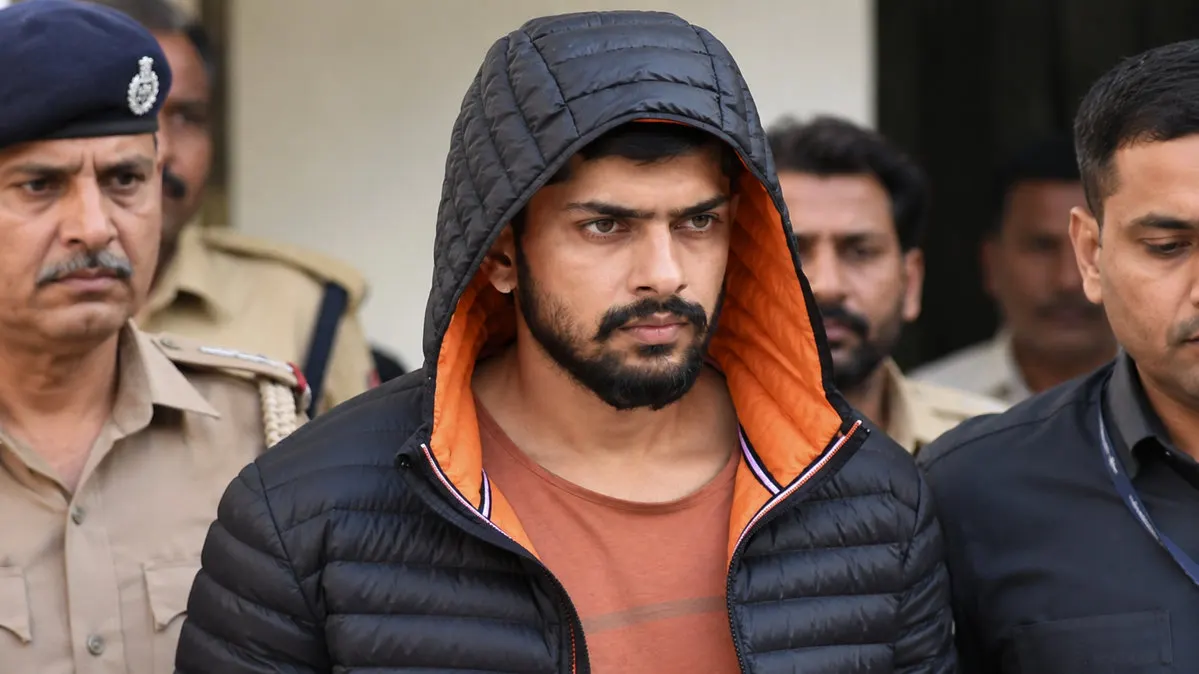
Lawrence Bishnoi is lodged in Sabarmati Central Jail in Ahmedabad, Gujarat. Despite his imprisonment, his name continues to appear in investigations concerning threats, shootings and alleged organised criminal activities.
Investigators have described a decentralised structure involving overseas associates, regional intermediaries and locally recruited suspects.
Under this alleged arrangement, individuals operating outside India may coordinate with associates who maintain connections to local groups. Different participants are suspected of performing separate functions, including arranging resources, identifying recruits and facilitating communication.
The separation of responsibilities can make it difficult for investigators to establish direct connections between those suspected of organising offences and the individuals accused of carrying them out.
Authorities have also examined the suspected use of encrypted communication platforms, including Signal and Telegram, by people associated with the network.
Another communication practice identified in reporting on organised crime is known as 'dabba calling', involving the indirect routing or relaying of calls. Investigators have examined whether such arrangements have been used to obscure the identities or locations of individuals making threats.
The use of encrypted applications is not itself evidence of criminal activity. Establishing criminal coordination requires examining communications, financial records, witness statements and other admissible evidence.
Similarly, the existence of a gang-associated threat does not automatically prove that Bishnoi personally authorised it. Investigators must establish who issued instructions, who carried them out and whether the alleged chain of command can be supported by evidence.
Tiger Shroff Shooting Brings the Criminal Network Back Into Focus
The renewed scrutiny follows a shooting involving actor Tiger Shroff in Mumbai's Juhu area on October 18, 2026.
Shroff escaped unhurt after gunmen reportedly fired multiple rounds near his vehicle as he left a football ground. His driver and an autorickshaw driver were injured in the incident.
Three suspects were subsequently arrested in connection with the shooting.
Among them was 22-year-old Hrithik Mahto, also identified as Roshan, who allegedly worked as a motorcycle taxi rider in Mumbai. Police sources indicated that he had joined the Bishnoi-linked network approximately a year earlier.
Investigators suspect that Mahto assisted two other accused men involved in the attack. They are examining his communications, financial transactions and possible connections with individuals outside Maharashtra.
A purported audio recording attributed to US-based gangster Anil Pandit also surfaced after the incident. The recording contained a claim of responsibility for the attack and threats directed towards individuals associated with the Bollywood industry.
However, the authenticity of the claims and the precise involvement of those named remain matters for investigation.
Police have not conclusively established that the motive described in the recording explains the shooting.
The incident highlights the challenge of distinguishing verified criminal connections from unsubstantiated claims of responsibility, particularly when threats circulate rapidly through social media.
Recruitment, Overseas Connections and the NIA Investigation
One of the most concerning aspects of the alleged network is the recruitment of young men who may have limited knowledge of the wider criminal organisation.
Investigative accounts describe cases in which financially vulnerable individuals were allegedly approached by local intermediaries and offered money for criminal assignments.
Some recruits are suspected of having been unaware of the identities of senior organisers or the full circumstances surrounding the offences they were asked to commit.
This pattern complicates investigations because those arrested at the scene may possess only partial information about the people suspected of planning or financing an attack.
The alleged international dimension presents an additional challenge.
Authorities have investigated connections involving people based in Canada, the United States and other countries. Such cases can require cooperation between domestic police agencies, immigration authorities and international law-enforcement organisations.
The NIA has also pursued allegations of connections between the Bishnoi gang and Babbar Khalsa International, a proscribed terrorist organisation.
In May 2026, the agency chargesheeted a 23rd accused in a related terror-gangster conspiracy case. The investigation concerned allegations that members of the criminal network received assistance obtaining fraudulent travel documents and escaping India.
These proceedings illustrate the wider concerns surrounding organised crime networks that allegedly combine domestic operations with cross-border support.
However, chargesheets contain allegations advanced by investigators. The guilt of individual accused persons must be determined through the judicial process.
Why Is the Network Difficult to Dismantle?
The principal challenge for law-enforcement agencies is not necessarily the arrest of individual suspects, but establishing the relationships between those suspected of directing, financing and executing criminal operations.
A decentralised network can continue functioning even when particular members are arrested, especially if other associates remain capable of providing financial or logistical support.
Investigators must therefore examine several interconnected issues: how suspects are recruited, how money moves through the network, whether illegal weapons are being supplied and which individuals are responsible for specific offences.
Cross-border connections create further investigative hurdles because identifying suspects overseas and securing evidence from foreign jurisdictions may require lengthy legal and diplomatic procedures.
The growing use of social media also creates opportunities for criminals or impersonators to exploit the reputation of an established gang. A threat issued under a familiar name can generate fear even before investigators determine whether it has any authentic connection to the organisation.
For this reason, claims of responsibility and online threats must be independently investigated rather than treated as proof of involvement.
What Happens Next in the Lawrence Bishnoi Gang Investigation?
The October 2026 developments have renewed attention to the relationship between imprisoned gang figures, alleged overseas associates and locally recruited suspects.
The ongoing investigation into the Tiger Shroff shooting is expected to examine the suspected chain of instructions, the origin of any financial support, communication records and the identities of individuals who may have coordinated the attack.
Separately, national investigative agencies continue pursuing cases involving alleged organised crime, terrorism-related conspiracies and cross-border criminal activity.
The findings may provide a clearer picture of whether the group's operational capabilities have changed since the earlier NIA investigation that identified approximately 700 operatives.
For now, the figure remains a historical investigative estimate rather than a verified count of active gang members.
The larger concern is how criminal networks allegedly maintain influence across state and international borders even after prominent figures are imprisoned, and whether coordinated investigations can establish the evidence needed to dismantle their operations.