Youth and Climate Action: How Young People Can Influence Change
Climate policy often speaks about young people in the future tense. They will inherit the infrastructure being built today, enter labour markets reshaped by the energy transition and live with climatic conditions created partly by decisions made before they were born.
All of that is true, but it is incomplete.
Young people are already students, workers, entrepreneurs, researchers, voters in many countries, community organisers and participants in public institutions. Their role in climate action is therefore not simply to wait for older decision-makers to protect their future. They already influence public debate, education, workplaces, local projects and, through formal mechanisms, international climate processes.
The United Nations climate framework recognises this broader role through Action for Climate Empowerment, commonly called ACE. Under the UN Framework Convention on Climate Change and the Paris Agreement, ACE covers six areas: climate change education, training, public awareness, public participation, public access to information and international cooperation. Its purpose is to enable society to understand and participate in climate action rather than merely receive instructions from governments. (unfccc.int)
This distinction matters because youth climate action is often reduced to a single image: a young person carrying a placard at a demonstration.
Protest can affect public attention. But young people also influence climate outcomes through classrooms, laboratories, businesses, farms, engineering firms, local councils, community organisations and international negotiations.
The more useful question is therefore not whether young people “care” about climate change.
It is where youth participation can meaningfully change knowledge, institutions, decisions and outcomes.
Youth movements can change what institutions are forced to discuss
One of the clearest forms of youth influence is agenda-setting.
Governments do not make policy solely in response to scientific reports. Political attention is also shaped by public concern, organised groups, businesses, media coverage, elections and the issues that civil society makes difficult to ignore.
Youth movements can increase the visibility of climate risks and connect environmental policy with questions about education, employment, health, housing and fairness between generations.
This is a real form of influence, but it should not be confused with direct policy implementation.
A movement can force governments to explain why climate commitments are being delayed. It can increase media attention. It can persuade universities, companies or public institutions to reconsider policies.
But a youth movement does not itself operate a national electricity grid, allocate a transport budget or set industrial regulation unless its members also hold the relevant institutional authority.
That distinction protects the analysis from two opposite mistakes.
The first is dismissing activism because protesters do not personally implement national policy.
The second is attributing major policy change entirely to activists when implementation depends on legislators, civil servants, courts, engineers, companies, financiers and public institutions.
Youth action often matters because it changes the political and social environment in which those institutions make decisions.
Young participants can also broaden the questions being asked. Long-term climate policy may look different to people expecting to live with its consequences for another six or seven decades. Employment prospects, education systems, future energy costs, urban design and intergenerational fairness can therefore become more prominent when younger groups participate.
That does not mean young people share one political position.
Age is not an ideology.
Young people differ by country, income, occupation, political belief and exposure to climate risk. Their value in climate debate comes from participation, not from assuming that an entire generation speaks with one voice.
The UN climate process gives youth a formal route into negotiations
Youth participation in international climate governance is not limited to demonstrations outside climate conferences.
Within the UNFCCC system, YOUNGO is the official children and youth constituency. UN Climate Change describes it as a global network of young activists and youth organisations that contributes to the intergovernmental climate process. YOUNGO representatives can make official statements, provide technical and policy input to negotiations and engage with decision-makers at UN climate conferences. (unfccc.int)
The constituency emerged when the UNFCCC secretariat extended constituency status to admitted youth organisations in 2009, with the status subsequently formalised. It now provides a structure through which young participants can coordinate around climate negotiations. (unfccc.int)
YOUNGO also supports Conferences of Youth, including local, regional and global formats. These events are organised independently of the UNFCCC itself but are associated with the youth constituency and are intended to develop youth positions, build knowledge and prepare participants for engagement with climate governance. The Global Conference of Children and Youth is YOUNGO's flagship annual conference; in 2026 it entered its twenty-first year. (unfccc.int)
Formal access matters because international climate negotiations are technically complex.
A participant discussing climate finance needs to understand financing mechanisms, development constraints and institutional rules. Loss and damage, adaptation plans, nationally determined contributions, carbon markets and just transition discussions each have specialised terminology and procedures.
Simply giving a young person accreditation to a conference does not automatically create meaningful influence.
Capacity-building matters.
The UNFCCC's 2026 ACE Youth Event in Bonn therefore included training on meaningful youth participation in policymaking, skills development and connections between local and international climate action. (unfccc.int)
This helps distinguish presence from participation.
A young delegate in a conference photograph may be visible.
Meaningful participation requires enough information, procedural access and institutional opportunity to contribute something that decision-makers must actually consider.
Representation remains difficult even when formal access exists
Youth participation mechanisms also have limitations.
A young person attending a global climate conference cannot automatically claim to represent every young person.
A university-educated delegate with funding to travel internationally may experience climate policy very differently from an agricultural worker, an Indigenous teenager, a migrant or a young person living in a region without reliable internet access.
Travel costs matter.
Visa requirements matter.
Language matters.
Technical expertise matters.
So does the ability to spend days or weeks attending meetings that may be unpaid.
These barriers can narrow the group that is practically able to participate, even when participation is formally open.
Digital participation can reduce some barriers while creating others. Online meetings avoid travel costs but depend on devices, connectivity and time-zone accessibility.
Meaningful youth participation therefore requires more than simply setting aside seats labelled “youth.”
A more useful test asks whether participants receive information early enough to understand the decision, whether they can propose alternatives rather than comment only after plans are finished, whether different socioeconomic and geographic backgrounds are represented and whether decision-makers explain how youth input was considered.
The outcome does not have to match the youth participants' preferred position.
Democratic participation includes disagreement.
Meaningful participation means that engagement is connected to the actual decision process rather than used only to demonstrate inclusiveness.
Climate education can turn concern into capability
Concern about climate change does not automatically produce the knowledge needed to evaluate climate policy.
Climate systems are complex. So are energy markets, infrastructure, biodiversity, public finance and adaptation.
Education can therefore expand the quality of youth participation by helping people distinguish evidence from rhetoric, understand trade-offs and evaluate whether proposed solutions are technically and socially plausible.
UNESCO treats climate education as part of Education for Sustainable Development, or ESD. Its Greening Curriculum Guidance calls for climate learning that is action-oriented, holistic, scientifically accurate and sensitive to questions of justice rather than restricted to memorising environmental facts. (unesco.org)
That makes climate education much broader than learning the greenhouse effect.
Students may need to understand energy systems, local disaster risk, biodiversity, public institutions, transport, food systems, environmental law and the economics of transition. Data literacy matters because climate discussions frequently depend on interpreting emissions, temperature records and risk projections.
Communication matters because scientific evidence still has to be explained to communities and decision-makers.
Vocational and professional skills matter because implementation requires people who can design buildings, manage grids, assess financial risks, restore ecosystems and construct infrastructure.
UNESCO's recent Education for Sustainable Development work increasingly emphasises competencies such as systems thinking, ethical decision-making, collaboration and the ability to connect learning with practical action. Its September 2026 guidance argues that conventional assessment focused mainly on memorisation is often poorly suited to these broader sustainability competencies. (unesco.org)
This is important because climate education should not simply teach young people which opinions they are expected to hold.
Climate policy contains legitimate disagreement.
Societies debate the speed of transition, the role of nuclear energy, land use, carbon pricing, public spending, the design of electricity markets and the distribution of transition costs.
Good climate education should therefore increase a person's ability to examine those disagreements rather than merely increase confidence in repeating approved slogans.
Careers can turn climate knowledge into institutional change
Youth climate action is often imagined as something people do outside their main work.
Much of the climate transition will actually occur through ordinary professions.
Engineers influence electricity grids, transport systems and buildings. Architects affect energy use and heat exposure. Farmers make decisions about crops, soil and water. Accountants and financial professionals determine how environmental risks appear in organisational decisions. Lawyers interpret climate regulation. Teachers influence scientific literacy. Designers affect material use and product durability. Public servants write procurement rules and administer adaptation programmes.
Young people entering these professions therefore have routes to climate influence that look very different from activism.
The relevant idea is not that everyone must pursue an environmental career.
It is that environmental constraints increasingly intersect with mainstream occupations.
UNESCO's current Education for Sustainable Development programme reflects this broader understanding. Its 2026 work links sustainability education with green skills, digital transformation, teacher development and institutional change rather than treating climate knowledge as a separate specialist subject. (unesco.org)
Workplace influence can also be collective.
An individual employee switching off a light has a small direct effect. A facilities team changing an entire building's energy-management system operates at a different scale.
An employee choosing lower-impact office supplies makes one decision. A procurement department changing supplier standards can influence thousands of purchases.
A worker raising concerns about extreme heat may help change a workplace safety policy affecting hundreds of people.
Climate influence often becomes more substantial when it changes an organisational rule or system rather than depending indefinitely on repeated individual behaviour.
Local climate projects can connect global problems to measurable outcomes
Global climate negotiations can feel distant from everyday life.
Local projects give young people a way to test what environmental action looks like in a specific place.
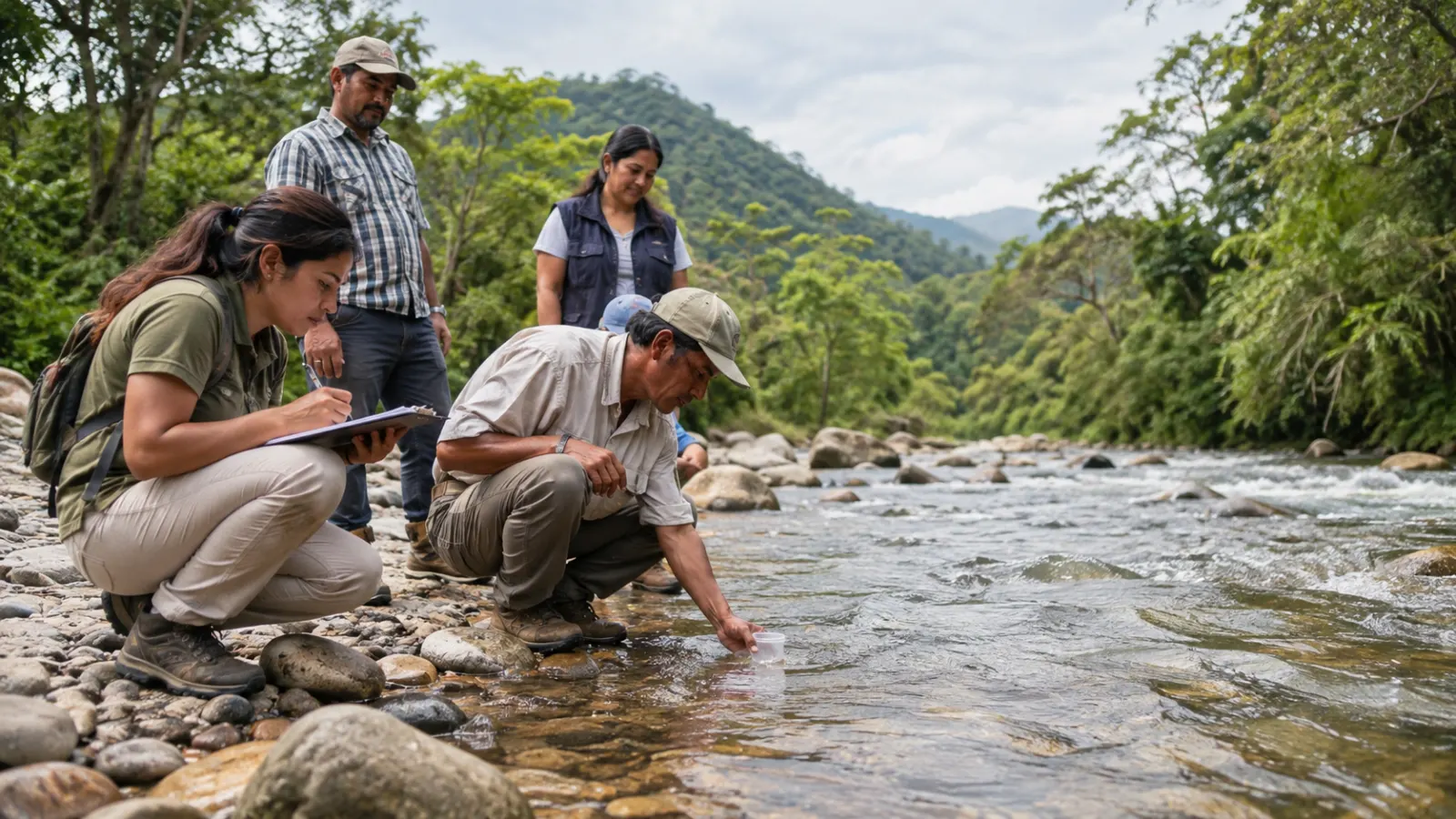
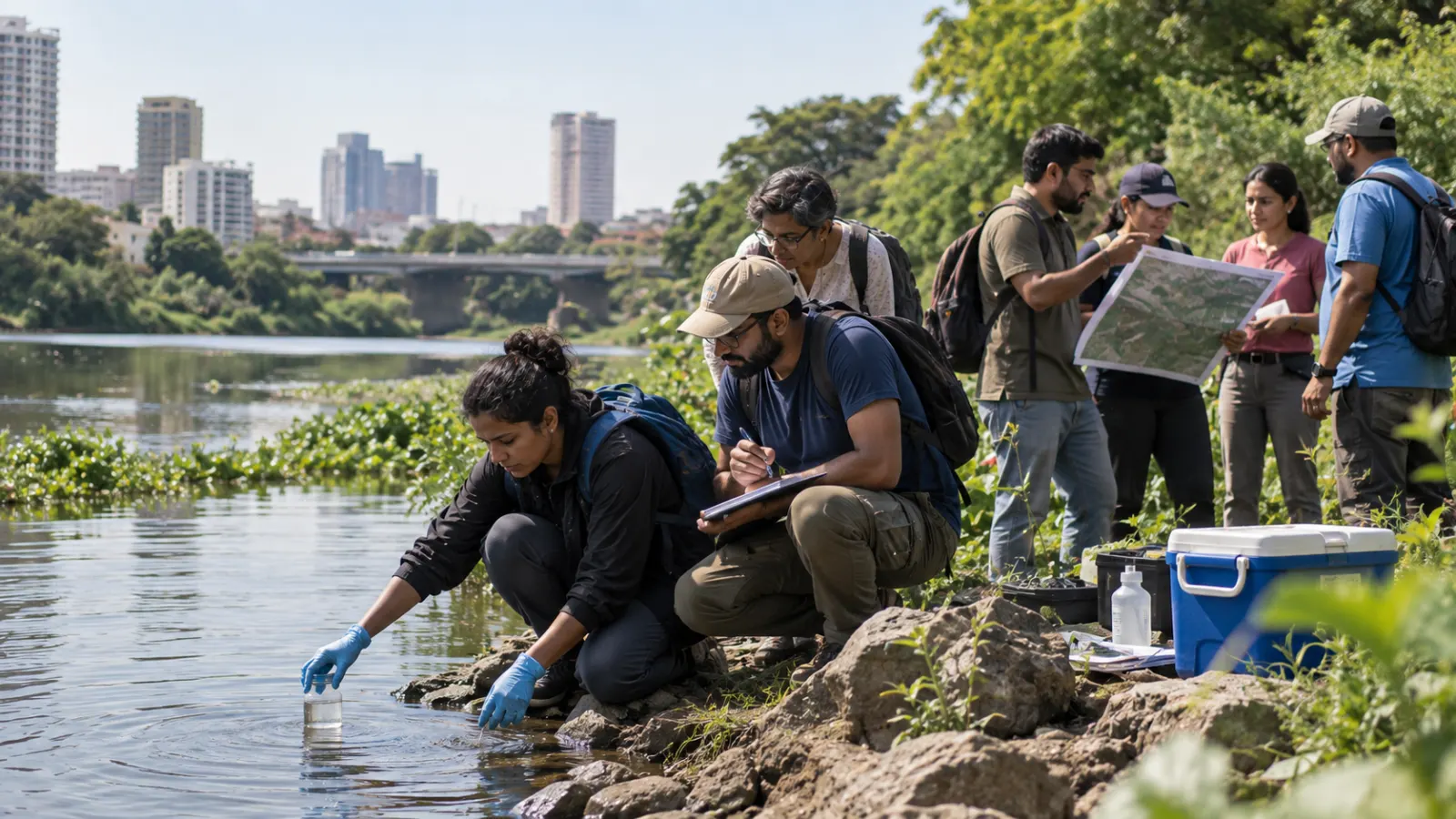
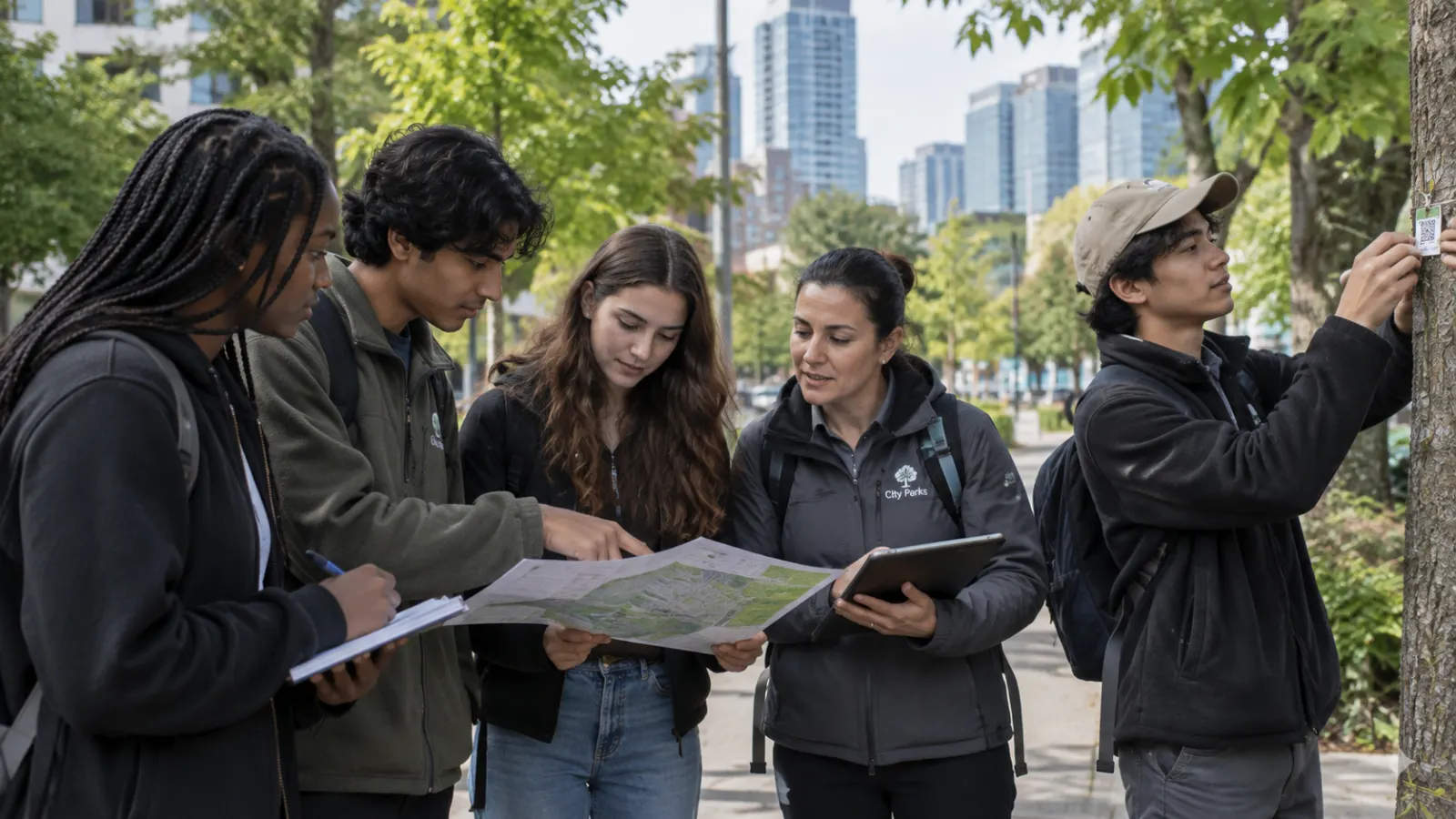
Students and community organisations can monitor neighbourhood heat, participate in biodiversity surveys, measure local water conditions, support habitat restoration, reduce food waste, contribute to early-warning communication or participate in municipal planning.
The strongest projects connect data or activity to a real decision.
A heat-mapping project becomes more useful if the results inform decisions about trees, school schedules, shaded bus stops or cooling centres.
Monitoring water quality becomes more meaningful when the data reach the public authority or institution responsible for managing the water body.
Citizen science can therefore be educational and practically useful without being confused with a substitute for professional scientific monitoring.
The standard should be outcomes rather than visible activity.
Planting 1,000 trees sounds impressive.
But which species were planted?
Were they appropriate for the local ecosystem?
Did they survive?
Who waters and maintains them?
Did they provide shade or habitat where those benefits were needed?
A cleanup can remove rubbish from a riverbank for one day. If waste collection remains absent and dumping resumes the following week, the underlying system has not changed.
This kind of evaluation teaches an important climate lesson.
Environmental action is not successful simply because an activity occurred.
Ask what changed, whether the change lasted and which institutions are responsible for maintaining it.
Young people can influence norms as well as formal policy
Climate behaviour is partly shaped by what groups consider normal.
This means youth influence can spread through schools, universities, workplaces and peer networks even without formal legislative power.
A student group that makes food-waste measurement routine can alter institutional expectations. Young employees who regularly ask organisations for credible environmental data can gradually make disclosure more normal. Communities that participate in local heat planning can change expectations about what municipal authorities should provide.
These effects should not be exaggerated.
Social norms cannot substitute for infrastructure.
A commuter cannot choose reliable public transport if none exists. A renter may not be able to retrofit a building. Consumers cannot purchase affordable low-carbon technology that is not available in their market.
But norms can influence what organisations perceive as legitimate, expected or politically important.
That makes youth participation relevant both to formal institutions and to the social environment around them.
Collective action can move an issue from private concern to a question that schools, employers or governments are expected to answer.
Youth participation should not become a way to shift responsibility downward
There is a risk in celebrating youth climate leadership too enthusiastically.
Responsibility can quietly move from institutions with substantial power to individuals with comparatively little.
A student can reduce waste.
The student cannot personally decarbonise a national electricity grid.
A youth organisation can campaign for better public transport.
It does not control the transport budget.
A young consumer can select a lower-emission product only if an affordable alternative exists.
Governments control laws, standards, taxation and much public infrastructure. Businesses control investment, production and supply chains. Financial institutions influence which projects receive capital. International organisations coordinate problems that cross borders.
Young people influence these systems but do not replace them.
The original draft correctly identifies this division of responsibility as essential: youth participation should strengthen institutional climate action, not become an excuse for governments or firms to transfer structural responsibility to individuals.
This matters psychologically as well as politically.
Climate change is not a test of whether individual young people can live perfectly.
Modern energy, transport, food and housing systems were built over decades. Changing them requires coordinated institutional decisions alongside individual and community behaviour.
Telling young people that the planet depends primarily on their personal lifestyle choices can create an enormous moral burden while obscuring where larger decisions are actually made.
A more accurate division of responsibility recognises several levels.
Individuals make choices.
Communities organise.
Schools and universities educate and manage their own facilities.
Companies control products and investment.
Governments control many laws and public systems.
International institutions coordinate collective problems.
Youth can participate at every level without pretending that all levels possess equal power.
Meaningful youth participation has practical tests
It is easy for organisations to describe a youth council, climate forum or consultation as evidence that young people have been included.
The more important question is whether participation affects anything.
Useful tests include whether young people were given enough information to understand the decision, whether consultation occurred before the major choices were finalised and whether participants could propose alternatives.
Decision-makers should be able to explain what happened to the recommendations.
Were any adopted?
Were some rejected?
Why?
Did the consultation reveal an overlooked problem?
Could participants see how their input entered the process?
Accessibility matters too.
A participation system dependent on unpaid international travel will exclude many people. A process conducted only in highly technical English will favour participants with particular educational backgrounds. A consultation held during working hours may exclude young workers.
Representation therefore needs active design rather than assumption.
The UN climate system has increasingly recognised this issue. COP26 called for enhanced and meaningful youth participation, and subsequent UNFCCC initiatives have expanded mechanisms intended to connect youth constituencies with climate negotiations and national implementation. (unfccc.int)
The same standard should apply locally.
Youth participation is meaningful when it improves information, challenges assumptions or influences decisions—not simply when young people appear in photographs.
The strongest youth climate action connects voice, skills and institutions
Young people can influence climate action through several overlapping channels.
They can shape public attention and social expectations.
They can acquire scientific, technical and civic skills.
They can work inside professions and organisations where climate decisions are implemented.
They can participate in local projects where outcomes can be measured.
And they can enter formal policy processes through institutions such as YOUNGO and broader public-participation mechanisms.
These channels reinforce one another.
Education improves participation because participants understand the systems they are trying to influence.
Participation reveals what technical knowledge is missing.
Local projects provide experience with implementation.
Professional skills allow climate considerations to enter ordinary institutional decisions.
Collective organisation can turn individual concern into something decision-makers need to address.
Current UN and UNESCO programmes increasingly reflect this broader model. UNFCCC's ACE framework combines education, training, awareness, participation, access to information and international cooperation, while UNESCO's Education for Sustainable Development programme emphasises knowledge, skills, values and action across entire education systems. (unfccc.int) (unesco.org)
The result is a more realistic understanding of youth climate action.
Young people are not a single political constituency.
They are not solely protesters.
They are not responsible for solving a crisis created through generations of infrastructure, consumption and policy.
And they are not merely future stakeholders waiting for today's adults to make decisions on their behalf.
They are already participants in the institutions through which climate action succeeds or fails.
The durable principle is therefore simpler:
climate decisions are stronger when young people have meaningful opportunities to understand them, contribute evidence and ideas, develop the skills needed to implement solutions and challenge assumptions—while governments, businesses and other institutions retain responsibility proportionate to the power they actually hold.