Extinction is an outcome, not a single cause
Species have always gone extinct. Evolution produces new lineages while environmental change, competition, predation and chance eliminate others. What distinguishes the modern biodiversity crisis is the pace of loss and the dominant role of human pressures. To understand why a species disappears, it is usually more useful to reconstruct the sequence of population decline than to search for one final cause.
A species can vanish locally before it vanishes globally
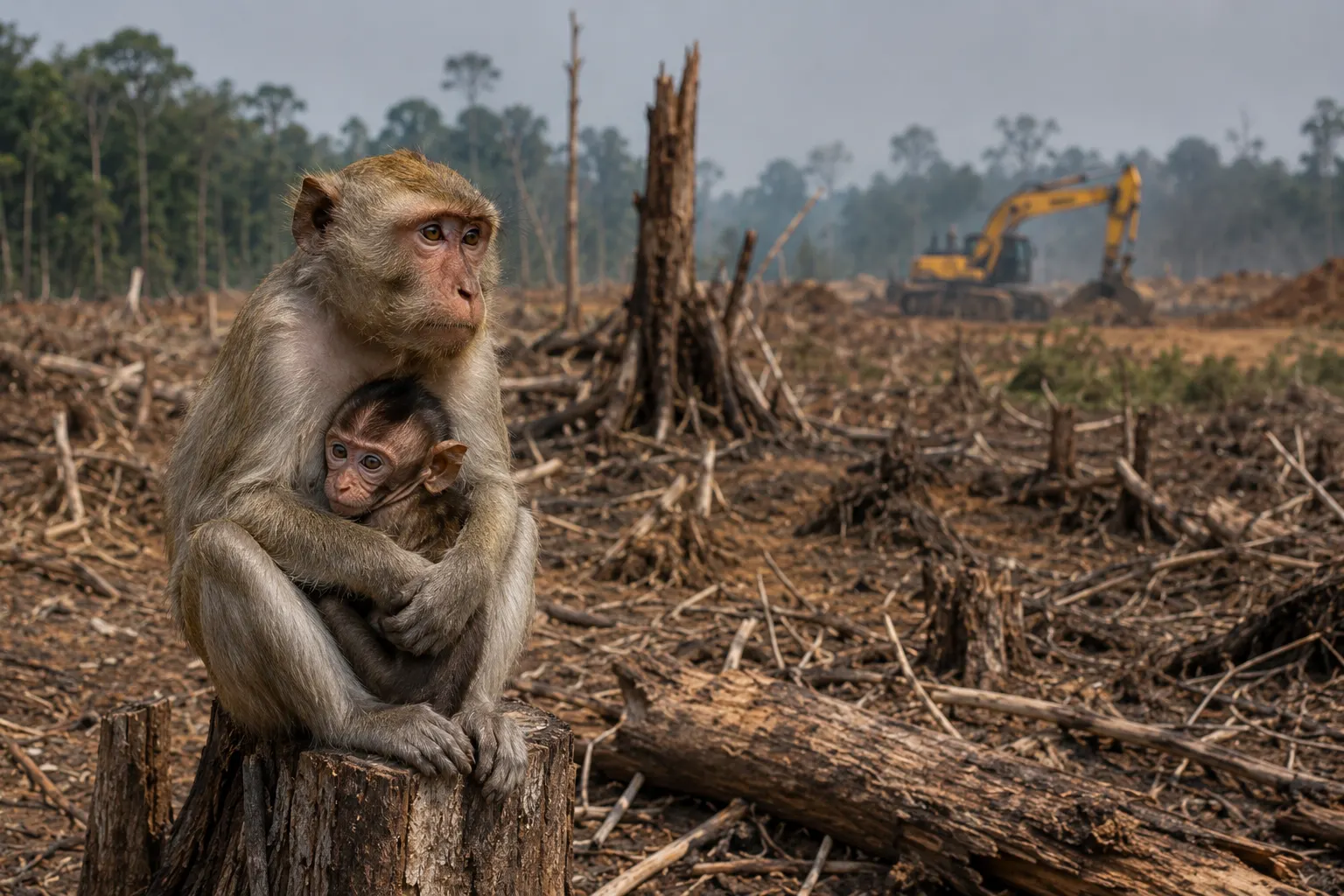
Extinction operates at different scales. A population can disappear from one valley or island while the species survives elsewhere; ecologists often call this local extinction or extirpation. Global extinction occurs when the last surviving population disappears everywhere. Conservation becomes harder as local populations are lost because the remaining range becomes smaller, populations become more isolated and the species has fewer places from which recovery can begin.
Habitat loss removes the basic conditions for survival
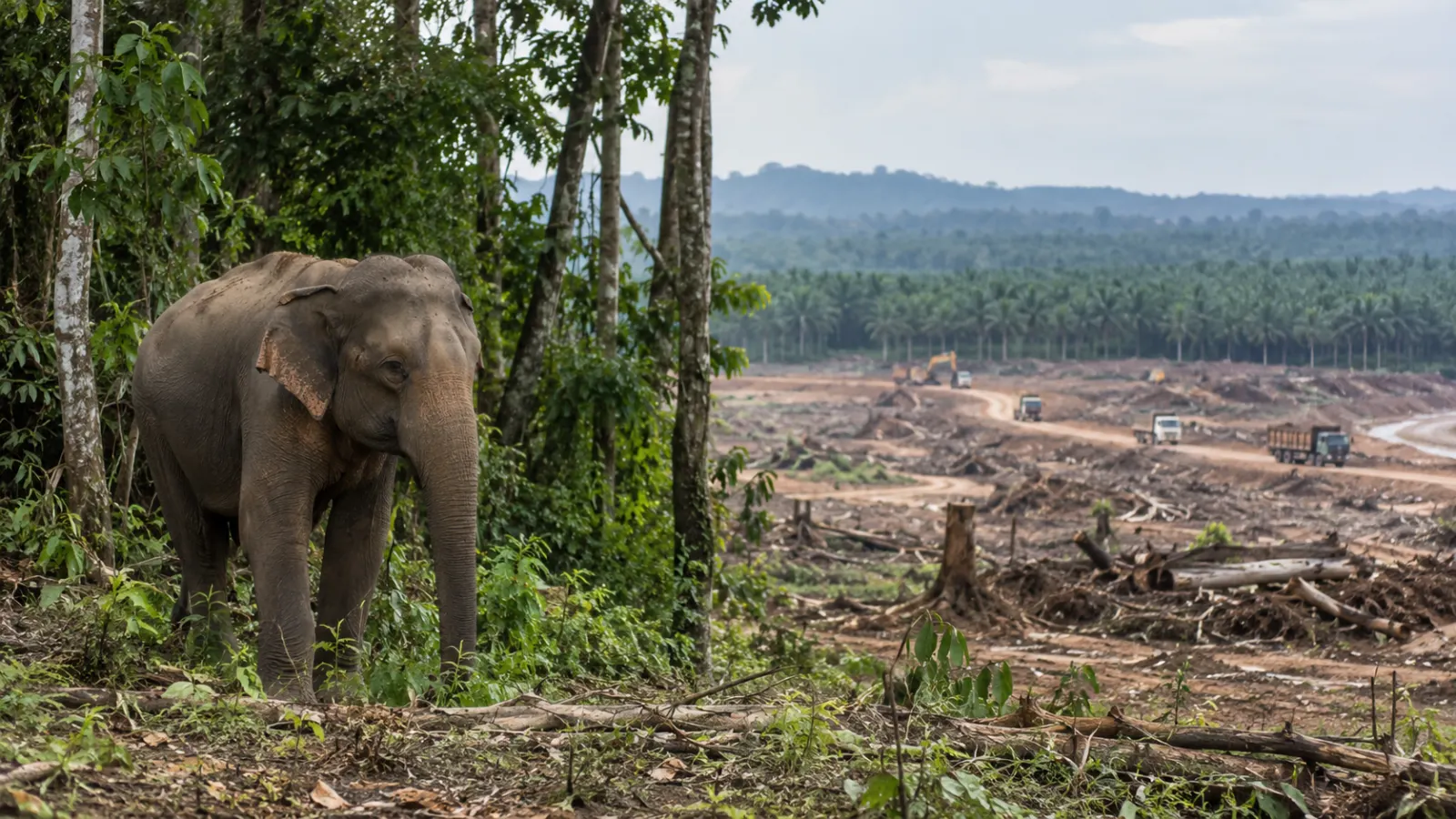
For many species, habitat loss is the central pressure. USGS identifies habitat loss as a primary cause of elevated modern extinction rates. Forest conversion, wetland drainage, river alteration, agricultural expansion, urbanisation and infrastructure can remove feeding areas, nesting sites, shelter and migration routes. A species does not need to lose every hectare of habitat to become vulnerable. Losing the particular places needed for breeding, seasonal refuge or access to water can be enough to drive decline.
Fragmentation can be damaging even when habitat remains
Habitat fragmentation breaks a once-connected landscape into smaller patches. Two consequences follow. First, each patch may support fewer individuals. Second, movement between populations becomes more difficult. Roads, farms, cities, fences and dams can interrupt dispersal and migration. A fragmented species may therefore retain substantial habitat on a map while losing the connectivity that allows populations to exchange individuals and recover after local losses.
Overexploitation removes organisms faster than they can replace themselves
Hunting, fishing, logging and collecting are not automatically unsustainable. The problem begins when mortality consistently exceeds reproduction and recruitment. Species with slow growth, late maturity, low reproductive rates or high commercial value can be especially vulnerable. Direct exploitation is one of the five major global drivers of biodiversity decline identified by IPBES, and the IUCN threat-classification system records unsustainable fishing, logging and other forms of biological resource use as direct threats where they affect assessed species.
Invasive species can create evolutionary mismatches
When humans transport organisms beyond natural barriers, some introduced species establish and spread in ways that disrupt native communities. Island species can be particularly vulnerable to introduced predators because they may have evolved without comparable threats. Invasive plants can alter fire regimes or crowd out native vegetation; introduced pathogens can affect hosts with little resistance. Invasive alien species are one of the five major direct drivers of biodiversity loss recognised by IPBES.
Pollution can make habitat biologically unusable
A habitat can remain physically present while becoming chemically hostile. Nutrient pollution can reduce oxygen in aquatic systems. Pesticides can affect non-target organisms. Industrial contaminants may accumulate in food webs. Plastics and other waste can cause ingestion and entanglement. Pollution is therefore not merely an aesthetic problem: it can alter survival, reproduction and ecological relationships even where the landscape appears intact.
Climate change shifts the environmental envelope
Every species survives within a range of climatic conditions. As temperature, rainfall, fire regimes, snow cover, ocean chemistry and seasonality change, suitable conditions can move. Some species can disperse or adapt; others cannot move fast enough or are blocked by fragmented habitat. Climate change can also magnify existing threats. A population already reduced by habitat loss may have less room to shift its range during warming, while coral or alpine species may simply run out of suitable environmental space.
Disease often becomes decisive when populations are already stressed
Disease can be a natural ecological process, but novel pathogens or changing environmental conditions can transform disease into a conservation crisis. Small, genetically limited populations may have fewer variants that confer resistance. Trade and transport can move pathogens into new regions. In amphibians, for example, emerging infectious disease has contributed to severe declines and extinctions in combination with other pressures. Disease is therefore often part of a multi-cause chain rather than an isolated explanation.
Small populations face a different kind of danger
Once a population becomes very small, the mathematics of extinction changes. Random events that a large population could absorb - a poor breeding year, an extreme storm, a skewed sex ratio - can become existential. Inbreeding may reduce genetic diversity and expose harmful variants. Low density can also make it harder for individuals to find mates or maintain social and ecological processes. Conservation biologists therefore consider population size, trend, geographic range and fragmentation when estimating extinction risk.
Why IUCN assessments use several criteria
The IUCN Red List does not classify species simply by counting the individuals alive today. Its criteria consider population reduction, geographic range, small population size and decline, very small or restricted populations, and quantitative estimates of extinction probability. This matters because different species can reach the same level of risk through different pathways: one may be declining rapidly across a broad range, while another may remain stable but survive only in a tiny area vulnerable to a single catastrophe.
Extinction debt: the final disappearance can be delayed
Environmental damage and extinction do not always occur at the same moment. A long-lived species may persist for decades after its habitat has become too small to support a viable population over the long term. This delayed loss is often described as extinction debt. The visible presence of a few remaining adults can therefore create false reassurance if recruitment has collapsed or habitat is no longer sufficient for future generations.
Why multiple pressures are more dangerous than one
Real populations rarely experience threats separately. Habitat loss can concentrate animals into smaller areas, making disease transmission easier. Climate change can intensify drought in an already fragmented ecosystem. Overexploitation can reduce abundance to the point where a storm or invasive predator has disproportionate impact. This interaction among pressures is why conservation strategies that address only the final visible threat sometimes fail.
Extinction can be prevented before the last individual
The most effective conservation usually starts long before a species reaches the brink. Protecting habitat, maintaining connectivity, managing harvest, controlling invasive species, reducing pollution, restoring ecosystems and mitigating climate change all operate on the causes of decline. Targeted breeding, reintroduction or genetic management may become necessary for extremely small populations, but those expensive interventions cannot substitute for functioning habitat.
Life history determines how quickly a species can recover
Species do not all respond to mortality in the same way. An insect that produces many generations each year may rebuild rapidly when conditions improve. A large mammal that matures late, produces few young and invests heavily in parental care can take decades to replace losses. Long-lived trees may survive for years even when regeneration has effectively stopped. Conservationists therefore examine generation length, age at maturity, reproductive output and survival rates when judging whether a population can recover. The same hunting pressure or habitat disturbance can be sustainable for one species and disastrous for another because their demographic machinery is different.
Specialists can be more exposed when environments change
Species differ in ecological flexibility. Generalists may use several foods, habitats or nesting sites, while specialists depend on a narrow range of conditions. Specialisation can be highly successful in a stable environment, but it can become a liability when the key resource disappears. A plant dependent on one pollinator, an amphibian restricted to a small climatic zone or an animal breeding only on particular beaches may have fewer alternatives after disturbance. This does not mean every specialist is doomed or every generalist is safe; it means ecological narrowness is one component of vulnerability that can amplify other threats.
Coextinction can link the fates of different species
Extinction can propagate through ecological relationships. A highly specialised parasite may disappear when its host vanishes. A plant that depends on a single pollinator can fail to reproduce if that pollinator is lost. Predators may decline after prey collapses, while mutualistic partners can disappear together. These linked losses are called coextinctions. They are difficult to document globally because many ecological relationships are poorly known, but they illustrate why counting species independently can underestimate risk. Biodiversity is a network, and removing one node can sometimes endanger others that were not directly exposed to the original threat.
Recovery can lag even after the original threat is reduced
Stopping the immediate pressure does not always produce an immediate rebound. Fragmented populations may remain too isolated to exchange individuals. Mature breeding animals may be scarce. Habitat structure may take decades to recover. Invasive species or altered fire regimes can keep an ecosystem in a degraded state after the initial disturbance ends. This is why conservation success is often measured over generations rather than months. A species may be saved from immediate extinction yet remain vulnerable until reproduction, range and population structure recover enough to withstand ordinary environmental variability again.
The central question is whether a population can remain viable
A species disappears when births, survival and movement can no longer compensate for mortality and environmental change. The final death of the last individual is dramatic, but the decisive processes often began much earlier. Extinction prevention therefore depends on recognising decline while recovery is still biologically and socially possible. By the time a species is reduced to a handful of isolated individuals, conservation is no longer simply about protecting wildlife; it is an emergency attempt to rebuild a population that has already lost much of its ecological safety margin.