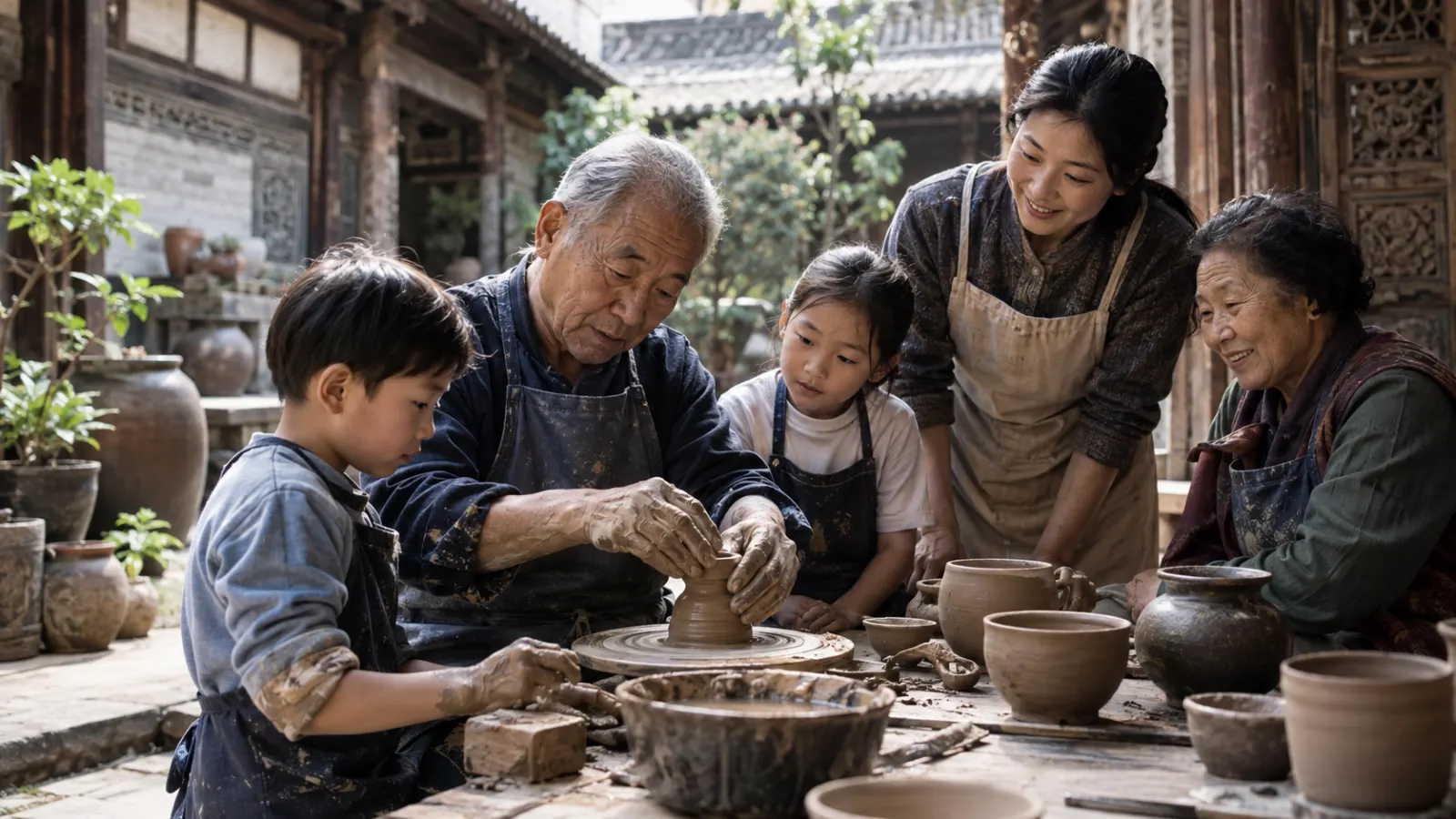
Mother tongue is the first language through which a person usually enters the world of meaning. It is the language of early affection, discipline, hunger, fear, play, lullabies, family stories and belonging. For many people, it is the language in which home first speaks to them. Its importance is therefore not limited to communication. Mother tongue shapes identity, learning, emotion, cultural memory and dignity.
The phrase “mother tongue” usually refers to the first language learned in childhood or the language most closely associated with home and early socialisation. In multilingual families, a person may have more than one mother tongue. A child may grow up hearing one language from a mother, another from a father, another from grandparents and another in the neighbourhood. The deeper point is not biological motherhood but linguistic belonging. Mother tongue is the language in which a person first learns how life feels.
The first importance of mother tongue is emotional. People often express their deepest feelings more naturally in the language of childhood. Anger, affection, grief, prayer, humour and fear may come more instinctively in mother tongue than in a language learned later. A person may become highly fluent in a global language, but when they are vulnerable, they may return to the words heard at home. This is because mother tongue is tied to memory before formal education begins.
Mother tongue also creates cultural identity. It carries family history, proverbs, blessings, songs, jokes, idioms, kinship terms and local worldview. A grandmother’s story is not only about plot; it is also about rhythm, tone, accent and cultural reference. A proverb in mother tongue may contain moral wisdom that sounds flat in translation. A festival song may carry generations of feeling. When a child understands mother tongue, they can access not only words but the cultural atmosphere behind them.
This is why losing mother tongue can create distance between generations. Many migrant families experience this. Grandparents may speak the heritage language; grandchildren may prefer the language of school and media. Conversations become shorter. Stories are simplified. Jokes do not land. Rituals are performed but not fully understood. The family still loves one another, but a channel of cultural depth weakens. Language loss can turn living memory into silent nostalgia.
Mother tongue is also important for early education. Children learn concepts more easily when instruction begins in a language they understand. If a child is taught in an unfamiliar language too early, they may struggle not because they lack intelligence but because the medium blocks comprehension. UNESCO has repeatedly argued for mother tongue-based multilingual education, especially in early schooling, because it supports inclusion and learning outcomes. UNESCO also notes that a large share of the world’s population still does not have access to education in a language they speak or understand.
The logic is straightforward. A child who already understands the language of instruction can focus on concepts: numbers, stories, science, environment, relationships and reasoning. A child who does not understand the language must first decode the medium before reaching the idea. This creates cognitive overload. The child may memorise sounds without understanding meaning. Over time, such children may lose confidence and be wrongly labelled weak learners.
Mother tongue-based education does not mean rejecting other languages. This is an important misconception. The strongest argument is not mother tongue versus English, Hindi, French, Spanish or any other wider language. The argument is sequencing and dignity. Children can begin learning in a familiar language while gradually acquiring regional, national and global languages. A strong foundation in the first language can support later multilingual ability rather than block it.
In fact, multilingualism is an advantage when properly supported. A child can think in mother tongue, participate in a regional language, access national institutions through another language and enter global opportunities through an international language. The problem arises when one language is treated as valuable and the child’s home language is treated as backward. That hierarchy damages confidence.
Mother tongue is also linked to self-esteem. When schools recognise a child’s home language, the child receives a message: your family world matters. When schools punish or mock it, the child receives another message: your background is inferior. Language humiliation can produce cultural shame. Children may stop speaking their mother tongue publicly because they fear being seen as rural, poor, tribal, backward or less educated. This is not natural language change; it is social pressure.
The importance of mother tongue is especially visible among minority, Indigenous and marginalised communities. Many such languages carry ecological knowledge, oral history, healing traditions, spiritual practices and community law. When children stop learning these languages, the community loses more than speech. It loses access to knowledge systems. UNESCO has highlighted that languages carry histories, cultures, identities and unique ways of understanding the world. The disappearance of a language can therefore mean the weakening of an entire knowledge tradition.
Mother tongue also affects citizenship and justice. People participate more effectively in public life when they can understand information in their own language. Health advisories, legal rights, government schemes, voting information, disaster warnings and educational resources become meaningful only when people understand them. A state that communicates only in elite or dominant languages may unintentionally exclude millions. Language access is therefore a democratic issue.
In the workplace, mother tongue may not always be the language of professional advancement, but it still matters. People often build trust faster when they speak a shared home language. Local businesses, political mobilisation, community organisations and social services often operate through mother tongues. Even when formal documents use a dominant language, informal trust may depend on local speech. Language is part of social capital.
Mother tongue is also important for creativity. Poetry, folk music, theatre, cinema, comedy and storytelling often draw power from local language. Some emotional registers cannot be easily imported from another language. A joke in one mother tongue may carry social knowledge that outsiders miss. A song may sound simple in translation but powerful in its original because sound, rhythm and memory work together. Cultural industries thrive when mother tongues are alive.
However, mother tongue can also become politicised. Language pride is healthy when it protects dignity and diversity. It becomes dangerous when it turns into hostility toward other languages or communities. Loving one’s mother tongue should not mean hating another’s. The best linguistic culture is confident, not insecure. It allows people to preserve their language while learning others. It treats multilingualism as enrichment rather than betrayal.
Another misconception is that mother tongue belongs only to the past. Some people assume that local languages are useful only for home and tradition, while modern life requires global languages. This is a narrow view. Mother tongues can be languages of science, technology, law, media, literature and entrepreneurship if societies invest in terminology, translation, publishing, digital tools and education. A language becomes “modern” when people use it for modern purposes.
Digital technology has created new challenges and opportunities for mother tongues. Dominant languages have more online content, better keyboards, stronger translation systems, voice recognition and artificial intelligence support. Smaller languages may struggle for digital presence. Young people may shift toward languages that dominate entertainment and social media. But technology can also help revive mother tongues through online classes, digital dictionaries, podcasts, subtitles, regional content, recorded oral histories and community archives.
The survival of mother tongue depends on use. Pride alone is not enough. A language must be spoken to children, used in stories, supported in schools, visible in books, heard in songs, present in public spaces and usable online. Families often play the first role. If parents stop speaking the language to children because they fear it will harm career prospects, transmission weakens. But if families combine mother tongue with other languages confidently, children can grow multilingual.
Urban families face a particular challenge. In cities, children may live in apartment cultures where English, Hindi or another dominant language becomes the peer language. Parents may speak mother tongue but children reply in a dominant language. Over time, comprehension may remain but speaking ability declines. This pattern is common worldwide. To maintain mother tongue, families need intentional spaces: storytelling, reading, songs, calls with relatives, visits to ancestral places, films, theatre and community gatherings.
Mother tongue also carries moral imagination. Words for respect, kinship, shame, affection, devotion, duty and humour are culturally dense. Kinship terms alone can shape how people see relationships. A language that distinguishes elder brother, younger brother, maternal uncle, paternal aunt and many other relations teaches a social map of family. When such terms are replaced by generic words, some cultural nuance may fade.
At the same time, mother tongue must not become a prison. Some people have painful relationships with their home language because it may be associated with control, exclusion, caste insult, gender restriction or childhood trauma. Others may have mixed identities and not feel rooted in one language. Respecting mother tongue should include respecting people’s complex experiences. Language policy should create freedom, not compulsion.
The healthiest approach is additive multilingualism. This means strengthening mother tongue while adding other languages. A child should not have to choose between roots and opportunity. A society should not ask people to abandon home language in order to become educated. Nor should it deny people access to wider languages in the name of tradition. Both rootedness and mobility matter.
International Mother Language Day, observed on 21 February, exists to promote linguistic and cultural diversity and multilingualism. Its continued relevance shows that mother tongue is not a minor sentimental issue. It is connected to education, inclusion, heritage, dignity and social participation. In a world where many languages are endangered, mother tongue protection is also a form of cultural conservation.
In the end, the importance of mother tongue lies in its ability to connect the intimate and the collective. It connects a child to family, a family to community, a community to history and a society to diversity. It helps people think, feel, learn and remember. Other languages can open doors, but mother tongue often gives people a home to return to.
A society that respects mother tongues does not weaken national or global communication. It deepens human dignity. It tells every child that the language of their home is not an obstacle to knowledge, but a foundation for it.
The importance of mother tongue also appears in mental confidence. A child who can ask questions, make mistakes and explain ideas in a familiar language is more likely to participate. When the child is forced to perform only in an unfamiliar language, silence may be mistaken for lack of ability. This is especially important for first-generation learners. Many such children enter school with rich oral intelligence, local knowledge and observation skills, but the school recognises only the language of textbooks. Mother tongue helps convert lived intelligence into formal learning.
Mother tongue also protects memory during social change. Families may become nuclear, villages may become towns, and children may move to distant cities, but language can carry continuity across these changes. A phone call in the home language can restore intimacy that formal speech cannot. A song remembered from childhood can connect a migrant worker to a distant home. A story told in mother tongue can help a child understand that their family existed before the city, the school and the market shaped their current life.
For policy makers, the challenge is practical. Supporting mother tongue requires trained teachers, textbooks, scripts, digital fonts, terminology development, assessment systems and parental trust. Many parents fear that mother tongue education will reduce access to wider opportunities. This fear must be taken seriously. The answer is not to deny the value of wider languages, but to design strong multilingual pathways. Early learning in mother tongue, followed by well-planned addition of regional, national and global languages, can serve both dignity and mobility.
For communities, the challenge is daily use. A language cannot survive only through annual celebration. It must be spoken at meals, used in jokes, written in messages, sung to children, heard in local media and respected in schools. Mother tongue remains important only when it remains alive in ordinary life. Its future depends less on speeches and more on whether children hear it with love, usefulness and pride.