Why Old and New Values Clash: How Societies Adapt to Change
Social change rarely arrives as one coordinated package. A new technology can transform communication within a few years while law takes much longer to establish rules around privacy, liability or ownership. Employment patterns can change before schools teach the skills new jobs require. Women's participation in paid work can change household economics faster than expectations about caregiving adjust. Migration can diversify cities before political institutions find effective ways to represent increasingly varied communities.
What people experience as a conflict between “old” and “new” is therefore often a conflict between different speeds of adjustment. A social practice may survive after the economic or technological conditions that once supported it have changed. At the same time, a new behaviour may spread before anyone fully understands its long-term effects.
This helps explain why societies can feel simultaneously modern and traditional. A person may use artificial intelligence at work while living within family expectations shaped several generations earlier. A city can adopt digital payments and app-based transport while relying on administrative institutions designed for a pre-digital age. People can hold socially liberal attitudes while depending on housing, childcare or employment systems built around older assumptions.
Old and new do not simply replace one another. They coexist, compete, combine and sometimes reshape each other.
Research on family change illustrates this broader process. Sociologist Frank Furstenberg notes that changes in economies, education, technology, law and cultural beliefs interact with family institutions rather than transforming them through one uniform pathway. Economic development can alter marriage, gender relations and intergenerational authority, but the result varies according to each society's history and institutions. (pmc.ncbi.nlm.nih.gov)
The useful question is therefore not whether society should choose the past or the future. It is how communities manage transitions when different parts of social life move at different speeds.
Institutions change on different clocks
Families, markets, governments, schools, religious institutions and legal systems do not adapt at the same rate.
Markets can reward a new technology almost immediately. If a digital service saves consumers time, adoption can spread within months. Regulation may take years because lawmakers first have to understand the technology, identify harms, negotiate competing interests and create enforceable rules.
Education systems move differently again. Employers may begin demanding new technical capabilities long before curricula, teacher training and qualification systems have adjusted. Students can therefore be preparing for a labour market partly designed around yesterday's occupations.
Family institutions can move more slowly because they involve identity, obligation and emotional relationships rather than only efficiency. Household structures developed under one economic environment may continue after work patterns change. Expectations about who earns income, who provides care, when people marry and how much authority parents exercise can persist even when education and employment make older arrangements less practical.
Large comparative research on family change across low- and middle-income countries shows that socioeconomic development is associated with substantial changes in family behaviour, but not simple convergence toward one universal model. Using decades of data covering millions of respondents across 84 countries, researchers found both common shifts and persistent cross-national diversity. (pmc.ncbi.nlm.nih.gov)
This is important because the language of “traditional versus modern” can suggest that every society is travelling toward exactly the same destination. Evidence is more complicated. Similar economic pressures can produce different arrangements because existing institutions, religious systems, laws and histories mediate the response.
Transition periods therefore appear inconsistent because social systems are layered. Older arrangements do not vanish when newer ones appear. Instead, people learn to live across several institutional timelines simultaneously.
Generational conflict reflects different formative worlds
Age differences are often described as though younger people naturally prefer change while older people naturally resist it. That stereotype contains too little sociology.
Generations can disagree because they were formed under different conditions.
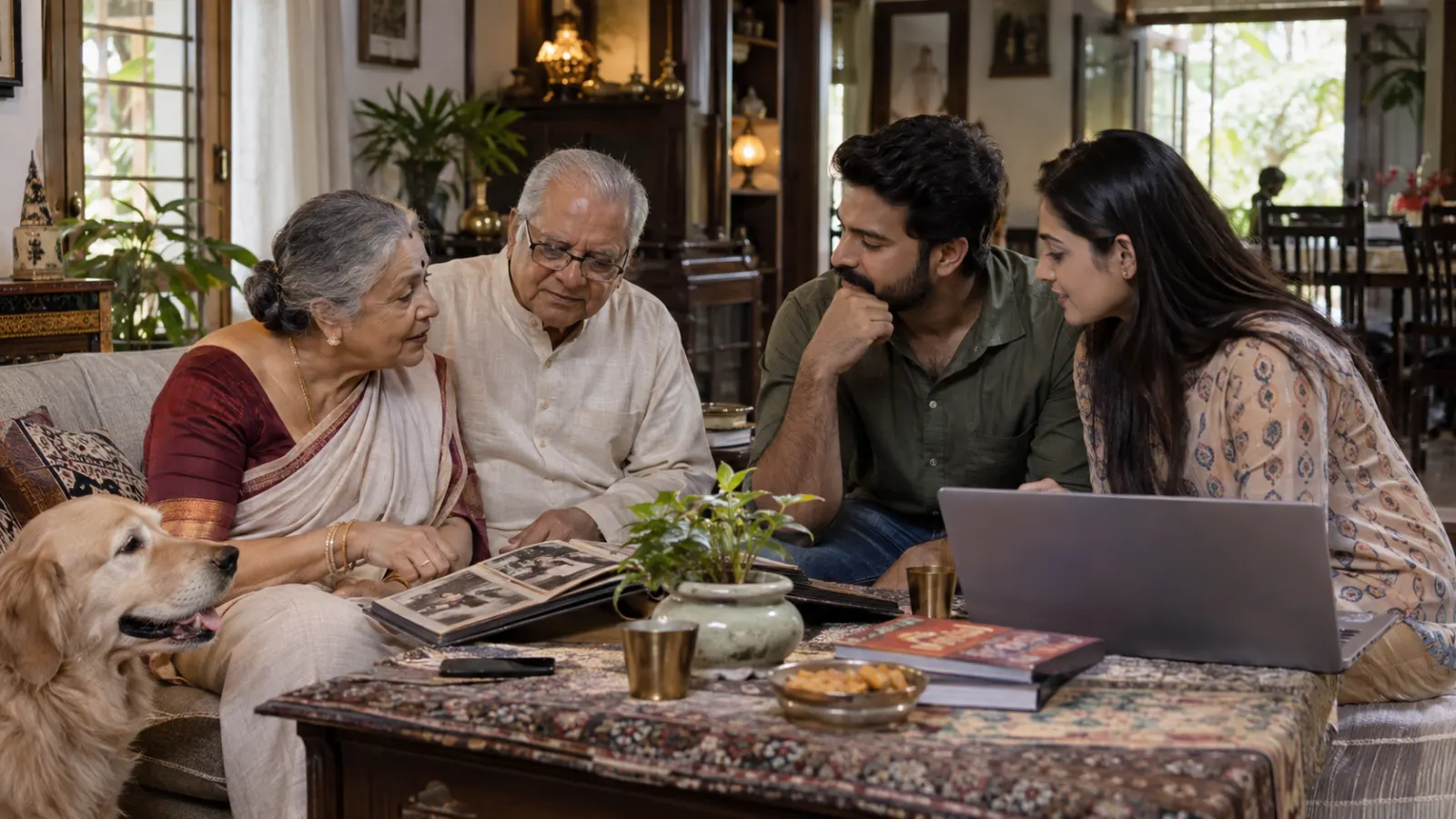
Someone who entered adulthood during a period of economic instability may place unusually high value on secure employment, home ownership or savings. Someone who grew up with smartphones may regard constant access to friends, information and entertainment as ordinary rather than technologically remarkable. People raised when gender roles were more rigid may interpret later changes through assumptions learned in childhood, while younger people encounter the revised expectations as normal.
Neither generation necessarily experiences itself as ideological. Each may experience its own assumptions as common sense.
This helps explain arguments that appear to concern personality but actually concern historical reference points. An older worker may interpret staying with one employer for decades as evidence of commitment, while a younger worker may interpret frequent movement as rational career development. A parent may consider early home ownership a normal milestone because it was achievable during their own youth, while a younger adult faces very different housing prices and labour conditions.
Generational categories still need caution. People born in the same decade are not interchangeable. Class, gender, region, education, religion, migration experience and personality can produce enormous differences within age groups. Wealthy and poor members of the same generation may have more different experiences than two people several decades apart.
Rapid modernisation research illustrates the complexity. Studies of China, for example, have documented major changes in values and everyday behaviour alongside economic transformation, while also showing that change interacts with existing culture rather than simply replacing it. (pmc.ncbi.nlm.nih.gov)
The generation gap is therefore better understood as different historical experiences meeting inside the same family, workplace or institution.
Technology, migration and economic change alter more than behaviour
Technology often changes what people can do before societies agree on what people should do.
Smartphones created new possibilities for constant communication, photography, location sharing and work outside the office. Social media radically increased the scale on which ordinary people could publish information. Artificial intelligence is changing assumptions around authorship, expertise, education and professional work. Digital payments change commerce while also creating new records of transactions that previously left little data.
The resulting conflicts are partly technological but also normative.
How quickly should someone answer a message? Is photographing strangers in public acceptable? When does using AI become assistance rather than misrepresentation? Should an employer be allowed to contact workers outside normal hours simply because technology makes them reachable?
There is rarely a complete social rule available on the first day of a new technology. Norms emerge through experimentation, disagreement, repeated behaviour and eventually institutionalisation. Law may then codify some of those expectations.
Migration produces another form of rapid contact between social worlds.
People carry language, food, religion, family obligations, clothing, music and social networks when they move. Cities bring people with different practices into workplaces, schools, neighbourhoods and public spaces. Some customs adapt quickly, others become more important because maintaining them provides continuity in an unfamiliar environment.
Host populations change too. Foods once associated with immigrant communities become ordinary parts of national cuisine. Languages borrow words. Music combines styles. Festivals acquire wider audiences. Younger generations may produce identities that cannot easily be classified as belonging entirely to either ancestral or host culture.
The result is usually not replacement. It is negotiation and hybridisation.
UNESCO's approach to “living heritage” captures this idea particularly well. Its safeguarding framework explicitly states that preserving cultural heritage does not mean freezing it into a supposedly pure or original form. Living heritage survives partly because communities continually recreate and transmit it, and safeguarding measures should involve the people who actually practise it. (ich.unesco.org)
Economic transformation can make these cultural tensions even more intense because it changes status and power.
New industries raise the value of different skills. Education can reduce the authority associated with age or inherited occupation. Migration can allow younger family members to become major earners. Women's paid employment can change bargaining relationships within households. Mechanisation may increase production while weakening the social position of traditional craftspeople.
Someone who loses status during a transition may experience the change not merely as economic displacement but as cultural disrespect.
This is why arguments about values sometimes contain material conflicts underneath them. A debate may appear to concern whether young people still respect tradition while also reflecting a real transfer of financial power from one generation to another.
Recognising the material element does not invalidate moral arguments. It explains why cultural conflict can become so emotionally intense.
Law, identity and moral panic can turn adjustment into open conflict
Law and social change influence one another in both directions.
Sometimes law follows behaviour. A practice gradually becomes socially common and legal rules eventually recognise it. In other cases, lawmakers deliberately move ahead of existing norms—for example by prohibiting discrimination, expanding rights or changing institutional procedures.
Neither route guarantees immediate cultural acceptance.
A rule can exist formally while older practices continue for years because enforcement is weak or because institutions lack capacity. Conversely, behaviour may change before legislation catches up. Social norms influence law, and law can gradually reshape what people expect from one another.
Conflict becomes especially intense when a specific practice takes on symbolic meaning.
A debate about dress can become a debate about national identity. A curriculum disagreement can become a struggle over whose history belongs to the nation. Changing gender roles may be interpreted not merely as household adjustment but as rejection of religion or family tradition. Language policy can become a symbolic argument about which group has status.
Once this happens, the immediate issue becomes difficult to separate from fears about belonging and continuity.
Political, religious and cultural leaders can intensify these conflicts by framing every social change as the destruction of tradition or, in the opposite direction, treating every inherited practice as inherently oppressive. Both approaches turn complex questions into zero-sum identity contests.
Periods of rapid change are also fertile ground for moral panic. A new technology, style of music, youth culture or behaviour becomes a symbol of broader social decline. Some fears eventually prove justified; others become exaggerated because the visible new behaviour absorbs anxieties produced by much larger transformations.
The useful analytical question is not whether people are “overreacting” but whether the scale of concern matches the evidence.
How widespread is the new behaviour? What measurable outcomes are actually changing? Is the new phenomenon causing the problem, or has it simply become an easy explanation for older frustrations? Are extreme examples being mistaken for typical behaviour?
Moral panic does not mean that every warning about social change is false. It describes situations in which public reaction becomes disproportionate or in which one visible phenomenon carries anxieties that originate elsewhere.
Historical memory can produce a similar distortion.
Debates between old and new often compare present complexity with an idealised past. Families are remembered as more stable, communities as more cohesive and traditions as more authentic than historical evidence may justify. Yet family patterns have always varied across class and region, cultures have continually borrowed from one another and many customs described as ancient acquired their current form relatively recently.
Historical knowledge can therefore reduce unnecessary conflict. It reminds societies that earlier generations also experienced change, argument and adaptation.
The past was not one permanent settlement from which the present suddenly departed.
Social change creates unequal winners and losers
One reason transition cannot be understood purely as a debate over values is that people do not experience change with equal resources.
A highly educated professional may benefit immediately from digital transformation, while an older worker in an occupation threatened by automation faces displacement. Urban residents may gain new services years before rural communities. A family with money and migration networks may turn international mobility into opportunity, while another experiences separation and insecure employment.
The people who gain from change can easily describe resistance as ignorance or nostalgia. Those carrying most of the cost can interpret the new order as evidence of social decay.
Both descriptions can conceal material reality.
A transition may be technologically efficient while distributing benefits unfairly. An inherited practice may be culturally meaningful while also limiting opportunities for certain groups. Social analysis therefore has to consider both symbolic and economic consequences.
This unevenness also affects the speed at which people can adapt.
Learning a new skill requires time and access to education. Moving to a new job may require transport or relocation. Changing family roles may require childcare. Adopting digital services may require devices, connectivity and literacy.
People who resist a transition are not always defending an ideology. Sometimes the alternative has been made easier for others than for them.
Public policy can reduce this friction through retraining, social protection, accessible education and transitional support. Such measures do not eliminate cultural disagreement, but they reduce the likelihood that adaptation will be experienced entirely as loss.
Voice matters for the same reason.
People tend to resist decisions more intensely when change is imposed on them without meaningful participation. Consultation cannot guarantee agreement, but it can reveal which aspects of a practice communities consider essential, which costs policymakers underestimated and where compromise may be possible.
UNESCO's heritage framework similarly emphasises community participation rather than assuming that experts can preserve culture on behalf of passive populations. Living heritage remains viable when communities themselves continue to recognise, adapt and transmit it. (ich.unesco.org)
Societies usually adapt through hybrids rather than total replacement
Debates over tradition and change are often framed as though one side must eventually defeat the other.
Actual social change is usually messier.
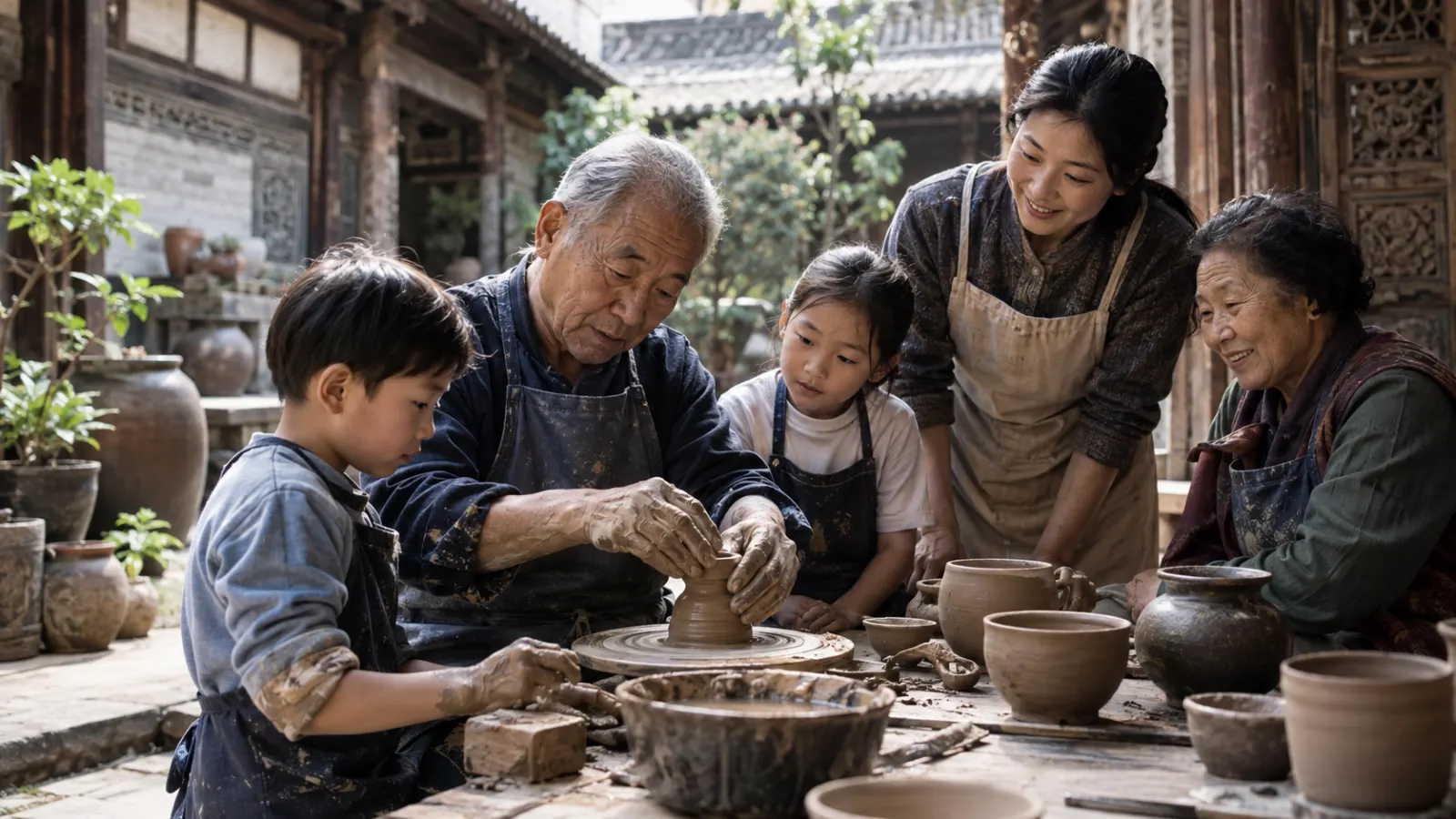
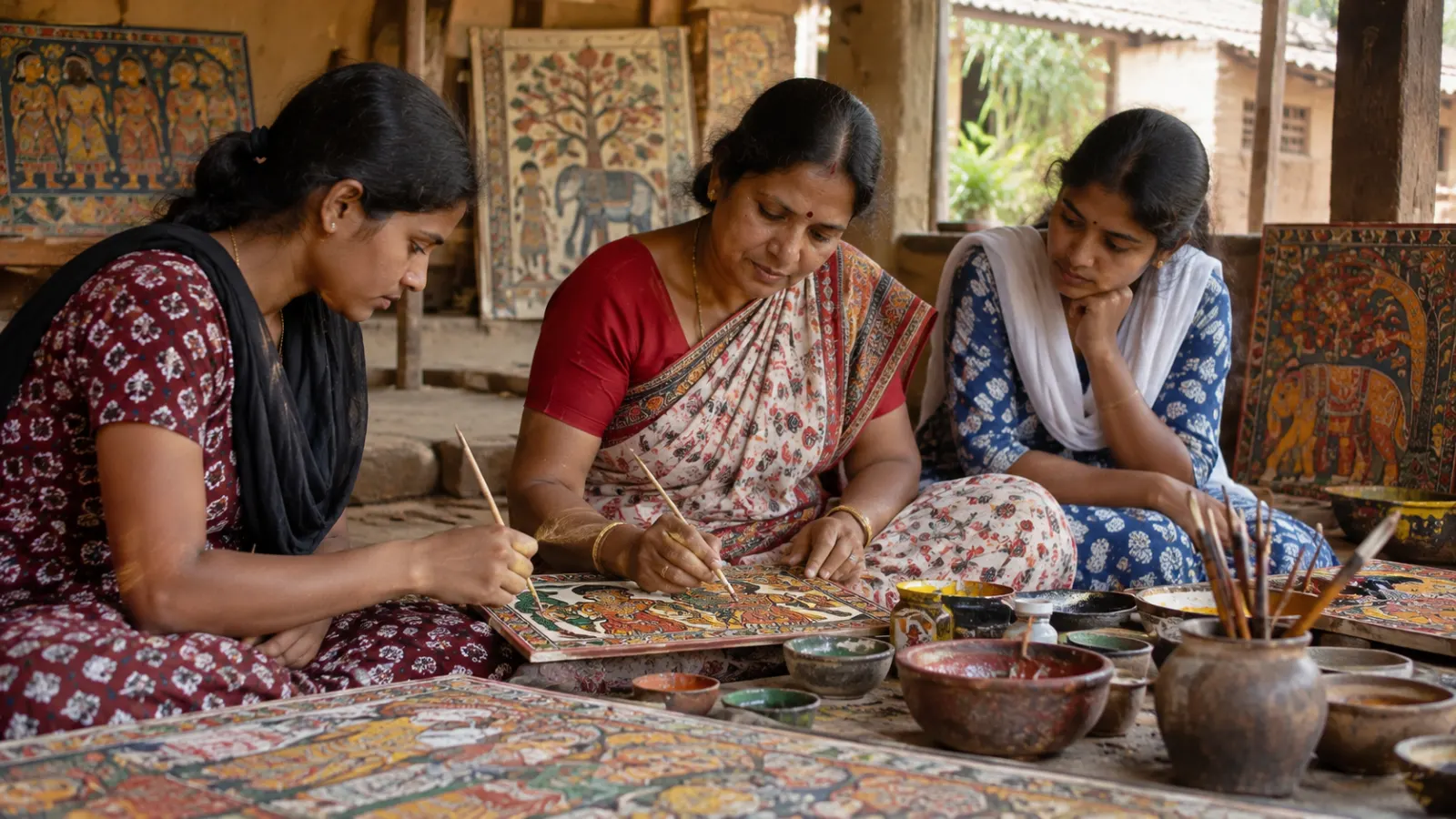
Historic neighbourhoods receive modern infrastructure. Traditional ceremonies are livestreamed to relatives abroad. Local languages develop new digital vocabularies. Craftspeople sell handmade products through international online marketplaces. Families preserve obligations toward parents while renegotiating gender roles and individual choice.
These are hybrid solutions.
They can generate new arguments about authenticity, but hybridisation is one of the normal ways cultures survive. Continuity frequently depends on adaptation rather than exact reproduction.
UNESCO explicitly describes living heritage as something transmitted across generations while being continually recreated. Safeguarding therefore does not mean locking traditions into a fixed historical form. (ich.unesco.org)
This provides a more useful way of thinking about cultural confidence.
Communities secure in their history and identity may find it easier to borrow, experiment and reform because every modification does not feel like evidence of disappearance. Groups that feel politically marginalised or culturally disrespected may become more defensive because apparently small changes appear to confirm a broader loss of status.
Support for language, representation and historical recognition can therefore have practical consequences for adaptation. People may be more willing to reconsider a specific tradition when they do not believe doing so requires declaring their entire inherited culture illegitimate.
The same principle works in the opposite direction. Reformers gain little by treating everyone attached to an inherited practice as irrational or backward. Some traditions contain genuine social knowledge, forms of solidarity or cultural meaning worth preserving. Others may perpetuate harms that deserve reform or rejection.
The challenge is to distinguish among them.
Managing change requires neither worship of the past nor worship of novelty
The tension between old and new is a permanent feature of social life because institutions, technologies, economies and cultural values do not change at the same speed. The original draft captures this well: periods of transition become especially difficult when changes affect identity, status and authority rather than only practical behaviour.
Societies therefore need mechanisms for negotiating change rather than pretending conflict can be eliminated.
Evidence matters because it distinguishes demonstrated harm from symbolic anxiety. Historical knowledge matters because it prevents idealised memories of the past from becoming the only benchmark. Social protection matters because change is easier to accept when its costs are not concentrated on the least powerful. Law matters because rights and institutional rules cannot always wait for every norm to change first. Dialogue matters because people are more likely to adapt when they have meaningful ways to participate.
Tradition also has to remain capable of movement.
UNESCO's concept of living heritage is useful precisely because it rejects the idea that preservation requires freezing culture. Traditions survive through transmission, interpretation and recreation, not simply by repeating every historical practice without alteration. (ich.unesco.org)
Progress requires similar humility.
Newer does not automatically mean better. Technologies can create harms societies recognise only after adoption. Economic changes can increase inequality. Reforms designed with good intentions can produce unintended consequences. A willingness to change should therefore include a willingness to evaluate change.
The most resilient societies are neither those that attempt to freeze themselves against disruption nor those that discard continuity whenever something new becomes available.
They create ways to examine inherited practices, preserve what remains valuable, reform what no longer fits and reject what causes unjustifiable harm. At the same time, they evaluate innovations rather than treating novelty itself as evidence of improvement.
Cultural change is therefore rarely a clean leap from past to future.
It is the continuous negotiation of how people formed by different histories, institutions and values can inhabit the same present—and decide together what deserves to continue into the future.