Traditions do not survive by accident. They survive because people teach them, repeat them, perform them, remember them, adapt them and attach meaning to them. A tradition may look like a simple act — lighting a lamp, singing a song, cooking a recipe, telling a story, wearing a garment, visiting a shrine, celebrating a festival, using a greeting, following a craft technique — but behind that act lies a chain of transmission. Someone received it, someone practised it, someone valued it, and someone passed it on.
A tradition is not merely something old. It is something inherited that continues to carry meaning. Many old practices disappear because people no longer find them useful or meaningful. Many traditions survive because they remain emotionally, socially or spiritually significant. They connect people to family, community, place, faith, memory and identity. They give continuity in a world that keeps changing.
UNESCO’s work on intangible cultural heritage is useful here because it defines living heritage as practices, representations, expressions, knowledge and skills that communities recognise as part of their cultural heritage. UNESCO also emphasises that such heritage is transmitted from generation to generation and is constantly recreated by communities in response to their environment, history and social life.
This means traditions are not dead objects from the past. They are living processes. A temple may be old, but the tradition is not only the stone building. It is the ritual, song, procession, memory, offering, story, seasonal calendar, local economy, family participation and community emotion around it. A recipe may be old, but the tradition is not only ingredients. It is the grandmother’s method, the festival context, the smell of the kitchen, the rule about who eats first, the story of scarcity or celebration attached to it.
The first and most powerful channel of tradition is family. Families pass down traditions through repetition. Children watch adults perform rituals, cook certain foods, speak certain words, arrange ceremonies, treat guests, celebrate festivals and respond to birth, marriage and death. Most children do not learn tradition through formal lectures. They learn by being present. They absorb timing, tone, gesture and emotion.
For example, a child may not understand the full meaning of a festival prayer, but they remember waking up early, wearing new clothes, smelling incense, hearing songs, receiving sweets and seeing elders gather. Over time, the practice becomes part of emotional memory. Later, when the child becomes an adult, they may repeat the tradition not because they have studied its history, but because it feels like home.
This emotional element is crucial. Traditions are passed down most effectively when they are tied to affection, belonging and identity. A forced tradition may produce resentment. A meaningful tradition produces attachment. When people associate a ritual with warmth, family, music, food, beauty or collective joy, they are more likely to continue it. When they associate it only with fear, pressure, expense or hierarchy, they may reject it.
Language is another major carrier of tradition. Proverbs, blessings, lullabies, folk tales, jokes, idioms, prayers and oral histories transmit values across generations. A proverb may contain an entire worldview in one sentence. A lullaby may carry regional memory. A folk tale may teach courage, caution, morality or humour. A family phrase may preserve the voice of ancestors. When a language weakens, many traditions become harder to transmit because translation may preserve meaning but lose emotional texture.
Oral tradition has been especially important in societies where literacy was limited or where sacred, artistic and historical knowledge travelled through memory. Songs, epics, genealogies, myths, performance traditions and ritual instructions often moved orally for centuries. Even today, many traditions are learned by listening and repeating rather than reading. A student of classical music learns not only notation but mood, discipline, improvisation and the guru’s style. A craftsperson learns not only technique but touch, timing and judgement.
Ritual is one of the strongest forms of transmission. Rituals organise memory into repeated action. They tell people: this is the time, this is the gesture, this is the order, this is the meaning. Birth rituals welcome life into society. Marriage rituals recognise union. Funeral rituals help communities process death. Seasonal rituals mark agricultural cycles. Religious rituals connect ordinary life to sacred meaning. Civic rituals such as flag hoisting, national days and public ceremonies transmit political identity.
Rituals pass down tradition because they involve the body. People remember what they do repeatedly. Kneeling, bowing, touching feet, folding hands, lighting candles, offering flowers, singing together, walking in procession, fasting, feasting, dancing or wearing particular clothes — these bodily acts create memory. Tradition is not only stored in books; it is stored in movement, posture, rhythm and sensory experience.
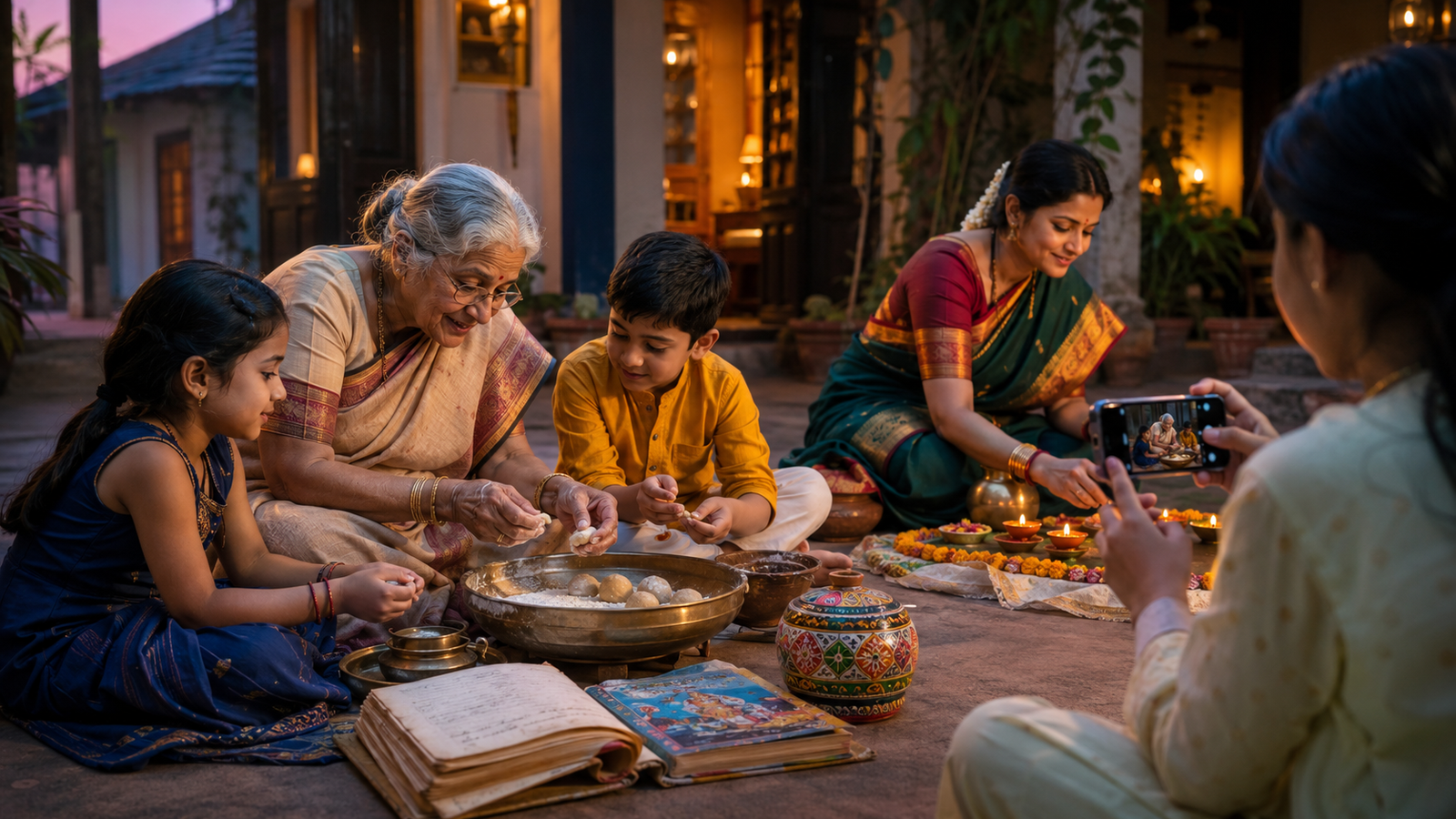
Food is another powerful vehicle of tradition. Recipes carry geography, climate, caste, class, religion, migration, trade and family memory. A community’s cuisine tells stories about available crops, historical contact, ritual purity, festival calendars and economic conditions. Families often preserve tradition through special dishes prepared during festivals, weddings or mourning periods. Food traditions are passed down in kitchens, not classrooms.
But food traditions also change. Ingredients may shift when people migrate. A dish prepared in a village may be modified in a city. Diaspora communities may replace unavailable ingredients with local substitutes. Health concerns may reduce oil, sugar or salt. Packaged products may simplify older methods. Yet the dish may still carry emotional continuity. The exact recipe changes, but the memory remains.
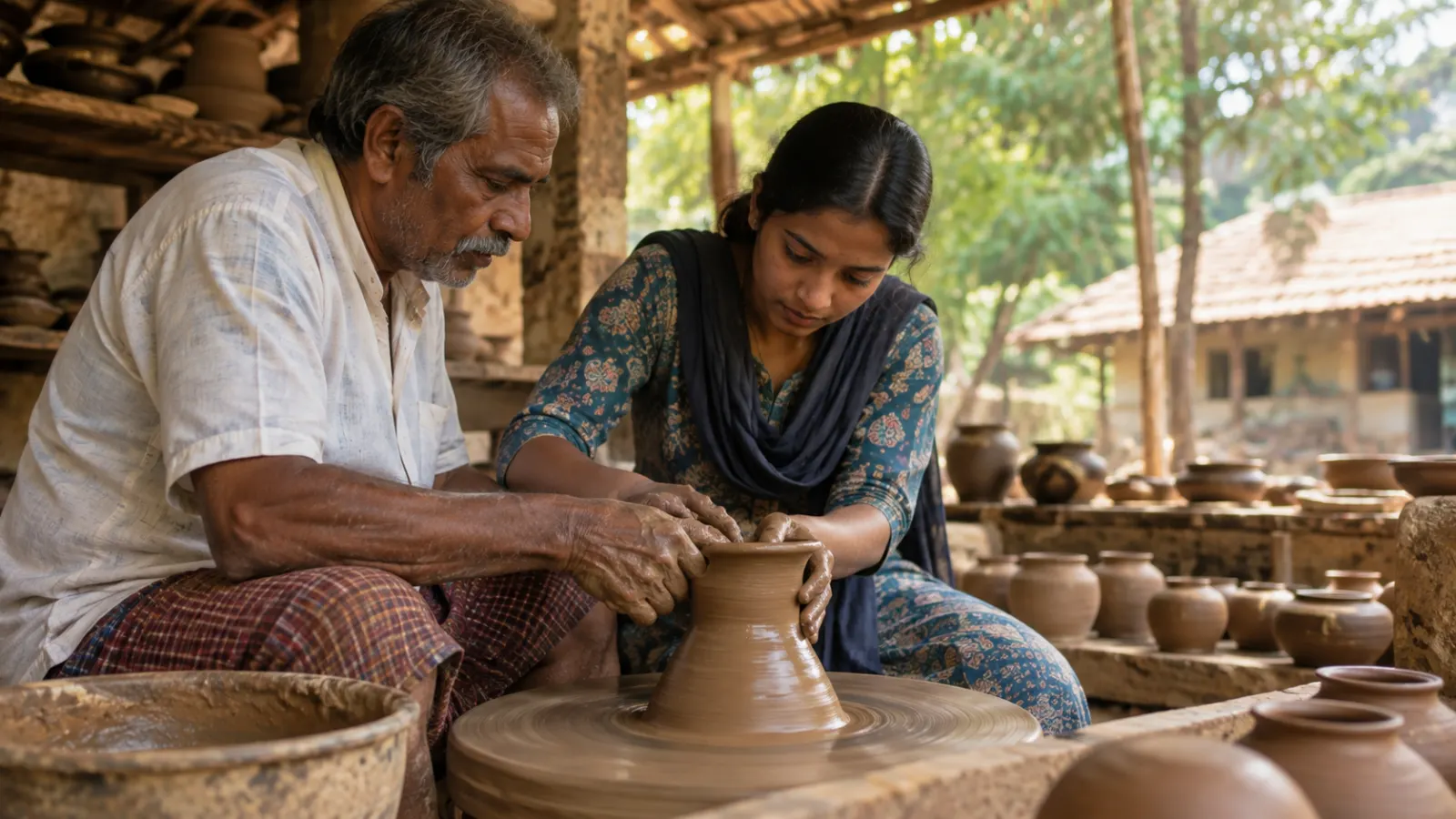
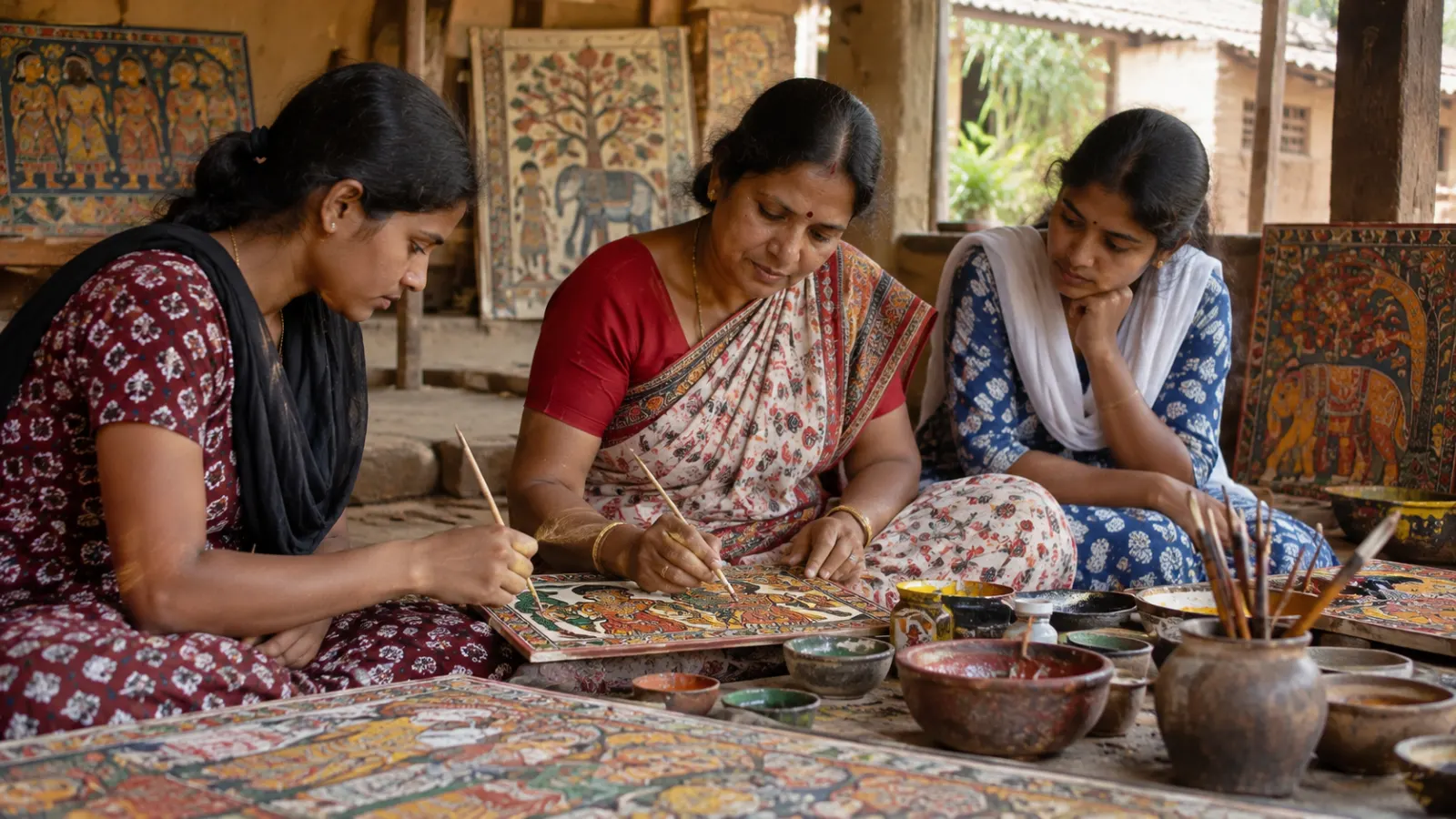
Craft traditions are passed down through apprenticeship. Pottery, weaving, embroidery, metalwork, painting, carving, instrument-making and other skills require long practice. A craft tradition involves knowledge of materials, tools, design, symbolism, market demand and community identity. It is often transmitted through families or specialised communities. UNESCO’s intangible heritage framework recognises skills and knowledge, not just final products, as part of living heritage.
The difficulty with craft traditions is that they require social and economic support. If younger generations cannot earn a livelihood from a craft, they may leave it. If machine-made products replace handmade work, the tradition may decline. If designs are copied without credit, artisans lose value. Therefore, preserving tradition is not only about nostalgia. It also requires markets, dignity, training, documentation and fair income.
Schools and institutions also pass down traditions. Textbooks teach national history, literature and moral values. Museums preserve objects and interpret heritage. Religious institutions teach rituals and doctrine. Cultural academies train artists. Universities study language, history and society. Governments recognise festivals, monuments and heritage forms. Media platforms broadcast traditional music, dance, food and storytelling to wider audiences.
However, institutional transmission can change tradition. Once a local practice enters a school syllabus, museum or state festival, it may become standardised. A living tradition with many local variations may be presented as one official version. This can help preservation, but it can also freeze diversity. The challenge is to document traditions without turning them into lifeless displays.
Community participation remains essential. UNESCO emphasises that intangible cultural heritage is community-based, meaning it depends on recognition by the communities, groups or individuals who create and maintain it. Outsiders may study or promote a tradition, but the tradition remains alive only if the community continues to value and practise it. Heritage cannot be preserved only from above; it must be lived from within.
Migration changes how traditions are passed down. When people move from villages to cities or from one country to another, they carry traditions with them. But the new environment changes practice. A festival once celebrated by an entire village may become a weekend gathering in an apartment society. A ritual once performed with extended family may be performed by a nuclear family through a video call. A mother tongue may be spoken at home but not at school. A traditional dress may be worn only on special occasions.
Diaspora communities often preserve traditions strongly because traditions become anchors of identity in unfamiliar surroundings. A language class, community temple, cultural association, food festival or dance school may become a way of teaching children where they come from. But diaspora traditions may also become selective. Communities may preserve the version of culture they remember from the time they migrated, while the homeland itself continues to change.
Technology has transformed tradition transmission. Earlier, one had to learn many traditions directly from elders or local specialists. Today, people learn recipes from YouTube, rituals from online guides, songs from streaming platforms and language from apps. Families record ceremonies, share festival photos and create digital archives. Young people may rediscover traditions through social media rather than through family instruction.
This creates opportunities and risks. Technology can revive interest in endangered traditions and connect dispersed communities. It can help document oral histories before elders pass away. It can make regional art visible to global audiences. But it can also simplify, commercialise or distort traditions. A ritual reduced to a viral reel may lose context. A sacred symbol used as fashion may offend practitioners. A complex tradition may become content without understanding.
Traditions are also passed down through stories of origin. Communities tell stories about where a ritual began, why a festival matters, how an ancestor acted, why a place is sacred or how a practice protected the community. These stories do not always function as literal history. They function as meaning. They explain why the tradition deserves continuity. A society without stories struggles to pass down practices because people need reasons, not only instructions.
But traditions also face questioning. Younger generations often ask: Why should we continue this? Is it meaningful? Is it fair? Is it expensive? Is it environmentally harmful? Is it gender-equal? Does it still fit modern life? These questions are not necessarily attacks on tradition. They can be part of renewal. A tradition that answers new questions may survive. A tradition that refuses all questions may lose younger participants.
Many traditions disappear because they become disconnected from life. If people no longer understand the language of a ritual, no longer live in the social structure that supported it, or no longer accept the values behind it, the practice weakens. Some traditions disappear because of urbanisation, economic pressure, migration, state policy, religious reform, market change or ecological loss. Others disappear because they were oppressive and people consciously reject them.
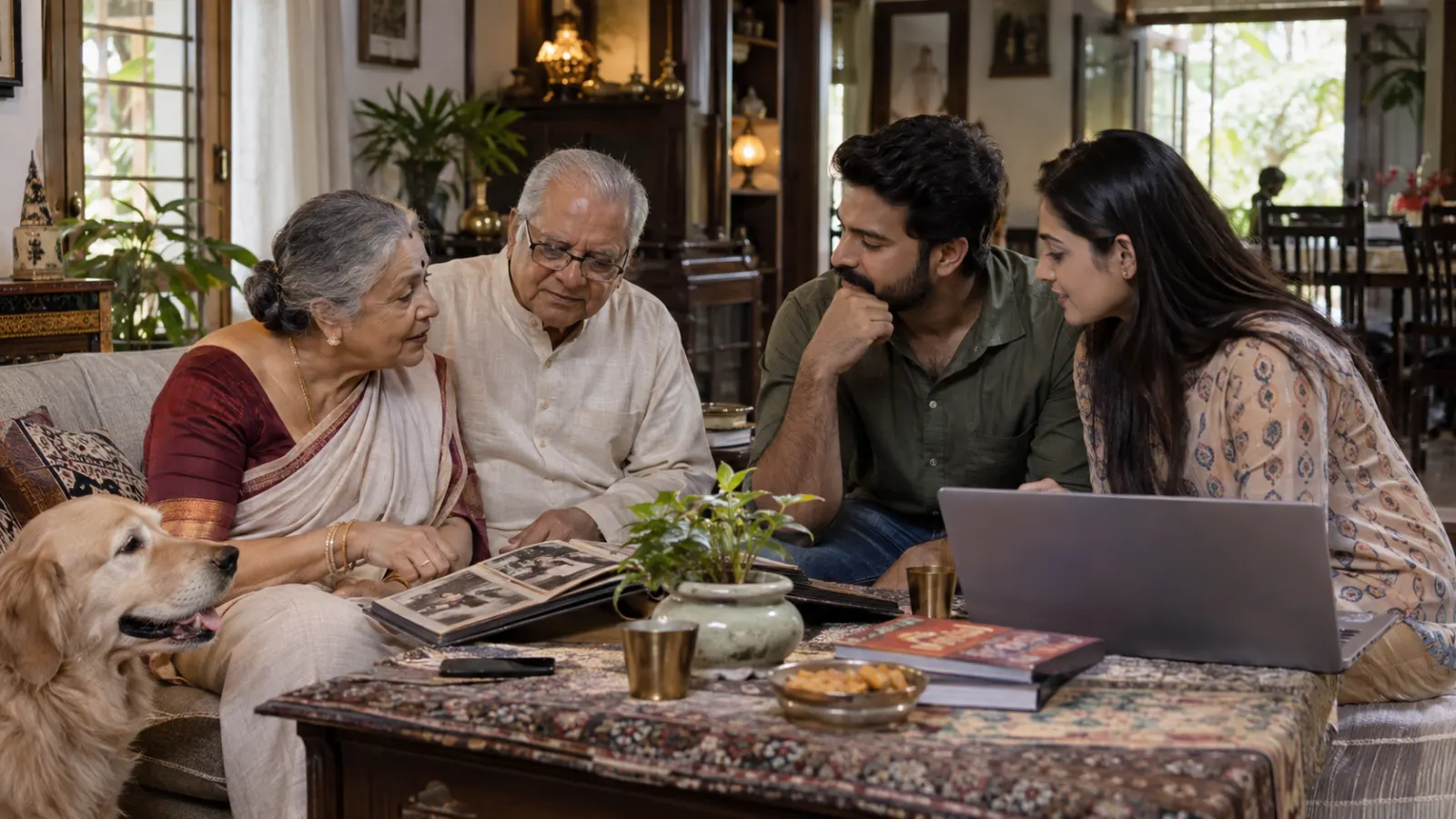
This is why passing down traditions requires interpretation, not just repetition. Elders cannot simply say, “Do this because we did it.” They need to explain meaning. Young people cannot simply dismiss everything old as useless. They need to understand context. The healthiest cultural transmission happens when generations speak to one another. Elders provide memory; youth provide renewal. Tradition survives through dialogue.
Adaptation is not the enemy of tradition. It is often the reason tradition survives. A festival may become less elaborate but more inclusive. A wedding may reduce wasteful expenditure while keeping symbolic rituals. A craft may use modern design while preserving technique. A language may create new words for modern life. A religious gathering may use digital streaming for those far away. The form changes, but the thread continues.
However, not every change is harmless. Some changes empty traditions of meaning. Excessive commercialisation can turn festivals into consumption. Competitive display can turn rituals into status pressure. Political appropriation can turn shared traditions into exclusionary identity markers. Tourism can turn sacred practices into performances for outsiders. Preservation requires sensitivity: traditions must remain meaningful for communities, not merely attractive to markets.
The passing down of tradition is ultimately a social act. It requires someone willing to transmit and someone willing to receive. It requires memory, practice, explanation, emotion and relevance. It requires spaces where traditions can be performed: homes, streets, schools, temples, mosques, churches, gurudwaras, community halls, theatres, workshops, farms, kitchens and digital platforms. It also requires respect for those who carry knowledge, especially elders, artisans, performers, storytellers and ritual specialists.
There is also an ethical responsibility in transmission. Passing down tradition should not mean forcing the next generation to repeat everything without choice. It should mean giving them enough context, beauty and freedom to decide what deserves continuity. When traditions are explained with patience, they become inheritance. When they are imposed through fear, they become burden. The same practice can either strengthen belonging or create distance depending on how it is transmitted.
Modern societies also need cultural documentation. Families can record elders’ memories, communities can archive songs and oral histories, schools can invite local artists, and digital platforms can preserve disappearing dialects, recipes and craft methods. Documentation cannot replace living practice, but it can protect knowledge from total loss. It also gives younger people material through which they can reconnect with traditions later in life.
In the end, traditions are passed down because they help people answer fundamental questions: Who are we? Where do we come from? What do we honour? How do we celebrate? How do we mourn? What do we owe our ancestors? What should we give our children? These questions do not disappear in modern life. They become even more important when change is rapid.
A living tradition is not a chain that binds the present to the past. It is a bridge. It allows memory to travel forward while allowing each generation to walk differently. The task is not to preserve every practice unchanged, nor to abandon inheritance in the name of modernity. The task is to keep meaning alive.
Traditions survive when they are loved, understood, questioned, adapted and practised. They die when they become empty performance or unbearable burden. The future of tradition therefore depends not only on elders preserving the past, but on younger generations finding reasons to carry it forward.