Languages die when communities stop using them as living means of communication. A language does not usually disappear in one dramatic moment. It weakens gradually. Fewer children learn it. Fewer families speak it at home. Fewer songs, stories and rituals are performed in it. Fewer public institutions recognise it. Younger speakers shift to a dominant language for school, work, status or survival. Eventually, the language may remain only in memories, recordings, dictionaries or ceremonial fragments.
Language death is one of the most serious but least understood cultural losses in the world. People often assume that if a language has few speakers, its disappearance is natural. But languages usually die because of historical pressure: colonisation, forced schooling, migration, economic inequality, stigma, state policy, religious conversion, urbanisation, media dominance, violence, displacement or the attraction of a more powerful language. Language death is rarely just linguistic. It is social, political and economic.
A language is considered endangered when children no longer learn it as their first language or when its use is restricted to older generations and limited contexts. If a language is spoken only by elders, it may still sound alive, but its future is fragile. The key question is not only how many people speak it today, but whether children are learning and using it naturally. Intergenerational transmission is the heartbeat of language survival.
UNESCO and language researchers have repeatedly warned that linguistic diversity is under threat. UNESCO’s World Atlas of Languages documents thousands of spoken and signed languages, while UNESCO has noted that only a small fraction are used as media of instruction and that one language is estimated to disappear every two weeks. UNESCO also reports that around 40 per cent of the world’s estimated languages are at risk of disappearing. These figures matter because language loss is also loss of cultural and intellectual heritage.
The first stage of language decline is often bilingual pressure. A community continues speaking its language at home but must use a dominant language in school, administration, markets, media or law. At this stage, the local language remains emotionally important but loses public power. Parents may begin to feel that their children need the dominant language for success. This concern is understandable. No parent wants a child to be excluded from opportunity. But when the dominant language replaces rather than adds to the mother tongue, decline begins.
The second stage is shame. Children may be mocked for speaking a minority language. Teachers may punish local speech. Employers may associate it with low status. Media may portray it as backward. Speakers internalise the message that their language is an obstacle. They may stop using it in public, then with friends, then with children. A language dies faster when its speakers are made to feel embarrassed by it.
The third stage is domestic shift. This is the decisive point. When parents stop speaking the language to children at home, transmission weakens sharply. The language may still be used by grandparents, in songs, at rituals or in jokes, but children no longer become fluent. They may understand some words but reply in a dominant language. This creates a semi-speaker generation. The next generation may understand even less. Within a few decades, a language can move from living speech to symbolic memory.
The fourth stage is ritual survival. Some languages remain in prayers, songs, names, ceremonial greetings or cultural performances after daily use has declined. This can preserve dignity, but it is not the same as full language vitality. A language used only in ceremony may become sacred but silent in ordinary life. It may be respected without being spoken. Revival is still possible, but it requires deliberate effort.
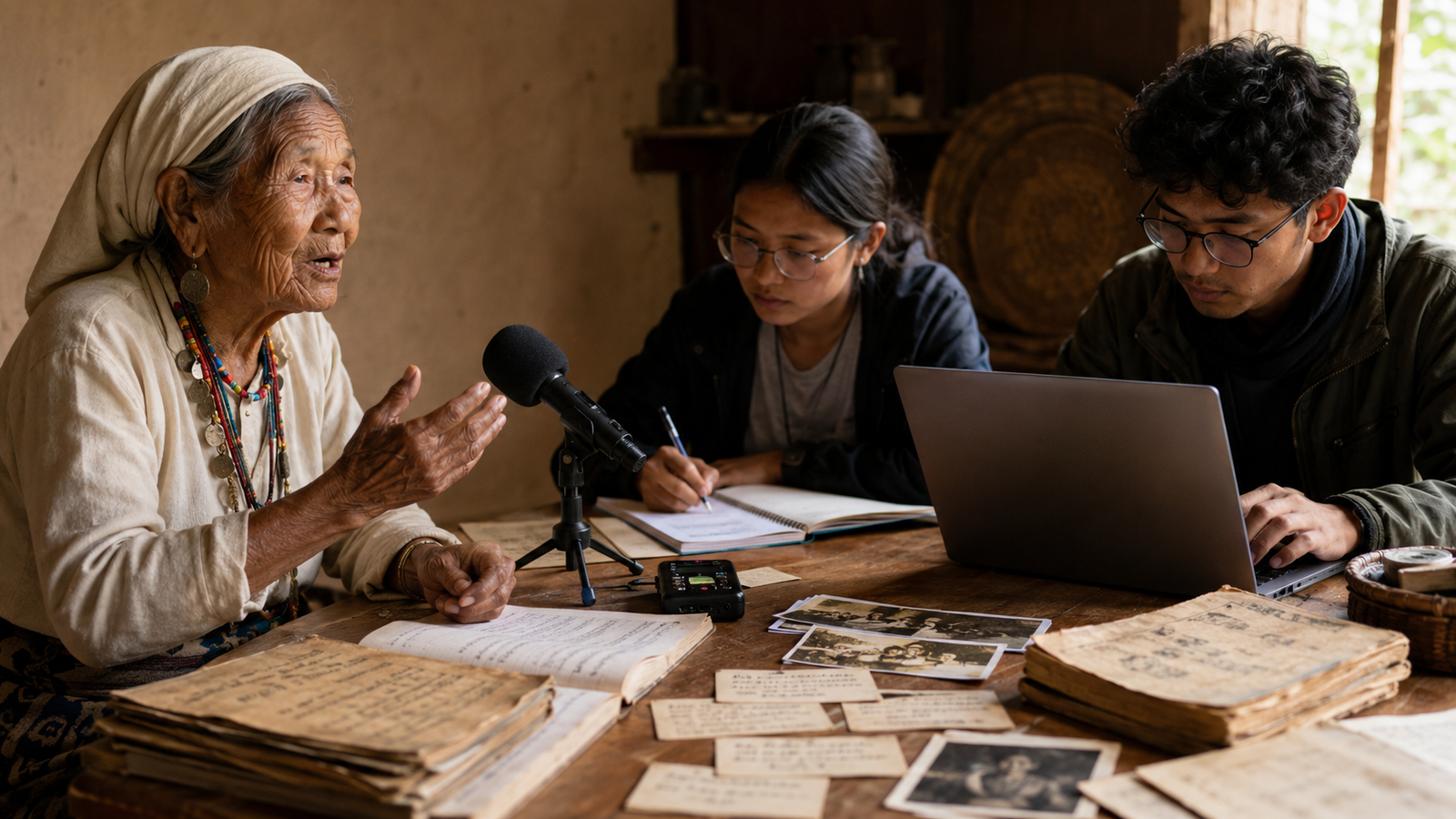
The final stage is documentation without community use. Linguists may record grammar, vocabulary and oral histories. Archives may preserve audio. Dictionaries may exist. But if no community speaks the language as a living medium, the language is functionally dead. Documentation is valuable because it can support revival, but documentation alone is not survival. A language lives when people use it to speak about ordinary life: food, children, jokes, love, work, anger, weather, money and dreams.
Why does language death matter? Some argue that fewer languages would make communication easier. This view misunderstands what languages are. A language is not merely a code that can be replaced by a more efficient code. It is a worldview. It contains ecological knowledge, kinship systems, oral history, humour, poetry, spiritual concepts, memory of place and ways of classifying experience. When a language dies, humanity loses one way of knowing the world.
Local and Indigenous languages often contain detailed knowledge of landscapes. They may name plants, animal behaviour, water sources, winds, soil, seasons and healing practices with precision developed over centuries. When the language disappears, this knowledge may not transfer fully into dominant languages. The loss can affect biodiversity, medicine, land memory and community resilience. Language death can therefore be connected to ecological loss.
Language death also affects identity. Speakers of endangered languages often feel that their language carries the soul of their community. Losing it can produce grief similar to losing ancestral land or sacred objects. The community may continue to exist, but a part of its memory becomes inaccessible. Young people may feel cultural disconnection. Elders may feel unheard. A language death is also a relationship death between generations.
Colonialism has played a major role in language decline. Many colonial systems imposed the language of the ruler in administration, courts, education and elite life. Indigenous and local languages were often treated as inferior. Children were sometimes punished for speaking their own languages in schools. These policies did not merely spread new languages; they disrupted cultural transmission. The effects continue long after formal colonial rule ends because language hierarchy becomes embedded in institutions.
Modern states have also contributed to language loss through nation-building projects. To create unity, some states promote one national language at the cost of others. A common language can help administration and citizenship, but when imposed harshly, it can suppress linguistic minorities. The challenge is to balance shared communication with diversity. A country can have a national language without humiliating mother tongues.
Economic pressure is another major driver. People shift languages when they believe their language cannot provide employment, education or mobility. This is not irrational. If all jobs require a dominant language, families will prioritise it. The solution is not to blame families but to create additive multilingual systems where children gain wider languages while keeping their own. Language survival requires dignity and utility.
Urbanisation accelerates shift because cities mix populations and reward dominant languages. Migrant children may use a common city language with peers and school friends. Parents working long hours may have less time for heritage language transmission. Mixed marriages may choose a dominant language for convenience. Over time, the home language becomes passive. This is why urban language preservation requires intentional family and community effort.
Media dominance also matters. Children spend enormous time with television, films, music, games and social platforms. If their language has little content, it becomes less relevant to their imagination. A language without digital presence may look old-fashioned to youth. Conversely, when young people see their language in songs, comedy, memes, podcasts, subtitles and apps, it can feel alive. Cultural production is therefore part of language survival.
Technology can hurt or help. Artificial intelligence and translation tools often work best for dominant languages because they have more data. Smaller languages may be excluded from keyboards, speech recognition and digital archives. This deepens inequality. But technology can also record elders, build dictionaries, create learning apps, generate subtitles, connect diaspora speakers and support revitalisation. The question is whether technology will reproduce language hierarchy or challenge it.
Language revival is possible, but it is difficult. Successful revival requires community will, children’s learning, teaching materials, trained speakers, public recognition, cultural pride and daily use. It cannot depend only on slogans. A language needs homes, schools, songs, books, media, public signs, ceremonies, jokes and economic spaces. Revival works best when young people do not see the language as a burden but as a source of pride and usefulness.
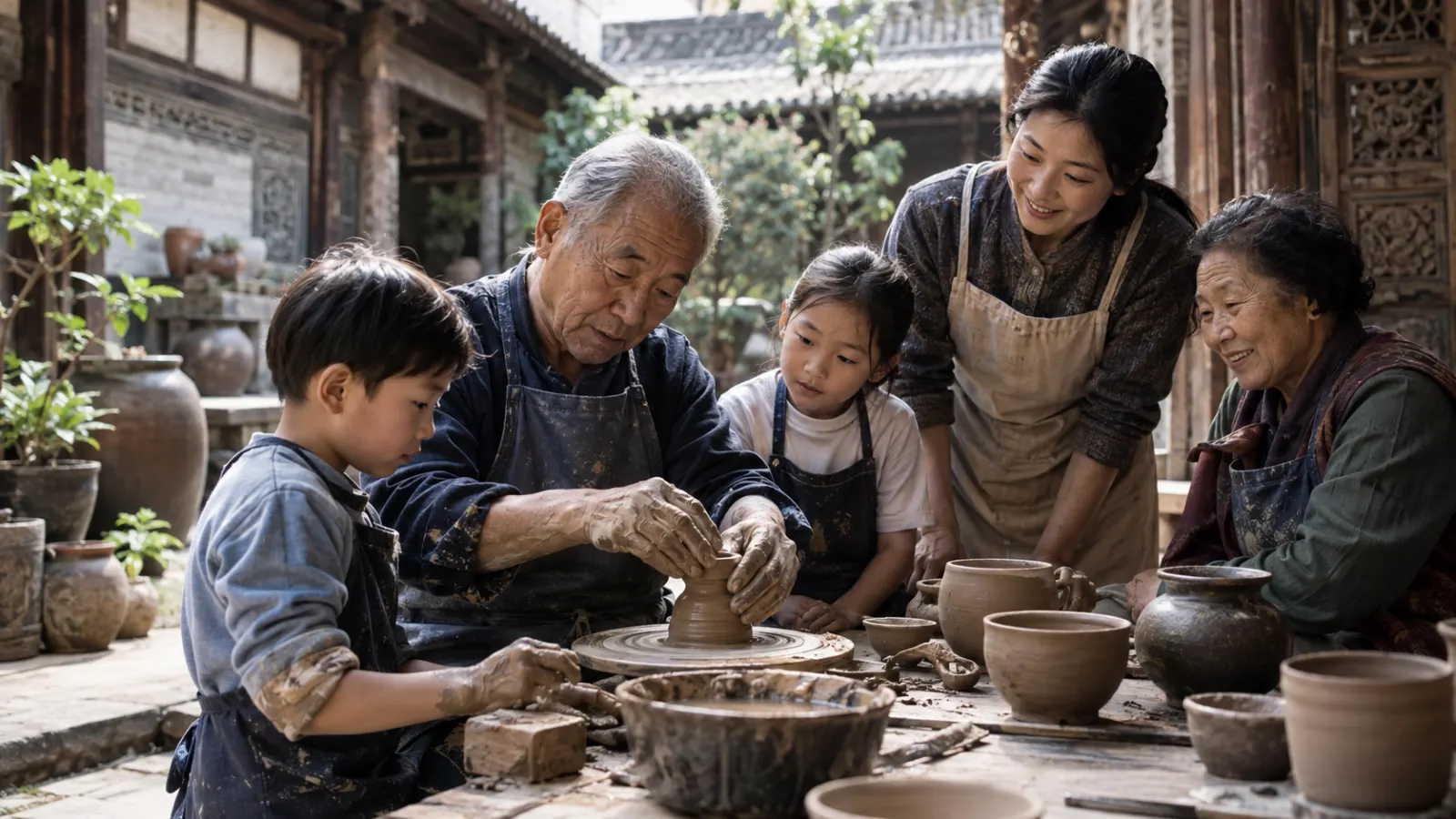
Families are central to revival. If parents and grandparents speak the language with children, transmission begins. Even imperfect speaking matters. Communities can organise language nests, storytelling circles, children’s classes, elder interviews and cultural camps. Schools can support bilingual education. Governments can recognise minority languages in curricula, signage, broadcasting and public services. Universities and linguists can help with documentation, but the community must remain at the centre.
There is also a need to avoid romanticising endangered languages while ignoring speakers’ material realities. A community facing poverty, land loss, discrimination or poor schooling cannot preserve language through cultural pride alone. Language protection must be linked with social justice. If people are forced to choose between survival and language, language will lose. The task is to make linguistic dignity compatible with opportunity.
Another danger is museum preservation. Sometimes institutions celebrate endangered languages through festivals or exhibitions but do not support everyday use. This turns living language into heritage performance. A language cannot survive only as a song on a stage. It must be usable in ordinary conversation. Respect is not enough; use is necessary.
Language death also raises ethical questions for outsiders. Linguists, activists, governments and media may document endangered languages, but they must avoid treating communities as research objects. Speakers should control how their knowledge is recorded, shared and used. Sacred stories, medicinal knowledge or ritual language may not be meant for public databases. Preservation must respect community rights.
One misconception is that languages die because they are weak. No language is weak by nature. Every language can express complex thought if its speakers use it across domains. Languages become vulnerable when speakers are denied power, education, dignity and resources. Another misconception is that language change equals language death. All languages change. New words, borrowed terms and mixed speech do not automatically mean decline. The real warning sign is when children stop acquiring the language.
The future of linguistic diversity will depend on choices made now. Schools can either erase home languages or build on them. Technology companies can either ignore smaller languages or include them. Families can either abandon mother tongues out of fear or pass them on alongside wider languages. Governments can either impose uniformity or support multilingual citizenship. Communities can either treat language as nostalgia or make it part of modern life.
A dying language is not only losing words. It is losing a library of human experience. To protect linguistic diversity is to protect the many ways human beings have learned to name the world, remember ancestors, understand nature, make jokes, comfort children and speak to the sacred. Every language that survives keeps humanity larger.
Language death also affects emotional rights. People have the right to inherit the words through which their ancestors named love, land, kinship, humour and the sacred. When communities are pressured to abandon those words, the loss is not only academic. It changes how people mourn, pray, joke, remember and teach. A child who cannot speak to grandparents in their strongest language loses access to more than vocabulary; the child loses a direct path to memory.
There is also a difference between natural language evolution and forced language death. Languages always change through contact, borrowing and innovation. Mixed speech among young people is not automatically decline. A living language can absorb new words for phones, climate change, social media, law and science. Forced death occurs when speakers stop transmitting the language because institutions, markets or social prejudice make them believe it has no future. The issue is not purity; the issue is continuity.
Language revival must therefore make the language useful in the present. Children need to use it not only for old songs but also for school projects, games, messages, videos, local history, environmental knowledge and public life. Young speakers should be allowed to create new slang, music and digital content in the language. A revived language cannot be locked in the past. It must be allowed to become modern in its own voice.