Sustainable Agriculture: Food, Livelihoods and Long-Term Ecological Health
Sustainable agriculture begins with a constraint that cannot be wished away: agriculture has to produce food. A farming system that protects the environment but cannot reliably supply food or provide viable livelihoods will struggle to endure. Yet a system that maximises production today by degrading soil, exhausting groundwater, polluting rivers or destroying the ecological processes on which future harvests depend is equally unsustainable.
The challenge is therefore not simply to produce more, nor simply to reduce environmental impact. It is to maintain productive agriculture over time while protecting the natural resources, economic conditions and social institutions that make continued production possible.
The Food and Agriculture Organization of the United Nations describes sustainable agriculture as agriculture capable of meeting the needs of present and future generations while ensuring profitability, environmental health and social and economic equity. It links sustainability to all four dimensions of food security—availability, access, utilisation and stability—and explicitly treats environmental, social and economic performance as interconnected rather than competing definitions.
This makes sustainable agriculture broader than any particular technique or label. It is not synonymous with organic farming, regenerative agriculture, agroecology, conservation agriculture, precision farming or climate-smart agriculture. Each of those approaches may contribute useful practices or principles, but none automatically guarantees sustainability under every condition.
A farmer might use satellite-guided fertiliser application, crop rotation, biological pest control and conventional fertiliser on the same farm. Another might operate under organic certification but use water inefficiently or achieve yields so low that more land is needed elsewhere. A third might practise agroforestry while facing economic conditions that make the farm financially impossible to maintain.
The important question is therefore not, “Which farming label is best?”
It is, “What happens to food production, soil, water, biodiversity, climate, farm income and communities when this farming system operates over time?”
Sustainable Agriculture Has to Work Ecologically, Economically and Socially
Environmental sustainability usually receives the most attention because agriculture depends so visibly on natural resources. Farming occupies land, withdraws water, alters habitats, moves nutrients and changes biological communities. Poor management can produce erosion, salinisation, declining fertility, groundwater depletion, pesticide contamination or greenhouse-gas emissions.
But environmental performance is only one part of the system.
Farms are businesses and livelihoods. Farmers must be able to pay workers, maintain machinery, purchase inputs, manage risk and earn enough to continue farming. A practice may generate a measurable environmental benefit while remaining economically unrealistic if it requires substantial investment, additional labour or several years of reduced income that the farmer cannot absorb.
Social sustainability adds another layer. Agricultural systems affect working conditions, food security, land access, rural communities, health, gender roles and the distribution of economic and environmental risks. A technically efficient farming system can still be socially unsustainable if it depends on unsafe labour, excludes small producers from essential resources or concentrates benefits while shifting pollution and risk onto vulnerable communities.
These dimensions are interconnected.
Suppose a farmer adopts a practice that reduces fertiliser use but also sharply reduces crop yield. The farm may use fewer inputs per hectare, yet lower production could reduce income or require more land elsewhere to produce the same amount of food. Conversely, aggressively pursuing maximum yield through excessive irrigation or fertiliser can increase short-term output while undermining the resource base on which the farm depends.
Sustainability is therefore about trade-offs as well as synergies.
Some practices improve several outcomes simultaneously. Better nutrient timing can lower fertiliser costs, reduce pollution and maintain yield. Soil cover can reduce erosion while improving moisture retention. Integrated pest management can reduce unnecessary pesticide applications while preserving crop protection.
Other decisions involve genuine conflicts. Maintaining habitat can reduce the land available for crops. Replacing herbicides with mechanical weed control can increase soil disturbance or labour. Water-efficient irrigation can require high capital investment. A livestock system may provide income and nutrition while generating substantial methane emissions.
Good sustainable-agriculture policy does not pretend these conflicts disappear.
It makes them visible enough to manage.
Soil Is Productive Infrastructure, Not Just the Surface Crops Grow In
Agriculture ultimately depends on soil functions that are easy to take for granted.
Healthy soil anchors plant roots, stores and releases nutrients, regulates water, provides habitat for organisms and supports the physical conditions in which crops grow. Soil degradation reduces the capacity of that system to perform those functions. FAO defines degraded soil as soil whose health has declined enough to reduce the ecosystem services it can provide and identifies erosion, nutrient depletion, salinisation, pollution and deterioration of soil structure among important forms of degradation.
Erosion is particularly visible because the productive surface layer can physically leave the field through wind or water. But soil degradation is broader than erosion alone. Heavy machinery can compact soil, reducing pore space and root growth. Excess irrigation in poorly drained environments can contribute to salinity. Repeated harvest without adequate nutrient replacement can mine fertility. Loss of organic matter can affect soil structure, biological activity and the ability of soil to hold water.
Sustainable soil management therefore has no single universal recipe.
Maintaining crop residues, using cover crops, rotating species, integrating legumes, adding organic matter and reducing unnecessary disturbance can all be useful under appropriate conditions. FAO notes that soil organic matter influences soil structure, porosity, water infiltration, moisture retention, biological activity and nutrient availability.
Yet the trade-offs matter.
Reduced tillage can protect soil structure and reduce erosion, but in some cropping systems it may increase reliance on herbicides for weed control. Mechanical weed management may reduce herbicide use while disturbing the soil more frequently. Adding manure can return nutrients and organic matter but may create nutrient imbalances or pollution if applications exceed crop demand.
Even the phrase “improve soil carbon” requires care. Agricultural practices can increase soil organic carbon under some conditions, but results depend on soil type, climate, previous management, crop production and how long the practice continues. Carbon accumulated in soil can also be lost again if management reverses.
Soil should therefore be treated neither as an inexhaustible input nor as a simple carbon-storage device.
It is productive infrastructure.
Maintaining its capacity is one of the clearest examples of why agricultural sustainability requires thinking beyond a single harvest.
Water Efficiency Is Important, but Saving Water on One Farm Does Not Always Save Water for Everyone
Agriculture is by far the largest user of freshwater globally. FAO currently estimates that agriculture accounts for about 72% of freshwater withdrawals, with irrigation as the principal driver. It also estimates that around 1.2 billion people live in agricultural areas facing severe water constraints.
These numbers make improved agricultural water management essential, particularly as climate change alters rainfall patterns, increases heat stress and makes water availability less predictable in many regions.
At farm level, several strategies can improve water productivity. Irrigation scheduling can better match applications with crop demand. Drip and other targeted irrigation systems can reduce certain losses when they are appropriate for the crop and location. Maintaining soil cover can reduce evaporation and runoff. Soil organic matter can support infiltration and water retention. Crop selection and planting dates can be adjusted to local rainfall and temperature conditions.
But agricultural water use contains an important paradox: greater irrigation efficiency does not automatically create the same quantity of real water savings at basin scale.
FAO distinguishes between apparent water savings and genuine reductions in water consumption. Water that appears to be “lost” from a field can sometimes return to rivers or groundwater and remain available to other users. A farmer who adopts more efficient irrigation may also expand irrigated area, grow a more water-intensive crop or use the saved water to increase production. FAO's guidance therefore warns that field-level efficiency improvements often do not translate directly into additional water available elsewhere in the basin.
This is why sustainable water management cannot be judged only by litres applied per hectare.
The wider questions are: How much water is actually consumed? Is groundwater being withdrawn faster than it is replenished? Are river flows sufficient for downstream users and ecosystems? Is irrigation reducing or increasing salinity? Who holds rights to the water? What happens when drought reduces supply?
Water accounting becomes crucial because individual farms share hydrological systems.
A farmer can be highly efficient while an aquifer as a whole remains overdrawn.
Sustainability therefore has to operate at both farm and watershed scales.
Nutrients Have to Feed Crops Without Becoming Pollution
Agricultural sustainability cannot mean eliminating fertiliser, because crops remove nutrients from fields when they are harvested.
Nitrogen, phosphorus, potassium and other nutrients must eventually be replaced if productive agriculture is to continue. A farming system that continuously exports nutrients without replenishing them simply mines soil fertility.
The environmental problem begins when nutrient supply and crop demand become badly mismatched.
Nitrogen that plants do not use can move into groundwater as nitrate, enter rivers through runoff or be transformed into gases, including nitrous oxide. Phosphorus losses can contribute to eutrophication in lakes and rivers, encouraging excessive algal growth and disrupting aquatic ecosystems.
The objective is therefore not the smallest possible amount of fertiliser.
It is high nutrient-use efficiency: supplying sufficient nutrients in forms, locations and at times when crops can use them while reducing unnecessary losses.
Soil testing can improve estimates of nutrient requirements. Splitting applications can avoid supplying an entire season's nitrogen before the crop can absorb it. Precision systems can vary application rates across fields. Legumes can contribute biologically fixed nitrogen. Cover crops can capture nutrients that might otherwise be lost between commercial crops. Better manure storage and application can improve recycling.
This is another area where ideological categories can be misleading.
Synthetic fertiliser can be used inefficiently and create major pollution, but organic nutrient sources are not inherently loss-free. Manure and compost can also release nitrate, ammonia or nitrous oxide when quantities, timing and crop needs are poorly matched.
Sustainable nutrient management therefore asks where nutrients come from, how efficiently they are used, where they go after application and what the crop removes.
The same logic applies to recycling. FAO's agroecology framework identifies both efficiency and recycling among its central elements because unused resources represent both economic waste and environmental pressure.
The most sustainable nutrient is not necessarily the one carrying the most attractive label.
It is the one that feeds the crop without needlessly escaping the farming system.
Pest Control Must Protect Yields Without Making Chemical Intervention Automatic
Sustainable agriculture still needs effective pest management.
Insects, fungal diseases, weeds and other pests can cause serious crop losses. A farming system that repeatedly loses harvests may waste land, irrigation, fertiliser, labour and energy already invested in the crop. Protecting yield is therefore itself part of sustainability.
The challenge is how that protection is achieved.
Heavy reliance on a narrow range of pesticides can produce resistance, harm non-target organisms and create environmental or occupational exposure. But simply removing pesticides without providing reliable alternatives can create crop losses that farmers cannot economically tolerate.
Integrated pest management, or IPM, addresses this by changing the order of decisions.
Instead of treating pesticides as the automatic first response, growers can combine resistant varieties, crop rotation, sanitation, biological control, habitat management, field scouting, traps and mechanical measures. Pest populations can be monitored, with chemical treatment used when likely damage justifies intervention.
The objective is not necessarily zero pesticide use.
It is to make pesticide use more targeted, less routine and part of a wider ecological management system.
This approach matters because pest populations evolve. Repeated use of the same pesticide mode of action selects for resistant individuals, gradually making the product less effective. Natural enemies of pests can also be disrupted by poorly targeted treatments.
A sustainable crop-protection system therefore needs both immediate effectiveness and long-term durability.
Precision technologies may help. Weather-based disease forecasts, satellite or drone imagery, field sensors and improved decision-support systems can identify where risk is developing and reduce unnecessary blanket treatment. But technology only improves sustainability if it produces better outcomes rather than simply making intensive input use easier.
The correct metric is not whether a farm is “high-tech” or “low-tech”.
It is whether pests are controlled while environmental and economic costs remain acceptable.
Biodiversity Is Part of Agricultural Productivity—and Also Competes for Land
Agricultural landscapes contain much more than crops and livestock.
Pollinators, predators, soil organisms, decomposers and other species provide ecological functions that agriculture itself uses. FAO describes biodiversity as foundational to agrifood systems and highlights services including pollination, nutrient cycling, pest control, soil function, water regulation and carbon storage.
This means biodiversity can function as agricultural infrastructure.
Wild pollinators contribute to many fruit, vegetable and seed crops. Predatory insects and birds can suppress pests. Soil organisms decompose organic matter and cycle nutrients. Genetic diversity within crops and livestock can provide options when pests, diseases or climatic conditions change.
Farm management can help preserve these functions. Hedgerows, flowering margins, buffer zones, wetlands, agroforestry, mixed cropping and patches of natural or semi-natural habitat can provide food, nesting space and movement corridors for wildlife. FAO specifically identifies wild habitat, flower-rich field margins, hedgerows and reduced pesticide risk among measures that can support pollination services.
Yet biodiversity conservation also creates one of sustainable agriculture's hardest land-use questions.
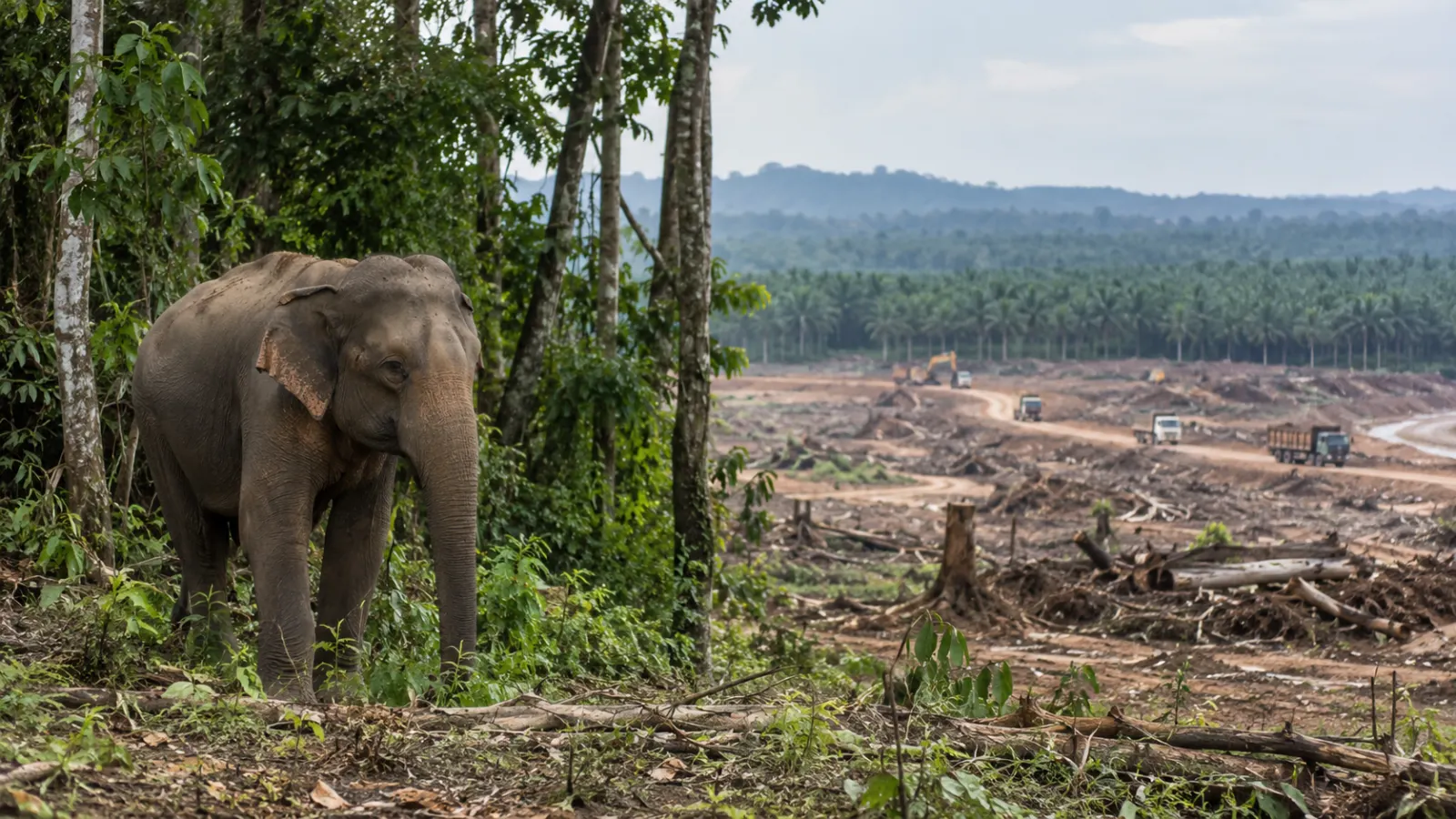
Land used for habitat is not always available for crops. If production falls and demand remains unchanged, agriculture may expand somewhere else. Converting forest or grassland elsewhere can produce greater biodiversity and climate damage than the habitat measure prevented locally.
This is the tension between land sharing and land sparing.
More wildlife-friendly farming within fields can benefit biodiversity locally but may reduce yields in some circumstances. High-yield farming can reduce the amount of agricultural land required for a particular quantity of food, potentially leaving more land for intact habitat—but intensive production can create serious local pollution, soil and pesticide impacts.
There is no universal answer.
The best strategy depends on crops, ecosystems, yield responses, landscape structure and whether protected habitat actually remains protected when production intensifies elsewhere.
What can be said more confidently is that sustainability requires examining both environmental impact per hectare and environmental impact per unit of useful agricultural output.
Ignoring either side produces an incomplete comparison.
Climate Change Makes Agriculture Both a Victim and a Source of Emissions
Agriculture sits on both sides of the climate problem.
Farmers are already exposed to heat, drought, flooding, changing rainfall and shifting pest and disease pressures. Climate change can alter growing seasons, water availability, livestock productivity and the reliability of yields. Adaptation therefore requires practices such as improved water management, soil-moisture conservation, more resilient crop varieties, diversified production, agroforestry and better climate information. The IPCC identifies on-farm water management, soil-moisture conservation, cultivar improvement, agroforestry and farm diversification among important agricultural adaptation responses.
Agriculture simultaneously contributes to greenhouse-gas emissions.
Ruminant livestock produce methane through enteric fermentation. Rice paddies can generate methane under flooded conditions. Nitrogen fertiliser and manure contribute to nitrous oxide emissions. Land clearing releases carbon stored in vegetation and soil. Agricultural machinery, irrigation, fertiliser manufacture, storage and processing add further energy-related emissions.
The IPCC identifies improved crop and livestock management, soil-carbon management, agroforestry, improved rice cultivation and nutrient management among significant agricultural mitigation opportunities. It also stresses that the outcomes of land-based mitigation measures are highly context-dependent and that poorly designed interventions can create trade-offs with food security, biodiversity, water and other ecosystem services.
That warning matters because climate claims about agriculture are often reduced to a single practice.
“Soil carbon” is a good example. Building soil organic carbon can improve soil condition and store additional carbon under some circumstances. But sequestration rates vary, gains can eventually slow as soils approach a new equilibrium, and stored carbon can be released again if practices change.
Similarly, livestock systems cannot be judged by methane alone if changing production shifts land use, food supply or livelihoods elsewhere. Rice-water management may reduce methane but alter water requirements or nitrous oxide under some conditions.
Sustainable climate policy therefore requires whole-system accounting.
It should ask whether a practice lowers net greenhouse-gas emissions while maintaining food production, protecting biodiversity and avoiding unintended pressure elsewhere.
Climate mitigation and adaptation often reinforce each other, but they are not automatically identical.
Sustainable Agriculture Is a Portfolio of Approaches, Not a Competition Between Labels
Agricultural debates frequently become competitions between named systems.
Organic farming emphasises defined input restrictions and biological processes. Conservation agriculture focuses on minimum soil disturbance, soil cover and crop diversification. Agroecology brings ecological and social principles into the redesign of food systems. Precision agriculture uses data and technology to target management. Climate-smart agriculture emphasises productivity, adaptation and mitigation. Integrated crop-livestock systems connect nutrient and resource flows between animals and crops.
These approaches can overlap.
FAO defines agroecology as a holistic, integrated approach applying ecological and social principles to sustainable agriculture and food systems. Its ten-element framework includes diversity, synergies, efficiency, recycling, resilience, responsible governance, co-creation of knowledge, human and social values, culture and food traditions, and circular and solidarity economies.
That framework can contribute substantially to sustainability.
But agroecology is still one pathway rather than the definition of sustainable agriculture itself.
A farmer does not need to reject modern sensors to benefit from crop rotations. Precision agriculture does not prevent the use of biological pest control. Improved genetics can operate within systems that also maintain soil cover and landscape habitat. Organic systems can use sophisticated monitoring technologies. Conventional farmers can adopt many agroecological practices without becoming certified organic.
Treating all these approaches as mutually exclusive ideological camps can prevent useful combinations.
Technology deserves similar scrutiny.
A satellite-guided fertiliser applicator can reduce unnecessary nutrient use. Soil-moisture sensors can improve irrigation decisions. Drought-tolerant crop varieties can reduce risk. Robotics may reduce particular labour or pesticide exposures. Digital disease forecasting can reduce prophylactic spraying.
Yet advanced technology is not inherently sustainable.
Equipment can be too expensive for small producers. Proprietary platforms can create dependence on suppliers. Digital agriculture can concentrate data and decision-making power. Efficiency gains can encourage expansion instead of reducing total resource use.
Technology should therefore be evaluated the same way as any other agricultural intervention:
What problem does it solve, what does it cost, who can access it, and what happens to the whole system after it is adopted?
Farmer Economics and Public Policy Determine Whether Better Practices Survive
Sustainable farming practices do not exist outside markets.
A farmer may understand that a riparian buffer would protect water quality but lose productive land by installing it. Cover crops may require seed, labour and specialised machinery while benefits emerge gradually. Changing crop rotations can disrupt established marketing arrangements. Precision equipment can require large up-front investment.
Many environmental benefits are also public benefits.
Cleaner water helps downstream communities. Reduced greenhouse-gas emissions benefit people far from the farm. Pollinator habitat may support neighbouring land. Soil conservation can reduce sediment entering public waterways.
The farmer may pay most of the cost while society receives much of the benefit.
This creates a legitimate role for policy.
Technical assistance can reduce learning costs. Research and extension services can improve access to reliable information. Credit can help finance equipment. Crop insurance can be structured so that farmers are not penalised for experimenting with resilience practices. Payments for ecosystem services can reward outcomes markets do not price. Regulations can establish minimum protections where voluntary incentives are insufficient.
Policy can also fail.
Subsidies can encourage excessive groundwater pumping, fertiliser use or cultivation in environmentally sensitive areas. Support tied to one crop can discourage diversification. Poorly designed environmental rules can impose costs without providing farmers with realistic alternatives.
Sustainable agriculture is therefore not merely a question of farmer behaviour.
It is also a question of institutions and incentives.
Farmers respond to prices, infrastructure, land tenure, credit, insurance, markets and regulations. Asking them to optimise long-term environmental outcomes while the surrounding economic system rewards short-term resource extraction is unlikely to produce durable change.
Productivity Cannot Be Separated From Sustainability
A crucial mistake in environmental discussions is to treat agricultural productivity as though it were inherently opposed to sustainability.
Food production itself uses resources.
If a farming method produces much less food from the same area, the missing production must come from somewhere unless diets, food waste or demand change. Additional agricultural expansion can threaten forests, grasslands and other ecosystems.
For this reason, a practice that looks environmentally favourable per hectare may look different when assessed per tonne of grain, litre of milk or unit of nutritional output.
The opposite mistake is equally serious.
High yield does not automatically make a system sustainable. A farm can produce exceptional output while degrading an aquifer, losing soil, creating severe nutrient pollution or depending on pesticide use that is generating rapid resistance.
The relevant objective is therefore productive efficiency within ecological limits.
The IPCC identifies sustainable agricultural intensification, reductions in food loss and waste and dietary changes as measures that can reduce pressure for agricultural land expansion while contributing to climate mitigation.
The word sustainable is essential.
Intensification that raises yield by exhausting groundwater is not sustainable merely because more food is produced from each hectare. But raising yields through better genetics, improved agronomy, efficient nutrient management or reduced crop losses can reduce land pressure when accompanying policies prevent rebound expansion.
This is why sustainability cannot be captured by one number.
Useful metrics can include yield, profitability, soil condition, nutrient balance, pesticide risk, water consumption, greenhouse-gas emissions, biodiversity and labour conditions. Each answers a different question.
The challenge is deciding how they interact.
The Food System Continues Long After the Crop Leaves the Field
A farm can be managed extremely well and still supply an inefficient food system.
Harvested crops must often be dried, stored, refrigerated, transported, processed, packaged and sold. Losses can occur at each stage. Consumers can also purchase food that is ultimately discarded.
Reducing avoidable food loss and waste can lower pressure on agricultural land, water and other inputs because fewer resources are spent producing food that nobody ultimately eats. The IPCC identifies reduced food loss and waste among important demand-side measures capable of reducing land pressure and greenhouse-gas emissions.
This is one reason FAO increasingly discusses agrifood systems rather than farm production in isolation.
Sustainability depends partly on what is being produced and why.
A highly efficient field does not necessarily produce a sustainable outcome if much of its crop spoils because storage infrastructure is inadequate. Raising agricultural output may have limited value when market failures prevent food from reaching people who need it. Producing more animal feed, biofuel or export crops can have very different food-security implications from producing staple food, even when the farming techniques are identical.
Consumers and supply chains therefore affect agricultural sustainability as well.
Diet, waste, processing standards, retail contracts and demand for particular commodities influence what farmers have economic reasons to grow.
The farm is where many environmental impacts occur.
It is not where the food system ends.
There Is No Universal Sustainable Farm
Context is one of the most important principles in sustainable agriculture.
A rice farmer in a humid delta, a rain-fed cereal farmer in a semi-arid region, a pastoral livestock system, a tropical agroforestry farm and a controlled-environment greenhouse face completely different resource constraints.
The correct water strategy differs.
The appropriate crop differs.
The relevant pest risks differ.
Labour availability, land tenure, markets and infrastructure differ.
A practice that works well in one location can fail somewhere else.
This context dependence is not evidence that sustainable agriculture is too vague to be useful. It is a reminder that agriculture occurs inside ecological and economic systems rather than laboratories with identical conditions.
Sustainability provides the questions and objectives, while local evidence determines the appropriate practices.
Are yields sufficient and reasonably stable? Is soil productive capacity being maintained? Is water consumption compatible with renewable supply? Are nutrients being lost faster than necessary? Are pesticides creating avoidable risks? Is important habitat protected? Are greenhouse-gas emissions being reduced where possible? Can farmers earn viable incomes? Are workers protected? Can the system withstand drought, price shocks and changing climate?
Those questions should be measured repeatedly because sustainability is not a certificate obtained once.
It is a trajectory.
Sustainable Agriculture Is Continuous Improvement Under Real Constraints
No agriculture is impact-free.
Farming deliberately changes ecosystems. It redirects biological productivity toward human purposes, removes biomass, uses water, alters nutrient flows and occupies land that could support other organisms.
The realistic objective is therefore not untouched nature.
It is to produce the food and agricultural products people need while keeping environmental pressures within limits that allow the system to continue functioning.
That requires rejecting several easy conclusions.
Sustainable agriculture is not automatically organic.
It is not automatically high-tech.
It is not necessarily low-input.
It is not simply the practice that uses the least water, fertiliser or pesticide per hectare.
And it is not necessarily the system with the highest yield.
A sustainable farming system has to combine enough productivity with resource efficiency, ecological resilience, economic viability and social legitimacy.
Sometimes this will mean crop rotation, cover crops and biological control.
Sometimes it will mean improved irrigation, fertiliser sensors or more productive crop varieties.
Often it will mean combinations of both.
The strongest agricultural future is unlikely to emerge from choosing between ecology and technology as opposing philosophies. It will come from using agronomy, ecology, engineering, genetics, economics and local knowledge together—and judging them by outcomes.
FAO's definition provides a useful final test: sustainable agriculture must meet current and future needs while maintaining environmental health, profitability and social and economic equity.
That is demanding because agriculture has to satisfy several objectives simultaneously.
But that difficulty is the point.
The question is not whether a farm can maximise one indicator for one season.
It is whether food can continue to be produced without steadily consuming the soil, water, biodiversity, economic security and social conditions on which the next generation of farming will depend.
Sustainable agriculture is the discipline of keeping all of those accounts at once.