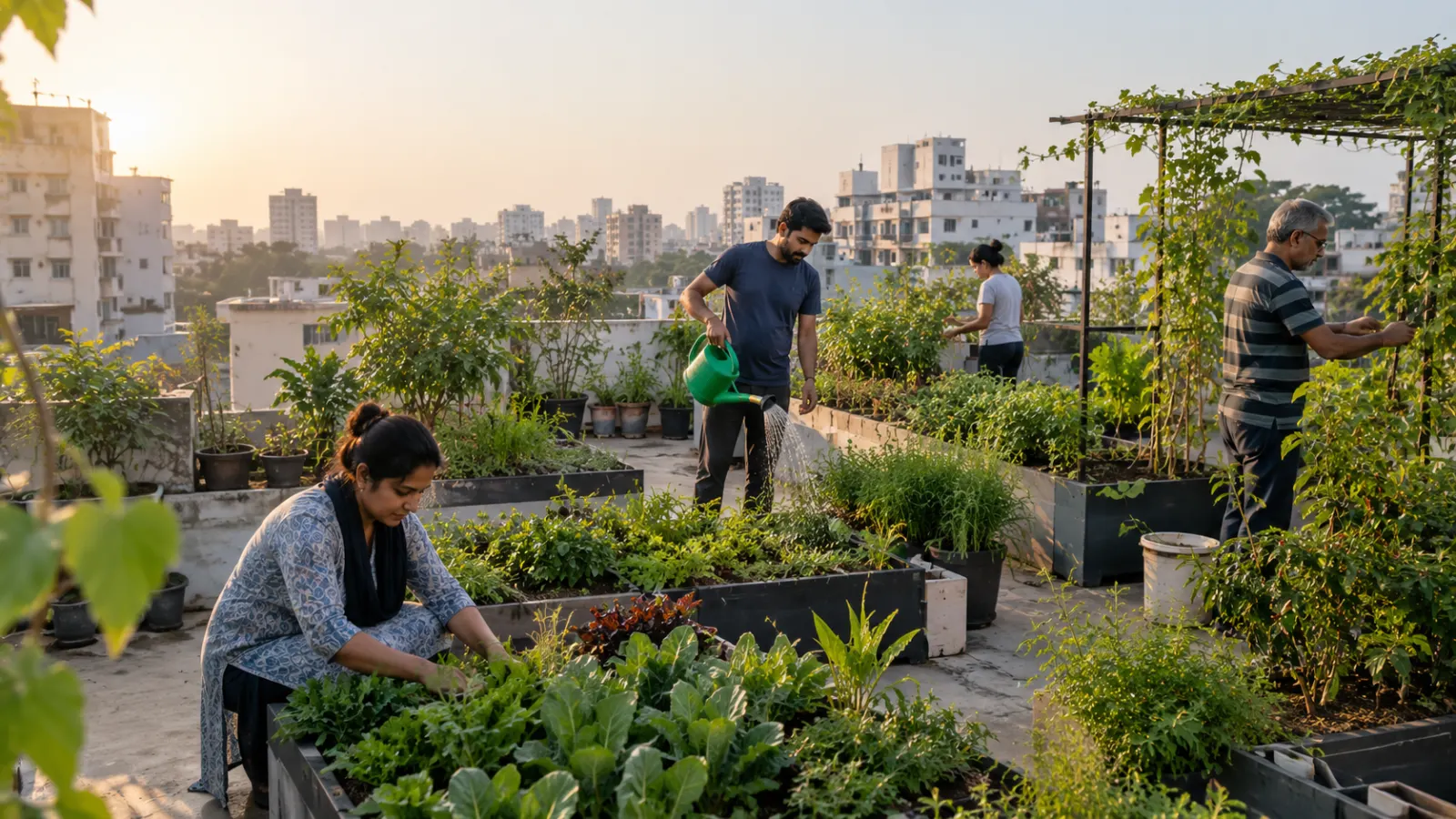
Urban Farming: Benefits, Challenges and Its Role in Resilient Cities
Urban farming can provide fresh food, jobs and greener spaces, but its success depends on safe soil, water, land, economics and good city planning.

Urban farming can provide fresh food, jobs and greener spaces, but its success depends on safe soil, water, land, economics and good city planning.

Plant-based diets and the environment are closely linked, especially when high-impact ruminant meat is replaced with nutritious plant foods.

Sustainable eating combines healthy nutrition with lower environmental impact, affordability, less food waste and practical food choices.

The water footprint of food reveals hidden water use, but volume alone can mislead. Location, scarcity, season and water source determine the real impact.

Organic farming changes how crops are grown and pests managed. Learn its benefits, yield gaps, pesticide rules and environmental trade-offs.

Sustainable agriculture balances food production with soil, water, biodiversity, climate, farm income and long-term resilience.

Permaculture is less a single farming technique than a design approach. It tries to arrange crops, trees, animals, water, buildings and human activity so that useful relationships…