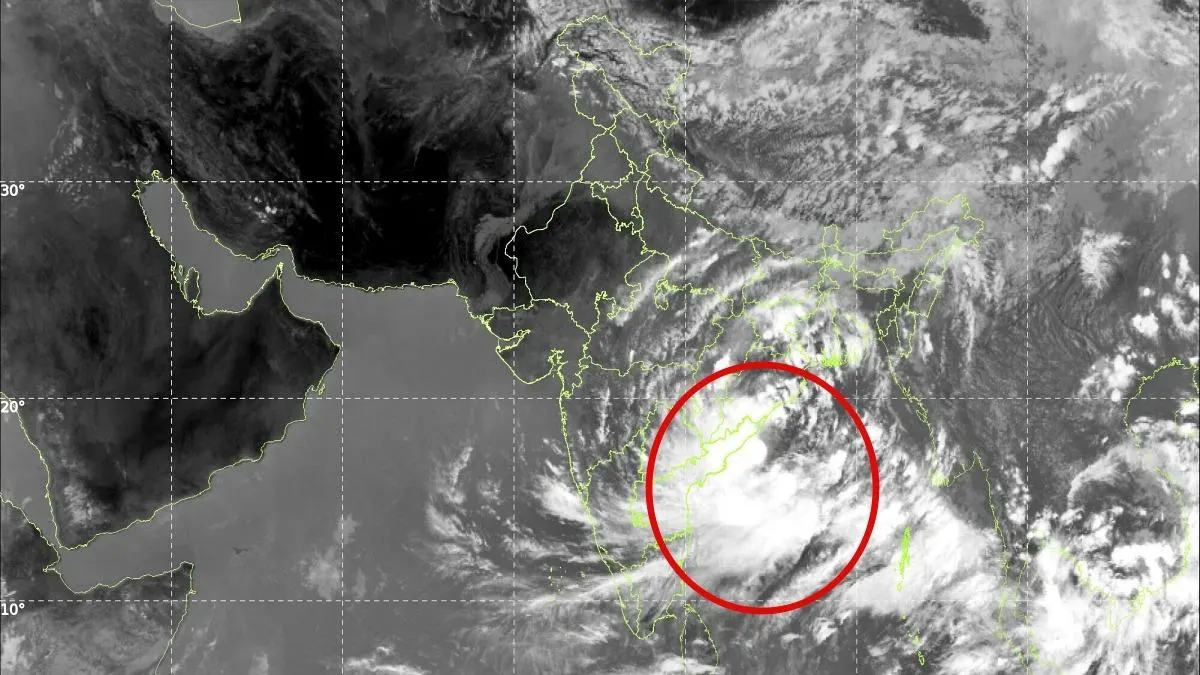
Cyclone Arnab: Andhra, Odisha Brace for October 28 Landfall
Cyclone Arnab has intensified over the Bay of Bengal, prompting high alerts, evacuation preparations and emergency measures across Andhra Pradesh and Odisha as the powerful storm approaches India's eastern coastline. The India Meteorological Department (IMD) has forecast that the cyclone could make landfall on Wednesday, October 28, 2026, with sustained winds of 115–125 km/h and gusts reaching 140 km/h.
The storm is expected to cross the Andhra Pradesh and Yanam coasts between Bapatla and Visakhapatnam, close to Yanam, during the forenoon of October 28. Authorities have warned of extremely heavy rainfall, damaging winds, coastal flooding and disruption to essential services.
Andhra Pradesh has identified approximately 5.7 lakh people in vulnerable areas as part of its evacuation planning, while Odisha has deployed senior ministers to oversee preparedness in eight districts. Schools, colleges and Anganwadi centres in five southern Odisha districts have been ordered closed on October 28 and 29.
Both state governments are prioritising evacuation, disaster-response readiness and the protection of vulnerable communities as the cyclone approaches.
Cyclone Arnab Latest Update: When and Where Will It Make Landfall?
Cyclone Arnab developed from a deep depression over the east-central and adjoining west-central Bay of Bengal on Monday, October 26.
According to the IMD's morning observations, the system was centred near latitude 15.4°N and longitude 88.5°E at 8:30 am, after moving westwards at approximately 15 km/h.
The cyclone is forecast to move west-northwestwards and intensify into a severe cyclonic storm by midnight on October 26. It could strengthen further into a very severe cyclonic storm on October 27 before approaching the Andhra Pradesh coast.
The expected landfall zone stretches between Bapatla and Visakhapatnam, with the Kakinada, Konaseema and Yanam coastal belt among the areas facing significant risks.
During landfall, sustained winds could reach 115–125 km/h, with stronger gusts of approximately 140 km/h. Such winds can damage weak structures, uproot trees, disrupt electricity networks and create dangerous conditions for coastal settlements.
The IMD has also warned of a possible storm surge measuring approximately 1–1.5 metres above the astronomical tide near Kakinada and Yanam, potentially inundating low-lying coastal areas.
Although the forecast currently points to an October 28 landfall, the precise track, timing and intensity may change as the system develops.
Andhra Pradesh Prepares Evacuations for 5.7 Lakh Vulnerable Residents
Andhra Pradesh Chief Minister N Chandrababu Naidu has directed district administrations to remain on high alert and ensure that every department is prepared for the approaching cyclone.
Officials have identified approximately 5.7 lakh people living in potentially vulnerable locations as part of the state's emergency planning. Evacuation arrangements are being prepared, with priority given to low-lying coastal communities and residents of structurally unsafe buildings.
The government has instructed officials to establish round-the-clock control rooms, distribute regular cyclone warnings and coordinate rescue operations.
Ten National Disaster Response Force teams and 11 State Disaster Response Force teams have been kept ready for emergency operations.
Authorities have also been directed to ensure that fishing boats return to shore and that coastal residents comply with evacuation instructions.
Special arrangements are being made for pregnant women, elderly residents and people requiring medical assistance. Officials have been instructed to transfer pregnant women close to delivery to hospitals in advance to avoid emergencies if roads or communication networks become disrupted.
Electricity departments have been told to keep repair crews, vehicles and essential equipment ready for immediate deployment after the cyclone.
The state government has emphasised that preventing loss of life must remain the highest priority.
Odisha Closes Schools and Deploys Ministers to Eight Districts
Although Cyclone Arnab is currently forecast to make landfall in Andhra Pradesh, southern Odisha is also expected to experience heavy to extremely heavy rainfall and strong winds.
Chief Minister Mohan Charan Majhi has assigned eight ministers, including both deputy chief ministers, to monitor preparedness in vulnerable districts.
The districts under ministerial supervision include Koraput, Rayagada, Kandhamal, Ganjam, Nabarangpur, Malkangiri, Kalahandi and Gajapati.
The government has ordered schools, colleges and Anganwadi centres to remain closed on October 28 and 29 in Ganjam, Gajapati, Rayagada, Koraput and Malkangiri. District collectors elsewhere have been authorised to decide on additional closures based on local conditions.
Fishing activities have been restricted, while tourist access to hills, waterfalls, dams and other vulnerable destinations has been prohibited in six southern districts.
Disaster-response teams have been mobilised, cyclone shelters are being prepared and officials have been directed to relocate residents of low-lying areas and unsafe houses.
The state government has also instructed health facilities to maintain stocks of essential medicines and medical supplies.
Odisha has placed 302 rescue teams on standby as part of its wider disaster-response preparations. The administration is also preparing to restore road connectivity, electricity and drinking-water supplies if the cyclone causes significant disruption.
Heavy Rainfall and Storm Surge Threaten Coastal Districts
The approaching cyclone presents multiple hazards beyond the strong winds expected during landfall.
The IMD has forecast heavy to extremely heavy rainfall across parts of coastal Andhra Pradesh on October 27 and 28, with some locations potentially receiving more than 200 mm of rain within 24 hours.
Kakinada, Dr B R Ambedkar Konaseema, East Godavari, West Godavari, Eluru, Krishna, NTR and other coastal districts are among the areas expected to experience significant rainfall.
Further north, Visakhapatnam, Anakapalli, Vizianagaram and surrounding districts could also face intense weather conditions.
In Odisha, Ganjam, Gajapati, Rayagada, Koraput and Malkangiri face a heightened risk of extremely heavy rainfall.
Intense downpours could trigger flash flooding, waterlogging, landslides in hilly areas and damage to agricultural land.
The possibility of a storm surge near the Andhra Pradesh coast is particularly concerning for fishing communities and residents living near river mouths and low-lying coastal settlements.
Sea conditions are expected to deteriorate sharply, making fishing and other marine activities extremely dangerous.
Farmers have been advised to protect harvested crops and agricultural equipment wherever possible. Authorities are also monitoring reservoirs, drainage systems and vulnerable transport routes.
Disruptions to road transport, rail services, electricity and telecommunications remain possible in the most severely affected areas.
What Should Residents Do Before Cyclone Arnab Arrives?
With landfall forecast for October 28, residents in affected districts have limited time to complete necessary safety preparations.
People living in coastal villages, low-lying areas and weakly constructed buildings should follow evacuation instructions issued by district administrations.
Residents should secure loose outdoor objects, charge mobile phones and power banks, and keep essential medicines, drinking water, identification documents and emergency supplies readily accessible.
Fishing communities should avoid venturing into the sea and follow harbour and fisheries department instructions.
During heavy rainfall or strong winds, people should stay away from beaches, flooded roads, unstable trees and damaged electricity infrastructure.
Fallen electrical wires must never be touched. Residents should report damaged power infrastructure to the authorities and avoid attempting repairs themselves.
Those requiring urgent medical assistance should contact local emergency services rather than travelling through flooded or storm-affected roads.
The public should rely on official IMD bulletins, state disaster-management advisories and district administration announcements for the latest information.
What Happens Next as Cyclone Arnab Approaches?
The next 48 hours will be critical for Andhra Pradesh and Odisha as Cyclone Arnab intensifies and approaches the eastern coast.
Weather authorities will continue tracking the storm's movement, wind speed and expected landfall location, while state governments monitor evacuation operations and emergency-response preparedness.
The cyclone is forecast to become a very severe cyclonic storm on October 27 before crossing the Andhra Pradesh coast on October 28. Heavy rainfall may continue in affected regions even after the system moves inland and begins to weaken.
The immediate priorities are to move vulnerable residents to safe locations, protect essential infrastructure and ensure that emergency personnel can respond rapidly to developing situations.
Although the final scale of damage cannot yet be determined, advance warnings and timely evacuations can significantly reduce the danger to coastal communities.
As Cyclone Arnab moves closer to landfall, the effectiveness of evacuation measures, public cooperation and emergency preparedness will be crucial in protecting lives across Andhra Pradesh and Odisha.