Climate Justice: Responsibility, Fairness and the Costs of Climate Change
Climate change operates through a shared atmosphere, but neither responsibility for the problem nor vulnerability to its consequences is evenly distributed. Countries industrialised at different times, burned different quantities of fossil fuels and accumulated very different levels of wealth. Within countries, households also differ sharply in income, housing, access to insurance, political influence and their ability to protect themselves from heat, floods, drought and other climate hazards.
Climate justice is the framework used to ask what fairness requires under those unequal conditions. The United Nations defines climate justice as placing equity and human rights at the centre of climate decision-making and action. It encompasses historical responsibility, unequal vulnerability, intergenerational fairness and the distribution of both climate impacts and the costs of responding to them.
That does not produce one universally accepted formula for dividing responsibility. Science can estimate emissions, temperature change and physical risk. It cannot, by itself, decide how much weight should be given to historical emissions compared with current emissions, whether responsibility should be measured nationally or per person, how much richer countries should finance adaptation elsewhere, or how rapidly different economies should decarbonise.
Those are partly ethical and political questions.
Climate justice makes those choices explicit rather than allowing them to disappear behind global averages.
Historical responsibility and present-day emissions tell different parts of the story
Carbon dioxide accumulates in the atmosphere. Today's warming therefore reflects not only emissions released this year but a long history of fossil-fuel combustion, deforestation and industrial development.
That history matters because countries did not industrialise at the same time.
Older industrial economies accumulated wealth during periods when coal, oil and gas were central to economic expansion. Many countries that industrialised later contributed much less to the historical stock of greenhouse gases, yet they face the same altered climate system.
This asymmetry helped shape one of the central principles of international climate law: common but differentiated responsibilities and respective capabilities, usually abbreviated as CBDR-RC.
The principle does not mean that only one group of countries has responsibilities. It means that responsibilities can differ because countries have contributed differently to the problem and possess different resources with which to address it.
The Paris Agreement retains this idea. Article 2 states that implementation should reflect equity and common but differentiated responsibilities and respective capabilities in light of different national circumstances. UNFCCC material also continues to describe climate finance as reflecting differences in both countries' contributions to climate change and their financial capacity to respond.
Historical responsibility, however, cannot be the only relevant measure.
The global emissions landscape has changed dramatically. Several emerging economies now produce substantial shares of annual greenhouse-gas emissions. Future warming depends on emissions released from this point forward as well as the stock already accumulated.
A framework concerned only with the nineteenth and twentieth centuries could therefore fail to address the emissions driving future temperature increases.
Climate negotiations consequently involve several competing but legitimate metrics: cumulative national emissions, current annual emissions, emissions per person, national income, development needs and technological capacity.
These measures do not produce identical conclusions.
A country can rank high in total annual emissions while remaining much lower in emissions per person. Another can have high historical responsibility but declining current emissions. A poorer country may need substantial new electricity and infrastructure while a richer country already possesses mature systems built during a high-carbon period.
There is no scientific equation that automatically converts those differences into one indisputable burden-sharing formula.
Climate science constrains what must happen physically.
Climate justice asks how the required effort should be divided.
Vulnerability does not follow the emissions map
Those contributing least to climate change are not necessarily those facing the least danger.
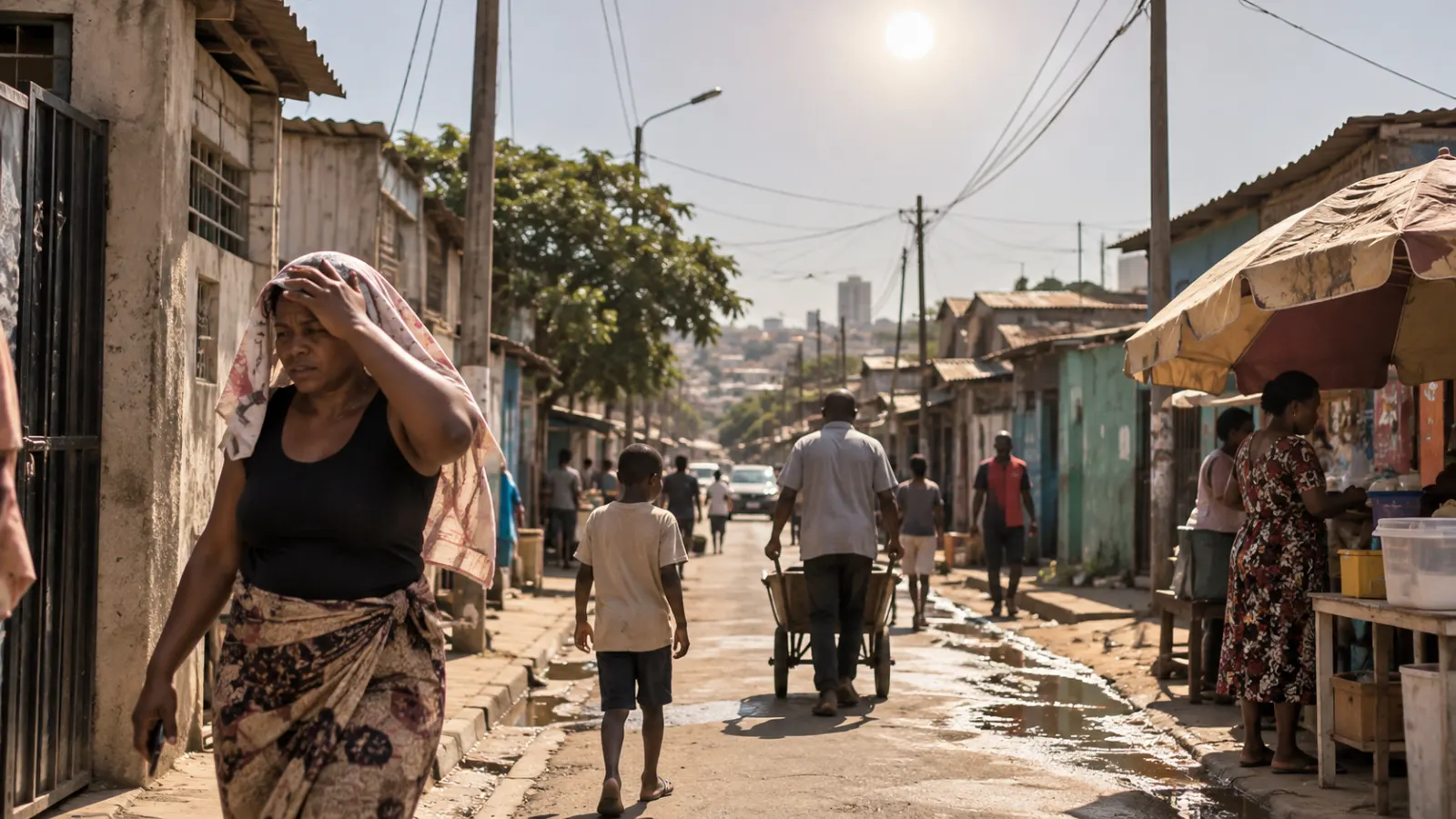
Small island states may contribute extremely little to global emissions while facing serious long-term risks from sea-level rise. Rain-fed farmers can lose livelihoods during repeated droughts despite having tiny individual carbon footprints. Low-income residents of large cities may experience extreme heat or flooding in neighbourhoods with weaker infrastructure than wealthier districts several kilometres away.
Climate justice therefore looks at consequence as well as cause.
This applies within countries as much as between them.
A wealthy household may be able to install cooling, purchase insurance, relocate temporarily after a disaster or finance repairs without selling productive assets. A poorer household may lose wages by staying home during extreme heat, live in housing with weak drainage or ventilation and need expensive debt to rebuild after flooding.
The climate hazard is physical.
The resulting damage is partly social.
This is why vulnerability depends on more than temperature or rainfall. Housing quality, healthcare, public infrastructure, savings, occupation, disability, gender, age, migration status and political marginalisation can all influence the severity of a climate shock.
Climate justice should not be interpreted as claiming that every low-income person is more vulnerable than every affluent person. Wealthy communities can occupy highly exposed coastlines, and poorer communities can possess strong social networks and detailed local knowledge.
The point is structural: people with fewer private resources generally possess fewer options for avoiding, absorbing and recovering from environmental shocks.
That is also why climate justice overlaps with development policy. Reliable water, healthcare, safe housing, drainage, electricity, transport and social protection can all reduce climate vulnerability even when they were not originally designed as climate interventions.
Climate finance turns fairness into a practical financial question
Mitigation and adaptation require enormous investment.
Electricity grids must be modernised. Clean generation needs financing. Buildings and transport systems must change. Coastal protection, heat plans, water systems and climate-resilient agriculture require capital.
Countries do not borrow that capital on equal terms.
A wealthy government with deep financial markets and strong creditworthiness can often finance infrastructure more cheaply than a poorer country facing high debt, expensive borrowing and competing demands for healthcare, education and basic infrastructure.
This difference creates one of climate justice's most practical questions:
Who should finance climate action where the need is greatest but the ability to pay is weakest?
International climate finance is one response.
The UNFCCC describes climate finance as funding for mitigation and adaptation and explicitly links financial assistance to the recognition that countries vary greatly in both their contribution to climate change and their ability to prevent or cope with its consequences. Under the Convention framework, developed-country Parties are expected to provide financial resources to assist developing countries.
But the amount of finance is only one issue.
The form of finance matters as well.
A loan can fund renewable energy, resilient infrastructure or adaptation, but it also creates a repayment obligation. For a heavily indebted country, financing climate damage primarily through additional debt can transfer a current climate burden into future fiscal pressure.
Grants do not create the same debt obligation but are more limited.
Access matters too. Complex application and reporting requirements can disadvantage governments and organisations with less administrative capacity. A financing mechanism can therefore appear equitable in aggregate while remaining difficult for the most vulnerable recipients to use.
Climate-finance debates consequently involve at least four questions: how much money is available, who provides it, whether it arrives as grants or loans, and whether vulnerable countries and communities can actually access it.
Climate justice turns the headline number into a distribution problem.
Loss and damage deals with harms adaptation cannot fully prevent
Adaptation can reduce climate risk, but it cannot eliminate every consequence.
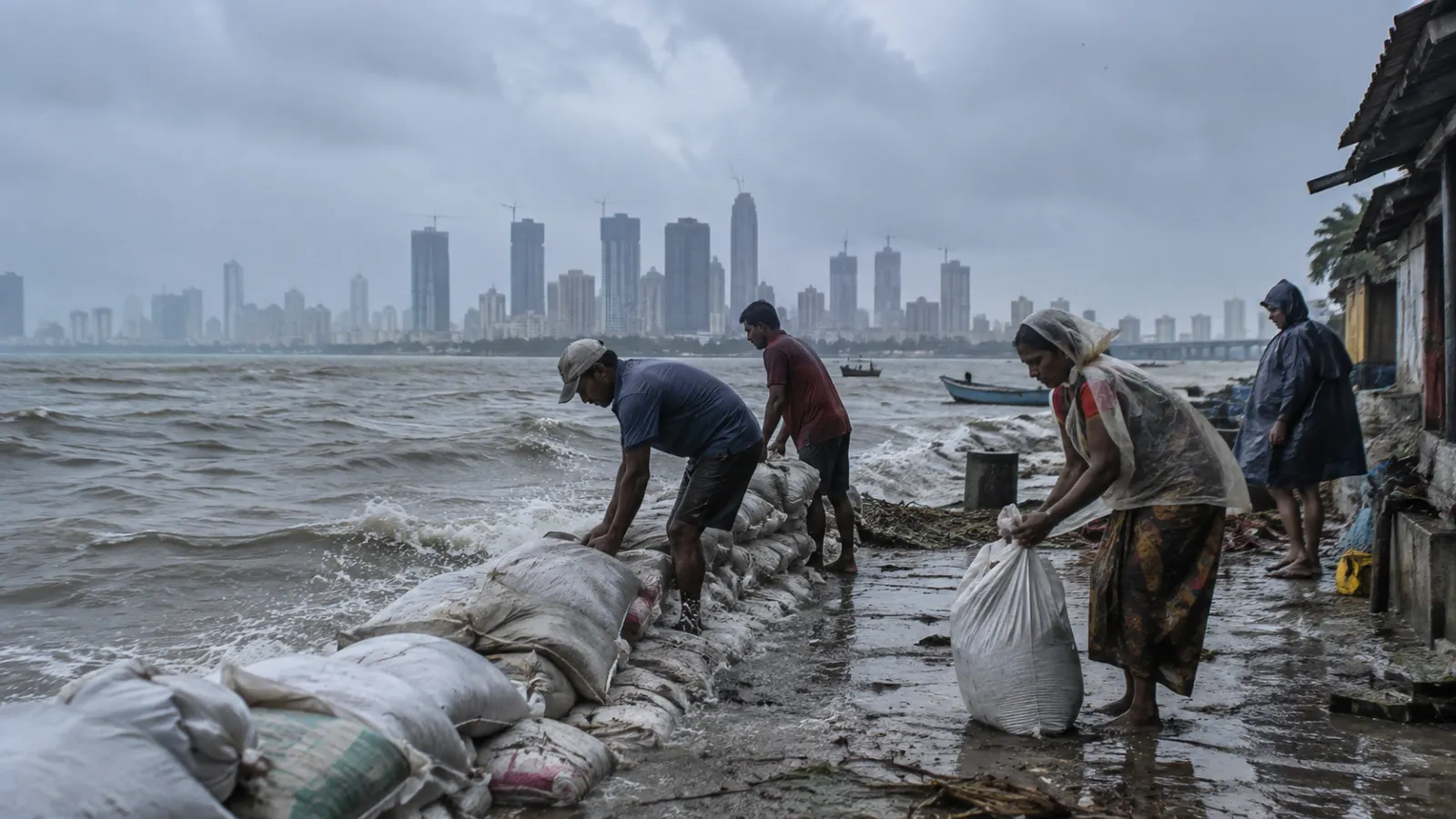
A stronger seawall may reduce coastal flooding without permanently preventing sea-level rise. Drought-resistant crops can lower agricultural losses without guaranteeing harvests during unprecedented conditions. Early-warning systems can save lives during cyclones while homes, infrastructure and livelihoods are still destroyed.
Some losses are economic.
Others are harder to price: cultural heritage, ancestral land, ecosystems, community cohesion or the disappearance of places central to collective identity.
The international climate regime uses the term loss and damage for climate impacts that cannot be fully avoided through mitigation and adaptation.
The issue became increasingly important because vulnerable developing countries argued that conventional climate policy left a major gap. Mitigation addresses the causes of future warming. Adaptation reduces future harm. Neither automatically answers who should bear the cost once serious climate damage has already occurred.
The UN climate system now includes the Warsaw International Mechanism, the Santiago Network and the Fund for responding to Loss and Damage. The Fund was established through the UN climate negotiations and remains an active part of the institutional architecture; its Board submitted its latest report for the 2026 UN climate conference cycle in September 2026.
Creating an institution does not settle the justice debate.
Governments still disagree over the scale and sources of funding, eligibility, access, governance and how non-economic losses should be treated.
The underlying claim, however, is straightforward: communities experiencing severe climate harm despite contributing little to the problem should not necessarily be expected to absorb all of the resulting cost alone.
Whether, how and to what extent other actors should contribute remains a matter of negotiation.
A just transition asks who bears the cost of decarbonisation
Climate policy itself can create distributional consequences.
Closing coal mines can reduce emissions while eliminating local employment and tax revenue. Increasing fuel prices can encourage lower consumption but place larger proportional burdens on households that cannot afford efficient vehicles or lack public transport. New clean industries can create employment, but those jobs may appear in different regions or require different skills from the jobs they replace.
A just transition addresses these effects.
The International Labour Organization describes just transition as managing the shift toward environmentally sustainable economies in ways that maximise social and economic opportunities while minimising disruption. Its framework emphasises decent work, labour rights, skills, social protection and social dialogue among governments, employers and workers.
This does not mean every existing industry or job should continue indefinitely.
A climate transition cannot achieve its purpose if high-emitting activities are permanently protected from change.
The fairness question is who absorbs the disruption.
Workers who spent decades developing skills for one industry may need retraining, income support or pathways into new employment. Regions dependent on a single high-carbon sector may need broader economic redevelopment. Low-income households may need protection from abrupt increases in energy or transport costs.
A poorly designed transition can therefore reduce emissions while intensifying inequality.
A well-designed transition can use climate investment to expand employment, public transport, cleaner air, energy access and more efficient housing at the same time.
ILO guidance continues to place social dialogue at the centre of this process, including in its 2026 work on employment policy and worker participation in national climate plans.
The climate objective and the social objective do not always conflict.
But neither guarantees the other automatically.
Climate justice is also about who gets to make decisions
Fairness is not only about distributing money.
It also concerns procedural justice: who receives information, who participates in decisions and whether affected groups have meaningful ways to challenge outcomes.
Climate projects can create conflicts even when their environmental objectives are legitimate.
A renewable-energy project may require land. Transmission lines can cross communities. Conservation programmes can limit access to forests or fisheries. Mining for minerals needed in batteries and electrical systems can generate environmental and labour impacts. Relocation programmes may reduce flood exposure while separating households from employment and social networks.
In each case, asking only whether the project reduces emissions is insufficient.
Who benefits?
Who loses land, income or access?
Who was consulted?
What happens when communities object?
Do people have access to compensation and grievance mechanisms?
Procedural justice does not mean every affected person receives a veto over public policy.
Governments inevitably make decisions among competing interests.
The objective is different: people bearing significant consequences should not become invisible simply because an environmental benefit exists elsewhere.
Participation can also improve policy quality.
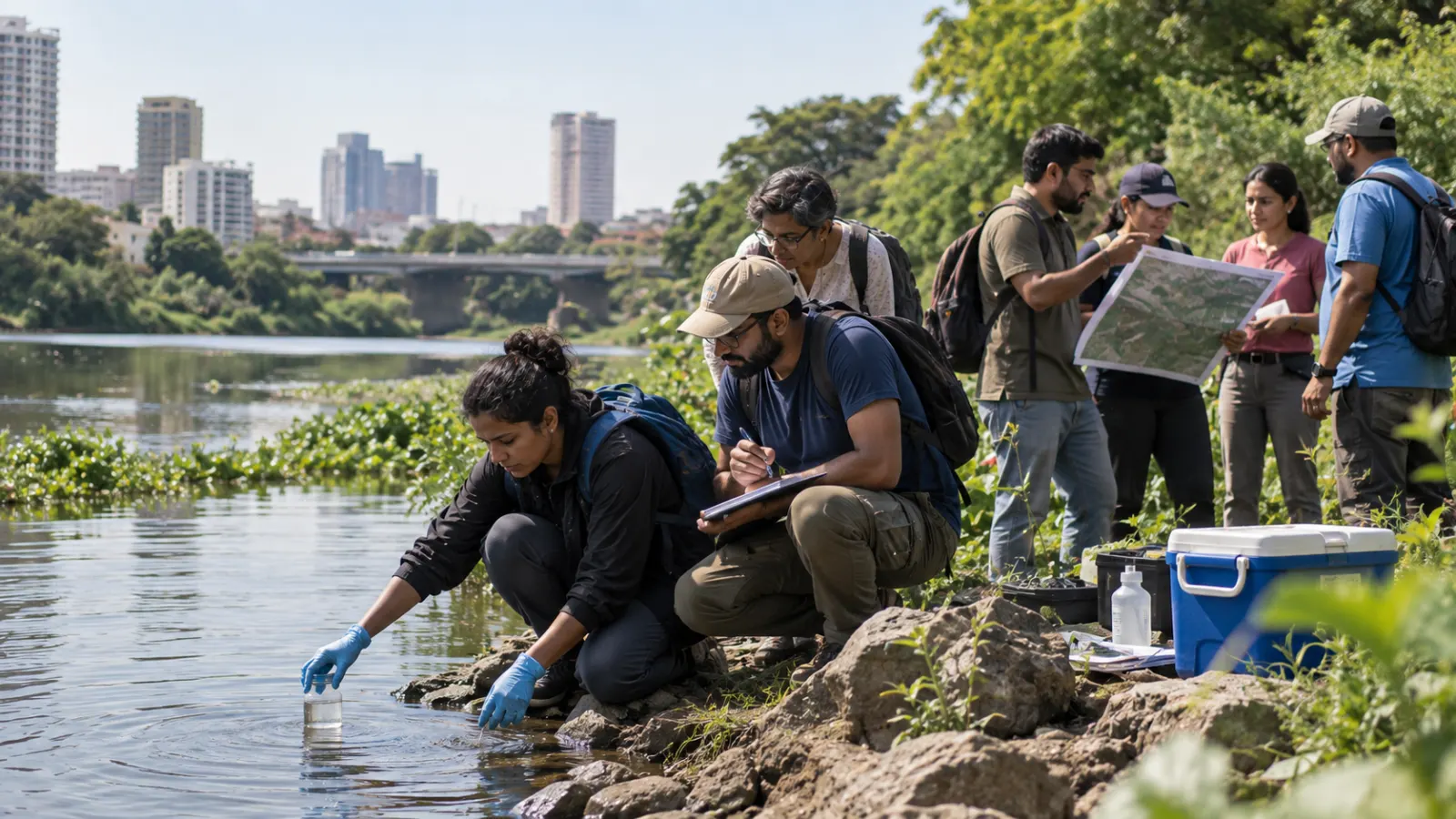
Local residents may know which roads become inaccessible during flooding, which water sources fail during drought or why a proposed relocation site would disconnect households from livelihoods.
Workers understand operational realities that planners may miss.
Indigenous and local communities may possess detailed ecological knowledge relevant to conservation and adaptation.
Climate justice therefore treats participation as both a fairness principle and a potential source of better information.
Future generations create another fairness problem
Climate change connects present decisions to people who cannot participate in them.
Carbon dioxide emitted today can influence climate conditions for generations. Infrastructure built now can lock in energy use for decades. Adaptation decisions can determine which coastlines, cities and ecosystems remain viable far into the future.
This creates an intergenerational justice problem.
Current generations receive many of the benefits produced through energy use and industrial activity. Part of the resulting climate cost arrives later.
People born decades from now did not vote for today's governments or consume today's fossil fuels, yet they may inherit higher temperatures, greater adaptation costs and ecological losses.
The reverse problem exists too.
Rapid climate investment costs money today.
Governments financing cleaner infrastructure, energy transition and adaptation must decide how much current consumption should be redirected toward reducing future risks.
Intergenerational justice therefore cannot be reduced to the idea that the present should sacrifice everything for the future.
Current poverty, healthcare, development and energy access are morally significant too.
The problem is how to balance legitimate needs now against predictable costs imposed later.
Climate justice makes the future population part of a decision from which future people are necessarily absent.
Fairness does not require every country to follow the same path
Equal treatment and equitable treatment are not always identical.
A wealthy economy with universal electricity access, mature infrastructure and high historical emissions operates under different conditions from a low-income country still expanding basic electricity, housing, transport and industry.
Expecting exactly the same immediate transition path from both may appear formally equal while ignoring those differences.
The Paris Agreement addresses this partly through nationally determined contributions, or NDCs. Countries define national climate commitments within a shared global framework, while the Agreement recognises different national circumstances and retains the principles of equity and differentiated responsibility. The UNFCCC's 2025 NDC synthesis likewise describes national commitments in light of different national circumstances.
Differentiation does not exempt any country from climate physics.
Global warming depends on global emissions. Large current emitters matter regardless of when their industrialisation began.
The practical challenge is to allow development without recreating the same high-carbon pathway where cleaner alternatives are increasingly available.
Finance and technology can narrow this conflict.
If low-carbon electricity, efficient transport and resilient infrastructure are affordable, poorer countries face less pressure to choose between development and climate action.
Climate justice therefore involves not merely telling countries to decarbonise but asking what resources make different development pathways feasible.
Fairness can affect whether climate policy survives politically
Climate transitions unfold over decades.
Policies that require long-term public cooperation become difficult to sustain when people believe that costs are being allocated arbitrarily or unfairly.
A carbon-pricing policy that raises household energy bills without affordable alternatives may provoke resistance even if its emissions rationale is strong. A transport transition favouring people able to purchase expensive new vehicles may appear unfair to households dependent on older cars. Adaptation projects that protect affluent districts while neglecting informal settlements can deepen distrust.
Fairness therefore has practical consequences for implementation.
This does not mean that every unpopular climate policy is unjust, or that a policy becomes scientifically effective merely because it is popular.
It means distribution affects political durability.
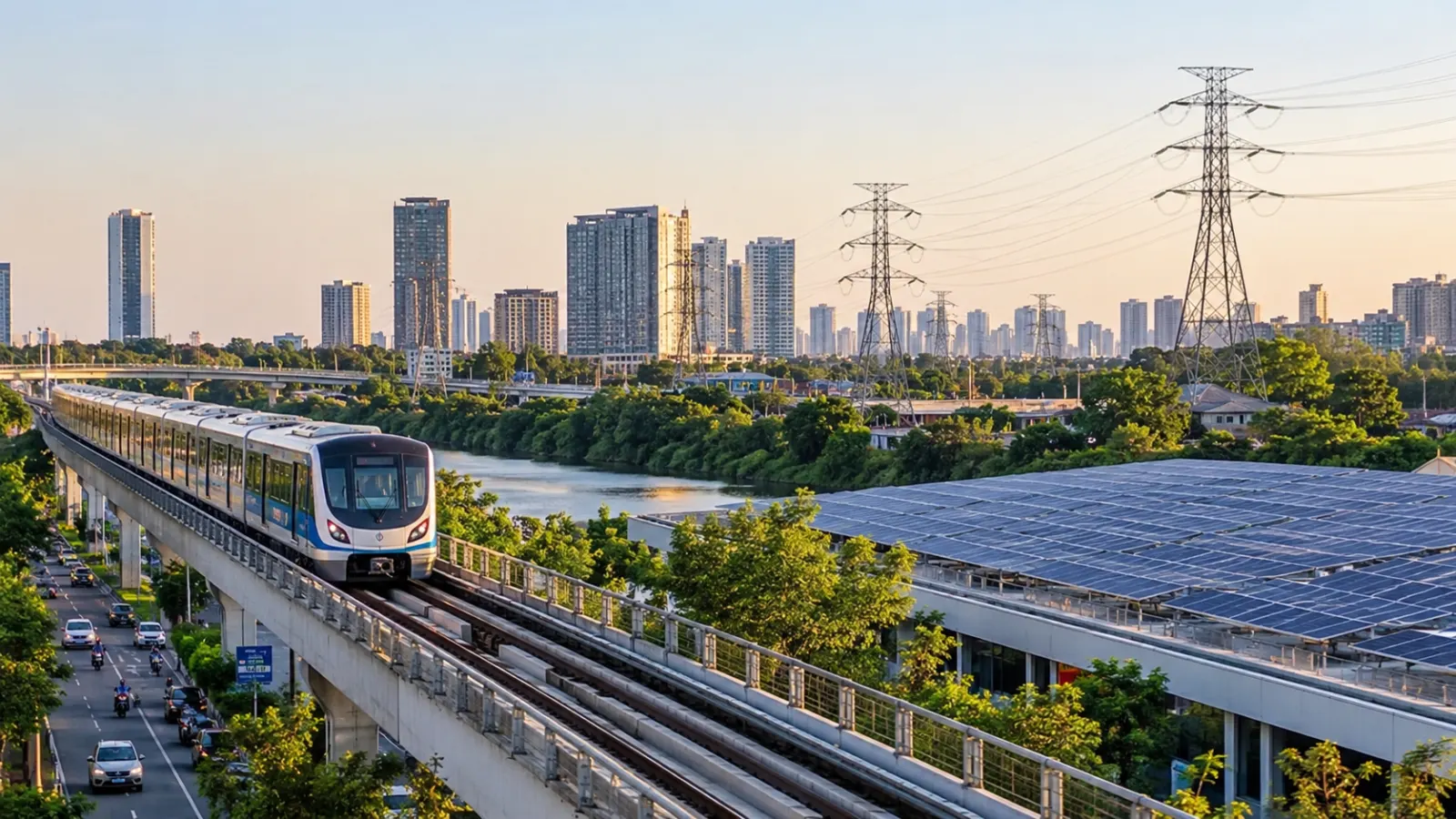
Climate action can sometimes provide benefits beyond emissions reduction: cleaner urban air, better public transport, more efficient homes, reduced energy costs, safer infrastructure or new employment.
Designing policy around those broader benefits can reduce the perceived divide between climate action and immediate welfare.
But trade-offs remain.
Climate justice does not eliminate disagreement. It provides a framework for identifying who is being asked to bear those trade-offs and whether alternatives exist.
Climate justice is ultimately about allocation
Climate change forces societies to distribute several scarce or valuable things.
There is limited remaining capacity to release greenhouse gases while meeting global temperature goals.
There is limited public money for mitigation, adaptation and disaster recovery.
Clean technologies, finance and infrastructure are not equally available.
Protection from climate hazards cannot always be provided everywhere at once.
Economic transitions inevitably create gains and losses across industries, regions and generations.
Atmospheric science can estimate the consequences of different emissions pathways.
It cannot independently decide how these burdens and benefits should be divided.
Those decisions involve judgments about responsibility, capacity, vulnerability, development, rights and need.
Different political traditions and countries weigh those principles differently. Some place greater emphasis on historical responsibility. Others stress current emissions. Some prioritise equality between states; others focus more strongly on individuals, future generations or vulnerable communities.
Climate justice therefore does not supply a single universally accepted answer.
Its contribution is to make the distributive questions harder to hide.
A climate policy can reduce emissions while distributing costs unfairly.
A development policy can improve present welfare while transferring substantial climate costs into the future.
An adaptation project can protect one population while increasing another's risk.
A financing package can mobilise investment while adding unsustainable debt.
Evaluating climate action therefore requires more than asking how many tonnes of emissions were avoided.
The original draft captures that larger point clearly: climate justice asks who caused how much of the problem, who has the capacity to act, who faces the greatest harm, who pays for the transition and whose voice counts in the decisions.
The atmosphere is shared.
The responsibilities, resources and consequences are not.
Climate justice is the attempt to decide how those inequalities should matter when the world determines who cuts emissions, who receives protection, who finances unavoidable losses and whose interests shape the transition to a lower-carbon future.