The phrase is powerful - but it has a scientific meaning
The phrase “sixth mass extinction” has moved from scientific debate into popular language. It is often used as shorthand for the accelerating loss of species, populations and habitats in the modern world. But in palaeontology, a mass extinction is not simply a period when extinction is worrying or unusually fast. It refers to a loss of an exceptionally large share of Earth's species over a geologically short interval. That distinction matters because the evidence supports two statements at the same time: today's extinction rates are far above long-term background levels, yet the planet has not necessarily lost enough total species to say that the conventional mass-extinction magnitude has already been completed.
What counts as a mass extinction?
A widely used palaeontological benchmark is the loss of more than three-quarters of species in a geologically short interval. Using that standard, scientists recognise five major mass extinctions over roughly the past 540 million years. These were not ordinary fluctuations in biodiversity. They were global biological crises that removed large fractions of existing species and reorganised ecosystems on a planetary scale.
The Big Five were different events, not one repeating pattern
The five great extinction events did not share a single cause. The end-Cretaceous extinction about 66 million years ago is closely associated with the Chicxulub asteroid impact and was the event that eliminated non-avian dinosaurs. The end-Permian extinction, the most severe of the Big Five, unfolded in a different geological setting and is linked to massive volcanism, greenhouse warming, ocean chemistry changes and other cascading stresses. The lesson from deep time is not that mass extinctions have one mechanism. It is that sufficiently large environmental disruption can overwhelm the capacity of many species and ecosystems to adapt.
Why scientists are alarmed today
Modern extinction rates are much higher than rates expected from the fossil background. The 2019 IPBES Global Assessment concluded that the global rate of species extinction is already at least tens to hundreds of times higher than the average over the past 10 million years, and accelerating. It also estimated that around one million animal and plant species face extinction, many within decades, unless the pressures on nature are reduced. These are not predictions that one million species will certainly disappear; they are assessments of elevated risk under present pressures.
The drivers are overwhelmingly human
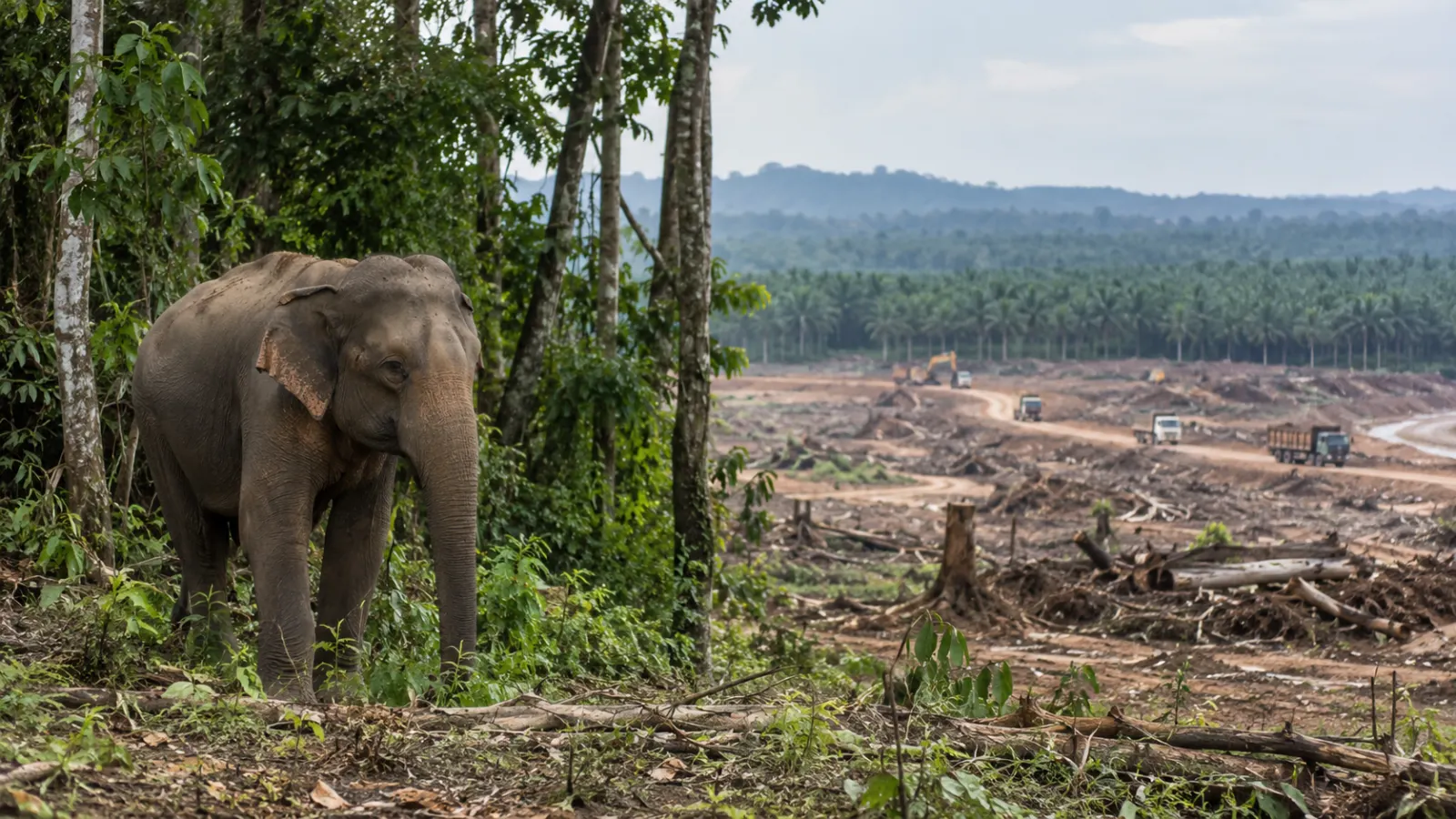
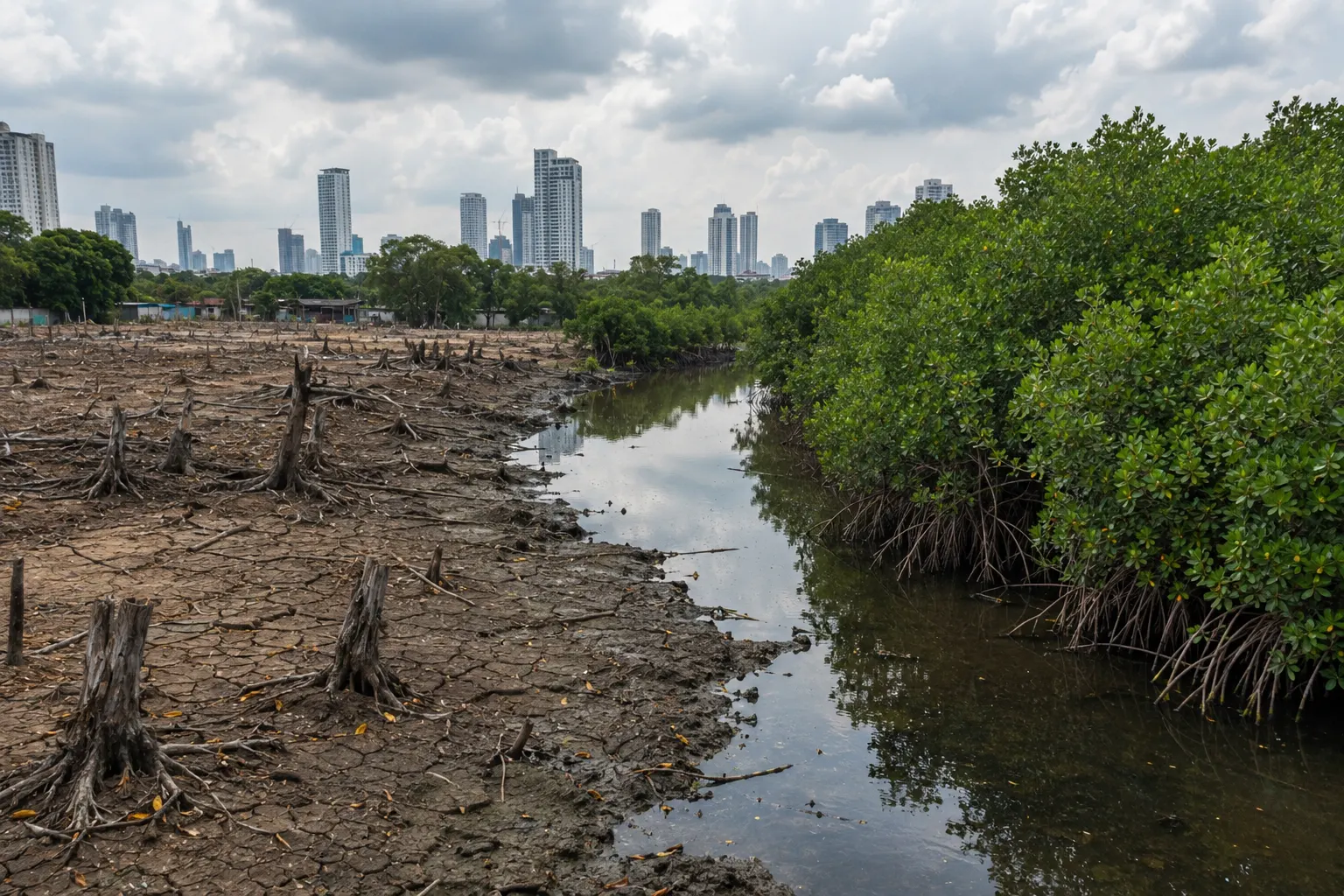
The current crisis differs from the Big Five in one obvious respect: the dominant pressures are generated by one species. IPBES identifies land- and sea-use change, direct exploitation of organisms, climate change, pollution and invasive alien species as the major direct drivers of biodiversity decline. Agriculture, logging, fishing, hunting, urbanisation, infrastructure, trade and energy systems translate those broad drivers into specific pressures on populations and habitats.
Extinction rate and extinction magnitude are not the same thing
A useful analogy is a vehicle travelling toward a cliff. Speed tells you how quickly it is moving; distance tells you how far it has already travelled. Extinction rate describes the pace of species loss. Extinction magnitude describes the fraction of species that has actually disappeared. A very high rate can indicate an emergency even before the cumulative loss reaches the 75% benchmark used for the Big Five. This is why scientists can warn that humanity is entering or driving a sixth mass extinction while also noting that the formal palaeontological threshold has not yet been crossed.
Why the fossil record and the present are difficult to compare
Comparing modern conservation data with the fossil record is methodologically difficult. Fossils preserve only a fraction of past organisms, preservation varies among environments and taxonomic groups, and geological time compresses events that may have lasted thousands or hundreds of thousands of years. Modern datasets are much more detailed for many living groups, but large numbers of species - especially insects, fungi and many marine organisms - remain incompletely described or assessed. The time windows and evidence are therefore fundamentally different.
Population collapse can precede extinction
A second reason not to focus only on the final extinction count is that ecosystems can be transformed long before species vanish globally. A species may lose most of its population and disappear from much of its historical range while technically remaining extant. That can remove predation, pollination, seed dispersal or other ecological interactions from local systems. The biological crisis is therefore broader than the tally of species officially declared extinct.
Does calling it the sixth mass extinction exaggerate the evidence?
It depends on how the phrase is used. If it is presented as a claim that Earth has already lost 75% of its species in the current episode, it is misleading. If it describes a rapidly accelerating, human-driven extinction episode that could reach mass-extinction magnitude if present trajectories continue, it is defensible and widely used in scientific literature. The most careful formulation is that Earth is experiencing an exceptional extinction crisis and may be entering a sixth mass extinction, rather than implying that a completed event equivalent to the Big Five has already occurred.
Why prevention is still meaningful
Mass extinction language can sound fatalistic, as if a geological process has already become unstoppable. That is the wrong implication. Extinction risk responds to human decisions. Habitat protection and restoration, control of invasive species, regulation of exploitation, pollution reduction, climate mitigation and targeted species recovery can all change outcomes. The Kunming-Montreal Global Biodiversity Framework explicitly sets a long-term goal of halting human-induced extinction of known threatened species and reducing extinction rate and risk.
How scientists estimate a background extinction rate
The phrase background extinction rate refers to the comparatively low pace at which species disappear outside exceptional mass-extinction episodes. Estimating it is difficult because the fossil record is incomplete and because species differ enormously in how readily they fossilise. Researchers therefore compare lineages across long time intervals and often express rates in extinctions per million species-years. The exact numerical baseline varies with method and taxonomic group, but the important result is robust: modern observed rates for well-studied groups substantially exceed the slow background rates inferred from deep time. That comparison is one of the strongest reasons the present crisis is treated as extraordinary even before a 75% cumulative loss has occurred.
Threatened species are not already extinct species
Another common misunderstanding is to add every threatened species to the extinction total. The IUCN categories Vulnerable, Endangered and Critically Endangered describe elevated risk, not completed extinction. A threatened species may recover if pressures are reduced, remain at high risk for decades, or continue declining. This distinction is central to interpreting the estimate that around one million species face extinction risk. It is a warning about possible future losses under ongoing pressures, not a statement that one million extinctions have already taken place. Treating risk as destiny would erase the entire purpose of conservation, which is to change the trajectory before extinction occurs.
Why mass extinctions matter beyond the species count
The fossil record shows that mass extinctions change more than the number of species. They remove ecological roles, simplify food webs and alter which lineages have opportunities to diversify afterward. Recovery can eventually produce new evolutionary radiations, but the replacement does not restore the same biological world. Once a lineage and its unique evolutionary history disappear, they do not return. For human societies this matters because the current biosphere is the one on which agriculture, fisheries, water systems and cultures have developed. Geological recovery over millions of years would offer little consolation for ecological losses experienced over decades or centuries.
Why the term can still be useful
Used carefully, the phrase sixth mass extinction compresses a complex scientific warning into an understandable idea: human activity is driving extinction at a pace that, if sustained, could produce a geological-scale loss of biodiversity. Its usefulness depends on retaining the caveat. The phrase should motivate attention to rate, magnitude and drivers rather than imply that a threshold has already been crossed beyond reversal. In editorial terms, the distinction is not pedantry. It separates a scientifically grounded warning from an apocalyptic claim that the evidence does not require.
The real warning is the trajectory
The scientific importance of the sixth-mass-extinction debate is not whether a headline should use the word “sixth”. The important evidence is that the pace of loss has departed sharply from background conditions and that the main pressures are continuing. Geological history shows that when biodiversity is lost on a massive scale, recovery is measured not in election cycles or human generations but in evolutionary time. The present still contains an enormous amount of biodiversity. That is precisely why the distinction between an approaching mass extinction and a completed one matters: there is still something substantial to prevent.