INDIA Bloc Postpones 'Public Impeachment' of CEC Gyanesh Kumar to October 31 Amid Delhi Rains
The opposition INDIA bloc has postponed its planned symbolic 'public impeachment' of Chief Election Commissioner (CEC) Gyanesh Kumar after heavy rainfall disrupted preparations in New Delhi on Friday, October 30, 2026. The programme, originally scheduled at Congress president Mallikarjun Kharge's official residence, is now expected to take place on Saturday, October 31.
The event is part of the opposition alliance's continuing campaign against alleged electoral irregularities and the Special Intensive Revision (SIR) of voter lists. Opposition leaders have accused the Election Commission of failing to protect voting rights and demanded Gyanesh Kumar's resignation.
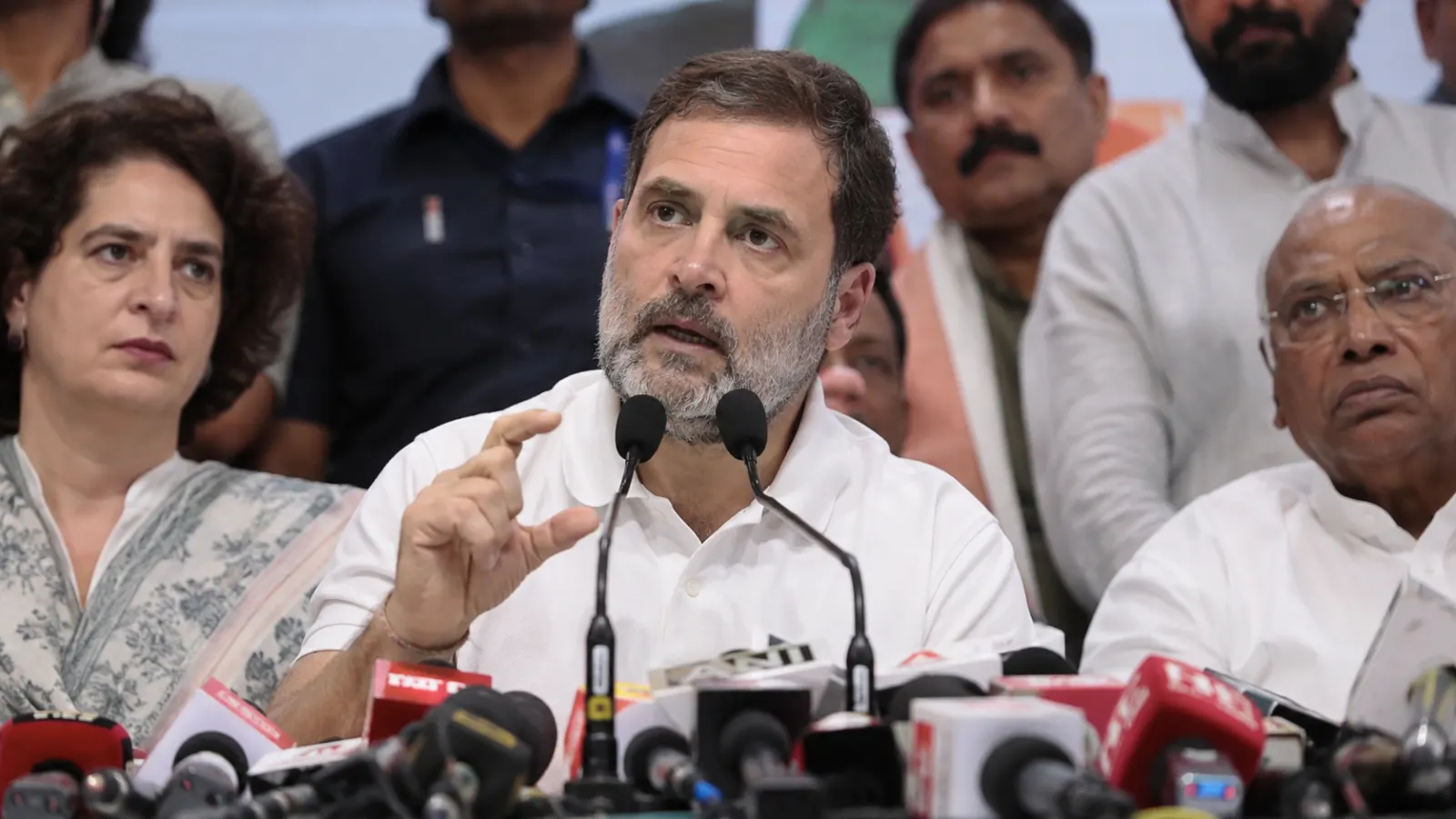
The proposed proceedings were designed to resemble a parliamentary impeachment debate, with former Lok Sabha Speaker Meira Kumar presiding, Kharge presenting a symbolic motion and Leader of the Opposition Rahul Gandhi delivering the concluding remarks.
However, the exercise is a political demonstration rather than a constitutional impeachment proceeding. Any resolution passed at the event would have no legal authority to remove the Chief Election Commissioner.
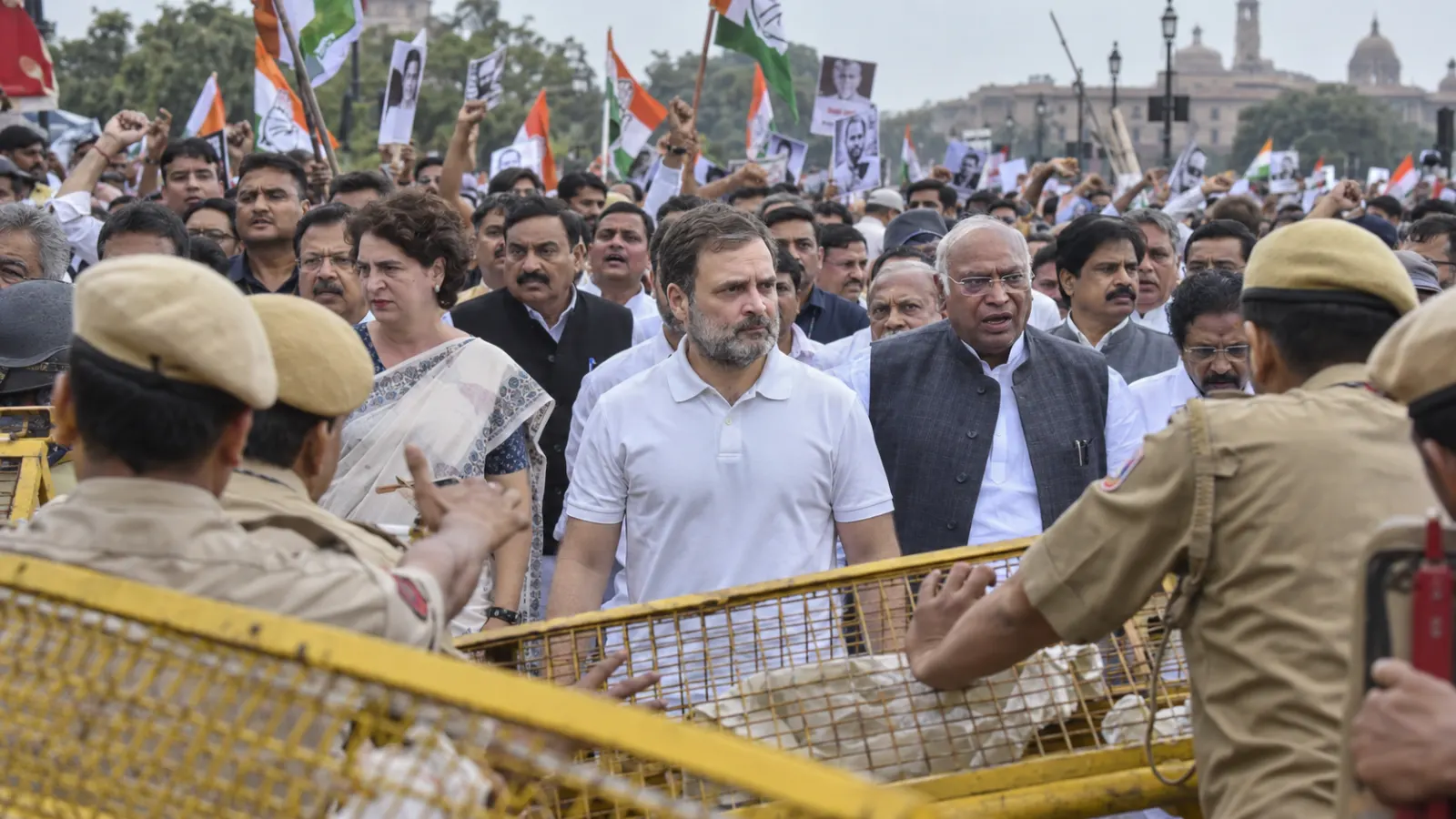
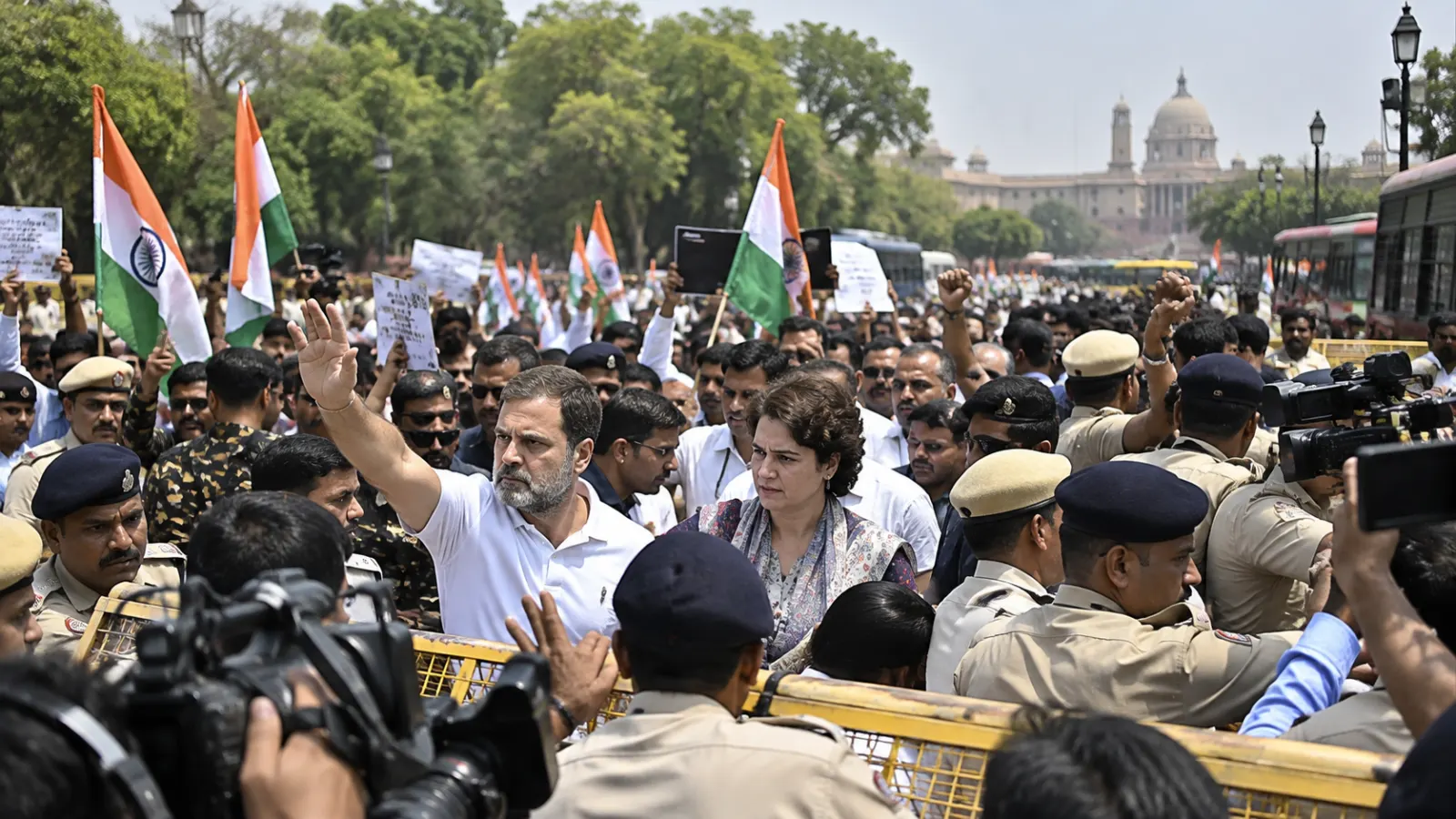
The postponement comes just two days before the INDIA bloc's planned November 1 rally at Delhi's Ramlila Maidan, where opposition parties intend to mobilise supporters against alleged electoral manipulation.
Why Was the Public Impeachment of Gyanesh Kumar Postponed?
The INDIA bloc had planned to conduct its symbolic proceedings on Friday afternoon at 10, Rajaji Marg, the official residence of Congress president Mallikarjun Kharge.
However, persistent rainfall and unfavourable weather conditions in Delhi disrupted the arrangements.
Opposition sources subsequently confirmed that the programme would not take place on October 30 and was likely to be conducted the following day.
Reports indicated that the rescheduled event could begin at approximately 3:30 pm on Saturday, although the final arrangements remained subject to confirmation.
The programme was originally intended to last approximately three hours, with participation from political leaders, parliamentarians, civil society representatives and individuals raising concerns about electoral roll revisions.
At least 30 speakers representing approximately 21 political parties were expected to participate in the original programme.
The weather-related postponement has altered the immediate timetable but has not changed the opposition's stated demand for the Chief Election Commissioner's removal.
What Is the INDIA Bloc's 'Public Impeachment' Campaign?
The proposed public impeachment is a symbolic political exercise designed to highlight the INDIA bloc's allegations against Chief Election Commissioner Gyanesh Kumar.
Opposition leaders have accused the Election Commission of allowing irregularities in electoral rolls and failing to address concerns about the removal of eligible voters.
The campaign has been promoted around the opposition's allegations of 'vote chori', or vote theft.
Congress and its allies argue that the Special Intensive Revision of electoral rolls has created opportunities for eligible citizens to be excluded from voter lists.
They have demanded greater transparency in the verification process, stronger safeguards against wrongful deletions and accountability from the Election Commission's leadership.
The planned public impeachment would allow representatives of different opposition parties to present their arguments in a parliamentary-style setting.
Civil society activists and individuals claiming to have been adversely affected by the revision process were also expected to participate.
However, allegations of deliberate electoral manipulation have not been established merely by the opposition's assertions. Specific claims require examination of electoral records, official responses and relevant judicial findings.
Meira Kumar, Mallikarjun Kharge and Rahul Gandhi Assigned Key Roles
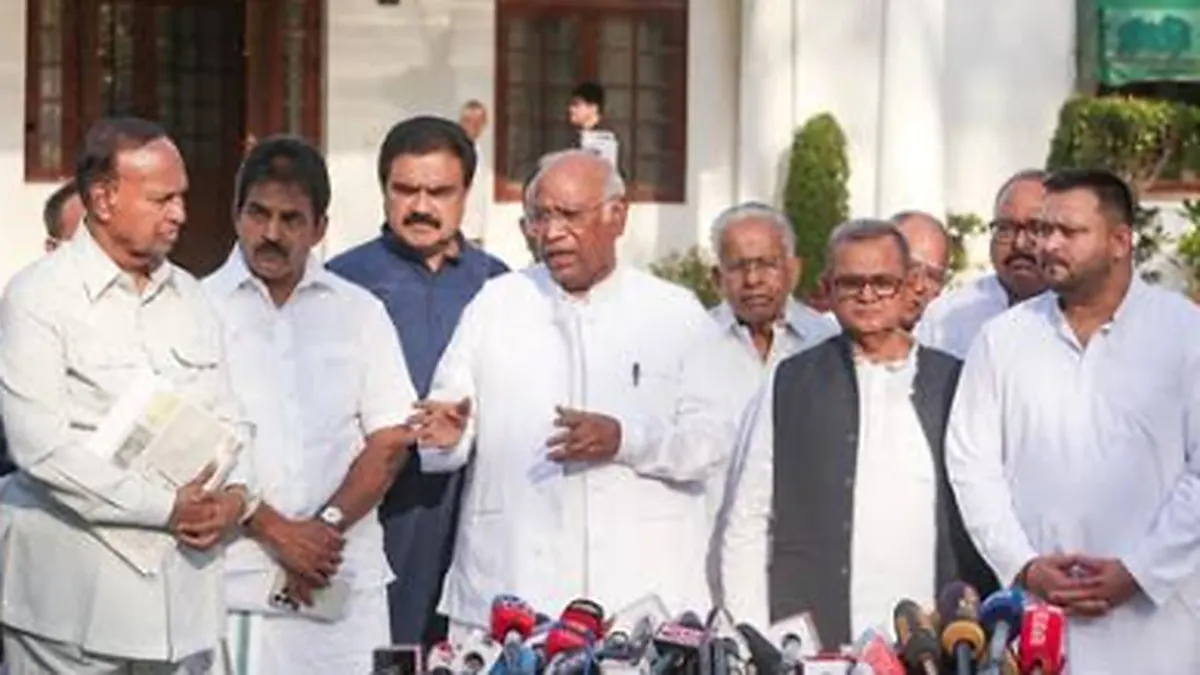
The INDIA bloc finalised the proposed structure of its symbolic proceedings during a meeting at Mallikarjun Kharge's residence on October 29.
Former Lok Sabha Speaker Meira Kumar was selected to preside over the event, lending a parliamentary character to the proceedings.
Kharge, who is also Leader of the Opposition in the Rajya Sabha, was expected to introduce the symbolic motion against Gyanesh Kumar.
Rahul Gandhi, Leader of the Opposition in the Lok Sabha, was scheduled to deliver the concluding remarks before a symbolic vote.
Senior opposition representatives participating in the preparations included Congress leaders Priyanka Gandhi Vadra, Jairam Ramesh and K C Venugopal.
Other participants included Trinamool Congress leader Derek O'Brien, CPI(M) parliamentarian John Brittas, Samajwadi Party representative Harendra Malik and Jharkhand Mukti Morcha leader Mahua Maji.
The discussions focused on the programme's structure, participation and the political arguments to be presented against the Election Commission.
Opposition leaders intended to use the event to demonstrate unity across different political parties over concerns about electoral transparency.
Can the Opposition Actually Impeach the Chief Election Commissioner?
The term 'public impeachment' has generated considerable attention, but the planned event does not constitute a formal constitutional process.
Under Article 324(5) of the Indian Constitution, the Chief Election Commissioner can be removed from office only in the same manner and on the same grounds as a judge of the Supreme Court.
Such removal requires a constitutionally prescribed parliamentary process and cannot be accomplished through a public gathering or a symbolic vote organised by political parties.
The formal process involves parliamentary consideration and special-majority requirements, along with the applicable legal procedures.
A symbolic resolution passed at Mallikarjun Kharge's residence would therefore not affect Gyanesh Kumar's tenure or official powers.
The INDIA bloc's programme is intended to communicate political opposition to the CEC rather than directly exercise a legal power of removal.
This distinction is essential because describing the event as an actual impeachment could incorrectly suggest that constitutional proceedings have begun or that a public vote has legal consequences.
Why Is the Special Intensive Revision So Controversial?
The Special Intensive Revision is an electoral roll verification exercise intended to update voter records and identify entries requiring correction or deletion.
Electoral authorities conduct revision exercises to improve the accuracy of voter lists, including by addressing duplicate registrations, deceased voters and changes in residence.
The Election Commission maintains that electoral roll accuracy is necessary for conducting free and fair elections.
However, opposition parties and civil society groups have raised concerns about the scale of the verification exercise, the documentation required and the possibility of eligible voters being excluded.
Critics argue that individuals facing difficulties producing documentation or responding to verification notices could lose their place on electoral rolls despite remaining eligible to vote.
They have also questioned whether affected voters receive sufficient notice and meaningful opportunities to challenge deletion decisions.
The opposition's central accusation is that the revision process could disproportionately affect certain communities and influence electoral participation.
These allegations remain disputed, and the existence of voter-list corrections does not by itself establish wrongful disenfranchisement or intentional manipulation.
The controversy therefore centres on whether the verification exercise can ensure accuracy while providing adequate protection for every eligible voter.
Congress Alleges Restrictions on Protest Venues
The proposed public impeachment has also become the subject of a separate dispute concerning permission to organise political gatherings in Delhi.
Congress leaders previously explored holding the programme at venues including the Ashok Hotel and Ramlila Maidan.
The party alleged that permissions or venue arrangements were denied following government or police intervention.
Congress general secretary K C Venugopal accused the central government of attempting to obstruct the opposition's campaign.
The organisers subsequently selected Kharge's official residence as the venue for the October 30 event.
However, allegations of deliberate political interference in venue permissions have not been independently established.
Delhi Police had also clarified that permission for the opposition's separately planned November 1 rally at Ramlila Maidan had not been withdrawn.
The distinction between the symbolic impeachment event and the larger public rally is important because the two programmes involve different arrangements.
The dispute reflects broader tensions between opposition parties and the authorities over protest permissions, public gatherings and political demonstrations in the national capital.
November 1 Ramlila Maidan Rally Remains a Major Focus
Despite Friday's postponement, the INDIA bloc continues preparations for its planned November 1 mobilisation in Delhi.
The rally at Ramlila Maidan is intended to bring together opposition leaders, party workers and supporters from different parts of the country.
The organisers have presented the event as a campaign to defend voting rights and demand accountability from the Election Commission.
The opposition has also called for greater scrutiny of the Special Intensive Revision and the procedures used to add or remove names from voter lists.
Congress leaders have announced ambitious mobilisation targets, although actual attendance will only be known after the event.
The rally is expected to become a significant political demonstration ahead of the upcoming electoral cycle.
Whether the postponed public impeachment proceeds on October 31 as anticipated will determine how closely the two events take place.
What Happens Next in the Gyanesh Kumar Controversy?
The immediate development to watch is confirmation of the revised timetable for the INDIA bloc's symbolic public impeachment.
If held on October 31, the programme is expected to feature speeches from opposition leaders and a symbolic resolution concerning the Chief Election Commissioner.
Attention will then shift to the November 1 rally and any further demands made by opposition parties.
Separately, the dispute over the Special Intensive Revision will continue through electoral administration, political debate and applicable legal processes.
The Election Commission's responses to allegations of wrongful deletions, the procedures available for claims and objections and the handling of disputed voter records will remain central to the controversy.
For the opposition, the public impeachment campaign is intended to increase pressure on the Commission and reinforce its demand for Gyanesh Kumar's resignation.
For electoral authorities, the challenge is to demonstrate that voter-list verification is conducted fairly, transparently and with adequate safeguards.
The postponement caused by Delhi's rainfall has delayed the political spectacle, but it has not resolved the underlying disagreement over electoral integrity.
The larger question remains whether India's political institutions can address concerns about voter-list accuracy and electoral accountability through transparent procedures while maintaining public confidence in the independence of the Election Commission.