Punjab Drug Census Row: Jakhar Questions ₹250-Crore Spending, Demands Report From AAP Government
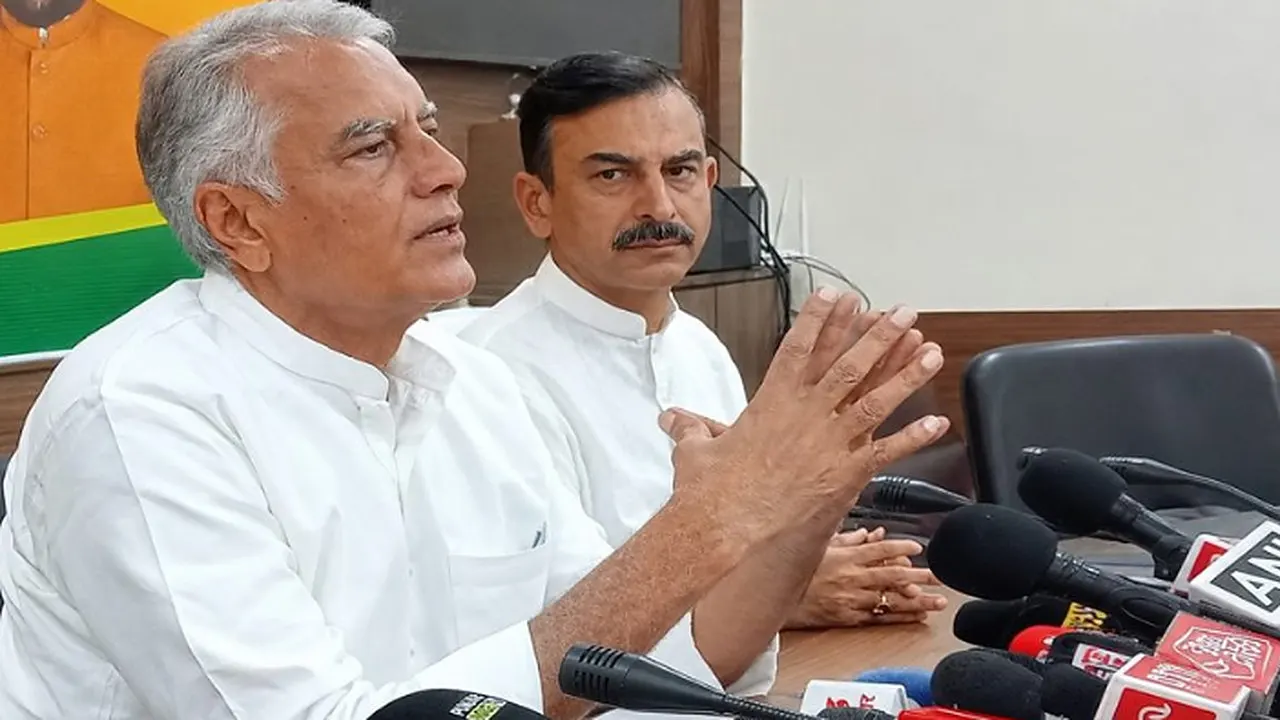
Punjab's statewide drug census has become the centre of a political controversy after senior Bharatiya Janata Party (BJP) leader Sunil Jakhar alleged that the Aam Aadmi Party (AAP) government spent ₹250 crore on an extensive household survey without making its findings public. The allegations have raised questions about government expenditure, transparency and the effectiveness of Punjab's campaign against drug abuse.
At a press conference in Chandigarh on October 26, 2026, the former Punjab BJP president demanded that Chief Minister Bhagwant Mann's government release the survey report and explain how the exercise would help tackle the state's long-standing drug problem.
Jakhar claimed that approximately 28,000 government employees had been deployed and 65 lakh families covered during the survey. However, the ₹250-crore expenditure figure remains an allegation, not an independently verified amount. Earlier budget reporting identified an allocation of ₹150 crore for the census, while detailed expenditure records establishing the actual amount spent have not been made public in the reporting examined.
The AAP has rejected Jakhar's wider criticism of its anti-drug policies, questioning his own political record and defending the government's efforts to combat narcotics trafficking.
The dispute, which continues to attract attention on October 30, comes as Punjab prepares for the 2027 Assembly elections and faces renewed concerns over illegal drug trafficking, pharmaceutical substance misuse and rehabilitation services.
Why Is Punjab's ₹250-Crore Drug Census Under Scrutiny?
The latest controversy began when Jakhar challenged the Punjab government to explain why the findings of its extensive Drug and Socio-Economic Census had not been publicly released.
Addressing reporters in Chandigarh, the BJP leader questioned the purpose and cost of the exercise, arguing that taxpayers deserved to know what had been achieved.
Jakhar alleged that ₹250 crore had already been spent and questioned whether the government had used the information gathered to develop effective measures against drug abuse.
He also accused the AAP leadership of pursuing political interests through the survey rather than concentrating exclusively on addiction, treatment and enforcement.
The allegations went beyond financial accountability. Jakhar claimed that senior AAP leaders Arvind Kejriwal and Manish Sisodia had designed a strategy to understand the illicit drug supply chain for improper commercial purposes.
These are serious political allegations. No independently verified evidence has been presented in the available reporting to establish that the survey was designed to facilitate illegal drug trafficking or that the named leaders participated in such a scheme.
The distinction is important because questions over government spending and the publication of survey findings can be examined through official records without assuming that criminal wrongdoing has occurred.
Was ₹250 Crore Actually Spent on Punjab's Drug Survey?
The ₹250-crore figure has become the most prominent element of the controversy, but available financial information does not establish that the government has already spent this amount.
Punjab's budget documents for the 2025–26 financial year included an allocation of ₹150 crore for a statewide drug census. When the Drug and Socio-Economic Census was launched in April 2026, reporting on the government's announcement also referred to a ₹150-crore allocation for the 2026–27 financial year.
These figures should not automatically be added together to calculate total expenditure. Budget allocations, revised allocations, funds released and actual spending represent different financial measures.
Jakhar's allegation that ₹250 crore was spent therefore requires verification against government expenditure statements, departmental records and audited accounts.
The government has not been shown, in the available reporting, to have released a comprehensive public breakdown establishing the total amount spent on the census.
A full financial disclosure would help clarify the cost of survey personnel, data collection, digital infrastructure, verification, administration and analysis.
It would also establish whether the disputed ₹250-crore amount refers to an approved budget, cumulative allocation, estimated project cost or actual expenditure.
Until that information is available, describing the census as a proven ₹250-crore expenditure would be premature.
What Is Punjab's Drug and Socio-Economic Census?
Punjab launched its Drug and Socio-Economic Census on April 1, 2026, with the stated objective of understanding the scale of substance abuse and its relationship with household income, education, employment and other social conditions.
The government initially planned to survey approximately 65 lakh families across the state using around 28,000 personnel, including government employees and teachers.
Chief Minister Bhagwant Mann presented the exercise as a means of moving beyond enforcement-driven measures towards more targeted prevention, treatment and rehabilitation policies.
The survey sought information about the nature and duration of substance use, access to treatment facilities and the socio-economic circumstances of affected households.
It also collected data relating to education, employment, household finances and access to government welfare programmes.
Officials maintained that such information could help identify vulnerable communities and improve the allocation of rehabilitation and welfare resources.
However, the breadth of the questionnaire became controversial shortly after fieldwork began.
Survey Covered Over 55 Lakh Households, Earlier Figures Show
The government initially targeted approximately 65 lakh families, but subsequent reporting described a revised operational target of around 55.61 lakh households.
By early September 2026, the survey had reportedly covered approximately 55.36 lakh households, representing about 99.56% of that operational target.
The figures also indicated that approximately 3.48 lakh families had declined to participate or had not cooperated with the enumeration process.
An automated quality-assessment system had examined around 51.88 lakh survey responses. Of these, approximately 44.63 lakh had been approved, while more than 7 lakh were flagged for additional manual checking.
These numbers describe the survey's reported progress as of September, not a final independently audited count for October 30.
The government subsequently moved towards consolidating and analysing the collected information.
A committee headed by Punjab Chief Secretary K A P Sinha was tasked with examining the findings and identifying possible policy interventions.
The results are expected to inform decisions concerning addiction patterns, treatment facilities, vulnerable communities and broader socio-economic support.
However, a comprehensive final report was not publicly available in the reporting reviewed for this article.
Why Did the Survey Questionnaire Become Controversial?
The drug census had already attracted criticism months before Jakhar's October allegations.
Teachers involved in the enumeration process questioned why a survey primarily described as an exercise to measure drug abuse contained numerous questions about government welfare programmes.
The questionnaire reportedly included nearly 120 questions when conditional follow-up questions were counted. A substantial portion of its mandatory questions concerned government schemes and public experiences with those programmes.
Respondents were asked about initiatives such as free electricity, Aam Aadmi Clinics, free bus travel for women and other state welfare measures.
Opposition leaders alleged that these questions could help the AAP assess public sentiment ahead of the 2027 Punjab Assembly elections.
Some survey workers also raised concerns about whether families would openly disclose information about drug dependence because of stigma, privacy concerns or fear of social consequences.
Such reluctance could potentially affect the reliability of the collected data.
The government defended the questionnaire, maintaining that understanding the social and economic conditions of households was essential to designing better policies.
Officials explained that questions about welfare schemes could help assess whether existing government support was reaching vulnerable communities and identify areas requiring improvement.
The competing arguments highlight a methodological question: whether a broad household survey can accurately measure substance abuse while simultaneously collecting information about unrelated welfare programmes.
How Has the AAP Responded to Sunil Jakhar?
The Aam Aadmi Party criticised Jakhar's remarks and challenged his credibility on the issue of drug abuse in Punjab.
AAP Punjab media in-charge Baltej Pannu questioned Jakhar's record when he was associated with the Congress and Captain Amarinder Singh's government.
Pannu argued that Jakhar should explain what action he had taken against the drug problem during his earlier political career before criticising the present administration.
The party reiterated its commitment to the Yudh Nashian Virudh campaign, which combines law-enforcement action with community participation and initiatives intended to steer young people away from substance abuse.
The government has consistently maintained that the drug census is intended to improve evidence-based policymaking and identify the communities most in need of rehabilitation services.
However, the AAP's broader political rebuttal does not independently establish the survey's final cost or resolve questions about the publication of its findings.
Those issues require separate disclosure of financial records and survey results.
Jakhar Also Demands Investigation Into Alleged Drug Networks
Beyond the census, Jakhar raised allegations concerning drug trafficking, pharmaceutical regulation and suspected links between criminal networks and influential individuals.
He questioned the handling of cases involving alleged drug smugglers and a police constable reportedly linked to the recovery of a substantial quantity of heroin.
The BJP leader also raised concerns about the functioning of Punjab's drug regulatory system and sought wider investigation into possible corruption and administrative failures.
Jakhar urged the Central Bureau of Investigation to expand its examination of matters connected with the killing of anti-drug activist Parvinder Singh, also known as Jhota, in Mansa.
He further indicated that he would seek central intervention concerning alleged international drug trafficking and weapons-smuggling networks.
These accusations remain separate from the financial questions surrounding the drug census.
The existence of criminal investigations or drug seizures does not establish that the census was conducted for an unlawful purpose, nor does it prove misconduct by the political leaders accused.
Each allegation would require examination of relevant records and independent evidence.
Why Punjab's Drug Census Matters Beyond Politics
Punjab has faced persistent challenges involving heroin trafficking, misuse of pharmaceutical substances, addiction-related deaths and the availability of treatment services.
Its location near the international border creates additional enforcement difficulties, particularly as authorities confront attempts to move narcotics and weapons across the border.
A credible statewide drug census could help the government develop a more accurate understanding of substance dependence and direct resources towards communities requiring urgent support.
Such information could improve the planning of de-addiction centres, counselling services, medical treatment and programmes supporting education and employment.
However, the effectiveness of the exercise depends on the quality of the data, the protection of personal information and the government's willingness to translate findings into measurable policy outcomes.
Experts have cautioned that social stigma and household reluctance to disclose addiction can produce underreporting in surveys.
The reliability of the final findings will therefore depend partly on how the government addresses incomplete responses, verification errors and possible reporting bias.
Public confidence would also benefit from a clear explanation of the methodology, data limitations and financial costs.
What Happens Next in the ₹250-Crore Drug Census Controversy?
The immediate question is whether the Punjab government will release the final census report and provide a detailed financial account of the exercise.
A comprehensive disclosure would help establish the number of households successfully surveyed, the prevalence of different forms of substance dependence and the resources needed for prevention and treatment.
It would also allow independent researchers to assess the quality of the methodology and the reliability of the findings.
Separately, official expenditure statements could establish whether Jakhar's ₹250-crore allegation is accurate, overstated or based on a different measure of project expenditure.
With the 2027 Assembly elections approaching, the dispute is likely to remain politically significant.
For the AAP government, the challenge is to demonstrate how the census contributes to measurable improvements in tackling drug abuse. For the opposition, the challenge is to substantiate allegations concerning public expenditure and misconduct.
The controversy ultimately extends beyond competing political claims.
Punjab's residents need reliable information about the scale of the drug problem, transparent accounting of public funds and effective policies that help people affected by addiction. Until the survey findings and expenditure details are made public, those questions will remain central to the debate.