Energy Conservation: Why Using Less Energy Matters
Energy is valuable because of what it allows people to do.
Households do not usually want electricity simply because they value kilowatt-hours. They want light after sunset, food kept cold, comfortable rooms, hot water, internet access and appliances that save time. Businesses want machinery, computing, heating, cooling and transport. Cities need mobility, hospitals, water systems, communications and reliable public infrastructure.
This distinction is central to energy conservation.
The objective is not simply to make an energy meter move more slowly. It is to provide the services people need while eliminating energy use that provides little or no additional value.
Sometimes that means behavioural change: switching off equipment that nobody is using, avoiding unnecessary heating or cooling, or reducing wasteful travel. Sometimes it means better technology: an efficient air conditioner providing the same comfort with less electricity, insulation preventing heat from escaping a building, or an efficient industrial motor doing the same mechanical work with less energy.
Those two approaches are related but not identical. Energy conservation generally reduces unnecessary demand, while energy efficiency delivers the same or better service using less energy input.
Both matter.
A highly efficient air conditioner can still waste electricity if it cools an empty room all day. A careful household can still have an enormous heating bill if the building is badly insulated. An efficient car can still consume unnecessary fuel if poor urban planning forces people to drive long distances for basic needs.
This is why modern energy policy increasingly looks beyond individual devices and asks a larger question:
How can entire systems deliver comfort, mobility, production and economic development with less wasted energy?
That question matters for household bills, energy security, pollution, infrastructure costs and climate change at the same time.
Energy conservation and energy efficiency are different—but strongest together
The distinction is easiest to understand through examples.
If someone turns off an unused air conditioner, that is conservation. If the old air conditioner is replaced by a more efficient model that provides the same cooling with less electricity, that is efficiency.
If a factory shuts down machinery during periods when nothing is being produced, that is conservation. If it replaces an inefficient motor with one that produces the same output using less electricity, that is efficiency.
If a household lowers excessive heating, that is conservation. If better insulation allows the home to remain at the same comfortable temperature while requiring less heating, that is efficiency.
In practice, separating the two completely is often unnecessary because good energy systems use both.
Buildings illustrate this particularly well.
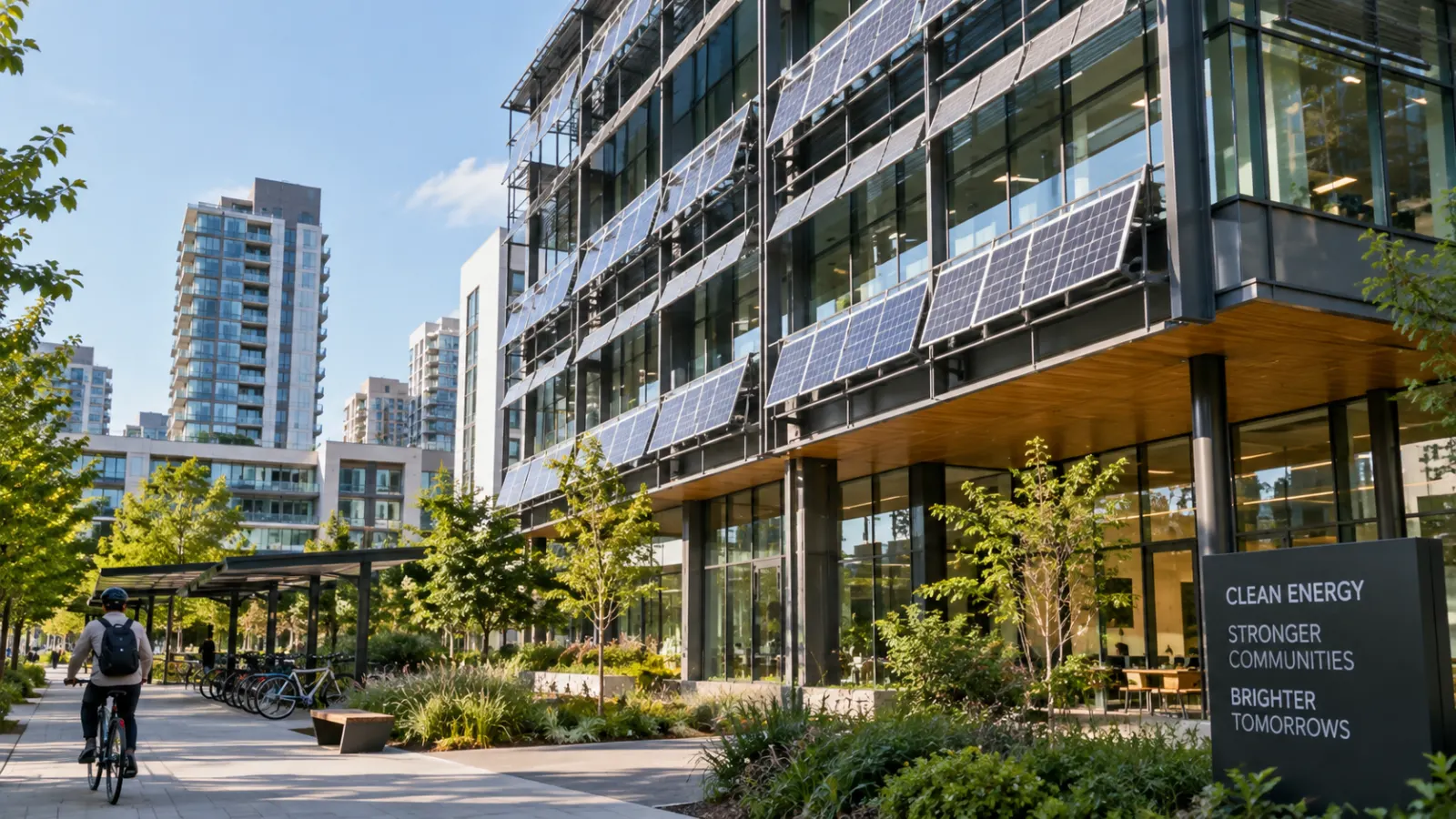
A poorly designed building may absorb enormous amounts of heat during summer and lose heat rapidly during winter. Occupants then compensate by running cooling or heating equipment harder. Installing a highly efficient air conditioner reduces electricity consumption, but improving shading, insulation, windows and ventilation can reduce the amount of cooling the building needs in the first place.
The most efficient air conditioner is still using energy.
A building that prevents unnecessary heat gain reduces the service demand placed on that equipment.
The IPCC describes this broader demand-side approach through the framework of Avoid, Shift and Improve. “Avoid” reduces unnecessary demand or redesigns systems so less energy service is required. “Shift” moves activity toward lower-energy or lower-emission ways of meeting the same need. “Improve” increases the efficiency of technologies already providing the service. The IPCC emphasises that these approaches involve behaviour, infrastructure and technology together rather than putting responsibility entirely on individual consumers.
Transport offers another example.
A more fuel-efficient car is an improvement.
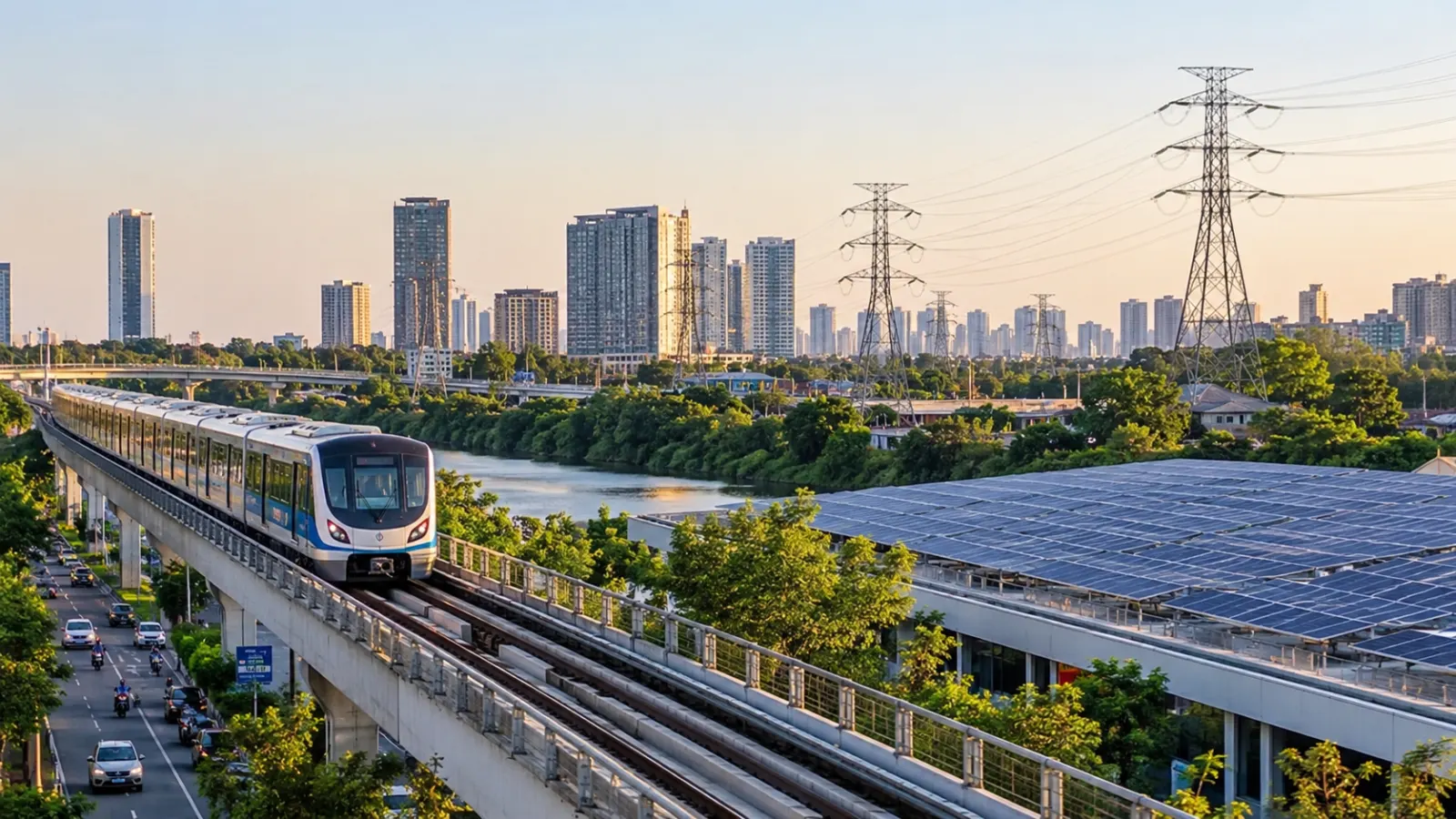
Taking an efficient train instead of driving can be a shift.
Designing cities in which homes, shops, schools and workplaces are closer together can avoid some unnecessary travel altogether.
All three can reduce energy use while still providing the underlying service: mobility.
That is why the most useful measure of progress is not simply whether society consumes less energy in absolute terms. Developing economies may require substantially more energy as incomes rise and people gain access to cooling, transport, industry and modern appliances.
The better question is whether each unit of energy is producing more useful human and economic value.
Why saving energy can matter as much as producing more of it
Energy debates are visually dominated by supply.
New solar farms are visible.
Wind turbines are visible.
Power stations are visible.
Transmission lines, LNG terminals, refineries and batteries are visible.
Energy that never had to be generated is not.
Yet reducing unnecessary demand can change the scale of almost every supply problem.
Suppose a rapidly growing city needs much more air conditioning as temperatures rise and household incomes increase. One response is to build enough generating capacity, transmission lines and distribution infrastructure to power millions of inefficient cooling systems inside poorly designed buildings.
Another response still provides cooling, but combines efficient air conditioners with insulation, shading, reflective roofs, improved building design and smart controls.
The second city may require less electricity to provide the same or better thermal comfort.
That reduction cascades through the entire energy system.
Less generating capacity may be required.
Fewer transmission and distribution upgrades may be necessary.
Peak electricity demand can be lower.
Less fuel may need to be imported.
Energy bills decline.
If the marginal electricity would otherwise have come from fossil fuels, emissions and air pollution decline as well.
This is why energy efficiency is sometimes described as a resource in its own right. The energy is not physically generated, but the avoided demand performs a similar system function: it reduces the amount of supply needed to satisfy the same underlying need.
The same logic applies in industry. Efficient motors, compressed-air systems, furnaces, boilers, process controls and waste-heat recovery can reduce energy required per unit of industrial output. Better energy management can identify equipment running needlessly, leaks that continuously waste compressed air, poorly timed processes or heat that can be captured and reused.
The savings may appear small at one machine.
Across an industrial economy they can be enormous.
The International Energy Agency estimates that global energy-efficiency progress is improving, but not nearly fast enough. Its Energy Efficiency 2025 report estimates that global primary energy intensity improved by about 1.8% in 2025, compared with roughly 1% in 2024. Since 2019, however, average annual improvement has been only about 1.3%.
At COP28 in Dubai in 2023, nearly 200 governments agreed to work toward doubling the global average annual rate of energy-efficiency improvement by 2030. Using the relevant baseline, the IEA says this corresponds to progress of roughly 4% per year, far above the recent global rate.
That gap matters because global demand for energy services is still increasing.
More people need cooling.
More households are purchasing appliances.
Industry is expanding in emerging economies.
Transport systems are growing.
Data centres and digital infrastructure require increasing quantities of electricity.
Development itself is not the problem.
The challenge is preventing the infrastructure supporting that development from locking in unnecessary energy consumption for decades.
Conservation lowers costs and strengthens energy security
The most immediate reason to save energy is often the simplest one:
energy costs money.
For households, reducing wasted electricity, gas or fuel leaves more income available for food, housing, education and other priorities. For businesses, lower energy use can reduce operating costs and improve competitiveness, particularly in energy-intensive industries.
The IEA estimates that efficiency improvements since 2000 have reduced household energy bills in advanced economies by up to 20% relative to what they otherwise would have been. It also reports that industries today generate around 20% more economic value per unit of energy consumed than in 2000.
Those benefits are important, but access to them is unequal.
A homeowner may be able to install insulation, replace an old air conditioner or buy an efficient heat pump.
A low-income renter may have no authority to change the building and insufficient income to replace an inefficient appliance.
This creates what is sometimes called a split incentive. The landlord pays for building improvements, while the tenant receives much of the lower energy bill. Unless regulations or incentives address that mismatch, inefficient buildings can remain inefficient for years.
Upfront costs also matter. An efficient appliance may save money over its operating life but still cost more at the moment of purchase. Wealthier households can often afford to optimise for lifetime cost; poorer households may be forced to choose whichever appliance has the lowest purchase price.
Energy-efficiency policy therefore extends well beyond telling consumers to make better choices. Building codes, appliance standards, financing, targeted rebates, weatherisation programmes and minimum-performance regulations can spread efficiency gains beyond households already able to afford them.
The same logic applies to national energy security.
A country that needs less imported gas to heat buildings becomes less exposed to international gas prices. A country whose vehicles consume less petroleum requires fewer oil imports. An electricity system that reduces peak demand needs less emergency generation and can become more resilient during supply disruptions.
The IEA estimates that efficiency improvements since 2000 avoided the need for roughly 20% more fossil-fuel imports across IEA countries. During Europe's recent energy crisis, the agency says efficiency measures accounted for around two-thirds of gas-demand savings in European households.
That illustrates an important point.
Energy security does not come only from having more fuel, more power stations or larger strategic reserves.
It can also come from needing less energy to provide the same essential services.
A well-insulated building is less vulnerable to a gas-price spike than an otherwise identical building that leaks heat continuously.
An efficient factory is less exposed to electricity-price increases than a competitor producing the same output with inefficient machinery.
Demand reduction is therefore a form of resilience.
Lower energy demand helps climate goals—but conservation is not a substitute for clean energy
Energy conservation and efficiency can reduce greenhouse-gas emissions because much of the world's energy system still depends on fossil fuels.
When an efficient building uses less gas for heating, less fuel is burned.
When an industrial process needs less coal or gas, emissions fall.
When electricity demand is avoided on a fossil-heavy grid, power stations do not need to generate as much.
The IEA estimates that without energy-efficiency gains achieved since 2010, today's global greenhouse-gas emissions would be about 20% higher.
That is a substantial contribution.
But efficiency should not be confused with complete decarbonisation.
An extremely efficient coal-fired process can still produce significant emissions.
A highly efficient petrol car still burns petroleum.
A well-insulated home using fossil gas may require far less gas but does not eliminate emissions entirely.
Deep decarbonisation therefore requires both lower energy demand and cleaner energy supply.
The two approaches reinforce one another.
Imagine two future electricity systems providing the same living standards. One requires 1,000 units of electricity because buildings, motors, appliances and transport systems waste large amounts of energy. The other provides comparable services with 700 units.
If both systems are trying to transition toward renewable, nuclear or other low-emission electricity, the second has a smaller infrastructure challenge.
It may need fewer power plants.
Less grid expansion.
Less storage.
Fewer materials.
Less land.
And less capital.
This point becomes particularly important as economies electrify.
Electric vehicles shift energy demand from petroleum toward electricity. Heat pumps move heating away from direct fossil-fuel combustion. Industries are increasingly investigating electrified production processes. Data centres are adding substantial new electricity demand in some regions.
Electrification can reduce emissions when the electricity system becomes cleaner, but it also increases the pressure on grids.
Efficiency reduces that pressure.
A heat pump operating in a well-insulated building requires less electricity than the same heat pump trying to heat a poorly insulated structure.
An efficient electric motor reduces both a factory's annual electricity bill and the peak capacity the grid must provide.
Smart charging can shift electric-vehicle demand away from stressed hours without preventing drivers from travelling.
Conservation is therefore not an alternative to electrification.
It can make large-scale electrification easier and cheaper.
The rebound effect is real, but it does not make efficiency pointless
One of the most interesting objections to energy efficiency is the rebound effect.
Suppose someone replaces an inefficient air conditioner with a new model that costs much less to operate.
The household may decide to use air conditioning more often because cooling is now cheaper.
Or imagine that a highly efficient vehicle cuts the cost of driving each kilometre. The owner may drive farther.
Part of the expected energy saving is then “taken back” through increased use of the service.
That is rebound.
It is real, and its size varies widely between technologies, sectors, countries and income levels.
But it does not follow that efficiency is useless.
First, the additional energy use usually offsets only part of the original efficiency gain rather than necessarily eliminating it.
Second, some rebound represents genuine improvement in human welfare.
Imagine a low-income household that previously avoided using air conditioning during dangerous heat because electricity was unaffordable. After purchasing a much more efficient unit, the family can afford to cool the home safely.
Electricity consumption may fall less than engineers predicted because the family uses the new system more.
From a narrow energy accounting perspective, that is rebound.
From a social perspective, it is also better access to an essential service.
The IEA has explicitly noted that rebound can sometimes represent a desirable social outcome where efficiency allows households to obtain heating, cooling or other services they previously could not afford.
That distinction returns us to the central principle of conservation.
The goal is not the lowest possible energy use under all circumstances.
A village without electricity uses very little electricity. That is not an energy-policy success.
A family unable to afford cooling during extreme heat consumes less electricity than a comfortable household. That does not mean deprivation is desirable.
The objective is to provide valuable services efficiently while eliminating waste.
The biggest gains often come from systems, not individual sacrifice
Energy advice frequently focuses on personal behaviour.
Turn off lights.
Lower the thermostat.
Unplug devices.
Drive less.
These actions can be useful.
But individuals operate inside infrastructure they did not design.
A commuter cannot use reliable public transport if no useful service exists.
A renter cannot install external insulation on an apartment building.
A household may want an efficient appliance but be unable to afford the upfront cost.
A family living far from jobs and schools may have no practical alternative to driving.
A worker cannot switch off industrial machinery if the factory's operating procedures require it to run continuously.
The IPCC therefore treats demand-side mitigation as a combination of individual choice, infrastructure, institutions and technology. It estimates that demand-side strategies across buildings, land transport and food could contribute very large emissions reductions by 2050 while remaining compatible with improved wellbeing, although real-world potential depends heavily on implementation and context.
This shifts the discussion from moralising about behaviour toward designing better systems.
Building codes can require insulation, shading and efficient equipment before occupants move in.
Minimum appliance standards can gradually remove extremely inefficient products from the market.
Urban planning can place homes closer to employment, schools and services, reducing forced travel.
Public transport can give households a genuine alternative to private cars.
Smart building controls can reduce heating, cooling and lighting when spaces are unoccupied.
Factories can adopt energy-management systems that continuously identify avoidable consumption.
Electricity pricing can encourage some demand to shift away from peak periods.
These measures can deliver savings without asking people to consciously think about energy every minute of the day.
The best conservation system often makes the efficient choice automatic or easy.
Energy efficiency can increase comfort rather than reduce it
The belief that conservation necessarily means sacrifice persists partly because energy shortages historically required people to tolerate less heating, less cooling or reduced mobility.
But efficiency can often improve services.
A poorly insulated room may feel cold even when the air temperature looks acceptable because surrounding walls and windows remain cold and drafts create discomfort. Insulation can reduce energy use while also making the room more comfortable.
Better windows can reduce heat gain, noise and drafts.
Efficient air conditioners can provide better humidity control.
LEDs can deliver better lighting while using far less electricity than incandescent lamps.
Efficient industrial equipment can improve reliability as well as lower energy costs.
Good public transport can reduce congestion and travel stress while using less energy per passenger than many individual car journeys.
The more useful question is therefore not:
“How can people tolerate using less?”
It is:
“How can we provide the service with less waste?”
That framing is particularly important in developing economies.
Hundreds of millions of people still need greater access to reliable electricity, cooling, modern transport, appliances and productive energy services.
Energy conservation should not become an argument that poorer populations must permanently accept low levels of comfort or development because wealthy countries previously consumed too much.
The development challenge is to provide expanding energy services without automatically reproducing the most wasteful infrastructure and technologies of the past.
That can mean efficient cooling in rapidly urbanising cities, strong building standards before billions of square metres of new construction are locked in, efficient industrial equipment as manufacturing expands, and transport systems designed before dependence on private cars becomes unavoidable.
Efficiency is therefore not only about retrofitting old systems.
It is also about avoiding inefficient systems before they are built.
Why energy conservation matters more during the clean-energy transition
The clean-energy transition is often imagined almost entirely as a supply transformation.
Coal plants are replaced by renewable electricity.
Petrol cars become electric vehicles.
Gas heating becomes electric heat pumps.
New transmission lines connect renewable resources.
Batteries and other flexibility technologies support power systems.
All of that matters.
But the size and cost of the transition depend partly on how much energy the final system must provide.
If buildings waste large amounts of heating and cooling, more clean generation is required.
If electric vehicles charge inefficiently during peak hours, more grid capacity may be needed.
If industrial equipment wastes electricity, more power stations and transmission lines must be built simply to feed those losses.
Efficiency does not remove the need to build new clean-energy infrastructure.
It reduces the scale of the task.
That benefit extends beyond money.
Every power system requires physical materials. Solar modules require glass, aluminium, silicon and other materials. Wind turbines use steel, concrete and specialised minerals. Electricity grids require copper and aluminium. Batteries require mined and processed materials.
Clean technologies generally avoid many of the ongoing environmental costs associated with burning fossil fuels, but they are not physically immaterial.
Using energy efficiently reduces how much equipment and infrastructure may be needed to provide a given level of service.
In that sense, conservation reduces pressure not only on fuel systems but also on land, materials, finance and construction capacity.
The real meaning of energy conservation
Energy conservation is sometimes presented as a collection of small household habits.
Those habits matter, but the concept is much larger.
It is a principle for designing energy systems around useful services rather than wasted inputs.
At household level, it can lower bills and improve comfort.
At business level, it can raise productivity and competitiveness.
At national level, it can reduce dependence on imported fuels and improve resilience to price shocks.
At grid level, it can lower peak demand and reduce infrastructure requirements.
At environmental level, it can reduce pollution, greenhouse-gas emissions and material pressure.
And during the energy transition, it can make the shift to cleaner electricity, transport and industry easier to finance and build.
None of this means that humanity should pursue energy minimisation as an end in itself.
Energy consumption can support enormous improvements in human welfare.
Hospitals require electricity.
Food needs refrigeration.
People need safe heating and cooling.
Industry requires energy to produce housing, infrastructure and essential goods.
Billions of people still reasonably aspire to higher levels of mobility, comfort and economic opportunity.
The question is not whether society should stop using energy.
It is whether society should continue wasting energy that provides little additional benefit.
The IEA's latest figures show how large the opportunity remains. Efficiency progress strengthened in 2025, but the global rate is still far below the pace governments agreed to pursue toward 2030.
The cleanest unit of energy is not always the one that is never used—sometimes additional energy provides essential human development.
But the cheapest and least environmentally damaging unit is often the one that did not need to be wasted in the first place.
That is why energy conservation belongs alongside renewable power, electrification, storage and grid expansion as part of the infrastructure of the energy transition.
The future energy system will need to produce enormous quantities of clean energy.
Its task becomes considerably easier when buildings, vehicles, factories and cities are designed to use that energy intelligently.