Role of Government in Climate Action: From Targets to Implementation
The role of government in climate action begins where individual choices stop being enough. A household can buy an efficient appliance, install rooftop solar where regulations allow it or choose public transport if a useful service exists. A company can invest in cleaner equipment and reduce emissions from its own operations. Neither can independently redesign an electricity market, establish national vehicle standards, build a metropolitan rail network, protect an entire watershed or determine where new housing should be permitted in a flood-prone city.
Those decisions require collective institutions. Governments establish many of the rules, prices, infrastructure systems and public services within which private choices are made. They decide whether electricity grids can accommodate renewable generation, whether buildings must meet energy-performance standards, whether public money supports high- or low-carbon infrastructure, how cities prepare for extreme heat and whether industrial emissions are monitored at all.
This does not mean governments can solve climate change simply by passing laws. Public institutions face budget constraints, political opposition, administrative weaknesses, technological uncertainty and competing social priorities. Businesses provide investment and innovation, households ultimately make millions of everyday decisions, and civil society can expose failures or build political support. Government's distinctive role is different: it can coordinate action where the costs and benefits extend far beyond the person or company making the immediate decision.
Effective climate governance is therefore less about finding one perfect policy than about making regulation, infrastructure, finance, taxation, social protection and accountability work together.
International Climate Promises Have to Become Domestic Decisions
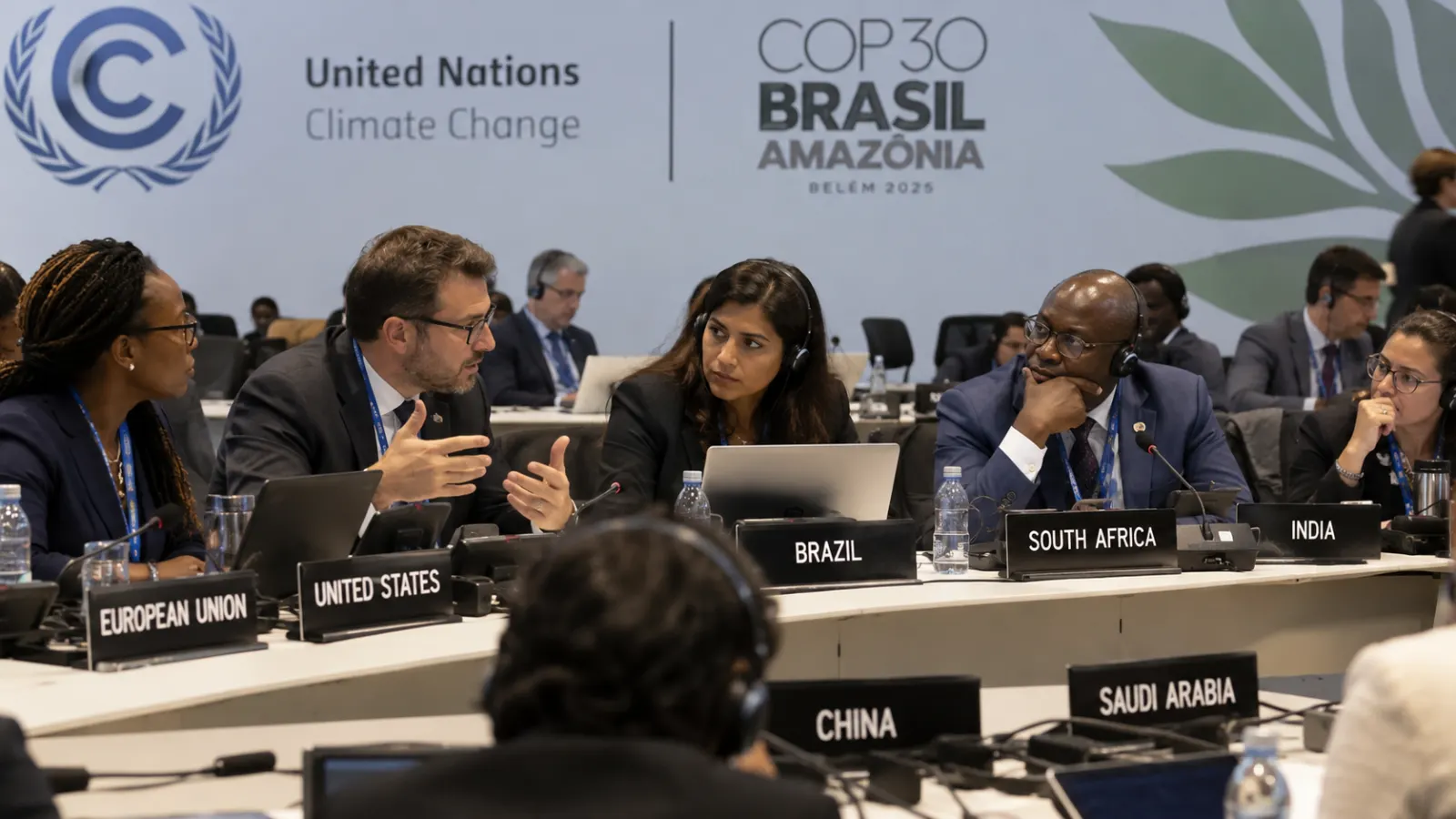
The Paris Agreement provides an international framework, but countries implement climate policy primarily through domestic institutions. Its nationally determined contributions, or NDCs, are the climate plans through which countries communicate what they intend to achieve. Article 4 requires each Party to prepare, communicate and maintain successive NDCs and to pursue domestic mitigation measures aimed at achieving them. Successive contributions are expected to represent progression over previous ones.
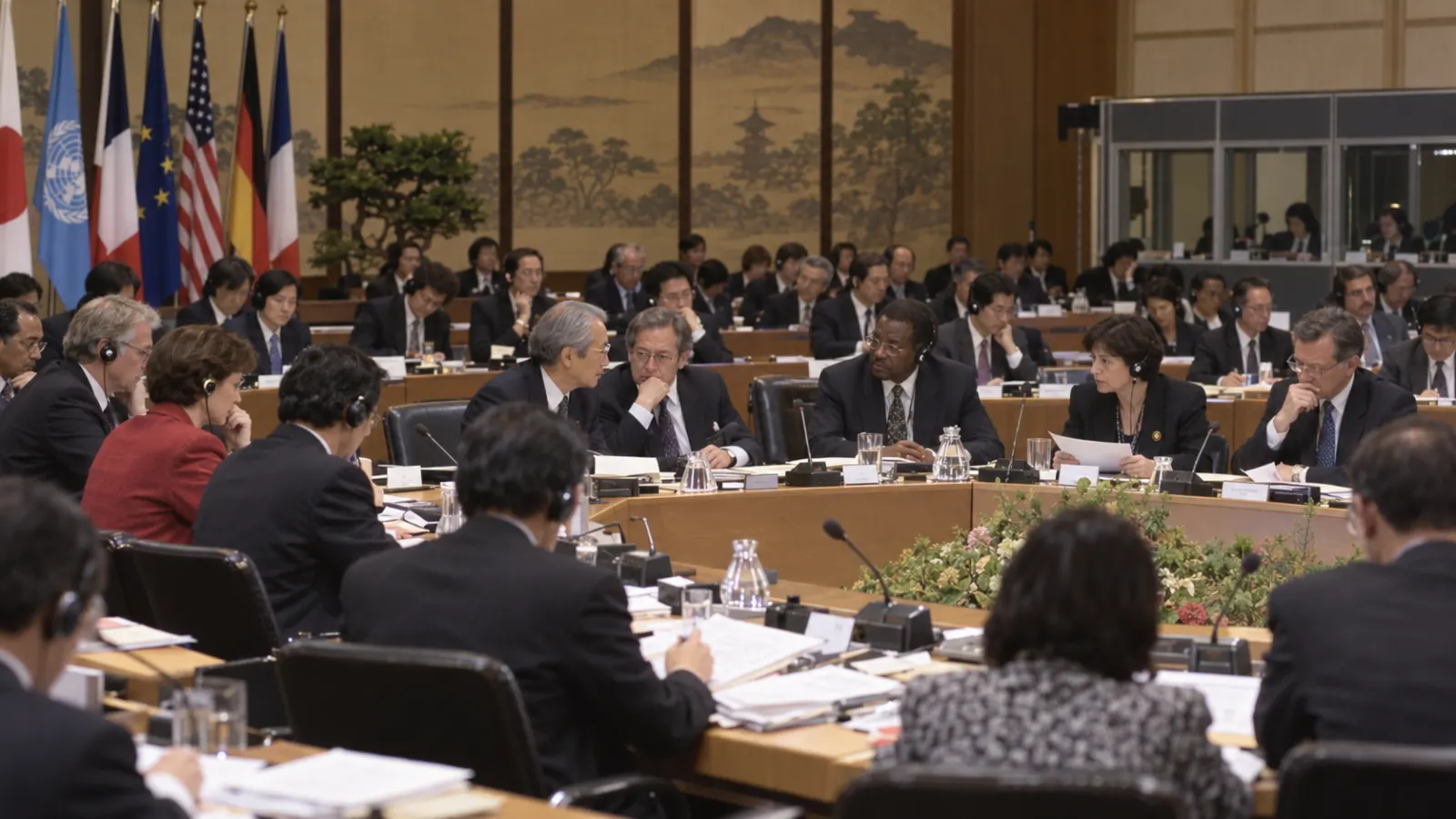
That distinction between commitment and implementation is fundamental. An international target does not directly retire a coal plant, change a building code, establish an electric-bus network or reduce methane leakage. Ministries, regulators, legislatures, state and local governments, utilities and public agencies have to translate broad targets into thousands of specific decisions.
The scale of that task is already visible in countries' reporting. The UNFCCC's 2025 synthesis of first Biennial Transparency Reports examined submissions representing roughly three-quarters of global greenhouse-gas emissions in 2020. Parties reported almost 5,000 planned, adopted or implemented mitigation policies and measures, spanning electricity, transport, buildings, industry, agriculture, forests and waste. Most reported measures still concerned the energy sector, including renewable power, electrification, grid upgrades, energy taxation, vehicle standards and efficiency improvements.
Climate policy is therefore better imagined as a portfolio than as a single instrument. A government may simultaneously strengthen a vehicle-efficiency rule, expand electricity transmission, subsidise heat pumps, regulate methane, finance public transport, restore forests and update industrial standards. Some measures reinforce one another; others can conflict.
The central implementation question is not whether a country has announced a climate target. It is whether the rest of government increasingly behaves as though that target matters.
Governments Change Markets Through Rules, Prices and Public Investment
Regulation is one of the clearest ways governments influence emissions. Building codes can require minimum energy performance. Appliance standards can remove inefficient products from the market. Vehicle rules can alter the efficiency or emissions profile of entire fleets. Governments can regulate methane leaks, industrial pollution, land clearing and power-sector emissions rather than relying entirely on voluntary action.
These rules matter because pollution creates costs beyond the company or consumer responsible for it. A firm that avoids investing in cleaner production may reduce its private costs while shifting part of the environmental burden onto the wider public. Regulation establishes minimum requirements that apply across a market rather than rewarding only organisations willing to act voluntarily.
But regulation is only as credible as the institutions enforcing it. A technically strong emissions standard can achieve little if monitoring is weak, permits are rarely inspected or penalties are routinely avoided. Climate governance therefore depends on capabilities that may sound bureaucratic but are environmentally consequential: technical staff, measurement systems, reliable inventories, courts, enforcement agencies and stable administrative procedures.
Governments also change incentives through taxation and subsidies. Carbon taxes and emissions-trading systems attach a financial cost to emissions, while tax credits, grants, guarantees and concessional finance can accelerate cleaner investment. Governments can influence vehicle purchases, industrial equipment, building renovation, renewable generation and research by changing the relative costs faced by households and businesses.
Yet price-based policy immediately raises distributional questions. Higher fuel or electricity costs can fall disproportionately on households that have little ability to change their behaviour. A worker living far from employment cannot instantly respond to higher petrol prices by using a train that does not exist. This is why climate pricing is usually more durable when governments simultaneously improve alternatives or use revenue to support affected households and communities.
Subsidies create the reverse problem. Public money can accelerate renewable energy, storage or cleaner manufacturing, but it can also reinforce high-emission systems. A government may announce ambitious climate goals while continuing to spend heavily on infrastructure or incentives that prolong fossil-fuel dependence.
Budget policy is therefore climate policy even when the budget document does not use the word “climate.”
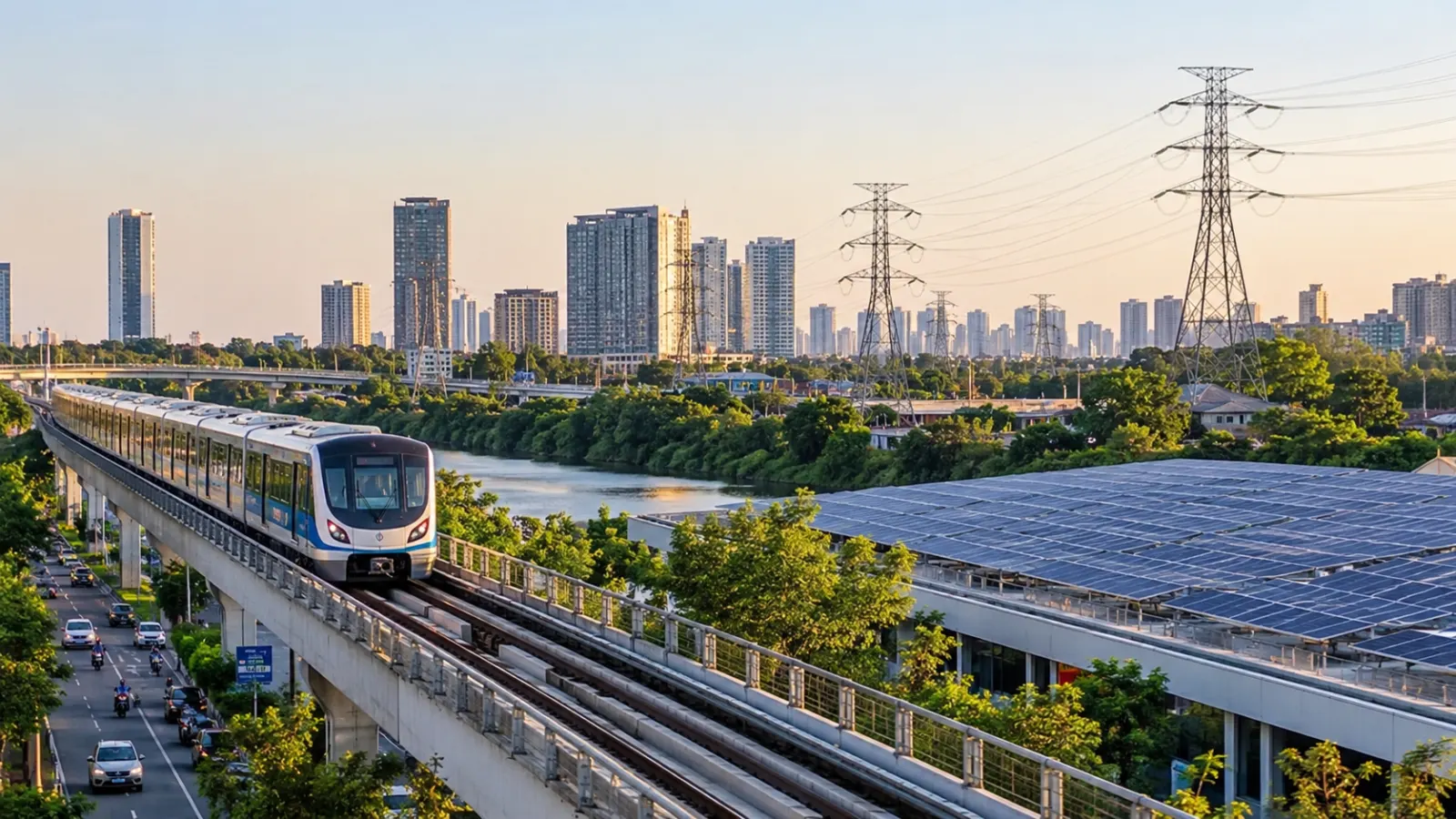
Public investment may matter even more because infrastructure determines which choices are physically possible. Electricity transmission affects how much renewable power can reach consumers. Public transport affects whether people can travel without relying on private vehicles. Building design affects energy demand for decades. Water systems, drainage, hospitals and urban green space influence whether communities can cope with heat, drought and floods.
The emissions effect of today's infrastructure can persist for far longer than the political term of the government approving it. That makes infrastructure one of the clearest examples of why climate policy requires a time horizon longer than the next election.
Climate Policy Also Means Preparing for Damage That Can No Longer Be Avoided
Government climate action is sometimes discussed almost entirely in terms of reducing greenhouse-gas emissions. That is only half the problem.
Even very rapid global mitigation cannot eliminate all climate impacts already emerging from past and present emissions. Governments therefore also have to manage adaptation: reducing vulnerability to heat, floods, drought, wildfire, sea-level rise, water shortages and changing health risks.
Many adaptation measures are classic public responsibilities. Meteorological services and early-warning systems protect entire populations. Local governments establish land-use rules and decide whether construction should continue in exposed areas. Public-health systems prepare for heat waves and disease risks. Water authorities manage reservoirs and supply networks. Governments design drainage, coastal defences, roads, hospitals and emergency-response systems.
The 2025 UNFCCC transparency synthesis shows that countries are already reporting adaptation and loss-and-damage measures across areas such as early-warning systems, infrastructure resilience, risk assessment and preparedness.
Adaptation also exposes difficult political choices because protection can never be allocated without consequences. A government may have to decide which coastline receives expensive defences, whether development should be prohibited in a floodplain or how households should be compensated when relocation becomes unavoidable.
These are not merely technical engineering questions. They involve property rights, public expenditure, social vulnerability and fairness.
A wealthy neighbourhood may be able to install private cooling or insurance while poorer communities depend more heavily on public protection. Agricultural workers may experience extreme heat differently from office workers. Informal settlements can face high flood exposure while having little influence over land-use decisions.
Climate adaptation therefore inevitably becomes part of social policy.
National Governments Cannot Act Alone
Climate policy is often described as though it originates from one national government, but many decisive powers sit elsewhere.
National governments usually determine international commitments, national taxation, energy frameworks, industrial policy and major public spending. States or provinces may regulate electricity markets, transport, land use or natural resources depending on the constitutional system. Municipal governments often control zoning, building permits, waste collection, local roads and public transit.
A national government can announce an ambitious renewable-energy target while transmission approval, local land disputes or permitting delays prevent projects from being built. A city can want compact, transit-oriented development while higher-level finance or road policies continue encouraging urban sprawl. Conversely, states and cities can sometimes move faster than national politics, test new approaches and demonstrate policies that are later adopted more widely.
This makes coordination a central but underappreciated climate function.
Governments need to clarify which institution is responsible for what, align planning and finance, share reliable data and prevent different ministries from pursuing mutually contradictory objectives. Transport ministries, finance ministries, energy regulators, local governments and environmental agencies cannot operate as though climate policy belongs only to an environment ministry.
This is one reason the strongest climate strategies gradually stop looking like separate “climate programmes.” Climate risk becomes incorporated into ordinary decisions about transport, housing, energy, agriculture, industrial development and public finance.
Good Climate Policy Requires Sequencing and Political Durability
A government can adopt the technically correct policy at the politically wrong time.
Suppose a city wants to reduce car dependence. Increasing parking charges and restricting vehicle access may eventually be sensible, but doing so before reliable public transport exists can impose high costs on people who have no practical alternative. Likewise, requiring industrial electrification is difficult if the power grid lacks capacity or reliability.
Effective climate policy therefore depends on sequencing. Cleaner alternatives frequently need to be available before governments can credibly restrict high-emission ones. Grid investment may need to precede large-scale electrification. Building standards may need to be accompanied by financing that allows owners to comply. Coal-region transition plans may need to begin before closures rather than after unemployment rises.
This does not mean every affected interest can be protected from every cost. Climate transition changes industries and investment patterns precisely because existing high-emission systems cannot continue indefinitely. But policies that ignore distributional effects may generate resistance strong enough to reverse the entire programme.
Durability matters because decarbonisation takes longer than one electoral cycle. A policy that exists for three years and disappears after an election may produce less investment than a somewhat less aggressive policy that survives for twenty years.
Governments therefore need to build credibility in two directions: investors need confidence that the broad policy direction will persist, while citizens need confidence that climate action will not arbitrarily impose costs on them without alternatives or protection.
Stable direction does not require inflexible policy. Governments should revise instruments when evidence shows they are ineffective or unnecessarily expensive. Long-term goals can remain consistent while implementation improves.
That is institutional learning rather than policy failure.
Transparency Turns Climate Promises Into Something That Can Be Tested
Governments can announce targets far more easily than they can deliver them.
This is why climate governance increasingly includes systems for measuring and publicly reporting what is happening. The Paris Agreement's Enhanced Transparency Framework requires regular reporting designed to make progress visible and comparable. Biennial Transparency Reports include information on emissions, progress toward NDCs, policies, adaptation and support.
The system is still developing. In July 2026, the Paris Agreement Implementation and Compliance Committee reported that 149 Parties had communicated the relevant new NDC submissions then under review, while compliance with mandatory reporting requirements under the Enhanced Transparency Framework had reached 105 Parties. The Committee also reported that 45 Parties had not yet communicated the latest NDC expected of them and 14 had not submitted all mandatory transparency information, although every Paris Agreement Party still maintained an applicable NDC in the public registry.
These numbers matter because they show that climate governance involves administrative compliance as well as political ambition.
Transparency does not guarantee that emissions will fall. A country can report accurately and still have an inadequate policy. But transparent inventories and progress reports make it harder to rely entirely on announcements. They can show whether emissions are actually declining, which sectors are lagging, whether policy measures have been implemented and where additional action is required.
Domestic accountability matters just as much. Legislatures, auditors, courts, researchers, journalists and citizens need access to enough information to evaluate government claims. Public budgets should reveal what is being funded. Major infrastructure projects should include credible assessments of climate risk. Agencies should publish performance data where possible.
Climate policy becomes more credible when independent observers can distinguish a functioning programme from an announcement.
Government Cannot Replace Markets or Citizens—It Shapes the Conditions Around Them
A strong role for government does not imply that public institutions should make every climate decision.
Most of the investment needed to transform energy, transport, industry and buildings will involve businesses, households, financial institutions and other private actors. Innovation often emerges from firms and research organisations. Consumers ultimately decide whether many products succeed.
Government's role is distinctive because it can alter the environment in which all these decisions occur.
Consider electric vehicles. A government can regulate vehicle emissions, fund charging networks, set building requirements for charging infrastructure, establish electricity-market rules, provide temporary purchase incentives and procure electric buses for public fleets. Manufacturers still have to develop competitive vehicles and consumers still decide whether to buy them, but government action can change whether an electric vehicle is practical and economically attractive.
The same logic applies to buildings. Asking households to reduce energy use has limited effect when buildings are badly insulated, landlords have weak incentives to invest and efficient equipment is unaffordable. Standards, financing and public programmes can change the structure of the decision rather than repeatedly demanding individual virtue.
Climate action is therefore not a contest between “government” and “individual responsibility.”
The two operate at different levels.
Individuals can make choices inside systems.
Governments can change the systems.
The Real Test of Climate Government Is Implementation
The role of government in climate action ultimately cannot be judged by the number of climate strategies, summit speeches or net-zero announcements it produces.
The test is whether governments can translate long-term objectives into durable changes in the real economy.
Are electricity grids being built quickly enough for cleaner generation and electrification? Are building standards actually enforced? Does public transport provide a realistic alternative to private vehicles? Are high-emission subsidies working against climate targets? Are vulnerable communities being protected from growing climate risks? Are industrial policies creating cleaner production rather than merely relocating emissions? Can citizens and legislatures see whether promised measures were actually implemented?
The first generation of climate politics focused heavily on setting targets. The next stage is increasingly about administrative capacity, finance, infrastructure and implementation. The UNFCCC's first transparency synthesis already shows thousands of climate policies being planned or implemented, while its 2026 compliance work demonstrates that governments are still building the systems required to report and deliver those commitments.
This is why climate action works best when it stops being treated as the isolated responsibility of an environment department.
Transport policy is climate policy.
Energy policy is climate policy.
Housing, industrial strategy, agriculture, taxation, procurement and disaster planning all influence either emissions or vulnerability.
Individuals, businesses and communities remain essential, but only governments possess the combination of regulatory authority, taxation powers, public budgets and democratic legitimacy needed to coordinate change across an entire economy.
Their central task is not to control every decision.
It is to make cleaner, safer and more resilient decisions increasingly possible, affordable and ordinary.
That is where climate promises become climate policy—and where climate policy either succeeds or fails.