Afforestation: Meaning, Benefits, Examples and Why the Right Land Matters
Afforestation means creating forest on land that historically has not been forested.
At first, the idea appears straightforward.
Find open land.
Plant trees.
Create a forest.
Store carbon.
Improve the environment.
But the ecological reality is much more complicated.
Open land is not automatically empty land.
A degraded mine site, abandoned farmland, native grassland, savanna, peatland and wetland can all appear “non-forest” on a map while performing completely different ecological functions.
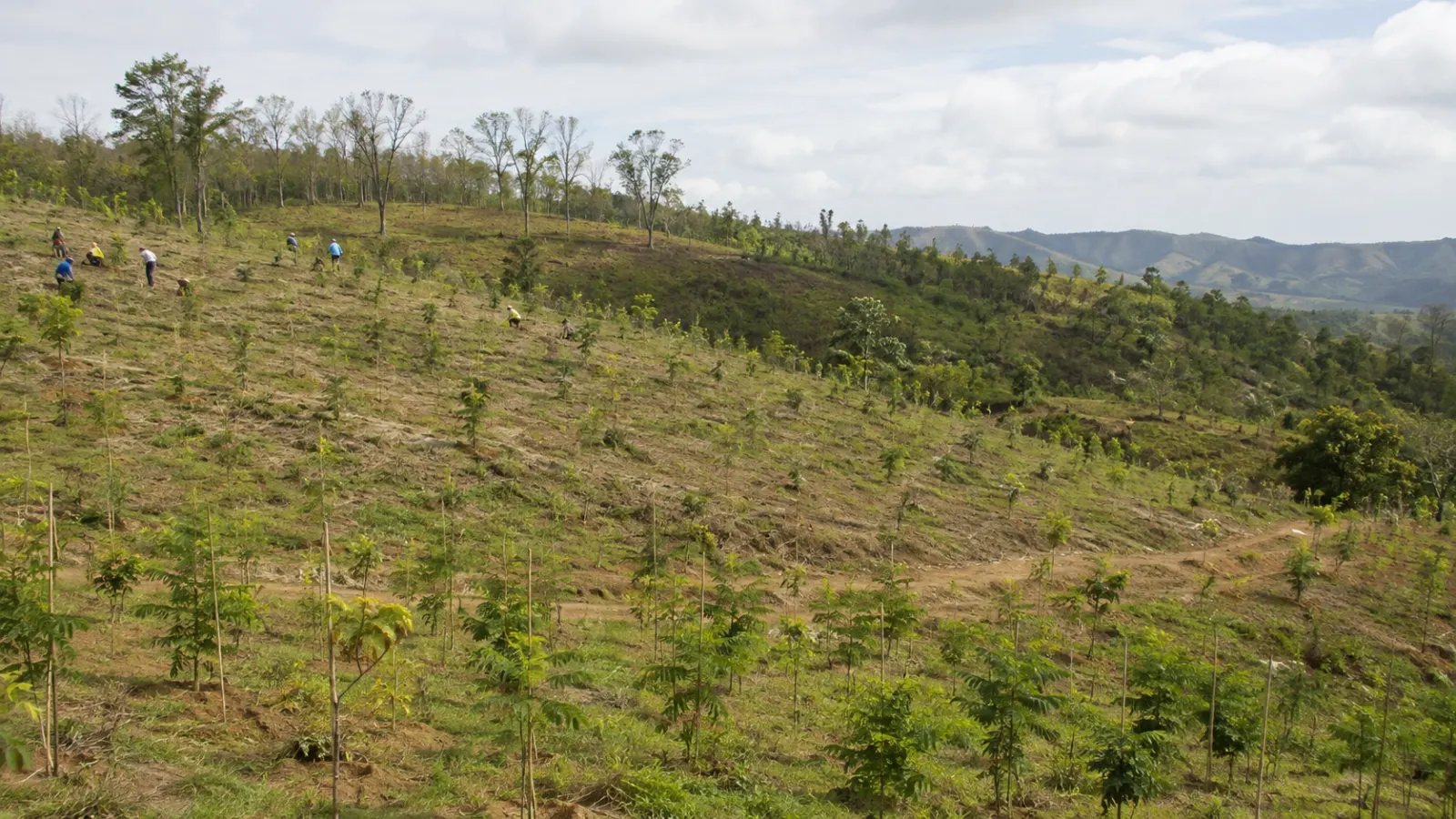
Planting trees on severely degraded land may improve soil, provide timber, store carbon and create habitat.
Planting the same trees across a naturally treeless grassland may destroy habitat that has existed for thousands of years.
That is why responsible afforestation begins with a question that sounds almost too simple:
Should this particular land become forest at all?
The answer determines whether afforestation becomes a climate and restoration solution—or simply another poorly planned land conversion.
Afforestation at a glance
| Question | Short answer |
|---|---|
| What is afforestation? | Converting historically non-forested land into forest. |
| Is afforestation the same as reforestation? | No. Reforestation returns forest to land that previously supported forest. |
| Is afforestation just tree planting? | Tree planting is a common method, but afforestation describes the land-use transition to forest rather than merely the act of planting. |
| Does afforestation help climate change? | It can increase carbon storage, but climate benefits depend on location, species, permanence and what land use is replaced. |
| Is every open area suitable for afforestation? | No. Native grasslands, savannas, wetlands and peatlands can be valuable ecosystems precisely because they are not forests. |
| Does afforestation improve biodiversity? | It can on degraded low-biodiversity land, but poorly located plantations can reduce biodiversity. |
| Does afforestation increase water supply? | Not necessarily. Trees can improve water quality and erosion control while reducing water yield in some catchments. |
| Are plantations and afforestation the same? | No. Afforestation describes land-use change; a plantation describes one type of planted and managed forest. |
| Should native species be used? | Native and locally appropriate species are often preferable for ecological objectives, while species choice depends on the project's purpose and site conditions. |
| Can afforestation harm food security? | Large-scale conversion of productive agricultural or grazing land can create food and livelihood trade-offs. |
| How should success be measured? | Survival, carbon, biodiversity, soil, water, livelihoods and long-term forest persistence—not only hectares planted. |
What Is Afforestation?
The IPCC defines afforestation as:
the conversion to forest of land that historically has not contained forests.
It defines reforestation separately as conversion to forest of land that previously contained forest but was converted to another use.
That distinction is fundamental.
Afforestation creates a new forest land use.
Reforestation attempts to bring forest back.
The terminology used by forestry agencies and carbon-accounting systems can vary in technical details, especially over how far back land-use history should be considered.
But the practical distinction remains useful:
Afforestation = creating forest where forest was not historically the ecosystem.
Reforestation = bringing forest back where forest previously existed.
Afforestation vs Reforestation
| Afforestation | Reforestation |
|---|---|
| Establishes forest on historically non-forested land | Restores forest on previously forested land |
| Changes the ecosystem or land-use type | Attempts to return a previous forest land use |
| Requires careful assessment of what open ecosystem is being replaced | Usually has a clearer forest-restoration reference |
| May be used for timber, carbon, soil protection or land rehabilitation | Often used after clearing, degradation or land conversion |
| Can create substantial ecological trade-offs when badly located | Can also be poorly designed, but generally restores rather than creates forest cover |
| May convert agricultural, grazing or degraded land | Often converts former forest land back toward forest |
Neither is automatically better.
The appropriate intervention depends on land history and ecological context.
If a forest was recently cleared, reforestation may be appropriate.
If a native grassland has never been forest, planting dense tree cover simply because the site appears open may be ecologically harmful.
Why the Difference Matters
The distinction is not merely vocabulary.
It changes the environmental question.
Reforestation asks:
How can forest be returned?
Afforestation first has to ask:
Should forest be created here?
That additional question matters because the ecosystem being replaced may itself be valuable.
A good afforestation project must therefore evaluate both:
the benefits of the future forest
and
the value of the existing landscape.
Afforestation Is Not the Same as a Plantation
These terms also get confused.
Afforestation describes a land-use transition.
A plantation describes a way that a forest may be established and managed.
FAO defines planted forests broadly as forests predominantly composed of trees established through planting or deliberate seeding. Well-designed planted forests can supply timber and other products while providing services such as carbon sequestration, degraded-land rehabilitation and watershed functions.
An afforestation project could therefore create:
- a commercial plantation,
- a mixed-species woodland,
- a protective forest,
- a community forest,
- a biodiversity-oriented planted forest,
- or another form of forest depending on the project's objectives and applicable forest definitions.
The environmental outcomes can be dramatically different.
Plantation vs Natural Forest
A commercial plantation may be useful.
It can efficiently supply:
- timber,
- pulp,
- fibre,
- fuelwood,
- or industrial raw material.
That can have economic value and may reduce harvesting pressure elsewhere when managed sustainably.
But a plantation composed largely of one fast-growing species should not automatically be presented as ecologically equivalent to a complex natural forest.
Natural forests may contain:
- multiple tree species,
- trees of different ages,
- understory vegetation,
- canopy gaps,
- dead wood,
- fungi,
- insects,
- specialised wildlife,
- and long-developed soils.
Forest area alone therefore does not tell us everything about forest quality.
Why Countries Use Afforestation
Afforestation can serve several legitimate purposes.
Governments, communities and landowners may establish forests to:
- store carbon,
- produce timber,
- control erosion,
- reduce wind erosion,
- rehabilitate damaged land,
- create shelterbelts,
- provide fuelwood,
- improve landscape connectivity,
- produce non-timber forest products,
- generate employment,
- or increase forest area.
UNCCD notes that establishing tree cover on land prone to wind erosion can reduce surface wind speeds, retain moisture and stabilise soil through root systems. It also stresses that successful projects need to consider climate, soil, water, community participation, species choice and maintenance costs.
Afforestation therefore has legitimate uses.
The problem arises when tree cover itself becomes the only objective.
Afforestation and Climate Change
One of the strongest arguments for afforestation is climate mitigation.
Trees remove carbon dioxide from the atmosphere through photosynthesis.
Some of that carbon becomes stored in:
- trunks,
- branches,
- roots,
- leaves,
- forest litter,
- dead wood,
- and soils.
Creating new forest can therefore increase terrestrial carbon stocks.
The IPCC considers afforestation and reforestation important land-based mitigation options.
But calculating the climate benefit is much more difficult than multiplying the number of trees planted.
Carbon Storage Takes Time
A seedling contains very little carbon.
As trees grow, carbon stocks increase.
The rate depends on factors including:
- species,
- rainfall,
- temperature,
- soil,
- management,
- planting density,
- disturbance,
- and forest age.
A young forest therefore does not instantly compensate for emissions released elsewhere.
The carbon benefit develops over time.
And it lasts only while carbon remains stored.
Permanence Matters
Suppose an afforestation project grows successfully for 30 years.
Then the forest is:
- burned,
- cleared,
- harvested without regeneration,
- killed by severe drought,
- or destroyed by pests.
Part of its stored carbon may return to the atmosphere.
Climate value therefore depends partly on permanence.
A serious climate-oriented afforestation project needs plans for:
- fire,
- drought,
- pests,
- illegal clearing,
- harvesting,
- future land use,
- and climate change.
Planting is one day.
Climate mitigation is a multi-decade commitment.
Afforestation Does Not Replace Emissions Reduction
Tree planting is sometimes promoted as though enough land could simply absorb continued fossil-fuel emissions.
That is unrealistic.
Afforestation can contribute to climate mitigation.
It cannot substitute for deep reductions in greenhouse-gas emissions.
There are several reasons.
Land is finite.
Forests can burn.
Carbon storage is reversible.
Trees eventually mature and their rate of net carbon accumulation changes.
And large-scale afforestation itself can compete with:
- agriculture,
- biodiversity,
- water,
- and livelihoods.
The IPCC warns specifically that large-scale land conversion for afforestation can increase risks to biodiversity, water and food security.
The Climate Effect Is Not Only About Carbon
Another important issue is often missing from simple afforestation explanations.
Changing land cover changes the physical surface of Earth.
A forest differs from grassland or snow-covered open land in:
- reflectivity,
- evapotranspiration,
- surface roughness,
- and energy exchange.
One important concept is albedo.
What Is Albedo?
Albedo describes how much incoming sunlight a surface reflects.
Bright surfaces reflect more.
Dark surfaces absorb more.
Snow has relatively high albedo.
A dark forest canopy absorbs much more solar energy.
This means forest expansion can affect climate in two directions:
trees remove CO₂, producing a cooling influence;
but
darker vegetation can absorb more sunlight, producing a warming influence in some locations.
Why Afforestation at High Latitudes Is Different
The IPCC notes that in tropical regions, carbon sequestration and enhanced evapotranspiration can provide substantial cooling benefits.
At high latitudes and in snow-covered regions, however, replacing bright open land with dark forest can lower surface albedo enough to counteract some of the climate benefit from carbon storage.
This does not mean northern forests are environmentally undesirable.
It means:
one hectare of new forest does not have identical climate effects everywhere on Earth.
Location matters.
Afforestation and Biodiversity
Afforestation can benefit biodiversity when it rehabilitates:
- badly degraded agricultural land,
- mined areas,
- severely eroded land,
- or other landscapes with low current ecological value.
A mixed forest can create:
- nesting habitat,
- shade,
- food resources,
- movement corridors,
- and new ecological niches.
But afforestation can also reduce biodiversity when it replaces a valuable open ecosystem.
That is why “more trees = more biodiversity” is not a universal rule.
Native Grasslands Are Not Failed Forests
This is one of the most important ecological corrections to simplistic tree-planting campaigns.
Some landscapes are naturally open.
Examples include many:
- grasslands,
- savannas,
- shrublands,
- wetlands,
- peatlands,
- and tundra ecosystems.
They may remain open because of:
- climate,
- fire,
- soils,
- grazing,
- hydrology,
- and long evolutionary history.
They are not necessarily forests waiting to return.
Planting dense trees across them can destroy the very ecosystem that conservation should protect.
Grasslands Have Their Own Biodiversity
Natural grasslands can support highly specialised:
- grasses,
- wildflowers,
- insects,
- birds,
- mammals,
- reptiles,
- and soil communities.
Species adapted to open landscapes may disappear when tree canopy closes.
The Convention on Biological Diversity has advised that afforestation and related climate-mitigation projects should preferentially convert land of low biodiversity value, particularly degraded land, use locally appropriate native species where feasible, avoid invasive alien species and consider landscape connectivity.
This gives a more defensible ecological principle:
Do not plant forest over valuable ecosystems merely because they lack trees.
Peatlands Need Particular Caution
Peatlands are another important example.
Some peatlands are naturally treeless or sparsely wooded.
They can store very large amounts of carbon in waterlogged soil.
Draining or altering them to establish trees can damage:
- hydrology,
- biodiversity,
- and long-term soil carbon storage.
A climate project that gains carbon in tree trunks while losing ancient soil carbon would be a poor trade.
This is why ecosystem restoration increasingly focuses on the right ecosystem, not simply maximum woody biomass.
Afforestation and Water
Trees interact with water in many beneficial ways.
They can:
- reduce soil erosion,
- trap sediment,
- influence infiltration,
- protect slopes,
- improve water quality,
- and alter flood responses.
FAO emphasises the major role forests play in streamflow regulation, erosion reduction, groundwater processes and atmospheric water recycling.
But that does not mean:
more forest always means more available water.
Trees Also Use Water
Trees move water from soil into the atmosphere through transpiration.
Rainfall intercepted by leaves can also evaporate.
When dense tree cover replaces grass or low vegetation, total evapotranspiration may increase.
In some catchments, this can reduce:
- streamflow,
- water yield,
- or groundwater recharge.
The size of the effect depends on:
- rainfall,
- climate,
- species,
- forest density,
- soil,
- topography,
- and scale.
Afforestation Can Improve Water Quality While Reducing Water Quantity
This apparent contradiction is crucial.
A forest can simultaneously:
reduce erosion and sediment
while
reducing downstream water yield.
Both can be true.
The first concerns water quality and landscape regulation.
The second concerns water quantity.
Good watershed planning therefore cannot rely on the slogan:
“Plant trees to create more water.”
The correct question is:
How will this particular forest affect this particular catchment?
Does Afforestation Increase Rainfall?
Trees participate in atmospheric water cycling through evapotranspiration.
Large forests can influence regional moisture recycling and rainfall patterns.
But it is misleading to say:
“Planting trees here will automatically increase rainfall here.”
Rainfall depends on complex interactions involving:
- atmospheric circulation,
- ocean conditions,
- land cover,
- temperature,
- topography,
- and moisture transport.
Small local afforestation projects should not be marketed with guaranteed rainfall claims.
Afforestation and Soil
On genuinely degraded land, afforestation can help rebuild soil function.
Tree roots can:
- stabilise slopes,
- reduce wind erosion,
- reduce water erosion,
- and help bind soil.
Leaf litter can add organic matter.
Shade can change soil temperature and moisture.
Roots and microorganisms can gradually alter soil structure.
These benefits are particularly relevant to:
- erosion-prone slopes,
- degraded farms,
- mine rehabilitation,
- and desertification-control programmes.
But even here, species choice matters.
A tree poorly adapted to the site may fail to establish or create new ecological problems.
Afforestation and Desertification
Tree belts and woodland can help reduce wind erosion in appropriate dryland settings.
Shelterbelts may protect:
- crops,
- soil,
- settlements,
- or infrastructure
from wind.
But drylands require especially careful water planning.
Trees cannot grow without water.
Large-scale planting of unsuitable high-water-demand species can reduce soil moisture or groundwater and undermine the purpose of the project.
UNCCD therefore stresses site characteristics, aridity, water conditions and species selection in afforestation and reforestation planning.
Where Afforestation Can Make Sense
Afforestation is most defensible where there is a clear ecological, economic or protective reason for creating new forest.
Potential examples include:
Severely degraded land
Land where previous use has substantially damaged soil and ecological function may benefit from suitable tree cover.
Abandoned agricultural land
Where agriculture has ceased and local ecology supports forest establishment, long-term woodland may provide useful new functions.
Mine rehabilitation
Some post-mining landscapes may require extensive soil treatment followed by appropriate vegetation establishment.
Erosion-prone slopes
Trees and other vegetation can help stabilise soil where conditions are suitable.
Shelterbelts
Rows or blocks of trees can protect farms and settlements from wind.
Production forestry
Land may deliberately be converted to planted forest for timber or fibre.
Landscape connectivity
Strategically located woodland can sometimes improve connectivity between existing forest habitats, provided valuable open ecosystems are not sacrificed.
The important phrase is:
where conditions are suitable.
Afforestation Methods
Afforestation is a land-use outcome rather than one single technique.
In practice, projects may use combinations of:
- planting seedlings,
- direct seeding,
- facilitating woody colonisation,
- enrichment planting,
- soil preparation,
- irrigation during establishment,
- grazing control,
- and long-term forest management.
The method should respond to the site rather than the campaign target.
Seedling Planting
Seedlings raised in nurseries can provide control over:
- species,
- spacing,
- density,
- and planting location.
But seedlings require:
- labour,
- transport,
- planting,
- protection,
- and often maintenance.
Poorly handled seedlings can suffer transplant shock or die during drought.
Direct Seeding
Seeds can sometimes be placed directly into the landscape.
This may reduce nursery and transportation requirements.
But success can be affected by:
- seed predation,
- drought,
- germination conditions,
- competing vegetation,
- and soil conditions.
The cheapest planting method is not automatically the cheapest successful method.
Species Choice Changes Everything
Selecting species is one of the most consequential decisions in afforestation.
Managers need to consider:
- climate,
- rainfall,
- soil,
- elevation,
- expected future climate,
- growth rate,
- invasiveness,
- fire behaviour,
- water demand,
- biodiversity value,
- disease,
- and economic objectives.
No species is simply “good for afforestation” everywhere.
Native Species
Native species can provide major advantages when ecological restoration or biodiversity is important.
They may have established relationships with:
- insects,
- birds,
- mammals,
- fungi,
- pollinators,
- and soil organisms.
The CBD recommends considering local and acclimated native species whenever feasible in biodiversity-sensitive afforestation and restoration projects.
But native status alone does not guarantee success.
A native tree still needs to be appropriate to the site's soil, water and future climate.
Exotic Species
Introduced species may be selected because they:
- grow rapidly,
- produce valuable timber,
- tolerate degraded soil,
- or supply fuelwood efficiently.
That can provide legitimate economic benefits.
The risks arise when an introduced species:
- becomes invasive,
- consumes excessive water,
- increases fire risk,
- supports little local biodiversity,
- or escapes beyond the intended plantation.
Species should be evaluated individually.
Monoculture vs Mixed Forest
A monoculture plantation is dominated by one species.
This can simplify:
- harvesting,
- processing,
- management,
- and timber production.
But ecological disadvantages can include:
- lower habitat diversity,
- simplified structure,
- potentially greater vulnerability to specific pests or diseases,
- and lower resilience under some disturbances.
Mixed-species forests may provide more diverse ecological functions.
But simply planting many species does not automatically create a functioning ecosystem.
Site suitability and long-term management remain essential.
Afforestation and Fire Risk
Fire is another factor frequently omitted from tree-planting plans.
Some tree species:
- accumulate flammable material,
- contain volatile oils,
- or create dense fuel loads.
Planting choices can therefore alter fire behaviour.
Climate change is increasing wildfire risk in many regions, making this increasingly important.
Afforestation planning may need:
- fuel management,
- firebreaks,
- appropriate spacing,
- species diversity,
- controlled access,
- and emergency planning.
A carbon forest that repeatedly burns is not performing as intended.
Afforestation and Food Security
Land used for forest cannot simultaneously provide every other land use.
Large-scale afforestation may compete with:
- crops,
- livestock,
- settlements,
- or future agricultural expansion.
If productive farmland is converted to forest, food production may decline locally.
Agricultural production may then move elsewhere, creating new land-use pressure.
This is one reason the IPCC warns that large-scale afforestation can create trade-offs involving food security.
Leakage: When Environmental Pressure Simply Moves
Imagine converting a major grazing area into forest.
Livestock production does not disappear.
Farmers may instead clear or intensify land elsewhere.
The forest project looks successful inside its boundary while environmental pressure moves outside it.
This is known in carbon and land-use accounting as leakage.
Projects should therefore be evaluated at a larger landscape scale.
A local environmental gain can coexist with a displaced environmental loss.
Afforestation and Livelihoods
Land that appears vacant on satellite imagery may support real livelihoods.
People may depend on it for:
- grazing,
- fuel,
- medicinal plants,
- wild foods,
- seasonal farming,
- hunting,
- cultural practices,
- or access routes.
Afforestation can create new economic opportunities.
It can also remove existing ones.
The distribution of costs and benefits therefore matters.
Land Rights Can Decide Whether a Forest Survives
A technically perfect plantation may fail politically.
Questions include:
Who owns the land?
Who previously used it?
Who owns the trees?
Who receives timber income?
Who receives carbon payments?
Who may collect fuelwood?
Who is responsible for fire prevention?
What happens after project funding ends?
The IPCC emphasises inclusive decision-making with local communities and Indigenous Peoples as integral to successful ecosystem adaptation and restoration.
Afforestation is therefore partly a governance project.
Afforestation and Indigenous Peoples
Large climate and forestry projects can create particular risks where customary land rights are weakly recognised.
Land described by an outside institution as:
unused
or
degraded
may actually be:
- grazing territory,
- ancestral land,
- sacred landscape,
- seasonal-use land,
- or community-managed commons.
Carbon goals do not automatically override those rights.
Credible projects need:
- transparent tenure,
- meaningful participation,
- fair benefit sharing,
- and appropriate consent processes.
Afforestation vs Agroforestry
Agroforestry is another concept that should not be confused with afforestation.
Agroforestry intentionally combines trees with:
- crops,
- livestock,
- or both.
Its objective is not necessarily to convert the entire land unit into forest.
A farmer may retain agricultural production while using trees for:
- shade,
- fodder,
- fruit,
- wind protection,
- timber,
- soil improvement,
- or carbon storage.
Agroforestry can therefore be a useful alternative where creating closed forest would conflict unnecessarily with food production.
Afforestation vs Rewilding
Rewilding is also different.
Afforestation specifically involves conversion toward forest.
Rewilding is a broader conservation approach intended to restore ecological processes, often with less intensive long-term human control.
A rewilded landscape may become forest.
It may also remain:
- grassland,
- wetland,
- scrub,
- or another ecosystem.
Again, ecological restoration should not assume every healthy landscape needs tree canopy.
Afforestation and Carbon Offsets
New forests are often used in carbon-credit projects.
The basic idea is:
trees grow → atmospheric CO₂ is removed → carbon credit is generated.
But credible forest-carbon accounting must answer several difficult questions.
Additionality
Would the forest have been created anyway?
If yes, claiming the entire carbon gain as a project benefit is questionable.
Permanence
How long will the forest remain?
Leakage
Did another activity move elsewhere because the project occupied this land?
Baseline
What would have happened without the project?
Measurement
How accurately are tree and soil carbon stocks measured?
Reversal
What happens if wildfire or clearing releases the carbon?
Land rights
Who owns the carbon claim?
Afforestation can support legitimate carbon removal.
But a photograph of seedlings is not sufficient evidence for a credible carbon credit.
Afforestation and the Carbon Opportunity Cost of Land
There is another subtle issue.
Land could often be used in several ways.
Suppose a site would naturally develop into native woodland over time.
Planting a fast-growing commercial plantation may store carbon rapidly initially.
But another land use might produce better long-term:
- biodiversity,
- soil,
- water,
- or carbon outcomes.
Carbon accounting therefore needs to compare the project not simply with bare land, but with the realistic alternative future of the site.
Does Afforestation Always Cool the Planet?
No single yes-or-no answer works globally.
Afforestation can cool climate by removing atmospheric CO₂.
But its total climate influence also depends on:
- albedo,
- evapotranspiration,
- snow cover,
- forest type,
- latitude,
- and atmospheric effects.
In many tropical settings, forest establishment can provide strong climate benefits.
At higher latitudes, reduced snow reflectivity can offset part of the carbon benefit.
The safest conclusion is:
afforestation is a climate tool whose effectiveness depends strongly on location and design.
How Long Does Afforestation Take?
There is no universal timeline.
A plantation may become visibly wooded within a few years.
That does not mean a mature forest has formed.
Different outcomes develop at different speeds.
Tree cover
Can establish relatively quickly under favourable conditions.
Timber
May require years or decades depending on species and product.
Carbon
Accumulates as trees and soils develop.
Wildlife
Some species may arrive quickly; forest specialists may require mature habitat.
Soil development
Can take decades.
Complex forest structure
May take many decades or longer.
Afforestation should therefore be evaluated on forest time, not only project-launch time.
How Should Afforestation Success Be Measured?
Planting figures are inputs.
They are not outcomes.
A useful monitoring framework can include:
Tree survival
How many trees remain alive after several years?
Growth
Are surviving trees developing at expected rates?
Species composition
Are intended species succeeding?
Biodiversity
What happened to plants, insects, birds and other wildlife?
Carbon
How much additional carbon is being stored?
Water
Did water quantity or quality change?
Soil
Did erosion, organic matter or soil condition improve?
Fire
Has risk increased or decreased?
Livelihoods
Are local communities receiving promised benefits?
Permanence
Is the land likely to remain forest?
Only then can an afforestation project be judged properly.
Hectares Can Be a Misleading Success Metric
Governments often announce:
“100,000 hectares afforested.”
But that does not tell readers:
- whether trees survived,
- whether the site was suitable,
- what ecosystem was replaced,
- whether the forest is diverse,
- whether water availability changed,
- or whether local people supported the project.
A hectare statistic is useful.
It is not sufficient.
Common Benefits of Afforestation
When well planned, afforestation may provide:
| Benefit | Possible contribution |
|---|---|
| Carbon storage | Removes atmospheric CO₂ as trees grow |
| Timber and fibre | Creates renewable forest products |
| Soil protection | Roots and vegetation can reduce erosion |
| Wind protection | Shelterbelts can reduce wind speeds |
| Land rehabilitation | Trees can help recover some degraded sites |
| Biodiversity | Appropriate mixed forests can create habitat |
| Employment | Nurseries, planting and management create work |
| Water quality | Forest cover can reduce sediment in some watersheds |
| Landscape connectivity | Strategic planting may connect other wooded habitats |
| Local climate | Shade and evapotranspiration can affect microclimate |
These benefits are potential outcomes.
They are not guaranteed simply because trees were planted.
Potential Disadvantages of Afforestation
Poorly planned afforestation can cause:
Biodiversity loss
If valuable grassland, savanna, wetland or peatland is converted.
Water loss
If high-water-demand forests are established in dry catchments.
Food competition
If productive agricultural land is converted at large scale.
Land conflict
If customary or community rights are ignored.
Invasive species
If introduced trees spread beyond the plantation.
Fire risk
If plantation structure or species increase fuel hazards.
Monoculture vulnerability
If ecological complexity is sacrificed for uniform production.
Carbon reversal
If forests burn or are cleared.
Climate trade-offs
Including altered albedo in snow-covered regions.
Economic failure
If planting and maintenance costs exceed realistic returns.
These are arguments for better design—not for abandoning afforestation entirely.
Afforestation Can Become Greenwashing
Tree planting is attractive in corporate sustainability campaigns because it produces simple numbers.
One million trees planted.
Ten thousand hectares restored.
Carbon neutral through forests.
Those claims deserve scrutiny.
Ask:
Where were the trees planted?
What ecosystem was there first?
What species were used?
How many survived?
Who owns the land?
How long will the forest remain?
Was existing forest destroyed elsewhere?
Is the claimed carbon additional?
A campaign can plant real trees and still exaggerate its environmental value.
What Makes a Good Afforestation Project?
A serious project should begin before seedlings are ordered.
Step 1: Determine land history
Was the landscape historically forested?
If yes, the project may actually be reforestation.
Step 2: Identify the existing ecosystem
Is the site degraded—or is it valuable natural grassland, savanna, wetland or peatland?
Step 3: Define the objective
Is the goal:
- timber,
- carbon,
- erosion control,
- biodiversity,
- rehabilitation,
- or community livelihood?
Step 4: Assess water
How much water will the future forest use?
Step 5: Choose appropriate species
Consider ecology, climate, invasiveness and purpose.
Step 6: Assess future climate
Will the chosen species survive expected heat, drought or fire conditions?
Step 7: Resolve land rights
Who owns and uses the site?
Step 8: Plan maintenance
Who protects seedlings after planting?
Step 9: Plan monitoring
What outcomes will be measured?
Step 10: Plan the forest's long-term future
Who manages it after the initial project ends?
The Right Tree, Right Place, Right Purpose Principle
The strongest afforestation strategy can be summarised as:
right tree,
right place,
right purpose,
right people,
right timeframe.
A fast-growing species selected for timber may be appropriate in one landscape and disastrous in another.
A biodiversity-oriented woodland may work well on degraded farmland but damage a native prairie.
A shelterbelt may improve farming without requiring an entire agricultural district to become forest.
Good afforestation is therefore not about maximising tree numbers.
It is about selecting the land-use change that produces the best long-term outcome.
Examples of Afforestation Approaches
| Land situation | Potential approach |
|---|---|
| Severely eroded former agricultural land | Protective mixed woodland where locally appropriate |
| Post-mining degraded land | Soil rehabilitation followed by suitable planted forest |
| Wind-eroded farmland | Shelterbelts rather than converting the whole farm |
| Land intended for timber production | Managed planted forest |
| Degraded peri-urban land | Multipurpose woodland where ecology and water permit |
| Farm requiring shade and fodder | Agroforestry may be better than full afforestation |
| Native grassland | Usually protect grassland rather than establish dense forest |
| Naturally treeless peatland | Protect or restore peatland hydrology, not automatically plant trees |
| Dry water-stressed catchment | Detailed hydrological assessment before tree expansion |
The table illustrates the central principle:
not every environmental problem requires the same tree-planting solution.
Ten Principles for Better Afforestation
A well-designed programme should generally:
- Establish forest only where forest is ecologically appropriate.
- Avoid conversion of valuable natural grasslands, wetlands, savannas and peatlands.
- Prefer genuinely degraded or low-biodiversity land where practical.
- Choose appropriate species and avoid invasive trees.
- Consider carbon and biodiversity together.
- Assess water before large-scale planting.
- Avoid unnecessary competition with food production.
- Respect community and Indigenous land rights.
- Plan for wildfire, drought and future climate.
- Measure long-term outcomes instead of only planting totals.
Frequently Asked Questions
What is afforestation?
Afforestation is the conversion to forest of land that historically has not contained forest.
What is afforestation in simple words?
It means creating a new forest on land that was previously non-forest.
What is the difference between afforestation and reforestation?
Afforestation creates forest on historically non-forested land. Reforestation returns forest to land that previously contained forest.
What is an example of afforestation?
Establishing woodland on severely degraded former agricultural land that historically lacked forest under the applicable definition can be an example.
Why is afforestation important?
Afforestation can store carbon, produce timber, reduce erosion, rehabilitate degraded land and provide other ecosystem or economic benefits when correctly designed.
What are the main benefits of afforestation?
Potential benefits include carbon sequestration, soil protection, timber production, wind protection, habitat creation, jobs and rehabilitation of degraded landscapes.
What are the disadvantages of afforestation?
Possible disadvantages include biodiversity loss, reduced water yield, food-land competition, invasive species, fire risk, land conflicts and carbon reversals.
Is afforestation good for climate change?
It can help remove carbon dioxide from the atmosphere, but total climate benefit depends on location, forest type, permanence, albedo and what land use is replaced.
Does afforestation increase rainfall?
Forests can influence atmospheric moisture and regional water cycles, but local tree planting does not guarantee increased rainfall.
Does afforestation reduce water availability?
It can in some places. Trees use water, and dense forest expansion may reduce streamflow or groundwater recharge in certain catchments.
Is afforestation good for biodiversity?
It can create habitat when established on degraded low-biodiversity land. It can damage biodiversity when native open ecosystems are converted to forest.
Why should trees not always be planted on grasslands?
Many grasslands are natural ecosystems containing specialised species and ecological processes. Converting them to forest can cause biodiversity loss.
Is a plantation an example of afforestation?
It can be if the plantation establishes forest on historically non-forested land. Plantations can also be created through reforestation.
Is afforestation the same as forest restoration?
No. Forest restoration generally aims to recover the integrity of an existing or former forest ecosystem. Afforestation creates forest where forest historically did not occur.
Is afforestation the same as agroforestry?
No. Agroforestry integrates trees with crops or livestock and may retain agriculture as the main land use.
Can afforestation help prevent soil erosion?
Yes. Appropriate tree and vegetation cover can reduce wind and water erosion and stabilise soil in suitable landscapes.
Can afforestation cause wildfires?
Afforestation does not automatically cause wildfire, but species selection, density, accumulated fuel and climate can influence fire risk.
How long does afforestation take?
Tree cover may establish within years, while development of mature forest structure, soil processes and ecological functions can take decades or longer.
How is successful afforestation measured?
Success can include tree survival, growth, carbon storage, biodiversity, soil condition, water impacts, economic outcomes, community benefits and forest permanence.
Is planting more trees always good?
No. Planting trees in the wrong ecosystem, with the wrong species or without considering water and communities can produce environmental harm.
Which land is best for afforestation?
There is no universal answer. Genuinely degraded, low-biodiversity land that can sustainably support forest and does not create major food, water or rights conflicts may be suitable.
Why Afforestation Matters
Afforestation can be valuable.
Humanity needs:
- more sustainable timber,
- degraded-land rehabilitation,
- carbon removal,
- soil protection,
- and resilient landscapes.
Creating new forests can contribute to those goals.
But afforestation is unusual among popular environmental solutions because the visible action—planting trees—is much simpler than the environmental decision behind it.
The real decision is not:
“Should we plant trees?”
It is:
“What ecosystem should exist on this land?”
If the answer is forest, then the next questions begin:
Which forest?
Which species?
How much water will it use?
What carbon will it store?
What biodiversity will it support?
Who currently uses the land?
Who will benefit?
Who will maintain it?
Will the trees survive future drought and fire?
Will the forest still exist 50 years from now?
A good afforestation project can transform genuinely degraded land into productive, resilient forest.
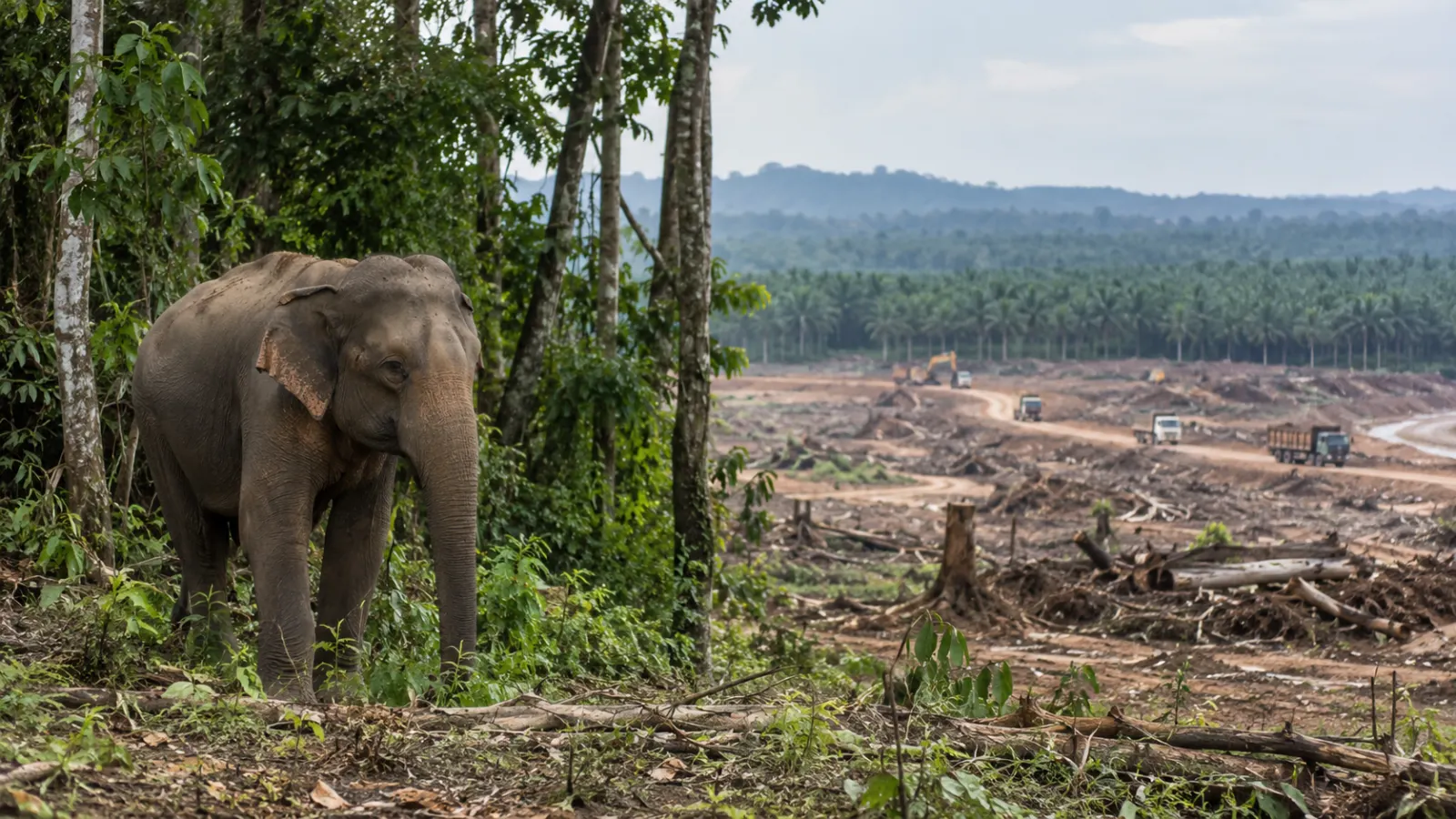
A bad one can replace valuable grassland, consume scarce water, displace livelihoods and still receive praise because the tree-planting number looks impressive.
That is why environmental success cannot be measured merely by increasing the colour green on a map.
The right forest in the right place can be enormously valuable.
The wrong forest in the wrong place can become another form of ecological damage.
Afforestation works best when that distinction is understood before the first tree enters the ground.