LPU Protest Explained: Allegation, SIT Probe and Campus Violence
Lovely Professional University (LPU) in Punjab’s Phagwara is facing one of its most serious periods of campus unrest after students protested over an unverified allegation that a female student was sexually assaulted on the university campus. The protests escalated on September 27, 2026, with vandalism, damage to vehicles, clashes with police and a prolonged blockade of the Jalandhar–Phagwara stretch of National Highway 44. Punjab Police has registered an FIR alleging rape against an unidentified person and constituted a Special Investigation Team, while LPU has denied that the alleged incident has been established and has described claims circulating online as false or unverified. The Indian Express
The case requires particular care because several different claims are circulating simultaneously. Students have alleged that a sexual assault occurred. The university disputes those allegations. Police say preliminary inquiries had not substantiated the alleged incident at the location initially identified, but they have nevertheless registered an FIR and opened a formal investigation. Separate claims that the alleged victim later died by suicide have also circulated online without public confirmation from investigators. Until the SIT establishes the facts, none of those disputed claims should be reported as proven. The Indian Express
How the LPU protest began
The unrest grew after messages and social-media posts circulated among students claiming that a woman staying on campus had been sexually assaulted by an outsider, variously described in online claims as a plumber or construction worker. Students also alleged that university authorities had failed to respond appropriately after becoming aware of the incident.
LPU rejected those allegations. Registrar Monica Gulati said people with vested interests were spreading what the university described as “false, baseless and fabricated” claims. University authorities also released a video featuring three female students who were identified as occupants of the hostel room that had become associated with the allegations. In that video, the students said no such incident had occurred in their room and asked students and police not to continue troubling them. The Times of India
Punjab Police subsequently registered an FIR against an unidentified person on allegations of rape. Senior officers told The Indian Express that preliminary investigation at the location cited by protesters had not substantiated the allegation, but police established an SIT to investigate further rather than treating the matter as closed. The Indian Express
The SIT is headed by the Superintendent of Police, Phagwara, Major Singh, and includes a DSP, a woman police inspector and student representatives, according to The Indian Express. Its task is now to determine whether an assault occurred, identify any victim and alleged perpetrator, examine available evidence and establish how the claims originated. The Indian Express
That distinction is central to understanding the story: an FIR means an allegation is being formally investigated; it is not proof that the allegation has been established.
Protests escalate into violence and highway blockade
What began as a demand for answers rapidly became a major law-and-order situation.
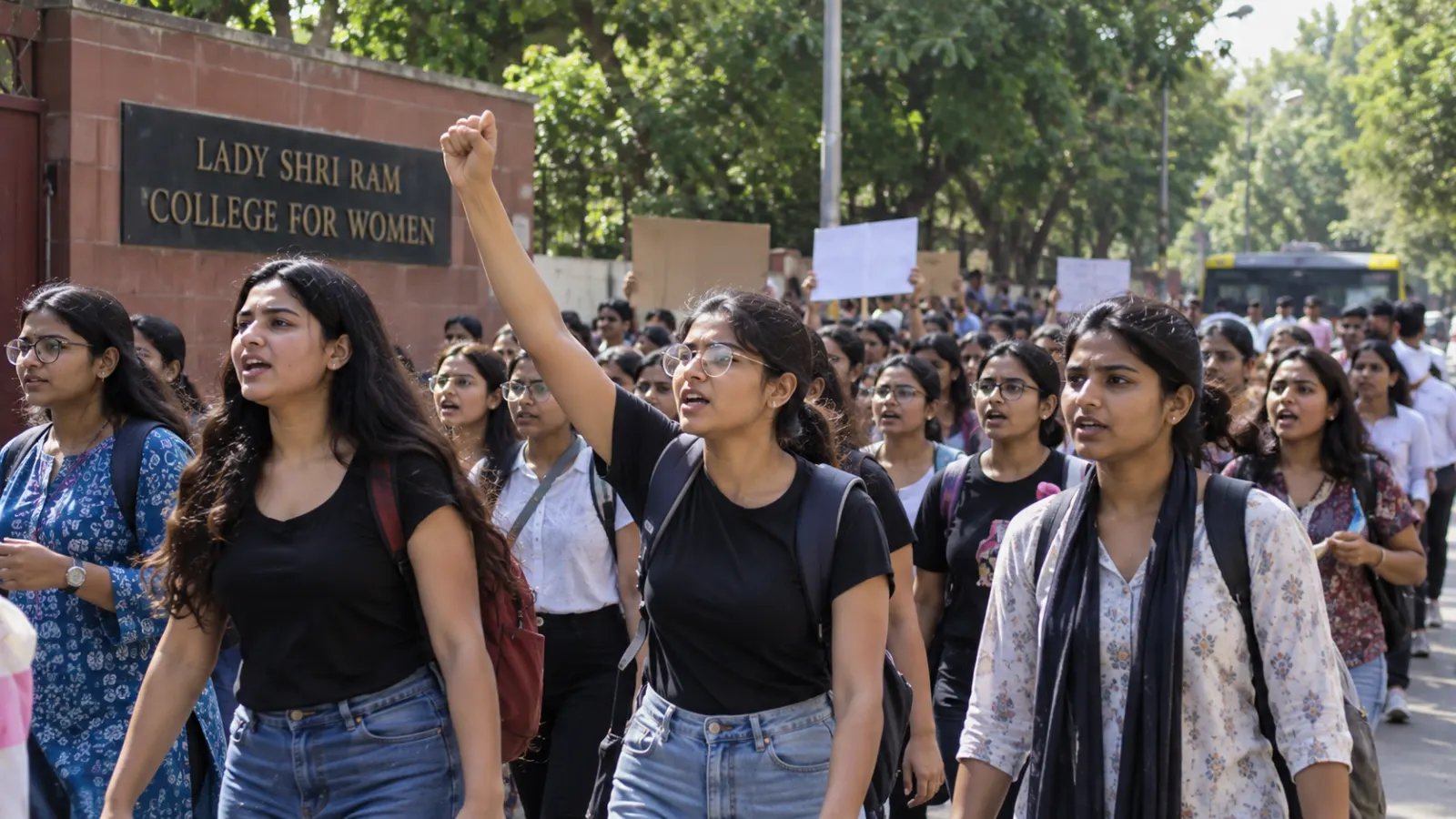
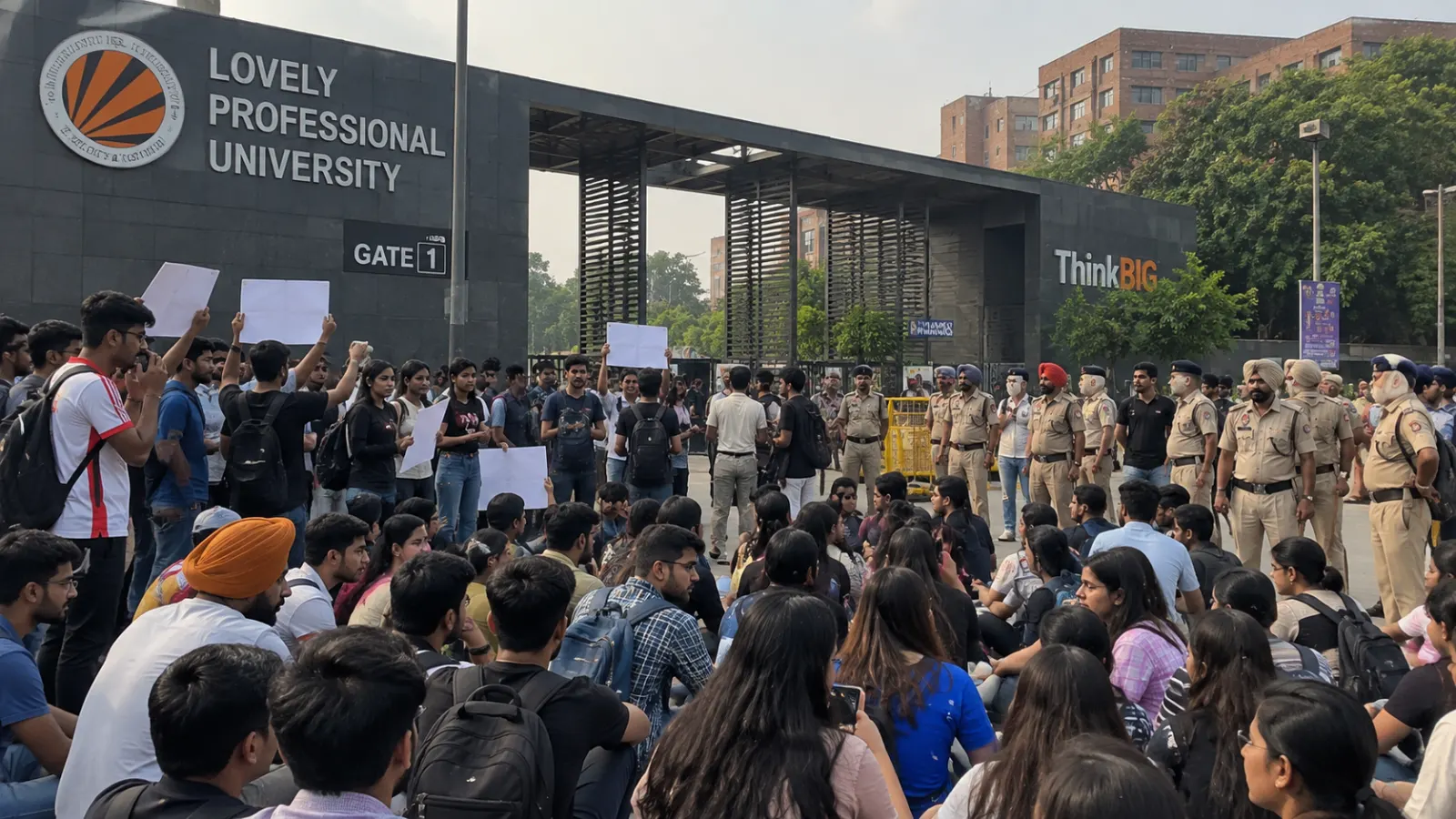
Large groups of students gathered on campus and later blocked NH-44 outside the university. The highway remained obstructed for around 15 hours before traffic was restored. During the unrest, university property and shops were vandalised, vehicles were damaged and some were reportedly set on fire. Police said protesters also threw stones at personnel and police vehicles, leaving officers injured. The Times of India
A large police deployment was sent to the area, led by senior officers, and authorities eventually said the situation had been brought under control. The violence is being investigated separately from the underlying sexual-assault allegation.
Keeping those two issues separate is important. Students have a legitimate right to seek information, demand an impartial investigation and protest peacefully. Allegations of sexual violence on a university campus warrant serious scrutiny. But vandalism, arson or attacks on police are independent acts for which individual responsibility must also be determined according to law.
Treating every protester as responsible for violence would be inaccurate. Equally, concern over the underlying allegation does not make violent conduct legally irrelevant.
University suspends classes and postpones examinations
Following the unrest, LPU announced that regular classes would be suspended for 10 days from September 28. Mid-term examinations were postponed until further notice. Students were permitted to return to their home towns, while those remaining at the university were advised to stay in their hostels or residences and avoid unnecessary movement. India Today
The decision illustrates the scale of the disruption. LPU is one of India's largest private universities, with a substantial residential student population. A ten-day academic shutdown therefore affects far more than the students who participated directly in the protests.
The immediate priority for authorities is restoring safety without prejudging the investigation. The longer-term challenge will be rebuilding trust between students, university administrators and police after a dispute in which different groups currently disagree even about the basic facts that triggered the unrest.
Students who appeared in LPU video now allege it was scripted
A significant new development emerged on September 28.
The three female students who had appeared in LPU's earlier clarification video later appeared in another video alleging that university authorities had instructed them about what to say, edited their statements and published the footage without their consent. They said they had no involvement in the alleged sexual-assault incident and wanted to be left out of the controversy. @theweek
One of the students alleged that they were instructed to say that other students and police were troubling them, and that only part of their recording was subsequently posted online. The students also said they had faced online abuse after the university released the video. The Times of India
These are serious allegations concerning how the university communicated during the crisis, but they should also be treated as allegations rather than established findings.
Importantly, the students' later statements do not themselves prove that a rape occurred. Their claim concerns the production and use of the university's clarification video. It weakens the value of that particular video as straightforward evidence about the underlying allegation, but it does not establish what happened to any alleged victim.
That distinction can easily disappear in a fast-moving social-media controversy.
There are now effectively two separate factual questions: whether a sexual assault occurred, and whether the students featured in the university's response were instructed or misrepresented when their video was published. Both require independent examination.
Why rumours and verified facts have become difficult to separate
The LPU controversy demonstrates a recurring problem during breaking campus incidents: information can spread much faster than investigators can verify it.
Online posts have circulated different versions of where the alleged assault happened, who allegedly committed it and what subsequently happened to the alleged victim. Some posts have included claims of suicide. Police and the university have not publicly verified many of these assertions.
At the same time, the absence of immediate confirmation does not automatically prove an allegation false. Sexual assault cases can involve delayed reporting, fear, privacy concerns and difficulties in identifying survivors. That is precisely why an independent investigation is preferable to either accepting every viral claim or dismissing the entire matter solely because initial verification has been difficult.
Responsible reporting therefore needs three categories.
There are confirmed facts: protests occurred, violence occurred, NH-44 was blocked, classes have been suspended, examinations postponed, an FIR has been registered and an SIT formed.
There are attributed allegations: students have alleged a sexual assault and an administrative failure; three female students have alleged their earlier video was scripted or edited without consent.
And there are unverified claims circulating online, including claims about the identity or subsequent fate of an alleged victim.
Mixing those categories risks misleading readers in either direction.
Universities have a special responsibility when sexual-assault claims emerge
Whatever the SIT ultimately finds, the controversy raises broader questions about how universities should respond when serious allegations begin circulating among students.
An institution needs to protect potential survivors, preserve evidence, inform police when required, prevent retaliation and provide students with reliable information. At the same time, it must avoid publicly identifying a complainant or circulating information that could compromise privacy.
Communication also matters.
If an institution believes a viral allegation is false, it has a legitimate interest in correcting misinformation. But such a response needs to be evidence-based and transparent. Using students in public-facing rebuttal videos can create additional problems if those students later say they did not consent to the way their statements were presented.
Universities therefore need crisis protocols that distinguish between investigating an allegation and defending the institution's reputation.
The first question should be: What happened, and is anyone at risk?
Questions about public perception should come afterwards.
Students also have responsibilities during a crisis
Institutional accountability does not remove responsibility from students.
Sexual-assault allegations should not become material for speculation, entertainment or viral amplification. Publishing names, room numbers, photographs or other identifying details can expose innocent students to harassment and may cause enormous harm.
The experience of the three students featured in the LPU video demonstrates the danger. They have said they became targets of abuse even while maintaining that they had no connection with the alleged incident. Hindustan Times
Students demanding an investigation also have stronger credibility when protests remain peaceful. Destruction of university property, setting vehicles on fire or attacking police does not establish the truth of the allegation being protested. Instead, such violence can create additional victims and shift public attention away from the demand for an impartial inquiry.
The strongest response to an uncertain allegation is therefore neither silence nor mob judgment. It is preservation of evidence, protection of possible victims and witnesses, and independent investigation.
What the SIT now needs to establish
The Special Investigation Team faces several fundamental questions.
Investigators need to determine whether a sexual assault occurred and, if so, when and where. They must establish whether an identifiable complainant or victim exists, identify any alleged perpetrator, examine CCTV footage and entry records where available, question relevant staff and students, and determine whether any university personnel received a complaint before the protests began.
The SIT may also need to examine the origins of social-media claims and distinguish authentic evidence from speculation or deliberately misleading material.
Separately, questions surrounding the university's clarification video may require examination. If the students' allegations are accurate, investigators or other authorities may need to establish what instructions were given, how the footage was edited and whether the students consented to its publication.
Only after this evidence is gathered will it be possible to reach responsible conclusions about the underlying event.
The central issue is trust
The LPU controversy is no longer only about one allegation.
It has become a crisis of institutional trust.
Students demanding answers do not appear satisfied with university assurances. The university says serious falsehoods have been circulated against it. Police initially said their inquiries had not substantiated the claim at the location identified but nevertheless considered the matter serious enough to register an FIR and form an SIT. Students used in the university's public rebuttal have now challenged how that rebuttal was produced. The Indian Express
In such circumstances, neither viral certainty nor institutional denial is sufficient.
The purpose of the SIT should be to replace conflicting narratives with evidence.
If an assault occurred, the survivor deserves protection, dignity and justice, and anyone who attempted to suppress a complaint should be held accountable according to the evidence and law.
If the allegations prove false or materially different from what circulated online, that too needs to be established transparently, because fabricated or distorted claims can harm innocent people and damage trust in genuine survivors.
And irrespective of the investigation's outcome, responsibility for the violence during the protests must be examined separately.
The most important lesson from LPU is therefore not to decide the case through social media before investigators have established the facts.
Students are entitled to demand answers. Universities are entitled to correct false information. But when the underlying allegation is as serious as sexual assault, credibility ultimately comes from an investigation that is independent, transparent and based on evidence rather than institutional reputation or viral narratives.