The Environmental Cost of Technology: What Digital Progress Really Uses
Digital technology often feels almost weightless. A message crosses continents in seconds, a video appears without a visible supply chain and a cloud service can replace filing cabinets, paper records or business travel. Yet every digital service ultimately depends on physical infrastructure: mines, refineries, semiconductor factories, power plants, transmission grids, fibre-optic cables, mobile antennas, data centres, batteries and billions of electronic devices.
That physical foundation is the starting point for understanding the environmental cost of technology. The environmental question is not whether digitalisation is inherently good or bad. Technology can reduce resource use in one activity while increasing it somewhere else. The more useful questions are: What materials were required to build the system? How much energy and water does it use? Where do those resources come from? How long will the equipment remain useful? What happens when it is discarded? And does the environmental cost make sense compared with the service the technology provides?
UN Trade and Development’s Digital Economy Report 2024 uses this lifecycle perspective. It argues that digitalisation can support economic development and environmental solutions while simultaneously increasing demand for minerals, electricity, water and waste-management systems. UNCTAD also stresses that these costs and benefits are distributed unevenly: developing countries often supply raw materials and absorb environmental burdens while capturing a smaller share of the high-value manufacturing and digital services built on those materials. The original article similarly frames digital technology as an industrial system whose footprint begins with extraction and continues through manufacturing, operation, replacement and disposal.
This lifecycle view is especially important as artificial intelligence, cloud computing, streaming, connected devices and other digital services expand. Discussions often focus on the electricity consumed when someone uses a service, but the environmental footprint begins long before the first search, video call or AI prompt and continues long after the device has been switched off for the last time.
The Digital Economy Begins With Mines and Factories
A smartphone may fit in one hand, but it contains materials extracted and processed through supply chains spanning multiple continents. Copper conducts electricity. Lithium, nickel, cobalt and graphite can be used in batteries. Silicon forms the basis of semiconductor chips. Aluminium, steel, glass, plastics and numerous specialty metals appear in circuit boards, displays, casings and electronic components.
Obtaining these materials can disturb land, consume substantial quantities of energy and water and generate mining waste. Tailings and chemical residues can pollute soil and waterways when inadequately managed. Refining ores into materials pure enough for electronics adds further energy use and industrial processing.
These impacts are geographically uneven. Mineral extraction often occurs far from the consumers who eventually buy the finished device. UNCTAD notes that many developing countries occupy relatively low-value portions of digital supply chains, supplying raw materials while importing higher-value electronic products and digital services. Environmental costs associated with mining, processing and waste can therefore fall disproportionately on communities that capture a smaller share of the final economic value.
This distributional question matters as demand grows for materials used not only in smartphones and computers but also in data-centre infrastructure, batteries, telecommunications equipment, electric vehicles and renewable-energy systems. Critical-mineral policy is therefore simultaneously an environmental, industrial and geopolitical issue.
Mining cannot simply disappear from the system in the near term. Recycling can recover valuable material from existing equipment, but much of the world’s copper, lithium and other material stock remains locked inside products and infrastructure that are still in use. When the total amount of digital infrastructure is expanding, recycled material alone cannot immediately satisfy all new demand.
The realistic objective is therefore a combination of responsible primary extraction, lower material intensity, longer-lasting products, higher recovery rates and more circular manufacturing.
Manufacturing creates another large environmental hotspot. Semiconductor fabrication requires highly controlled clean rooms, complex chemicals, substantial electricity and extremely pure water. Batteries, displays, printed circuit boards and final device assembly add further resource and energy demands.
For many consumer electronics, a substantial portion of lifecycle greenhouse-gas emissions occurs before the product reaches the customer. UNCTAD notes that the production phase can dominate the environmental footprint of devices and estimates that manufacturing accounts for roughly 80% of the greenhouse-gas emissions associated with a smartphone across its lifecycle.
That changes how product replacement should be understood. Replacing a functioning phone every two years instead of every four means that the environmental burden of extraction and manufacturing is repeated much sooner. The electricity used to charge the replacement device may be relatively small compared with the industrial system required to manufacture it.
Product lifetime therefore becomes an environmental variable.
Longer software support can keep hardware usable. Replaceable batteries can prevent an otherwise functional device from being discarded when battery performance deteriorates. Repairable components and access to spare parts can extend product life. Modular design can allow one component to be replaced without discarding the entire system.
This is why circular design should begin before recycling. Recycling is valuable, but it occurs after a product has already consumed materials and manufacturing energy. A product that lasts substantially longer can avoid or delay the environmental burden of producing its replacement.
Durability is therefore not merely a consumer convenience.
It is part of environmental design.
Electricity and Water Make the Cloud Physical
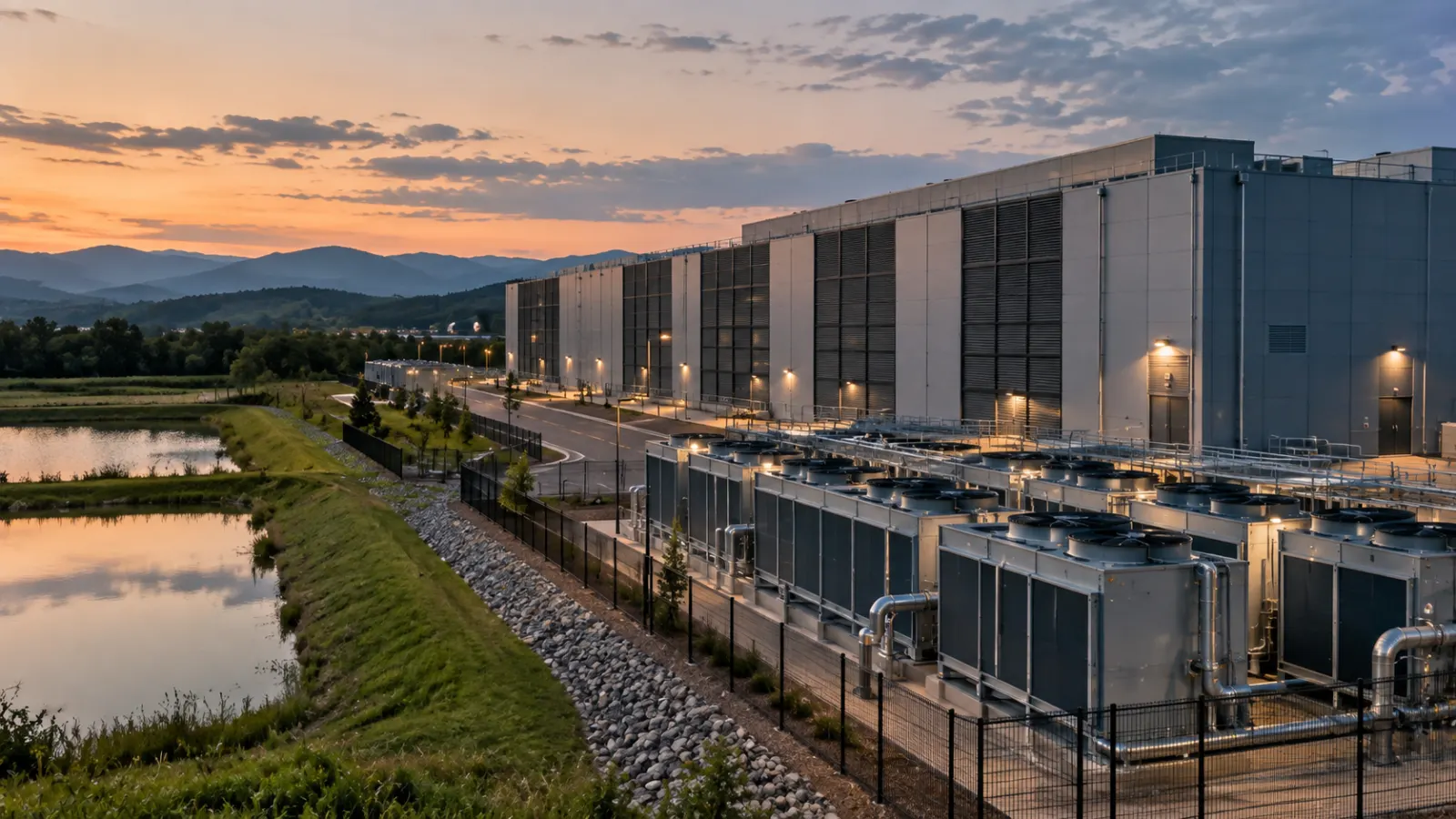
Once devices and digital infrastructure are manufactured, they continue to require energy. Phones, computers and televisions consume electricity directly. Telecommunications networks move information between users. Data centres operate processors, storage equipment and networking hardware while cooling systems remove the heat generated by computing.
The environmental impact of that electricity depends heavily on where and when it is produced. A data centre supplied primarily by low-carbon electricity has a different operational footprint from one relying heavily on fossil-fuel generation. Identical digital workloads can therefore produce different emissions depending on the surrounding power system.
Artificial intelligence is making this energy question more prominent. The International Energy Agency estimates that data centres consumed around 460 terawatt-hours of electricity globally in 2024. Its 2025 Energy and AI analysis projects consumption to rise to around 945 TWh by 2030 in its base case—slightly more than double current demand and just under 3% of projected global electricity consumption. The IEA also emphasises considerable uncertainty because future demand depends on AI adoption, hardware efficiency, software efficiency and constraints in the energy system.
Those numbers are important, but they should not be confused with the complete environmental footprint of digital technology. A data-centre electricity statistic does not include all the materials required to manufacture servers, construct buildings, produce chips and batteries, operate telecommunications networks or manufacture the billions of devices through which digital services are accessed.
AI also illustrates why environmental claims should be made carefully. Attempts to assign one universal carbon or electricity cost to “an AI prompt” are often misleading. Different models require different computational workloads. Hardware efficiency differs. Data centres operate with different power-usage effectiveness. Electricity grids have different carbon intensities. The same service may also be used for very different tasks.
A more useful question is the total infrastructure and electricity required to deliver a meaningful unit of service—and whether that service replaces or creates environmental impacts elsewhere.
Water creates similar complexity.
Semiconductor fabrication requires large quantities of ultra-pure water. Mining and mineral processing can require substantial freshwater resources and may compete with agricultural or household use in water-stressed areas. Some data centres use evaporative cooling systems that consume water, while the electricity supplying a data centre may itself have a water footprint depending on how it is generated.
UNCTAD specifically identifies water use in mining, semiconductor production and data-centre operation as an important part of digitalisation’s environmental footprint. It also warns that local context matters because water consumption has much greater environmental significance in a water-stressed basin than in a region with abundant supplies.
This is why claims such as “one internet search consumes X millilitres of water” or “one AI prompt uses one bottle of water” should be treated cautiously. Such estimates often depend on assumptions about facility location, weather, cooling system, workload, electricity generation and whether the calculation measures water withdrawal or actual consumption.
There is no universal environmental cost that applies identically to every digital interaction.
Location-specific reporting is more useful. How much freshwater is consumed? What cooling technology is used? Is the local watershed already stressed? Can recycled or non-potable water replace freshwater? How much water is associated indirectly with electricity production?
Those questions reveal trade-offs that a global average can conceal.
Efficiency Helps, but Growth Can Outrun It
Digital technology has become extraordinarily efficient. Modern processors perform far more calculations for each unit of electricity than earlier generations. Networks transmit much more data. A smartphone can perform functions that once required cameras, maps, music players, telephones, calculators and computers.
Efficiency is one reason the environmental footprint of technology does not increase in direct proportion to computing capability.
But efficiency per unit does not guarantee lower total resource use.
If a computing operation becomes substantially more efficient while the total number of operations expands even faster, overall electricity consumption can still rise. Economists and environmental researchers often describe this family of effects as rebound: reducing the resource intensity of an activity can lower its cost and enable sufficiently rapid growth that aggregate demand continues increasing.
Digitalisation provides many examples. Video streaming may become more efficient per gigabyte while audiences consume higher-resolution video for more hours. Storage becomes cheaper, encouraging organisations and individuals to retain vastly larger quantities of data. Chips become more energy efficient while AI models, cloud services and connected devices increase computational demand.
The environmental question therefore requires both intensity and scale.
A service that consumes 30% less energy per transaction but expands tenfold can still create much greater total demand.
This becomes especially relevant for AI. More efficient chips and models may reduce the electricity required for individual computations, but falling costs can also make AI practical in more products and workflows. Automated coding, image generation, search, advertising, industrial optimisation and personalised digital services can collectively increase total compute demand even if each operation becomes more efficient.
The IEA’s projections incorporate substantial efficiency improvements and still anticipate rapid growth in data-centre electricity consumption through 2030.
That does not mean efficiency is pointless. Without efficiency improvements, growth would require even more resources. The lesson is simply that efficiency needs to be evaluated alongside total demand rather than celebrated in isolation.
The same reasoning applies to digital substitution.
Video conferencing can avoid business flights. Digital documents can reduce paper use and physical transport. Smart-building systems can reduce heating or cooling energy. Sensors can make industrial processes more efficient. Remote sensing can identify deforestation, water stress or methane leaks.
These can be significant environmental benefits.
But the comparison should be made against the alternative delivering the same service. A video meeting replacing an intercontinental flight is very different from a video meeting that would otherwise have been a telephone call. A digital book can avoid printing and shipping, but its impact depends partly on the device already being available and how extensively that device is used.
Technology can reduce environmental pressure elsewhere, but those reductions should be measured rather than assumed.
E-Waste Reveals What Happens When Digital Products Reach the End
The environmental lifecycle does not end when a device stops working or is replaced. Electronics contain valuable metals alongside plastics, batteries and substances that can become hazardous when improperly handled.
The Global E-waste Monitor 2024, produced by ITU and UNITAR partners, estimates that the world generated a record 62 million tonnes of electronic waste in 2022. Only 22.3% was documented as formally collected and recycled in an environmentally sound manner. Under current trends, global e-waste is projected to reach 82 million tonnes by 2030, while the documented collection and recycling rate could fall further if recycling systems fail to keep pace.
Poor management creates two simultaneous losses.
The first is environmental and health damage. Informal dismantling, open burning or crude chemical processing can expose workers and communities to hazardous substances and contaminate air, soil and water.
The second is material waste. Discarded electronics contain copper, gold and other valuable resources that could potentially be recovered and returned to production instead of being replaced entirely through new extraction.
Recycling is therefore essential, but it is not a complete solution.
Products must actually reach safe collection systems. Components need to be designed in ways that allow materials to be separated efficiently. Recycling facilities need technology capable of recovering valuable fractions without creating additional pollution. Workers require appropriate protections.
The rapid growth of e-waste also reveals why product design matters upstream. ITU identifies limited repair options, shorter product lifetimes, higher consumption and design shortcomings among the factors driving the widening gap between e-waste generation and documented recycling.
A circular technology economy therefore cannot begin at the recycling plant.
It begins with decisions about how long a device is expected to last.
Can the battery be replaced?
Can software support continue?
Can components be repaired?
Can a manufacturer recover equipment for refurbishment?
Can materials be separated when the product finally reaches the end of its useful life?
A durable product used for many years and then effectively recycled is fundamentally different from one designed around rapid replacement even if both eventually reach the same recycling facility.
Sustainable Technology Has to Improve the Whole Lifecycle
The environmental footprint of technology does not mean digital progress should stop. Digital systems can contribute to environmental solutions precisely because computation, sensing and communication can improve how physical systems operate.
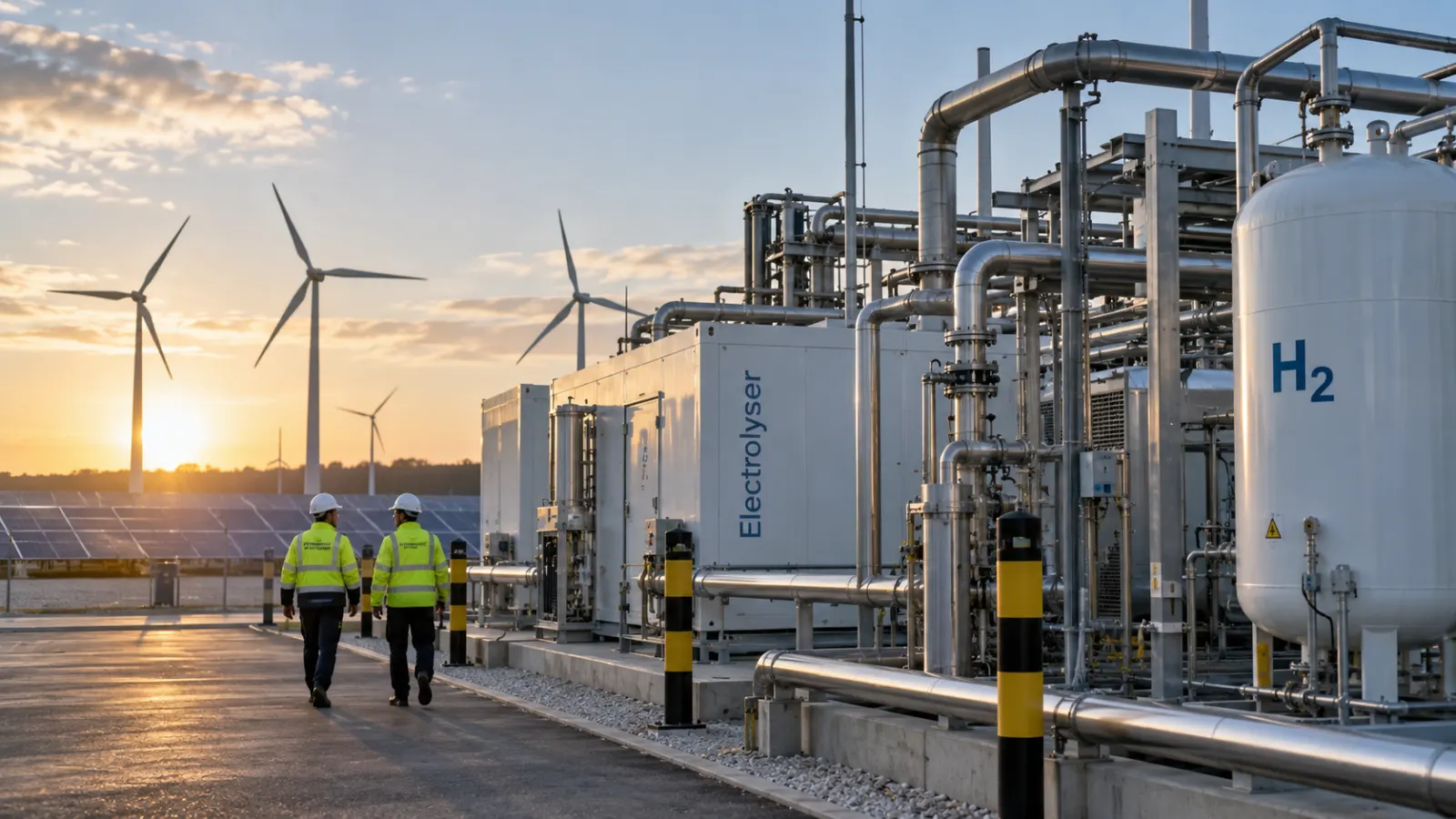
Power grids can use digital systems to balance variable renewable generation. Sensors can identify methane leaks. Logistics software can reduce unnecessary journeys. Precision agriculture can improve the targeting of irrigation or fertiliser. Satellite data can monitor forests, fires, crops and water. Digital control systems can improve industrial energy efficiency.
The question is whether the environmental benefit produced by those applications exceeds the physical footprint required to create and operate them.
That requires lifecycle analysis rather than technological optimism.
A lower-impact technology system would combine several strategies rather than rely on one.
Cleaner electricity can reduce emissions associated with devices, networks and data centres.
Efficient hardware and software can reduce the electricity required for each useful computation.
Longer product life can spread manufacturing impacts across more years of service.
Repairability and modularity can reduce unnecessary replacement.
Responsible mineral production can reduce environmental and social damage at the beginning of the supply chain.
Higher collection and recycling rates can recover more material at the end.
Location-sensitive water management can reduce pressure on stressed basins.
And transparent environmental reporting can allow governments, companies and consumers to understand where impacts actually occur.
UNCTAD’s 2024 report specifically calls for longer-lasting and more easily repairable products, greater transparency, stronger recycling systems and a shift toward a more circular digital economy.
Governments can influence this transition through right-to-repair rules, extended producer responsibility, e-waste collection standards, efficiency requirements and environmental disclosure. Public procurement can favour equipment with longer support periods and lower lifecycle costs instead of choosing products only by their initial purchase price.
Companies can design hardware for durability, reduce hazardous material use, disclose credible lifecycle information and provide spare parts and software support. Data-centre operators can improve server utilisation, cooling and power efficiency while considering whether local grids and water systems can support new facilities.
Organisations and consumers also have some influence, although responsibility should not be shifted entirely onto individual buyers. Keeping devices longer when they remain functional, repairing them where practical and using legitimate recycling channels can reduce demand for repeated manufacturing.
The underlying principle is service delivered per unit of environmental burden.
A faster product is not automatically environmental progress.
A more efficient product that is replaced twice as often may not reduce total impact.
A cloud service is not environmentally weightless merely because the infrastructure is invisible to its user.
And digitalisation is not automatically sustainable because it replaces something physical. Digital systems are physical systems too.
That is the most important conceptual correction.
The environmental cost of technology should be evaluated across the entire chain: extraction, refining, manufacturing, infrastructure, electricity, water, use, replacement and disposal.
Once that chain is visible, the debate becomes more useful.
Technology does not have to be classified as either an environmental villain or an environmental solution.
It can be designed better.
Its energy can become cleaner.
Its products can last longer.
Its materials can circulate more effectively.
Its environmental burdens can be reported more honestly.
And digital systems can be directed toward applications where their environmental benefits genuinely exceed the resources required to provide them.
The digital economy may feel virtual from the screen.
Its environmental reality is not.
Digital progress remains dependent on land, minerals, water, energy and physical infrastructure—and sustainable technology begins by accounting for all of them.