Bank Strike Deferred: Why Employees Want a Five-Day Week
India’s proposed three-day bank strike scheduled for September 28 to 30, 2026 has been deferred after late-night discussions between the United Forum of Bank Unions (UFBU) and the Indian Banks’ Association (IBA). The immediate result is straightforward for customers: bank branches are expected to operate normally during the three days, while the larger dispute over a five-day banking week remains unresolved.
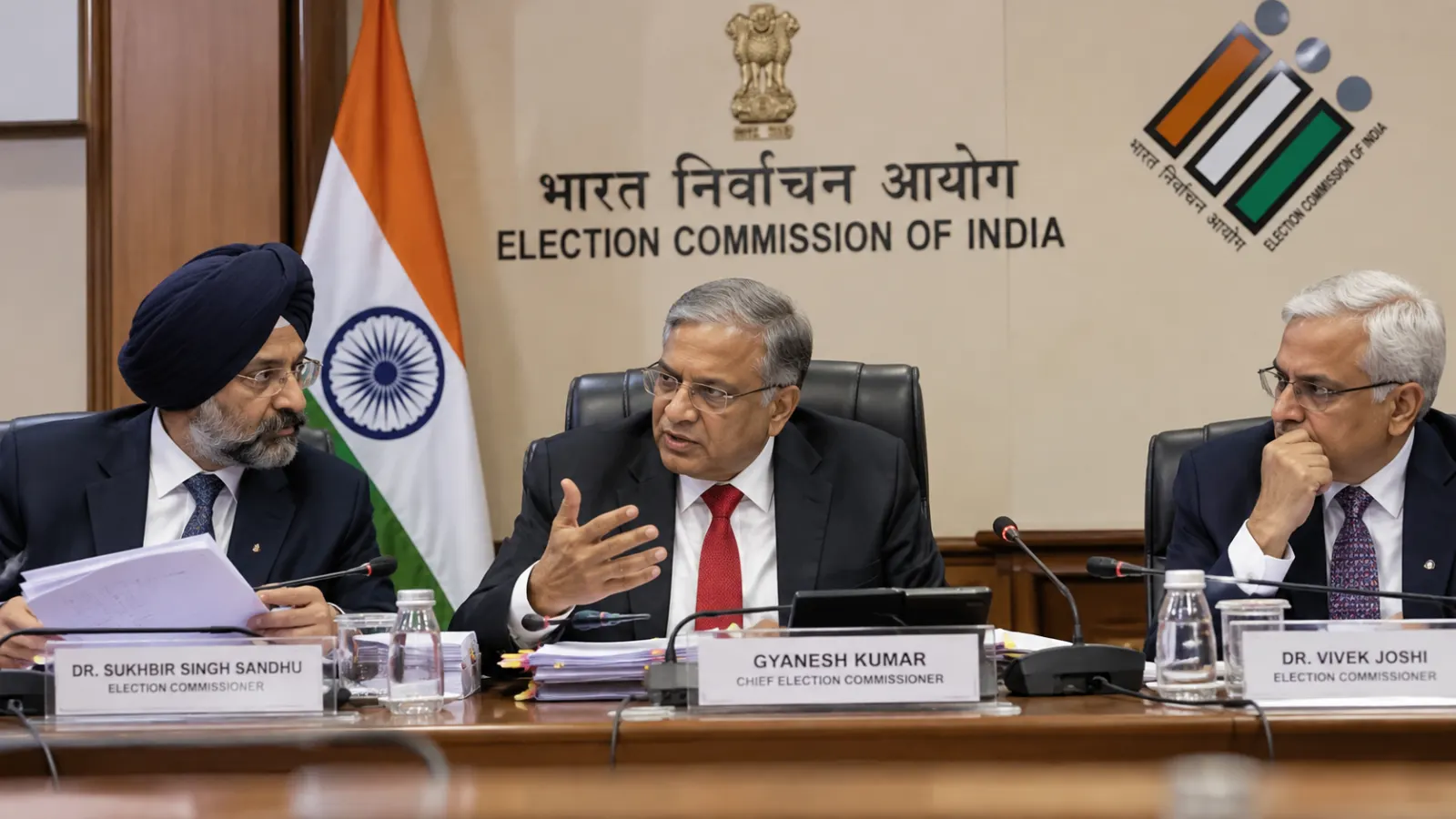
The breakthrough came after the IBA agreed to constitute a high-level committee with representatives of the UFBU to examine the unions’ demand that all Saturdays be declared bank holidays. The two sides will also continue discussions over the Performance Linked Incentive scheme and other pending service-related issues. The strike has therefore been deferred rather than permanently withdrawn, leaving open the possibility of further industrial action if negotiations again fail.
The dispute may initially sound like a simple argument over an extra weekly holiday. In reality, it involves working hours, customer access, employee workload, digital banking, government approval and a negotiation that bank unions say has remained unresolved for years.
What changed just before the strike?
The nationwide strike was due to begin on Monday, September 28. UFBU had announced the action as part of a wider campaign over several unresolved demands, with implementation of a five-day working week among the most prominent.
A late meeting between the IBA and union representatives on September 27 changed the situation. UFBU subsequently announced that the strike and associated agitation programme would be deferred after the two sides reached an understanding.
The most significant development was the decision to establish a high-level IBA-UFBU committee to examine the five-day-week proposal and consult relevant stakeholders. Discussions will also cover the Performance Linked Incentive scheme, particularly concerns raised over its application to senior officers, and other issues remaining from earlier wage negotiations.
This does not mean that five-day banking has now been approved.
Banks continue to follow the existing schedule. The second and fourth Saturdays of every month are bank holidays, while branches generally operate on the first, third and, where applicable, fifth Saturdays.
Why are bank employees asking for all Saturdays off?
The demand is not new.
Since September 2015, banks in India have observed the second and fourth Saturdays as public holidays following a government notification issued after negotiations involving the IBA and bank unions. The first, third and fifth Saturdays remained working days.
Bank unions have continued to seek a complete five-day week, arguing that the banking industry should move to a Monday-to-Friday schedule similar to a number of other major institutions and government offices.
The dispute gained renewed importance during the 12th Bipartite Settlement signed in March 2024. Documents and reporting from that settlement referred to an understanding between the IBA and unions regarding declaring all Saturdays as holidays, subject to government approval and other necessary clearances. The IBA subsequently recommended the proposal to the government.
Under the proposal supported by the unions, employees would not simply work fewer hours. Their working day from Monday to Friday would reportedly be extended by around 40 minutes, intended to compensate for the loss of Saturday working hours.
This is an important detail because the debate is sometimes reduced to employees seeking an additional holiday. The proposed arrangement is better described as a redistribution of weekly working hours.
Was a five-day banking week already agreed?
This has become one of the most contested parts of the dispute.
Bank unions argue that an understanding on declaring all Saturdays holidays was reached with the IBA and reflected in the March 8, 2024 settlement and joint note. They say implementation has remained pending because government approval has not arrived.
However, Finance Ministry sources have recently disputed the claim that the government itself ever committed to implementing a five-day week. An official quoted by The Indian Express said the government had not agreed to such a change and accused unions of overstating what had been settled.
Both statements can be understood more clearly by separating the institutions involved.
The IBA and unions negotiate wages and service conditions. Their 2024 settlement referred to an understanding about Saturdays and the IBA recommending the proposal. But changing the statutory holiday structure requires government approval and potentially other regulatory clearances. The settlement itself recognised that implementation would take effect only after those approvals.
The disagreement is therefore partly about what the 2024 understanding represented: unions describe it as an agreed reform awaiting implementation, while government sources maintain that the government never committed itself to approving it.
The newly announced committee is intended to move that unresolved issue forward.
Would customers lose banking hours?
This is probably the most important practical concern.
Physical branches remain important even as UPI, mobile apps and internet banking have transformed everyday payments. Customers still visit branches for cash services, documentation, loan processing, account-related work, lockers and transactions requiring physical verification.
Making every Saturday a holiday would reduce the number of days on which branches open. But unions argue that extending weekday working hours would compensate for this.
Whether that produces an equivalent level of customer access depends on how the eventual schedule is designed.
A customer who works Monday to Friday may actually find Saturday particularly convenient for visiting a branch. For such customers, removing Saturday banking could make access more difficult even if branches remain open somewhat longer during weekdays.
On the other hand, the growth of digital banking means many routine services no longer depend on branch opening hours. UPI payments, mobile banking, online transfers and many ATM services are available outside normal branch hours. This is one reason the debate over a five-day week looks very different today from how it would have looked before large-scale digitisation.
Any final decision therefore needs to balance employee working conditions against the needs of customers who continue to depend on physical branches.
Why do unions believe the change is justified?
Bank unions have several arguments.
One is work-life balance. Banking has undergone significant changes in workload, compliance requirements, sales responsibilities and digital operations. Employees argue that a predictable two-day weekend would place them closer to working arrangements already used in other financial and government institutions.
Another argument concerns parity. Unions have pointed to five-day working schedules followed by organisations including the Reserve Bank of India and various government offices.
They also argue that the proposed change does not amount to simply reducing working hours because additional time would be added to the five weekday shifts.
The issue has consequently become less about whether employees should receive “more holidays” and more about how the same workload should be distributed across the week.
Why might the government hesitate?
The government has broader considerations than employee working conditions alone.
Public sector banks operate one of India's largest physical financial-service networks. Millions of customers, including elderly people, pensioners, small businesses, farmers and people in areas with lower digital adoption, still depend heavily on branches.
A nationwide change affecting Saturday operations therefore needs to consider whether longer weekday hours genuinely compensate for losing an entire working day.
Operational requirements also vary significantly between large urban branches and smaller rural locations. Digital adoption is high nationally, but it is not uniform across every customer group.
There may also be questions involving transaction processing, government business, clearing arrangements and coordination across the wider financial system.
The fact that the IBA-UFBU agreement itself made implementation conditional upon government approval demonstrates that this was never solely a bilateral employee-management decision.
The dispute is not only about Saturdays
The five-day week has received most public attention, but it was not the only issue behind the proposed strike.
UFBU has also raised objections concerning the Performance Linked Incentive, or PLI, scheme. The unions have questioned aspects of how incentives are calculated and applied to officers, particularly at senior levels.
Under the understanding reached before the strike was deferred, the IBA has agreed that modifications to the PLI arrangement can be discussed with union representatives and, where appropriate, recommendations can be sent to the government. Other unresolved matters originating from earlier negotiations are also expected to be considered.
This means the negotiations will continue even if the five-day-week question receives most of the headlines.
What does the strike being deferred mean for customers?
For now, very little changes in everyday banking.
Branches are expected to function normally on September 28, 29 and 30, subject to ordinary local holidays or bank-specific circumstances. The proposed strike will not cause the three-day nationwide disruption customers had been warned about.
The normal Saturday arrangement also continues. Second and fourth Saturdays remain bank holidays; first, third and fifth Saturdays remain working Saturdays unless another notified holiday applies.
Customers should therefore not interpret the latest agreement as the introduction of five-day banking.
Nothing changes unless the proposal receives the necessary approvals and a formal implementation date is announced.
Would a five-day bank week be unusual?
Not necessarily.
Many financial institutions globally operate customer-facing branches primarily on weekdays, although arrangements vary considerably by country and institution. Even within India, several government and financial-sector organisations already operate five-day schedules.
But commercial banks occupy a distinctive position because of their enormous customer-facing network.
A five-day office schedule at an administrative institution affects the public differently from a five-day schedule across tens of thousands of bank branches.
That does not mean five-day banking is impractical. It means its impact needs to be assessed from both sides.
For employees, it concerns predictable working conditions and parity with comparable institutions.
For customers, it concerns branch availability and convenience.
For banks, it concerns productivity, staffing, operating costs and the increasing migration of transactions to digital channels.
A well-designed reform would need to reconcile all three.
What happens next?
The new high-level committee represents progress, but it is not a final settlement.
Representatives of the IBA and UFBU are expected to examine possible solutions and engage relevant stakeholders before recommending a way forward. No formal date has yet been announced for introducing a five-day banking week.
This means the central dispute remains unresolved.
The latest agreement has prevented an immediate three-day disruption, but the eventual outcome will depend on whether unions, banks and the government can agree on a model that protects both employee interests and customer access.
For the moment, the practical position is simple: the strike is deferred, banks remain open, and five-day banking has not yet begun.
The more important question now is whether the committee produces a genuine path toward resolution—or merely postpones the next confrontation.