The easiest part of United Nations Security Council reform is explaining why it is necessary. The difficult part is explaining why it has still not happened.
Almost everyone agrees that the Security Council no longer fully reflects the world as it exists today. It was built in the shadow of 1945, when the victors of the Second World War shaped the institutional architecture of global security. Since then, colonial empires have collapsed, dozens of new states have joined the United Nations, Asia and Africa have become central to global demography and development, India has become the world’s most populous country, and economic and political power has spread far beyond the Atlantic world.
Conflict itself has changed. Cyber threats, terrorism, drones, sanctions, climate stress and non-state actors now sit alongside conventional military threats. Yet permanent power in the Security Council remains concentrated in five countries: China, France, Russia, the United Kingdom and the United States.
The Council has 15 members — five permanent members and ten elected members serving two-year terms. That structure is not merely old. It reflects a world in which much of Africa and Asia was still under colonial rule and India had not yet achieved independence.
UNSC reform is therefore not simply an institutional debate. It is a debate about who counts in world politics.
That is also why it remains stuck.
Why UNSC Reform Is Back on the Global Agenda
The reform debate has gained new urgency because criticism is no longer coming only from countries outside the Council’s permanent circle.
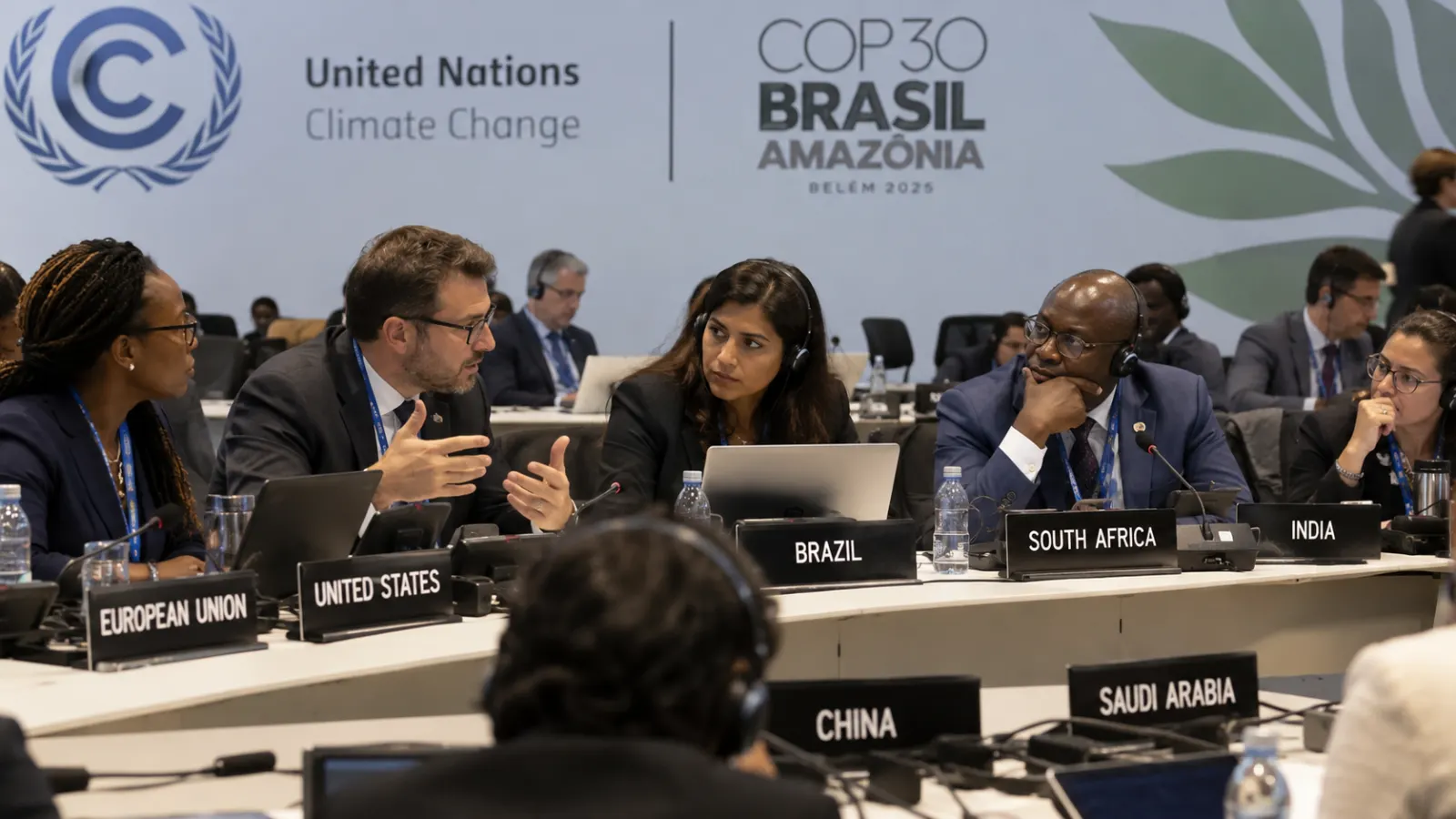
At the Summit of the Future in September 2024, world leaders adopted the Pact for the Future, which sought to modernise international cooperation for a world very different from the one in which the United Nations was created. The Pact included a major commitment to Security Council reform and placed particular emphasis on improving representation for historically underrepresented regions, especially Africa.
The significance of this language should not be dismissed.
But the central problem with Security Council reform has never been the absence of declarations.
The UN system has produced decades of speeches, working groups, reform proposals, negotiating formulas and statements of principle.
The blockage is political.
India’s Permanent Representative to the UN, speaking for the G4 in January 2026, argued that the credibility and effectiveness of the United Nations were increasingly being questioned, particularly because of the organisation’s inability to respond effectively to major conflicts.
That goes to the core of the reform debate.
The demand is not only for prestige or symbolic recognition. It is also about whether the institution responsible for maintaining international peace and security remains capable of performing that role.
The Security Council Was Designed to Protect Great-Power Consent
The current structure of the Security Council emerged from a strategic bargain.
The strongest powers of the post-war period would remain inside the United Nations system only if they received special institutional privileges.
Those privileges took the form of permanent membership and veto power.
In the context of 1945, this was not irrational.
The architects of the UN had seen the League of Nations fail. A global security institution that alienated the strongest military powers might have suffered the same fate.
The veto therefore became the price of great-power participation.
But a mechanism that once helped stabilise the institution has gradually become a legitimacy problem.
The permanent five do not simply occupy seats. They possess structural advantages.
They remain present during every crisis. They influence sanctions, peacekeeping mandates, diplomatic pressure and authorisations involving the use of force. They also possess the ability to block substantive Council action.
That is why reform is so difficult.
It asks countries that already possess institutional privilege to accept a system in which that privilege may become less exclusive.
No major power gives up influence simply because other states present a moral argument.
Power is normally shared only when the political cost of maintaining the existing arrangement becomes greater than the cost of reform.
That point has not yet been reached.
The Veto Sits at the Centre of the Legitimacy Crisis
No feature of the Council demonstrates its political hierarchy more clearly than the veto.
Any permanent member can block a substantive resolution even when the remaining Council members support it.
In principle, the veto reduces the risk that the United Nations will take coercive action directly against the core interests of a major power, potentially triggering wider confrontation.
In practice, it can also paralyse the Council during the crises in which action is most urgently demanded.
Gaza Showed the Power of a Single Veto
On June 4, 2025, the Security Council voted on a draft resolution introduced by the ten elected members calling for an immediate, unconditional and permanent ceasefire in Gaza.
The United States vetoed the resolution despite support from the other 14 Council members.
Ukraine Exposed the Same Structural Problem
On February 25, 2022, Russia vetoed a draft Security Council resolution that would have condemned the Russian Federation’s aggression against Ukraine.
These cases arose from different conflicts and political circumstances, but they illustrate the same institutional problem.
When a permanent member or one of its core strategic interests is involved, the Council can become least effective precisely when the international stakes are highest.
States defend their vetoes with legal, diplomatic and strategic arguments.
But for many countries outside the permanent circle, the wider perception is difficult to ignore: the structure often protects power before it protects victims.
The Veto Initiative Improves Accountability, Not Equality
The wider UN membership has tried to make veto use more politically costly.
In April 2022, the General Assembly adopted Resolution 76/262, establishing a standing mandate for a General Assembly debate whenever a veto is cast in the Security Council.
This was an important procedural change.
A permanent member can still block a resolution, but it can now be required to defend that action before the broader membership of the United Nations.
The measure increases visibility and political accountability.
But it does not change the underlying balance of power.
What the Initiative Does
It forces veto use into wider public and diplomatic scrutiny.
It gives countries outside the Security Council an opportunity to respond.
It prevents a veto from automatically ending the political discussion.
What It Does Not Do
It does not remove the veto.
It does not reform permanent membership.
It does not give Africa permanent representation.
It does not give India a permanent seat.
It does not create equality between permanent and elected members.
The initiative is therefore a pressure mechanism, not structural reform.
Why Expanding the Security Council Is So Difficult
On paper, expansion sounds simple.
Add more members. Improve geographic representation. Give emerging powers and underrepresented regions a stronger voice.
In practice, every model creates new political disputes.
India seeks permanent membership. Japan, Germany and Brazil pursue the same objective through the G4 grouping. African countries demand permanent representation and correction of historical injustice. Latin America wants greater representation. Small and medium-sized states worry that the result may simply be a larger permanent elite.
Existing permanent members fear dilution of influence.
Regional rivals oppose each other’s elevation.
The G4 has called for expansion in both permanent and non-permanent categories, greater participation by developing countries and stronger representation for Africa, Asia-Pacific, Latin America and the Caribbean.
The group has also supported text-based negotiations and backed the permanent-membership aspirations of its four members.
But reformist coalitions still need to overcome regional opposition, scepticism from smaller states, procedural resistance and, eventually, the consent of all five existing permanent members.
That is an extraordinarily high political threshold.
The UN Charter Protects the Status Quo
The greatest legal obstacle to reform is built directly into the UN Charter.
Article 108 states that amendments enter into force only after adoption by a two-thirds vote of the General Assembly and ratification by two-thirds of UN members, including all permanent members of the Security Council.
This has profound consequences.
Any serious reform of permanent membership ultimately requires approval from the same countries whose relative privilege might be diluted.
The countries demanding reform may possess numerical strength in the General Assembly.
The countries controlling whether that reform takes legal effect retain decisive constitutional power.
This is not a procedural accident.
It is part of the institutional design of the United Nations.
A system created to preserve great-power consent cannot easily be transformed against great-power preference.
Africa Has Become Central to the Reform Debate
Africa’s absence from permanent membership is perhaps the clearest representational weakness in the current Council.
The continent has 54 UN member states and is central to peacekeeping, development, climate vulnerability, conflict prevention, migration, natural resources and future global demography.
Yet Africa has no permanent seat.
The Pact for the Future’s focus on correcting historical underrepresentation, especially Africa’s, reflects growing recognition that credible reform cannot leave this imbalance untouched.
India has also supported stronger African representation.
Its April 2026 statement in the Intergovernmental Negotiations welcomed the African position and argued that the historical injustice faced by Africa must be addressed.
But Africa’s case also demonstrates why reform becomes politically difficult once principles are translated into actual institutional design.
Which Countries Would Hold African Seats?
Would permanent African representation be assigned to specific states or structured through regional mechanisms?
Would New African Members Have Veto Power?
If existing permanent members keep the veto while African permanent members do not receive it, the result would create another category of unequal permanence.
How Many Seats Would Be Enough?
Would two permanent seats sufficiently represent 54 countries?
How Would Regional Rivalries Be Managed?
Permanent representation could create competition among major African states over who should occupy those seats.
The justice of Africa’s claim is increasingly difficult to dispute.
The implementation remains politically complicated.
India’s Case Is Strong but Not Automatic
India’s case for permanent membership rests on multiple factors: population, economic scale, democratic institutions, military capability, peacekeeping participation, nuclear status, development cooperation, Global South engagement and long-standing involvement in the UN system.
It is increasingly difficult to defend a twenty-first-century Security Council that permanently excludes India while claiming to reflect contemporary geopolitical realities.
But a strong case does not guarantee a seat.
UNSC reform is not a merit-based selection process.
It is a negotiation over power.
India’s prospects are shaped not only by its own credentials but by China’s position, Pakistan’s opposition, regional rivalries, US preferences, Russian calculations, European interests, African priorities and the concerns of smaller states.
India’s April 2026 statement argued for a 26-member reformed Council and supported expansion in both permanent and non-permanent categories.
That distinction is strategically important.
India does not want a reform that simply adds more rotating seats while leaving permanent authority unchanged.
It wants representation in the category where binding power is concentrated.
That is precisely why the political resistance is greater.
China Is the Obstacle India Cannot Ignore
No serious assessment of India’s permanent-membership campaign can ignore China.
China is currently the only Asian permanent member of the Security Council.
India’s elevation would fundamentally alter Asian representation and the balance of institutional influence inside the Council.
Beijing therefore has little strategic incentive to make India an institutional equal in the UN’s most powerful body.
This does not mean China alone explains the failure of reform.
The entire process contains multiple competing interests.
But because Charter reform requires ratification by all permanent members, China’s position carries exceptional weight.
India’s diplomatic challenge is therefore more complicated than simply accumulating declarations of support.
It must either reduce the political cost for reluctant permanent powers to accept reform or increase the diplomatic cost of continued obstruction.
That requires a long-term strategy.
The G4 Has Strength but Also Structural Weaknesses
The G4 brings together India, Japan, Germany and Brazil.
Collectively, the four countries have major economic, political and regional weight.
But each candidate also faces opposition.
India
India faces Pakistan’s opposition and strategic reluctance from China.
Japan
Japan faces Chinese resistance and historical sensitivities in East Asia.
Germany
Germany faces questions about whether Europe should gain another permanent seat when France and the United Kingdom are already members.
Brazil
Brazil faces hesitation from regional states that do not necessarily want one country to hold a permanent Latin American seat.
These objections do not invalidate the G4 case.
They explain the difficulty of translating collective strength into a successful Charter amendment.
Each aspirant is influential enough to demand inclusion.
None is powerful enough to eliminate every source of resistance.
Small States Fear a Bigger Club of Privilege
Not all resistance comes from existing major powers.
Many small and medium-sized countries support making the Security Council more representative but remain cautious about creating additional permanent members.
Their concern is straightforward.
If reform simply expands the number of permanent powers, the Council may become geographically more representative while remaining structurally unequal.
For smaller countries, the question becomes: why replace an exclusive club of five with an exclusive club of ten or eleven?
Some states therefore support longer-term elected seats rather than additional permanent membership.
The argument is that elected seats preserve accountability because countries must return to the General Assembly for political support.
But this solution has limitations.
Longer elected terms may improve continuity but do not eliminate the hierarchy between permanent and non-permanent members.
They also do not guarantee permanent representation for major underrepresented regions.
The reform debate is therefore shaped by competing fears.
Emerging powers fear permanent exclusion.
Small states fear new domination.
Existing permanent members fear dilution.
Regional rivals fear each other’s elevation.
Those fears reinforce one another and help preserve the status quo.
Text-Based Negotiations Are the Real Test
The Intergovernmental Negotiations on Security Council reform have continued for years.
But the decisive question is whether the process moves from general statements into actual negotiating text.
Text changes everything.
Once states begin negotiating concrete language, they must answer questions they can otherwise avoid.
How many seats should be added?
Which categories should expand?
Who should receive veto power?
How should regions be represented?
How should new members be selected?
Should there be review mechanisms?
How should Charter amendments be structured?
As long as reform remains at the level of principles, almost every country can say it supports change.
A negotiating text forces states to reveal which reforms they are actually willing to accept.
The G4 has repeatedly pushed for text-based negotiations because vagueness protects the existing system.
Those seeking reform need a process with an endpoint.
Those comfortable with the status quo benefit from a process that can continue indefinitely.
Permanent Membership Without a Veto Creates Another Dilemma
One of the most difficult reform questions is whether new permanent members should receive veto rights.
Existing permanent members are unlikely to expand the veto easily.
Many UN members also dislike the idea of creating more vetoes because the current system already contributes to paralysis.
But reformers argue that permanent membership without equal rights would create second-class permanent members.
India’s April 2026 statement supported the principle that there should not be separate classes of permanent membership with different privileges.
The logic is clear.
If a country becomes a permanent member but cannot exercise the same rights as the existing P5, institutional inequality remains embedded in the system.
But every available option creates a problem.
Give New Members the Veto
The Council may become even harder to operate.
Deny New Members the Veto
New permanent members would remain institutionally unequal.
Restrict the Veto for Everyone
Existing permanent members would have to accept a significant reduction in privilege.
Leave the System Unchanged
Reform risks becoming largely symbolic.
There is no politically easy solution.
That is why the veto question remains one of the biggest obstacles to comprehensive reform.
Reform Is About More Than Membership
The Security Council’s problems cannot be reduced entirely to who holds permanent seats.
The Council also faces criticism over working methods, transparency, sanctions practices, consultation and the way agendas are shaped.
India’s April 2026 statement called for stronger engagement between the Council and troop-contributing countries.
This matters because states that provide peacekeepers may carry operational risks without having equivalent influence over the mandates under which those personnel operate.
A more credible Council would therefore need not only broader representation but also better institutional practices.
Greater Transparency
Decision-making processes should be easier for the wider membership to understand.
Stronger Consultation
Countries contributing troops and resources should have more meaningful input into peacekeeping mandates.
Better Sanctions Governance
Sanctions processes should be transparent, evidence-based and subject to review.
Improved Agenda-Setting
The way conflicts and issues enter the Council’s agenda should not depend excessively on the preferences of a small number of states.
A larger Council that preserves all existing procedural weaknesses would solve only part of the legitimacy problem.
An Unreformed Council Weakens the Entire United Nations
The cost of paralysis extends beyond the Security Council itself.
When the Council cannot respond, countries increasingly turn to other forums.
NATO, the G7, G20, BRICS, Quad, regional organisations, contact groups, sanctions coalitions and ad hoc diplomatic arrangements all provide alternatives for addressing particular problems.
Many of these formats are useful.
But if the Security Council is repeatedly bypassed, the political centrality of the United Nations weakens.
The danger is not necessarily that the UN disappears.
The greater danger is that it survives as a universal forum for speeches while consequential decisions move elsewhere.
That would be particularly harmful to smaller states.
However imperfect the United Nations may be, it remains the only global institution in which every recognised member state has formal standing.
A world governed mainly through coalitions of powerful states would be even less equal.
UNSC reform is therefore not an attack on the United Nations.
It may be necessary for preserving the institution’s relevance.
Would a Larger Council Become Less Effective?
There is a serious counter-argument to ambitious expansion.
Critics warn that a larger Security Council might become more representative but less capable of acting.
More members could make negotiations slower.
More permanent members could create additional rivalries.
More vetoes could generate even greater paralysis.
A Council expanded to around 26 members might also become procedurally cumbersome.
These concerns deserve serious consideration.
New permanent members would not suddenly stop pursuing national interests.
India, Brazil, Germany, Japan and African powers would all bring their own strategic priorities into the Council.
Representation does not automatically create effectiveness.
But the comparison should be realistic.
The current Council is already frequently paralysed.
The choice is not between a perfectly effective 15-member body and a dysfunctional larger one.
It is between an exclusive institution that is gradually losing legitimacy and a reformed institution attempting to balance representation with functionality.
An international body can fail through paralysis.
It can also fail because those it claims to represent no longer consider it legitimate.
Reform must address both risks.
What Realistic Reform Should Aim For
A workable reform strategy will probably require sequencing rather than one dramatic institutional redesign.
1. Expand Both Permanent and Non-Permanent Membership
Adding only elected seats may improve participation but would leave the central hierarchy of permanent power untouched.
2. Give Africa Priority
Any reform package that fails to address Africa’s absence from permanent membership will struggle to claim historical legitimacy.
3. Treat India’s Claim as Part of Wider Reform
India’s case will be stronger when presented as part of a broader correction of global representation rather than as an isolated status demand.
4. Pursue Gradual Veto Reform
Immediate abolition is politically unrealistic. Greater explanation, General Assembly scrutiny and voluntary restraint in cases involving mass atrocities can still increase political pressure.
5. Improve Working Methods Now
Some changes involving transparency, sanctions, peacekeeping consultation and Council-General Assembly interaction can be pursued without waiting for full Charter reform.
6. Move to Text-Based Negotiations
Without negotiating text, the reform process risks remaining permanent diplomatic theatre.
The goal should be to make progress possible even when comprehensive agreement remains difficult.
What India Should Do Next
India needs to pursue reform through several parallel tracks.
1. Strengthen Coalition-Building
India should continue working with the G4, L69, African countries, small island developing states and the wider Global South.
Its argument is strongest when permanent membership is framed as part of wider democratic correction in global governance.
2. Build a Record of Responsibility
Permanent membership should be presented not as a reward for national power but as an assumption of greater global responsibility.
India can strengthen its case through consistent engagement in peacekeeping, humanitarian assistance, development cooperation, global health, climate action and digital public goods.
3. Increase Pressure for Text-Based Negotiations
India and other reformers should continue demanding concrete negotiations, clearer timelines and greater political accountability.
As long as reform remains vague, delay remains easy.
4. Deepen Engagement With Africa
Africa is central to any credible reform coalition.
India should support African representation on its own merits rather than treating African backing merely as a route to its own permanent seat.
5. Engage Reluctant Permanent Members
India must continue diplomatic engagement with countries whose support is legally indispensable to Charter reform.
Declarations from friendly states are politically useful but insufficient if one permanent member ultimately refuses ratification.
6. Avoid Assuming Reform Is Inevitable
India’s economic and demographic rise strengthens its case, but institutions do not automatically adjust to changing power.
Reform occurs when diplomatic pressure, political timing and negotiated compromise align.
Three Possible Futures for UNSC Reform
The reform process could evolve along three broad paths.
The Best Scenario: Gradual but Real Reform
The Intergovernmental Negotiations move toward text-based negotiations. A consolidated reform model emerges. African permanent representation becomes central. India’s claim gains wider acceptance. Veto accountability increases even if full equality remains politically difficult.
The Council becomes more representative without abandoning its central security role.
The Middle Scenario: Permanent Symbolism
Governments continue to endorse reform in speeches and declarations, but no meaningful Charter amendment advances.
The Security Council remains formally central while gradually losing political authority.
Reform becomes a recurring diplomatic ritual rather than an institutional process.
The Worst Scenario: The Council Is Increasingly Bypassed
Major powers rely more heavily on regional blocs, strategic coalitions and informal arrangements to manage crises.
The Security Council remains legally important but becomes less relevant to actual geopolitical decision-making.
The UN gradually shifts from a decision-making institution toward a primarily deliberative forum.
The first scenario is difficult.
The alternatives are more dangerous.
Why This Matters to India
For India, permanent Security Council membership is about more than prestige.
The Council makes decisions involving sanctions, peacekeeping, conflict management and international security that can affect Indian interests directly.
India’s population, economic scale, military capability and Global South role give it strong reasons to seek a permanent voice in those decisions.
But the issue also goes beyond India.
A global institution that permanently excludes major emerging powers and an entire continent from permanent representation will face increasing difficulty claiming political legitimacy.
India therefore has an interest in building a reform coalition that is broader than its own candidacy.
Its strongest argument is not simply that India deserves a permanent seat.
It is that the architecture of global security should better reflect the world whose security it is supposed to manage.
The Politics of Power Is Why Reform Remains Stuck
UNSC reform remains trapped because the moral argument for change is strong while the institutional incentives for change remain weak.
Those outside the permanent circle want greater representation.
Those already inside it want to protect influence.
Aspirant powers want recognition.
Regional rivals want restraint.
Smaller countries want accountability.
Africa wants historical correction.
India wants a permanent role in the institution where global security decisions are made.
Each position has its own logic.
Together, they produce paralysis.
But paralysis also carries a cost.
Every major crisis the Council fails to address damages confidence in the institution. Every year without permanent African representation reinforces the perception of historical imbalance. Every reform declaration without substantive negotiation strengthens the suspicion that multilateralism is becoming theatre.
The Security Council does not need reform simply because India wants greater status.
It needs reform because the world of 1945 cannot indefinitely govern the world of 2026 through an institutional structure frozen in the distribution of power that existed at the end of the Second World War.
Power has changed.
Demography has changed.
Development has changed.
Conflict has changed.
The Global South has changed.
The legitimacy of international institutions must eventually change as well.
The question is no longer whether the case for UNSC reform exists.
The real question is whether the countries that hold the greatest institutional power will accept meaningful change before the Security Council loses too much credibility to recover.