The Role of the United Nations in Climate Change: What the UN Can and Cannot Do
Discussion of climate change often refers to “the UN” as though it were a single authority deciding how countries must reduce emissions. That description obscures how international climate governance actually works. The United Nations does not operate as a world government with power to set national electricity prices, close factories, impose a carbon tax or rewrite domestic energy law. Most of those powers remain with sovereign governments.
The UN's climate role is better understood as providing institutional infrastructure for international cooperation. It supplies treaties, negotiating forums, scientific assessment, common reporting systems, climate-finance mechanisms, technical bodies and channels through which nearly every government can negotiate common rules. The UN Framework Convention on Climate Change secretariat supports this machinery, but governments—the Parties to the treaties—make the formal political decisions. (unfccc.int)
This distinction is important when judging climate diplomacy. An agreement reached at a UN climate conference is not simply a policy written by UN officials and handed to governments. It is the product of negotiations among states with different energy systems, development levels, economic interests, vulnerabilities and political priorities. The UN can organise that negotiation, preserve common rules and make implementation more transparent. It cannot guarantee that governments will collectively choose measures sufficient to achieve every climate objective.
The UNFCCC created the legal framework for climate cooperation
The legal foundation of the modern UN climate system is the United Nations Framework Convention on Climate Change, adopted in 1992 and in force since 1994. It has 198 Parties. Its central objective is to stabilise greenhouse-gas concentrations at a level that prevents dangerous human interference with the climate system while allowing ecosystems to adapt, food production to continue and sustainable development to proceed. (unfccc.int)
The Convention established principles and institutions rather than prescribing one identical emissions policy for every country. One of its foundational principles is common but differentiated responsibilities and respective capabilities: countries share responsibility for addressing climate change, but their historical circumstances, capacities and responsibilities are not identical.
The international regime subsequently developed through two major agreements. The Kyoto Protocol created legally binding emissions targets for a defined group of developed countries. The Paris Agreement, adopted in 2015, created a more universal structure in which countries submit their own nationally determined contributions, or NDCs, and are expected to strengthen action over time.
This architecture explains an important feature of the system. The Paris Agreement does not give the UNFCCC secretariat authority to decide how much electricity India should generate from renewable energy, what fuel standards the United States should adopt or when another country should close a particular power plant. Governments determine their national contributions and domestic implementation measures within the international framework.
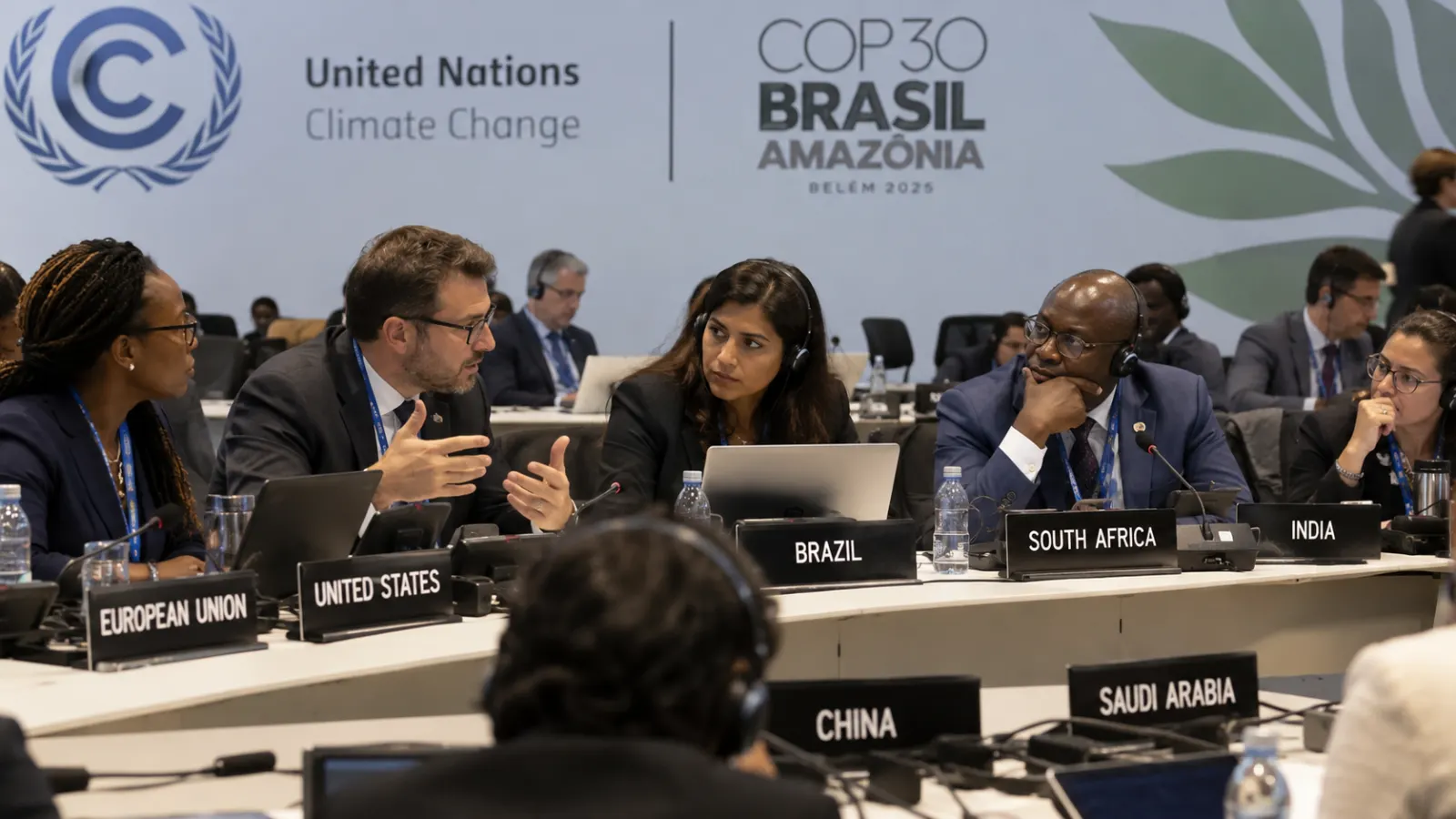
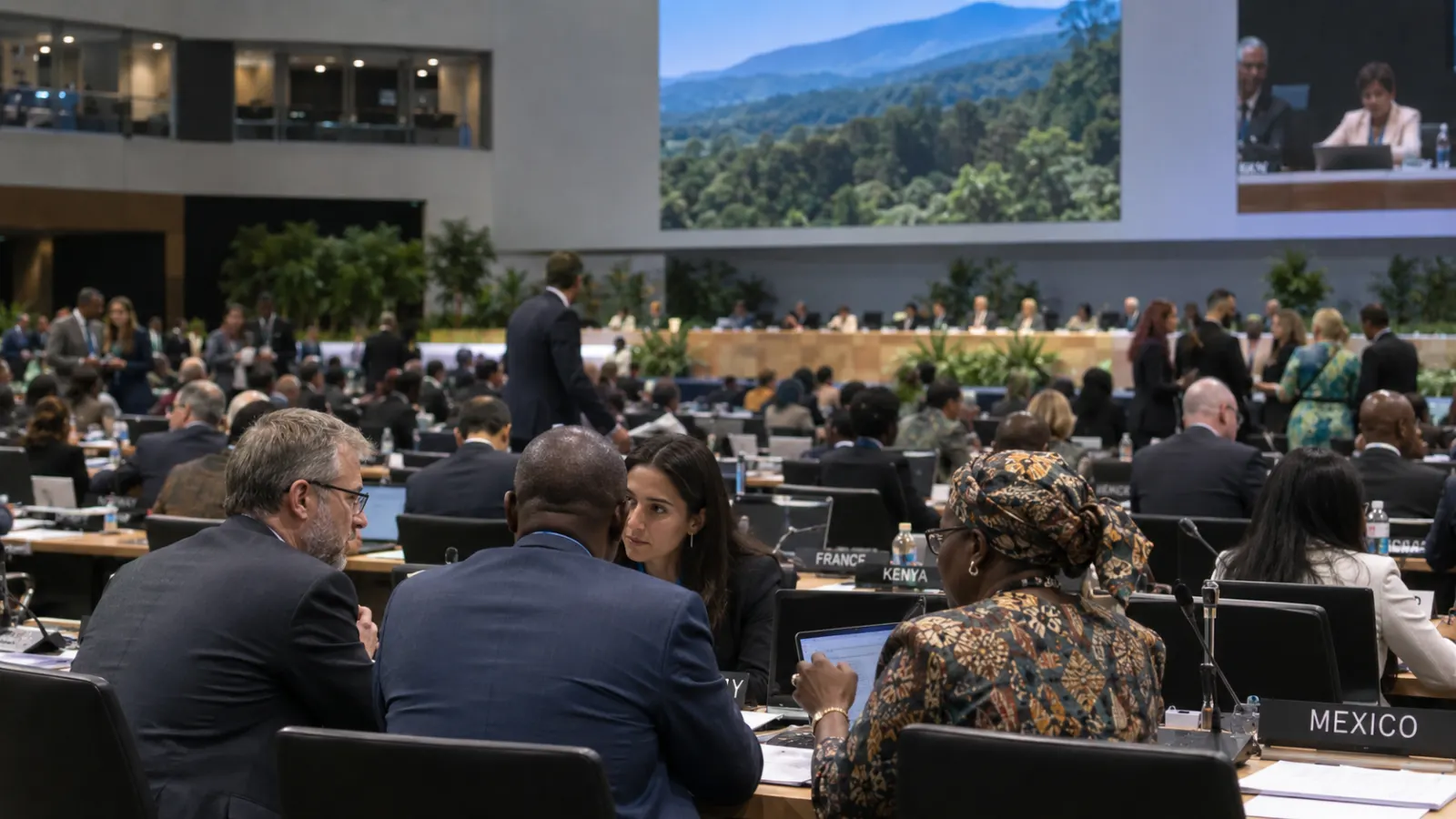
The annual UN climate conference then brings several treaty bodies together. The Conference of the Parties (COP) governs the Convention, the CMP serves Parties to the Kyoto Protocol and the CMA serves Parties to the Paris Agreement. The UNFCCC secretariat provides organisational and technical support, while governments negotiate and adopt the decisions. (unfccc.int)
Decision-making is heavily consensus-based. The Convention's voting rule was never fully agreed, so substantive decisions in practice generally require consensus rather than a simple majority vote. That gives governments substantial protection against being routinely outvoted, but it can also make agreement difficult when national interests diverge sharply. (unfccc.int)
The annual summit is only the visible part of this process. Two permanent subsidiary bodies—the Subsidiary Body for Scientific and Technological Advice (SBSTA) and the Subsidiary Body for Implementation (SBI)—continue technical and implementation work between conferences. Negotiators and experts work on issues such as transparency, adaptation, carbon accounting, technology and implementation long before political leaders arrive at a COP.
The secretariat supports the process, while the IPCC assesses the science
The UNFCCC secretariat, commonly known as UN Climate Change, has been based in Bonn since 1996. It supports negotiations, provides technical expertise, assists with analysis and review of information submitted by governments and supports the bodies created under the Convention, Kyoto Protocol and Paris Agreement. (unfccc.int)
Much of this work is less visible than summit diplomacy but essential to maintaining an international regime over decades. National reports have to be received and reviewed. Conference agendas, legal documents and translations have to be prepared. Registries and transparency systems have to operate. Governments with limited technical capacity may need assistance in meeting reporting requirements.
The secretariat therefore provides continuity even when governments, ministers and annual COP presidencies change.
The Intergovernmental Panel on Climate Change (IPCC) plays a different role. It is closely connected with international climate policy but is institutionally distinct from the UNFCCC secretariat. The IPCC was created in 1988 by the World Meteorological Organization and the United Nations Environment Programme. It assesses scientific, technical and socioeconomic research relevant to climate change; it does not conduct most of the underlying research itself. (ipcc.ch)
Its role is assessment rather than government instruction. Scientists review large bodies of published research on climate processes, impacts, adaptation and emissions-reduction pathways. Governments participate in the IPCC process, including approval of summary material, but the organisation describes its work as policy-relevant rather than policy-prescriptive.
This distinction matters because phrases such as “the UN says governments must use policy X” can collapse several different institutions and processes into one. The IPCC may assess what scientific literature says about emissions pathways or climate risks. Governments then decide through negotiations and domestic political systems how they will respond.
The relationship is therefore a science-policy interface, not a command hierarchy.
Common reporting rules make national climate claims more comparable
One of the least dramatic but most important functions of the international climate system is establishing common rules for measurement and reporting.
Cooperation becomes difficult if every government calculates emissions differently, chooses its own reporting periods or reports only information favourable to its position. The Paris Agreement therefore established an Enhanced Transparency Framework, under which countries submit Biennial Transparency Reports and national inventory information and participate in review processes.
The first major UNFCCC synthesis of these reports, published in 2025, covered information from more than 100 first Biennial Transparency Reports and related submissions. The Parties included in that synthesis represented roughly 75% of global greenhouse-gas emissions in 2020. (unfccc.int)
Transparency does not force a government to meet its target, but it changes the information environment. Governments, researchers and the public can more easily compare what countries promised with what they report doing. Technical review can identify methodological problems, while common formats make national claims less dependent on each country's preferred accounting language.
Implementation remains incomplete. In July 2026, the Paris Agreement Implementation and Compliance Committee reported that 149 Parties had submitted new NDCs and 105 had met mandatory Enhanced Transparency Framework reporting requirements, while other Parties had outstanding requirements. (unfccc.int)
The compliance system itself illustrates the design of the Paris Agreement. The committee is intended to facilitate implementation and promote compliance, not operate as an international climate court imposing punitive sanctions on governments. (unfccc.int)
That may appear weaker than a domestic enforcement system, but international agreements operate in a different political environment. Sovereign governments have not transferred general climate-policy enforcement power to the UN. The system therefore relies heavily on reporting, review, diplomatic pressure, domestic implementation and repeated rounds of commitments.
Climate finance, technology and capacity are part of the same system
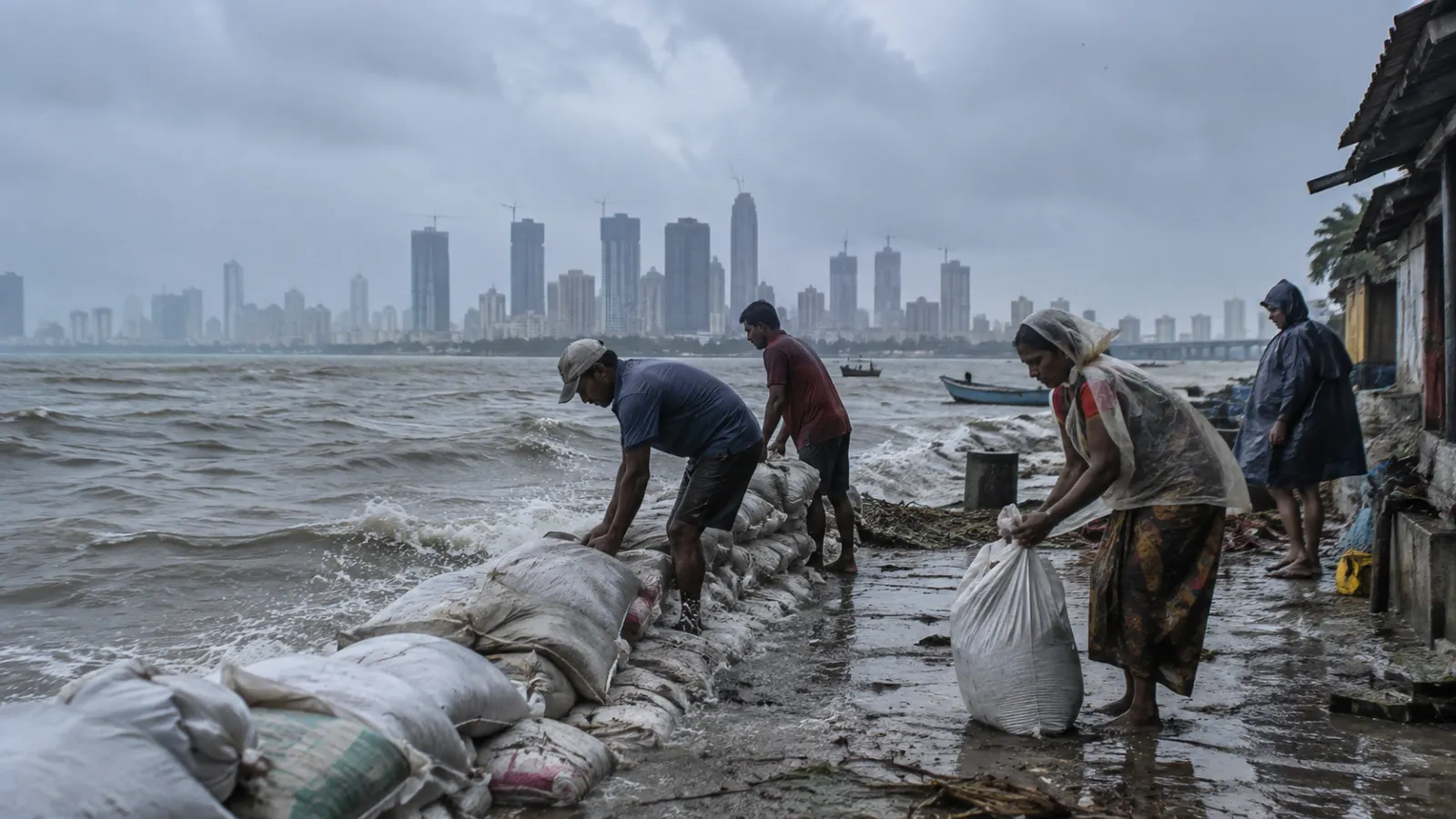
Developing countries have repeatedly argued that climate commitments cannot be separated from finance, technology and administrative capacity. Preparing emissions inventories, redesigning electricity systems, strengthening disaster protection or developing adaptation projects requires institutions and resources as well as political promises.
The UNFCCC therefore created a Financial Mechanism to provide climate-related financial resources to developing-country Parties. Its operating architecture now includes the Global Environment Facility, Green Climate Fund and Fund for responding to Loss and Damage, with additional funds and arrangements serving particular purposes. (unfccc.int)
The Green Climate Fund and Global Environment Facility finance projects and programmes across mitigation, adaptation and related areas. The Least Developed Countries Fund and Special Climate Change Fund address particular developing-country needs, while the Adaptation Fund has its own history under the Kyoto Protocol and Paris framework. The Fund for responding to Loss and Damage was created to address economic and non-economic consequences of climate impacts, particularly in vulnerable developing countries.
But the UN climate-finance architecture should not be confused with all climate finance worldwide.
National governments, development banks, bilateral donors, institutional investors, commercial banks and private companies move much larger flows of capital. The UN does not possess a central global treasury capable of financing the entire energy transition or adaptation needs of every country.
Its role is different: governments negotiate collective finance goals, establish funds, provide policy guidance and create accountability structures around some international financial flows. These mechanisms can be particularly important where commercial investment alone is unlikely to provide adequate adaptation or resilience funding.
Technology and capacity-building address a related problem.
A government may support stronger climate policy but lack enough specialists to produce detailed inventories, design electricity-market reform, prepare technically complex funding proposals or manage adaptation planning. The UNFCCC system therefore contains technology and capacity-building mechanisms intended to help governments develop these capabilities.
This is more than administrative assistance. Differences in institutional capacity affect whether international commitments can be translated into functioning domestic programmes. A small island state with a limited civil service faces different implementation constraints from a large economy with extensive ministries, laboratories, regulators and financial institutions.
Climate cooperation therefore involves not only agreeing on objectives but also building the institutional ability to carry them out.
The wider UN system reaches far beyond climate negotiations
Climate change intersects with development, health, food, cities, weather, disasters and finance, so the UN's climate work extends beyond the UNFCCC.
The World Meteorological Organization coordinates weather and climate observation. UN Environment Programme works across environmental policy and helped establish the IPCC. UN Development Programme supports national planning and implementation. FAO works on agriculture, forests and food systems, while the World Health Organization addresses climate-related health risks. Other organisations work on cities, aviation, shipping, disaster risk and development finance.
This breadth offers specialist expertise but also creates a coordination challenge. A country might simultaneously receive assistance on adaptation planning, agriculture, weather services, urban resilience and climate finance from different institutions, each with its own procedures and project cycles.
The useful question is therefore not simply how many UN programmes exist, but whether different programmes reinforce national climate and development strategies rather than creating parallel administrative systems.
The UN Secretary-General has another type of influence. The office can convene leaders, highlight scientific findings, appoint envoys, organise high-level initiatives and use public diplomacy to place climate issues on international agendas.
That influence can be substantial in agenda-setting, but it should not be confused with legislative authority. A Secretary-General cannot impose a country's NDC, national carbon price or electricity policy. Those decisions remain with governments and their domestic institutions.
The UN system also provides formal space for non-state actors. Cities, regional governments, companies, financial institutions, researchers, Indigenous peoples, trade unions and civil-society organisations participate around the negotiations even though treaty decisions are formally adopted by governments.
Their involvement reflects an implementation reality: national governments do not directly control every investment, infrastructure project or technological choice relevant to climate change. Cities shape buildings and transport, companies make investment decisions, banks finance projects and communities experience adaptation needs locally.
Non-state participation can provide expertise and implementation partnerships, but it also raises questions of unequal access. Large organisations can often maintain permanent international representation more easily than smaller community groups. Participation therefore increases the range of voices around negotiations without making every participant equally influential.
COP30 and COP31 show how the system continues between annual summits
The 2025 UN Climate Change Conference in Belém, Brazil, produced a series of decisions across climate finance, adaptation, loss and damage, gender, technology and other implementation issues. Formal COP30 decisions included guidance concerning the Green Climate Fund and Global Environment Facility, the Fund for responding to Loss and Damage, national adaptation plans, the Belém Gender Action Plan and review of the Climate Technology Centre.
The process did not end when delegates left Belém.
Technical meetings, transparency processes, committee sessions and subsidiary-body negotiations continued through 2026. By September 2026, provisional agendas had already been published for the next round of governing and subsidiary-body meetings.
COP31 is scheduled for 9–20 November 2026 at the Antalya EXPO Center in Antalya, Türkiye. The conference will simultaneously host COP31 under the Convention, CMP21 under the Kyoto Protocol and CMA8 under the Paris Agreement, alongside meetings of SBSTA and SBI.
This continuity is one reason international climate institutions exist. Climate policy unfolds across decades, while national governments, ministers and political priorities can change much faster. Treaties provide an enduring calendar, common vocabulary and procedural structure through which cooperation can continue despite those changes.
Continuity, however, does not guarantee rapid action. Negotiation among almost every government in the world necessarily brings competing economic and geopolitical interests into the same process. Institutional durability and political ambition are separate questions.
What the UN cannot do is as important as what it can
The UN cannot guarantee that countries achieve their NDCs. It cannot directly build national electricity grids, rewrite building codes, administer municipal transit systems or force national legislatures to pass climate laws. It cannot eliminate geopolitical competition or require private investors to finance particular projects without corresponding national or contractual authority.
Many climate decisions are also inherently domestic or local. Building standards, urban planning, public transport, agricultural extension, industrial regulation and emergency-response systems often depend on national, regional or municipal institutions.
International cooperation is most useful where problems cross borders or require common rules: global emissions, comparable accounting, climate finance, technology cooperation, scientific assessment and collective political commitments.
The Paris structure therefore depends on a chain of action.
Governments negotiate internationally. They submit national commitments. Common systems make progress more visible. International finance and technical assistance may support implementation. But actual emissions reductions and adaptation measures largely occur through domestic policies, investments and institutions.
This also explains why simply saying that “the UN failed” or “the UN succeeded” after a climate conference can be misleading. Outcomes reflect decisions made by governments operating through the UN framework. The organisation supplies the process, but the level of ambition governments collectively accept remains political.
The UN's climate role is coordination at global scale
Climate change creates an unusual governance problem. Greenhouse gases mix globally, but the legal authority to regulate power plants, buildings, vehicles, land use and investment remains overwhelmingly national.
The UN climate system exists in the space between those two realities.
It provides a nearly universal negotiating forum. It maintains international climate treaties. It connects scientific assessment with diplomacy. It establishes common transparency rules. It creates finance, technology and capacity-building mechanisms. It gives governments a repeated process through which commitments can be compared and updated.
None of these functions is equivalent to governing the world.
The UN cannot substitute for national climate policy, and international agreements cannot implement themselves. At the same time, no single government can create a genuinely global emissions-accounting framework, negotiate climate obligations with every other state or independently maintain a common international legal structure accepted across nearly the entire world.
The most accurate description is therefore less dramatic than either extreme.
The United Nations does not control global climate policy. It provides much of the institutional architecture through which governments attempt to coordinate it.
Whether that architecture produces sufficient action ultimately depends on what governments agree internationally—and what they then choose and are able to implement at home.