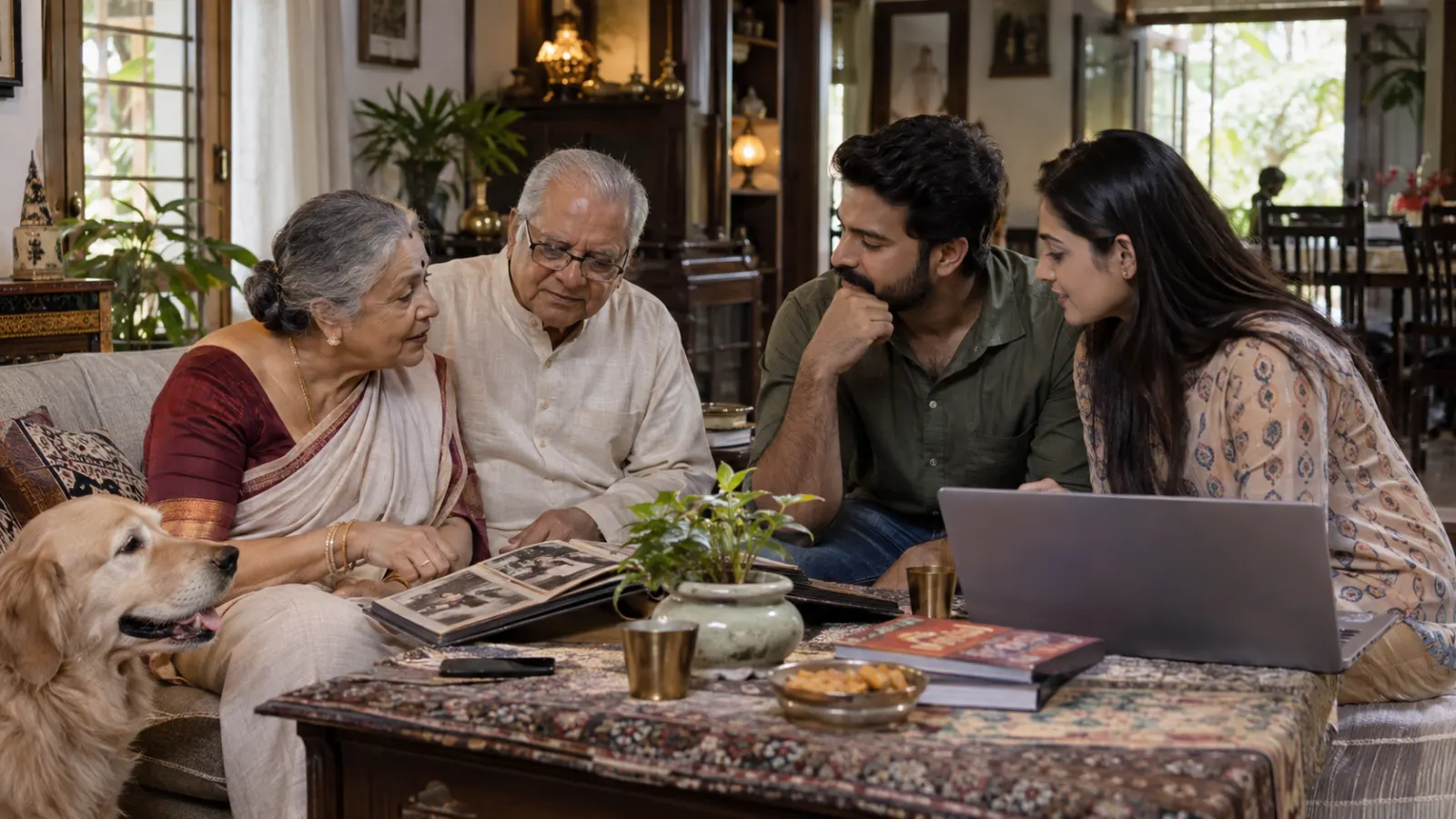
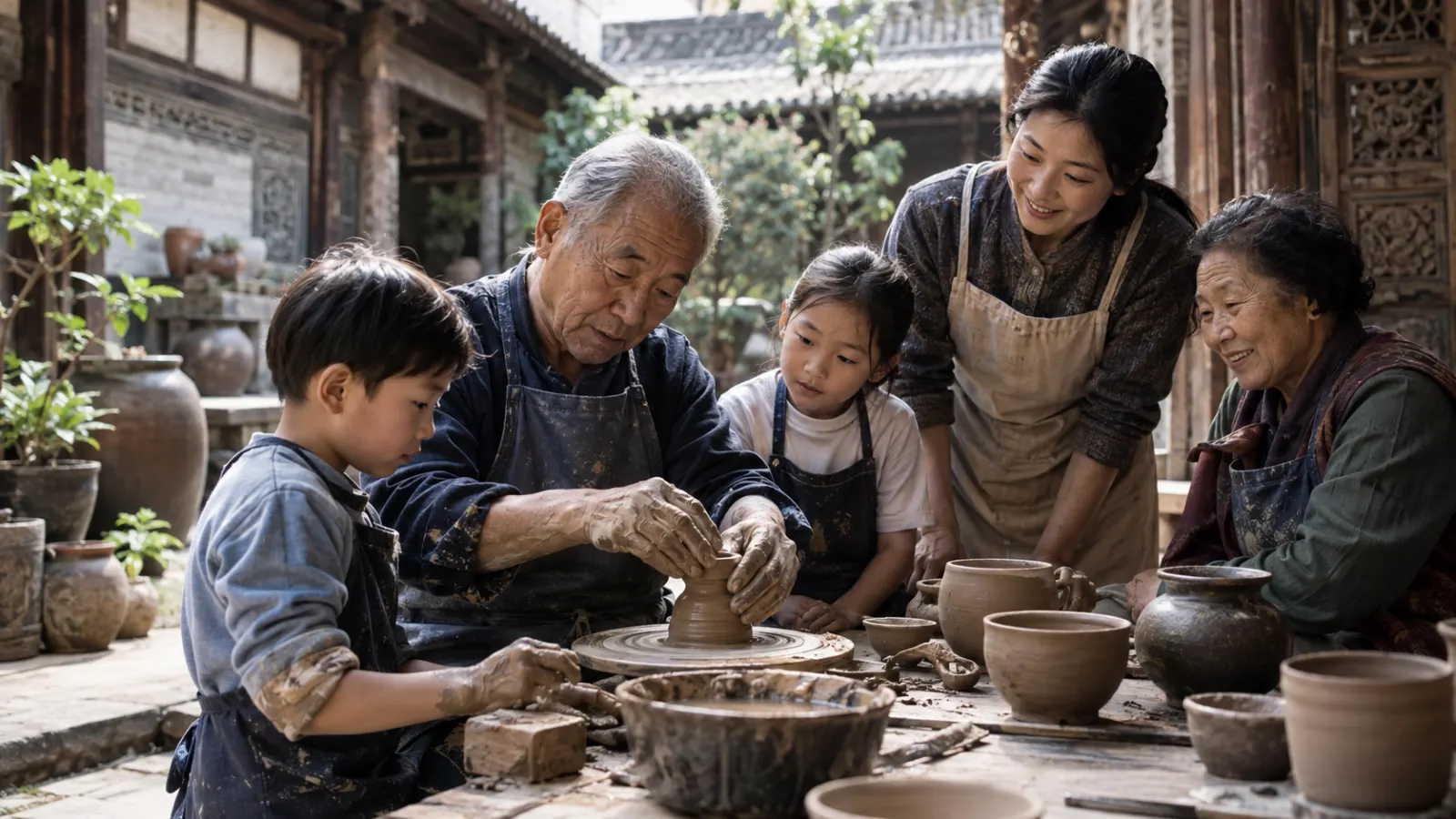
Storytelling is one of the oldest and most powerful cultural acts. Before societies built libraries, printed books, film studios or digital platforms, they told stories around fires, in homes, at shrines, in fields, during journeys, at festivals and after meals. Through stories, communities remembered ancestors, explained the world, taught children, warned against danger, celebrated heroes, mocked arrogance, preserved moral rules and imagined the future. Storytelling is not entertainment alone. It is a cultural technology for transmitting meaning.
Every culture tells stories because every culture must answer questions that facts alone cannot satisfy. Where did we come from? Why do we suffer? What is courage? What is betrayal? What do we owe our family? Why should we respect the dead? How should power be used? Why does greed destroy? What makes a life honourable? A society may answer these questions through law, religion, philosophy or education, but stories make those answers memorable. A moral rule may be abstract; a story makes it visible through characters, conflict and consequence.
At the simplest level, storytelling is the act of shaping experience into a narrative. A narrative has sequence, meaning and emotional movement. It tells not only what happened, but why it matters. This is why a story is different from a list of events. A list says, “A person left home, faced danger and returned.” A story shows fear, temptation, help, loss, courage and transformation. It allows listeners to experience meaning, not merely receive information.
Storytelling is central to culture because it carries collective memory. Many communities preserve history not only through written records but through oral narratives, songs, genealogies, legends, epics and local accounts. UNESCO recognises oral traditions and expressions as important forms of intangible cultural heritage because they pass on knowledge, cultural and social values, and collective memory. This is especially significant for communities whose histories were not fully recorded in official archives.
Official history often remembers kings, wars, laws and institutions. Storytelling remembers how ordinary people interpreted life. A family story may preserve migration, famine, courage, sacrifice or injustice. A village tale may preserve ecological warnings about rivers, forests or animals. A community legend may encode memory of invasion, settlement or resistance. A devotional story may preserve moral imagination across centuries. Stories can therefore act as informal archives.
Storytelling also shapes identity. People do not know who they are only through documents. They know themselves through stories told about their family, region, religion, nation, caste, tribe, language, profession and community. A child who hears stories of hardworking ancestors may inherit a value of perseverance. A community that tells stories of resistance may build identity around dignity. A nation that teaches stories of freedom struggle creates patriotic imagination. Identity is not only classification; it is narrative belonging.
This is why conflicts over stories are so intense. Societies argue over which stories should be taught in schools, which heroes deserve monuments, which myths should be honoured, which histories were suppressed and which narratives are harmful. Whoever controls storytelling often controls collective memory. A community whose stories are ignored may feel erased. A dominant group whose stories are treated as universal may not notice its own power. Storytelling is therefore deeply political.
Stories teach values without sounding like instructions. A parent can tell a child, “Do not be greedy,” but a story about a greedy person losing everything may be more effective. A teacher can define courage, but a story of someone standing up under pressure makes courage emotionally understandable. Folktales often teach caution, cleverness, humility, generosity and justice through animals, tricksters, kings, demons, fools and wise elders. The lesson enters memory because it is carried by plot.
Religious traditions also rely heavily on storytelling. Sacred stories explain creation, duty, devotion, sin, compassion, sacrifice, liberation and divine justice. They are recited in temples, mosques, churches, gurudwaras, monasteries and homes. Their power lies not only in doctrine but in repeated narration. A story heard every year during a festival becomes part of emotional time. It links personal life to sacred history.
Storytelling creates community because listening together produces shared emotion. When people gather for a performance, epic recitation, theatre, cinema, folk song, sermon or family narration, they are not merely receiving content individually. They are experiencing meaning collectively. Laughter, silence, tears, suspense and applause become social bonds. A community that shares stories also shares references. A single line from a known story can evoke a whole moral world.
The body matters in storytelling. In oral traditions, stories are carried through voice, gesture, rhythm, repetition, song, facial expression and audience response. The teller is not just a delivery system. The teller interprets the story. The same tale may sound different when told by a grandmother, a bard, a priest, a comedian, a teacher or a film director. Storytelling is performance, and performance allows adaptation. Each retelling can preserve the core while adjusting emphasis.
This adaptability explains why stories endure. A story survives when later generations find new relevance in it. An ancient tale about exile may speak to migrants. A myth about pride may speak to political power. A folktale about cleverness may speak to the powerless. A family story about hardship may guide a new generation facing economic struggle. Stories remain alive because they are not fixed like stone; they are reinterpreted.
Storytelling also helps societies manage fear and uncertainty. Disasters, illness, death, war, betrayal and social change are difficult to face directly. Stories give them form. They allow people to place suffering inside a larger pattern. This does not erase pain, but it makes it speakable. A mourning community may tell stories about the dead to preserve presence. A society facing crisis may tell stories of survival to rebuild hope. Narrative helps human beings endure what raw fact cannot heal.
Powerful stories can also challenge authority. Satire, protest songs, street theatre, novels, films and oral jokes have often criticised rulers, social hypocrisy and injustice. A direct accusation may be punished, but a story can carry critique through allegory. Trickster tales often allow weaker people to laugh at the powerful. Modern cinema and literature can expose caste, gender violence, corruption, ecological destruction and class inequality. Storytelling is not always conservative; it can be revolutionary.
At the same time, stories can reinforce harmful beliefs. A story may glorify violence, justify hierarchy, stereotype communities, romanticise sacrifice or normalise gender inequality. Myths and legends can be used to exclude outsiders. National stories can become aggressive when they erase plural histories. Family stories can create pressure by idealising obedience. The power of storytelling is morally ambivalent. It can liberate or control, humanise or dehumanise.
This is why critical listening matters. We should not ask only whether a story is old or popular. We should ask what it teaches, whom it includes, whom it silences and what kind of future it imagines. A mature culture does not destroy its stories, but it learns to interpret them. It can honour narrative heritage while questioning unjust meanings. Retelling is often a form of cultural reform. Marginalised groups frequently reclaim old stories by telling them from new perspectives.
Modern media has expanded storytelling dramatically. Print, radio, cinema, television, podcasts, video games, streaming platforms, reels and social media threads have all changed how stories travel. A local tale can reach global audiences. A historical event can be turned into a documentary, a film, a meme, a podcast or a graphic novel. Digital storytelling has democratised voice in some ways, allowing individuals and communities to share experiences without waiting for traditional gatekeepers.
But digital storytelling also creates new problems. Algorithms reward speed, emotional intensity and simplification. Complex histories may become viral fragments. False stories may spread faster than verified information. Communities may be reduced to stereotypes for engagement. Personal trauma may become content. The cultural power of storytelling becomes dangerous when narrative replaces truth entirely. A society must protect storytelling while also protecting evidence.
Advertising and politics understand storytelling very well. A brand rarely sells only a product; it sells a story of aspiration, care, tradition, status or freedom. A political movement rarely offers only policy; it offers a story of decline, renewal, injustice, pride or destiny. People respond to stories because stories organise emotion. This is why media literacy is essential. Citizens must learn to identify narrative frames, emotional triggers and hidden assumptions.
Storytelling also matters in personal life. People understand themselves through the stories they tell about their own lives. One person may narrate failure as proof of inadequacy; another may narrate it as learning. One family may remember poverty as shame; another may remember it as resilience. Personal identity is partly autobiographical storytelling. Changing the story does not change facts, but it can change meaning.
In education, storytelling is one of the best ways to teach complex ideas. Historical dates become memorable when connected to human choices. Scientific discoveries become meaningful when told through curiosity, error and experiment. Ethical lessons become clearer through dilemmas. Civic education becomes deeper when students hear stories of ordinary citizens, not only famous leaders. Storytelling makes knowledge emotionally accessible.
However, storytelling should not be confused with manipulation. Good storytelling respects the listener’s intelligence. It does not hide complexity simply to create emotional impact. Responsible storytelling connects emotion with truth. It gives people enough context to understand rather than merely react. This is especially important for journalism, public history, documentaries and educational content.
Cultural storytelling is strongest when it remains plural. No society has only one story. Families contain multiple memories. Nations contain competing histories. Religions contain different interpretations. Regions contain many voices. A culture becomes healthier when it allows many stories to be heard, especially those of women, workers, minorities, migrants, Indigenous communities and marginalised groups. Diversity of stories expands moral imagination.
In the end, the power of storytelling lies in its ability to turn experience into shared meaning. Stories preserve memory, teach values, create belonging, challenge power, comfort suffering and imagine alternatives. They travel across generations because human beings do not live by information alone. We need meaning, pattern, emotion and example.
A culture that loses its stories loses more than entertainment. It loses a way of remembering itself. A culture that refuses to question its stories risks being trapped by them. The wisest societies do both: they preserve stories that carry memory and reinterpret stories that need renewal. Storytelling is powerful because it is where culture speaks to itself.
The power of storytelling also lies in its ability to compress complexity into memory. People may forget a lecture, but they remember a character. They may forget a policy argument, but they remember a scene of injustice. This is why reformers, teachers and spiritual leaders often use examples instead of abstractions. A story gives the mind a structure to hold. It allows ideas to travel from one person to another without losing emotional force.
Storytelling is also one of the ways communities negotiate change. When new realities emerge, old stories are retold with new emphasis. Migration produces stories of departure and return. Urbanisation produces stories of loneliness, ambition and dislocation. Feminist retellings ask what older stories looked like from women’s perspectives. Environmental storytelling asks what myths, folk narratives and local memories reveal about the relationship between humans and nature. In this sense, storytelling is not merely backward-looking. It helps societies rehearse new moral possibilities.
There is a special relationship between storytelling and empathy. A statistic can inform people that suffering exists, but a story can make them imagine another person’s inner life. This does not mean stories should replace data, but it explains why they matter. Social distance reduces when people encounter lives unlike their own through narrative. Literature, theatre, cinema and oral testimony can humanise those who are otherwise reduced to labels: migrant, widow, farmer, worker, refugee, minority, patient or victim. Storytelling can turn categories back into people.
Yet empathy created by stories must be responsible. A powerful story can make one individual visible while hiding a wider system. It can sentimentalise suffering without explaining causes. It can make audiences feel moved without encouraging understanding. Therefore, mature storytelling balances the individual and the structural. It gives a face to experience, but also shows the conditions that produced that experience.
In cultural life, stories are never finished. Every generation receives a narrative inheritance and decides what to do with it. Some stories are preserved almost unchanged because their rhythm and meaning remain powerful. Some are revised because older versions no longer satisfy ethical expectations. Some are rejected because they carry harm. Some new stories are created because older narratives cannot explain new realities. This continuous editing of cultural memory is one of the signs of a living society.