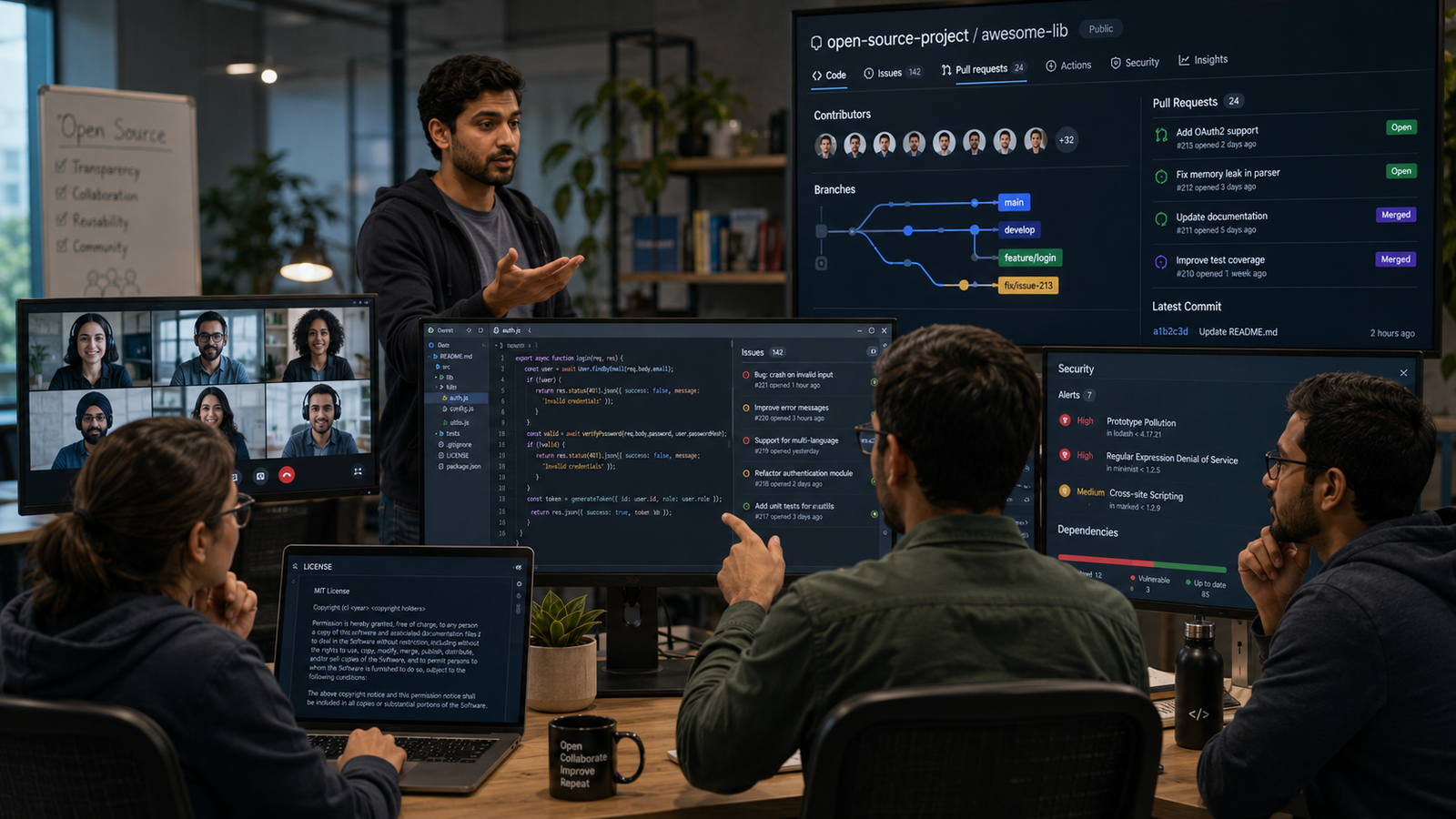
Much of the modern digital world runs on software that no single company fully owns in the traditional closed sense. Web servers, programming languages, databases, security tools, mobile systems, cloud platforms and artificial intelligence frameworks often depend on open source components. The phrase sounds simple, but it is often misunderstood. Open source is not just software that is free to download. It is a legal, technical and community model for building and sharing software.
The Simple Meaning
Open source software is software whose source code is made available under a license that permits people to use, study, modify and share it under defined conditions. Source code is the human-readable version of a program. A finished app may appear as buttons and screens, but source code is the instruction layer developers write. When software is open source, others can inspect how it works, suggest improvements, fix bugs or build new versions, depending on the license terms.
Why the License Matters
The license is the heart of open source. Simply posting code online does not automatically make it open source. Without a license, copyright restrictions may still prevent others from copying, modifying or redistributing the code. Open source licenses grant permissions, but they may also impose conditions. Some require attribution. Some require modified versions to remain open under similar terms. Some are more permissive and allow broad commercial use. The license converts code visibility into usable rights.
How Open Source Development Works
Open source development often happens in public repositories where developers can report issues, suggest changes, submit patches and review each other’s work. A project may have maintainers who decide which contributions are accepted. Larger projects may have governance models, security teams, release schedules and community guidelines. Smaller projects may depend on one or two volunteers. This community structure is powerful, but it also means that open source health varies widely from project to project.
Why Developers Use Open Source
Developers use open source because it saves time, improves learning and encourages reuse. If a reliable open source library already solves a common problem, a team does not need to rebuild that function from scratch. Developers can also inspect the code to understand behaviour, adapt it to specific needs and contribute fixes. For students and early professionals, open source offers a practical way to learn real-world software development by reading and improving actual code.
Why Companies Use Open Source
Companies use open source for speed, flexibility and ecosystem advantage. Cloud systems, analytics tools, operating systems and development frameworks frequently include open source components. A company may build commercial products on top of open source infrastructure. It may also release open source tools to attract developers, set standards or build trust. In many sectors, open source is not a hobby movement at the edge; it is part of core digital infrastructure.
Benefits for Society
Open source can reduce duplication, expand access and support transparency. Schools, startups, governments and researchers can use tools that would otherwise be too expensive or unavailable. Public review can help detect bugs and security weaknesses, although review is not automatic. Open standards and open software can also reduce dependence on one vendor. This is why open source is often linked with digital sovereignty, innovation and collaborative problem-solving.
Risks and Limitations
Open source is not risk-free. A project may be abandoned. A dependency may contain vulnerabilities. A license may be misunderstood. A package may be maintained by a very small team despite being used by thousands of organisations. Attackers may also target widely used open source components because a single vulnerability can affect many systems. Responsible use therefore requires version tracking, security scanning, license review and maintenance planning.
Common Misconceptions
The biggest misconception is that open source means no one owns the software. In reality, copyright still exists, and the license determines what others can do. Another misconception is that open source is always free of cost. Many open source tools are free to use, but businesses may pay for hosting, support, consulting, enterprise features or managed services. A third misconception is that open source is automatically secure. Transparency helps, but security depends on review, maintainers, users and update practices.
Final Takeaway
Open source software is a model of permission, collaboration and shared technical progress. It allows code to be studied, modified and reused under defined rules. It powers much of the internet, cloud computing, cybersecurity, data science and app development. Its strength lies in openness and community, but its reliability depends on responsible governance. Understanding open source means understanding not only code, but also licenses, maintainers, trust and long-term stewardship.