Is Fruit Healthy? Sugar, Fibre, Juice and What Actually Matters
Fruit contains sugar. A banana does. So do mangoes, apples, grapes and oranges. That fact is sometimes used to argue that fruit should be restricted in the same way as sweets, desserts or sugary drinks.
The comparison misses an important nutritional distinction: the form in which carbohydrate is eaten matters.
Whole fruit contains water, fibre, vitamins, minerals and numerous plant compounds within an intact or partly intact food structure. It usually requires chewing, occupies substantial volume and takes longer to eat than a sweetened drink or confectionery product. Its sugar is therefore being consumed as one component of an entire food rather than as an isolated source of rapidly available sweetness.
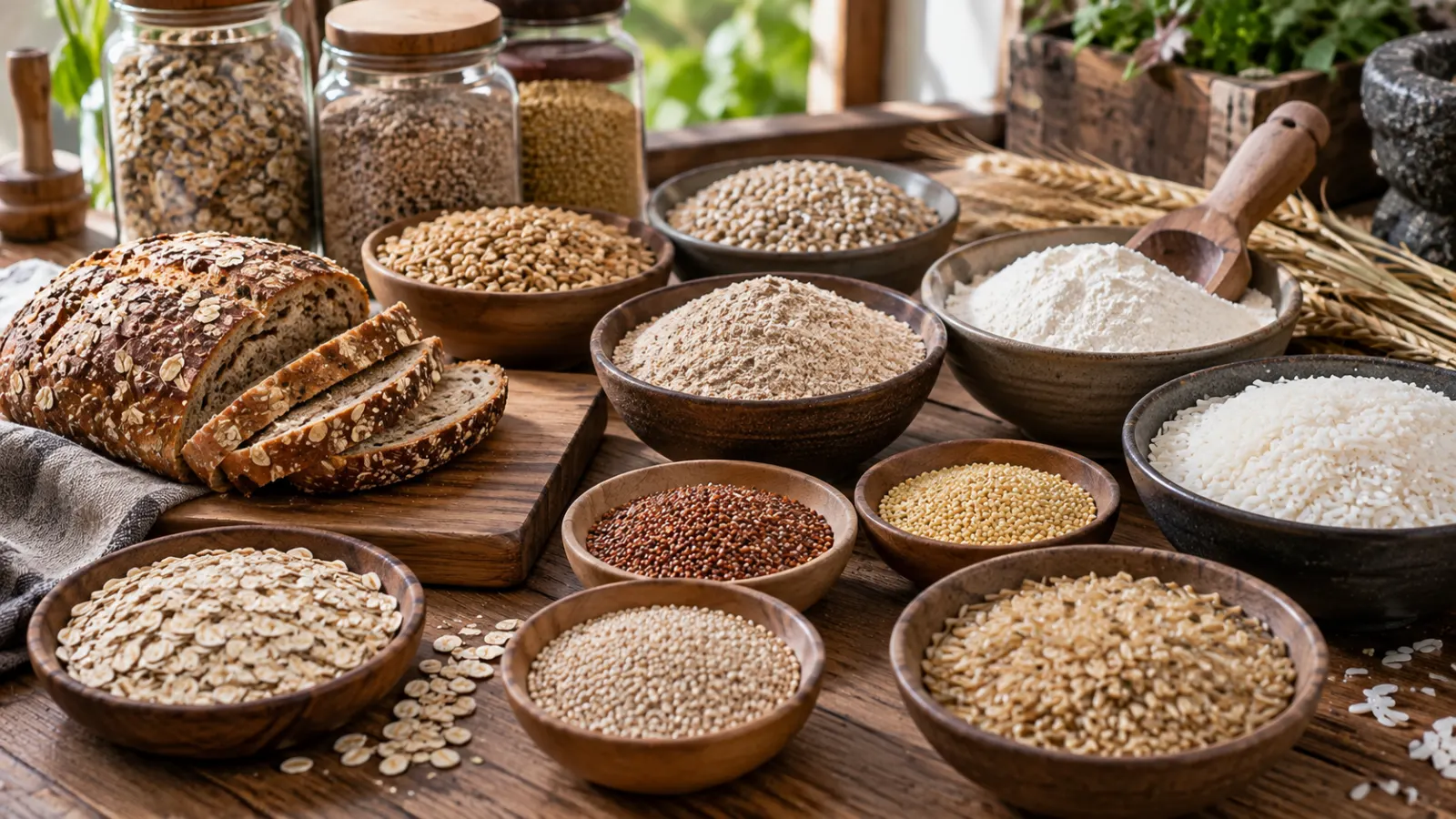
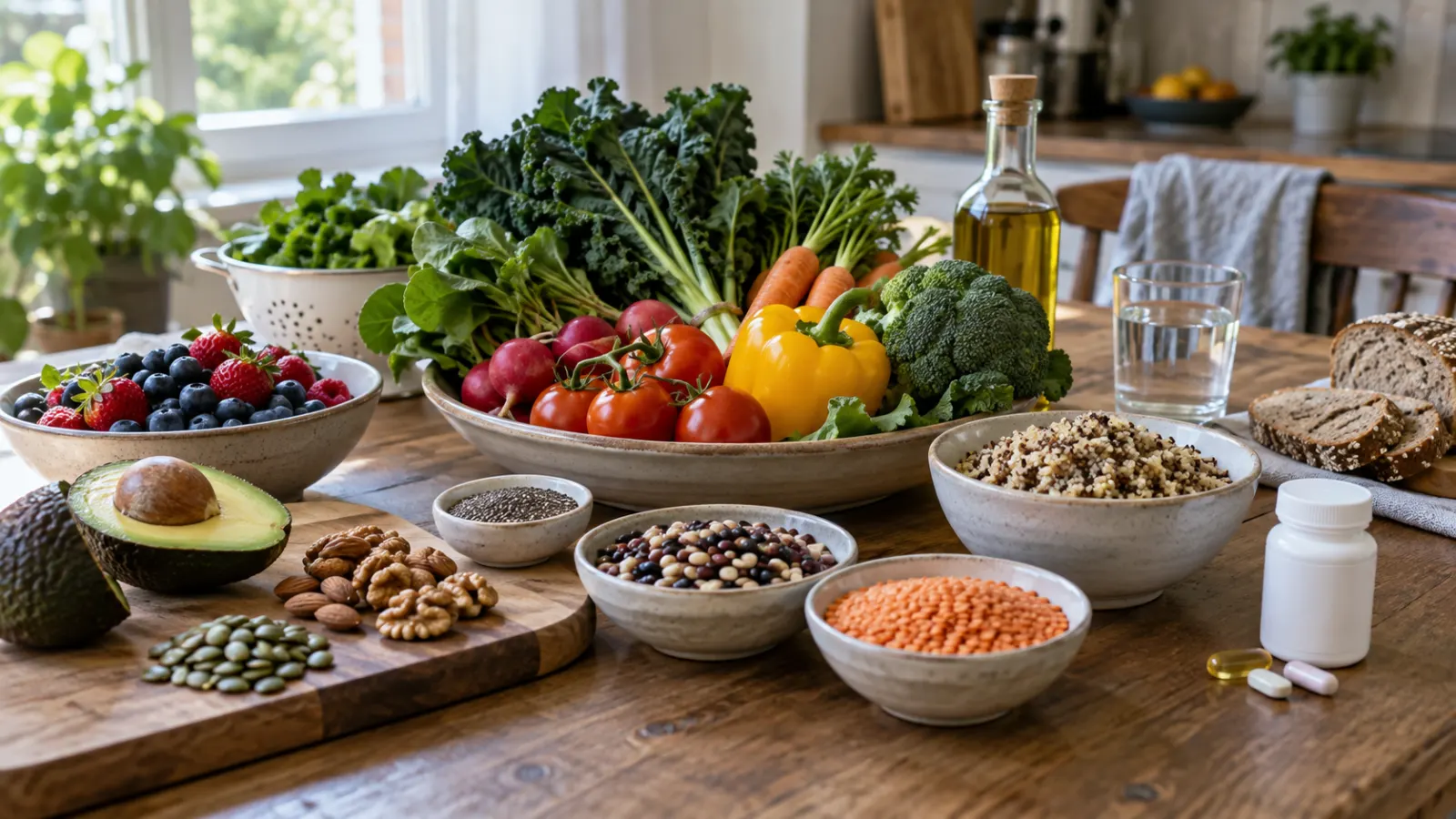
The World Health Organization's current healthy-diet guidance recommends that carbohydrates come primarily from whole grains, vegetables, fruits and pulses. For people aged 10 years and older, WHO recommends at least 400 grams of fruits and vegetables combined each day and at least 25 grams of naturally occurring dietary fibre. (who.int)
That does not mean fruit should be eaten without regard to quantity, medical conditions or the rest of the diet. It means that asking only “How much sugar does this fruit contain?” gives an incomplete picture.
A more useful question is:
What form is the fruit in, how much is being eaten, and what is it replacing in the overall diet?
Whole fruit is more than a source of sugar
Different fruits supply different combinations of nutrients.
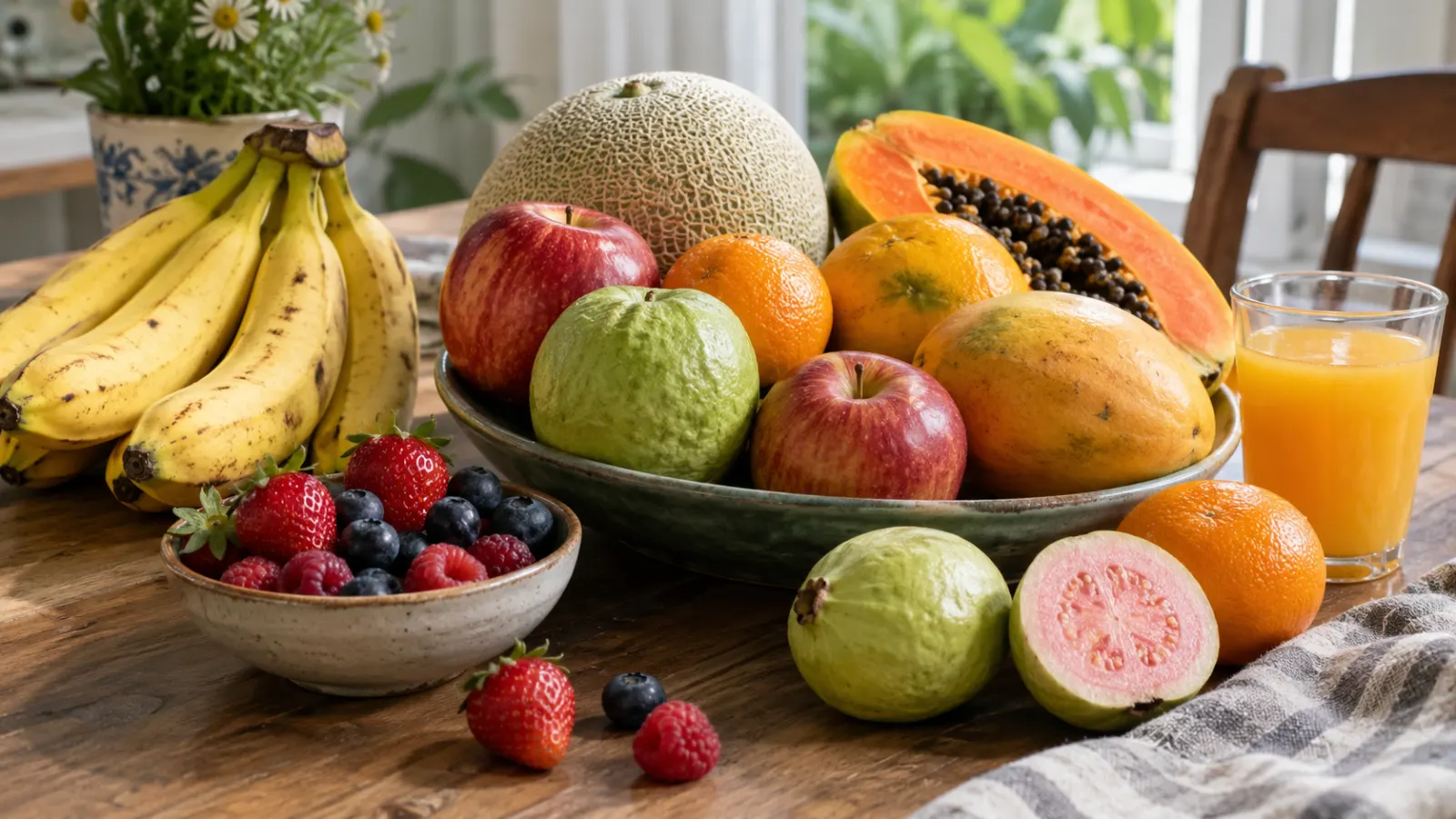
Citrus fruits can contribute vitamin C and flavonoids. Orange and yellow fruits may provide carotenoids. Bananas contain potassium and carbohydrate. Berries contain several classes of polyphenols, including anthocyanins. Guavas, papayas, melons, apples and many other ordinary fruits can all make useful contributions to a varied diet.
Fruit also contributes dietary fibre.
That is important because fibre is not merely something added to food labels to make products appear healthier. Naturally occurring dietary fibre affects digestion, stool formation and the rate at which food moves through the gastrointestinal tract. Some types of fibre are fermented by gut microorganisms, while fibre and food volume can contribute to fullness.
WHO's current guidance specifically emphasises obtaining carbohydrates from foods containing naturally occurring fibre rather than relying heavily on refined carbohydrate sources. (who.int)
Water matters too.
Most fresh fruits contain a substantial amount of water. That increases the physical volume of the food without adding energy. A bowl of melon or orange segments occupies far more space than a small confectionery product delivering a similar amount of energy.
This does not mean all fruits produce identical effects on appetite or blood glucose. Ripeness, portion size, fibre content, individual metabolism and what else is eaten at the meal all matter.
The broader point is that nutritional effects cannot be inferred from sweetness alone.
An apple is not simply a container holding several teaspoons of sugar.
It is a food.
Sugar in whole fruit is treated differently from free sugar
WHO uses the term free sugars for sugars added to foods and beverages by manufacturers, cooks or consumers, as well as sugars naturally present in honey, syrups, fruit juices and fruit-juice concentrates. (who.int)
The naturally occurring sugars contained within intact whole fruit are not included in that definition.
This distinction is often misunderstood.
It does not mean that the glucose, fructose and sucrose inside fruit somehow cease to be sugars. Nor does it mean that someone could eat unlimited quantities of fruit without considering energy or carbohydrate intake.
It means the public-health concern around free sugars relates partly to food form and availability.
Sugars released from the cellular structure of fruit and consumed as juice can be taken in quickly and in larger quantities than the same fruit would normally be eaten whole. Added sugars can similarly deliver substantial energy without the fibre and physical structure of an intact food.
WHO recommends keeping free sugars below 10% of total energy intake and suggests reducing them below 5% for additional health benefits. Its definition explicitly includes fruit juice and juice concentrates. (who.int)
This is why a guideline telling people to limit free sugars is not a recommendation to avoid apples, bananas or oranges.
WHO's dietary guidance does the opposite: it encourages regular fruit and vegetable intake while advising limits on free sugars.
Whole fruit and fruit juice are not nutritionally interchangeable
A glass of orange juice may begin with oranges, but eating oranges and drinking their juice are not identical experiences.
Juicing disrupts or removes much of the original structure, and many juices contain substantially less fibre than the intact fruit. It is also easy to drink the juice from several pieces of fruit much faster than most people would eat the same quantity whole.
That difference can change both portion size and satiety.
WHO's 2026 healthy-diet guidance explicitly states that although fruit juice can be consumed, most varieties, including those without added sugars, contain significant quantities of free sugars and should therefore be limited. (who.int)
This needs nuance.
One hundred percent fruit juice is not nutritionally identical to a sugar-sweetened soft drink. Juice may retain vitamin C, potassium and various plant compounds depending on the fruit and processing method.
But it is also not equivalent to whole fruit.
A useful rule for routine eating is therefore:
prefer the intact fruit and treat juice as a drink that requires more attention to quantity.
This distinction also matters for dental health. WHO identifies free sugars as the primary dietary risk factor for dental caries and explicitly includes sugars naturally present in fruit juices within the free-sugar category. Frequent exposure gives oral bacteria repeated opportunities to convert those sugars into acids that damage teeth. (who.int)
How something is consumed therefore matters alongside what it contains.
Eating an orange at lunch is a different exposure pattern from slowly sipping a large fruit drink throughout the afternoon.
Smoothies retain more of the fruit, but portion still matters
Smoothies occupy a more complicated position.
When whole edible fruit is blended rather than juiced and strained, much of the fibre may remain. In that sense, a smoothie can preserve more of the original food than clear juice.
But blending still changes the physical structure and allows a person to consume a large quantity quickly.
A smoothie containing a banana, mango, berries and several other fruits may contain far more fruit than someone would normally sit down and eat at one time. Added honey, syrups, fruit juice, sweetened yoghurt or other ingredients can increase the total sugar and energy further.
This does not make smoothies inherently unhealthy.
A modest smoothie made primarily from whole fruit can fit within a healthy dietary pattern. The relevant questions are how much fruit it contains, whether sweeteners or juice have been added and whether the drink is replacing a meal or being added on top of an already adequate intake.
Calling all smoothies healthy is too simplistic.
Calling blended fruit toxic is equally unsupported.
Food form and portion remain the useful considerations.
Fresh fruit is not the only worthwhile fruit
Nutrition advice can become unnecessarily expensive when “healthy fruit” is imagined only as fresh berries, imported produce or premium organic products.
WHO specifically states that fresh fruit and vegetables are good choices but that frozen and canned versions are also appropriate when they do not contain added sugars or excessive sodium. (who.int)
Frozen fruit can be particularly practical because it lasts longer and reduces waste.
Canned fruit can also be useful. Choosing products packed in water or without added sugar generally avoids the additional free sugars found in heavy syrups.
Dried fruit needs a little more attention because removing water concentrates the food into a smaller volume.
A handful of raisins contains far more individual grapes than most people would eat fresh in the same number of bites. Dried fruit can still supply fibre and micronutrients, but portion sizes become easier to underestimate.
The American Diabetes Association makes a similar practical distinction. It identifies fresh, frozen and canned fruit without added sugars as good choices and notes that dried fruit and 100% fruit juice can also fit into the diet, but their serving sizes are relatively small and may be less filling. (diabetes.org)
Availability matters as much as nutritional perfection.
A family regularly eating affordable frozen or seasonal fruit may have a better dietary pattern than one waiting for a supposedly ideal variety that is too expensive to buy consistently.
People with diabetes usually do not need to ban whole fruit
The statement “fruit contains sugar, so people with diabetes should not eat fruit” is too broad.
Fruit contains carbohydrate, and carbohydrate intake is relevant to blood-glucose management. But whole fruit can be incorporated into many diabetes eating plans.
The American Diabetes Association recommends fresh, frozen or canned fruit without added sugars as appropriate fruit choices and notes that fruit carbohydrate should be counted as part of the overall meal plan. (diabetes.org)
Portion still matters.
A small serving of fruit contributes a different amount of carbohydrate from a very large bowl. Dried fruit and juice deliver carbohydrate in much smaller volumes, which means it can be easier to consume a larger carbohydrate load quickly.
Individual glucose responses can differ too.
Medication, physical activity, meal composition and the person's overall diabetes-management plan all affect what is appropriate.
This is why universal lists declaring bananas, mangoes or grapes “forbidden” are generally less useful than considering portion, total carbohydrate and individual response.
Someone whose glucose remains difficult to manage should work with a qualified diabetes clinician or dietitian rather than progressively eliminating nutritious foods based on internet lists.
The goal is glucose management, not fear of sweetness.
What fruit replaces can matter as much as what fruit contains
Nutrition studies are easy to misinterpret when foods are discussed as though they are simply added to an otherwise unchanged diet.
In reality, eating one food often means not eating another.
An apple eaten instead of a confectionery bar changes the snack in several ways. The fruit contributes more water and fibre and generally has a different energy density and micronutrient profile.
Replacing a sugar-sweetened drink with whole fruit and water changes the dietary pattern even more.
But adding several large portions of fruit to an already excessive energy intake is a different intervention.
This is called the substitution effect.
When someone says that a food is “healthy,” the practical question should often be:
Healthy compared with what?
Fruit does not need to act like medicine to be useful.
Its role can simply be to replace less nutritious foods while contributing fibre and dietary variety.
That is a more defensible reason for eating fruit than claims that a particular berry “detoxifies” the body or that one tropical fruit dramatically boosts immunity.
There is no single healthiest fruit
Nutrition marketing tends to create hierarchies.
Blueberries become “superfoods.” Pomegranates are promoted for antioxidants. Imported berries are placed above bananas or guavas. Exotic products are presented as though ordinary local fruit is nutritionally second-rate.
That is not how a healthy dietary pattern needs to work.
Different fruits contain different nutrient profiles. Variety is therefore generally more useful than searching for one nutritionally superior fruit.
A banana can be useful.
So can papaya.
So can guava, citrus, mango, melon, apples, pears, berries and whatever seasonal fruits are locally accessible.
WHO's healthy-diet guidance emphasises diversity as one of the core principles of healthy eating. (who.int)
Seasonality can make that diversity more affordable.
When mangoes, guavas, oranges or melons are abundant locally, prices may fall and quality may improve. Rotating through available fruits over the year can create variety without requiring expensive imported products.
Nutrition does not require access to a global luxury supermarket.
A nutritious food has little practical value if it is too expensive to become part of someone's normal diet.
Fruit products should be judged by how much of the original food remains
The word fruit on a label does not tell you whether two products are nutritionally similar.
Consider the progression:
whole orange → blended orange → orange juice → sweetened orange drink → orange-flavoured confectionery.
All may contain something associated with fruit.
They are clearly not equivalent foods.
A useful way to evaluate fruit products is to ask how much of the original structure remains.
Does the product still contain the edible fruit?
Has much of the fibre been removed?
Has water been removed so the food is concentrated?
Have free sugars or syrups been added?
Can a large amount be consumed very quickly?
Those questions are more informative than simply deciding whether a product is “natural.”
The same principle explains why whole fruit should generally be the default while juice, dried fruit and highly processed fruit products require more attention to portion and ingredients.
Fruit also has exceptions to general advice
Population-level advice never fits every individual perfectly.
Some people have fruit allergies. Others experience oral allergy syndrome, in which certain raw fruits trigger itching or swelling in the mouth because proteins in the fruit cross-react with pollen allergens.
People with certain gastrointestinal disorders may find that specific fermentable carbohydrates trigger symptoms. Fructose malabsorption can make some fruits difficult to tolerate.
Kidney disease can alter how much potassium a person should consume. Some medical treatments or dietary conditions may require other individual modifications.
These exceptions do not make fruit generally unhealthy.
They show why personal health conditions should modify general nutrition guidance when necessary.
Elimination should ideally be specific to the problem rather than progressively excluding multiple fruits without understanding what is causing symptoms.
Unnecessarily restrictive diets can reduce fibre and dietary variety.
Fruit deserves a normal place in a healthy diet
Fruit does not need extraordinary health claims to justify eating it.
It is not a detoxification treatment. No individual fruit cures disease. Antioxidant terminology does not transform berries into medicine. Eating an orange will not compensate for an otherwise nutritionally poor diet.
The case for fruit is much simpler.
Whole fruit contributes water, naturally occurring fibre, vitamins, minerals and numerous plant compounds. WHO recommends fruits as one of the primary sources from which dietary carbohydrate should come and includes fruit and vegetables within its minimum daily intake recommendations. (who.int)
Its naturally occurring sugars should therefore be understood in the context of the whole food rather than treated automatically as equivalent to free sugars in soft drinks, confectionery or fruit juice.
That does not make portions irrelevant.
It does not make juice equivalent to whole fruit.
And it does not mean every person with a medical condition should follow exactly the same advice.
For most people, however, the practical guidance is straightforward:
eat whole fruit regularly, vary the types you choose, use affordable fresh, frozen or unsweetened canned options, pay more attention to portions of juice and dried fruit, and judge fruit as food rather than as a delivery system for sugar.
The strongest nutritional question is not simply whether fruit contains fructose.
It is what else arrives with that fructose—and what would have been eaten instead.
Medical Note
This article provides general nutrition information and is not a substitute for individual medical or dietetic advice. Diabetes, kidney disease, gastrointestinal disorders, allergies, pregnancy, eating disorders, medication use and other health conditions can change dietary requirements. People with persistent symptoms or difficulty managing blood glucose should seek individual guidance from an appropriately qualified healthcare professional.