The Scientist Who Became a Public Emotion
A. P. J. Abdul Kalam occupies a distinctive place in modern Indian memory. He was a scientist, a project leader, a defence technologist, an author, a teacher, and the eleventh President of India. Yet none of these titles fully explains why he became so beloved. Kalam became a public emotion because millions saw in him a rare combination of humility, aspiration, discipline, patriotism, and accessibility. He represented the idea that knowledge could rise from modest beginnings, that science could serve national development, and that public life could still carry moral simplicity. In a country often disappointed by power, Kalam gave people an image of authority without arrogance.
To describe him as a scientist visionary is accurate because his life linked scientific work to national imagination. He was associated with India’s space programme, missile development, strategic capabilities, and a future-oriented vision of development. But he was also a communicator of dreams. He spoke to students with unusual seriousness, treating them not as an audience to be flattered but as citizens to be awakened. His speeches, books, and public engagements repeatedly returned to themes of hard work, knowledge, integrity, and national purpose. Kalam’s legacy lies not only in laboratories and institutions, but in the psychological confidence he helped create among ordinary Indians who began to see science as a pathway to dignity.
Early Life in Rameswaram: Humility, Faith, and Discipline
Avul Pakir Jainulabdeen Abdul Kalam was born on 15 October 1931 in Rameswaram, Tamil Nadu, into a modest family. His father, Jainulabdeen, was connected with boat ownership and religious life, while his mother, Ashiamma, was remembered for warmth and generosity. Rameswaram was a place of pilgrimage, sea winds, religious coexistence, and hard work. Kalam’s childhood was not marked by luxury. He sold newspapers as a young boy to support the family income, studied under limited conditions, and learned early that dignity does not require wealth. This background later became central to his public image, but it was not merely a sentimental story. It shaped his attitude toward discipline, simplicity, and gratitude.
The spiritual environment of Rameswaram also influenced him deeply. Kalam grew up in a Muslim household in a town sacred to Hindus, and his memories often emphasised harmony between communities. He later wrote and spoke about the mutual respect between his father, the local temple priest, and other religious figures. Whether one treats these memories as personal recollection or moral narrative, their significance is clear: Kalam’s idea of India was plural, spiritual, and practical. He did not present science and faith as enemies. For him, faith gave inner discipline, while science gave tools for national transformation. This synthesis made him relatable across social and religious boundaries.
Education and the Making of an Engineer
Kalam’s education took him from local schooling to St. Joseph’s College, Tiruchirappalli, and then to the Madras Institute of Technology, where he specialised in aeronautical engineering. The move from Rameswaram to advanced technical education was not easy. It required financial support, personal sacrifice, and intense commitment. At MIT, Kalam encountered the discipline of engineering design and the pressure of deadlines. One well-known episode from his student life describes how a professor pushed him hard to complete an aircraft design project. Such experiences formed the professional habits that later defined him: punctuality, focus, respect for technical detail, and the ability to work under pressure.
His early dreams included becoming a fighter pilot, but he narrowly missed selection. This failure became a turning point rather than a permanent wound. It redirected him toward aerospace and defence research. Kalam’s response to disappointment is one of the most instructive parts of his biography. He did not convert failure into bitterness. He converted it into redirection. This ability would later allow him to work through technological setbacks, institutional constraints, and public expectations. In the life of a scientist, failure is not an exception; it is part of the method. Kalam’s early career taught him to treat failure as information, not identity.
DRDO and ISRO: Learning the Architecture of National Capability
Kalam began his career at the Defence Research and Development Organisation, working in aeronautical development. His early assignments did not immediately produce the heroic image later associated with him. Like many scientific careers, they involved experimentation, uncertainty, and institutional learning. His major professional transformation came when he moved into India’s space programme and worked with the Indian Space Research Organisation. There he became associated with the Satellite Launch Vehicle programme, especially SLV-III, which successfully placed the Rohini satellite into near-earth orbit in July 1980. This achievement was a milestone in India’s technological self-reliance.
The importance of SLV-III was larger than one launch. A launch vehicle is an ecosystem of design, materials, propulsion, guidance, testing, project management, and national confidence. For a postcolonial country, building such capability meant refusing permanent technological dependency. Kalam’s role as project director made him a symbol of team science. He was not a lone inventor working in isolation; he was a leader within institutions. This distinction matters. Modern science is collaborative. Kalam’s genius was not simply technical calculation, but the ability to energise teams, absorb pressure, communicate purpose, and hold together complex projects where failure could be public and morale could collapse.
The Missile Programme and Strategic Self-Reliance
After his work in the space sector, Kalam became closely associated with India’s Integrated Guided Missile Development Programme. The programme aimed to develop indigenous missile capabilities, including systems such as Prithvi and Agni. This phase of Kalam’s life produced the popular title Missile Man of India. The title captured public imagination, but it can also oversimplify the institutional nature of the work. Missile development involved many scientists, engineers, defence planners, administrators, and political decisions. Kalam’s role was crucial because he served as a project leader who connected technology, organisation, and national security objectives.
The strategic context of this work is important. India had faced wars, technology denial regimes, and pressure from a global order that often restricted advanced technologies to powerful states. Indigenous development was therefore not only a matter of pride; it was a response to vulnerability. Kalam believed that a nation seeking peace must possess strength. This view is open to debate, especially among those concerned about militarisation, but it was central to his thinking. He saw defence technology as part of sovereignty. For him, scientific self-reliance was a shield against dependence and coercion. His strategic vision linked laboratories to national autonomy.
Pokhran-II, Nuclear Debate, and Public Visibility
Kalam’s public visibility increased further during the period of India’s 1998 nuclear tests at Pokhran, where he played an important organisational and technical role along with other scientific leaders. The tests changed India’s strategic posture and triggered intense global debate. Supporters saw them as an assertion of security and sovereignty in a nuclearised world. Critics worried about arms races, regional instability, and the moral consequences of nuclear weapons. Kalam’s own position emphasised deterrence, national confidence, and strength as a condition for peace. This made him a hero to many, but also placed him within one of the most contested areas of modern statecraft.
A balanced profile must recognise that Kalam’s strategic legacy is not beyond criticism. The celebration of missile and nuclear capabilities can overshadow ethical debates about security, development priorities, and peace. Yet it would be unfair to read Kalam as a lover of war. His public language consistently framed strength as defensive and peace-oriented. He believed weakness invites pressure, while capability creates respect. Whether one agrees fully with this view or not, it must be understood in the context of India’s postcolonial security concerns and technological restrictions. Kalam’s contribution was to make science central to national self-belief, even when the specific uses of science remained debatable.
People’s President: Simplicity in High Office
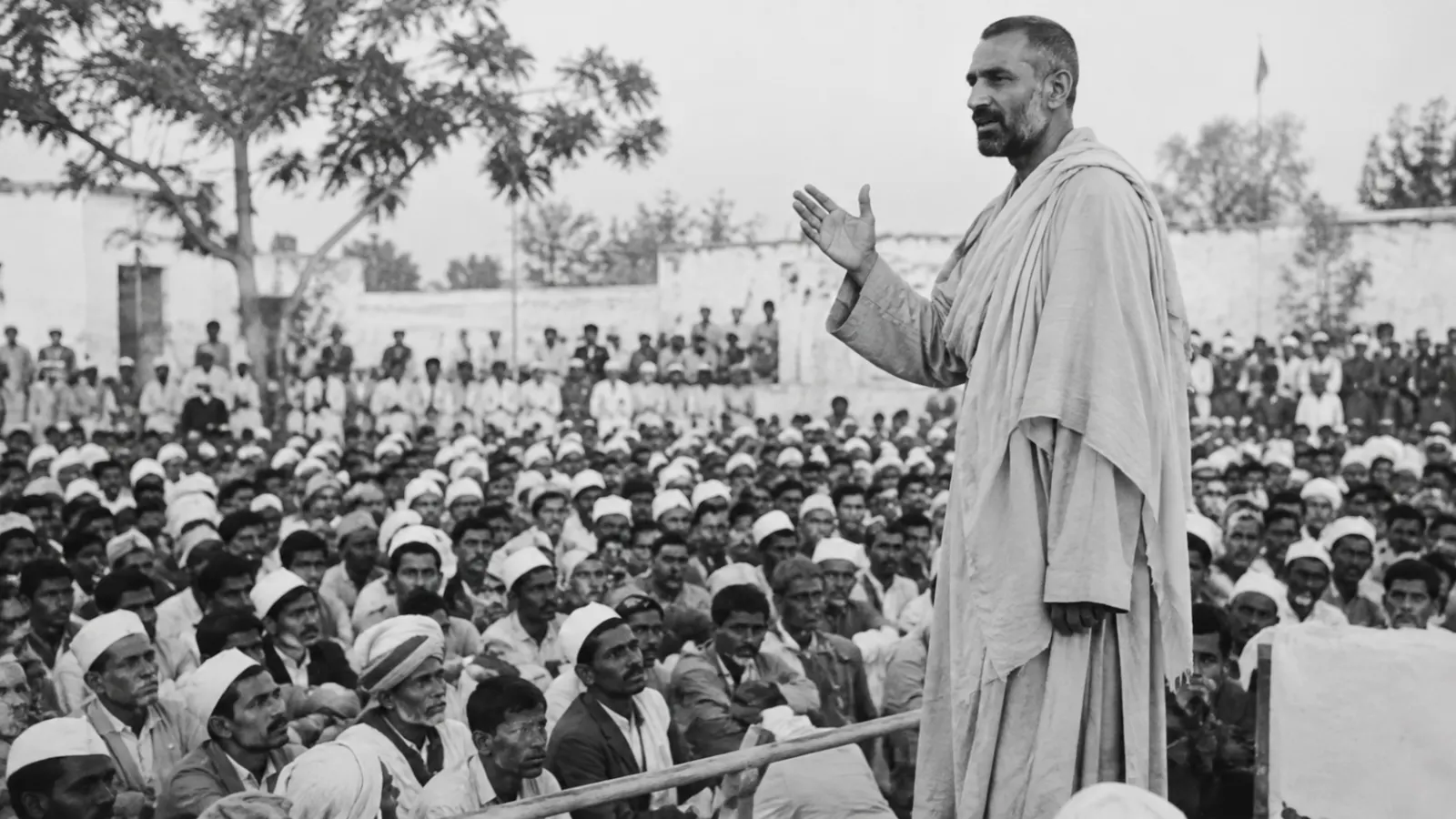
Kalam served as President of India from 2002 to 2007. His presidency was unusual because he entered Rashtrapati Bhavan not from a conventional political career, but from the world of science and public inspiration. He quickly became known as the People’s President. The phrase was not empty branding. Kalam travelled widely, met students, answered questions, used accessible language, and carried himself with visible simplicity. He brought to the presidency a teacher’s instinct. In ceremonial office, he found a platform for civic education. He reminded citizens that constitutional positions can also serve as moral classrooms.
His presidency had limits, as all presidencies in India’s parliamentary system do. The President is not the executive head in the everyday sense; real political power rests with the elected government and Parliament. Yet symbolic authority matters. Kalam used symbolism effectively. He turned official events into conversations about national development, youth, innovation, and ethics. He also faced complex constitutional moments, and scholars can debate the strength or limitations of his interventions. But the larger public memory of his presidency remains tied to dignity and accessibility. In a deeply hierarchical society, he made the highest office appear closer to ordinary citizens.
Teacher, Author, and Messenger to the Young
After and even during his presidency, Kalam’s strongest relationship was with students. He spoke to them as the builders of India, urging them to dream, read, innovate, and live with integrity. His books, including Wings of Fire, India 2020, Ignited Minds, and others, spread his ideas to a mass readership. He wrote in a style that was direct, motivational, and accessible. Critics may find some of his language idealistic, but its impact cannot be ignored. In small towns, schools, engineering colleges, and middle-class homes, Kalam became a figure who made ambition feel morally respectable and nationally useful.
His emphasis on dreams was often misunderstood as simple motivation. In Kalam’s vocabulary, a dream was not a fantasy one sees while asleep; it was a disciplined vision that refuses to let a person sleep. He connected aspiration with work. He wanted young Indians to develop scientific temper, ethical conduct, and courage to innovate. His message was especially powerful because it came from his own life. He had moved from a modest background to the highest constitutional office and to national scientific leadership. He embodied the possibility he preached. That authenticity gave his words force.
Development Vision: India 2020 and Beyond
Kalam’s development vision was built around the idea of transforming India into a developed nation through technology, education, infrastructure, healthcare, agriculture, and national character. India 2020, associated with Kalam and Y. S. Rajan, presented a framework in which scientific capability was linked to social progress. He was not satisfied with symbolic pride; he wanted measurable improvement in people’s lives. His concept of Providing Urban Amenities in Rural Areas, commonly known as PURA, reflected this concern. He argued that rural India needed connectivity, education, entrepreneurship, and infrastructure so that development would not remain trapped in cities.
The strength of Kalam’s development thinking was its optimism. The limitation was that optimism sometimes underplayed structural obstacles: inequality, governance failures, caste barriers, uneven schooling, public health weaknesses, and political economy. Technology alone cannot solve these problems. Yet Kalam’s vision remains valuable because it placed science and youth at the centre of national planning. He refused fatalism. He told India that poverty and underdevelopment were not destiny. His approach must be supplemented by social justice and institutional reform, but its emotional power lay in making development feel like a collective mission rather than a bureaucratic slogan.
Criticism and Complexity
Kalam’s public popularity sometimes made criticism difficult. Admirers turned him into a saintly figure, but serious biography must avoid blind praise. Some critics argue that his association with missile and nuclear programmes made him a symbol of militarised nationalism. Others suggest that his motivational language sometimes simplified complex social realities. His presidency, while beloved, can also be examined for constitutional restraint and the limits of symbolic politics. There were moments when people expected stronger public positions from him. These debates are legitimate and necessary because public heroes should not be protected from analysis.
Yet criticism should be proportional. Kalam did not present himself as a professional politician, ideological theorist, or social revolutionary. His domain was science, education, inspiration, and national capability. Within that domain, his contribution was enormous. He brought scientific institutions into popular imagination. He made humility compatible with ambition. He made young people feel addressed by the state. He showed that a person from a modest background could rise without abandoning simplicity. His life should not be flattened into either worship or dismissal. It should be read as the journey of a scientist who became a moral symbol of aspiration.
Final Day and National Mourning
Kalam died on 27 July 2015 while delivering a lecture at the Indian Institute of Management Shillong. The circumstances of his death became part of his legend because he died doing what he loved most: speaking to students. National mourning followed across regions, religions, and political lines. The grief was unusually personal. Many Indians who had never met him felt they had lost a teacher. This emotional response reveals the depth of his connection with the public. He had become a figure people trusted, not because he promised them immediate benefits, but because he made them feel capable.
His memorial at Rameswaram and the continued celebration of his birth anniversary reflect official recognition, but his real memorial lies elsewhere: in classrooms where his quotations are remembered, in students who read Wings of Fire, in scientists who see public service as a noble calling, and in citizens who still seek integrity in public life. Kalam’s legacy is not only institutional; it is motivational and ethical. He belongs to the rare category of public figures whose memory inspires personal discipline. People do not merely ask what Kalam achieved. They ask what they can become after remembering him.
Conclusion: A Life That Turned Aspiration Into Duty
A. P. J. Abdul Kalam’s life tells a story of movement: from Rameswaram to laboratories, from project rooms to Rashtrapati Bhavan, from defence technology to classrooms, from national strategy to individual dreams. At every stage, he carried a consistent message: knowledge matters, character matters, and nations are built by disciplined citizens. He did not come from inherited privilege. He built his authority through work, simplicity, and service. That is why his popularity cut across class, region, religion, and politics. He represented the dignity of effort.
His title as the Missile Man of India captures only one part of him. The fuller description is more demanding: he was a scientist who taught India to dream with discipline. His life invites admiration, but also responsibility. To praise Kalam while neglecting education, scientific temper, ethical public life, and rural development would be to miss his message. His legacy asks India to turn inspiration into institution, dreams into work, and patriotism into service. In that sense, Kalam remains not only a former President or scientist, but a continuing challenge to every young person and every public institution that claims to believe in India’s future.
Leadership Style in Scientific Institutions
Kalam’s leadership style was built on mission clarity and emotional ownership. Large technology programmes can easily become bureaucratic, fragmented, and fearful of failure. Kalam understood that engineers and scientists need more than instructions; they need a reason to endure pressure. Colleagues often remembered his ability to absorb blame when projects failed and distribute credit when they succeeded. This may sound like a personal virtue, but in high-risk technology environments it becomes an institutional asset. Teams innovate more boldly when they believe their leader will protect them from humiliation and keep attention fixed on the mission.
His project leadership also reflected the Indian challenge of building advanced technology with limited resources, import restrictions, and uneven industrial support. Kalam’s generation could not assume easy access to every component, software system, material, or testing facility. They had to improvise, coordinate, and persist. This gave his technological nationalism a practical basis. It was not only rhetoric about pride. It emerged from the daily experience of building systems under constraints. In that sense, Kalam helped create not just missiles or launch capability, but a culture of indigenous problem-solving.
Science as Public Culture
One of Kalam’s most important contributions was that he made science emotionally attractive to the wider public. In many societies, science remains trapped between elite laboratories and school textbooks. Kalam brought it into public aspiration. He made rockets, satellites, materials, engineering, and innovation part of ordinary conversation. He did not explain every technical detail to mass audiences, but he communicated the dignity of scientific work. This matters because a country cannot build scientific temper only through policy documents. It also needs role models who make inquiry, experiment, and disciplined imagination culturally respected.
His popularity among students created a bridge between national development and personal ambition. A young person in a small town could listen to Kalam and feel that engineering, research, teaching, or innovation was not merely a career option but a form of service. This public pedagogy has long-term significance. Nations compete not only through budgets but through the dreams they legitimise. Kalam legitimised scientific dreams. He made the laboratory feel connected to the classroom and the classroom connected to the nation. That is why his speeches often had the tone of both a teacher and a nation-builder.
Ethics, Simplicity, and the Burden of Being an Icon
Kalam’s simplicity became central to his moral authority. His modest lifestyle, personal discipline, and visible lack of appetite for luxury contrasted sharply with common public cynicism about status and power. People trusted him because he appeared unpossessive. Yet this simplicity also created the burden of iconhood. Once a public figure is treated as morally pure, society may stop analysing him seriously. Kalam deserves admiration, but he also deserves critical reading. His life should be studied as public history, not only circulated as motivational quotation.
The best way to honour him is therefore not to repeat slogans but to examine the values he embodied. Did institutions become more honest? Did schools become more curious? Did public life become more disciplined? Did rural India receive the connectivity and opportunity he imagined? Did science become more inclusive? These questions move Kalam from inspiration to accountability. He would be diminished if remembered only as a smiling portrait above a school stage. His real legacy asks for work: better laboratories, better teachers, better governance, better ethics, and a development model that treats every child as a possible contributor to India’s future.
Relevance for India’s Next Generation
Kalam remains relevant because India is still trying to convert demographic energy into productive capability. Millions of young people need not only employment but confidence, scientific temper, ethical direction, and exposure to meaningful role models. Kalam’s message was that national development is not the work of government alone; it requires disciplined citizens who can learn, build, question, and serve. This idea is especially important in an age of distraction, shortcuts, and cynicism. His life insists that aspiration must be tied to competence and character.
For today’s students, Kalam’s biography should not be read merely as an inspiring story of success. It should be read as a working manual for seriousness: respect teachers, master fundamentals, accept failure, build teams, stay humble, and connect personal ambition to public purpose. For today’s institutions, his life asks whether they are creating conditions where such seriousness can flourish. The future he imagined will not arrive through admiration alone. It requires laboratories, classrooms, libraries, mentors, and public ethics worthy of the dreams he asked young Indians to carry.