Flydubai Cockpit Attack: What Failed in Aviation Security?
The attempted attack aboard Flydubai flight FZ1073 has become one of the most disturbing aviation-security incidents in recent years because the alleged threat did not come from a passenger trying to enter the cockpit. It came from inside the cockpit itself. Investigators say an Omani co-pilot allegedly attacked Indian captain Smit Machchhar during a Dubai-to-Tel Aviv flight on September 30 and attempted to seize control of the aircraft. Passengers, crew members and reserve pilots ultimately helped regain control, and the aircraft made an emergency landing in Saudi Arabia.
Fresh details emerging from the investigation have made the incident more troubling. Israeli officials say the co-pilot may have planned an attack before joining Flydubai and deliberately sought employment with an airline operating flights to Israel. Authorities are also examining reports that warning signs concerning his background may have existed before the flight. These claims remain part of an ongoing investigation, and the full sequence of decisions that allowed him to operate the route has not yet been independently established.
The incident therefore raises a larger aviation-security question. The global system built after the September 11 attacks is extremely focused on preventing unauthorised people from reaching a cockpit. But what happens when the person who poses the threat is already authorised to sit inside it?
What happened aboard Flydubai flight FZ1073?
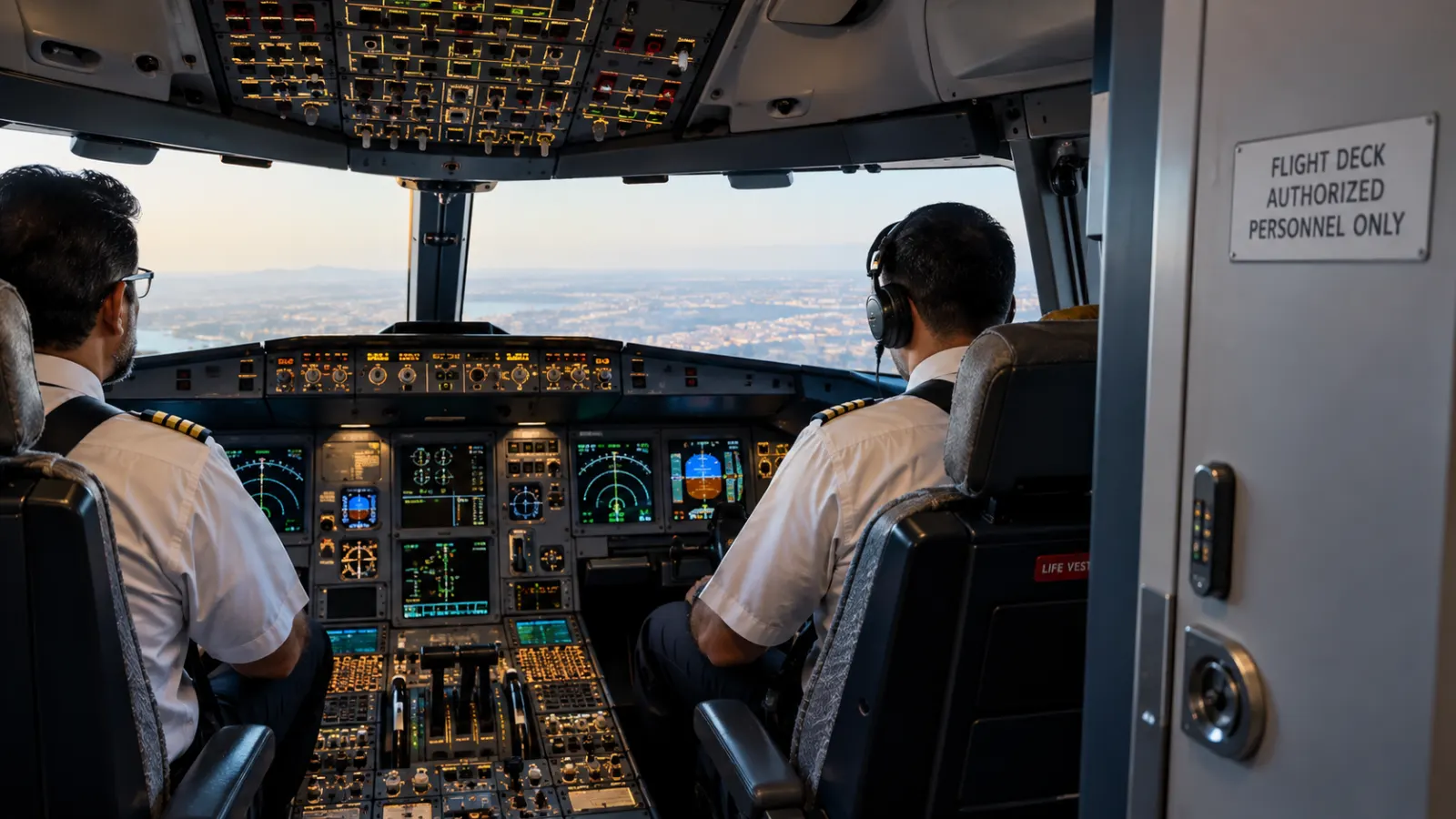
Flight FZ1073 departed Dubai for Tel Aviv with more than 170 passengers and crew aboard. During the journey, investigators say the co-pilot attacked Captain Smit Machchhar with an emergency crash axe while the two were inside the cockpit. The aircraft then entered a dramatic descent, losing thousands of feet of altitude in a very short period.
Despite being injured, Machchhar managed to reach the cockpit door and open it. That decision proved critical because people outside the cockpit were then able to intervene. Passengers and crew restrained the alleged attacker, while reserve or off-duty pilots aboard the aircraft helped stabilise the situation and eventually land the plane safely in Tabuk, Saudi Arabia.
The suspect was detained after the emergency landing and later transferred to UAE custody. Emirati authorities subsequently described the incident as a terrorist act and opened an investigation into the motive, planning and whether anyone else may have been involved.
The actions of Machchhar, crew members, passengers and the pilots who helped land the aircraft prevented the incident from becoming a mass-casualty disaster. But the successful intervention should not obscure the deeper security questions exposed by what happened before the attack began.
Why the latest allegations are particularly serious
The most concerning new allegation is that the incident may not have been a sudden act committed without advance planning. Israeli officials familiar with the investigation have said the co-pilot allegedly developed an attack plan before he was hired by Flydubai and chose the airline partly because it operated flights to Israel.
Investigators are reportedly examining claims that he intended to take control of an Israel-bound aircraft and crash it at or near Ben Gurion Airport. According to accounts attributed to investigators, he may also have considered carrying out the plan on an earlier flight but abandoned it after discovering that someone he knew was aboard.
These details have not yet resulted in a publicly completed judicial finding, so they should be treated as allegations being investigated rather than established facts. If confirmed, however, they would change the character of the incident significantly. The central security failure would no longer simply be that a pilot unexpectedly became violent. It would raise the possibility that someone with hostile intentions successfully entered a professional aviation system, passed recruitment and operational checks, completed training and gained authorised access to an international passenger aircraft.
That is a fundamentally different threat from a passenger carrying a prohibited object through airport security.
The biggest question is how pilot vetting worked
Commercial pilots undergo extensive professional checks because they are trusted with aircraft carrying hundreds of people. Airlines normally verify licences, flying experience, medical fitness, employment history, training records and other professional qualifications. Depending on the airline and jurisdiction, additional security and background checks may also apply.
The Flydubai case raises questions about whether those systems were sufficiently connected.
Reports have suggested that the co-pilot may previously have attracted concern in Oman over extremist views or his suitability to fly. Investigators in several countries are now examining his history, including periods spent studying or living overseas. Authorities in Australia and New Zealand have reportedly begun reviewing parts of his background.
The important question is not simply whether one country possessed concerning information. It is whether information that was relevant to aviation safety was recorded in a way that another airline, regulator or security agency could reasonably discover.
International aviation is inherently cross-border. A pilot can be born in one country, study in another, train somewhere else, work for an airline based in a fourth country and fly passengers to dozens more. If safety information remains trapped inside national agencies or previous employers, significant gaps can develop.
Aviation regulators therefore need to determine whether this incident exposed a failure of screening, a failure of information sharing, or both.
Israel had advance information about the flight, but what was checked?
Another area attracting scrutiny concerns security information provided before the aircraft reached Israel.
Foreign airlines operating flights to sensitive destinations commonly provide passenger and crew information in advance. Israeli authorities reportedly had access to crew information before the Flydubai flight departed, but the co-pilot was not prevented from operating the service.
That does not automatically mean Israeli authorities should have known he posed a threat. Receiving someone's name is not the same as possessing intelligence that indicates the person is dangerous.
The question is what databases or warning systems were checked against that information. If another government or aviation authority had previously recorded serious security concerns, were those concerns accessible to Israeli, Emirati or airline security officials? If they were available, why did the screening process not produce an alert? If they were not available, should international aviation-security systems be changed so that comparable information can be shared?
These questions become particularly sensitive because Israel already applies unusually strict aviation-security procedures. The fact that the alleged attacker was part of an authorised cockpit crew illustrates how even highly security-conscious systems can be vulnerable to insider threats.
Israel has since indicated that checks on pilots operating flights into the country will be strengthened.
Cockpit security solved one problem but created another
After the September 11, 2001 attacks, aviation authorities around the world transformed cockpit security. Reinforced cockpit doors became standard, and access procedures were tightened dramatically to prevent hijackers from forcing their way into the flight deck.
Those measures addressed a specific vulnerability: unauthorised passengers entering the cockpit.
They have been highly effective at making that type of hijacking much more difficult.
But reinforced cockpit security introduces another problem. When the dangerous person is already inside the cockpit, the strengthened door can temporarily isolate the rest of the crew from what is happening inside.
The Flydubai incident demonstrates this insider-threat problem very clearly. An authorised pilot has access not only to the flight deck but also to aircraft controls and certain emergency equipment. Traditional passenger screening cannot prevent such a person from entering because entering the cockpit is part of the job.
Aviation security therefore cannot rely only on physical barriers. It also depends heavily on selecting, monitoring and supporting the people authorised to operate aircraft.
This does not mean pilots should automatically be treated as security suspects. Commercial aviation depends on professional trust, and overwhelmingly pilots perform their duties safely. But systems designed around the assumption that threats always originate outside the cockpit need to account for the possibility—however rare—of an insider becoming dangerous.
Why the two-person cockpit debate may return
The incident is also likely to revive debate about cockpit staffing procedures.
Following previous aviation incidents, some airlines and regulators adopted rules requiring at least two authorised people to remain in the cockpit at all times. These policies were intended partly to reduce the risk that one person could gain exclusive control of an aircraft.
Such rules have varied across airlines and jurisdictions over time, and they do not eliminate every insider threat. If two pilots are already in the cockpit, one can still potentially attack the other, as investigators allege occurred here.
However, the availability of additional trained personnel can become critical when an emergency develops. The presence of reserve pilots aboard FZ1073 appears to have been particularly important after the cockpit struggle.
Investigators will likely examine whether cockpit staffing, crew-rest arrangements and emergency procedures worked as intended and whether additional safeguards could have reduced the danger more quickly.
There is no simple rule capable of eliminating every possible insider attack. Increasing cockpit personnel can create operational and security complications of its own. The objective is to design overlapping safeguards so that one person's actions cannot easily lead to catastrophic loss of control.
Captain Smit Machchhar’s actions became crucial
Captain Smit Machchhar has received widespread praise because his actions while injured appear to have allowed others to reach the cockpit and intervene.
The Indian pilot later described the incident to Prime Minister Narendra Modi, explaining how he focused on opening the cockpit door despite his injuries. That decision gave passengers, crew and other pilots access to a situation that would otherwise have remained isolated behind the secured flight-deck door.
His actions also demonstrate why aviation emergencies cannot always be solved by automated systems alone. Modern aircraft contain sophisticated autopilot, navigation and warning technologies, but in an extreme cockpit security incident, human judgment and physical intervention may still determine the outcome.
The passengers who helped restrain the alleged attacker also played an extraordinary role. Ordinarily, passengers are instructed not to interfere with aircraft operation. This was a rare situation in which intervention became necessary because the normal command structure inside the cockpit had broken down.
The safe landing should therefore be viewed as the result of several layers of resilience functioning after earlier preventive layers had apparently failed.
Aviation security needs to treat employees differently from passengers
Airport security is highly visible to travellers. Passengers remove electronics from bags, pass through scanners, surrender prohibited liquids and may undergo additional screening. Employees typically operate through different security channels because their jobs require frequent access to restricted areas.
That creates a challenge known as the insider threat.
Pilots, engineers, ground workers, baggage staff and other airport employees need access that ordinary passengers do not have. Security systems cannot function if every authorised employee is treated every day as though they were an unknown traveller.
But repeated trusted access can also become a vulnerability if background information changes or warning signs emerge after employment begins.
This means employee security needs to be continuous rather than limited to a one-time pre-employment check.
A pilot who passed screening five years ago may undergo major personal, behavioural or ideological changes later. Airlines therefore need systems that can identify concerning behaviour without turning workplaces into environments of constant suspicion.
This is extremely difficult. Mental-health privacy, labour rights, discrimination concerns and operational safety all need to be balanced. There is also a danger of treating nationality, religion or political opinion as substitutes for evidence of actual security risk.
Effective screening should focus on behaviour, credible intelligence, professional conduct and verified risk indicators rather than broad profiling.
Why mental health and radicalisation must not be confused
Some public discussion surrounding the case has blurred two very different subjects: mental-health problems and ideological radicalisation.
That distinction is important.
Most people experiencing mental-health conditions are not violent, and describing deliberate terrorism primarily as a mental-health issue can stigmatise millions of people while providing little useful explanation of extremist violence.
At the same time, aviation authorities already pay close attention to psychological fitness because pilots work in exceptionally high-responsibility environments.
Investigators in this case need to determine the suspect's actual motivations from evidence rather than simply attaching broad labels. Israeli officials have described him as radicalised and suicidal, while investigators continue examining his background and potential connections.
Until that process is completed, claims about precisely how or when he became radicalised should remain carefully attributed.
The policy lesson is broader: airlines need systems capable of responding to credible behavioural or security warning signs regardless of whether those signs originate from workplace conduct, intelligence reporting, previous employment or other lawful sources.
International information sharing may be the hardest problem
Perhaps the most important long-term issue is that no single country controls international aviation.
Flydubai is based in the United Arab Emirates. The alleged attacker is Omani. The captain is Indian. The destination was Israel. The aircraft landed in Saudi Arabia. Investigators are examining possible links to Australia and New Zealand.
That multinational chain demonstrates why security failures can emerge even when each individual country has sophisticated institutions.
A warning held by one country may not automatically appear in an airline's employment screening system. Privacy and national-security laws can restrict information sharing. Intelligence agencies may also be unwilling to disclose sensitive information or sources.
The answer cannot simply be to place every person who has ever attracted government attention on an international aviation blacklist. Such a system would create serious due-process and human-rights problems.
Instead, aviation authorities may need clearer standards describing what type of verified security information should trigger additional screening for safety-critical personnel and how people can challenge incorrect information.
The goal must be both effective security and procedural fairness.
What investigators now need to establish
The investigation needs to answer several factual questions before firm conclusions can be drawn. Authorities need to determine when the alleged plot began, whether the suspect intentionally joined Flydubai because of its Israel routes, whether he had attempted or considered an attack previously, and whether anyone else knew about or assisted the alleged plan.
They also need to establish what information existed about the co-pilot before his employment and which organisations had access to it. If concerns had been recorded elsewhere, investigators must determine whether Flydubai could reasonably have discovered them through existing screening systems.
Cockpit procedures will also be examined. Investigators will want to know precisely how the captain was attacked, what happened to the aircraft controls, how the rapid descent occurred and how long it took for others to regain control.
These questions matter because aviation safety improves when investigations identify the exact sequence of failures rather than merely declaring that security should become “stricter.”
Each failure needs a specific remedy.
The lesson is not that flying has suddenly become unsafe
An incident this dramatic can understandably make passengers anxious, but commercial aviation remains one of the safest forms of transportation.
Hundreds of thousands of pilots operate flights without security incidents, and insider attacks of this type are extremely rare.
That rarity is partly why the Flydubai case matters so much. Aviation learns from unusual events precisely because catastrophic risks need to be addressed even when they occur infrequently.
The industry has repeatedly changed after rare events. Aircraft accidents led to stronger engineering standards. Hijackings led to airport screening. September 11 produced reinforced cockpit doors. Other incidents produced new pilot-training, medical and operational procedures.
The FZ1073 incident may now force another reassessment: how should aviation systems protect aircraft when a threat originates from someone already trusted to operate them?
The answer will probably involve better information sharing, continuing employee screening, stronger cockpit procedures and clearer international cooperation rather than one dramatic new rule.
The passengers aboard Flydubai FZ1073 survived because several people responded effectively after the attack began. The deeper objective of the investigation should be ensuring that future security systems identify comparable risks before an aircraft is already in the sky.