Why Sensex and Nifty Are Recovering After Eight Weeks of Losses
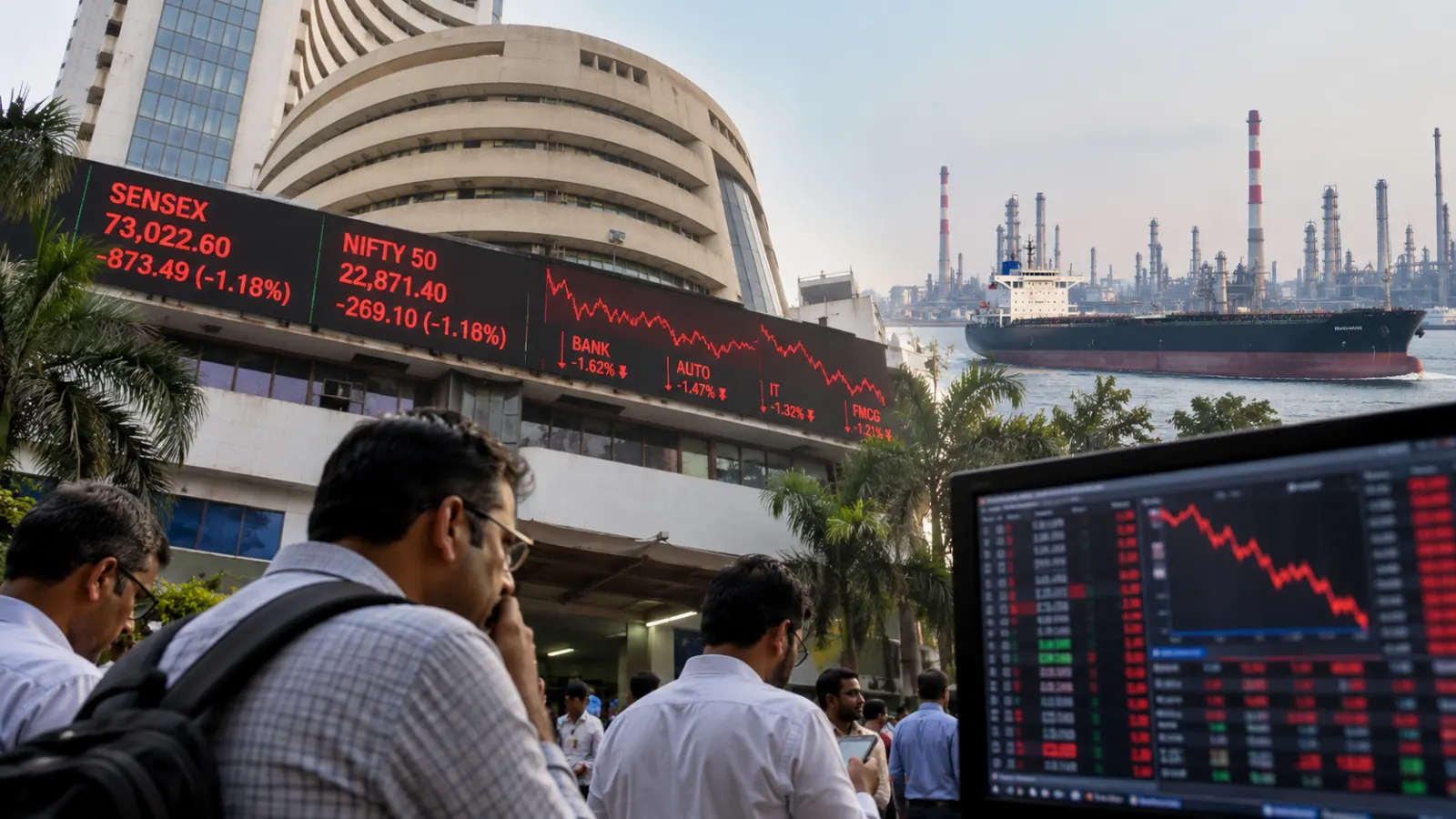
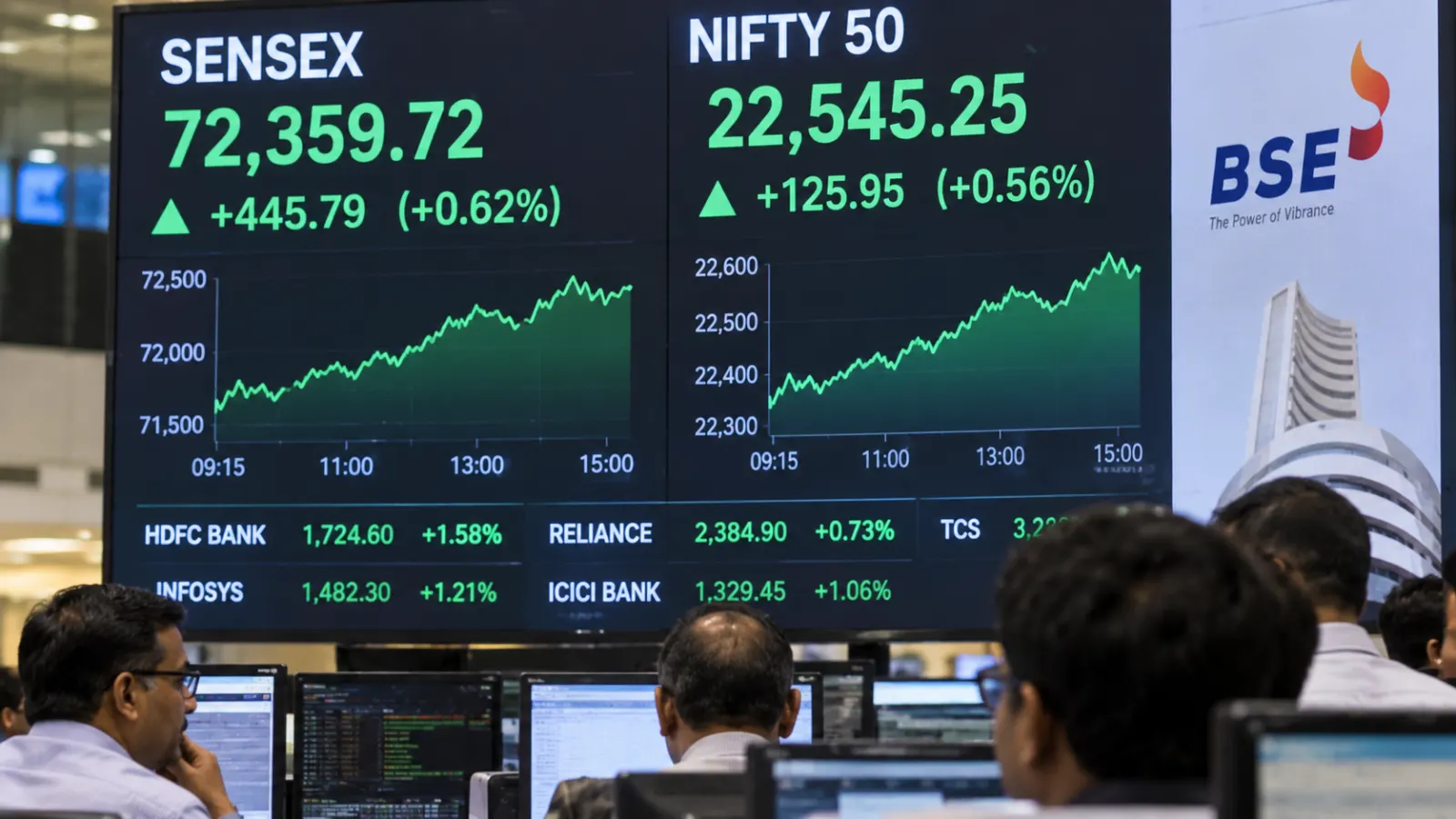
Indian equities moved higher on October 5 after one of their weakest stretches in years, with the Sensex gaining several hundred points and the Nifty recovering above key levels during the session. The rebound follows eight consecutive weeks of losses, a period in which Indian markets were pressured by heavy foreign selling, elevated crude-oil prices, a weakening rupee, rising global bond yields and expectations of tighter monetary policy. Monday’s recovery does not mean those risks have disappeared, but several of the forces that had been moving against Indian stocks have started to ease at the same time.
The biggest change has come from global interest-rate expectations and crude oil. Weaker-than-expected US employment data reduced expectations of an immediate Federal Reserve rate increase, helping improve sentiment across emerging markets. At the same time, lower crude-oil prices reduced concerns over India’s import bill, inflation and corporate costs. After eight weeks of persistent selling, these developments were enough to bring buyers back into the market.
Why lower oil and US rate expectations are helping
For India, crude oil is one of the most important external variables affecting financial markets because the country imports most of the petroleum it consumes. When oil becomes expensive, India needs more dollars to finance imports, which can put pressure on the rupee. Higher fuel and transport costs can then feed into inflation, while companies in sectors such as airlines, logistics, chemicals, paints and consumer goods face higher operating costs. Investors also begin worrying that persistent inflation could force the Reserve Bank of India to keep interest rates higher for longer.
When oil prices fall, that chain begins to weaken. The import bill becomes less threatening, pressure on the rupee can ease and companies get some relief from input costs. Lower oil also reduces the risk that inflation will accelerate further because of energy prices. This is why Indian equities often respond strongly to changes in crude even when nothing has immediately changed inside individual companies.
The second supportive factor is the shift in expectations around the US Federal Reserve. Higher US interest rates tend to make Treasury bonds more attractive and can encourage global investors to move money away from emerging markets such as India. Weaker US employment data has reduced expectations of an immediate rate increase, which in turn has eased some pressure on global bond yields and the dollar. For Indian markets, even a change in the probability of a Fed hike can matter because investors continuously price future monetary policy before central banks actually make decisions.
Eight weeks of losses also created room for a rebound
The recovery has a technical dimension as well. After eight consecutive weeks of declines, both major indices had fallen close to important support levels and several technical indicators had moved into oversold territory. That does not automatically mean a market has reached its bottom, but it often encourages traders and longer-term investors to start buying selectively after an extended decline.
Short sellers may also close bearish positions when prices stop falling, which adds to buying pressure. This can produce a sharp rebound even before the broader economic picture improves significantly. The important distinction is that a rebound after heavy selling is not necessarily the same as a full trend reversal. Markets can recover for several sessions and still resume falling if the underlying risks return.
That is why the present move is better described as a recovery attempt rather than proof that the correction has ended. The strength of the rebound will depend on whether buying remains broad, whether foreign selling slows and whether the market can hold above recently recovered levels rather than giving back gains quickly.
Banks and IT stocks are supporting the market
Financial stocks have been among the stronger contributors to the recovery. Several banks and lenders have reported encouraging business updates, including continued growth in advances and customer activity. Banks carry a large weight in both the Sensex and Nifty, so coordinated gains across major financial stocks can significantly influence the headline indices.
Strong credit growth also gives investors some confidence that domestic economic activity remains resilient despite relatively high borrowing costs. However, the same sector will be closely watched if the RBI begins another tightening cycle. Higher lending rates can support margins for some banks, but aggressive rate increases can eventually slow borrowing and increase repayment stress, so the impact is not uniformly positive.
Technology stocks have also found support from improving sentiment around global IT spending. Positive signals from international technology-services companies have reduced some of the fear that artificial intelligence will immediately destroy traditional outsourcing demand. AI may disrupt parts of the industry, but it is also creating new work in consulting, cloud migration, data infrastructure and implementation. If global clients continue spending on these areas, Indian IT companies may participate in the transition rather than simply lose business to automation.
Foreign selling and the rupee remain major risks
Despite Monday’s gains, foreign investor behaviour remains one of the biggest unresolved problems for Indian equities. Overseas investors have sold Indian shares aggressively during 2026 as US yields rose, the dollar strengthened, crude became more expensive and Indian valuations remained relatively high compared with several other emerging markets. Domestic mutual funds and retail investors have absorbed a significant part of this selling, but persistent foreign outflows can still place heavy pressure on large-cap stocks.
The rupee also remains close to weak levels against the dollar. Currency depreciation matters because foreign investors evaluate their returns in international currency terms. An Indian stock may rise in rupees while still providing a poor dollar return if the rupee weakens sharply. A weaker currency can also increase the cost of imported commodities and equipment, potentially adding to inflation.
Some export-oriented businesses, especially IT and pharmaceutical companies, can benefit from a weaker rupee because they earn substantial revenue overseas. But for the broader economy, excessive currency weakness creates uncertainty and increases imported inflation. A stronger market recovery would therefore become more convincing if foreign selling moderates and the rupee begins to stabilise.
The RBI decision could determine what happens next
The next major domestic test for the market is the Reserve Bank of India’s monetary-policy decision. Investors increasingly expect the RBI to tighten policy as inflation broadens, but the market reaction will depend not only on whether the repo rate changes. What the RBI says about future inflation, crude oil, the rupee and additional rate increases may prove even more important.
If markets have already priced in a modest rate increase, the actual announcement may create limited disruption. A more aggressive signal suggesting several further hikes could pressure equities, particularly rate-sensitive sectors such as real estate, automobiles and consumer durables. On the other hand, if the RBI indicates that inflation can be controlled with limited tightening, investors may interpret that as supportive.
Higher interest rates generally make borrowing more expensive for companies and consumers while increasing the attractiveness of fixed deposits and bonds relative to equities. However, markets usually respond more strongly to surprises than to widely expected decisions. The RBI’s guidance will therefore help determine whether Monday’s rebound develops into something more durable.
Is the correction over?
There are genuine reasons for the market to recover. Oil prices have eased, expectations of an immediate US rate hike have weakened, banks continue to report credit growth, technology sentiment has improved and eight weeks of losses have brought valuations down from earlier levels. These factors explain why buyers are returning after an unusually long period of weakness.
But the risks that drove the correction have not disappeared. Foreign investors remain cautious, the rupee is still under pressure, domestic inflation remains a concern and the RBI may begin raising rates. A renewed surge in crude oil or global bond yields could also quickly reverse part of the relief currently supporting stocks.
A sustained recovery would become more convincing if the Nifty holds above recently reclaimed levels, market breadth remains strong, foreign selling slows and corporate earnings continue to support profit-growth expectations. Until then, the current move is best seen as evidence that the market has become more balanced rather than proof that a new bull run has already begun.
After eight weeks in which almost every important macroeconomic factor seemed to move against Indian equities, the latest session shows how quickly sentiment can improve when even a few of those pressures begin to reverse. The next few sessions—and especially the RBI’s policy guidance—will determine whether this is merely a relief rally or the beginning of a more durable recovery.