Koel Mallick Enters Rajya Sabha Race After Switching to BJP
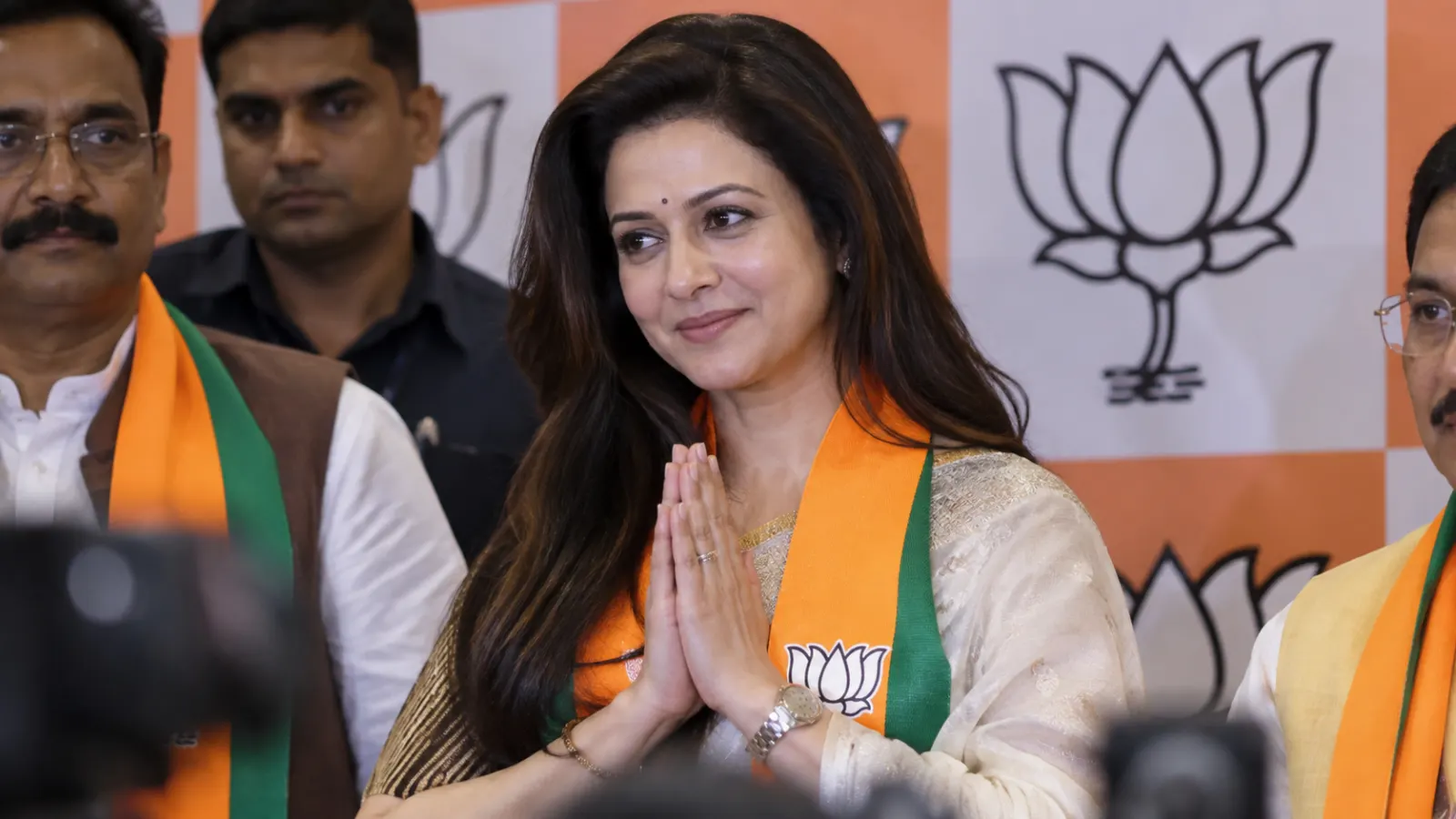
Bengali actor and former Trinamool Congress Rajya Sabha MP Koel Mallick has joined the Bharatiya Janata Party after being named its candidate for the October 16 Rajya Sabha by-election in West Bengal, marking a striking political shift within a matter of months. Mallick had entered the Upper House earlier in 2026 as a Trinamool representative but resigned from the Rajya Sabha in July. Her emergence as the BJP candidate for the same political arena now makes her party switch one of the more closely watched developments in West Bengal politics.
The move is significant because Mallick is not entering politics for the first time. She already has parliamentary experience, substantial public recognition through Bengali cinema and recent direct association with the Trinamool Congress. Her nomination therefore differs from the more familiar pattern of a political party bringing a celebrity with no legislative experience into electoral politics. BJP is instead backing someone who combines celebrity appeal with recent Rajya Sabha experience and an existing political profile.
From TMC Rajya Sabha MP to BJP candidate within months
Mallick’s political trajectory in 2026 has been unusually rapid. She entered the Rajya Sabha as a Trinamool Congress member in April, but resigned in July after West Bengal’s changing political circumstances and tensions within the party. Her parliamentary term could otherwise have continued for several more years, making the resignation itself politically important.
Her subsequent movement towards the BJP attracted attention because the two parties are principal rivals in West Bengal. The shift was confirmed further when BJP selected her for the October 16 Rajya Sabha by-election and she formally joined the party. Mallick has said she bears no personal anger towards her former party and has framed her decision around differences in political direction rather than an individual dispute.
That distinction matters because high-profile defections are often interpreted entirely through personal conflict or immediate electoral calculations. Mallick’s switch may certainly have strategic consequences, but publicly she has avoided turning the transition into a direct personal attack on her former colleagues. Her comments instead suggest an attempt to establish a new political identity without completely repudiating her previous association.
For the BJP, that can be politically useful. A candidate who moves from a rival party while avoiding an extremely confrontational exit can potentially attract voters or political sympathisers beyond the BJP’s traditional base. It also allows the party to present the defection as evidence of its ability to attract figures who previously operated within the Trinamool ecosystem.
Why BJP’s choice of Koel Mallick matters in Bengal
West Bengal politics has historically been highly competitive and personality-driven. Mamata Banerjee remains the dominant face of the Trinamool Congress, while BJP has spent years attempting to expand its organisational strength and build a deeper bench of recognisable state-level leaders.
Celebrity candidates are not unusual in Bengal. Film actors, singers and other cultural personalities have repeatedly entered electoral politics, particularly through the Trinamool Congress and BJP. The reasons are straightforward: public familiarity can make political communication easier, especially in a state with a powerful film and cultural industry.
But celebrity alone does not guarantee political success. Voters may recognise an actor without necessarily accepting that person as an effective legislator. Political parties therefore increasingly need celebrity candidates who can demonstrate organisational commitment, parliamentary participation or policy engagement after the initial attention surrounding their entry into politics disappears.
Mallick’s recent Rajya Sabha experience gives the BJP an advantage in this respect. It can present her not merely as an actor entering politics but as someone who has already served in Parliament and understands the functioning of the Upper House.
Her nomination may also have symbolic value. Bringing a former Trinamool MP into the BJP allows the party to communicate that political movement is not occurring only among grassroots workers or relatively unknown local leaders. A recognised face crossing the political divide can create disproportionate media attention and reinforce a broader narrative about changing alignments in the state.
The unusual possibility of returning to the Rajya Sabha through a rival party
Perhaps the most interesting element of Mallick’s political story is the speed with which her parliamentary affiliation could change.
She entered the Rajya Sabha representing Trinamool Congress earlier this year, resigned from that position and is now seeking a return with BJP backing. If she wins the by-election, she would effectively return to the same chamber within months but under the banner of a party that had previously been her political opponent.
That makes the case more than an ordinary celebrity nomination. It illustrates how Rajya Sabha politics can reflect rapid shifts within state party systems. Unlike the Lok Sabha, where voters directly elect MPs from territorial constituencies, most Rajya Sabha members are elected by elected members of state legislative assemblies. Party strength in a state assembly therefore plays a major role in determining who can secure a seat.
For ordinary voters, this can sometimes make Rajya Sabha contests appear less visible than Lok Sabha or Assembly elections. Yet the Upper House plays an important role in national lawmaking, scrutiny of legislation and parliamentary debate. Political parties consequently treat Rajya Sabha seats as strategically important, particularly when trying to strengthen their numbers in Parliament or give experienced leaders a national platform.
Mallick’s nomination should therefore not be seen merely as a public-relations exercise. If elected, she would participate directly in national legislative work while simultaneously becoming a recognisable BJP political face from West Bengal.
What her switch says about Bengal’s changing political landscape
Party switching is common in Indian politics, but defections become particularly significant when competition between two parties is intense. Trinamool Congress and BJP have spent years fighting for political space in West Bengal, making movement between the two camps politically sensitive.
A defection can serve several purposes simultaneously. The receiving party gains a leader who already has public recognition, networks and experience. The departing party must explain why someone it previously considered suitable for Parliament has chosen to leave. The individual politician also gains an opportunity to reposition themselves within a new political environment.
However, party switches create risks as well. Supporters of the previous party may view the politician as opportunistic, while long-time workers of the new party may question why someone who recently belonged to a rival organisation receives a prominent nomination. BJP therefore needs to balance the electoral value of defectors with the expectations of its existing cadre.
How Mallick handles that transition will be important. Her long-term political standing is likely to depend less on the initial publicity around her move and more on whether she establishes relationships within the BJP organisation, participates consistently in political work and develops positions on issues beyond her celebrity identity.
West Bengal voters have seen multiple actors enter politics, and public recognition alone may no longer be enough to produce lasting political credibility.
Celebrity politics can attract attention, but performance eventually matters
The relationship between cinema and politics has a long history in India. Several states have produced major political figures whose careers began in entertainment, and contemporary parties continue to recruit actors because they bring enormous communications advantages.
A recognised actor enters politics with something most first-time politicians spend years attempting to build: name recognition. People already know the face, journalists are interested in the candidate and social-media engagement can be substantial from the beginning.
But the advantage can quickly become a liability if the politician appears absent from parliamentary or constituency work. Celebrity MPs frequently face more scrutiny over attendance, participation in debates and political visibility precisely because critics question whether their nomination was based primarily on fame.
For Mallick, this issue is particularly relevant because she is not now a first-time candidate. If she returns to Parliament, expectations will be higher. Voters and political observers can assess her against her earlier period as a Rajya Sabha member and ask what she intends to do differently under the BJP.
That gives her an opportunity as well. A successful transition from film celebrity to active legislator could allow her to develop political credibility independent of her acting career. The Rajya Sabha provides space for members to participate in debates, raise questions, serve on committees and focus on policy areas in which they develop expertise.
What happens in the October 16 Rajya Sabha election?
The West Bengal Rajya Sabha by-election is scheduled for October 16. Unlike a general election, citizens will not directly cast ballots for Mallick. Rajya Sabha members representing states are generally elected by elected MLAs through a system of proportional representation using the single transferable vote.
That means the arithmetic of the West Bengal Legislative Assembly will be central to the result. Party strength, voting discipline and the specific circumstances surrounding the vacant seat will determine the contest far more directly than a conventional public campaign.
BJP has also nominated Dinesh Arya for the Rajya Sabha election from Uttarakhand, while several other Upper House seats are being contested in different states during the same period. Mallick’s candidacy has attracted disproportionate attention because of her celebrity profile and recent move from Trinamool to BJP.
The election will provide an immediate test of whether her dramatic political transition results in a quick return to Parliament.
But winning the seat would only begin the more important test. Once the novelty of the switch fades, the question becomes what role Mallick intends to play within the BJP and Parliament.
Could BJP use Mallick as a larger political face?
That possibility will depend on what happens after the Rajya Sabha election.
Political parties frequently use prominent cultural personalities to communicate with constituencies they find difficult to reach through conventional political organisation. Mallick’s established popularity in Bengali cinema gives BJP access to audiences that may not closely follow party politics.
Her profile could be particularly useful in urban and culturally influential sections of Bengal. But converting personal popularity into political support is rarely automatic. An actor may be widely admired without their fans adopting the same political preferences.
BJP would therefore need to integrate Mallick into political campaigns carefully rather than assuming her cinematic popularity translates directly into votes.
Her recent association with Trinamool also creates a distinctive political role. She understands the rival party from inside and may be able to communicate with voters who previously viewed her as part of the Trinamool ecosystem. That can make her useful in a political contest where persuading voters across party boundaries matters.
At the same time, aggressive attacks on her former party could undermine the softer cross-party appeal that makes her valuable. Her initial decision to avoid framing her departure in deeply personal terms may therefore be politically deliberate as well as personal.
Why this story extends beyond one Rajya Sabha seat
The immediate news is that a prominent Bengali actor and former Trinamool MP is now a BJP Rajya Sabha candidate. The larger story concerns the continuing reorganisation of political leadership in West Bengal.
BJP wants to demonstrate that it can attract recognised political and cultural figures from outside its traditional organisation. Trinamool wants to retain its dominance and show that individual departures do not weaken its broader structure. Politicians moving between the two parties become symbols within that competition, even when their individual electoral impact is uncertain.
Mallick’s case is particularly striking because the entire transition has happened in a compressed period. In April, she entered the Rajya Sabha as a Trinamool representative. By July, she had resigned. By October, she had become a BJP candidate seeking a route back into the Upper House.
That sequence inevitably raises questions about political loyalty, party ideology and the role of individual ambition in Indian politics. Those questions cannot be answered simply from the fact of her switch. Politicians leave parties for many reasons, and voters ultimately decide how much weight to give those decisions.
What is clear is that BJP has chosen to treat Mallick as more than a celebrity acquisition. Giving her a Rajya Sabha nomination immediately places her within the party’s parliamentary strategy.
If she wins on October 16, the next phase of the story will no longer be about why Koel Mallick changed parties. It will be about what she does with a second opportunity in Parliament—and whether BJP can convert her public popularity into durable political influence in West Bengal.