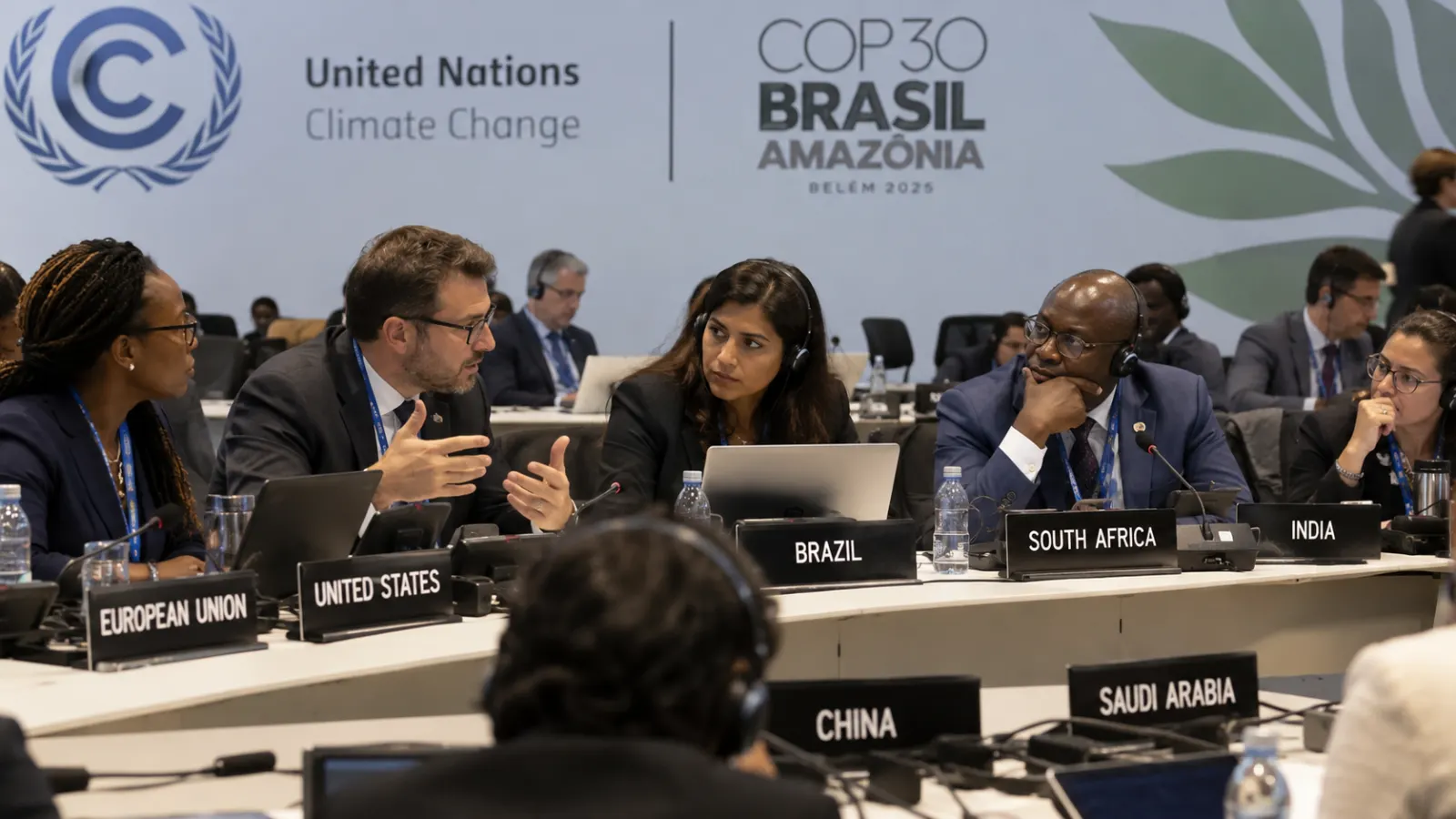
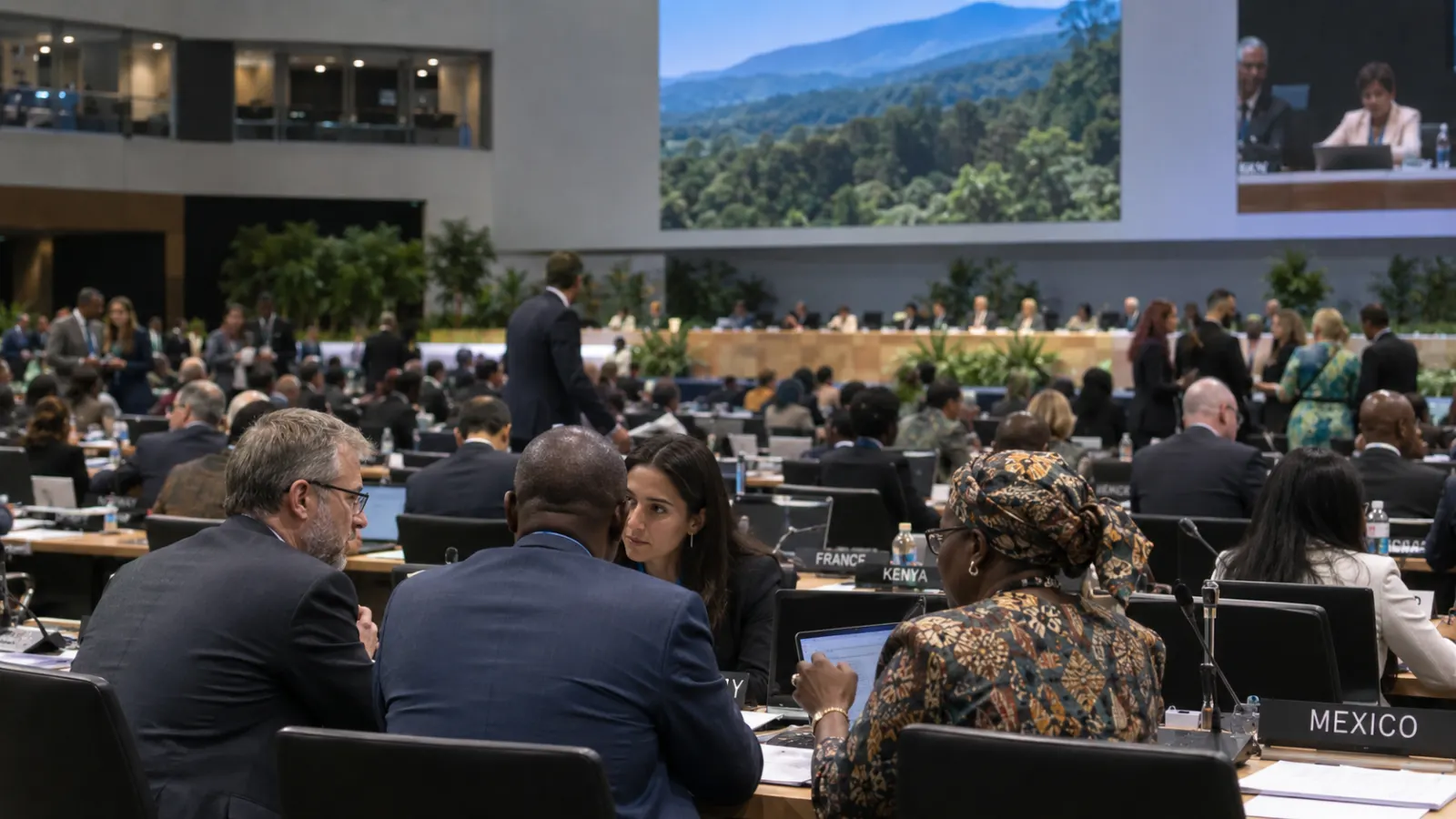
For most of the modern development era, poorer countries were described through a vocabulary created elsewhere. They were “recipients,” while richer countries were “donors.” Developing societies had “needs,” while advanced economies supposedly possessed the “solutions.” That language reflected a wider hierarchy in which development assistance often arrived with policy prescriptions, institutional templates, expert missions and reform conditions designed far from the societies expected to implement them. South-South cooperation challenges this model. It does not suggest that developing countries no longer need international capital, technology or multilateral institutions, nor does it assume that cooperation among developing countries is automatically equal or free from political interests. Instead, it starts from a different principle: countries with comparable development histories and constraints may have valuable knowledge, technologies and institutional experience to share with one another. At its best, South-South cooperation is therefore not charity. It is development through partnership rather than instruction.
What South-South Cooperation Actually Means
The United Nations describes South-South cooperation as collaboration among developing countries based on shared experiences, common objectives, solidarity, national ownership, respect for sovereignty, non-interference and mutual benefit. In practice, it can involve governments, regional organisations, universities, businesses and civil society sharing knowledge, skills, technology, finance and technical expertise. This makes it different from the classic donor-recipient model, where expertise and resources traditionally flowed in one direction. South-South cooperation recognises that useful development knowledge can emerge from many societies and that policies successful in one developing country may sometimes be more adaptable to another developing country than models created for wealthy economies. The United Nations also stresses that South-South cooperation is not intended to replace North-South cooperation. It is a complement to it. Its significance lies in expanding the choices available to developing economies and reducing dependence on a system in which finance, standards, expertise and institutional legitimacy have historically been concentrated in a relatively small group of wealthy countries.
Why South-South Cooperation Matters Now
The growing importance of South-South cooperation is closely linked to changes in the international development system. Developing countries today face simultaneous pressures involving debt, climate change, infrastructure, public health, food security, digital transformation and industrialisation, while traditional development finance is becoming more constrained. Preliminary OECD data cited in the draft showed a sharp decline in official development assistance in 2025, with further pressure expected thereafter. Such reductions matter because grants, concessional finance, humanitarian assistance and technical programmes are particularly important for countries that cannot borrow cheaply from international markets. Debt pressures make the challenge even more severe. The World Bank's International Debt Report 2025 showed that low- and middle-income economies collectively carried trillions of dollars in external debt, while interest payments absorbed enormous amounts of public resources. When debt servicing rises, money that could otherwise support hospitals, schools, infrastructure, welfare programmes and climate adaptation may instead be directed towards creditors. South-South cooperation is gaining relevance in this environment not because developing countries suddenly possess unlimited resources, but because the existing development architecture is struggling to provide sufficient finance, flexibility and policy space.
Why the Development Challenge Is Too Large for Traditional Aid
The financing required to achieve modern development goals is now far greater than conventional aid budgets can provide. Development itself has also become increasingly interconnected. A rural road is not merely a transport project; it can connect farmers with markets, children with schools, workers with employment and patients with hospitals. A digital identity platform is not simply an information-technology project; it can influence welfare delivery, banking access, taxation, public administration and the relationship between citizens and the state. A renewable-energy project may simultaneously be an environmental programme, an industrial-policy instrument, an energy-security strategy and an employment initiative. Traditional aid structures often separate these challenges into categories such as health, education, climate, governance and infrastructure, but governments experience them together. South-South cooperation can sometimes respond more practically because participating countries have themselves dealt with development under conditions of limited resources, large populations and administrative constraints. Their solutions may therefore be easier for other developing societies to adapt.
Why India Has a Particular Advantage
India occupies an unusual position within this emerging development landscape. It remains a developing country with substantial domestic challenges, yet it has accumulated experience in operating public systems at enormous scale. Digital payments, identity systems, affordable pharmaceuticals, vaccine production, space technology, disaster management, election administration, cooperatives and public-service delivery have all required India to solve problems under conditions familiar to many countries in Asia, Africa and other parts of the Global South. This gives India a form of credibility that cannot be created simply through financial power. The value of India's experience is not that every Indian model can be exported unchanged. Different countries have different political systems, administrative capacities and social conditions. Its value lies in showing that large-scale systems can be built under conditions of scarcity and complexity, and that the lessons from those systems can be shared.
India’s Model: Capacity, Credit and Consultation
India has increasingly positioned itself as a major supporter of South-South cooperation. Its development partnership model combines concessional credit, grants, technical assistance and capacity building while emphasising consultation with partner governments. India's lines of credit have financed projects across developing countries, particularly in Africa, supporting infrastructure and development while strengthening diplomatic and commercial relationships. Capacity building is equally important. Through the Indian Technical and Economic Cooperation programme, India provides training across fields ranging from governance and information technology to public administration, finance and entrepreneurship. This reflects one of India's strongest comparative advantages. India cannot compete with every major power in the volume of infrastructure finance it can offer, nor can it match the financial resources of the world's largest multilateral institutions. What it can provide is institutional experience. In many developing societies, insufficient state capacity can be just as serious a constraint as insufficient capital. Governments may have resources but lack trained personnel, regulatory frameworks, digital systems or administrative structures capable of converting those resources into effective programmes. Capacity building therefore becomes a form of development investment in its own right.
How South-South Trade Is Changing the Economic Map
South-South cooperation extends far beyond aid. Trade among developing economies has expanded dramatically, creating new markets, production networks and diplomatic relationships. UNCTAD data cited in the draft showed that South-South trade more than doubled between 2007 and 2023. For much of modern economic history, developing countries exported commodities to wealthy economies while importing manufactured goods, technology and finance from the same centres of power. The growth of trade among developing countries complicates that old pattern. New regional supply chains are emerging, and developing economies increasingly sell manufactured goods, services, food, energy and technology to one another. Larger consumer markets across Asia, Africa and Latin America are becoming economically important in their own right. Greater South-South trade can help countries diversify away from excessive dependence on traditional markets, but diversification does not automatically create equality. A smaller developing economy can become heavily dependent on a larger developing economy just as easily as it can become dependent on a Western power. Trade therefore still requires transparent rules, strong institutions, infrastructure, dispute-settlement mechanisms and national industrial strategies.
China’s Role in South-South Cooperation
Any serious discussion of South-South cooperation must include China. China has transformed the development landscape through trade, lending, construction capacity and the Belt and Road Initiative. Chinese financing has supported ports, roads, railways, power stations and other large infrastructure projects across developing countries, including projects that traditional Western development institutions were sometimes reluctant to finance. At the same time, Chinese engagement has generated debates over debt sustainability, transparency, strategic influence and dependence. This creates a complicated environment for India. India wants to expand its role as a partner of the Global South while also competing with China for political and economic influence in Africa, South Asia, the Indian Ocean and multilateral institutions. India is unlikely to benefit from attempting to match China's model purely through financial scale. Its stronger strategy is differentiation. India can emphasise democratic institutional experience, legal and regulatory training, digital public goods, affordable healthcare, pharmaceuticals, education, skill development and demand-driven capacity building. Most partner countries are unlikely to choose permanently between India and China. They will work with multiple powers. India's objective should therefore be to become indispensable in areas where its own development experience offers genuine value.
Digital Public Infrastructure as a Development Export
Digital public infrastructure may become one of the most significant areas of South-South cooperation. Governments increasingly depend on digital systems for identification, payments, welfare delivery, taxation, healthcare and administrative coordination. Countries that cannot build reliable digital infrastructure may struggle to deliver public services efficiently in an increasingly digital economy. India's experience is particularly relevant because it has developed population-scale systems under conditions of enormous demographic diversity. The opportunity is not simply to export particular platforms but to share the institutional knowledge required to build interoperable digital systems that governments and private companies can use to deliver services. This could offer developing economies an alternative to systems dominated entirely by private technology platforms or highly centralised state structures. Yet digital public infrastructure also creates serious risks. Poorly designed systems can enable surveillance, exclusion, cyber vulnerabilities, data breaches and misuse of personal information. South-South digital cooperation therefore cannot be limited to exporting technology. It must also involve privacy protections, regulatory safeguards, cybersecurity and accountability.
Climate Finance and the Global Trust Deficit
Climate change has intensified tensions within the international development system. Developing economies are expected to reduce emissions, expand clean energy, protect ecosystems and adapt to climate shocks while continuing to reduce poverty, create jobs and industrialise. These goals require huge amounts of investment, yet many developing countries already face expensive borrowing costs and limited fiscal space. This creates a fundamental political question: who should finance the transition? Developing countries have repeatedly argued that historical responsibility matters because economies that industrialised earlier produced a much larger share of accumulated greenhouse-gas emissions. For global climate cooperation to retain credibility, poorer countries therefore expect meaningful financial and technological support. South-South cooperation cannot replace the climate-finance responsibilities of developed economies, but it can supplement them. Developing countries can share experience in renewable energy, water management, disaster preparedness, resilient agriculture, early-warning systems, low-cost cooling and climate-adaptation technologies. India has an opportunity to combine solar deployment, digital systems, agriculture, disaster response and technical training into a broader climate-development partnership.
The India-UN Fund and a New Model of Development Partnership
South-South cooperation does not always have to be purely bilateral. Triangular partnerships can combine the experience of a developing country with the institutional capacity of an international organisation. The India-UN Development Partnership Fund provides one example. The fund supports development projects designed around the priorities of partner countries, with particular attention to least developed countries and small island developing states. This model offers several advantages. India contributes political commitment and development experience, the United Nations provides multilateral implementation capacity and partner countries retain an important role in defining priorities. For smaller states, such arrangements can provide access to development support without reproducing the traditional donor-recipient hierarchy. They also demonstrate that South-South cooperation can work alongside multilateral institutions rather than attempting to replace them.
The Limits of South-South Cooperation
South-South cooperation should not be romanticised. Developing countries themselves often face limited fiscal resources, administrative constraints and domestic political pressures. Projects can be delayed, loans can become difficult to repay, infrastructure can be poorly designed and training programmes can create goodwill without producing lasting institutional change. Political interests also remain important. Countries do not stop pursuing strategic influence simply because cooperation is described as solidarity. Power imbalances can exist between developing countries just as they exist between rich and poor countries. There is also a risk that South-South cooperation becomes a diplomatic slogan rather than a measurable development practice. Summits, memoranda and declarations are easy to announce; long-term improvements in institutions, productivity and living standards are much harder to deliver. For South-South cooperation to retain credibility, governments need to measure results. Projects should be evaluated after completion, training programmes should demonstrate whether they improve institutional performance, and credit-funded infrastructure should be assessed for economic viability and debt sustainability. Failures should also be acknowledged rather than hidden. Dignity matters, but dignity without delivery is not enough.
What India Must Do Next
Build a Stronger Development Cooperation Architecture
India's Development Partnership Administration already manages grants, lines of credit, technical cooperation and humanitarian assistance. The next step should be stronger monitoring, evaluation and implementation capacity. Public dashboards could make project progress easier to track, while independent assessments could identify which programmes work and which do not. Indian universities, state governments, businesses and civil-society organisations could also play a larger role in development partnerships.
Focus on Areas Where India Has a Comparative Advantage
India should not attempt to operate in every development sector. It should concentrate resources where its domestic experience provides a genuine advantage. These areas include digital public infrastructure, affordable healthcare, pharmaceuticals, agriculture, disaster management, skill development, renewable energy, election administration, public finance systems and low-cost space applications. Specialisation would make India's partnerships more credible and easier to scale.
Avoid Paternalism
One of the greatest dangers would be replacing an old donor hierarchy with a new one. Countries in the Global South do not want another external power telling them what development should look like. Successful cooperation must begin with local priorities. Projects should use local capacity wherever possible, respect domestic institutions and avoid presenting Indian experience as universally applicable. The language of partnership must be reflected in project design.
Improve Delivery Speed
Goodwill loses value when projects remain unfinished. China's advantage in many developing countries has often come from the ability to execute large projects quickly. India needs faster administrative systems without sacrificing transparency or financial discipline. Development diplomacy ultimately depends on whether promised projects are actually delivered.
Connect Development Diplomacy With India’s Economic Strategy
South-South cooperation can also create opportunities for Indian companies and institutions. Healthcare, education, fintech, renewable energy, agriculture technology, consulting and infrastructure companies can expand into developing markets through long-term partnerships. Commercial expansion, however, should not become extractive. The strongest model would build local capacity while creating sustainable opportunities for Indian firms. Mutual benefit must remain visible on both sides.
Three Possible Futures for South-South Cooperation
Scenario One: It Becomes a Major Pillar of the Global Order
Developing countries could build stronger trade relationships, share technology, coordinate climate positions, improve debt restructuring and develop institutions capable of complementing the existing international system. In this scenario, South-South cooperation would move beyond diplomatic rhetoric and become a durable element of global governance.
Scenario Two: Great-Power Competition Captures the Model
A less optimistic possibility is that South-South cooperation becomes another arena for geopolitical rivalry. China, India, Gulf states, Brazil, Türkiye and other emerging powers may compete for influence while presenting their initiatives as development solidarity. Smaller countries could gain bargaining leverage from this competition, but they could also become dependent on competing patrons.
Scenario Three: The Idea Remains Strong but Delivery Stays Weak
The concept may continue to feature prominently in international summits while producing limited institutional change. Declarations could multiply without corresponding improvements in project quality, financing or implementation. This would preserve the symbolic importance of South-South cooperation while weakening its practical credibility. India should work toward the first scenario while guarding against the second and third.
South-South Cooperation Is About Power, Not Charity
South-South cooperation is not fundamentally a rejection of the West. It is a rejection of hierarchy. It challenges the assumption that useful development knowledge flows only from Washington, London, Paris or Brussels. Knowledge can also move from Delhi to Dakar, Nairobi to Dhaka, Brasília to Pretoria or Jakarta to Colombo. Developing countries can learn from one another because they often confront comparable constraints involving population, infrastructure, state capacity, finance and social inequality. The traditional aid model frequently asked how rich countries could help poor countries. South-South cooperation asks a different question: how can countries with shared constraints build capability and bargaining power together? The Global South does not need charity as a substitute for structural reform. Developing countries need access to affordable finance, technology, stronger institutions, fairer international rules and greater influence over decisions that shape their futures. South-South cooperation cannot solve all of these problems, but if it combines solidarity with accountability, ownership with transparency and diplomacy with actual delivery, it can become one of the defining development ideas of the twenty-first century.