When nations try to shelter their economies
Protectionism begins with a promise that sounds simple and emotionally powerful: protect domestic jobs, domestic factories and domestic industries from foreign competition. In periods of economic anxiety, that promise becomes politically attractive. A factory closure, a sudden import surge, a currency shock or a geopolitical dispute can quickly turn trade into a question of national dignity. The language changes from efficiency to survival.
But protectionism is never only about protecting. It is also about choosing who receives protection, who pays for it, and how long the protection lasts. A tariff that saves one industry may raise costs for another. A quota that helps one producer may make goods more expensive for millions of consumers. A subsidy that supports a strategic sector may become a permanent fiscal burden if it is not disciplined by performance. This is why protectionism is one of the most contested ideas in economics.
The serious question is not whether protectionism is always good or always bad. It is whether the protection is temporary or permanent, targeted or blunt, developmental or political, and whether it makes the economy stronger over time or merely hides weakness from competition.
What protectionism means
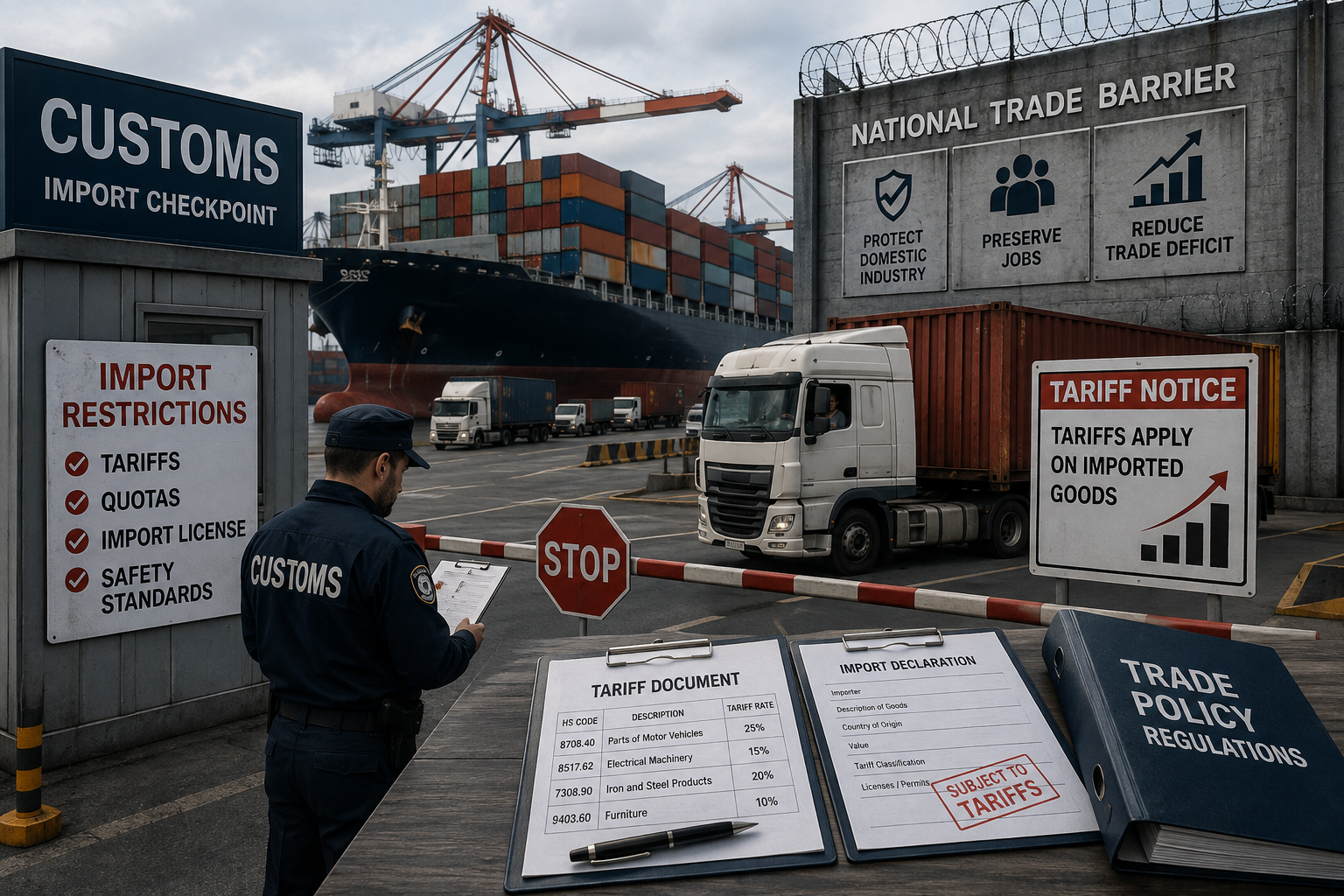
Protectionism refers to government policies that restrict, discourage or reshape imports in order to protect domestic producers from foreign competition. The most visible tool is a tariff, which is a tax on imported goods. But protectionism can also appear through quotas, licensing requirements, subsidies, local content rules, technical standards, government procurement preferences, foreign exchange restrictions, anti-dumping duties, safeguard measures and informal administrative delays.
At its core, protectionism changes market conditions. It makes foreign products more expensive, less available or harder to sell. Domestic firms then receive breathing space. They may gain time to invest, hire, learn and become competitive. But they may also become complacent, depending on the shield rather than improving productivity.
Protectionism therefore has two faces. In one version, it is a bridge that helps a young or strategic industry mature. In another version, it is a wall that protects inefficiency and forces citizens to pay higher prices.
Why governments use protectionism
Governments turn to protectionism for several reasons. The first is employment. Trade can create gains for an economy as a whole, but those gains are not evenly distributed. Workers in import-competing sectors may lose jobs even if consumers benefit from cheaper goods. A government facing political pressure may protect the sector to slow the adjustment.
The second reason is infant-industry protection. A country may believe that a new sector needs temporary protection until it reaches scale. The logic is that established foreign firms already have technology, capital, brands and supply chains. Without some protection, domestic firms may never get the chance to learn.
The third reason is strategic security. Countries may not want to depend entirely on foreign suppliers for food, energy equipment, semiconductors, defence components, pharmaceuticals, telecom infrastructure or critical minerals. In such sectors, the argument moves beyond simple price efficiency. Supply security becomes part of national power.
The fourth reason is bargaining. Tariffs and barriers can be used as negotiating tools. A country may raise barriers to pressure another country to lower its own barriers, stop subsidies, open a market or address unfair trade practices. The danger is that bargaining can escalate into retaliation.
The main tools of protectionism
Tariffs are the classic tool. By making imports costlier, tariffs give domestic producers price advantage. Quotas restrict the quantity of imports. Subsidies support domestic firms directly through cheaper credit, tax benefits, grants, land, power or procurement support. Local content rules require companies to use domestic inputs. Technical regulations and standards can protect consumers and safety, but they can also become hidden barriers if designed unfairly.
Modern protectionism is often less visible than old protectionism. It may operate through data localisation, digital regulations, export controls, investment screening, industrial subsidies, climate-linked border measures, sanctions, procurement restrictions or complex certification requirements. As global trade has moved from simple goods to technology, services and supply chains, trade barriers have also become more sophisticated.
This matters because the public debate often focuses only on tariffs. In reality, the protectionist state can act through dozens of channels. A country may claim to support free trade while still using standards, subsidies and procurement rules to favour domestic firms.
The economic cost of protection
Protectionism usually raises costs somewhere in the economy. Consumers may pay higher prices. Firms that use imported inputs may face higher production costs. Exporters may become less competitive because their inputs become expensive. Government revenue may rise from tariffs, but the wider economy can lose efficiency.
There is also the risk of retaliation. If one country blocks another country’s goods, the affected country may respond with its own barriers. What begins as a measure to protect one industry can become a broader trade conflict affecting exporters, farmers, manufacturers and consumers.
Protection can also create rent-seeking. If firms know that political influence can produce tariff protection, they may invest more in lobbying than in productivity. Instead of competing in the market, they compete for government favour. This weakens capitalism because profit becomes tied to protection rather than performance.
Protectionism versus industrial policy
Protectionism should not be confused with all forms of industrial policy. Industrial policy means deliberate government support to build productive capability. It may include infrastructure, research, skills, credit, standards, export promotion, technology transfer and cluster development. Protectionism is one possible instrument within that toolkit, but it is not the whole strategy.
The difference lies in discipline. Good industrial policy asks firms to become more competitive over time. It links support to performance, exports, productivity, innovation or employment quality. Bad protectionism gives support without accountability. It protects firms whether they improve or not.
This distinction is crucial for developing countries. Many economies need strategic support to build manufacturing and technological capability. But support must create learning, not dependency. A protected industry should eventually be able to face competition. If it cannot, the country has not built strength; it has merely transferred costs from firms to consumers.
India and the protectionism debate
For India, protectionism is not an abstract textbook issue. It sits at the centre of debates on manufacturing, jobs, self-reliance, import dependence, export competitiveness and strategic autonomy. India wants to build domestic capability in electronics, defence, renewable energy, pharmaceuticals, semiconductors and other sectors. Some degree of policy support is inevitable in such a development strategy.
The challenge is to protect learning, not inefficiency. If import barriers help firms invest in technology, scale, skills and supply chains, they can contribute to long-term capability. If they simply allow firms to charge higher prices without upgrading, the economy pays twice: once through costlier goods and again through lost competitiveness.
India also participates in global value chains. Many exporters need imported components, machinery and raw materials. Excessive protection can therefore hurt the very firms that India wants to make globally competitive. A smartphone, automobile, solar panel or pharmaceutical product often depends on cross-border inputs. Trade policy must recognise this production reality.
The global return of protectionism
Protectionism has returned to global politics because the old belief in frictionless globalisation has weakened. The pandemic exposed supply-chain vulnerability. Geopolitical rivalry turned technology into a strategic asset. Climate policy began affecting trade through carbon rules. Major powers now use industrial subsidies, export controls and investment restrictions with increasing confidence.
This does not mean global trade is disappearing. It means trade is becoming more political. Countries are not asking only where goods are cheapest. They are asking where goods are made, who controls the technology, whether supply can be weaponised, and whether dependence creates strategic risk.
The new era therefore requires a more mature debate. Pure free-trade optimism ignores security and distributional concerns. Pure protectionism ignores the efficiency, innovation and consumer benefits of openness. The sensible position is selective openness: trade where possible, resilience where necessary, and protection only where it builds future competitiveness.
Final reader takeaway
Protectionism is not simply a wall against foreign goods. It is a policy choice that redistributes costs and benefits inside an economy. It can defend jobs, build capacity and protect strategic sectors. It can also raise prices, weaken productivity, invite retaliation and reward inefficiency.
The real test is time. Protection that prepares firms for competition may be defensible. Protection that permanently shields weak firms becomes a tax on the public. Trade policy should not be judged by slogans such as free trade or self-reliance alone. It should be judged by whether it makes citizens, firms and the economy stronger in the long run.
Editorial Disclaimer
This article is for general financial and economic education. It does not constitute investment, tax, customs, legal or policy advice. Readers should verify current rules, rates and notifications from official sources before making business, investment or compliance decisions.