Ozone Layer Recovery: Is the Ozone Hole Really Healing?
Ozone layer recovery is real, measurable and still far from complete. That combination is important because the state of the ozone layer is often interpreted in two misleading ways. One view sees the enormous Antarctic ozone hole that still forms each spring and concludes that the Montreal Protocol failed. The opposite view hears that ozone is recovering and assumes the environmental problem has essentially been solved.
Neither interpretation reflects the evidence.
The strongest scientific assessments show that the concentration of ozone-depleting chlorine and bromine in the stratosphere has declined from its peak and that this decline is allowing ozone to recover gradually. The Montreal Protocol and its later amendments have phased out nearly 99% of controlled ozone-depleting substances, fundamentally changing the future chemical trajectory of the stratosphere. Yet many of the chemicals responsible for depletion remain in the atmosphere for decades or even longer, which means the Antarctic ozone hole can still become continental in scale during favourable meteorological conditions.
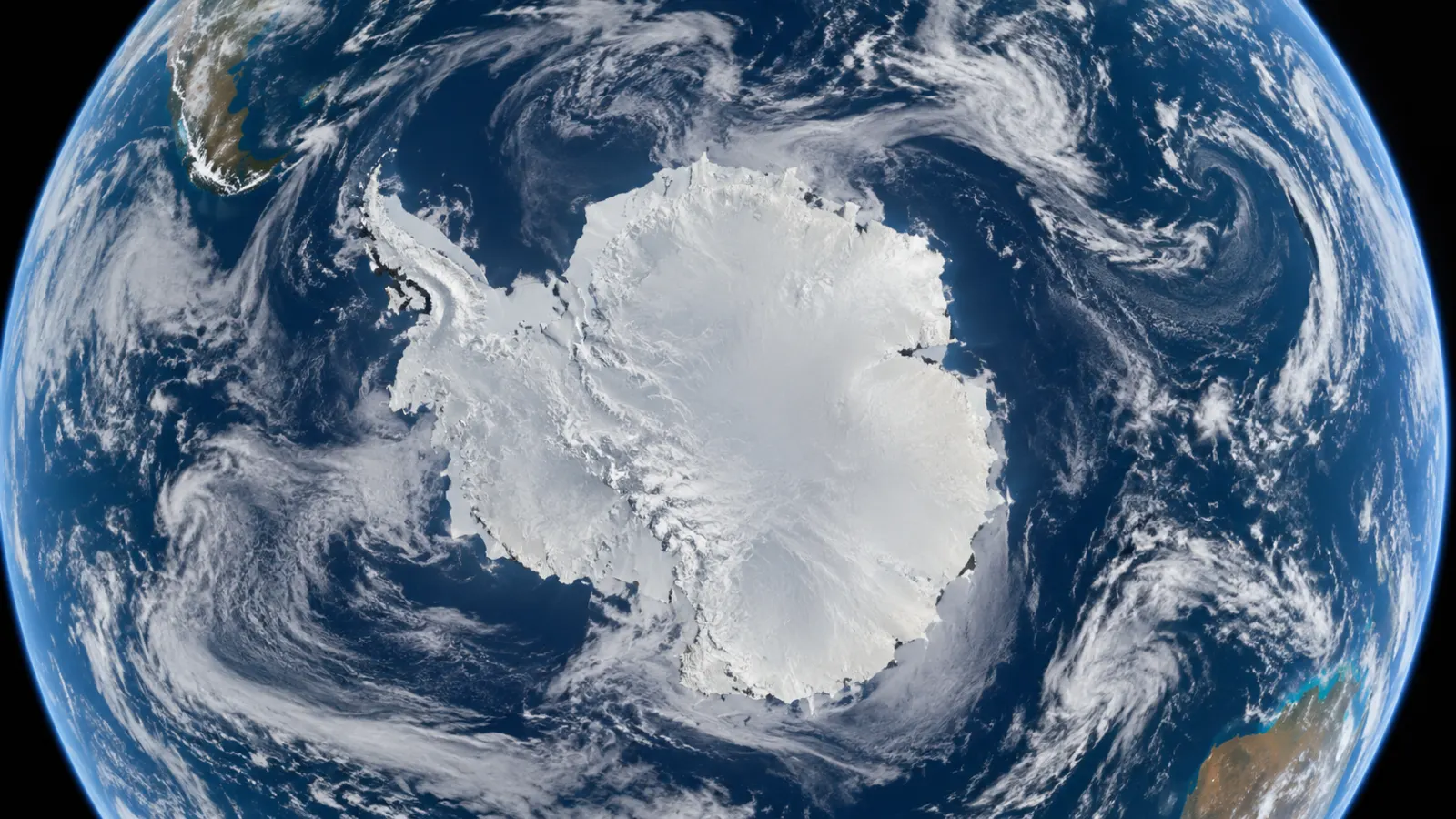
The 2025 Antarctic ozone hole illustrates both sides of the story. NASA and NOAA reported that its maximum one-day area reached 22.86 million square kilometres on 9 September 2025. Averaged from 7 September through 13 October, however, it was the fifth-smallest ozone hole since 1992 and broke up nearly three weeks earlier than the recent seasonal average. That is evidence of improvement, but a hole covering an area larger than North America remains an enormous atmospheric phenomenon.
The correct interpretation is therefore not that the ozone crisis has ended. It is that humanity has stopped adding ozone-destroying chemicals at anything like their former rate, atmospheric concentrations are gradually responding, and the ozone layer is now moving toward recovery rather than continued chemical deterioration.
Why the Montreal Protocol Changed the Direction of the Ozone Crisis
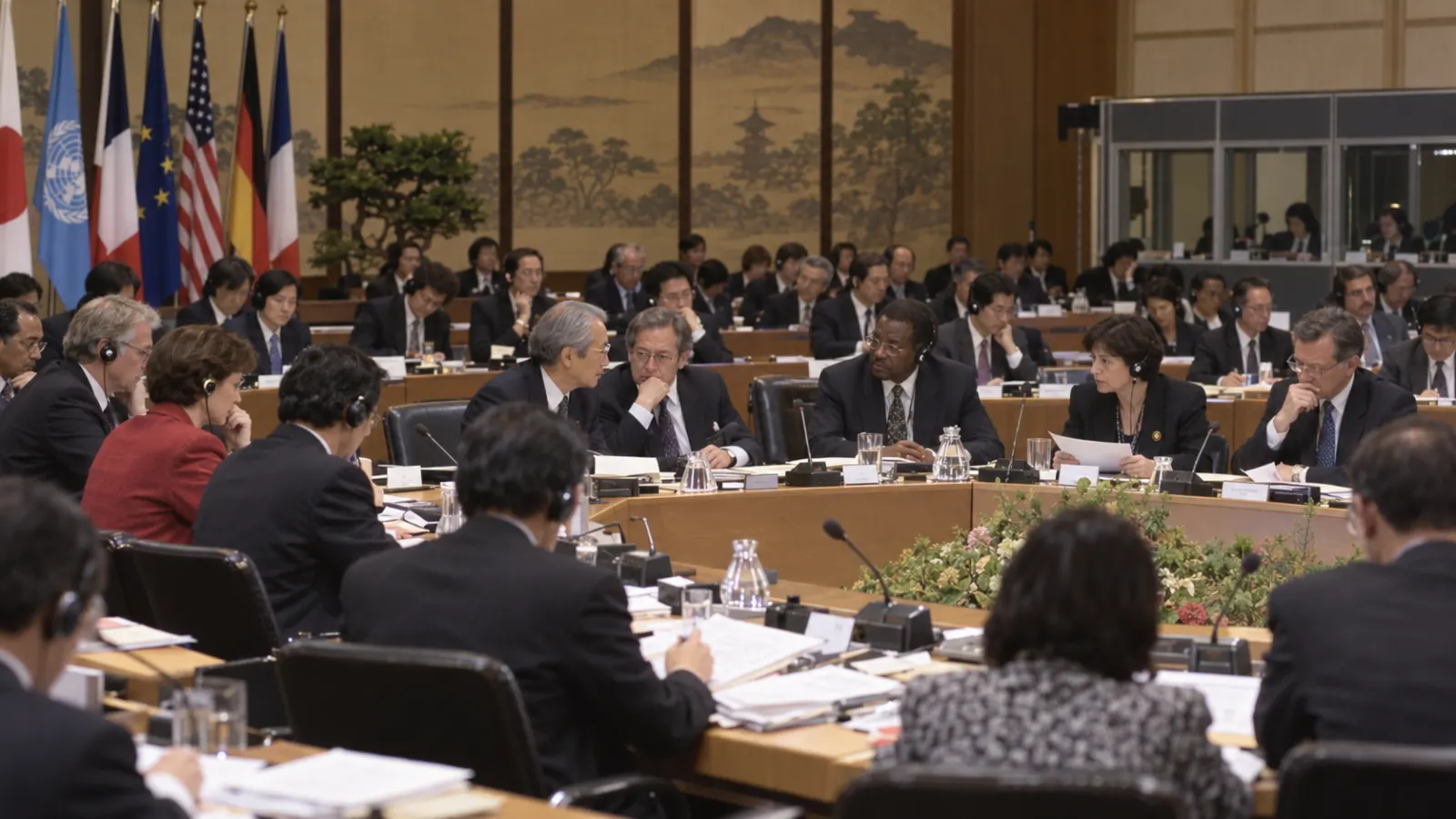
The Montreal Protocol on Substances that Deplete the Ozone Layer was agreed in 1987 and entered into force in 1989. Its purpose was to phase out the production and consumption of chlorofluorocarbons, halons and other manufactured chemicals known to deplete stratospheric ozone. The agreement was repeatedly strengthened as scientific understanding improved, making it less a one-time ban than an evolving regulatory system.
This approach mattered because ozone depletion was fundamentally a stock-and-flow problem. Factories produced CFCs and related compounds, and those emissions accumulated in the atmosphere. Stopping new production could reduce the flow into that atmospheric reservoir, but it could not instantly eliminate material that had already been released.
Many ozone-depleting substances are remarkably stable in the lower atmosphere. That stability was one reason they were so useful industrially in refrigeration, air conditioning, foams, solvents and aerosol applications. It was also what allowed them to survive long enough to reach the stratosphere. Once there, intense ultraviolet radiation breaks the molecules apart and releases chlorine or bromine atoms capable of participating repeatedly in reactions that destroy ozone.
Some of these substances have atmospheric lifetimes measured in decades, while others can influence stratospheric chemistry for substantially longer. Old refrigerators, insulation foams, fire-suppression systems and other equipment can also contain banks of controlled chemicals that may continue leaking after new production has ended.
The Montreal Protocol therefore did not work like switching off a smokestack. Governments changed the inflow into an enormous, slowly turning atmospheric chemical system. The response was always going to take decades.
That response is now visible. UNEP’s Ozone Secretariat reports that emissions weighted according to their ability to damage ozone peaked in the late 1980s and subsequently declined sharply. Total stratospheric halogen loading peaked later, during the late 1990s, because gases emitted near the surface require time to reach and move through the stratosphere. By the end of 2022, total stratospheric halogen content had fallen about 18% below its peak.
The timing illustrates why environmental recovery can lag far behind policy. Production controls began changing in the late twentieth century, but the atmosphere needed years before the chemistry at stratospheric altitudes reflected those changes.
NASA and NOAA provide an additional Antarctic measure. They reported in 2025 that levels of ozone-depleting substances in the Antarctic stratosphere had declined by roughly one-third from their peak around 2000, relative to pre-ozone-hole levels. NASA scientist Paul Newman estimated that the 2025 ozone hole would have been more than one million square miles larger if Antarctic stratospheric chlorine had remained at levels seen about 25 years earlier.
That is one of the clearest ways to understand recovery. The ozone hole still exists, but scientists can now detect that the same meteorological conditions would produce worse depletion if the Montreal Protocol had not reduced the underlying chlorine and bromine burden.
What the 2025 Antarctic Ozone Hole Actually Tells Us
Antarctic ozone loss occurs most dramatically during Southern Hemisphere spring. Extremely cold winter conditions allow the formation of polar stratospheric clouds. Chemical reactions on these cloud particles convert chlorine into forms that become highly reactive when sunlight returns. At the same time, the strong polar vortex isolates Antarctic air from ozone-rich air farther north.
The result can be rapid destruction of stratospheric ozone.
Scientists conventionally define the Antarctic ozone hole as the area where total column ozone falls below 220 Dobson Units. The Dobson Unit measures the total amount of ozone in a column of atmosphere above a location. NASA’s 2025 observations recorded a minimum South Pole concentration of 147 Dobson Units, compared with the record low of 92 Dobson Units measured in October 2006.
During 2025, the ozone hole reached its maximum extent of 22.86 million square kilometres on 9 September. Its average area during the core 7 September–13 October depletion period was 18.71 million square kilometres, making it the fifth-smallest average ozone hole since 1992.
That comparison period matters. NASA and NOAA use 1992 because by then Montreal Protocol controls had begun to affect the production and release of ozone-depleting chemicals. Using the longer satellite record beginning in 1979, the 2025 ozone hole ranked only the 14th-smallest over 46 years, which shows why rankings can look different depending on the historical baseline.
The 2025 hole also broke up relatively early. Scientists have increasingly observed that ozone holes tend to be smaller than the enormous holes common during the early 2000s, often form later and can dissipate sooner.
That does not mean every future year will produce a smaller hole than the year before. Annual ozone conditions are strongly affected by meteorology.
A particularly cold and stable polar vortex can sustain conditions favourable to severe chemical depletion. A weaker, warmer or more disturbed vortex can reduce those conditions and allow ozone-rich air to mix into the polar region earlier. NASA and NOAA noted that a weaker-than-normal polar vortex during part of August 2025 helped keep temperatures relatively high and likely contributed to the smaller hole that year.
This is why one unusually large ozone hole would not prove recovery had stopped, just as one unusually small hole would not prove the problem had been solved. Scientists evaluate multi-decadal trends alongside the atmospheric concentration of ozone-depleting chemicals, rather than judging the success of the Montreal Protocol from one Antarctic spring.
The distinction is similar to separating climate from weather. Short-term variability moves around a long-term trend. Ozone recovery is happening beneath substantial year-to-year atmospheric variability.
When Will the Ozone Layer Fully Recover?
Scientists usually describe recovery relative to 1980 ozone levels, a benchmark chosen because it predates the development of severe Antarctic ozone depletion.
The latest completed UNEP-WMO Scientific Assessment of Ozone Depletion, published for 2022, projects that under continued compliance with current policies, total column ozone should return approximately to 1980 levels by 2040 for most of the world, around 2045 over the Arctic and around 2066 over Antarctica.
These dates should not be understood as appointments on which the ozone layer will suddenly become “fixed.” They are modelled milestones representing when long-term averages are expected to return to particular historical values under specified assumptions.
Recovery also differs geographically. Mid-latitude ozone depletion has generally been less extreme than the Antarctic ozone hole, so those regions do not require the same degree of reduction in chlorine and bromine before ozone approaches pre-depletion conditions. Antarctica is expected to recover last because the exceptionally cold and isolated winter stratosphere creates the strongest environment for chlorine- and bromine-driven destruction.
Even as the concentration of ozone-depleting substances declines, enough remains over Antarctica to produce very large springtime ozone losses when the polar vortex is sufficiently cold and stable. The Antarctic atmosphere therefore requires a much larger reduction in reactive halogens before its seasonal behaviour returns to something resembling conditions before the ozone-hole era.
As of 7 September 2026, the 2022 assessment remains the latest completed global scientific benchmark publicly listed by the UNEP Ozone Secretariat. The Scientific Assessment Panel met under WMO on 20 July 2026 specifically to finalise the Scientific Assessment of Ozone Depletion: 2026, but the new full assessment has not yet appeared among the published Scientific Assessment Panel reports.
This distinction is important for current reporting. It is accurate to say that a 2026 assessment is being finalised, but the widely cited 2040, 2045 and 2066 recovery dates still come from the completed 2022 assessment until the new assessment is formally released.
Why Monitoring Must Continue Even When the Trend Is Improving
The success of the Montreal Protocol could easily create a dangerous assumption: once chemicals are prohibited, atmospheric monitoring becomes less important.
The opposite is true.
One of the strengths of the ozone regime has been the ability to compare reported production and consumption with what scientists actually measure in the atmosphere. That system was tested dramatically when researchers discovered an unexpected slowdown in the decline of CFC-11 concentrations during the 2010s.
Measurements indicated that global CFC-11 emissions had increased unexpectedly after 2012, despite restrictions on new production. Investigators subsequently traced a significant portion of the increase to eastern mainland China. NOAA and international partners later found that global emissions fell sharply from 2018 to 2019, declining by roughly 26%, suggesting that much of the unexpected production had stopped.
The episode demonstrated why treaties cannot rely solely on paperwork.
Atmospheric gases mix globally. Independent measuring stations can therefore detect discrepancies that national production statistics may miss. When observations reveal a chemical concentration behaving differently from projections, scientists can investigate whether previously unknown sources, illegal production, leakage from old equipment or changes in atmospheric circulation are responsible.
Monitoring also remains necessary because large banks of ozone-depleting substances remain stored in old foams, refrigeration equipment, fire-protection systems and waste. Even when manufacture stops, poor disposal can release those chemicals gradually.
New compounds can create additional questions. Some relatively short-lived chlorine- or bromine-containing substances may reach the stratosphere more effectively in certain regions than earlier models assumed. Scientific assessments therefore have to keep updating not only atmospheric concentrations but also transport, chemistry and industrial use.
Recovery is not a reason to stop measuring ozone. It is a prediction being continuously tested against the atmosphere.
Climate Change Makes Ozone Recovery More Complicated
The chemistry of ozone depletion is not isolated from the climate system.
Greenhouse gases warm the lower atmosphere but can cool parts of the stratosphere. Changing temperatures alter chemical reaction rates. Changes in atmospheric circulation can affect how ozone and ozone-depleting compounds move between regions. Major volcanic eruptions can inject particles into the stratosphere, while extremely intense wildfire events can sometimes influence stratospheric aerosol chemistry.
These effects do not overturn the central conclusion that human-produced chlorine- and bromine-containing substances caused the severe historical Antarctic ozone hole. The declining atmospheric burden of those substances remains the dominant reason scientists expect long-term recovery.
Climate change does, however, mean that returning to the same amount of ozone does not necessarily mean returning to exactly the same atmosphere that existed in 1980.
The 2022 scientific assessment notes that future ozone levels depend not only on declining ozone-depleting substances but also on greenhouse-gas-driven changes in stratospheric temperature and atmospheric circulation. In some regions, climate-related changes could cause ozone to exceed historical values later in the century.
This makes the phrase “recovery to 1980 levels” a practical benchmark rather than a claim that every atmospheric process will return to its 1980 state.
It also explains why recovery projections have uncertainty ranges. They depend partly on future greenhouse-gas trajectories, atmospheric circulation and episodic events that cannot be predicted precisely decades in advance.
The Montreal Protocol Became More Than a CFC Treaty
The Montreal Protocol is often summarised as “the treaty that banned CFCs.” That description misses much of what made it successful.
The agreement was designed to evolve. Scientists periodically assessed the atmosphere, governments reviewed those assessments, controls were tightened, additional chemicals were added and timetables were adjusted. Financial and technical mechanisms were also created to help developing countries replace controlled substances rather than expecting every country to make identical transitions using identical resources.
This feedback between scientific measurement, international assessment, technological substitution and policy adjustment is one reason the treaty became unusually effective.
UNEP’s 2022 assessment concludes that nearly 99% of controlled ozone-depleting substances have been phased out. Had production continued along earlier trajectories, ozone depletion would have become substantially more severe.
The treaty later acquired an additional climate role through the Kigali Amendment, adopted in 2016. Kigali targets hydrofluorocarbons, or HFCs, which were widely adopted as substitutes for ozone-depleting refrigerants. HFCs generally do not destroy stratospheric ozone, but many have extremely high global-warming potentials.
WMO estimates that implementation of the Kigali Amendment could avoid roughly 0.3–0.5°C of global warming by 2100, depending on how effects are calculated. The Ozone Secretariat similarly describes the HFC phasedown as an important extension of the Montreal Protocol into climate protection.
This distinction matters because the ozone layer and climate change are different environmental problems. CFC controls worked primarily because chlorine and bromine damaged ozone. HFC controls are primarily climate policy because the replacement gases can trap substantial heat.
The institutional framework, however, proved adaptable enough to address both.
Why the Ozone Story Is an Important—but Imperfect—Model for Environmental Cooperation
Ozone recovery is frequently described as one of the greatest successes of international environmental policy, and there is strong evidence for that conclusion. A specific environmental threat was identified, its chemical mechanism became increasingly well understood, governments negotiated controls, industries developed substitutes, compliance systems were established and atmospheric observations eventually showed the underlying chemical burden beginning to fall.
The outcome is unusually powerful because scientists can connect policy intervention with changes in atmospheric chemistry. The concentration of controlled substances did not simply stabilise for unrelated reasons; their decline followed global controls on their production and consumption. Long-term increases in upper-stratospheric ozone have likewise been attributed in substantial part to declining stratospheric chlorine.
But the Montreal Protocol should not be turned into a simplistic claim that every environmental problem can be solved by copying the same treaty.
Ozone depletion involved a relatively identifiable group of manufactured chemicals produced by a limited range of industries. Alternatives could be developed, regulatory targets could be defined and many uses could be phased out without reconstructing the entire global economy.
Climate change is structurally harder because fossil fuels are deeply embedded in electricity, transport, industry, buildings, agriculture and economic development. Biodiversity loss involves land use, food production, habitat destruction, pollution and invasive species. Water scarcity differs dramatically by geography and governance.
The Montreal Protocol therefore offers principles rather than a universal template: identify the mechanism accurately, measure the system continuously, update policy as evidence changes, create practical transition pathways, support countries with different capacities and verify whether the physical environment responds as predicted.
Those lessons are transferable even when the specific policy instrument is not.
Frequently Asked Questions About Ozone Layer Recovery
Is the ozone layer recovering? Yes. Long-term measurements show declining concentrations of ozone-depleting chlorine and bromine and increasing ozone in parts of the stratosphere. Current assessments project continued recovery if Montreal Protocol controls remain in place.
Does the ozone hole still exist? Yes. A large Antarctic ozone hole still forms during Southern Hemisphere spring. Recovery does not mean the seasonal hole has disappeared.
How big was the 2025 ozone hole? It reached a one-day maximum of approximately 22.86 million square kilometres on 9 September 2025. Its average area during the main depletion season was 18.71 million square kilometres, the fifth-smallest average since 1992.
Why can the ozone hole still be huge if the ozone layer is recovering? Long-lived ozone-depleting chemicals remain in the atmosphere, and cold Antarctic meteorological conditions can still activate enough chlorine and bromine to destroy large amounts of ozone each spring.
Why does ozone-hole size change from year to year? Temperature, atmospheric circulation and the strength of the Antarctic polar vortex strongly influence each season. Chemical recovery changes the long-term background trend, while weather produces substantial annual variability.
What caused the ozone hole? Human-made chemicals containing chlorine and bromine, particularly CFCs and halons, released reactive halogens in the stratosphere. Antarctic winter and spring conditions then greatly intensified the resulting chemical destruction of ozone.
What did the Montreal Protocol do? It established international controls on the production and consumption of ozone-depleting substances and was repeatedly strengthened as scientific evidence evolved.
Has the Montreal Protocol worked? Yes. UNEP reports that nearly 99% of controlled ozone-depleting substances have been phased out, atmospheric halogen loading has declined and ozone recovery is underway.
When will the ozone layer recover completely? The latest completed global assessment projects return to 1980 ozone levels around 2040 for most of the world, around 2045 over the Arctic and around 2066 over Antarctica if current policies continue.
Why will Antarctica take until around 2066? Antarctic temperatures and the polar vortex create unusually favourable conditions for chemical ozone destruction. Significant chlorine and bromine therefore continue producing large seasonal losses even while their concentrations are declining.
Are the recovery dates guaranteed? No. They are model projections based on assumptions about future emissions, atmospheric chemistry, climate and continued treaty compliance.
Is the 2026 ozone assessment available yet? As of 7 September 2026, UNEP’s published Scientific Assessment Panel listings still show the 2022 assessment as the latest completed quadrennial assessment. WMO hosted a July 2026 meeting to finalise the next assessment.
What are CFCs? Chlorofluorocarbons are long-lived chemicals once widely used in refrigeration, air conditioning, aerosol products, foams and industrial applications. When they reach the stratosphere, ultraviolet radiation can release chlorine that destroys ozone.
Why are old CFCs still a problem if production was banned? Many molecules survive in the atmosphere for decades, and additional chemicals remain stored in old appliances, insulation and other products.
What happened with the unexpected CFC-11 emissions? Atmospheric measurements revealed an unexpected increase in emissions during the 2010s. Subsequent monitoring showed a large decline after 2018, demonstrating the importance of independent atmospheric verification.
What is the Kigali Amendment? It is a 2016 amendment to the Montreal Protocol that phases down HFCs, which generally do not deplete ozone but can be powerful greenhouse gases.
Does climate change affect ozone recovery? Yes. Greenhouse gases influence stratospheric temperature and atmospheric circulation, while events such as major volcanic eruptions can affect stratospheric chemistry. These interactions add variability without overturning the evidence that declining ozone-depleting substances are driving long-term recovery.
Ozone Recovery Is What Successful Environmental Repair Actually Looks Like
The strongest evidence does not show an atmosphere that has already returned to normal. It shows something more scientifically interesting: a planetary environmental system that was pushed far from its earlier state and is now slowly moving back because the human activity driving the damage was reduced.
The Antarctic ozone hole remains large enough to look alarming on satellite maps. That will continue for years because the chemicals responsible for depletion are exceptionally long-lived and Antarctic weather can still create ideal conditions for destructive reactions. The 2025 hole covered tens of millions of square kilometres even though it ranked among the smaller holes of the post-1992 period.
Yet beneath that annual variability, the chemistry has changed. Ozone-depleting substance emissions peaked and fell. Stratospheric halogen loading peaked and is declining. Scientists can already detect that modern ozone holes are less severe than they would be if chlorine concentrations had remained at their early-2000s levels. The long-term direction has reversed.
That is what ozone layer recovery actually means.
It does not mean every future ozone hole will be smaller than the previous one. It does not mean continued monitoring is unnecessary. It does not guarantee that governments can weaken controls without consequence. And it does not mean climate change or unexpected emissions cannot complicate the trajectory.
Recovery means that, under current policy, the processes restoring ozone now outweigh the long-term chemical pressure that previously drove worsening depletion.
The historical significance is difficult to overstate. Humanity manufactured chemicals that altered the chemistry of the global stratosphere, discovered the consequences through atmospheric observation, established the causal mechanism, negotiated international restrictions and changed emissions sufficiently for the atmosphere itself to begin responding.
The repair is taking much longer than the policy decision because atmospheric systems contain memory. Molecules emitted decades ago remain relevant today, just as actions taken today can determine conditions many decades from now.
That makes the ozone story both optimistic and cautionary.
It demonstrates that international environmental policy can change a planetary trend when science identifies a controllable cause and governments sustain coordinated action.
It also demonstrates that preventing damage is much faster than waiting for a planetary system to heal after the damage has already been done.
The ozone layer is recovering.
The ozone hole has not disappeared.
Both statements are true, and understanding why they can be true at the same time is the key to understanding one of the most important environmental recoveries ever measured.